Greek Dep. Foreign Minister’s ‘Six Point Plan for Illegal Migration in Agean’ (News)

Greek Deputy Foreign Minister Yannis G. Valinakis has written an article in an Athens daily paper proposing a “Six-point plan on illegal migration in the Aegean.”

The most troubling of the six points is a call for the use of “a ship of sufficient tonnage to be used as a first reception and transport centre [which would] sail near the islands of the Aegean where illegal migrants have been arrested, it will take them on board and carry them to the reception centres already in, or due to be put into, operation.”

Such a proposal is reminiscent of a similar practice used by the US Government in late 1991 when the US intercepted at sea thousands of Haitians fleeing a bloody military coup d’état.  In an effort to prevent the Haitians from reaching shore, US Coast Guard and US Naval ships detained Haitians on board large naval vessels in steadily worsening conditions.  Ultimately most of the Haitians were transferred to migrant detention camps at the US Naval Base at Guantanamo Bay, Cuba.

Other points proposed by the Deputy Foreign Minister include:

  • “Immediate relaunching of EU-Turkey negotiations on the conclusion of a readmission agreement and an immediate implementation of the existing Greek-Turkish Readmission Protocol.
  • “Use of a specific port on the Turkish coast for the return of illegal migrants who have reached [Greece] through Turkey.
  • “Intensification of joint operations on a permanent basis under FRONTEX … on the way towards the creation of a European Coastguard.
  • “Proposal for the creation of a specialised FRONTEX branch in Greece.”

Click here for the full text of the article on the Ministry’s web site.

Leave a comment

Filed under Aegean Sea, Frontex, Greece, News, Turkey

Maltese Patrol Boats Funded by EU External Borders Fund (News)

blog - Austal shipFour new patrol boats for the Armed Forces of Malta are scheduled to be delivered in six months.  The boats cost €9.6 million.  75% of the cost is coming from the EU External Borders Fund.

Click here for Times of Malta article.

Click here for EC Justice and Home Affairs External Borders Fund site.

Click here for the 2008 “Annual Work Programme for Community actions and Specific Actions within the framework of the External Borders Fund”.

Click here for Austal ship builder Media Release.

Leave a comment

Filed under European Union, Malta, Mediterranean, News

Swedish Migration Minister in Malta for Migration Talks (News)

Blog - swedish Min for Migration and Asylum BillstromSwedish Migration Minister Tobias Billström completed a two day visit to Malta ahead of Sweden’s 1st July assumption of the EU Presidency.  The recently approved EU pilot project where refugees are to be transferred from Malta to other EU member states on a voluntary basis was reviewed.

 Click here for Times of Malta article.   Click here for www.di-ve.com article.

Leave a comment

Filed under European Union, Mediterranean, News, Sweden

IOM Report – Southward Migration from East Africa and the Horn Towards the RSA (Reports)

Blog - IOM report cover southward migrationWhile slightly off topic from this blog’s primary focus (northward migration from Africa towards Europe), IOM released a substantial study of the irregular migration of men from East Africa and the Horn of Africa towards the Republic of South Africa.

In Pursuit of the Southern Dream: Victims of Necessity: Assessment of the irregular movement of men from East Africa and the Horn to South Africa

Some excerpts follow:

“[T]his research illuminates, for the first time, the scope and nature of irregular migration and human smuggling of men from East Africa and the Horn towards South Africa.

“Of the countries relevant to this study, Ethiopia, Somalia, Tanzania and Zimbabwe have not signed the UN Protocol Against the Smuggling of Migrants by Land, Sea and Air, supplementing the United Nations Convention Against Transnational Organized Crime, also known as the Smuggling Protocol. Kenya, Malawi and Zambia acceded to, or ratified, the protocol in 2005, while Mozambique ratified it in 2006. RSA signed the protocol in December 2000 and ratified the same in 2004.5 However, there is a need to reflect the protocol in national legislation and implement this protocol for it to be effective.

“For some migrants, arrival in RSA is the start of a long-cherished dream; for many more, it is a step in a process that they hope will result in admittance to Europe or North America via similar means.

“This report also emphasizes that irregular migrants should no longer be perceived as perpetrators of criminal acts. Instead, they should be provided proper protection in line with international law, and the penal focus should be on those who smuggle and abuse migrants. The corruption and complicity associated with these irregular movements result in great profit to smugglers, and allegations of official corruption must be addressed more seriously.

“Marginalizing human rights – Soon after the creation of what are known as the UN Smuggling Protocol and the UN Trafficking Protocol (Palermo Protocol), the former trafficking adviser to the UN Office of the High Commissioner for Human Rights (UNHCHR) warned that there was a risk of human rights being marginalized. The reasoning was that these protocols (which are supplements to the UN Convention Against Transnational Organized Crime and the second attempts to address trafficking in persons) were not developed as human rights tools, but in response to a growing international concern to curb trafficking and smuggling crimes. This concern, not surprisingly, was felt most urgently by destination countries, where a “growing intolerance of all forms of irregular migration” was increasing, making it progressively more difficult to give priority to individuals and their rights in the debate.

“The alternatives to direct air travel are: a combination of limited air travel with additional road travel, a combination of boat and road travel, or the most common choice, which is overland travel the entire way. In many cases, migrants must walk certain stretches of the smuggled journey – in some cases for many days at a time.  The impression gained during the study was of a scenario in which the smugglers were continually assessing the success and viability of these four modes of travel (air, boat, vehicle and foot). Because of the flexibility of the network, the mode of transport and the routes used can be altered on short notice, depending on circumstances.

“The role of sea travel  Travel to RSA by sea is relatively common for the Somali and Ethiopian irregular migrant. It is unknown for Kenyans and slightly more common for a limited number of Tanzanians who have been known to stow themselves away on ships between Dar es Salaam and RSA’s eastern ports (Durban, East London and Port Elizabeth).

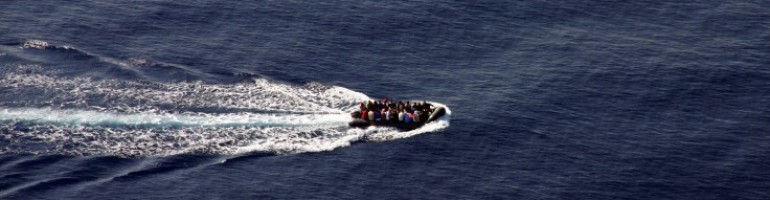
“A significant number of the 293 irregular migrants whose data was captured through in-depth interviews for this study did travel by boat. An average of 33 per cent of all Somali and Ethiopian respondents described a sea voyage as part of their journey to RSA. In many cases, the voyage passed without incident and lasted a few days, but the vessels were overloaded and, being primitive trading dhows, had neither rescue equipment nor any facility to protect passengers from sun or storm. The respondents also mentioned that they usually were given neither food nor water throughout the trip.

“The respondents in this study travelled by boat along the following routes:

• From Mogadishu (Somalia) to Mombasa (Kenya)

• From Kismayo (Somalia) to Mombasa (Kenya)

• From Mombasa (Kenya) to Pemba or Mocimboa (Mozambique)

• From Mombasa (Kenya) to Dar es Salaam (Tanzania)

• From Mombasa (Kenya) to Tanga or Mtwara (Tanzania)

• From Shimoni and Funzi Island (Kenya) to Tanga, Bagamoyo or Pangani (all in Tanzania)

“Blaming neighbours – Many of the countries involved in this study are troubled by the number of irregular migrants passing through their territory. They see this trespassing as a threat to their state security and an infringement of their immigration laws and border controls. In their frustration with a problem that appears intractable and growing, it was common during the course of the study to hear government officials criticize the inadequate policies of neighbouring countries: “Compared to ten years ago, the increase of Somalis and Ethiopians is visible and significant. South Africa complains that Mozambique is too liberal, but the problem is Tanzania and Kenya, who are far too lax,” stated one refugee official in Maputo, Mozambique. The same criticism was heard in Malawi, Tanzania and Kenya, where officials blamed other transit countries or origin countries for their own problems with irregular migrants.

“While further legislative review of the relevant laws and policies regarding smuggling in all relevant countries is required, it can already be said that the status offered to irregular migrants by different countries (whether they can apply for asylum or refugee status, etc.) and the level of criminalization of irregular migrants and of leniency towards smugglers contribute to a regional environment of disharmony. It is a disharmony that appears to work towards the direct benefit of the smuggling networks that exploit it and is currently expanding their trade. It is a disharmony that appears to call out for regional review and re-appraisal if a solution to controlling migrant flows and border management is to be found.”

Click here for more information about the report.

Click here for the full report.
Leave a comment

Filed under East Africa - Western Indian Ocean, Reports

UNHCR recommendations to the Swedish EU Presidency re EU Asylum Policy (Statements)

blog - unhcr-logo-print

UNHCR press briefing 23 June,  Main points include:

“During the second half of this year, the EU will adopt a new multiannual programme in the area of Justice and Home Affairs which will determine the course of EU law and policy on asylum from 2010 through 2014.

“UNHCR calls on Sweden to use its Presidency to reassert the importance of a rights-based approach to border management and migration control.

“Recent events, including Italy’s push-backs of boat people and elections in which anti-immigrant parties scored big gains in a number of EU countries, give rise to concern about Europe’s commitment to ensuring access to protection.

“UNHCR supports strengthened solidarity among EU Member States, to assist those facing particular pressures resulting from the arrival of irregular migrants and asylum seekers, and suggests a menu of options in this respect which could include the relocation from one Member State to another of persons recognized as refugees.

“But UNHCR points out that this should not be at the expense of solidarity with non-EU countries hosting large refugee populations.”

Click here for Press Briefing.

Leave a comment

Filed under European Union, Statements, UNHCR

First Summit Meeting Between Spanish PM and ECOWAS (News)

West African ECOWAS leaders met with Spanish PM on 22 June.  Spain pledged 262 million euros for projects in ECOWAS nations.  Increasing ties with west African countries is a priority for Spain due in part to efforts to reduce illegal migration from the area.

“Stepped-up surveillance and cooperation with African nations has meant the number of migrants reaching the Canaries dropped to 9,181 last year from to 12,478 in 2007 and 31,678 in 2006, Spain said in January.”

Click here for full article.

Click here for brief Spanish Foreign Ministry media release.

Leave a comment

Filed under Eastern Atlantic, ECOWAS, News, Spain

Colloque: Migrations en Méditerranée et crise mondiale (Tunis 29-30 juin) (Colloques)

Colloque: Migrations en Méditerranée et crise mondiale will be held in Tunis 29-30 June.  It is sponsored by Centre d’Etudes et de Recherches Economiques et Sociales and by Institut de Recherche sur le Economiques et Sociales Maghreb Contemporain.

Click here for a list of participants and here for the programme.

Leave a comment

Filed under Colloques / Conferences, Mediterranean

1,200 Died in Mediterranean in 2008 (News)

ANSA reports that Mehdi Mabrouk (Maître assistant en sociologie, Faculté des Sciences Humaines et Sociales de Tunis) a Tunisian sociologist, speaking at a conference in Tunis (‘Illegal migration: reality and solutions’) estimates that more than 1200 African migrants drowned in the Mediterranean while trying to reach Europe.

 Click here for ANSA article.

Leave a comment

Filed under Mediterranean, News

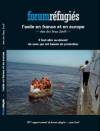
Forum Réfugiés: 9e rapport annuel sur l’asile en France et en Europe (Reports)

Conference-de-presse-a-Lyon_medium“A l’occasion de la Journée mondiale du réfugié, Forum réfugiés publie son 9e rapport annuel sur l’asile en France et en Europe. Seul document en France à faire un état des lieux précis du dossier de l’asile et des réfugiés, ce rapport reprend tous les indicateurs et statistiques indispensables à un débat objectif sur les migrations forcées.

 “Dans ce document, Forum réfugiés fait le bilan du droit d’asile en France, chez nos voisins européens et dans le monde, de janvier 2008 à mai 2009. A travers des chronologies, cartes et tableaux statistiques, ce rapport remet un an d’actualité en perspectives et pose des balises indispensables à la compréhension des débats actuels et des enjeux à venir.”

The full text of the 2009 report does not seem to be posted on the web site.

 Click here for more information and for le Dossier de presse Lyon.

Leave a comment

Filed under France, Reports

Creation of Joint European Coast Guard Premature (News)

The Greek PM’s request at the recent European Council Summit to create a joint European coast guard was regarded as “premature”.

Click here for Kathimerini article.

Leave a comment

Filed under European Union, Greece, Mediterranean, News

¿First Frontex Forced Repatriation Operation? (18 June Repatriation Near Malta) (News)

Malta Today reported that the forced repatriation operation involving 74 migrants that took place on 18 June was the first time that Frontex ever coordinated a forced repatriation operation at sea.

“Even though the migrants were intercepted by an Italian coast guard boat, the same migrants, that included women and children, were identified by a Frontex asset that followed the operation through.”

The operation, part of Nautilus IV, used a German helicopter, the Italian coast guard, and a Libyan patrol boat.

Click here for article.

Leave a comment

Filed under Frontex, Germany, Italy, Libya, Malta, Mediterranean, News

Maritime Border Surveillance (MarBorSur) meeting at EC Joint Research Centre (News)

blog - EC JRC IPSC logoA Maritime Border Surveillance (MarBorSur) meeting will be held at the European Commission’s Joint Research Centre in Ispra, Italy on 30 June 2009.
Frontex will participate in the meeting:  “As part of the security research funded by the European Commission there will be an industry demonstration project focusing on Maritime Border Surveillance (MarBorSur) running from 2010 to 2014. In order to ensure that the project becomes useful both for end-users and to the participating industries, an active participation of experts from Member States and Frontex is crucial.  The purpose of the meeting is to initiate the work to define scenarios, measures of effectiveness and methods for validation that will be used during the project to validate the demonstrator.”

Click here for Frontex press release.

The Joint Research Centre (click here) engages in a broad range of activities that touch on issues relating to migrant interdiction.

For example, the JRC’s Institute for the Protection and Security of the Citizen (click here)  has a Maritime Affairs Unit (click here).   One of this Unit’s FP 7 project’s is the Wide Maritime Area Airborne Surveillance (WIMAAS).  Click here for description.

One of the Global Security and Crisis Management (GLOBESEC) Unit’s  (click here) FP 6 projects is the Land/Sea Integreted Monitoirng for European Security (LIMES).  Click here for description.

Leave a comment

Filed under European Union, Frontex, News

AI USA: Lives in danger as European governments deny refugees protection (Statements)

blog-ai usa logoAI USA Statement on World Refugee Day

19 June 2009

“[***]  Countries at Europe’s border are showing a flagrant disregard for their international obligations towards refugees:

“*Italy is intercepting refugees in international waters and physically transporting them, without assessing their protection needs, to Libya, where migrants, asylum-seekers and refugees are at risk of ill-treatment and forcible return to countries where they risk serious human rights abuses.

“*Turkey continues not to recognize people from outside Europe as refugees, meaning thousands of people are denied the protection they need.

“*Greece pushes back people at its land border and sea borders with Turkey without first assessing their asylum claims. For those that do enter the country there are many legal obstacles for refugees to gain protection.

“*Spain’s bilateral agreements with several countries in Africa are used to justify the arbitrary arrest, detention and deportation of refugees, asylum-seekers and migrants in these countries.

“*Other countries in the European Union (E.U.) turn a blind eye to the increasing lack of respect for the rights of refugees and asylum-seekers at the E.U.’s borders as they attempt to receive fewer refugees themselves. Every year, thousands of asylum seekers are transferred under the “Dublin II” system to countries where the rights of refugees and asylum-seekers are inadequately protected.

“On World Refugee Day, Amnesty International warns E.U. states that their actions are undermining the protection of refugees not only in their own countries but across the world, by sending a dangerous message on the treatment of refugees. All countries must meet their obligations towards refugees and asylum-seekers not only within their own borders but wherever they exercise effective control.

“Background

“Italy [***] Between May 6-11, approximately 500 people were intercepted by Italy [in international waters] after they sent rescue requests and were transported to Libya, where Italy claimed they could seek protection. They included people from Somalia, Eritrea and other African countries. [***]

“Turkey [***] Turkey is effectively the only state party to the Refugee Convention that does not recognize people from outside Europe as refugees, meaning thousands in need of protection are denied it. Asylum-seekers are often arbitrarily detained for extended periods in poor conditions, and subjected to ill-treatment. Further, forcible returns of individuals from Turkey to countries where they face serious human rights abuses are common. [***]

“Greece [***]  Currently Greece is attempting to amend domestic law to further restrict protection by eliminating the right to an effective substantive appeal in the asylum system, in breach of international and European law. Furthermore, serious concerns over the detention conditions of asylum-seekers and migrants continue to exist. [***]”

Click here for link to AI USA statement on their web page.

Click here for more detailed AI USA press release.

Leave a comment

Filed under Eastern Atlantic, European Union, Greece, Italy, Libya, Mediterranean, Spain, Statements, Turkey

France may take asylum seekers from Malta per pilot EU project (News)

“The details will be finalised on Friday when French Immigration Minister Eric Besson flies to Malta for a one-day meeting with Home Affairs Minister Carm Mifsud Bonnici. [***]

“Immigration will be high on the government’s agenda this week, as Dr Mifsud Bonnici will also host Swedish Migration Tobias Billström tomorrow and Tuesday to discuss the EU Stockholm programme, before Sweden takes over the EU Presidency on July 1.

“This programme is a five-year strategy with precise goals in the areas of freedom, justice and security. The plan has to be endorsed by member states by the end of this year.”

Click here for full text of Times of Malta article.

Click here for text of approved European Commission communications setting priorities for the proposed future Stockholm Programme which will establish a framework for EU action on citizenship, justice, security, asylum and immigration for the next five years.

Leave a comment

Filed under European Union, France, Malta, Mediterranean, News

Greek PM Karamanlis satisfied with EU Summit decisions (News)

Greek PM Karamanlis is satisfied with EU Summit decisions and with agreements to more equally share illegal immigration burdens, stepped up guarding of borders via the Frontex initiative, and commencement of jointly chartered flights by EU governments to repatriate illegal immigrants.

Click here for article.

Leave a comment

Filed under European Union, Greece, Mediterranean, News