Tag Archives: Deaths at sea

Criminal Charges Brought in Italy Against 5 Men Accused of Murdering Passengers On Disabled Migrant Boat

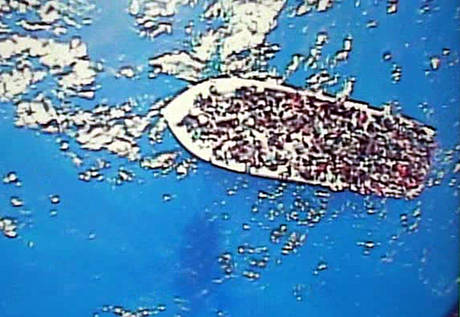
Italian authorities in Agrigento have brought criminal charges, including charges of unlawful killing, against 5 men from Ghana and Nigeria who are accused of throwing fellow migrant passengers into the sea from a disabled migrant boat this past August. The victims are alleged to been selected based upon their ethnicity or nationality. The boat in question was carrying over 300 migrants from Libya towards Lampedusa in August when it became disabled.  Italian patrol boats rescued the survivors on 4 August.  Italian authorities at the time accused NATO of failing to act to assist with the rescue of the boat.

Click here (EN), here (IT) and here (IT) for articles.

Click here and here for my earlier posts on the August incident.

Image of migrant boat from monitor inside Italian rescue helicopter

Leave a comment

Filed under European Union, Italy, Judicial, Libya, Mediterranean, News

PACE to Conduct Hearing: “Lives Lost in the Mediterranean Sea: Who is Responsible?” (Paris, 29 Nov)

The PACE Committee on Migration, Refugees and Population, in connection with the preparation of a report by Ms Tineke Strik (Netherlands, SOC) on the deaths of boat people who have died in the Mediterranean, will conduct a hearing in Paris on 29 November.  Ms Strik was appointed in June 2011 by the PACE Committee as Rapporteur to prepare a report on the deaths of boat people who have died in the Mediterranean since January 2011.

“The hearing will look at the loss of human life at sea, it will examine the right of families to receive information on the victims, and it will consider the rules applicable under international law and maritime law relevant to rescue at sea. The hearing will also examine international co-ordination regarding interception and rescue at sea, as well as the role of the national authorities, NATO and FRONTEX.  The participants include representatives of the International Committee of the Red Cross, the Office of the United Nations High Commissioner for Refugees, FRONTEX, the Italian Council for Refugees, and the International Institute of Humanitarian Law.”

The hearing seems to be open only to members of the press and will be held at the Council of Europe, 55 avenue Kléber, 75016 PARIS (Metro: Boissière).

Click here and here for more information.

Click here for my last post on this topic.

1 Comment

Filed under Council of Europe, Frontex, Italy, Libya, Malta, Mediterranean, News, Tunisia, UNHCR

Call for Support: Boats 4 People Project

From Migreurop:  “… thousands of migrants died in the Mediterranean this Summer in their attempts to reach Europe. Boats wandered adrift and shipwrecks took place in front of Coast Guard ships, surveillance patrols of Frontex and ships from the military coalition engaged operations in Libya under NATO command.  For the last several years, African and European organisations alike have been challenging governments about the number of deaths occurring at the borders of the European Union, but in vain. We have come to the conclusion that it is essential now to move to direct action in the light of the excessive number of shipwrecks taking place in the Mediterranean and the reluctance of Europe to concede entry to refugees. We call for a Mediterranean which is in solidarity with migrants and in opposition to repressive policies which seek to criminalise migration towards Europe more and more each day.

What are the concrete aims of the Boats 4 People initiative ?

  • To denounce the tragedy which is taking place in the Strait of Sicily
  • To exercise our right of access to the maritime regions in which these shipwrecks are taking place and to the centres in which migrants arriving in Italy are detained
  • To raise awareness about the requirements of the law of the sea in terms of assistance and to support citizens and sailors who rescue migrants and are criminalized.
  • To accuse state actors working at sea (border guards, Frontex, NATO) who are guilty of failing to assist migrants in difficulties and of refouling asylum seekers, against the provisions of the UN Convention on the Law of the Sea and the Geneva Convention
  • To strengthen Euro-African solidarity with regard to migration and the defence of migrant rights

Trip and organization of the project – The boats will leave for Spring 2012 from Rome, from where they will travel towards the south of Tunisia via Sicily, Malta, Lampedusa, Tunis, Sfax and Ben Guardane.  At the moment, we aim to use one or several motor/sail boats with a total capacity of around fifty passengers, including the crews. If you have one – or several ! – boats and would like to follow the flotilla for all or part of the journey, please contact the organisers.  The aim of the flotilla is to exert maximum pressure on the European authorities by carrying people likely to raise awareness of the situation in the Strait of Sicily and to denounce it to the greatest possible number of people. We also aim to allow the greatest number of people possible to participate by rotating passengers at each stop. If you are a Member of Parliament, journalist or artist and you wish to participate in a stage of the journey, please send your details to coord@boats4people.org. …”

Click here for full posting.

Leave a comment

Filed under European Union, Italy, Libya, Malta, Mediterranean, Statements, Tunisia

CoE Human Rights Commissioner Releases Report on Italy’s Treatment of Roma and Migrants

Council of Europe Commissioner for Human Rights, Thomas Hammarberg, just released a report on Italy based upon his visit to Italy on 26-27 May 2011.  The report addresses concerns relating to the treatment of the Roma and Sinti and relating to the treatment of migrants, including migrants arriving from North Africa.

Excerpts:

“Strasbourg, 7 September 2011 – CommDH(2011)26 – English only

Report by Thomas Hammarberg, Commissioner for Human Rights of the Council of Europe, following his visit to Italy from 26 to 27 May 2011

[***]

II. Protection of the human rights of migrants, including asylum seekers

Rescue operations and interceptions at sea

The Commissioner welcomes the invaluable efforts of the Italian authorities aimed at rescuing migrants on boats crossing the Mediterranean. He strongly encourages the Italian authorities to maintain their long-standing tradition of rescue, which is all the more indispensable in the current context of forced migration from Libya. He calls on the Italian authorities to ensure that in all cases where migrants are in distress at sea their rescue and safety enjoy absolute priority over all other considerations, including any lack of clarity and agreement, notably between Italy and Malta, about responsibilities for rescue. With reference to the operations carried out jointly with Libya in the central Mediterranean aimed at intercepting migrants fleeing Libya on boats and returning them there (so-called push-backs), the Commissioner urges the Italian authorities to discontinue and refrain from becoming involved in any practices in the field of interceptions at sea that may result in migrants being sent to places where they are at risk of ill treatment or onward refoulement.

[***]

II. Protection of the human rights of migrants, including asylum seekers

44. Following the political unrest in Tunisia and the armed conflict in Libya, the number of migrants, including asylum seekers, arriving on boats to Italy, and in particular Lampedusa, has increased sharply. Since mid-January, approximately 24 000 people have arrived from Tunisia. At the end of March 2011, migrants also started to arrive on boats from Libya (the biggest groups being nationals of Nigeria, Ghana, Mali, Ivory Coast, Bangladesh, Eritrea and Somalia) and by 23 June their number had almost reached 20 000. In addition to arrivals from Tunisia and Libya, some 2 000 migrants landed in southern Italy on boats coming from Egypt, Greece and Turkey. On 23 June, the total figure of arrivals by sea to Italy since January 2011 therefore stood at around 46 000.

45. It is clear that these events pose a number of challenges relating to a wide range of human rights, including the right to seek asylum and the right to life, notably in connection with rescue operations at sea. With most of the migrants from Northern Africa seeking refuge and a new life in “Europe” generally, and not specifically in the countries that they reach first, the European dimension of these challenges is equally clear. Certainly, the ongoing military operations in Libya and their impact on migratory movements bound to Europe has lent further visibility to this European and international dimension. Accordingly, the Commissioner has on many occasions called for a greater European role, in the form of solidarity and co-operation in meeting the human rights challenges relating to arrivals of migrants, including asylum seekers, from Northern Africa, but unfortunately the response has been limited. The Commissioner reiterates this call in respect of the situation with which Italy is confronted at the moment.

46. At the same time, the Commissioner wishes to stress that Italy must abide by its human rights obligations vis-à-vis all migrants, including asylum seekers, who find themselves within Italy’s jurisdiction – a responsibility which in the Commissioner’s view has not been met fully. While the Italian authorities have taken a number of steps to protect the human rights of these persons, from rescue at sea through to reception and access to asylum, concerns remain in different subject areas, some of which are highlighted below.

47. More generally, the Commissioner wishes to stress that a more objective and balanced representation of the migration movements prompted by the events in Northern Africa, and notably the conflict in Libya, would assist in ensuring a human rights compliant response to these phenomena in both Italy and Europe as a whole. In this respect, the Commissioner notes that the 20 000 arrivals from Libya to Italy mentioned above stand, at least for the moment, in stark contrast with the many times greater forecasts concerning the potential number of arrivals from Libya which had been made publicly in Italy at the beginning of the conflict. It is also sobering to note that these arrivals account for around 2% of the persons having left Libya as a result of the conflict. Indeed, 98% of the approximately 1 100 000 people who have left Libya so far have done so by crossing land borders into Tunisia, Egypt, Niger, Chad and Algeria.

a. Rescue operations and interceptions at sea

48. The Italian authorities, and particularly the coast guard and customs police, have been instrumental in saving the lives of many migrants who have attempted to reach European shores from Northern Africa on unseaworthy boats. Rescue operations have obviously intensified in recent months, reflecting the increase in departures of migrant boats from Tunisia and Libya since January 2011.

49. Over the same time period, however, at least as many as 1 500 persons have lost their lives while trying to cross the Mediterranean to seek a safe haven. The Commissioner notes that responsibilities remain to be ascertained in certain cases. For instance, in an episode which is currently being investigated by the Parliamentary Assembly of the Council of Europe, and which resulted in the death at sea of 61 persons, including over 20 women and children, a boat carrying 72 migrants was left adrift for two weeks in spite of its presence having reportedly been signalled to the authorities of Italy, Malta and NATO, and the boat itself having been spotted by a helicopter and a passing vessel of unidentified nationalities. The Commissioner notes that in some cases, lack of clarity and agreement, notably between Italy and Malta, about responsibilities for rescue may delay operations or otherwise put the lives of migrants in distress at risk. More generally, the Commissioner finds it difficult to accept that people in distress at sea can face death in one of the busiest areas of the Mediterranean, especially now with the large numbers of military and other vessels in the area.

50. The Commissioner also notes that since May 2009, and up to the beginning of the armed conflict in Libya in February 2011, the Italian authorities have carried out operations jointly with Libya in the central Mediterranean, aimed at intercepting migrants fleeing Libya on boats and returning them there (so-called respingimenti, or push-backs). The practice has been repeatedly criticised for violating international human rights law, as migrants, including asylum seekers, are returned to Libya where they risk being ill-treated or in turn deported to other countries where they are exposed to such a risk, without being given an opportunity to seek and enjoy international protection through an individual assessment of their case. Indeed, in a case that is currently pending before the Grand Chamber of the European Court of Human Rights, a group of Somali and Eritrean migrants who were travelling by boat from Libya have argued that the decision of the Italian authorities to intercept their vessels on the high seas and send them straight back to Libya exposed them to a risk of ill-treatment there, as well as to a serious threat of being sent back to their countries of origin, where they might also face ill-treatment.24

51. The Commissioner notes that the beginning of these operations started shortly after the conclusion of agreements between Italy and Libya in 2008 and 2009.25 In his 2009 report on Italy, the Commissioner expressed “his disapproval of bilateral or multilateral agreements for the forced return of irregular migrants to countries with long-standing, proven records of torture”,26 a concern which was shared by the Parliamentary Assembly in June 2010.27 In February 2011, following the beginning of the armed conflict in Libya, Italy announced that it had suspended the implementation of its agreements with Libya. However, the Commissioner also notes that on 17 June 2011, Italy signed with the Libyan National Transitional Council a Memorandum of Understanding, which refers to the commitments contained in the agreements previously signed with Libya and provides for mutual assistance and co-operation in combating irregular immigration, “including the repatriation of immigrants in an irregular situation.”28

Conclusions and recommendations

52. The Commissioner welcomes the invaluable efforts of the Italian authorities aimed at rescuing migrants on boats in the Mediterranean, which have saved thousands of lives over the past months and years. He strongly encourages the Italian authorities to maintain their long-standing tradition of rescue, a task which is all the more indispensable in the current context of forced migration from Libya.

53. At the same time, the Commissioner calls on the Italian authorities to ensure that in all cases where migrants are in distress at sea their rescue and safety enjoy absolute priority over all other considerations. The attention of the Italian authorities is drawn to the PACE resolution 1821 (2011)29 adopted in June 2011, which calls on member states to “fulfil without exception and without delay their obligation to save people in distress at sea.”30 In this connection, the Commissioner recalls that on 8 April, just two days after a boat from Libya carrying more than 220 migrants capsized near the Italian island of Lampedusa causing the death by drowning of more than 200 persons, UNHCR recommended that “[a]ny overcrowded boat leaving Libya these days should be considered to be in distress.” On the same occasion UNHCR also underlined that “[a] long-standing tradition of saving lives at sea may be at risk if it becomes an issue of contention between States as to who rescues whom.”

54. The Commissioner urges the Italian authorities to discontinue and refrain from becoming involved in any practices in the field of interceptions at sea that may result in migrants being sent to places where they are at risk of ill treatment or onward refoulement. The Commissioner wishes to highlight that when a state exercises effective control, authority or power over third-country nationals rescued or intercepted at sea (including the state’s own territorial waters, those of another state and international waters) its obligations include ensuring effective access to adequate asylum determination procedures and not returning individuals to countries where they would face a real risk of persecution or treatment contrary notably to Articles 2 (right to life) and 3 (prohibition of torture) of the ECHR.

55. In this connection, the Commissioner draws once more the attention of the Italian authorities to the PACE resolution 1821 (2011) which calls on member states to: “refrain from any practices that might be tantamount to direct or indirect refoulement, including on the high seas, in keeping with the UNHCR’s interpretation of the extraterritorial application of that principle and with the relevant judgements of the European Court of Human Rights”; and to “suspend any bilateral agreements they may have concluded with third states if the human rights of those intercepted are not appropriately guaranteed therein, particularly the right of access to an asylum procedure, and wherever these might be tantamount to a violation of the principle of non-refoulement […].”31

56. In accordance with UNHCR’s recommendations on protection with regard to people fleeing from Libya, the Commissioner strongly encourages the Italian authorities to continue to keep the country’s borders open for people who are forced to flee from Libya and are in need of international protection.32

[***]”

Click here for Report.

Click here for CoE Press Statement.

Click here for CoE Human Rights website regarding human rights of immigrants, refugees, and asylum seekers.

Leave a comment

Filed under Commissioner for Human Rights, Council of Europe, Italy, Libya, Malta, Mediterranean, News, Reports, Tunisia

PACE Rapporteur Conducts Interviews in Italy Regarding Mediterranean Migrant Deaths

Tineke Strik (Netherlands, SOC) concluded a two day fact-finding trip to Italy on 7 September as Rapporteur for the PACE Migration Committee.  She is investigating the deaths of boat people who have died in the Mediterranean since January 2011.  Strik interviewed Father Moses Zerai, an Eritrean priest, who was in satellite phone contact with several migrant boats during their voyages from Libya, including the disabled migrant boat that drifted for days in March-April this year and on which 61 persons are believed to have died.  In addition to Zerai, Strik interviewed three of the nine survivors from the boat, Italian Coastguard officials, and NGO and UNHCR staff.  Strik “is planning interviews with officials from Nato and the Maltese government, which the Italian coastguard says was alerted to the boat’s plight.”

From the PACE press statement: “‘There is an obligation to help all people in distress.  If anyone did not live up to this responsibility and deliberately did not assist them, they must not be allowed to get away with it. … The testimonies of witnesses directly involved in this incident are coherent, but we have to continue to collect more data and information on who was when and where in the area,’ Mrs Strik reported.  ‘My mission is to try to find out what went wrong, and if there was perhaps a gap in responsibility-sharing. The recommendation which will be contained in my report is aimed at establishing responsibilities and trying to determine how to deal with such incidents in the future. We have to draw the right lessons to prevent similar situations from occurring again.  … At the end of my inquiry, I expect national jurisdictions, governments and parliaments to carry on the investigations and I very much hope that the dynamic of truth … will pave the way,’ she concluded.”

Click here (EN), here (FR), and here (ES) for articles.

Click here for PACE press statement.

Click here for previous post.

2 Comments

Filed under Council of Europe, European Union, Frontex, Italy, Libya, Malta, Mediterranean, News, Tunisia, UNHCR

PACE Rapporteur to Begin Fact-Finding Mission to Italy to Investigate Mediterranean Migrant Deaths

Tineke Strik (Netherlands, SOC) will begin a two day fact-finding trip to Italy on 6 September as Rapporteur for the PACE Migration Committee (Parliamentary Assembly of the Council of Europe).  She is investigating the deaths of boat people who have died in the Mediterranean since January 2011.

From the PACE press statement of 2 September:  “Meetings are scheduled with survivors of a shipwreck, officers of Italian coastguard units, representatives of NGOs active in the field and representatives of the Office of the United Nations High Commissioner for Refugees.  During her visit the rapporteur will in particular look into the way boats are intercepted – or not intercepted – by national coastguard forces, or by military vessels under either NATO or national command.  Further to reports that migrants and refugees have perished after their distress calls were ignored, the PACE Committee on Migration, Refugees and Population appointed Ms Strik in June to conduct an inquiry into these matters.”

From the PACE press statement issued in June 2011: “‘There have been allegations that migrants and refugees are dying after their appeals for rescue have been ignored,’ said Mrs Strik. ‘Such a grave allegation must be urgently investigated.  I intend to look into the manner in which these boats are intercepted – or not – by the different national coastguards, the EU’s border agency FRONTEX, or even military vessels. I also intend to speak to witnesses directly involved in reported incidents, and put questions to national authorities, the UNHCR, FRONTEX and NATO, among others.’  On 8 May, the Guardian newspaper reported that 61 boat people escaping from Libya had died after their appeals for rescue had been ignored by armed forces operating in the Mediterranean. The following day PACE President Mevlüt Çavusoglu called for ‘an immediate and comprehensive enquiry’ into the incident.”

Presumably Ms. Strik’s investigation will also seek information from Maltese authorities.  The Maltese Rescue Coordination Centre run by the Armed Forces of Malta is in possession of relevant information pertaining to incidents within the Maltese Search and Rescue Area where many (perhaps most?) of the migrant deaths have occurred.

Click here and here for COE press statements.

Click here for link to COE’s web page regarding “PACE’s Response to Migrants and refugees arriving from North Africa.”

Click here and here for my previous posts on the topic.

1 Comment

Filed under Council of Europe, European Union, Frontex, Italy, Libya, Malta, Mediterranean, News, Reports, Tunisia

Fortress Europe Calculates 1,931 Deaths in the Mediterranean During First 7 Months of 2011

According to calculations made by Fortress Europe, 2011 is the deadliest year in the Mediterranean since at least 1994.  1,931 people have died during the first seven months of 2011.  This number is higher than the total number of deaths in all of 2008, the year with the previous highest death toll of 1,274.  Fortress Europe estimates that 1,674 (87%) of the 1,931 deaths have occurred in the Sicilian Channel and that most of the deaths in the Sicilian Channel have involved migrants travelling from Libya towards Europe.

Click here for Fortress Europe post.  (IT)

Click here for Clandestina blog post.  (EN)

From Fortress Europe:

Vittime del Canale di Sicilia dal 2002 ai primi 7 mesi del 2011
Anno 2002 2003 2004 2005 2006 2007 2008 2009 2010 2011
Morti 236 413 206 437 302 556 1274 425 20 1674

Leave a comment

Filed under Data / Stats, European Union, Italy, Libya, Malta, Mediterranean, News, Tunisia

NATO Denies It Failed to Respond to Migrant Boat in Distress

NATO said yesterday that Italian authorities never directly requested assistance from NATO in regard to the disabled migrant boat discovered earlier in the week by a Cypriot tug boat.  NATO spokespersons said while NATO was informed that the migrant boat was in distress, Italian authorities also informed NATO that Italian patrol boats and a rescue helicopter were responding to the situation.  NATO spokesperson Carmen Romero said NATO had a history of responding to emergency situations and pointed by way of example to NATO’s response on 26 March to two migrant boats in distress.   A Canadian naval ship under NATO command in March rendered assistance to two migrant boats but, unlike the incident last month when a Spanish ship under NATO command rescued 100 migrants and was unable to offload the migrants for five days, the Canadian ship did not take the migrants on board.

Click here (EN), here (IT) and here (IT) for articles.

Click here and here for previous posts on topic.

Click here for previous post about 11 July incident.

Click here and here for previous posts about the 26 March incident.

Leave a comment

Filed under Italy, Libya, Mediterranean, News

Italy Calls for Formal Inquest Into “Presumed Failure” of NATO to Render Assistance to Disabled Migrant Boat and for Expansion of NATO Mandate to Include Rescue at Sea

Here is today’s full statement from the Italian Foreign Ministry:

Minister for Foreign Affairs Franco Frattini instructed the Italian Permanent Representative to NATO to call for a formal inquest into the dynamic regarding the presumed failure to come to the aid of boats carrying civilians fleeing Libya. Minister Frattini also asked Ambassador Sessa to urge discussion within the Atlantic Alliance of the possibility of adapting the mandate of the mission sanctioned by UN resolutions 1970 and 1973 to safeguard Libyan civilians, to the effect that the defence and aid of those fleeing the conflict by sea, and thereby risking their lives, be adequately taken into consideration.

In relazione alle polemiche circa il presunto mancato soccorso a battelli con clandestini a bordo in fuga dalla Libia, il Ministro degli Esteri Frattini ha dato istruzioni al Rappresentante Permanente italiano presso la NATO di chiedere un’inchiesta formale per l’accertamento della dinamica di quanto accaduto. Il Ministro Frattini ha anche chiesto all’Ambasciatore Sessa di sollecitare una discussione all’interno dell’Alleanza Atlantica per il possibile adeguamento del mandato della missione di salvaguardia delle popolazioni civili in Libia, sulla base delle risoluzioni delle Nazioni Unite 1970 e 1973, affinchè vengano opportunamente considerate la tutela e soccorso anche di coloro che per cause belliche sono costretti a fuggire su barconi mettendo a rischio la propria incolumità.

Click here (EN) and here (IT) for links.

Click here (EN), here (EN) and here (IT) for articles.

Click here for previous post.

2 Comments

Filed under Italy, Libya, Mediterranean, News

Italy Rescues 300 Migrants from Disabled Boat; Multiple Deaths May Have Occurred Before Rescue; Italy Seeks Clarification Regarding Possible Failure of NATO Ship to Render Assistance

Italian patrol boats yesterday rescued approximately 300 migrants from a disabled boat 90 miles south of Lampedusa.  There are unconfirmed reports from survivors that before the rescue many people died and bodies were put in the sea.  The boat may have been drifting for one and a half days before the rescue.

The disabled migrant boat was reportedly first discovered by a Cyprus tug boat which was forced to move away from the disabled boat when some migrants jumped overboard and tried to swim to the tug.  An Italian helicopter which attempted to lower emergency supplies was forced to abandon its efforts when persons attempted to climb into the basket being used to drop supplies.

According to news reports, a NATO ship was located about 27 miles from the disabled migrant boat, but NATO reportedly failed to respond to a request by Italian authorities to render assistance.  Italian patrol boats were then forced to travel 90 miles from Lampedusa in order to reach the migrant boat.

The Italian government is seeking clarification from NATO regarding the possible failure to respond to the request to render assistance to the migrant boat.  A Spanish frigate under NATO command on 11 July rescued 100 migrants.  During the five day period that the migrants were on board the Spanish frigate, before the migrants were eventually transferred to Tunisian authorities, the Spanish frigate was removed from its NATO Operation Unified Protector embargo patrols due to the civilian passengers.

Click here, here, here, here, and here for articles. (IT)

Click here and here for articles.  (EN)

Click here for short AFP TV video from rescue helicopter.

Click here and here for previous posts on migrant rescue by Spanish frigate.

Image of migrant boat from monitor inside Italian rescue helicopter


3 Comments

Filed under Italy, Libya, Mediterranean, News

25 Persons Dead from Asphyxiation on Board Migrant Boat at Lampedusa

Italian authorities responded to a migrant boat in distress Sunday night near Lampedusa.  The boat was carrying about 270 migrants.  Seas were too rough to transfer the migrants to the Italian vessels and the migrant boat was escorted towards Lampedusa.  The boat broke down about one mile from Lampedusa and a transfer operation was begun this morning.  During the transfer 25 bodies were discovered in the boat.  It is believed that the deaths were probably caused by asphyxiation because the boat was overloaded and packed very tightly with passengers.

Click here, here, and here for articles.  (IT)

Leave a comment

Filed under Italy, Libya, Mediterranean, News

Call for a Humanitarian Flotilla to Stop Deaths in the Mediterranean

A coalition of migrants’ rights organisations, including Migeurop, Cimade, Gisti, FIDH, and others hope to organise a humanitarian “flotilla which will undertake maritime surveillance so that assistance is finally provided to people in danger. The participatory organisations call on European bodies and governments on both sides of the Mediterranean to establish relations within this common area on the basis of exchange and reciprocity. This flotilla will embark political figures, journalists, artists, and representatives of the organisations involved in the project.  Any organisation, trade-union, political representative, seafarer, journalist, artist or other individual interested in this initiative may join this mailing list : « Mediterranean Intervention ».” To subscribe to the mailing list, please send an email to migreurop07@yahoo.it.

Click here for full Migreurop statement.

Leave a comment

Filed under European Union, Frontex, Italy, Libya, Malta, Mediterranean, News, Statements, Tunisia

Close to 200 Reported Dead in Red Sea Migrant Boat Sinking

The Sudanese Media Centre reported on Tuesday that a boat carrying migrants from Sudan to Saudi Arabia caught fire and capsized near Atibia, Sudan.  The report said the boat was carrying Somalis, Eritreans, Ethiopians, and Sudanese.  197 persons were reportedly killed and three rescued.  Al Jazeera reported that the accident may have occurred this past Saturday.

Click here (AR) and here (EN) for articles.

Leave a comment

Filed under Gulf of Aden, News, Yemen

Italian Coast Guard: 44,000 Migrants Reach Italy by Boat in First Half of 2011

In a presentation on 28 June before the Italian Parliament’s Schengen Committee (Comitato parlamentare di controllo sull’attuazione dell’accordo di Schengen), officials from the Italian Coast Guard reported that at least 44,000 migrants have reached Italy by boat so far in 2011.

1,000 additional migrants arrived in Lampedusa over the 24 hour period Wednesay to Thursday of this week.  With the exception of one small boat carrying 8 Tunisians, all of the boats are believed to have left from Libya in recent days.

Click here, here, and here for articles.  (IT)

Leave a comment

Filed under Data / Stats, Italy, Libya, Mediterranean, News, Tunisia

Klepp, Int J Refugee Law, “A Double Bind: Malta and the Rescue of Unwanted Migrants at Sea, a Legal Anthropological Perspective on the Humanitarian Law of the Sea”

An article by Silja Klepp (Research Associate, Research Center for Sustainability Studies (artec), University of Bremen) entitled “A Double Bind: Malta and the Rescue of Unwanted Migrants at Sea, a Legal Anthropological Perspective on the Humanitarian Law of the Sea” has been published as an online advance access article by the International Journal of Refugee Law.

Abstract: “This paper discusses research results from anthropological fieldwork carried out in Malta in 2007. The island, which is situated in the central Mediterranean Sea between Tunisia, Libya and Italy, is a focal point regarding the continuing refugee situation. One of the research aims was to investigate the situation at sea concerning Search and Rescue (SAR) operations for migrants and refugees crossing the Mediterranean by boat. In the year 2006, 556 missing and drowned migrants were registered in the central Mediterranean between Libya, Malta and Italy, this number increased to 642 in 2008.1 The goal of the research in Malta was therefore to understand why an increasing number of migrants were dying at sea and what role the European security forces play in this context.

After introducing the research perspective of this article, background information concerning migration movements in the Mediterranean Sea between Libya, Italy and Malta in recent years is provided. Due to European regulations, which are considered unfavourable for the island, and its population density, Malta feels under pressure from migrants arriving by boat across the Mediterranean. Different concepts regarding a ‘place of safety’ to disembark rescued boat migrants are debated. The ambiguities in the responsibilities cause problems for the captains who rescue migrants in distress at sea. These ambiguities may in turn lead to a weakening of the SAR regime. Following discussion of the legal and political quarrels on the place of safety, the SAR operations at sea of the Armed Forces of Malta is analysed. The findings show that it is not merely a case of enforcing legal norms created by international law. The process is much more complex: legal gaps are filled by regional actors, through informal or even illegal practices, asserting their own claims at their convenience. Thus, transnationalization processes of law, such as the international SAR regime, are a fragmented and ambiguous set of regulations, creating space for negotiation and manoeuvre.2

Click here for link.  (Subscription or payment required.)

Also by Klepp from 2010, European Journal of Migration and Law: “A Contested Asylum System: The European Union between Refugee Protection and Border Control in the Mediterranean Sea.”

Leave a comment

Filed under Analysis, European Union, Italy, Malta, Mediterranean, UNHCR