CoE HR Commissioner: Europe should increase air surveillance to spot and rescue migrant boats

Council of Europe Human Rights Commissioner Thomas Hammarberg issued a new Comment, “African migrants are drowning in the Mediterranean,” in which he voices the concern that “preventing migrants from coming [to Europe] has become more important than saving lives” and calls for a dramatic increase in “surveillance – from the air – along the Libyan coast and further out in order to spot any fragile [migrant] vessels at sea and safely prepare a rescue.”

Excerpts:

“The drowning tragedies in the Mediterranean are not a new phenomenon; … [European deterrent measures] ha[ve] not prevented people from trying to reach Europe, but it has made the journey more dangerous and given the smugglers a reason to increase their prices. The boats have become more and more overcrowded and more of them have capsized.  Smugglers have a responsibility; they take on board much too many migrants in much too unsuitable boats – and thereby put lives at risk. …

Europe has a role in this. The imperative principle of ‘rescue at sea’ must not only be respected for those close to a sinking ship; there is also a need to increase dramatically surveillance – from the air – along the Libyan coast and further out in order to spot any fragile vessels at sea and safely prepare a rescue.  In view of the ongoing military operations it would be difficult to argue that there are no resources for such reconnaissance activity. Indeed, the escalation of the armed conflict has contributed to the acute situation of the sub-Saharan migrants.

European governments and institutions have more responsibility for this crisis than they have demonstrated so far. Their silence and passivity are difficult to accept. When preventing migrants from coming has become more important than saving lives, something has gone dramatically wrong.”

Click here (EN) or here (FR) for full statement.

Leave a comment

Filed under Council of Europe, Italy, Libya, Malta, Mediterranean, Statements, Tunisia

RFI: Le régime libyen soupçonné de favoriser l’émigration vers l’Europe

“Le régime libyen est-il à l’origine d’une nouvelle filière d’immigration ? Selon plusieurs témoignages, les pro-Kadhafi organisent des départs à prix réduit en bateau depuis Tripoli ou Zouara, à l’ouest, pour des réfugiés, direction l’Europe. Avec un objectif politique : inonder les côtes européennes d’immigrés. La filière recruterait maintenant directement au camp de Choucha, à la frontière tunisienne, un camp ouvert il y a trois mois et dans lequel les conditions de vie se dégradent. Le Haut commissariat aux réfugiés reste prudent sur la question, mais dit enquêter sur les rumeurs. Dossier de la rédaction avec notre envoyé spécial…..”

Cliquez ici pour l’article complet.

1 Comment

Filed under European Union, Italy, Libya, Mediterranean, News, Tunisia, UNHCR

CARIM: Libya Migration Profile

CARIM has published an updated Migration Profile for Libya.  The profile includes IOM data regarding migrant departures from Libya between 20 February and 26 May 2011 which again highlights the humanitarian burden imposed on Tunisia and Egypt relative to Italy and the EU.

Tunisia received 232,856 individuals from Libya during this period (185,442 of whom were TCNs) which is 43.8% of the total number of migrants who have fled Libya.  Egypt received 172,318 individuals (74,911 TCNs) which constitutes 32.4% of the migrants who have fled.  Italy received 13,110 individuals (all TCNs) which constitutes 2.5% of the total.   Niger received 13.1% of the total, Chad 5.1%, Algeria 2.3%, and Malta 0.3%.

Click here for the Profile.

Leave a comment

Filed under Algeria, Analysis, Data / Stats, Egypt, European Union, Italy, Libya, Malta, Mediterranean, Niger, Reports, Tunisia

Interview with Frontex Spokesperson Michal Parzyszek

Frontex spokesperson Michal Parzyszek was interviewed by the Sofia News Agency on 27 May.  Here are some excerpts:

Current Frontex sea operations: “Operation Hera, which is in the territorial waters of Senegal and Mauritania; Operation Indalo in Spanish waters; Operation Hermes in Italian waters; Operation Aeneas in Italian waters; Operation Poseidon in Greek waters.”

Frontex operations in Italy: “The help on part of Frontex in the southern waters, including in Italy, is more on providing risk analysis – to give a better idea of what is going on, and what can happen.  …  So in terms of [Frontez] assets, there are just two airplanes and two boats which are deployed there under Frontex in the waters south of Sardinia and south of Lampedusa.  …  There are 10-15 Frontex experts that are identifying the migrants once they reach the reception facilities there. They are deployed to Caltanissetta, Catania, Trapani, Crotone, and Bari….”

Arrivals to Lampedusa:  “It varies every day. You have days when you have no arrivals, and then suddenly you have 1 000 people arriving to Lampedusa. Since the start of the operation on February 20, 2011, there have been almost 31 000 people that arrived to Lampedusa.”

Irregular migrants prefer entering Greece rather than Bulgaria: “… In the case of Greece, a readmission agreement with Turkey doesn’t truly work; in the case of Bulgaria, the cooperation with Turkey is much better so the Turkish authorities – if they receive proper documentation and justification – they accept people back.  This is a very important element – potential migrants know that if they cross the border between Turkey and Bulgaria, there is high probability that they will be sent back to Turkey so they don’t choose that way….”

(HT to Euro-Police.)

Click here for full interview.

Leave a comment

Filed under Aegean Sea, Black Sea, Bulgaria, Eastern Atlantic, European Union, Frontex, Greece, Italy, Libya, Mauritania, Mediterranean, News, Senegal, Spain, Tunisia, Turkey

Update Regarding Migrant Boat Sinking Off Tunisian Coast

Tunisian authorities continue to recover the bodies of victims from the migrant boat that capsized off the coast of the Kerkennah islands  last week.  TAP reported that 26 additional bodies were recovered on Sunday, 5 June.  Poor weather conditions on Sunday made recovery operations difficult.  According to TAP, 577 persons were rescued from the boat and 200 to 270 persons are believed to have drowned.  There are conflicting media reports regarding the numbers of confirmed deaths.  Some reports indicate that at least 150 bodies have been recovered in addition to the 26 bodies reportedly recovered on 5 June.

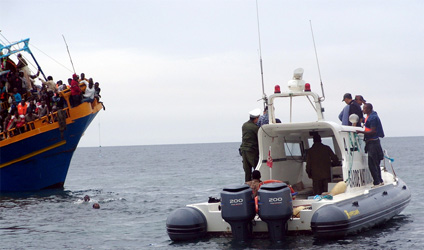
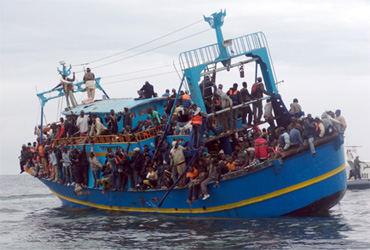
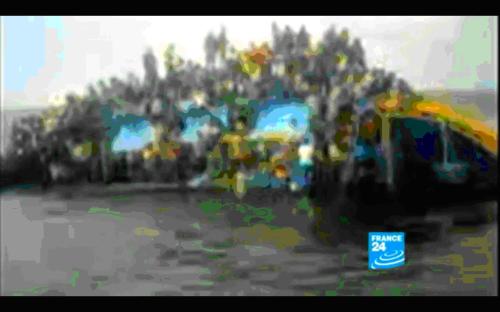
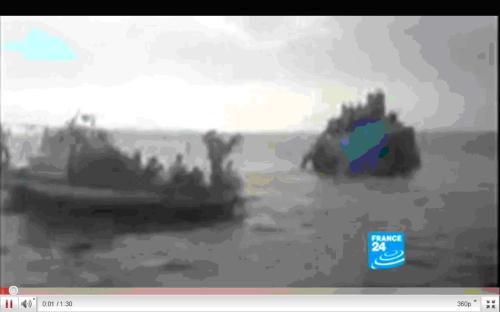
The boat, named The Wave, ran around last week, probably on Wednesday, 1 June.  The boat did not capsize until after rescue boats had arrived on the scene.   Tunisian coast guard and local fishing boats were involved in the rescue efforts.  The rescue boats did not have the capacity to rescue all of the migrants from the stranded migrant boat and some people jumped into the water and others moved to one side of the migrant boat causing it to capsize.  Media pictures show the vessel in an upright position with some rescue boats already on scene.  A France24 video report contains cell phone video shot immediately after the boat capsized.  (See pictures below.)

UNHCR and IOM staff have conducted interviews with some of the survivors.  According to UNHCR, the boat left Tripoli on 28 May with up to 850 people on board.  The passengers were primarily from West Africa, Pakistan, and Bangladesh. The crew was recruited on an ad hoc basis and had little or no maritime experience. The France24 video report states that survivors said Libyan military assisted them in leaving Libya.  The boat became lost after leaving Tripoli and on Wednesday, 1 June, it ran around near the Kerkennah islands.  UNHCR spokesman Adrian Edwards said that the boat “capsized as desperate passengers rushed to one side, seeking rescue by the Tunisian coast guard and fishing boats that had approached the vessel. Many fell into the water.”  IOM staff reported that at least one survivor said that during the boat’s voyage some people were thrown overboard alive.  The boat reportedly had run out of food and water.

Click here for a France24 video news report (EN) with cell phone video shot immediately after the migrant boat capsized.

Click here and here for UNHCR reports on the incident.

Click here for IOM Press Briefing Note.

Click here, here, here, and here for Tunisian articles. (FR)

Click here, here, and here for articles.  (EN)

Photo Agence Tunis Afrique Presse 04 juin 2011

La Garde maritime à Sfax au secours du chalutier libyen bloqué au large de Kerkennah (Photo AFP)

France24 03 June 2011 - Screen shot

France24 03 June 2011 - Screen Shot


1 Comment

Filed under Data / Stats, European Union, Italy, Libya, Mediterranean, News, Tunisia, UNHCR

Migrant Boat(s) Sink Off Tunisian Coast / 250+ Feared Dead, 550+ Rescued

Tunisian authorities report that one or more migrant boats that had departed from Libya capsized and sank near the Tunisian coast on Tuesday near the Tunisian island of Kerkennah.  There are currently conflicting media reports on the number of boats involved.  The boat(s) are is thought to have been carrying approximately 800 people in total.  Over 500 people have reportedly been saved.  Approximately 270 are missing and assumed dead.

Click here, here, and here for articles.

Leave a comment

Filed under Italy, Libya, Mediterranean, News, Tunisia

UNODC Report: The Role of Organized Crime in the Smuggling of Migrants from West Africa to the EU

UNODC released a report on 30 May: The Role of Organized Crime in the Smuggling of Migrants from West Africa to the European Union.  From the UNODC web page: “… The new report by the United Nations Office on Drugs and Crime (UNODC) investigates the involvement of organized criminal groups in the smuggling of migrants from West Africa towards the European Union (EU).  The involvement of organized crime in the smuggling of migrants is a sensitive and controversial issue in West African countries, as the report discusses at various points. The publication contributes to better understand the underlying mechanisms and actors involved in this criminal process as a basis for policy reforms in countries affected.

Information in the report was compiled by a team of researchers from West Africa and Europe using both documentary studies and field research conducted in Mali, the Niger, Nigeria and Spain. …  UNODC, as guardian of the Protocol against the Smuggling of Migrants by Land, Sea and Air, supplementing the United Nations Convention against Transnational Organized Crime, possesses specific expertise and experience that could be put at the service of all countries affected to support them in matters linked to prevention, legislation, operations or prosecution.”

From the Report’s Summary:  “The United Nations Office on Drugs and Crime (UNODC), through the European Union-funded ‘Law enforcement capacity-building to prevent and combat smuggling of migrants in the ECOWAS region and Mauritania (Impact)’, undertook to investigate the role played by organized criminal groups in the smuggling of migrants from West Africa to Europe.

The present report is aimed primarily at decision makers, law enforcement and judicial officials, but also at a wider audience interested in irregular migration. It contributes to a better understanding of the underlying mechanisms and actors involved in this criminal process as a basis for policy reforms in the West African countries concerned.  This report was prepared through desk and field research, conducted in Mali, Morocco, the Niger, Nigeria, Senegal and Spain. Interviews were conducted with over 200 people in Africa and Europe belonging to three main groups: migrants, national authorities and non-governmental organizations, and smugglers.

Four main findings can be mentioned:

• Transnational organized criminal groups are generally involved in the smuggling of migrants from West Africa to Europe. However, there are important differences among them in terms of specialization and professionalism. With regard to trafficking in persons and the smuggling of non-African irregular migrants, criminal groups are clearly well organized and structured, and keep close contacts with operatives in several countries. On the other hand, other would-be migrants in West Africa have to deal with loose networks that are not permanently structured. Various groups of actors usually collaborate for one particular operation, and there are no exclusive relationships between those criminal groups.

• Specialization and the building of transnational criminal networks usually come as a result of increased efficiency in border interdiction. Within West Africa, freedom of movement gives little incentive, if any, to engage in the smuggling of migrants. However, the situation changes when there are natural obstacles, such as the sea, or man-made obstacles, such as surveillance

• In most cases, smugglers are migrants themselves. Realizing that their knowledge acquired through (often painful) experience may be used by other migrants in exchange for remuneration, some migrants decide to enter the business of smuggling of migrants. They may then become specialized professional smugglers, or they use their knowledge to finance the completion of their journey to Europe.

• Irregular migrants generally do not see themselves as victims, and smugglers do not see themselves as criminals. A complex relationship exists between irregular migrants and smugglers. The latter have an interest in maintaining the flow and feeding youngsters with dreams of success. These dreams are also kept alive in some West African countries by families and circles where important social value is attached to those who decide to leave, as well as by those who have made it to Europe, be it legally or illegally, even though their situation in Europe is often worse than it was at home….”

Click here for Report.

Click here for article on UNDOC web page.

Leave a comment

Filed under Analysis, Eastern Atlantic, European Union, Mauritania, Mediterranean, Morocco, Niger, Reports, Senegal, Spain, United Nations, UNODC

European Commission: Annual Report on Immigration and Asylum for 2010

The Commission released its second Annual Report on Immigration and Asylum for 2010 on 24 May (COMMUNICATION FROM THE COMMISSION TO THE EUROPEAN PARLIAMENT AND THE COUNCIL).  Accompanying the 12 page Report is an 82 page Staff Working Paper.  Excerpts from the Commission press release regarding the Report:

“On Asylum:

  • Negotiations on all asylum legislative proposals must be finalised by the end of 2012, as agreed by the European Council.
  • The recent events in the Southern Mediterranean confirm the necessity of having in place a common asylum system at EU level. This implies better EU legislation, strengthened practical cooperation coordinated by the European Asylum Support Office (EASO), concrete solidarity between Member States and increased cooperation with third countries.
  • Agreement must be reached by the European Parliament and the Council on the EU joint resettlement scheme.
  • The EU relocation pilot project with Malta, the legislative reforms adopted by Greece and the ongoing support the country has received in the implementation of the Action Plan are concrete examples of the combination of responsibility and solidarity that are needed to build the Common European Asylum System.”

“On preventing irregular migration:

  • Member States must fully transpose the Employer Sanctions Directive by July 2011, which is essential for preventing irregular migration and for the credibility of legal migration.
  • Member States must step up measures against trafficking in human beings, including assistance given to victims under Directive 2004/81/EC with a view to dismantling networks of traffickers while strengthening rights of the victims.
  • Member States must fully transpose and implement the Return Directive and continue to make use of the opportunity offered by this Directive to foster voluntary departure as the preferred return option.
  • The use of joint return flights should be continued, by making full use of the European Return Fund and FRONTEX coordination, and including the presence of forced return monitors as required under the Return Directive.
  • Member States should systematically add entry bans in the Schengen Information System in order to give full effect to the European dimension of entry bans issued under the Return Directive.”

“On effective Border Control:

  • The European Parliament and the Council must agree on the proposed amendment to the FRONTEX Regulation as soon as possible, to provide a proper legal basis to strengthen the functioning of the agency.
  • All Schengen border-crossing points should be properly equipped, border surveillance properly ensured, and border guards trained to use new IT tools, as stipulated in the Schengen Border Code.
  • The feasibility of setting up a European Borders Guard System should be considered.
  • Local Schengen cooperation must be fully exploited in order to ensure a fully harmonised and streamlined visa procedure, in particular for the benefit of bona fide travellers.
  • Member States should continue to prepare the ground for establishing EUROSUR, the entry/exit system and the registered traveller programme.
  • To better coordinate the checks at the external borders the Commission will present proposals in 2012, in order to improve interagency cooperation between FRONTEX, EUROPOL, national customs and police authorities.”

I have reproduced about half of the Annual Report here, but have not had time to begin reading the Staff Working Paper.

Excerpts from Annual Report on Immigration and Asylum (2010):

“[***]

The present Annual Report is presented in response to the request made by the European Council when adopting the 2008 Pact on Immigration and Asylum[1] and covers the developments during 2010 in the implementation of the Pact and the relevant priorities of the Stockholm Programme adopted in 2009[2], both at the EU and the national level. The report has been prepared on the basis of Member States’ contributions and other information, in particular reports from the National Contact Points (NCPs) of the European Migration Network (EMN).

The report summarises and assesses developments at the EU and the national level[3], and puts forward recommendations for future action.

II. Entering and Residing in the EU

[***]

1. Legal migration – ensuring a legal way to enter the EU

[***]

2. Asylum – granting international protection and ensuring solidarity

In 2009 Member States recorded 266 400 asylum applications, the number in 2010 was 257 815, a slight decrease of 3%. While Poland, Italy, Hungary and Malta received less asylum-seekers in 2010 than in 2009, significant increases were recorded in Germany, Belgium and Sweden.

In 2010, the most important countries of citizenship of asylum-seekers in the EU were, in order: Afghanistan (20 580), Russia (18 500), Serbia (17 715, excluding Kosovo*[4]), Iraq (15 800) and Somalia (14 350).

In 2010, 55 095 asylum-seekers received a protection status in the EU at first instance (refugee, subsidiary protection or humanitarian). Protection was therefore granted in 25% of decisions taken in first-instance procedures.

In 2009, 7 147 refugees were resettled in the EU from third countries. The figure for 2010 was [until Q3] 3 848.

Legislative progress was slow and difficult in the field of asylum in 2010. The co-legislators agreed on the extension of the scope of the Long-Term Residents Directive to beneficiaries of international protection, and made some progress on the Dublin and Eurodac Regulations as well as on the Qualification Directive. To give an impulse to the stalled negotiations on the Reception Conditions and Asylum Procedures Directives, the Commission will adopt modified proposals on these two instruments in June 2011.

The adoption in 2010 of the Regulation for the creation of the European Asylum Support Office (EASO) was a significant development. The Commission is working actively so that the EASO becomes operational in June this year in view of boosting practical cooperation.

Solidarity among Member States is needed as one of the components of the Common European Asylum System (CEAS). A pilot project for the relocation from Malta to ten Member States of approx. 250 beneficiaries of international protection is running and will be extended beyond its originally intended duration so as to facilitate the relocation of recently-arrived migrants in need of international protection.

Following the submission of an Action Plan to the European Commission in August 2010, Greece has embarked on a comprehensive overhaul of its asylum and migration system, and has received support from the Commission, the Member States, Norway, the UNHCR and other EU partners. Asylum Expert Teams coordinated by the EASO are now deployed there. Important new legislation has already been adopted by Greece in 2010, and its implementation is underway.

Existing Regional Protection Programmes (RPPs) in Tanzania and Eastern Europe continued; the implementation of a new RPP in the Horn of Africa region started in September, in close cooperation with the UNHCR; and work advanced on the development of another RPP in North-Eastern Africa (Egypt, Libya and Tunisia).

Resettlement is equally essential in this context. Negotiations on the creation of a Joint EU Resettlement Programme must come to an operational and positive end. A strategic approach and political steering on the use of resettlement is needed.

  • Negotiations on all asylum legislative proposals must be finalised by the 2012 deadline.
  • The recent events in the Mediterranean and the need to restructure the asylum systems of some Member States confirm the necessity of creating a common procedure and a uniform status at EU level. This implies better EU legislation, strengthened practical cooperation coordinated by the EASO, a concrete multifaceted commitment to solidarity and an increased investment in cooperation with third countries.
  • Agreement must be reached by the European Parliament and the Council on the EU Joint resettlement scheme.
  • The EU relocation pilot project with Malta, the legislative reforms which have been adopted by Greece and the ongoing support it has received in the implementation of the Action Plan are concrete examples of the combination of responsibility and solidarity that are needed to build the CEAS.

3. Integration – a key element both for migrants and receiving societies

[***]

III. Addressing irregular migration to facilitate regular migration

In 2009, the number of irregularly staying third country nationals apprehended in the EU-27 was about 570 000 (7% less than in 2008). Member States returned about 253 000 third country nationals (4.7% more than in 2008).

In 2010 63% (i.e. about 20 000 detections) of illegal border-crossings into the EU were detected in 3Q2010 at the Greek/Turkey land border.

Effective measures aimed at preventing irregular immigration and at securing safe borders are an essential component of a coherent and credible EU immigration policy, but this policy must be fair and human rights must be respected.

1. Instruments for fighting irregular migration

Two legal key instruments have been adopted in recent years – the Return Directive 2008/115/EC and the Employer Sanctions’ Directive 2009/52/EC. They are in place now, but their state of transposition is far from satisfactory, in particular with respect to the Return Directive, where the implementation deadline passed on 24 December 2010. That is why its full and timely transposition is essential. Those provisions, which directly confer rights on migrants, may be, and already are, invoked in proceedings before national courts, and directly applied at the national level, regardless of whether national transposition legislation is in place.

Reinforced border control and cooperation with third countries, notably via readmission agreements, have already proved their effectiveness, as demonstrated in some Member States which have reported on their deterrent effect and on better-functioning return arrangements. However, there remains room for improving the effectiveness of readmission agreements at the EU level, as set out in the Commission’s Communication on the Evaluation of EU Readmission Agreements (COM(2011)76). It is also clear that the higher number of joint return flights coordinated by Frontex in 2010 have been a success, earning the agency further support and increased financial means. Moreover, the 29 measures agreed by the Council to reinforce the protection of the external borders and combating illegal immigration are now being implemented. In its Staff Working Document[5] on the fulfilment of these 29 measures, the Commission reported in detail on progress achieved with regard to each measure, putting a special emphasis on the role played by Frontex, the development of EUROSUR and the ongoing dialogue on migration with main countries of origin and transit as part of the implementation of the Global Approach. These measures need to be accelerated and given priority.

The Directive on preventing and combating trafficking in human beings, and protecting victims, the EU Anti-Trafficking Coordinator appointed by the Commission and a website on fight against trafficking in human beings[6] launched in 2010 have equipped the EU with new powers and ways to fight against this modern form of slavery. The recently adopted implementation report on Directive 2004/81/EC[7] on residence permits for victims of trafficking also called for their more effective protection, which should also help to dismantle networks of traffickers.

  • Member States must fully transpose the Employer Sanctions Directive by July 2011, essential for fighting irregular migration and for the credibility of legal migration.
  • Member States must step up measures against trafficking in human beings, including assistance given to victims under Directive 2004/81/EC with a view to dismantling networks of traffickers while strengthening rights of the victims.
  • The Return Directive must be fully transposed and implemented by the Member States who should continue to make use of the opportunity offered by this Directive to foster voluntary departure as the preferred return option.
  • The use of joint return flights should be continued, by making full use of the European Return Fund and FRONTEX coordination, and including the presence of forced return monitors as required under the Return Diretcive.
  • Member States should systematically add entry bans in the SIS in order to give full effect to the European dimension of entry bans issued under the Return Directive.

2. Effective border control

In 2010 the Commission proposed a Regulation on the establishment of an evaluation mechanism to verify the correct application of the Schengen acquis. In the light of recent experiences, its adoption must be a priority, so that the EU is better equipped to enforce a uniform application of the rules and take the appropriate measures if this would not be the case. Development of the Visa Information System (VIS) continued with the completion of the second and third major testing phases out of a total of four. Final agreement was reached on the technical specifications for the interaction of SIS II with the national systems. Member States continued to prepare the ground for establishing EUROSUR in line with the roadmap. EUROSUR will gradually establish a mechanism whereby Member States’ authorities carrying out border surveillance can cooperate and share operational information with each other and with Frontex, in order to reinforce the control of the external border of the Schengen area, especially its southern maritime and eastern land borders, and step up the fight against irregular migration and cross border crime. During the past year, the EU has faced critical situations at its borders, where it was confronted with high inflows of irregular migrants. This has been, and continues to represent, a major a test for the EU’s ability to react quickly and efficiently, while the Member States most directly concerned by migratory movements have required assistance in a spirit of solidarity. The achievements of Frontex are now broadly recognised and there is widespread agreement on the need to upgrade its role in order to enable it to be more effective.

The results of concerted EU action to tackle border-related crises have been mixed. On the one hand, the EU and the Member States have demonstrated that they are capable of responding decisively to address specific challenges faced by a Member State in effectively controlling its external borders. For the first time, following a request made by Greece related to the pressure on its land borders with Turkey, use was made of Frontex’s Rapid Border Intervention Teams (RABIT). The swift deployment of the RABIT, strongly supported by participating Member States, stabilised the situation and brought down the number of arrivals compared to the peaks in 2010. Malta has recently requested deployment of the RABIT in view of the situation in the southern Mediterranean.

On the other hand, one of the lessons learnt from these events is that both increased cooperation and uniform application of the acquis must be better and more effectively ensured by all Member States. Coordinated preventive EU action vis à vis countries of origin is still slow and weak.

  • The European Parliament and the Council must agree on the proposed amendment to the FRONTEX Regulation as soon as possible, to provide a proper legal basis to strengthen the functioning of the agency.
  • All Schengen border-crossing points should be properly equipped, border surveillance properly ensured, and border guards trained to use new IT tools, as stipulated in the Schengen Borders Code.
  • The proposed Schengen evaluation mechanism must be adopted, in order to foster mutual trust between Member States and EU institutions on the correct, uniform and coherent application of the Schengen Acquis.
  • The feasibility of setting up a European Border Guard System should be considered.
  • Local Schengen cooperation must be fully exploited in order to ensure a fully harmonised and streamlined visa procedure in particular for the benefit of bona fide travellers.
  • With a view to developing a fully reliable system of EU border control, Member States should continue to prepare the ground for establishing EUROSUR, and explore the desirability of putting in place an entry/exit system and a registered traveller programme.
  • To better coordinate the checks at the external borders the Commission will present proposals in 2012, in order to improve interagency cooperation between FRONTEX, EUROPOL, national customs and police authorities.

IV. Unaccompanied minors – a specific challenge

[***]

V. The External Dimension of EU migration Policy – The Global Approach

[***]

[1]               http://register.consilium.europa.eu/pdf/en/08/st13/st13440.en08.pdf.

[3]               A Commission Staff Working Paper provides more detail.

[4]               * Under UNSCR 1244/1999.

[5]               SEC (2010) 1480 final of 26.11.2010.

[7]               COM(2010) 493.”

Click here for Annual Report on Immigration and Asylum (2010)

Click here for Staff Working Paper.

Click here for Press Release.

Click here for 2009 Annual Report on Immigration and Asylum.

Leave a comment

Filed under European Union, Frontex, Reports

Some Refugees Who Fled Libya Return in Effort to Board Boats to Europe

Last week, UNHCR reported that hundreds of people who recently fled Libya to Tunisia and Egypt are returning to Libya in an effort to board boats for Europe.  “Among them are refugees, including members of the Somali, Ethiopian and Eritrean communities in the camps at Choucha near Tunisia’s border with Libya.”  UNHCR is warning of the dangers of trying to reach Europe by sea and of returning to Libya.  “UNHCR has met with refugees in Tripoli who are planning to make the perilous sea journey. ‘They are all aware of the high death toll, but they told us that they feel they have nothing to lose. One Eritrean man told us he would rather die trying to reach safety than continue to live in danger,’ [UNHCR’s chief spokesperson, Melissa] Fleming said.”  “Fleming [also] said that UNHCR had learnt with sadness ‘that people on track for resettlement, following interviews last year in Libya, lost their lives while trying to reach Europe recently. People in the middle of the resettlement process and vulnerable cases are prioritized in our interview schedule.’”

Click here for UNHCR statement.

Leave a comment

Filed under Egypt, European Union, Italy, Libya, Mediterranean, News, Tunisia, UNHCR

Frontex Deployment, Repatriation Practices, and Diplomacy Are Responsible For Halting Migrant Arrivals in Canary Islands

From Europa Press: Juan Martinez, Chief Inspector of the Spanish National Police’s  Illegal Immigration Network and False Document Unit (UCRIF – Unidad Contra las Redes de Inmigración Ilegal y Falsedades Documentales), attributes the significant decline in the arrival of migrant boats in the Canary Islands to the deployment of Frontex, diplomatic management in the countries of origin, and repatriation policies.  The article notes the first migrant boat arrival in the Canaries in 1994, the peak years of 2006-2008, and the ensuing practices which have halted further migrant arrivals.

Click here (ES) for article.

Leave a comment

Filed under Eastern Atlantic, Frontex, News, Senegal, Spain

PACE Delegation Completes Visit to Lampedusa

A delegation from the PACE Committee on Migration, Refugees and Population has just completed a two day visit to Lampedusa.  The members of the delegation were Christopher Chope (United Kingdom, EDG), Chair of the Migration Committee, Giacomo Santini (Italy, EPP/CD), First Vice-Chair of the Migration Committee, Tineke Strik (Netherlands, SOC), Chair of the Sub-Committee on Refugees, Tina Acketoft (Sweden, ALDE), and Annette Groth (Germany, UEL).  The delegation reported that while the situation in Lampedusa in regard to newly arriving migrants is under control when compared with the situation earlier in the year, the “reception facilities on Lampedusa were inadequate for longer stays – especially for vulnerable groups such as unaccompanied children – and that transfers to better-equipped centres elsewhere in Italy should be carried out within days: ‘In particular, the situation of the Tunisians that have been on the island in detention-like conditions for almost three weeks should be dealt with as soon as possible.’”

The delegation also said that “[t]he arrivals to Lampedusa are not the sole responsibility of a tiny island. There have been enough calls for responsibility-sharing and for solidarity. It is time that Europe acted on them. … Too many have already died at sea trying to reach Europe.  …  Europe must try to protect asylum seekers and refugees in a way that they are not forced to risk their lives first.”

Click here for PACE statement.

Click here for earlier announcement of the visit.

1 Comment

Filed under Council of Europe, Italy, Libya, Mediterranean, News, Reports, Tunisia

Migreurop Report: “Frontex: Which Guarantees for Human Rights”

Migreurop has released a 48 page report (EN and FR) entitled “Frontex Agency: Which Guarantees for Human Rights.”  The Report was prepared with a view to the revision of the Frontex mandate.  Here are the Report’s conclusion and recommendations:

“It is not enough to decree that fundamental rights must be respected: it is also necessary to provide the legal means and democratic safeguards needed to achieve this. The proposal for a Regulation amending the Regulation establishing the FRONTEX Agency does neither of these things. Over the five years in which the Agency has been operating, many questions have been asked about the compatibility of its functioning with respect for the rights of individuals. The Commission’s proposed Regulation only addresses a very few of these questions, and raises many more. Until the Agency’s objectives are fundamentally reviewed and seen in the context of the threats the Agency poses to respect for rights, it is questionable whether FRONTEX itself is compatible with human rights.  In the meantime, a number of measures should be introduced into the amended Regulation to bring the rules governing the functioning of FRONTEX more closely into line with standards on fundamental rights:

— There should be a clear division of responsibilities between Member States and FRONTEX in line with the Agency’s expanded role, ensuring that FRONTEX has full legal responsibility for acts committed during the operations that it coordinates, wherever they take place.

— It should be explicitly stated that all operations coordinated by FRONTEX must comply with EU directives on asylum, in particular Directive 2003/9 (on reception) and Directive 2005/85 (on procedures), as well as the principle of non-refoulement, including during interventions at sea wherever they take place, and during interventions involving officials acting under the authority of FRONTEX and liaison officers deployed by the Agency.

— It should be explicitly stated that operations coordinated by and/or involving officers placed under the authority of FRONTEX outside EU territory must be consistent with respect for the right to leave any country, including one’s own (Article 12.2 ICCPR).

— Independent monitoring mechanisms should be implemented during operations coordinated by FRONTEX (joint operations, joint return operations, deployment of liaison officers), and the conclusions and follow-up of monitoring operations should be communicated regularly to the European Parliament and made public.

— For monitoring of joint return operations, enough personnel should be made available to ensure that monitoring can take place at every stage, including inside the places of detention where deportees are held, onboard aircraft, and when deportees are handed over to the authorities of the country of return.

— The Code of Conduct for return operations should be made binding.

— Decisions taken by FRONTEX in relation to joint operations and pilot projects that it coordinates should be made available to the European Parliament.

— There should be mandatory consultation of the European Parliament whenever negotiations are opened between FRONTEX and a third country or the authorities of that country, and any agreement reached by FRONTEX during the negotiations should be submitted to the Parliament before being concluded.”

(While the Report was just added to the Migreurop web site, it may be that the French version of the report was released late last year.)

Click here (EN) or here (FR) for Report.

Leave a comment

Filed under Analysis, European Union, Frontex

Interview with Frontex Deputy ED Gil Arias

EurActiv.es conducted an interview in Spanish with Frontex Deputy Executive Director Gil Arias where he speaks about several topics, including Frontex’s response to the current situation in North Africa, the possible implications for Spain should unrest spread to Algeria or Morocco, Frontex’s budget shortfall and need for supplemental funding, and the problems experienced by Frontex when it attempts to negotiate cooperation or training agreements with third countries.

Click here for interview. (ES)

Leave a comment

Filed under Egypt, European Union, Frontex, Greece, Italy, Libya, Malta, Mediterranean, News, Spain, Tunisia

62 Bodies Recovered on Tunisian Beaches in First Week of May

While irregular departures from Tunisia have been significantly reduced in number since Tunisian authorities resumed efforts to prevent or discourage such departures, bodies from earlier departures and accidents continue to wash ashore.  The Financial Times reports that “62 bodies [were] found [during the first week of May] near Sfax, Kerkennah and Chaffar, up the coastline from Zarzis, apparently from boats lost weeks earlier.”  58 bodies were discovered during the month of April.  FT also reported that “[u]nder the previous regime, would-be illegal migrants risked a fortnight in jail for ‘infringement of frontiers’; now there are no penalties imposed on those who attempted the illegal crossing.”

Click here for FT article (free access, but registration may be required).

Click here for previous post.

Leave a comment

Filed under European Union, Italy, Mediterranean, News, Tunisia

EJML Article, Stefanie Grant: “Recording and Identifying European Frontier Deaths”

The latest edition of the European Journal of Migration and Law, Volume 13, Number 2, contains an article by Stefanie Grant, University of Sussex, entitled “Recording and Identifying European Frontier Deaths.”

Abstract: “Migrant deaths at EU maritime borders have more often been seen in the context of national border control, than in terms of migrant protection and human rights. The 2009 Stockholm Programme accepted the need for action to avoid tragedies at sea, and to `record’ and `identify’ migrants trying to reach the EU. But it did not specify how this should be done. There are parallels between these migrant deaths, and deaths which occur in conflict and humanitarian disaster. The principles of human rights and humanitarian law which apply in these situations should be developed to create legal and policy frameworks for use in the case of migrants who are missing or who die on EU sea frontiers. The purpose would be to enable evidence of identity to be preserved, to protect the rights of families to know the fate of their relatives, and to create common national and international procedures.”

“This article draws on publications by the author, including: ‘Migration and frontier deaths: a right to identity’, in Marie Bénédicte-Dembour and Tobias Kelly (eds.), Are Human Rights for Migrants?: Critical Reflections on the Status of Irregular Migrants in Europe and the United States, Abingdon, Routledge, 2011 [in press]; ‘The Legal Protection of Stranded Migrants’, in Ryszard Cholewinski, Richard Perruchoud and Euan Macdonald (eds.), International Migration Law: Developing Paradigms and Key Challenges, The Hague, T.M.C. Asser Press, 2007, pp. 29–48; and ‘International Migration and Human Rights’; expert paper for the Global Commission on International Migration (GCIM), 2005.”

Click here for link.  (Subscription or payment required.)

Leave a comment

Filed under Analysis, Eastern Atlantic, European Union, Mediterranean