Tag Archives: Italy

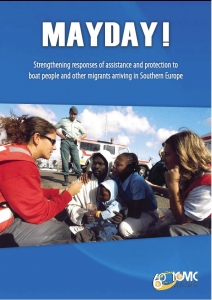
ICMC Europe Report: “MAYDAY! Strengthening responses of assistance and protection to boat people and other migrants arriving in Southern Europe”

ICMC has released a 150+ page report entitled “MAYDAY! Strengthening responses of assistance and protection to boat people and other migrants arriving in Southern Europe.”  I have just started reading the report and may post some additional excerpts in the coming days.  Here is an excerpt from the Foreword and Introduction:

“In the first months of 2011 alone, more than 2,000 migrants have died crossing the Mediterranean Sea. More than 2,500 unaccompanied children arrived just on Italian shores. Tragic, chronic figures like these are urgent and continuous reminders of the need for another approach to human mobility that goes far beyond simple enforcement and fundamentally recognises the rights to life and protection for all.

It is not so much the arrivals of migrants and refugees that should be put to question, but rather the response mechanisms which very often fail as much in the fields of prevention and rescue as in the processes deciding where and how people are permitted to move, disembark, stay or return. Protection today is provided only for a limited number of boat people who need it, and governed by systems of access and identification that are far too limited. Correct identification, differentiation and referral systems are needed for all migrants in distress and from the very moment of their arrival, not only because they are human beings, but also because such approaches reflect the quality of our societies….”

Scope of this report – Gathering the results of nearly a half thousand surveys of first responders and other actors as well as the migrants themselves, this report examines what happens—or does not happen— to identify migrants in need of protection and assistance upon their arrival in Europe. In particular, it sheds light on the mechanisms developed, and gaps both in practice and in policy in responses to boat people and other migrants arriving in mixed migratory movements in four countries at Europe’s Southern door: Greece, Italy, Malta and Spain.

Although rescue at sea at one end and voluntary or enforcement-related return at the other are highly relevant topics and areas of research per se, DRIVE has focused on the situation of migrants at point of arrival. As such, the project and this report look at first responses in the phase immediately upon and surrounding arrival, and then to identification, differentiation and referral mechanisms for legal protection and/or further assistance in subsequent phases following arrival.

The principal focus of the project was on boat arrivals, but the shift in routes in Greece during the project period and the sharp increase in land border crossings there compelled reflection upon responses to migrants crossing land borders as well as those arriving by sea. While the project maintained its focus on arrivals by sea, one of its findings is that most of the laws, policies, procedures and responses applicable to boat people pertain equally to those arriving across land borders—in particular, steps on identification, differentiation and referral for protection and assistance.

The DRIVE project set out to promote protection of the rights of all migrants in these situations, especially the most vulnerable, regardless of their immigration status. Nevertheless, the project has highlighted four groups whose members have come to be defined to a varying extent as having specific rights or special needs under international and European legal instruments: asylum seekers, victims of human trafficking, children, and victims of torture. It merits emphasising however, that other migrants also have special needs because of particular vulnerabilities,- notably people with serious health problems, disabled people, elderly people, pregnant women, single parents with minor children and persons who have been subjected to or witnessed torture, rape or other serious forms of psychological, physical or sexual violence.

Structure of this report – The report is composed of four main parts, plus annexes:

Part 1: Building policy responses to boat people and others arriving in mixed migration flows – Within this first part, Chapter 1 provides a brief history of the policy evolution and the organizations involved in the area of mixed migration. Chapter 2 gives an overview of legal obligations relating to the rights of the migrants composing these arrivals. The third chapter provides an analysis of the EU policy and legal framework with regards to mixed migration arrivals at its borders.

Part 2: A focus on post-arrival identification, differentiation and referral for assistance and protection – The first chapter explains what is meant and implied by “identification, differentiation and referral”in mixed migration contexts, the concept at the core of the DRIVE study. The second chapter seeks to focus on the legal obligations of member states to conduct identification of people in need of protection at the border, with in-depth legal analysis of the rights and state obligations that international and EU law articulate for asylum seekers, children, and victims of human trafficking and torture.

Part 3: What happens to people arriving irregularly by boat in Greece, Italy, Malta and Spain? – The first chapter gives a snapshot of the trends and figures of arrivals in the Mediterranean region. In Chapter 2, the summaries of the four country reports (each presented in its entirety in an annex) then provide a look at the procedures and practices on the ground for first reception, identification and referral. The third chapter presents the results of the extensive migrants surveys that the DRIVE project conducted in the four countries in an effort to give voice to the beneficiaries themselves. Chapter 4 concludes with a comparative analysis identifying the main gaps and challenges in those countries.

Part 4: Conclusions and recommendations – The focus on the four countries enabled consideration of practices and procedures which could either improve the quality of the process or prevent people from accessing protection and assistance. Recommendations therefore seek to address how identification, differentiation and referral can be improved in the Mediterranean, including how the international and European legal and policy framework can address this question in a more comprehensive manner.

Annexes: Detailed mapping of the situation in Greece, Italy, Malta and Spain are attached in the annexes, as well as a presentation of some relevant tools and guidelines….”

Click here for Report.

1 Comment

Filed under Analysis, Data / Stats, Eastern Atlantic, European Union, Greece, Italy, Malta, Mediterranean, Reports, Spain

ECRE Interview with Tineke Strik Regarding PACE Investigation into Migrants Deaths in Mediterranean

ECRE last week published an interview with Ms Tineke Strike regarding the PACE Migration Committee’s ongoing investigation into the almost 2000 migrant deaths that have occurred in the central Mediterranean this year.  The Committee is focusing in particular on the incident that occurred in late March 2011 when unknown ship(s) and aircraft observed and then failed to rescue a disabled migrant boat.  Approximately 60 persons subsequently died.

Excerpts from the ECRE interview:

“[***]  What are the main findings of your report on the death at the Mediterranean so far?

We have spoken with survivors and with the priest who received the request for assistance from the boat in distress, Italian border guards, and the Italian refugee agency, as well as the Italian Refugee Council (CIR), a Member of ECRE. We also talked to different people in Brussels, including NATO, the ambassador of the Council of Europe, Amnesty and several MEPs. Today, during the PACE hearing on November 30 in Paris, we had a discussion with a number of experts in international law, Frontex, UNHCR and ICRC. All in all a lot of information has been gathered.

We have already sent requests for information to find out via satellite maps and logs if there were boats near the distressed boat Once we know under which flags these boats were sailing, we will be able to track which governments might have been responsible and ask them whether they knew that the boat asking for help was in danger or not and how they acted upon that information.

We are actually still waiting for information for this information. It is unfortunate that it takes time to get this information but we are trying to get hold of it through different channels. We have approached High Representative Ashton and asked for her consent to provide us with information from the European Satellite Centre. We have already used this kind of information at the Council of Europe, for example to detect the illegal detention centres that the CIA was using. We therefore hope that Ashton once again will cooperate.

We also asked NATO to provide us with information and have asked all the countries who took part in the NATO action in Libya and who had ships in that region during that period to give us data on where their boats were and when. NATO has promised to request the Member States to provide us with this information, also if these boats were not under the command of NATO. If this does not succeed, we still have our own national parliamentarians that could push their governments in their own country if it is necessary to gather the information.

If countries were involved they might not want to admit that, which makes my position difficult. I am not a judge and I don’t have enforcement powers so I’m partly dependent on the cooperation of various parties.  But I think all parties can benefit from transparency on what has happened, in order to avoid such tragedies in the future.

[***]

How do you think the EU has responded to the turmoil and war in North Africa and, in particular, the following displacement of people in the region and the arrival of some of them to Europe?

In my report following the protests in North Africa, we see that by far the largest part of the people who have fled Libya went to Tunisia and Egypt. There was a lot of fuss in the EU about the 25,000 who eventually fled to Italy. Tunisia took half million, Egypt took a half a million which shows how big the contrast with the EU was, especially considering that Member States were reluctant to resettle refugees from camps in Tunisia. This while Tunisia and Egypt were in a very vulnerable position in the post-revolutionary period. If we really want to help and strengthen stability in the region, we must show these states that they are not alone. These countries generously opened their borders, they understood the situation of the people there and to a great extent we stood aside and just watched.

Then we failed to help out Italy and Malta, especially when countries like France and Denmark wanted to close their borders. This shows exactly how much we are still not politically ready for a common asylum system. We provide beautiful public statements but when it comes down to it, Member States do not want to lose their sovereignty or be troubled by developments elsewhere. I do not think you can have both: either you have a joint system and you show solidarity, or you close all the borders and reinvent the wheel.

Common policies go hand in hand with solidarity and in fact we should look beyond the European borders.  What you see now is that border controls at the external borders of the EU continue to shift to North Africa and sometimes even further. One cannot claim that our responsibilities only begin when people have reached our territory. I was therefore very disappointed when the European Commission replied to a question by MEP Hélène Flautre on this incident saying that the boat was in Libyan waters and therefore they had no power to get involved. If certain acts like push backs at high sea or bilateral agreements with unsafe third countries such as Libya, lead to death or inhumane treatment, EU member states or other countries of the Council of Europe are accountable for a violation of the European Convention on Human Rights. In that sense I have high expectations of the decision of the ECHR in the case of Hirsi and others v. Italy.

[***]

What do you think the impact of your work and the investigation will be?

I hope the report will raise the awareness of the international obligations and also the awareness of the importance of avoiding such tragedies. It is important that violating the obligation to rescue does not remain unmentioned or lead to impunity. If we succeed in proving which actors were wrong. Member States will be more careful and there will be more pressure to cooperate and share the responsibilities, and to establish practical and binding solutions. Being a parliamentary assembly of national parliamentarians, I also hope that the discussion will also take place in Member States. I find it really outrageous that such a tragedy can occur so close to our borders and that we have been so silent about it.

[***]”

Click here for full interview.

Click here for my last post on this topic.


Leave a comment

Filed under Council of Europe, European Union, Frontex, General, Italy, Libya, Malta, Mediterranean, News, Tunisia, UNHCR

Update Regarding PACE Investigation into Migrant Deaths in the Mediterranean

I have sought additional information from NATO and PACE regarding the 29 November hearing held in Paris by the PACE Migration Committee regarding the deaths of boat people in the Mediterranean.  I was informed by a PACE official that the minutes of the 29 November hearing will be released during or after the Committee’s next scheduled meeting which will take place in late January 2012.

In my previous post on this topic I incorrectly said that NATO officials attended the 29 November hearing.  Instead Ms Strik, the Committee’s rapporteur, met with a senior NATO official in Brussels on 28 November.  A NATO official informed me that “during the meeting [with Ms Strik], NATO offered to look into new details of the 28 March 2011 incident which were provided to NATO by Ms Strik. This process is ongoing and we will reply to the Council of Europe in due course.”

The NATO official reiterated to me that NATO ships were “fully aware of their responsibilities” to respond to vessels in distress and noted that during Operation Unified Protector “NATO ships have directly assisted in the rescue of more than 600 people in distress at sea.”  The official provided information about two incidents which have previously been reported on:

  • “[O]n 26 March 2011, NATO ships responded to information that two migrant ships with over 500 people on board were in distress, which were then provided direct assistance by the Italian authorities. That included a NATO ship using its helicopter to airlift two women and a newborn child to medical help”; and
  • “On 10 July 2011, a NATO ship responded to a vessel in distress approximately 75 miles off the coast of Libya. The NATO vessel provided medical support, food and offered mechanical assistance to the distressed migrants. In response to a deterioration of the humanitarian situation onboard, the 114 migrants were transferred onto the NATO ship in accordance with the Safety of Life at Sea (SOLAS) protocol and delivered to safety in Tunisia.”

The reference to the 26 March incident presumably relates in part to the Canadian warship, HMCS Charlottetown, which made contact with a disabled migrant boat carrying over 250 migrants on 25 March.  The Charlottetown provided food, waters, and repairs to the migrant boat and escorted it until 26 March when the Italian Coast Guard arrived on scene.  As far as I can tell from news reports from the time of this incident, there was only one migrant boat involved.   NATO’s current statement indicates there was a second migrant boat encountered by NATO at this time.

Click here and here for my previous posts on the March 2011 incident.

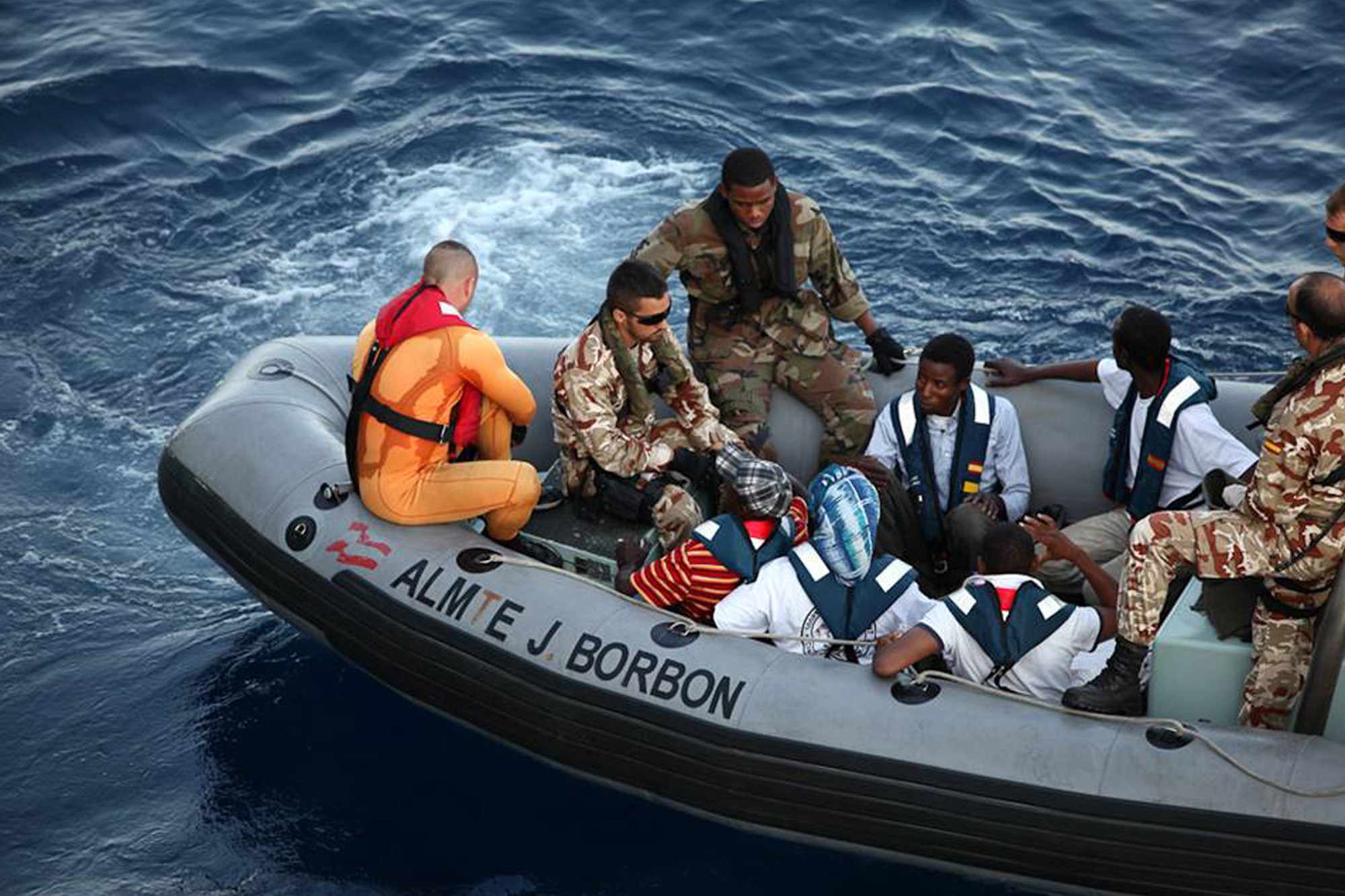
The 10 July incident relates to the rescue of over 100 migrants by the Spanish Navy frigate, the Almirante Juan de Borbón.  The rescued migrants remained onboard the Spanish frigate for six days after Malta and Italy refused to permit the NATO ship to enter port to disembark the rescued migrants.  The migrants were transferred to a Tunisian navy ship on 16 July and presumably then taken to Tunisia.

Click here and here for my previous posts on the July 2011 incident.

Neither of these two incidents relates to the events that occurred between 25 March and 10 April 2011 when a disabled migrant boat drifted for days during which time approximately 60 persons died.  Survivors from the migrant boat reported that at various times military ships and helicopters ignored their requests for assistance.  The Guardian reported extensively on this subject and the PACE Committee has been seeking information from NATO about this particular incident.

Click here and here for Guardian articles.

Click here for my last post of the PACE 29 Nov. hearing.

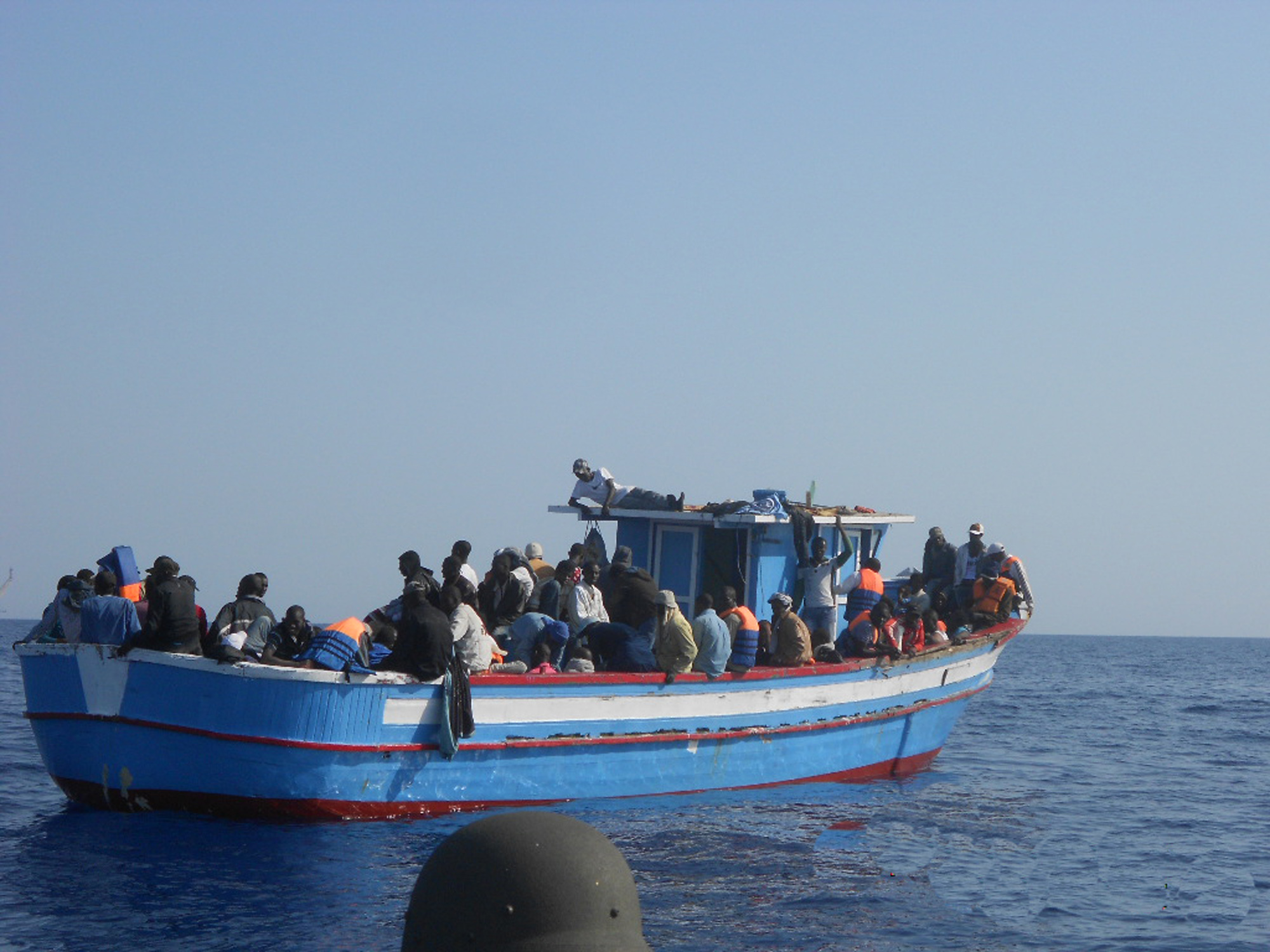
HMCS Charlottetown and migrant boat 25 March 2011.

Photo Credit: Lt(N) Michael McWhinnie, Department of National Defence and Canadian Forces

Spanish frigate Almirante Juan de Borbón rescuing migrant boat on 10 July 2011 and transferring migrants to Tunisian navy vessel on 16 July 2011.

Photo Credit: Ministerio de Defensa de España (mde.es)

Photo Credit: Ministerio de Defensa de España (mde.es)

2 Comments

Filed under Council of Europe, Italy, Libya, Malta, Mediterranean, News, Tunisia

EJML Article, B Nascimbene and A Di Pascale: “The ‘Arab Spring’ and the Extraordinary Influx of People who Arrived in Italy from North Africa”

The latest edition of the European Journal of Migration and Law, Volume 13, Number 4, contains an article by Bruno Nascimbene, Professor of European Union Law, Faculty of Law, University of Milan, and Alessia Di Pascale, Research Fellow, European Union Law, Faculty of Law, University of Milan, entitled “The ‘Arab Spring’ and the Extraordinary Influx of People who Arrived in Italy from North Africa”.

Abstract: “The ‘Arab spring’ which spread in early 2011 and the consequent exceptional influx of people that arrived on the Italian coasts from North Africa put the national reception and asylum systems under particular pressure, also raising the debate on the status to be attributed to these people. Faced with a situation out of the ordinary, Italy immediately addressed a request for help to the European Union, which has revealed the difference of views and mistrust existing between Member States in relation to these issues. This episode also calls into question the scope and effectiveness of the EU migration management framework, particularly in case of strong and unexpected pressure, and its implementation in a true spirit of solidarity.”

Click here for link.  (Subscription or payment required.)

1 Comment

Filed under Analysis, European Union, Frontex, Italy, Libya, Mediterranean, Tunisia, UNHCR

Libyan Interception of Migrant Boat Carrying 400 May Have Been Staged

Libyan officials yesterday claimed that Libya intercepted a migrant boat shortly after it left Libya attempting to sail to Italy.  The boat was carrying over 400 migrants from sub-Saharan countries including Ethiopia, Ghana, Ivory Coast, and Nigeria.  Journalists who interviewed some of the arrested migrants reported the incident appeared to have been staged.  Some migrants who “spoke briefly to Reuters said they had paid more than $1,000 each for the trip, and many believed the boat’s captain had had no intention of ever making for the European coast, but had handed them straight to the Libyan authorities. ‘We were deceived by these people, Libyans,’ said Isaac Okyere, a 27 year-old Ghanaian.  ‘They marched us to the Navy people,’ he said, adding that the boat was intercepted about 45 minutes after setting sail.”  Libyan officials denied the arrests were staged, but did admit that the boat’s captain (who apparently was not arrested) alerted officials in advance of the boat’s departure.  It was not reported where the arrested migrants have been taken or what will now happen to them.

Interior Minister Fawzi Abd al All told a news conference that the interception and arrests showed the new government was serious about stopping illegal migration to Europe:  “Despite a lack of means, we were able to prevent illegal immigration of people who were heading for Italy. … Illegal immigration was a means of pressure used by the former regime to blackmail Europe. Now this issue will be treated differently. …We expect support from the world” in preventing such trafficking.

Click here (EN), here (EN), here (IT), and here (FR) for articles.

Click here for video.

Leave a comment

Filed under European Union, Italy, Libya, Mediterranean, News

NATO Reportedly Agrees to Provide Additional Information to PACE Regarding Migrant Deaths in the Mediterranean

The PACE Committee on Migration, Refugees and Population, in connection with the preparation of a report by Ms Tineke Strik (Netherlands, SOC) on the deaths of boat people who have died in the Mediterranean, conducted a hearing in Paris on 29 November.  NATO officials who met with Ms Strik in Brussels before attended the hearing reportedly agreed to provide additional information, which might include satellite imagery, to the PACE Committee.

From PACE Press Statement, 30 November 2011:  “‘With 1971 boatpeople having perished in the Mediterranean Sea while trying to reach European soil from North Africa, the year 2011 sets a sad record as the deadliest year for boatpeople,’ PACE rapporteur Tineke Strik (Netherlands, SOC) said at the end of a hearing on this issue, organised by the Parliamentary Assembly of the Council of Europe (PACE) Migration Committee.  ‘Never before the Mediterranean Sea has been as closely monitored as this year because of the war in Libya and still more boat people than ever perished or disappeared,’ the rapporteur added.  ‘Is there a common understanding of a “distress situation”? Is it clear which legal framework is applicable and by whom? Do all ships, even warships, have to proceed with rescue operations even if they are situated beyond established search and rescue zones? Where does legal responsibility start and where does political responsibility end? These are some of the issues we are currently trying to clarify,’ she said.  Mrs Strik’s report will focus on an incident reported in March this year, during which 63 boat people escaping from Libya died after their appeals for rescue had allegedly been ignored. ‘The testimonies of survivors of this incident are coherent, but we have to continue to collect more data and information on who was when and where in the area and we now expect Nato and the EU to provide us with satellite imagery and other relevant information,’ she concluded.”

Click here, here, here, and here for articles.

Click here for PACE Press Statement.

Click here for my last post on the topic.

1 Comment

Filed under Council of Europe, Frontex, Italy, Libya, Malta, Mediterranean, Netherlands, News, Tunisia, UNHCR

New Italian Foreign Minister: Reactivation of Italy-Libya Friendship Treaty is Crucial

In a speech on 30 November to Parliament, Italy’s new Foreign Minister, Giulio Terzi, said the 2008 Italian-Libyan Friendship Agreement is crucial to bilateral relations between the two countries and that it therefore needs to be reactivated.  He announced he will travel to Libya as soon as the new Libyan government is ready to receive him.

Click here, here, and here for articles.  (IT).

Leave a comment

Filed under Italy, Libya, Mediterranean, News

Criminal Charges Brought in Italy Against 5 Men Accused of Murdering Passengers On Disabled Migrant Boat

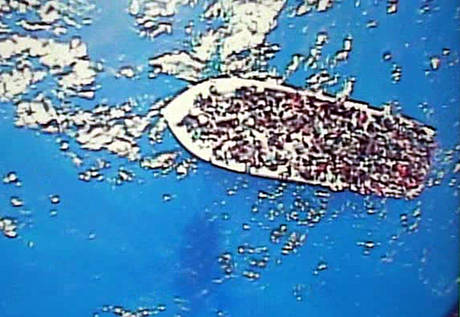
Italian authorities in Agrigento have brought criminal charges, including charges of unlawful killing, against 5 men from Ghana and Nigeria who are accused of throwing fellow migrant passengers into the sea from a disabled migrant boat this past August. The victims are alleged to been selected based upon their ethnicity or nationality. The boat in question was carrying over 300 migrants from Libya towards Lampedusa in August when it became disabled.  Italian patrol boats rescued the survivors on 4 August.  Italian authorities at the time accused NATO of failing to act to assist with the rescue of the boat.

Click here (EN), here (IT) and here (IT) for articles.

Click here and here for my earlier posts on the August incident.

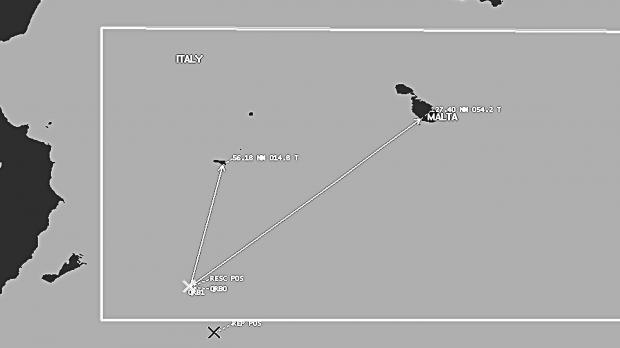
Image of migrant boat from monitor inside Italian rescue helicopter

Leave a comment

Filed under European Union, Italy, Judicial, Libya, Mediterranean, News

Libya Seizes Two Italian Fishing Boats in Renewed Dispute Over Libyan Territorial Waters

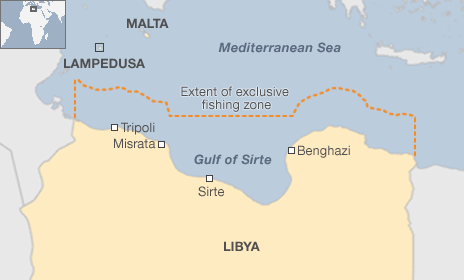
Two Italian fishing boats were seized yesterday by Libyan patrol boats in the Gulf of Sirte and are being held in the port of Misurata.  The boats are the second and third Italian fishing boats to be seized over the past two weeks.  The seizures indicate the interim Libyan government is maintaining the Ghaddafi government’s territorial claims to the Gulf of Sirte (and that Libya has some functioning patrol boats).  The territorial claims have resulted in numerous incidents and seizures of non-Libyan fishing boats over the years, including the incident in September 2010 when a Libyan patrol boat with an Italian official observer on board fired on an Italian fishing boat.  The waters near Libya are a major spawning ground for the endangered bluefin tuna and fishing vessels from EU countries have apparently taken advantage of the situation in Libya this year to engage in extensive illegal fishing activities.

Click here and here for articles. (IT)

Click here for article regarding illegal fishing.  (EN)

Leave a comment

Filed under European Union, Italy, Libya, Mediterranean, News

PACE to Conduct Hearing: “Lives Lost in the Mediterranean Sea: Who is Responsible?” (Paris, 29 Nov)

The PACE Committee on Migration, Refugees and Population, in connection with the preparation of a report by Ms Tineke Strik (Netherlands, SOC) on the deaths of boat people who have died in the Mediterranean, will conduct a hearing in Paris on 29 November.  Ms Strik was appointed in June 2011 by the PACE Committee as Rapporteur to prepare a report on the deaths of boat people who have died in the Mediterranean since January 2011.

“The hearing will look at the loss of human life at sea, it will examine the right of families to receive information on the victims, and it will consider the rules applicable under international law and maritime law relevant to rescue at sea. The hearing will also examine international co-ordination regarding interception and rescue at sea, as well as the role of the national authorities, NATO and FRONTEX.  The participants include representatives of the International Committee of the Red Cross, the Office of the United Nations High Commissioner for Refugees, FRONTEX, the Italian Council for Refugees, and the International Institute of Humanitarian Law.”

The hearing seems to be open only to members of the press and will be held at the Council of Europe, 55 avenue Kléber, 75016 PARIS (Metro: Boissière).

Click here and here for more information.

Click here for my last post on this topic.

1 Comment

Filed under Council of Europe, Frontex, Italy, Libya, Malta, Mediterranean, News, Tunisia, UNHCR

Malta Rejects UNHCR Suggestion that Malta Failed to Carry Out SAR Obligations

The Times of Malta reports that the Armed Forces of Malta (AFM) and Maltese SAR authorities have rejected what they characterised as the “impression conveyed” by a UNHCR spokesperson that “Maltese SAR authorities abdicated from their responsibilities and did not cooperate with the relevant Italian authorities” in connection with the search for and subsequent rescue of 44 migrants on board a disabled boat on 9-10 November.  The migrants were rescued by the Italian Navy ship Foscari and transported to Sicily, not to Lampedusa or Malta which were the two closest ports.

The AFM statement reported by the Times of Malta outlines in detail the Maltese response to the distress call from the migrant boat and Malta and Frontex’s participation in the air and sea search.  The AFM statement said that “[t]he decision for the Italian Navy vessel Foscari to take the rescued migrants to an Italian port in Sicily was the result of Italian insistence that Lampedusa does not represent a place of safety for the disembarkation of migrants, despite it being a mere four hours from the position where the persons were rescued.  Under the relevant legal regime applicable with the Malta SRR, the persons should have been disembarked in Lampedusa which, despite declarations to the contrary, represented the nearest place of safety.”

Click here for article.

1 Comment

Filed under Frontex, Italy, Libya, Malta, Mediterranean, News, UNHCR

Chatham House Briefing Paper: Responding to Migration from Complex Humanitarian Emergencies: Lessons Learned from Libya

A new Chatham House Briefing Paper by Dr Khalid Koser entitled “Responding to Migration from Complex Humanitarian Emergencies: Lessons Learned from Libya” has been released.

Summary:

  • At its peak during the Libyan conflict, migration to Tunisia and Egypt was massive, even in the context of a region where large-scale migration has become the norm.
  • In the case of Libya, at least five categories of migration can be distinguished: evacuating migrant workers, Libyan nationals moving into Egypt and Tunisia, ‘boat people’ arriving in the EU, internally displaced persons (IDPs), and asylum-seekers and refugees.
  • The international policy response in Libya was hampered by restricted access. IDPs therefore received limited assistance and protection, and migrant workers, especially from sub-Saharan Africa, experienced harassment and abuse.
  • The policy response in neighbouring states, especially Egypt and Tunisia, was far more robust.
  • The political response in the EU to the relatively small proportion of migrants who reached Europe is considered by many commentators to have been disproportionate.
  • The crisis has highlighted a gap in the international regime for protecting IDPs, and in particular migrant workers. It has also called into question the relevance to modern humanitarian crises of a dated refugee definition. More positively, the response has demonstrated how international agencies can cooperate, and there has been unprecedented cooperation between IOM and UNHCR to respond to ‘mixed flows’ from Libya.
  • Responsibility for managing migration now falls to the new government in Libya.

Click here for paper.

1 Comment

Filed under Analysis, European Union, Libya, Mediterranean, UNHCR

Migrant Boat Rescued by Italian Navy – Migrants to be Transferred to Sicily

The Italian Navy vessel Foscari rescued 44 migrants last night from a disabled boat that is believed to have departed from Libya about 4 days ago.  Maltese media reported that the Italians wanted to disembark the rescued migrants in Malta due to the earlier decision of Italian authorities to close Lampedusa for search and rescue purposes.  However Adnkronos news is reporting that the Foscari is taking the rescued migrants to Augusta, Sicily.

The first satellite phone distress call from the migrant boat was reportedly made when the boat was located within the Libyan SAR.  The migrant boat was finally sighted by an Italian fishing boat last night within the Maltese SAR.  The Italian Navy vessel Foscari rescued the migrants.  A Somali woman and her newborn infant who was born on the migrant boat were flown by helicopter to Lampedusa for medical care.  The remaining 42 rescued persons will now apparently be disembarked in Augusta some time tomorrow.  16 August was the last time a migrant boat reached Italy from Libya.

UNHCR issued a statement saying it was “grateful that the Italian navy took this initiative despite the fact that the boat was in Maltese search and rescue waters.”

Click here (EN), here (EN), here (IT), here (IT), and here (IT) for articles.

Click here for UNHCR statement.

Leave a comment

Filed under Frontex, Italy, Libya, Malta, Mediterranean, News, UNHCR

UNHCR Calls on Malta and Italy to Expand Search For Missing Migrant Boat

UNHCR’s Malta office issued the following statement on Thursday while search efforts for the migrant boat by the Armed Forces of Malta continued:

“The United Nations High Commissioner for Refugees (UNHCR) expresses deep concern for the fate of tens of migrants on board of a boat coming from Libya who have sent out SOS calls on Tuesday evening.   The presence of the migrants has reportedly also been confirmed by a number of Somali relatives in Italy who have received the distress calls.  The boat has not been sighted yet and this raises UNHCR concern, especially as it is much more dangerous to cross the Mediterranean in the current season. UNHCR calls on Malta and Italy to strengthen the search operations in order to save the lives of tens of persons at the mercy of the sea.”

Click here for link.

Leave a comment

Filed under Italy, Libya, Malta, Mediterranean, News

Director Laitinen Describes Frontex Response to the 2011 Migratory Flows from North Africa

In a recent opinion article published on Publicservice.co.uk, Frontex Director Ilkka Laitinen described the challenges faced by Frontex and provided a description of Frontex’s “unprecedented” activities over the past 12 months in the operational theatre, referring to the first RABIT deployment in October 2010 and the response to the migratory flows from North Africa beginning in January 2011.

Extensive excerpts regarding the response to the migratory flows from North Africa:

“…  Since January 2011, world attention has been focused as never before on the Arab world. The ‘Arab Spring’ uprisings in North Africa and the Middle East once again redrew the European migration map, and Frontex’s operational capacity was tested again. With the arrival of almost 5,000 migrants on the tiny Italian island of Lampedusa, the agency was once more called upon to assist. However, the support required was in a very different form than that in Greece.

African exodus
The migratory flows from North Africa towards the EU external borders – predominantly to Italy and Malta – have been very different from those to Greece. Initially, almost all were economic migrants from Tunisia seeking work in Europe.

The modus operandi of the facilitation networks behind the phenomenon was a familiar one to Frontex, namely, over-packing unseaworthy vessels with inadequately experienced crews and little life-saving equipment, if any. This created a predominantly humanitarian need for search and rescue activities at sea. It also created an administrative challenge on shore, to process usually undocumented migrants, establish their nationalities and identities and take care of their immediate needs, as well as to transfer them to better equipped facilities on the mainland and start return procedures where appropriate. There was no call from Italy for a RABIT deployment, however. Italy is very well equipped for maritime border control, as well as for search and rescue activities. Where the Italian authorities requested most support was in Frontex’s other areas of specialisation – intelligence gathering, situational awareness, and the deployment of experts to the field to assist in the screening and debriefing of migrants (establishing probable nationality and gathering evidence of people smuggling respectively). Long before being called on by the Italian Ministry of Interior, Frontex’s Situation Centre and Risk Analysis Unit were busy identifying the full range of possible scenarios in Egypt, Tunisia and Libya, as well as monitoring developments in other countries in the region.

Since the first waves of migrants from Tunisia, the situation has evolved constantly, with ever more sub-Saharan migrants and refugees seeking international protection. Such changeable flows require flexibility and constant adjustment to the operational response. For each possible scenario, an appropriate operational response was planned by the Joint Operations Unit and all necessary steps were taken to ensure that a rapid response could be launched anywhere in the operational area at any time.

This is an ongoing process and a challenge to which expert staff at the agency’s Warsaw HQ, and the Frontex Operational Office in Piraeus, Athens, continue to respond. This readiness ensures operational flexibility. It also demonstrates another important area in which Frontex adds value to member states’ activities at the EU’s external borders. It must always be borne in mind that it is the member states themselves that remain at all times responsible for their own borders; Frontex’s role is to provide support when requested. Keeping member states up to date with detailed and accurate intelligence is one of the ways the agency works behind the scenes to maximise member states’ effectiveness. Another way is by providing a platform for exchange of data and other information. Equally, experts in the field debrief migrants to build up a clearer picture of the routes used, prices paid and other modi operandi of the smuggling networks involved.

The cruel sea
The maritime domain remains the most complicated for border control, not least legally. The provisions of national and international maritime law and their impact on migration management, make the seas the most challenging environment for operations. It is for this reason that for many years, Frontex has been encouraging greater coordination between the southern member states themselves through the European Patrols Network (EPN) – an initiative to increase efficiency, improve information sharing and reduce overlapping of efforts and the incumbent gaps they leave in surveillance. It was the existing EPN provisions in the Mediterranean that formed the basis of Frontex’s operational response to the migration flows from North Africa. And it is the EPN that will be strengthened as a combined surveillance response going forward. EPN will form an essential component of EUROSUR, the common European surveillance system now being developed. It will also help to enhance Europe’s search-and-rescue capacity in the Mediterranean.

But as has been said many times, border control is no panacea. It is the last line of control and rescue. Its rightful place is at the heart of a far-reaching IBM [Integrated Border Management] system that includes deterrents against illegal migration as well as incentives for legal migration, and that tackles the root causes of such migration in countries of origin and transit. To put it simply, prevention is better than cure, and by the time migrants reach the external EU border it is often too late.

The most effective way to tackle the dangers of illegal migration by sea is to deter migrants from setting out in the first place. Only when this principle is enshrined at the EU policy level can it be claimed that the Union is seriously tackling illegal migration and cross-border crime.”

Click here for link to full text of article.

Leave a comment

Filed under European Union, Frontex, Greece, Italy, Libya, Malta, Mediterranean, News, Tunisia