Tag Archives: NATO

ECRE Interview with Tineke Strik Regarding PACE Investigation into Migrants Deaths in Mediterranean

ECRE last week published an interview with Ms Tineke Strike regarding the PACE Migration Committee’s ongoing investigation into the almost 2000 migrant deaths that have occurred in the central Mediterranean this year.  The Committee is focusing in particular on the incident that occurred in late March 2011 when unknown ship(s) and aircraft observed and then failed to rescue a disabled migrant boat.  Approximately 60 persons subsequently died.

Excerpts from the ECRE interview:

“[***]  What are the main findings of your report on the death at the Mediterranean so far?

We have spoken with survivors and with the priest who received the request for assistance from the boat in distress, Italian border guards, and the Italian refugee agency, as well as the Italian Refugee Council (CIR), a Member of ECRE. We also talked to different people in Brussels, including NATO, the ambassador of the Council of Europe, Amnesty and several MEPs. Today, during the PACE hearing on November 30 in Paris, we had a discussion with a number of experts in international law, Frontex, UNHCR and ICRC. All in all a lot of information has been gathered.

We have already sent requests for information to find out via satellite maps and logs if there were boats near the distressed boat Once we know under which flags these boats were sailing, we will be able to track which governments might have been responsible and ask them whether they knew that the boat asking for help was in danger or not and how they acted upon that information.

We are actually still waiting for information for this information. It is unfortunate that it takes time to get this information but we are trying to get hold of it through different channels. We have approached High Representative Ashton and asked for her consent to provide us with information from the European Satellite Centre. We have already used this kind of information at the Council of Europe, for example to detect the illegal detention centres that the CIA was using. We therefore hope that Ashton once again will cooperate.

We also asked NATO to provide us with information and have asked all the countries who took part in the NATO action in Libya and who had ships in that region during that period to give us data on where their boats were and when. NATO has promised to request the Member States to provide us with this information, also if these boats were not under the command of NATO. If this does not succeed, we still have our own national parliamentarians that could push their governments in their own country if it is necessary to gather the information.

If countries were involved they might not want to admit that, which makes my position difficult. I am not a judge and I don’t have enforcement powers so I’m partly dependent on the cooperation of various parties.  But I think all parties can benefit from transparency on what has happened, in order to avoid such tragedies in the future.

[***]

How do you think the EU has responded to the turmoil and war in North Africa and, in particular, the following displacement of people in the region and the arrival of some of them to Europe?

In my report following the protests in North Africa, we see that by far the largest part of the people who have fled Libya went to Tunisia and Egypt. There was a lot of fuss in the EU about the 25,000 who eventually fled to Italy. Tunisia took half million, Egypt took a half a million which shows how big the contrast with the EU was, especially considering that Member States were reluctant to resettle refugees from camps in Tunisia. This while Tunisia and Egypt were in a very vulnerable position in the post-revolutionary period. If we really want to help and strengthen stability in the region, we must show these states that they are not alone. These countries generously opened their borders, they understood the situation of the people there and to a great extent we stood aside and just watched.

Then we failed to help out Italy and Malta, especially when countries like France and Denmark wanted to close their borders. This shows exactly how much we are still not politically ready for a common asylum system. We provide beautiful public statements but when it comes down to it, Member States do not want to lose their sovereignty or be troubled by developments elsewhere. I do not think you can have both: either you have a joint system and you show solidarity, or you close all the borders and reinvent the wheel.

Common policies go hand in hand with solidarity and in fact we should look beyond the European borders.  What you see now is that border controls at the external borders of the EU continue to shift to North Africa and sometimes even further. One cannot claim that our responsibilities only begin when people have reached our territory. I was therefore very disappointed when the European Commission replied to a question by MEP Hélène Flautre on this incident saying that the boat was in Libyan waters and therefore they had no power to get involved. If certain acts like push backs at high sea or bilateral agreements with unsafe third countries such as Libya, lead to death or inhumane treatment, EU member states or other countries of the Council of Europe are accountable for a violation of the European Convention on Human Rights. In that sense I have high expectations of the decision of the ECHR in the case of Hirsi and others v. Italy.

[***]

What do you think the impact of your work and the investigation will be?

I hope the report will raise the awareness of the international obligations and also the awareness of the importance of avoiding such tragedies. It is important that violating the obligation to rescue does not remain unmentioned or lead to impunity. If we succeed in proving which actors were wrong. Member States will be more careful and there will be more pressure to cooperate and share the responsibilities, and to establish practical and binding solutions. Being a parliamentary assembly of national parliamentarians, I also hope that the discussion will also take place in Member States. I find it really outrageous that such a tragedy can occur so close to our borders and that we have been so silent about it.

[***]”

Click here for full interview.

Click here for my last post on this topic.


Leave a comment

Filed under Council of Europe, European Union, Frontex, General, Italy, Libya, Malta, Mediterranean, News, Tunisia, UNHCR

Update Regarding PACE Investigation into Migrant Deaths in the Mediterranean

I have sought additional information from NATO and PACE regarding the 29 November hearing held in Paris by the PACE Migration Committee regarding the deaths of boat people in the Mediterranean.  I was informed by a PACE official that the minutes of the 29 November hearing will be released during or after the Committee’s next scheduled meeting which will take place in late January 2012.

In my previous post on this topic I incorrectly said that NATO officials attended the 29 November hearing.  Instead Ms Strik, the Committee’s rapporteur, met with a senior NATO official in Brussels on 28 November.  A NATO official informed me that “during the meeting [with Ms Strik], NATO offered to look into new details of the 28 March 2011 incident which were provided to NATO by Ms Strik. This process is ongoing and we will reply to the Council of Europe in due course.”

The NATO official reiterated to me that NATO ships were “fully aware of their responsibilities” to respond to vessels in distress and noted that during Operation Unified Protector “NATO ships have directly assisted in the rescue of more than 600 people in distress at sea.”  The official provided information about two incidents which have previously been reported on:

  • “[O]n 26 March 2011, NATO ships responded to information that two migrant ships with over 500 people on board were in distress, which were then provided direct assistance by the Italian authorities. That included a NATO ship using its helicopter to airlift two women and a newborn child to medical help”; and
  • “On 10 July 2011, a NATO ship responded to a vessel in distress approximately 75 miles off the coast of Libya. The NATO vessel provided medical support, food and offered mechanical assistance to the distressed migrants. In response to a deterioration of the humanitarian situation onboard, the 114 migrants were transferred onto the NATO ship in accordance with the Safety of Life at Sea (SOLAS) protocol and delivered to safety in Tunisia.”

The reference to the 26 March incident presumably relates in part to the Canadian warship, HMCS Charlottetown, which made contact with a disabled migrant boat carrying over 250 migrants on 25 March.  The Charlottetown provided food, waters, and repairs to the migrant boat and escorted it until 26 March when the Italian Coast Guard arrived on scene.  As far as I can tell from news reports from the time of this incident, there was only one migrant boat involved.   NATO’s current statement indicates there was a second migrant boat encountered by NATO at this time.

Click here and here for my previous posts on the March 2011 incident.

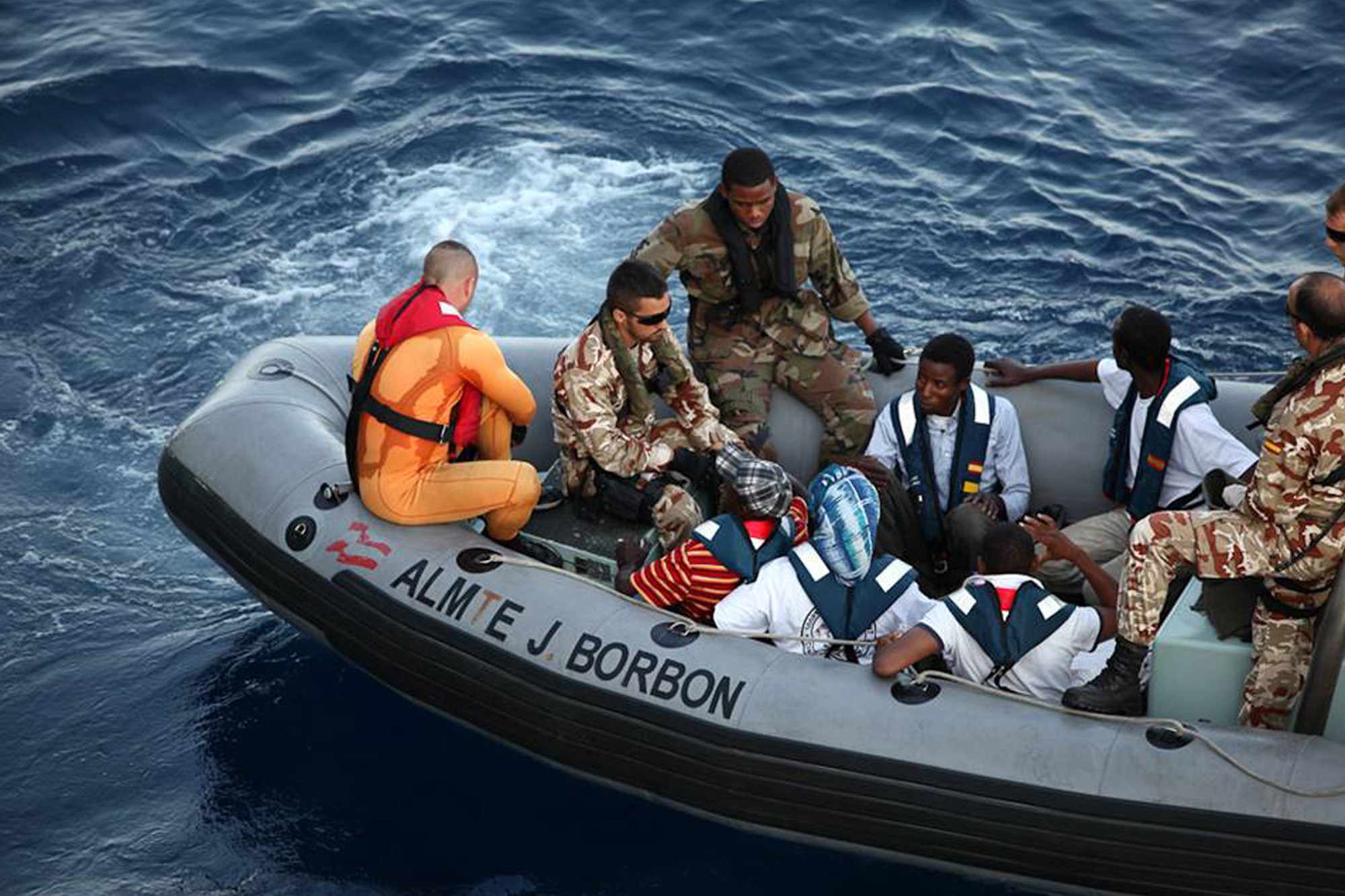
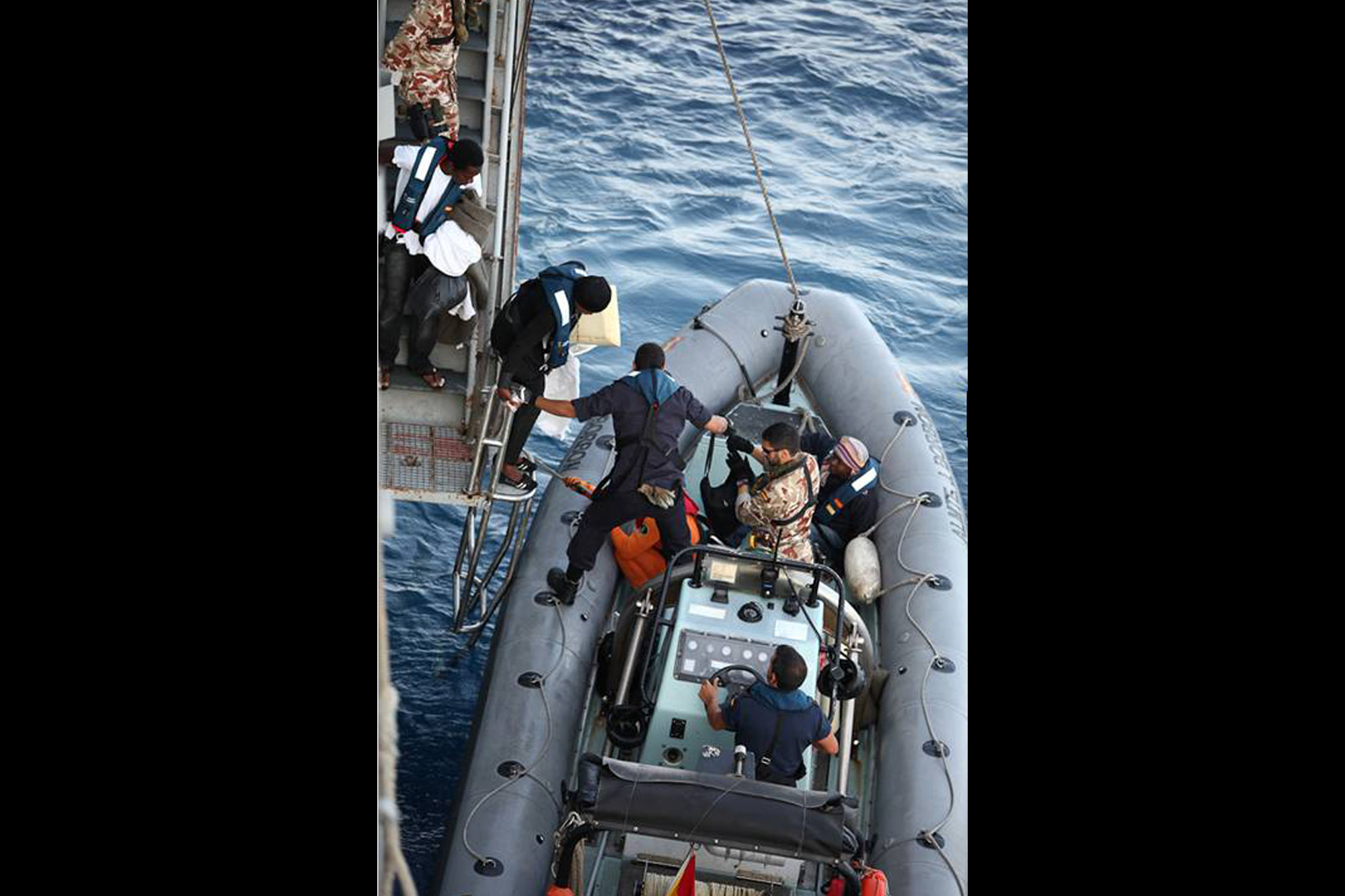
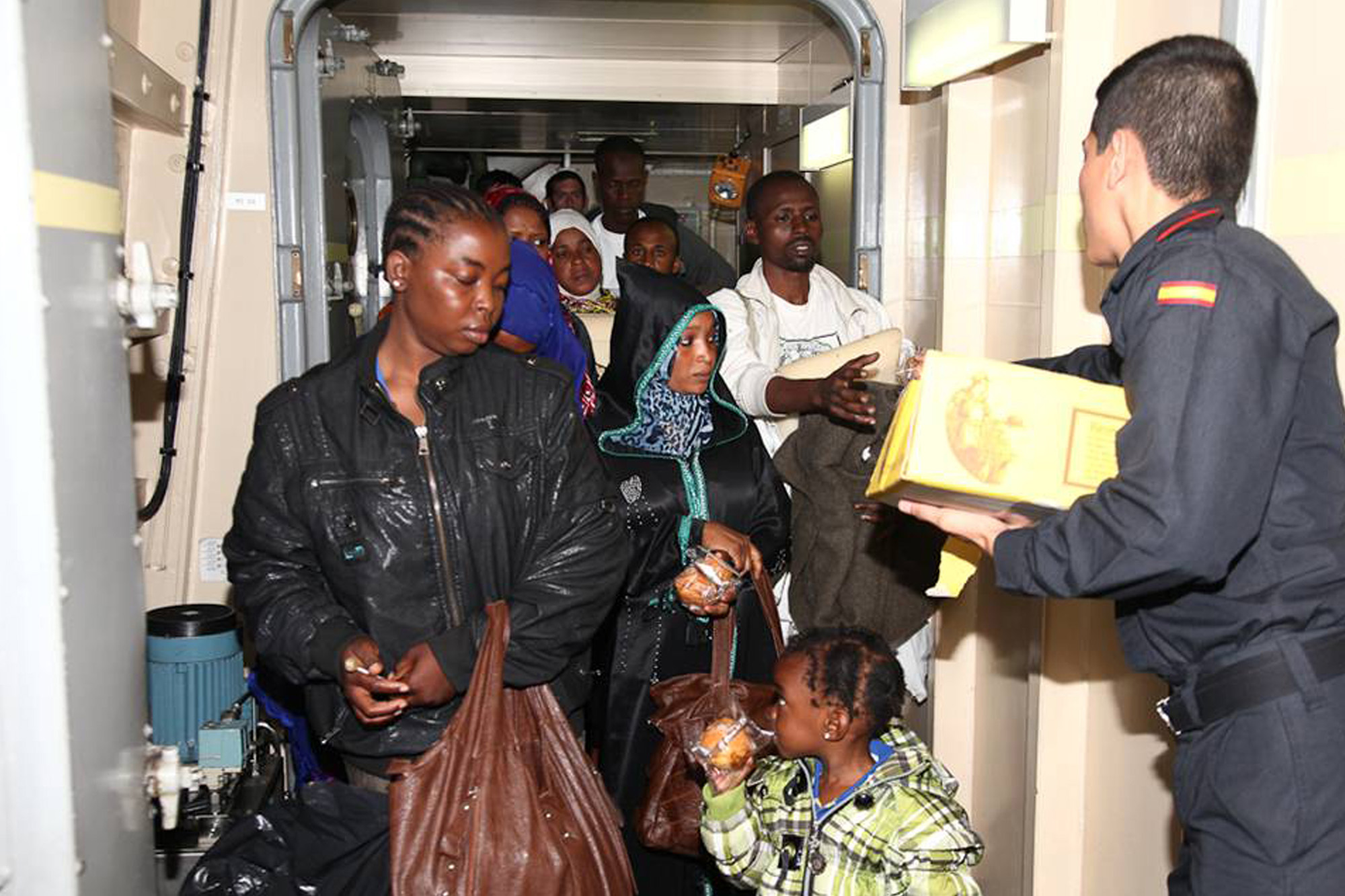
The 10 July incident relates to the rescue of over 100 migrants by the Spanish Navy frigate, the Almirante Juan de Borbón.  The rescued migrants remained onboard the Spanish frigate for six days after Malta and Italy refused to permit the NATO ship to enter port to disembark the rescued migrants.  The migrants were transferred to a Tunisian navy ship on 16 July and presumably then taken to Tunisia.

Click here and here for my previous posts on the July 2011 incident.

Neither of these two incidents relates to the events that occurred between 25 March and 10 April 2011 when a disabled migrant boat drifted for days during which time approximately 60 persons died.  Survivors from the migrant boat reported that at various times military ships and helicopters ignored their requests for assistance.  The Guardian reported extensively on this subject and the PACE Committee has been seeking information from NATO about this particular incident.

Click here and here for Guardian articles.

Click here for my last post of the PACE 29 Nov. hearing.

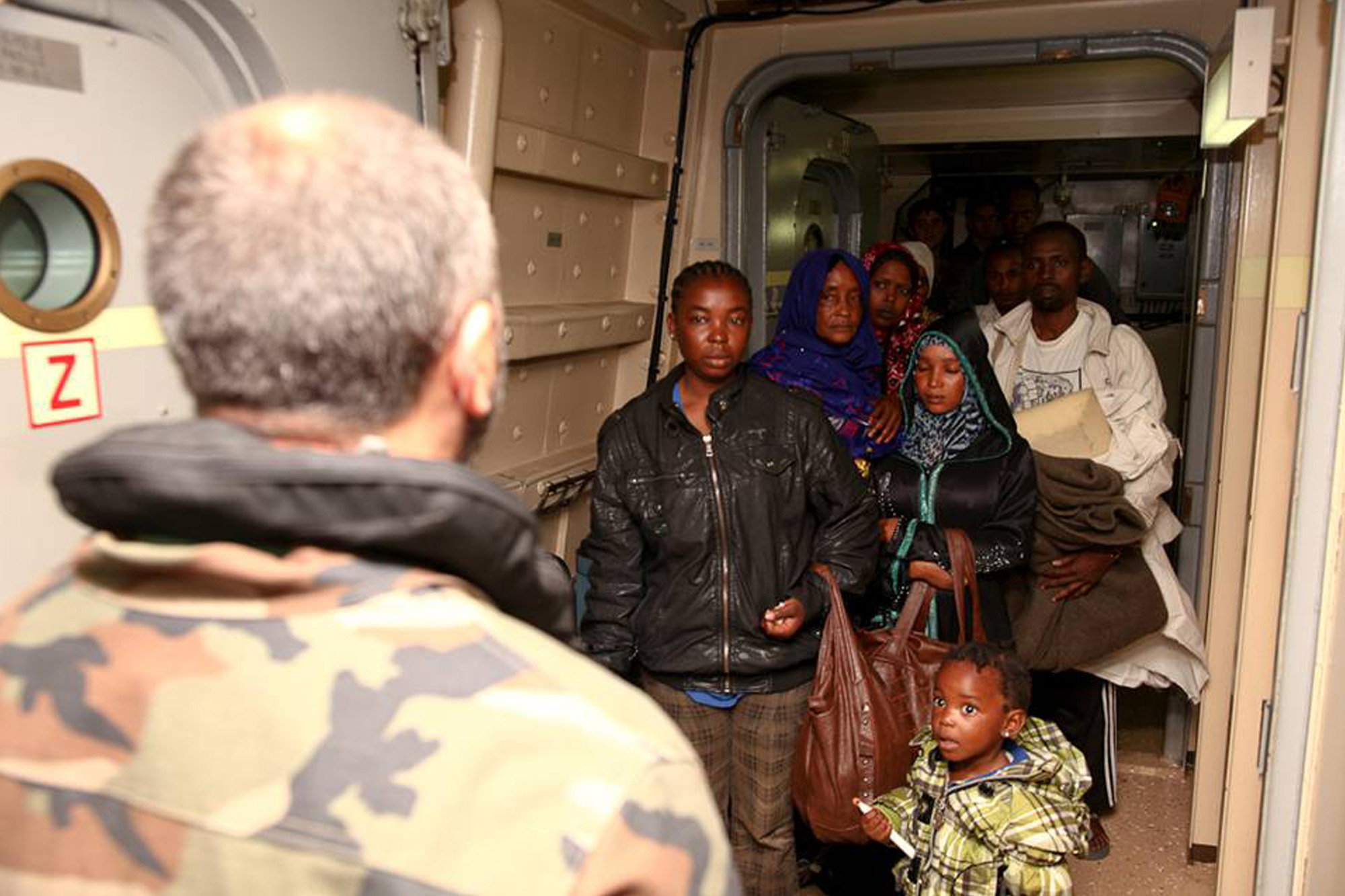
HMCS Charlottetown and migrant boat 25 March 2011.

Photo Credit: Lt(N) Michael McWhinnie, Department of National Defence and Canadian Forces

Spanish frigate Almirante Juan de Borbón rescuing migrant boat on 10 July 2011 and transferring migrants to Tunisian navy vessel on 16 July 2011.

Photo Credit: Ministerio de Defensa de España (mde.es)

Photo Credit: Ministerio de Defensa de España (mde.es)

2 Comments

Filed under Council of Europe, Italy, Libya, Malta, Mediterranean, News, Tunisia

NATO Reportedly Agrees to Provide Additional Information to PACE Regarding Migrant Deaths in the Mediterranean

The PACE Committee on Migration, Refugees and Population, in connection with the preparation of a report by Ms Tineke Strik (Netherlands, SOC) on the deaths of boat people who have died in the Mediterranean, conducted a hearing in Paris on 29 November.  NATO officials who met with Ms Strik in Brussels before attended the hearing reportedly agreed to provide additional information, which might include satellite imagery, to the PACE Committee.

From PACE Press Statement, 30 November 2011:  “‘With 1971 boatpeople having perished in the Mediterranean Sea while trying to reach European soil from North Africa, the year 2011 sets a sad record as the deadliest year for boatpeople,’ PACE rapporteur Tineke Strik (Netherlands, SOC) said at the end of a hearing on this issue, organised by the Parliamentary Assembly of the Council of Europe (PACE) Migration Committee.  ‘Never before the Mediterranean Sea has been as closely monitored as this year because of the war in Libya and still more boat people than ever perished or disappeared,’ the rapporteur added.  ‘Is there a common understanding of a “distress situation”? Is it clear which legal framework is applicable and by whom? Do all ships, even warships, have to proceed with rescue operations even if they are situated beyond established search and rescue zones? Where does legal responsibility start and where does political responsibility end? These are some of the issues we are currently trying to clarify,’ she said.  Mrs Strik’s report will focus on an incident reported in March this year, during which 63 boat people escaping from Libya died after their appeals for rescue had allegedly been ignored. ‘The testimonies of survivors of this incident are coherent, but we have to continue to collect more data and information on who was when and where in the area and we now expect Nato and the EU to provide us with satellite imagery and other relevant information,’ she concluded.”

Click here, here, here, and here for articles.

Click here for PACE Press Statement.

Click here for my last post on the topic.

1 Comment

Filed under Council of Europe, Frontex, Italy, Libya, Malta, Mediterranean, Netherlands, News, Tunisia, UNHCR

Criminal Charges Brought in Italy Against 5 Men Accused of Murdering Passengers On Disabled Migrant Boat

Italian authorities in Agrigento have brought criminal charges, including charges of unlawful killing, against 5 men from Ghana and Nigeria who are accused of throwing fellow migrant passengers into the sea from a disabled migrant boat this past August. The victims are alleged to been selected based upon their ethnicity or nationality. The boat in question was carrying over 300 migrants from Libya towards Lampedusa in August when it became disabled.  Italian patrol boats rescued the survivors on 4 August.  Italian authorities at the time accused NATO of failing to act to assist with the rescue of the boat.

Click here (EN), here (IT) and here (IT) for articles.

Click here and here for my earlier posts on the August incident.

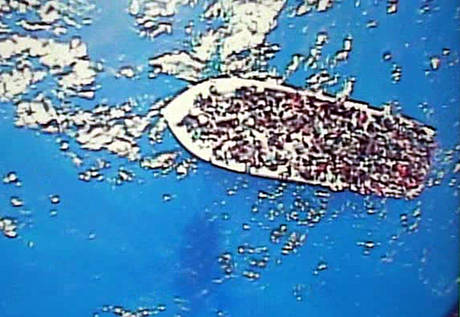
Image of migrant boat from monitor inside Italian rescue helicopter

Leave a comment

Filed under European Union, Italy, Judicial, Libya, Mediterranean, News

PACE to Conduct Hearing: “Lives Lost in the Mediterranean Sea: Who is Responsible?” (Paris, 29 Nov)

The PACE Committee on Migration, Refugees and Population, in connection with the preparation of a report by Ms Tineke Strik (Netherlands, SOC) on the deaths of boat people who have died in the Mediterranean, will conduct a hearing in Paris on 29 November.  Ms Strik was appointed in June 2011 by the PACE Committee as Rapporteur to prepare a report on the deaths of boat people who have died in the Mediterranean since January 2011.

“The hearing will look at the loss of human life at sea, it will examine the right of families to receive information on the victims, and it will consider the rules applicable under international law and maritime law relevant to rescue at sea. The hearing will also examine international co-ordination regarding interception and rescue at sea, as well as the role of the national authorities, NATO and FRONTEX.  The participants include representatives of the International Committee of the Red Cross, the Office of the United Nations High Commissioner for Refugees, FRONTEX, the Italian Council for Refugees, and the International Institute of Humanitarian Law.”

The hearing seems to be open only to members of the press and will be held at the Council of Europe, 55 avenue Kléber, 75016 PARIS (Metro: Boissière).

Click here and here for more information.

Click here for my last post on this topic.

1 Comment

Filed under Council of Europe, Frontex, Italy, Libya, Malta, Mediterranean, News, Tunisia, UNHCR

Call for Support: Boats 4 People Project

From Migreurop:  “… thousands of migrants died in the Mediterranean this Summer in their attempts to reach Europe. Boats wandered adrift and shipwrecks took place in front of Coast Guard ships, surveillance patrols of Frontex and ships from the military coalition engaged operations in Libya under NATO command.  For the last several years, African and European organisations alike have been challenging governments about the number of deaths occurring at the borders of the European Union, but in vain. We have come to the conclusion that it is essential now to move to direct action in the light of the excessive number of shipwrecks taking place in the Mediterranean and the reluctance of Europe to concede entry to refugees. We call for a Mediterranean which is in solidarity with migrants and in opposition to repressive policies which seek to criminalise migration towards Europe more and more each day.

What are the concrete aims of the Boats 4 People initiative ?

  • To denounce the tragedy which is taking place in the Strait of Sicily
  • To exercise our right of access to the maritime regions in which these shipwrecks are taking place and to the centres in which migrants arriving in Italy are detained
  • To raise awareness about the requirements of the law of the sea in terms of assistance and to support citizens and sailors who rescue migrants and are criminalized.
  • To accuse state actors working at sea (border guards, Frontex, NATO) who are guilty of failing to assist migrants in difficulties and of refouling asylum seekers, against the provisions of the UN Convention on the Law of the Sea and the Geneva Convention
  • To strengthen Euro-African solidarity with regard to migration and the defence of migrant rights

Trip and organization of the project – The boats will leave for Spring 2012 from Rome, from where they will travel towards the south of Tunisia via Sicily, Malta, Lampedusa, Tunis, Sfax and Ben Guardane.  At the moment, we aim to use one or several motor/sail boats with a total capacity of around fifty passengers, including the crews. If you have one – or several ! – boats and would like to follow the flotilla for all or part of the journey, please contact the organisers.  The aim of the flotilla is to exert maximum pressure on the European authorities by carrying people likely to raise awareness of the situation in the Strait of Sicily and to denounce it to the greatest possible number of people. We also aim to allow the greatest number of people possible to participate by rotating passengers at each stop. If you are a Member of Parliament, journalist or artist and you wish to participate in a stage of the journey, please send your details to coord@boats4people.org. …”

Click here for full posting.

Leave a comment

Filed under European Union, Italy, Libya, Malta, Mediterranean, Statements, Tunisia

PACE Rapporteur Conducts Interviews in Italy Regarding Mediterranean Migrant Deaths

Tineke Strik (Netherlands, SOC) concluded a two day fact-finding trip to Italy on 7 September as Rapporteur for the PACE Migration Committee.  She is investigating the deaths of boat people who have died in the Mediterranean since January 2011.  Strik interviewed Father Moses Zerai, an Eritrean priest, who was in satellite phone contact with several migrant boats during their voyages from Libya, including the disabled migrant boat that drifted for days in March-April this year and on which 61 persons are believed to have died.  In addition to Zerai, Strik interviewed three of the nine survivors from the boat, Italian Coastguard officials, and NGO and UNHCR staff.  Strik “is planning interviews with officials from Nato and the Maltese government, which the Italian coastguard says was alerted to the boat’s plight.”

From the PACE press statement: “‘There is an obligation to help all people in distress.  If anyone did not live up to this responsibility and deliberately did not assist them, they must not be allowed to get away with it. … The testimonies of witnesses directly involved in this incident are coherent, but we have to continue to collect more data and information on who was when and where in the area,’ Mrs Strik reported.  ‘My mission is to try to find out what went wrong, and if there was perhaps a gap in responsibility-sharing. The recommendation which will be contained in my report is aimed at establishing responsibilities and trying to determine how to deal with such incidents in the future. We have to draw the right lessons to prevent similar situations from occurring again.  … At the end of my inquiry, I expect national jurisdictions, governments and parliaments to carry on the investigations and I very much hope that the dynamic of truth … will pave the way,’ she concluded.”

Click here (EN), here (FR), and here (ES) for articles.

Click here for PACE press statement.

Click here for previous post.

2 Comments

Filed under Council of Europe, European Union, Frontex, Italy, Libya, Malta, Mediterranean, News, Tunisia, UNHCR

PACE Rapporteur to Begin Fact-Finding Mission to Italy to Investigate Mediterranean Migrant Deaths

Tineke Strik (Netherlands, SOC) will begin a two day fact-finding trip to Italy on 6 September as Rapporteur for the PACE Migration Committee (Parliamentary Assembly of the Council of Europe).  She is investigating the deaths of boat people who have died in the Mediterranean since January 2011.

From the PACE press statement of 2 September:  “Meetings are scheduled with survivors of a shipwreck, officers of Italian coastguard units, representatives of NGOs active in the field and representatives of the Office of the United Nations High Commissioner for Refugees.  During her visit the rapporteur will in particular look into the way boats are intercepted – or not intercepted – by national coastguard forces, or by military vessels under either NATO or national command.  Further to reports that migrants and refugees have perished after their distress calls were ignored, the PACE Committee on Migration, Refugees and Population appointed Ms Strik in June to conduct an inquiry into these matters.”

From the PACE press statement issued in June 2011: “‘There have been allegations that migrants and refugees are dying after their appeals for rescue have been ignored,’ said Mrs Strik. ‘Such a grave allegation must be urgently investigated.  I intend to look into the manner in which these boats are intercepted – or not – by the different national coastguards, the EU’s border agency FRONTEX, or even military vessels. I also intend to speak to witnesses directly involved in reported incidents, and put questions to national authorities, the UNHCR, FRONTEX and NATO, among others.’  On 8 May, the Guardian newspaper reported that 61 boat people escaping from Libya had died after their appeals for rescue had been ignored by armed forces operating in the Mediterranean. The following day PACE President Mevlüt Çavusoglu called for ‘an immediate and comprehensive enquiry’ into the incident.”

Presumably Ms. Strik’s investigation will also seek information from Maltese authorities.  The Maltese Rescue Coordination Centre run by the Armed Forces of Malta is in possession of relevant information pertaining to incidents within the Maltese Search and Rescue Area where many (perhaps most?) of the migrant deaths have occurred.

Click here and here for COE press statements.

Click here for link to COE’s web page regarding “PACE’s Response to Migrants and refugees arriving from North Africa.”

Click here and here for my previous posts on the topic.

1 Comment

Filed under Council of Europe, European Union, Frontex, Italy, Libya, Malta, Mediterranean, News, Reports, Tunisia

Fortress Europe Calculates 1,931 Deaths in the Mediterranean During First 7 Months of 2011

According to calculations made by Fortress Europe, 2011 is the deadliest year in the Mediterranean since at least 1994.  1,931 people have died during the first seven months of 2011.  This number is higher than the total number of deaths in all of 2008, the year with the previous highest death toll of 1,274.  Fortress Europe estimates that 1,674 (87%) of the 1,931 deaths have occurred in the Sicilian Channel and that most of the deaths in the Sicilian Channel have involved migrants travelling from Libya towards Europe.

Click here for Fortress Europe post.  (IT)

Click here for Clandestina blog post.  (EN)

From Fortress Europe:

Vittime del Canale di Sicilia dal 2002 ai primi 7 mesi del 2011
Anno 2002 2003 2004 2005 2006 2007 2008 2009 2010 2011
Morti 236 413 206 437 302 556 1274 425 20 1674

Leave a comment

Filed under Data / Stats, European Union, Italy, Libya, Malta, Mediterranean, News, Tunisia

NATO Denies It Failed to Respond to Migrant Boat in Distress

NATO said yesterday that Italian authorities never directly requested assistance from NATO in regard to the disabled migrant boat discovered earlier in the week by a Cypriot tug boat.  NATO spokespersons said while NATO was informed that the migrant boat was in distress, Italian authorities also informed NATO that Italian patrol boats and a rescue helicopter were responding to the situation.  NATO spokesperson Carmen Romero said NATO had a history of responding to emergency situations and pointed by way of example to NATO’s response on 26 March to two migrant boats in distress.   A Canadian naval ship under NATO command in March rendered assistance to two migrant boats but, unlike the incident last month when a Spanish ship under NATO command rescued 100 migrants and was unable to offload the migrants for five days, the Canadian ship did not take the migrants on board.

Click here (EN), here (IT) and here (IT) for articles.

Click here and here for previous posts on topic.

Click here for previous post about 11 July incident.

Click here and here for previous posts about the 26 March incident.

Leave a comment

Filed under Italy, Libya, Mediterranean, News

Italy Calls for Formal Inquest Into “Presumed Failure” of NATO to Render Assistance to Disabled Migrant Boat and for Expansion of NATO Mandate to Include Rescue at Sea

Here is today’s full statement from the Italian Foreign Ministry:

Minister for Foreign Affairs Franco Frattini instructed the Italian Permanent Representative to NATO to call for a formal inquest into the dynamic regarding the presumed failure to come to the aid of boats carrying civilians fleeing Libya. Minister Frattini also asked Ambassador Sessa to urge discussion within the Atlantic Alliance of the possibility of adapting the mandate of the mission sanctioned by UN resolutions 1970 and 1973 to safeguard Libyan civilians, to the effect that the defence and aid of those fleeing the conflict by sea, and thereby risking their lives, be adequately taken into consideration.

In relazione alle polemiche circa il presunto mancato soccorso a battelli con clandestini a bordo in fuga dalla Libia, il Ministro degli Esteri Frattini ha dato istruzioni al Rappresentante Permanente italiano presso la NATO di chiedere un’inchiesta formale per l’accertamento della dinamica di quanto accaduto. Il Ministro Frattini ha anche chiesto all’Ambasciatore Sessa di sollecitare una discussione all’interno dell’Alleanza Atlantica per il possibile adeguamento del mandato della missione di salvaguardia delle popolazioni civili in Libia, sulla base delle risoluzioni delle Nazioni Unite 1970 e 1973, affinchè vengano opportunamente considerate la tutela e soccorso anche di coloro che per cause belliche sono costretti a fuggire su barconi mettendo a rischio la propria incolumità.

Click here (EN) and here (IT) for links.

Click here (EN), here (EN) and here (IT) for articles.

Click here for previous post.

2 Comments

Filed under Italy, Libya, Mediterranean, News

Italy Rescues 300 Migrants from Disabled Boat; Multiple Deaths May Have Occurred Before Rescue; Italy Seeks Clarification Regarding Possible Failure of NATO Ship to Render Assistance

Italian patrol boats yesterday rescued approximately 300 migrants from a disabled boat 90 miles south of Lampedusa.  There are unconfirmed reports from survivors that before the rescue many people died and bodies were put in the sea.  The boat may have been drifting for one and a half days before the rescue.

The disabled migrant boat was reportedly first discovered by a Cyprus tug boat which was forced to move away from the disabled boat when some migrants jumped overboard and tried to swim to the tug.  An Italian helicopter which attempted to lower emergency supplies was forced to abandon its efforts when persons attempted to climb into the basket being used to drop supplies.

According to news reports, a NATO ship was located about 27 miles from the disabled migrant boat, but NATO reportedly failed to respond to a request by Italian authorities to render assistance.  Italian patrol boats were then forced to travel 90 miles from Lampedusa in order to reach the migrant boat.

The Italian government is seeking clarification from NATO regarding the possible failure to respond to the request to render assistance to the migrant boat.  A Spanish frigate under NATO command on 11 July rescued 100 migrants.  During the five day period that the migrants were on board the Spanish frigate, before the migrants were eventually transferred to Tunisian authorities, the Spanish frigate was removed from its NATO Operation Unified Protector embargo patrols due to the civilian passengers.

Click here, here, here, here, and here for articles. (IT)

Click here and here for articles.  (EN)

Click here for short AFP TV video from rescue helicopter.

Click here and here for previous posts on migrant rescue by Spanish frigate.

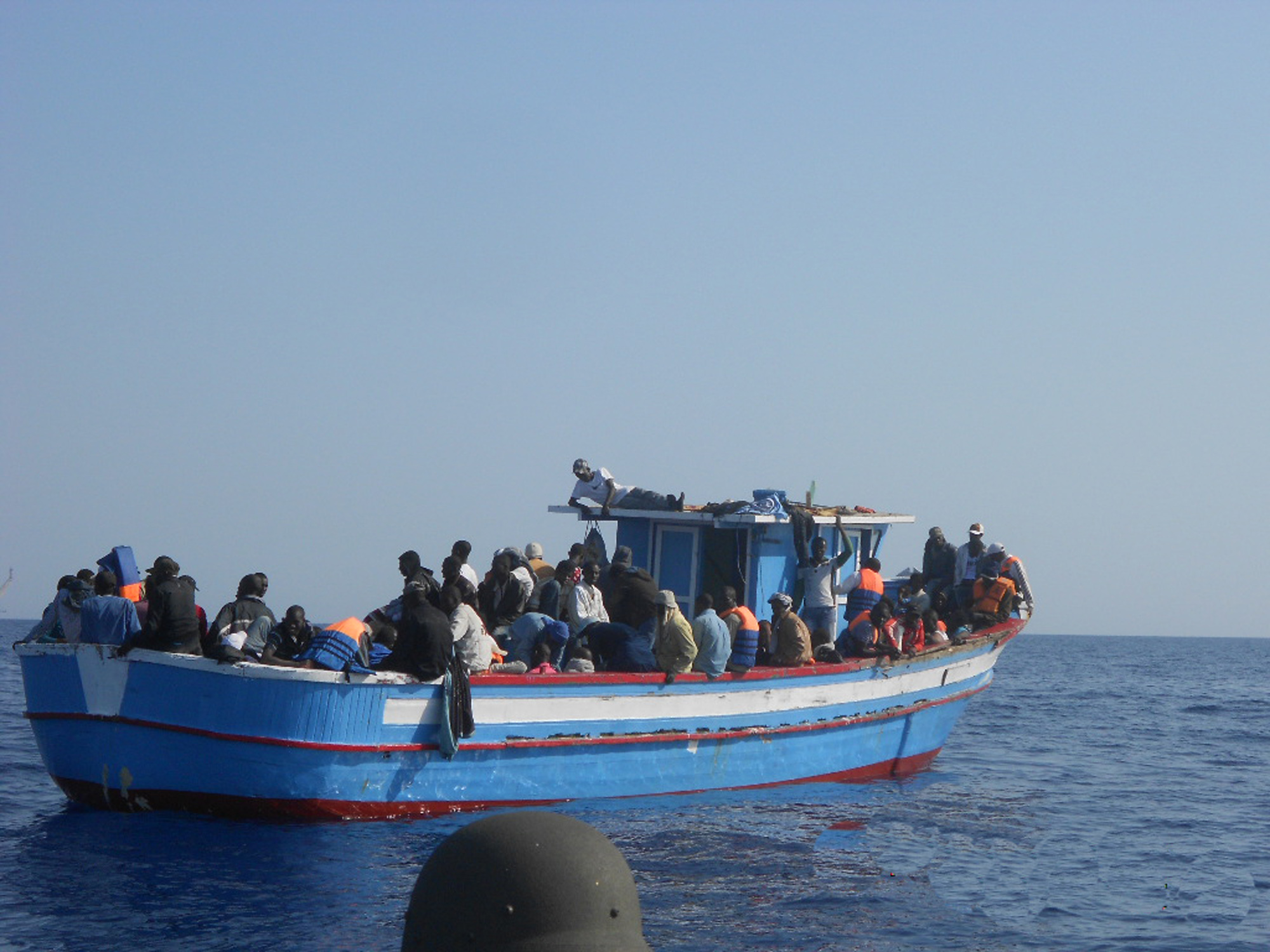
Image of migrant boat from monitor inside Italian rescue helicopter


3 Comments

Filed under Italy, Libya, Mediterranean, News

[Post Updated 4 August] Spanish Defence Ministry: NATO Instructed Spanish Navy to Transfer Rescued Migrants to Tunisia

A press release issued yesterday by the Spanish Ministry of Defence states that the 114 migrants who were rescued by the Spanish frigate Almirante Juan de Borbón on 11 July were transferred to Tunisian authorities on 16 July pursuant to orders issued by NATO command.

I previously have sought clarification from both NATO and the Spanish Defence Ministry regarding who made the decision to turn the rescued migrants over to Tunisian authorities and what procedures, if any, were followed to screen rescued migrants before the transfer.  NATO’s Operation Unified Protector press office informed me that all inquiries had to be directed to the Spanish Defence Ministry.  The Defence Ministry’s press office in turn has ignored my inquiries.

[Update – 4 August – I received information today from Communication Office of the Spanish Ministry of Defence reiterating that the Spanish frigate was under NATO command as an asset participating in NATO’s Operation Unified Protector.  According to the Communication Office, after the Spanish frigate commander made the decision that the migrants needed to be rescued, all of the frigate’s subsequent actions were carried out pursuant to specific commands issued by the NATO command, including the final order to transfer the migrants to Tunisian authorities.  Spanish authorities were never involved in discussions or negotiations with other countries regarding the rescued migrants.  The Communication Office referred me to NATO’s OUP Press Office for information regarding any further details of the operation.  I will try again with NATO.]

The press release issued yesterday pertains to a visit made to the Spanish  frigate Almirante Juan de Borbón by Italian Rear Admiral Filippo Maria Foffi, Commander of the NATO naval task group for Operation Unified Protector, where he praised the crew of the frigate for the rescue operation.

The press release goes on to state that after the migrants were taken on board the frigate on 11 July, “on orders from NATO command, the Juan de Borbón sailed to Malta and took a position 40 miles off the coast of that country. On 16 July, instructed by the command of NATO, the Spanish frigate headed for the coast of Tunisia to start the transfer to the Tunisian Navy patrol boat Carthage of the 106 immigrants who were still on board, after the earlier evacuation of eight persons for health and medical reasons.”

(“…siguiendo órdenes del mando de la OTAN, la ‘Juan de Borbón’ puso rumbo a Malta posicionándose a 40 millas frente a las costas de ese país.  El pasado 16 de julio, siguiendo instrucciones del mando de la Alianza, se dirigió hacia las costas de Túnez para iniciar el traslado al patrullero Carthage de la Armada tunecina, de los 106 inmigrantes que aún permanecían a bordo tras la evacuación de ocho personas por motivos médicos y de salud…”)

The Spanish government and NATO are rightfully to be praised for the rescue operation.  What is unfortunate is the lack of transparency on the part of both NATO and the Spanish Defence Ministry in regard to why the decision was made to transfer the migrants to Tunisia and what procedures, if any, were used to screen the migrants for claims to international protection.

Click here for Defence Ministry Press Release. (ES)

Click here for my last post on this topic.
2 Comments

Filed under Italy, Libya, Malta, Mediterranean, News, Spain, Tunisia

Call for a Humanitarian Flotilla to Stop Deaths in the Mediterranean

A coalition of migrants’ rights organisations, including Migeurop, Cimade, Gisti, FIDH, and others hope to organise a humanitarian “flotilla which will undertake maritime surveillance so that assistance is finally provided to people in danger. The participatory organisations call on European bodies and governments on both sides of the Mediterranean to establish relations within this common area on the basis of exchange and reciprocity. This flotilla will embark political figures, journalists, artists, and representatives of the organisations involved in the project.  Any organisation, trade-union, political representative, seafarer, journalist, artist or other individual interested in this initiative may join this mailing list : « Mediterranean Intervention ».” To subscribe to the mailing list, please send an email to migreurop07@yahoo.it.

Click here for full Migreurop statement.

Leave a comment

Filed under European Union, Frontex, Italy, Libya, Malta, Mediterranean, News, Statements, Tunisia

NATO Transfers Rescued Migrants to Tunisia

According to information provided by the Spanish Ministry of Defence, the Spanish frigate Almirante Juan de Borbón sailed to Tunisia earlier this morning (16 July) and, while remaining outside Tunisian waters near Zarzis, transferred the remaining 106 rescued migrants to the Carthage, a Tunisian naval vessel.  114 migrants were initially rescued by the Spanish ship.  5 of the migrants were airlifted to Malta for medical reasons on 13 July.  On 11 July, shortly after the initial rescue of the migrant boat, 3 migrants were evacuated and turned over to Tunisian authorities.  The original 114 consisted of 88 men, 20 women (5 of whom are pregnant), and 6 children. The Defence Ministry said that the decision to transfer the migrants to Tunisian authorities was a NATO decision.

While the decision to disembark the migrants in Tunisia is better than sending them to eastern Libya (something I was fearful would occur), Tunisia is problematic for several reasons.  The migrant boat was reportedly carrying Tunisians.  To the extent that any of them may have had claims for international protection, the claims have been effectively eliminated.   It is not known whether any efforts were made to assess whether any of the Tunisians had claims for international protection.   And to the extent that any of the non-Tunisians have claims for international protection, Tunisia is clearly less able to handle such claims and less able to provide care for asylum seekers relative to Malta, Italy, or Spain (or any of the NATO countries participating in Operation Unified Protector).

[17 July update – NATO’s OUP Press Office informed me earlier today that any questions regarding who made the decision to transfer the migrants to Tunisia and whether any of the migrants were screened for claims for international protection had to directed to the Spanish Ministry of Defence.]

Click here (EN), here (ES), and here (ES) for articles.

Click here for Spanish Ministry of Defence press statement and additional photos. (ES)

Photo Credit: Ministerio de Defensa de España (mde.es)

Photo Credit: Ministerio de Defensa de España (mde.es)

Photo Credit: Ministerio de Defensa de España (mde.es)

Photo Credit: Ministerio de Defensa de España (mde.es)

4 Comments

Filed under General, Italy, Libya, Malta, Mediterranean, News, Spain, Tunisia