Author Archives: Niels Frenzen

Niels Frenzen's avatar

About Niels Frenzen

Clinical Professor of Law, Gould School of Law, University of Southern California, Los Angeles, USA. Contact: frenzen@usc.edu; @migrantsatsea

Analysis of the Real Instituto Elcano- Frontex: Successful Blame Shifting of the Member States?

Analysis of the Real Instituto Elcano: “Frontex: Successful Blame Shifting of the Member States?” by Jorrit J. Rijpma, PhD European University Institute, Florence, and Lecturer in EU law, Europa Instituut, Leiden University.

Excerpts:

“Frontex in Short – Frontex can be seen as the outcome of a ‘re-balancing’ of powers between the Member States, the Council and the Commission following the communitarisation of the policy on external borders after the Treaty of Amsterdam, constituting an important shift from the intergovernmental coordination of operational activity under the Council to a more Community-based approach. [***]

Joint Operations at Sea – [***] Currently, the most controversial practice is that of the diversion by national border guards of ships back to their point of departure. This practice entails not only a real risk to the life and safety of the passengers on board these often unseaworthy ships, but as regards possible asylum seekers on board, it also risks violating the right to claim asylum and the prohibition of refoulement. The Greek coast guard has the questionable reputation of regularly diverting boats back to the Turkish shores. Italy has openly admitted to the interception and return of irregular migrants and asylum seekers from Libya under its 2008 Treaty on Friendship, Partnership and Cooperation with the latter country. Both within and outside the Hera operations, Spain has been returning people to Senegal and Mauritania, but here at least the interceptions are formally cast in terms of rescue operations and transfer to the nearest place of safety.

Frontex: the Lesser Evil?- There are many reasons why Frontex can be subject to criticism. It could be argued that it is an instrument of an essentially flawed EU migration and asylum policy. [***] Finally, it could be said that the Agency reinforces a securitised perception of what is essentially a humanitarian problem through its one-sided mandate, the background of most of its staff in national law-enforcement agencies and its military-style operations. [***] However, it is important to realise that for the moment the Agency’s scope for independent action remains very limited, both in practical and in legal terms. Serious human-rights violations are more likely to occur in operations from national border guards removed from the public eye, than in relatively well-scrutinised joint operations. Frontex, being a Community body, is subject to numerous reporting and evaluation duties, as well rules on transparency. [***]

Conclusion: Efforts should focus on ensuring full respect of international rules regarding international protection and search and rescue and an authoritative interpretation of these rules in a broad sense. These are essentially political decisions. It is the Member States and the Community institutions, not Frontex, that are to be reproached for the failure to do so. [***]”

Click here for full Analysis.

Leave a comment

Filed under Aegean Sea, Analysis, Eastern Atlantic, European Union, Frontex, Greece, Italy, Libya, Malta, Mauritania, Mediterranean, Senegal, Spain, Turkey

IMO Biannual Reports on “Unsafe Practices Associated with the Trafficking or Transport of Migrants by Sea”

The International Maritime Organization (IMO) has been collecting data on “unsafe practices associated with the trafficking or transport of illegal migrants by sea” since 1999.

Two times a year it releases a biannual report regarding incidents which are reported to the IMO by Member Governments.  The IMO describes the basis for the reporting as follows: “The Maritime Safety Committee, at its seventieth session (7 to 11 December 1998), in approving MSC/Circ.896 on Interim measures for combating unsafe practices associated with the trafficking or transport of illegal migrants by sea, invited Member Governments to promptly convey to the Organization reports on relevant incidents and measures taken to enable the updating or revising of the circular.”

In recent years (and perhaps since 1999), by far most of the reported incidents are provided by Greece.  Italy and Turkey have only reported a small number of incidents in recent years.  It is clear that most Member Governments do not routinely provide data for these biannual reports.

Even though a substantial number of incidents are not being reported and are therefore not documented in the reports, the biannual reports do contain an extensive amount of information dating back to 1999 regarding 2,030 incidents where 77,853 migrants were rescued or intercepted.

The reported data, when provided, include:

  • Ship’s name or description
  • Date and time of incident
  • Position of incident
  • Description of incident
  • Measures taken
  • Migrants (number and nationality; gender; adults/minor)

Click here for the Biannual Report issued 18 February 2010.

Click here for the Biannual Report issued 2 November 2009.

Leave a comment

Filed under Data / Stats, Greece, Italy, Reports, Turkey

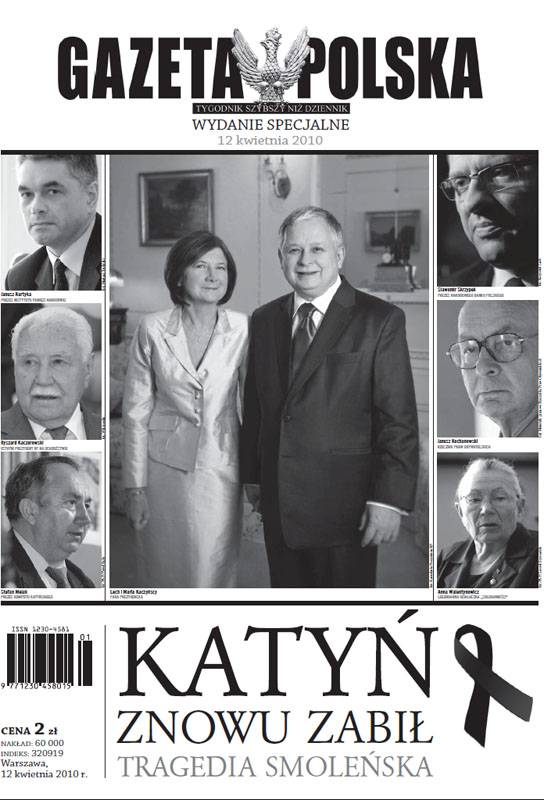
In Memoriam – Katyn


1 Comment

Filed under General

UNHCR Reports 50% Reduction in African Migrant Flow to Yemen

UNHCR reports a significant decline in the numbers of migrants travelling by sea from the Horn of Africa to Yemen.  UNHCR said that “violence within Somalia could be preventing many would-be migrants from reaching their port of departure.  An estimated 9,400 people from across the Horn of Africa have reached the shores of Yemen since the beginning of this year, compared to nearly 17,000 between January and March 2009….”

Click here for UNHCR statement.

Leave a comment

Filed under Data / Stats, Gulf of Aden, News, Somalia, UNHCR, Yemen

Vatican Criticises Italy-Libya Migration Agreement

Archbishop Agostino Marchetto, Secretary of the Pontifical Council for Pastoral Care of Migrants and Itinerant People, criticised the Italian agreement with Libya in a speech in Rome for the second European conference on the issue of human rights in the training of European lawyers.

”Confermo – conclude quindi mons. Marchetto – la mia posizione di condanna a chi non osserva il principio di non refoulement, che sta alla base del trattamento da farsi a quanti fuggono da persecuzione. E mi domando se in tempo di pace non si riesce a far rispettare tale principio fondamentale del diritto internazionale umanitario, come si fara’ a richiederne l’osservanza in tempo di guerra. E la domanda si puo’ estendere alla questione della protezione dei civili durante i conflitti, che viene cosi’ indebolita nella sua radice, comune, umanitaria”.

Click here (EN) and here (IT) for articles.

Leave a comment

Filed under Italy, Libya, Mediterranean, News

Frontex Operation Indalo 2010

Operation Indalo, which focuses on the interception of migrants travelling from North Africa, primarily Algeria, to Spain, will take place from June to September this year and will focus primarily on migrant arrivals on the coasts of the Spanish provinces of Murcia and Almeria.

Last year’s Operation Indalo took place in September and October, used assets from Spain, Italy, France, Belgium, Germany and Portugal, and resulted in the detention of approximately 500 migrants.

Click here for article (ES).

Leave a comment

Filed under Algeria, Frontex, Mediterranean, News, Spain

New Book: Migrant Smuggling by Sea

“Migrant Smuggling by Sea-Combating a Current Threat to Maritime Security through the Creation of a Cooperative Framework” by Patricia Mallia, lecturer and Head of the Department of International Law at the University of Malta.

Publisher’s summary of the book:  “A number of rules of the international law governing the oceans were created at a time far removed from the challenges of the present day. The principle of the freedom of the high seas and its corollary of flag State exclusivity are archetypical examples of this. Today these rules may appear to be obstacles in the effort to combat a number of contemporary maritime threats such as migrant smuggling by sea. This study examines this multi-faceted threat to maritime security against the backdrop of the current international legal framework and State practice in order to establish whether this threat can be effectively addressed within the existing framework of the law of the sea.”

In an interview with the Malta Independent the author suggests that the new Frontex guidelines governing operations at sea are inconsistent with international law:  “On the recently approved Frontex guidelines, apart from the fact that the wrong legal basis was used to get them through, the position taken in the guidelines goes beyond what is stipulated in international conventions, namely the International Maritime Organisation’s Safety of Life at Sea Convention (SOLAS) and Search and Rescue (SAR) Convention.”

Click here for link to publisher.

Click here for article.

Leave a comment

Filed under Books, Frontex, Malta, Mediterranean

CONCORD Briefing Paper on Revisions to Cotonou Agreement

CONCORD, the European NGO Confederation for Relief and Development, prepared an updated briefing paper regarding the ongoing negotiations concerning revisions to the Cotonou Agreement for the ACP-EU Joint Parliamentary Assembly session held 27 March to 1 April in Tenerife.

Excerpts regarding Article 13 (Migration) from an updated CONCORD Cotonou Working Group Briefing Paper:

“Migration, still unresolved – The revision of Article 13 on Migration is a major stumbling block to the negotiations.  The two sides failed to reach an agreement by the extraordinary ACP-EU Council on 19 March. EU and ACP states agreed in a joint declaration to continue dialogue on the migration article and report to the joint ACP/EU Council in June 2011.

The bulk of the disagreement lies on the clause on readmission. The EU side would like the clause on readmission in the Cotonou Agreement to become self-executive and binding for all ACP countries without needing complementary bilateral agreements. This will imply unmanageable obligations for many countries and hence an increased risk of migrants rights violations throughout the process of readmission.

In no way should EC and MS ODA [Official Development Assistance] be dependent on the signature of readmission agreements (being bilateral or multilateral).  By making development aid conditional on cooperation on border control, the EU is turning development aid into a tool for implementing restrictive and security-driven immigration policies which are at odds with its commitment to make migration work for development.

Article 13 should rather be focusing on concrete opportunities for increased mobility and ensuring that ACP states are assisted in their national efforts to ‘make migration work for development’ (countering of the negative economic and social effects of brain drain and care drain, sustainable migration opportunities, facilitating remittances…). This would bring progress towards Policy Coherence for Development in the migration area. Opportunities of legal migration, including for low skilled workers, and respect of migrants’ rights are necessary conditions for exploiting the development potential of migration. Provisions on legal migration should be as strong and binding. Finally, EU and ACP states should ratify the UN Convention on Migrants Rights and ratify it themselves.”

Click here for full text of CONCORD Cotonou Working Group Briefing paper.

Click here and here for earlier related posts.

1 Comment

Filed under European Union, News

28th Franco-Italian Summit – Agreement on Joint Maritime Patrols

The 28th Franco-Italian Summit was held 9 April in Paris and resulted in the signing of approximately 25 agreements between France and Italy.  Among the agreements is a joint declaration on immigration which highlights the leading role played by France and Italy in controlling illegal immigration in the Mediterranean region.  The agreement provides for, among other things, joint French-Italian maritime patrols to monitor the countries’ territorial waters.  The agreement also stresses the need to strengthen the role of Frontex and calls for cooperation with both Libya and Turkey on immigration matters, including readmission of migrants.

Click here (EN), here (IT), here (IT), and here (FR) for articles.

Leave a comment

Filed under France, Frontex, Italy, Libya, Mediterranean, News, Turkey

Annual GDISC Asylum Conference

From 8-10 March the German Federal Office for Migration and Refugees and the Directors General of Immigration Services Conference GDISC – organised the annual GDISC Asylum Conference in Nuremberg.

Representatives from 24 European countries, the EC, UNHCR, and IGC discussed the current situation in the field of asylum as it relates to the issues of unaccompanied minors, quality management of asylum services, the impact of the proposed changes on the EU directives to the field of asylum, and the functioning of the asylum support teams within the European Asylum Support Office (EASO).  The next GDISC conference will be held in Prague on 15-15 June 2010.

Click here for the Draft Summary Conclusions of the Conference.

Leave a comment

Filed under European Union, Germany, News, UNHCR

Conference for Heads of Coast Guards of EU States and Schengen Countries

The Second Conference for Heads of Coast Guards from the EU Member States and Schengen Associated Countries is being held in Málaga, Spain.  According to Santiago Macarrón, el general de Fiscal y Fronteras de la Guardia Civil, the conference represents an ongoing effort to standardize actions within the EU.  Among the topics being discussed at the Conference is the question of where migrants who are intercepted at sea are to be taken. Frontex’s Deputy Director Gil Arias stated that where migrants are to be landed is not clear under international law and has caused problems in the past, especially in the Mediterranean.

Click here for article (Spanish).

1 Comment

Filed under European Union, Frontex, Mediterranean, News

UNHCR Comments on Malta’s Decision Not to Host Frontex Missions

Times of Malta reports on comments made by the head of UNHCR’s Malta Office, Jon Hoisaeter, who said that “international law was not clearly defined when it came to the disembarkation of migrants after rescue operations.”

“There are situations when urgent health and safety considerations would require that those rescued are brought to the nearest safe port of call. In fact, even the new Frontex guidelines acknowledge this… Asylum seekers should be brought to a territory where their situation and claims can be individually assessed in a fair manner.  Of course, close cooperation among relevant states will often be crucial to successfully undertake rescue-at-sea operations.”

“The UNHCR supports the development of guidelines that can facilitate rescue and reduce the risk of lives being lost at sea. However, with or without support from Frontex, search and rescue operations are primarily the responsibility of states.”

Click here for article.

Leave a comment

Filed under Frontex, Malta, Mediterranean, News, UNHCR

Público: La llegada de inmigrantes en cayucos a España ha caído hasta mínimos históricos

«La llegada de inmigrantes en cayucos o pateras a España ha caído en los últimos meses hasta mínimos históricos. Entre enero y febrero de este año hubo sólo 126 detenciones, por 1.432 en el mismo periodo de 2009, lo que supone un 91,2% menos. Es el arranque de año con menor migración marítima desde que el Ministerio del Interior empezó a contabilizar losdesembarcos, en 1999. »

[“The arrival of immigrants in cayucos or pateras in Spain has fallen in recent months to historic lows. Between January and February of this year there were only 126 arrests compared with 1,432 during the same period in 2009, representing a 91.2% reduction.  These are the smallest numbers of beginning of year arrivals since the Interior Ministry began tracking arrivals in 1999.”]

Click here for article.

Leave a comment

Filed under Data / Stats, Eastern Atlantic, Mediterranean, News, Spain

ECRE Interview with Frontex Spokesperson

ECRE interviewed Frontex spokesperson Michal Parzyszek about the changes to Frontex’s mandate.  The interview took place before the 25 March European Parliament’s vote which allowed the changes to take effect.

Click here for the interview.

Leave a comment

Filed under European Union, Frontex, News

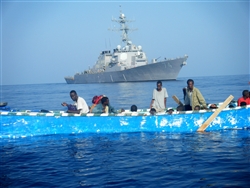
US Navy Ship Rescues Stranded Somalis

US Navy Photo

A US Naval vessel participating in counterpiracy operations off the Somali coast rescued 30 Somali men, women, and children approximately 100 miles of the Somali coast on 25 March.  The Somalis had been drifting for four days after their boat’s motors stopped working.  The Somalis were returned to Somalia.

Click here for article.

Leave a comment

Filed under Gulf of Aden, News, Somalia, United States, Yemen