Category Archives: European Union

EJML Article, B Nascimbene and A Di Pascale: “The ‘Arab Spring’ and the Extraordinary Influx of People who Arrived in Italy from North Africa”

The latest edition of the European Journal of Migration and Law, Volume 13, Number 4, contains an article by Bruno Nascimbene, Professor of European Union Law, Faculty of Law, University of Milan, and Alessia Di Pascale, Research Fellow, European Union Law, Faculty of Law, University of Milan, entitled “The ‘Arab Spring’ and the Extraordinary Influx of People who Arrived in Italy from North Africa”.

Abstract: “The ‘Arab spring’ which spread in early 2011 and the consequent exceptional influx of people that arrived on the Italian coasts from North Africa put the national reception and asylum systems under particular pressure, also raising the debate on the status to be attributed to these people. Faced with a situation out of the ordinary, Italy immediately addressed a request for help to the European Union, which has revealed the difference of views and mistrust existing between Member States in relation to these issues. This episode also calls into question the scope and effectiveness of the EU migration management framework, particularly in case of strong and unexpected pressure, and its implementation in a true spirit of solidarity.”

Click here for link.  (Subscription or payment required.)

1 Comment

Filed under Analysis, European Union, Frontex, Italy, Libya, Mediterranean, Tunisia, UNHCR

EU Will Not Fund Construction of Evros (Greece-Turkey) Border Fence

Of possible interest to some, Ekathimerni.com reports that the EU has made it clear it will not provide funding to the Greek government for the construction of a border fence along the Greek-Turkish border along the Evros river.  Greece has been planning the construction of the border fence for many months and was seeking €5 million from the EU.  Early proposals called for the construction of a fence over 200 km in length.  The fence that is now being built will be 12 km in length when completed.  “Responding to a question by Euro MP Giorgos Papanikolaou, who is affiliated with conservative New Democracy, European Commissioner for Home Affairs Cecilia [Malmström] said the bloc would not pay for the fence as it would not effectively discourage immigrants or smugglers who would simply seek alternative routes into the European Union, either via another section of Greece’s porous border with Turkey or through the border of another EU member state. [Malmström] reportedly said that the EU would be prepared to fund other measures if they are deemed to be an effective way of curbing illegal immigration into the bloc.”

Click here for current article.

Click here for older article.

Leave a comment

Filed under European Union, Frontex, Greece, News, Turkey

CARIM Note: Impact of Arab Revolts on Migration

CARIM has published a Note by Dina Abdelfattah, American University of Cairo, entitled “Impact of Arab Revolts on Migration” focusing on Egypt and Libya.

“Abstract – This paper explores how the revolts taking place in the Arab World would affect the migratory outcomes within the region and internationally. The impact of the uprisings on migration will depend on whether the country is a country of origin or of destination. The paper focuses on two cases-studies: Egypt, being the main sending country in the region, and Libya, a main country of destination for migrants from the North African region as well as from Sub-Saharan Africa. The Arab countries are still going through the transition between an old regime and a new one, with major economic and political unrest and episodes of protests and sit ins as well as military actions and, what is more, this period of unrest is likely to last for some time. The impact of the revolutions on the economic and political status of the country is still to be debated and understood. With the lack of clarity in economic and political policies, migration will continue to be unpredictable.

Résumé – Cet article s’intéresse aux conséquences des révolutions arabes sur les migrations régionales et internationales. L’impact des révoltes diffère dans les pays d’émigration et les pays d’immigration. Ce texte traite de deux exemples : l’Egypte, qui est le principal pays d’émigration dans la région, et la Libye, qui est un important pays de destination pour des migrants nord-africains et subsahariens. Les pays arabes traversent une période de transition, qui risque de durer, entre un ancien et un nouveau régime, avec d’importantes protestations politiques et économiques, des manifestations, et des actions militaires. L’impact des révolutions sur la situation politique et économique des pays arabes doit encore être débattu et analysé. L’évolution des mouvements migratoires est difficile à prévoir en l’absence d’une vision claire des choix politiques et économiques à venir.”

Click here for Note.

1 Comment

Filed under Analysis, Egypt, European Union, Italy, Libya, Malta, Mediterranean

Libyan Interception of Migrant Boat Carrying 400 May Have Been Staged

Libyan officials yesterday claimed that Libya intercepted a migrant boat shortly after it left Libya attempting to sail to Italy.  The boat was carrying over 400 migrants from sub-Saharan countries including Ethiopia, Ghana, Ivory Coast, and Nigeria.  Journalists who interviewed some of the arrested migrants reported the incident appeared to have been staged.  Some migrants who “spoke briefly to Reuters said they had paid more than $1,000 each for the trip, and many believed the boat’s captain had had no intention of ever making for the European coast, but had handed them straight to the Libyan authorities. ‘We were deceived by these people, Libyans,’ said Isaac Okyere, a 27 year-old Ghanaian.  ‘They marched us to the Navy people,’ he said, adding that the boat was intercepted about 45 minutes after setting sail.”  Libyan officials denied the arrests were staged, but did admit that the boat’s captain (who apparently was not arrested) alerted officials in advance of the boat’s departure.  It was not reported where the arrested migrants have been taken or what will now happen to them.

Interior Minister Fawzi Abd al All told a news conference that the interception and arrests showed the new government was serious about stopping illegal migration to Europe:  “Despite a lack of means, we were able to prevent illegal immigration of people who were heading for Italy. … Illegal immigration was a means of pressure used by the former regime to blackmail Europe. Now this issue will be treated differently. …We expect support from the world” in preventing such trafficking.

Click here (EN), here (EN), here (IT), and here (FR) for articles.

Click here for video.

Leave a comment

Filed under European Union, Italy, Libya, Mediterranean, News

Criminal Charges Brought in Italy Against 5 Men Accused of Murdering Passengers On Disabled Migrant Boat

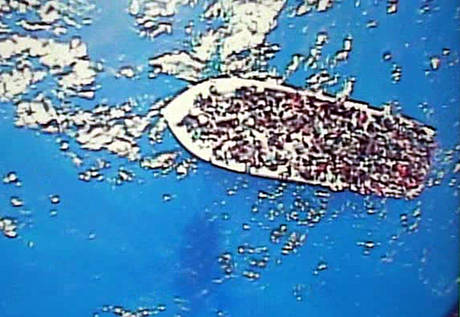
Italian authorities in Agrigento have brought criminal charges, including charges of unlawful killing, against 5 men from Ghana and Nigeria who are accused of throwing fellow migrant passengers into the sea from a disabled migrant boat this past August. The victims are alleged to been selected based upon their ethnicity or nationality. The boat in question was carrying over 300 migrants from Libya towards Lampedusa in August when it became disabled.  Italian patrol boats rescued the survivors on 4 August.  Italian authorities at the time accused NATO of failing to act to assist with the rescue of the boat.

Click here (EN), here (IT) and here (IT) for articles.

Click here and here for my earlier posts on the August incident.

Image of migrant boat from monitor inside Italian rescue helicopter

Leave a comment

Filed under European Union, Italy, Judicial, Libya, Mediterranean, News

Libya Seizes Two Italian Fishing Boats in Renewed Dispute Over Libyan Territorial Waters

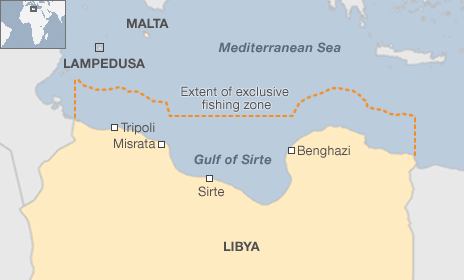
Two Italian fishing boats were seized yesterday by Libyan patrol boats in the Gulf of Sirte and are being held in the port of Misurata.  The boats are the second and third Italian fishing boats to be seized over the past two weeks.  The seizures indicate the interim Libyan government is maintaining the Ghaddafi government’s territorial claims to the Gulf of Sirte (and that Libya has some functioning patrol boats).  The territorial claims have resulted in numerous incidents and seizures of non-Libyan fishing boats over the years, including the incident in September 2010 when a Libyan patrol boat with an Italian official observer on board fired on an Italian fishing boat.  The waters near Libya are a major spawning ground for the endangered bluefin tuna and fishing vessels from EU countries have apparently taken advantage of the situation in Libya this year to engage in extensive illegal fishing activities.

Click here and here for articles. (IT)

Click here for article regarding illegal fishing.  (EN)

Leave a comment

Filed under European Union, Italy, Libya, Mediterranean, News

Chatham House Briefing Paper: Responding to Migration from Complex Humanitarian Emergencies: Lessons Learned from Libya

A new Chatham House Briefing Paper by Dr Khalid Koser entitled “Responding to Migration from Complex Humanitarian Emergencies: Lessons Learned from Libya” has been released.

Summary:

  • At its peak during the Libyan conflict, migration to Tunisia and Egypt was massive, even in the context of a region where large-scale migration has become the norm.
  • In the case of Libya, at least five categories of migration can be distinguished: evacuating migrant workers, Libyan nationals moving into Egypt and Tunisia, ‘boat people’ arriving in the EU, internally displaced persons (IDPs), and asylum-seekers and refugees.
  • The international policy response in Libya was hampered by restricted access. IDPs therefore received limited assistance and protection, and migrant workers, especially from sub-Saharan Africa, experienced harassment and abuse.
  • The policy response in neighbouring states, especially Egypt and Tunisia, was far more robust.
  • The political response in the EU to the relatively small proportion of migrants who reached Europe is considered by many commentators to have been disproportionate.
  • The crisis has highlighted a gap in the international regime for protecting IDPs, and in particular migrant workers. It has also called into question the relevance to modern humanitarian crises of a dated refugee definition. More positively, the response has demonstrated how international agencies can cooperate, and there has been unprecedented cooperation between IOM and UNHCR to respond to ‘mixed flows’ from Libya.
  • Responsibility for managing migration now falls to the new government in Libya.

Click here for paper.

1 Comment

Filed under Analysis, European Union, Libya, Mediterranean, UNHCR

Ashton in Tripoli – EU Ready to Resume Negotiations on Framework Agreement / Prepared to Immediately Fund Re-Activation of Suspended Migration Programmes

EU High Representative Catherine Ashton travelled to Tripoli on 12 November to open the new EU Delegation office (headed by James Moran) and to meet with Libyan NTC Chairman Mustafa Abdel-Jalil.

From an EU Press Release:  “…  The EU also stands ready to resume negotiations on a Framework Agreement which can serve as a basis for political, economic, social and cultural dialogue and cooperation with the new Libya, whenever the new authorities decide that is the right moment to do so. The same principle applies to the possibility of having Libya joining regional initiatives where the EU is involved….”

“…Beyond tackling the most pressing humanitarian needs, the EU is already preparing both immediate measures to support the stabilisation priorities of the National Transitional Council (NTC), as well as longer-term support programmes. It was agreed at the international conference in Paris on 2 September 2011 that the EU will conduct needs assessment for the following sectors: border management; strengthening civil society and women’s rights, and media/strategic communications, while the UN and the World Bank, with which the EU is working very closely, will lead assessments in other areas. In addition, the EU has already deployed experts in communications, civil society, border management and security, and procurement.   In addition to its humanitarian assistance, the European Commission can make up to €30 million available for immediate stabilisation needs, including through the re-activation of programmes in the field of migration that were suspended when conflict began….” [emphasis added]

Click here for full press release.

Leave a comment

Filed under European Union, Libya, Mediterranean, News

Director Laitinen Describes Frontex Response to the 2011 Migratory Flows from North Africa

In a recent opinion article published on Publicservice.co.uk, Frontex Director Ilkka Laitinen described the challenges faced by Frontex and provided a description of Frontex’s “unprecedented” activities over the past 12 months in the operational theatre, referring to the first RABIT deployment in October 2010 and the response to the migratory flows from North Africa beginning in January 2011.

Extensive excerpts regarding the response to the migratory flows from North Africa:

“…  Since January 2011, world attention has been focused as never before on the Arab world. The ‘Arab Spring’ uprisings in North Africa and the Middle East once again redrew the European migration map, and Frontex’s operational capacity was tested again. With the arrival of almost 5,000 migrants on the tiny Italian island of Lampedusa, the agency was once more called upon to assist. However, the support required was in a very different form than that in Greece.

African exodus
The migratory flows from North Africa towards the EU external borders – predominantly to Italy and Malta – have been very different from those to Greece. Initially, almost all were economic migrants from Tunisia seeking work in Europe.

The modus operandi of the facilitation networks behind the phenomenon was a familiar one to Frontex, namely, over-packing unseaworthy vessels with inadequately experienced crews and little life-saving equipment, if any. This created a predominantly humanitarian need for search and rescue activities at sea. It also created an administrative challenge on shore, to process usually undocumented migrants, establish their nationalities and identities and take care of their immediate needs, as well as to transfer them to better equipped facilities on the mainland and start return procedures where appropriate. There was no call from Italy for a RABIT deployment, however. Italy is very well equipped for maritime border control, as well as for search and rescue activities. Where the Italian authorities requested most support was in Frontex’s other areas of specialisation – intelligence gathering, situational awareness, and the deployment of experts to the field to assist in the screening and debriefing of migrants (establishing probable nationality and gathering evidence of people smuggling respectively). Long before being called on by the Italian Ministry of Interior, Frontex’s Situation Centre and Risk Analysis Unit were busy identifying the full range of possible scenarios in Egypt, Tunisia and Libya, as well as monitoring developments in other countries in the region.

Since the first waves of migrants from Tunisia, the situation has evolved constantly, with ever more sub-Saharan migrants and refugees seeking international protection. Such changeable flows require flexibility and constant adjustment to the operational response. For each possible scenario, an appropriate operational response was planned by the Joint Operations Unit and all necessary steps were taken to ensure that a rapid response could be launched anywhere in the operational area at any time.

This is an ongoing process and a challenge to which expert staff at the agency’s Warsaw HQ, and the Frontex Operational Office in Piraeus, Athens, continue to respond. This readiness ensures operational flexibility. It also demonstrates another important area in which Frontex adds value to member states’ activities at the EU’s external borders. It must always be borne in mind that it is the member states themselves that remain at all times responsible for their own borders; Frontex’s role is to provide support when requested. Keeping member states up to date with detailed and accurate intelligence is one of the ways the agency works behind the scenes to maximise member states’ effectiveness. Another way is by providing a platform for exchange of data and other information. Equally, experts in the field debrief migrants to build up a clearer picture of the routes used, prices paid and other modi operandi of the smuggling networks involved.

The cruel sea
The maritime domain remains the most complicated for border control, not least legally. The provisions of national and international maritime law and their impact on migration management, make the seas the most challenging environment for operations. It is for this reason that for many years, Frontex has been encouraging greater coordination between the southern member states themselves through the European Patrols Network (EPN) – an initiative to increase efficiency, improve information sharing and reduce overlapping of efforts and the incumbent gaps they leave in surveillance. It was the existing EPN provisions in the Mediterranean that formed the basis of Frontex’s operational response to the migration flows from North Africa. And it is the EPN that will be strengthened as a combined surveillance response going forward. EPN will form an essential component of EUROSUR, the common European surveillance system now being developed. It will also help to enhance Europe’s search-and-rescue capacity in the Mediterranean.

But as has been said many times, border control is no panacea. It is the last line of control and rescue. Its rightful place is at the heart of a far-reaching IBM [Integrated Border Management] system that includes deterrents against illegal migration as well as incentives for legal migration, and that tackles the root causes of such migration in countries of origin and transit. To put it simply, prevention is better than cure, and by the time migrants reach the external EU border it is often too late.

The most effective way to tackle the dangers of illegal migration by sea is to deter migrants from setting out in the first place. Only when this principle is enshrined at the EU policy level can it be claimed that the Union is seriously tackling illegal migration and cross-border crime.”

Click here for link to full text of article.

Leave a comment

Filed under European Union, Frontex, Greece, Italy, Libya, Malta, Mediterranean, News, Tunisia

Malmström: Commission Hopes Migration Talks With Libya Will Begin Soon

In response to a parliamentary question submitted by Italian MEP Fiorello Provera (EFD, Northern League) regarding the “control of migratory flows in the southern Mediterranean”, Commissioner Cecilia Malmström provided a written response on 25 October in which she stated that “[t]he Commission hopes [migration discussions] will start as soon as possible with the Libyan authorities.”

In his question, MEP Provera praised the Italy-Libya Friendship Agreement:  “In an example of successful migration control, Italy and Libya signed a friendship treaty in 2008, which included measures to put Libya in charge of its 2 000 km coastline to stem the flow of illegal migrants into the EU. The agreement had an enormous impact: in 2008, 40 000 migrants attempted to cross illegally into Italy, but according to The Economist, the number of migrants was reduced to 4 406 in 2010. However, following the popular uprising against Gaddafi forces at the start of 2011, 27 000 immigrants managed to cross from Libya into Europe.”

Full text of Ms Malmström’s written response:   “The Commission would like to underline that the discussions which were held on 4 October 2010 in Tripoli by the Members of the Commission responsible for Home Affairs and Enlargement and European Neighbourhood Policy took place in a context, and with interlocutors, which have profoundly changed.

Although the tentative list of common actions identified in October 2010 (1) may still represent a basis for future cooperation between the EU and Libya in the areas of migration, asylum, visa policy and border management, it is clear that the pattern and content of this future cooperation will have to be substantially revised on the basis of new discussions. The Commission hopes these will start as soon as possible with the Libyan authorities.

The revision of the cooperation with Libya, in any case, is necessary also to take into account several important changes which have taken place not only in Libya but also in the EU since the spring.

In particular, the European Council of 24 June 2011 which approved a new policy approach towards the Southern Mediterranean countries. This approach will be characterised by the launch of a Dialogue on Migration, Mobility and Security with these countries aimed at reinforcing cooperation and strengthening relations with Europe’s southern neighbours.

(1) ‘common actions aimed at preventing irregular migration, addressing more effectively its consequences and root causes, promoting the use of the regular channels of migration and mobility, avoiding further loss of migrants’ lives as well as to protecting their fundamental rights’.”

Click here for Question and here for Answer.

Click here for article. (EN)

Leave a comment

Filed under European Union, Italy, Libya, Mediterranean, News

Reports of First Post-Gaddafi Migrant Boat [UPDATED 2345 GMT – Lampedusa “Closed” for SAR Operations]

Italian media is reporting this afternoon that a satellite telephone distress call has been received from a disabled migrant boat carrying about 50 persons from Libya.  A search in the Maltese SAR zone is being undertaken.  The boat is reportedly drifting about 70 miles south of Lampedusa.  If the report is accurate, this would appear to be the first known migrant boat to have left Libya since the overthrow of Gaddafi.

Click here and here for articles.  (IT)  Click here for article. (EN)

[UPDATE 23:45 GMT – A Malta Today report suggests, as has been the case before, there may be  disagreement between Maltese and Italian officials regarding who has responsibility for coordinating SAR operations.  Malta Today reports that Malta is now coordinating SAR operations due to the “closure” of Lampedusa by Italian officials.  Click here for article.]

Leave a comment

Filed under European Union, Frontex, Italy, Libya, Malta, Mediterranean, News

Oxford Law Workshop: Governing Forced Migration by Sea: A Legal Perspective (Oxford, 18 Nov)

Limited places were available as of 6 November.  If interested, register ASAP.

“In the past decades, the phenomenon of ‘boat migration’ has increasingly been perceived as a problem. In the absence of a detailed legal regime, coastal states have adopted their own regulatory approaches, challenging at times the basis of their international obligations. In light of recent developments, including the flows of refugees fleeing the war in Libya, the increasingly important role played by the EU in this context, and the expected decision by the European Court of Human Rights in the case of Hirsi v Italy, the workshop, through an extensive analysis of the legal framework, aims at detecting both the potentialities and shortcomings of the regime currently governing forced migration by sea, so that possible solutions and spaces for improvement may be identified.

The workshop will take place at the Old Library, All Souls College, Oxford, on Friday 18 November 2011. Places are limited and registration to violeta.morenolax@st-hildas.ox.ac.uk or irini.papanicolopulu@law.ox.ac.uk is essential.

Programme: 10h Welcome address by Chair Vaughan Lowe 10h15 Guy S Goodwin-Gill: Introduction to Key Issues on Forced Migration by Sea 10h45 Efthymios Papastavridis: The Law of the Sea and Forced Migration 11h15 Coffee Break 11h30 Seline Trevisanut: Non-Refoulement at Sea 12h Discussion on the morning session/ Q&A 13h Lunch 14h Violeta Moreno Lax: Joint Operation Hermes 14h30 Irini Papanicolopulu: Hirsi v Italy 15h Tullio Treves : Conclusions – Cross-fertilization as a Potential Solution 15h30 Discussion on the afternoon session/ Q&A.  Organised by Oxford Law Faculty

Click here for link.

Leave a comment

Filed under Colloques / Conferences, European Union, Frontex

Italy Extends Temporary Permits for Tunisians Who Arrived Before 6 April 2011 and Extends Declaration of State of Emergency Relating to Influx of Migrants from North Africa

Italy has extended for an additional six month period the temporary residency permits issued to Tunisian migrants who arrived in Italy after 1 January 2011 and before 6 April 2011.  Italy also extended until 31 December 2012 the “Declaration of a state of humanitarian emergency in relation to the exceptional influx of citizens from the countries of North Africa.” (“Proroga dello stato di emergenza umanitaria in relazione all’eccezionale afflusso di cittadini appartenenti ai paesi del Nord Africa.”)

The decree granting the extension of the temporary residency permits noted the positive actions that have been undertaken by the Tunisian government pursuant to the bi-lateral agreement of 5 April 2011 between Italy and Tunisia, specifically the increased supervision of the Tunisian coast, Tunisia’s actions to prevent and fight against illegal immigration, and Tunisia’s cooperation with the repatriation of Tunisian nationals.  The decree noted that the new Tunisian government which will be formed after elections later this month will be expected to confirm and strengthen bi-lateral relations, especially in regard to the voluntary return programme and immigration controls.

(… “Rilevato che, in base all’accordo del 5 aprile 2011 tra il  Governo italiano e quello  tunisino,  sono  proseguite  con  risultati  molto positivi sia l’attivita’  di  vigilanza  sulle  coste  tunisine,  sia l’azione di prevenzione e di  contrasto  dell’immigrazione  illegale, sia le operazioni di  rimpatrio  dei  cittadini  tunisini  giunti  in Italia successivamente alla citata data del 5 aprile 2011; Preso atto delle rinnovate richieste, che  pervengono  dal  Governo provvisorio tunisino, di proseguire nelle  linee  di  cooperazione  e collaborazione gia’ avviate;  Considerato altresi’ che tale  rapporto  di  collaborazione  dovra’ essere confermato ed ulteriormente rafforzato con  il  nuovo  Governo tunisino che si insediera’ all’esito delle  consultazioni  elettorali per l’Assemblea Costituente del 23 ottobre 2011, in  particolar  modo per  il  proseguimento  dei  programmi  di  rimpatrio  volontario  e assistito e per una efficace politica di programmazione dei flussi;…”)

Click here for text of temporary residency decree.  (IT)

Click here for text of extension of humanitarian emergency decree.  (IT)

Click here and here for articles.  (IT)

Click here for link to ASGI web page with relevant information.

Leave a comment

Filed under European Union, Italy, Libya, Mediterranean, News, Tunisia

6 Month Temporary Residency Permits Issued in April by Italy to 12,000 Tunisian Migrants Set to Expire

In April of this year Italy issued temporary residency permits to most of the Tunisian migrants who arrived in Italy between 1 January and 6 April.  Accelerated return procedures facilitated by a new bi-lateral agreement with Tunisia were implemented for Tunisians who arrived in Italy on or after 6 April.  The issuance of the temporary residency permits triggered the temporary closures of internal EU borders by France and other Schengen countries.

Approximately 11,800 temporary permits were issued by Italy and they are now beginning to expire.  Everyone Group reported over the weekend that a decision has been reached by the Italian government to extend the residency permits for an additional six month period.

Click here and here for articles. (IT)

Click here for report from Everyone Goup. (EN)

Click here for my previous post on the temporary residency permits.

Leave a comment

Filed under European Union, Italy, Mediterranean, News, Tunisia

DIIS Policy Brief: Europe Fighting Irregular Migration – Consequences of European non-entry policies for West African Mobility

A new Policy Brief from DIIS by Nauja Kleist, “Europe Fighting Irregular Migration – Consequences of European non-entry policies for West African Mobility.”

Abstract: “In collaboration with African countries, the EU is fighting irregular migration to Europe through border control and deportations. However, rather than halting irregular migration, such policies reconfigure mobility flows and make migration routes more dangerous and difficult. The phenomenon of migrants and asylum-seekers crossing the Mediterranean in boats to reach Europe is just one example of this phenomenon.

In this DIIS Policy Brief, Nauja Kleist explores the consequences of EU migration policies and the fight against irregular migration, focusing on West African migration. The overall policy tendency is a differentiation of African migration flows, making mobility easier for educated and privileged groups and more difficult and dangerous for the large majority of migrants. Likewise there is a tendency to conflate migration within Africa – by far the largest and most important aspect of West African migration – with migration towards Europe.

Examining some of the main routes and migration systems between West and North Africa, the brief recommends to ensure evidence-based and context-sensitive migration polices, to carefully consider the human and politics costs of externalizing border control, and to ensure further access to legal and safe migration.”

Click here for full document.

1 Comment

Filed under Analysis, Eastern Atlantic, ECOWAS, European Union, Frontex, Mauritania, Mediterranean, Morocco, Reports, Senegal, Spain