Category Archives: Mediterranean

Malta Says the 111 Rescued Migrants Aboard Spanish Frigate Are NATO’s Problem, Not Malta’s Problem

The stand-off between Malta, Spain, and NATO continues.  111 rescued migrants remain on board the Spanish Navy frigate, the Almirante Juan de Borbón.  Maltese authorities criticised the attempt to bring the rescued migrants to Malta and have said that the migrants should have been taken to Tunisia or Italy because both locations were closer to the original point of rescue.  Malta has now allowed a total of 5 migrants to be airlifted to Malta for medical care.  The frigate remains at sea near Malta with the 111 migrants, including women and children, and a crew of 250 sailors.

At a press conference yesterday, Maltese Interior Minister, Carmelo Mifsud Bonnici, said that while Malta decided to allow the transfer of several rescued migrants to Malta for emergency medical treatment, it has no intention of allowing the other rescued migrants to be disembarked in Malta.  According to the Times of Malta, Mifsud Bonnici said “the problem is not Malta’s, it is Nato’s.  Malta is a sovereign state and it demands that it be respected as such. This is not a standoff with Spain or Italy and we await Nato’s replies.”

It is unclear from various media reports whether Italian authorities formally refused permission to the Spanish frigate to dock in Lampedusa, but some reports suggest there was communication with Italian authorities who said that Lampedusa’s immigrant reception facilities were at capacity.  Well over a thousand migrants have landed in Lampedusa in recent days.

There are also some media reports which suggest that the Spanish government may be taking the position that since the Spanish frigate is under NATO command as part of Operation Unified Protector, NATO therefore must decide where the migrants are to be disembarked.

The head of the Armed Forces of Malta has taken the bizarre position that the Spanish ship is well-equipped to care for the rescued migrants and that therefore there is no urgency in regard to removing the migrants from the ship for humanitarian reasons.

Meanwhile, the NATO naval embargo of Libya is missing one ship.  NATO had 17 ships under its command patrolling the Central Mediterranean, now there are 16 ships.  The Spanish frigate has been effectively removed from its embargo duties as it waits for a resolution to the stand-off.  If and when another migrant boat requires rescue by a ship under NATO command, will the NATO embargo be further weakened?  The obligations of NATO ships to rescue migrant boats in distress under SOLAS are clear, and NATO has repeatedly said that it will rescue migrant boats when required, but one must be fearful of a situation arising, as it does with commercial ships, where a NATO vessel’s commander may be less willing to conclude that a migrant boat is in need of rescue knowing that the act of rescuing the migrants may result in the NATO ship being removed from its mission because it is unable to quickly disembark the rescued migrants.

Click here (EN), here (EN), here (ES), here (IT), and here (IT) for articles.

1 Comment

Filed under Italy, Libya, Malta, Mediterranean, News, Spain

Aditus Calls for Immediate Disembarkation of Stranded Migrants

A statement from Aditus, “an independent, voluntary & non-profit organisation established with a view to monitor, act & report on access to fundamental human rights by individuals & groups”, which is based in Malta:

14 July 2011

“’Once again, political discussions take precedence over human lives.  It is at times like these that our consciences are called to do what is right, to ensure a full respect for the fundamental human rights of all persons irrespectively of colour, origin and status.’

It appears that the Maltese and Italian authorities are once again disagreeing over where to disembark a group of around 100 rescued migrants.  Rescued earlier today by a Spanish frigate, the Almirante Juan de Borbón, the group of migrants seems to be largely composed of men but also includes several women and children.  According to news reports, the stranded migrants were rescued in Sunday morning yet the date of departure from Libyan shores is as yet unconfirmed.

It is important to emphasise that the rescued persons have fled a situation of civil war, and have possibly been through several harrowing experiences.  ‘It is unclear when they left Libya, yet they have definitely been out at sea for over 5 days.  This can only mean that they are probably exhausted, dehydrated and are in urgent need of physical and psychological assistance.  A warship is definitely not the place to provide this urgent assistance’, commented aditus Chairperson Dr. Neil Falzon.

aditus applauds the crew of the Juan de Borbón for rescuing the persons in distress, yet urges the Italian and Maltese authorities to immediately relieve the warship of rescued migrants, in the interests of both the latter and of the crew itself.  aditus further recalls that international maritime law requires a prompt disembarkation at a place of safety for all persons rescued at sea, and that any prolonged period spent aboard the warship poses severe security, humanitarian and human rights concerns.

aditus therefore appeals to the Italian and Maltese authorities to allow the immediate disembarkation of the rescued persons so that their safety may be guaranteed.

For the longer-term, the two States are urged to seek resolution to this on-going legal impasse that too often has resulted in these tragic incidents.  To this end, aditus strongly recommends the involvement of competent international and regional agencies particularly the European Union, the International Maritime Organisation and NATO.”

Click here for statement.

Leave a comment

Filed under Italy, Libya, Malta, Mediterranean, Spain, Statements

Italy and Malta Turn Back NATO Ship Carrying 100 Rescued Migrants

A political and diplomatic standoff is underway between Malta, Italy, Spain and NATO.  The Times of Malta is reporting that the Spanish frigate, the Almirante Juan de Borbón, carrying the 100 rescued migrants attempted to dock at Lampedusa after the rescue, “but the Italian authorities refused it entry  and directed the vessel to Malta, which also refused entry, arguing that Lampedusa was the nearest safe port.”  “The Spanish warship is now off Maltese waters while talks are held between Maltese, Italian and Spanish diplomats.  A meeting which included the Prime Minister and Home Affairs Minister Carm Mifsud Bonnici was being held this afternoon at the Auberge de Castille.  Nato is understood to have appealed to both Italy and Malta to accept the migrants.”  The Times of Malta also reported that a 10 month old baby was flown yesterday from the Spanish frigate to Malta for medical treatment and that a man and pregnant woman were airlifted to Malta today.

Click here for Times of Malta article.

Click here and here for previous posts.

1 Comment

Filed under European Union, Italy, Libya, Malta, Mediterranean, News

Rescued Migrants Remain on NATO Ship While Consultations Continue Regarding Place of Disembarkation

According to information provided to me today by the NATO Public Affairs Office for Operation Unified Protector, most of the migrants who were rescued on 10-11 July by a NATO warship are still on board the Spanish Navy frigate.  An unspecified number of the migrants in need of immediate medical attention have been “off-loaded to safety” to an unidentified location.

While the NATO Public Affairs Office did not identify the NATO ship or its nationality, the Spanish Defence Ministry and Navy have previously confirmed that the Spanish frigate Almirante Juan de Borbón is the NATO ship that performed the rescue.

According to NATO, “the NATO Frigate responded [on 10 July] to a vessel in distress some 75 miles off the coast of Libya. A NATO ship [then] … provided medical support, food and offered mechanical assistance to the distressed civilians. [On the] 11th of July, the migrants (approximately 100), Ghanaians, Tunisians and Libyans, were transferred onto the NATO ship in accordance with the Safety of Life at Sea (SOLAS) protocol…”

Most of the migrants remain on board the Spanish frigate.  NATO says that “the appropriate legal, diplomatic and military authorities are being consulted to determine future course of action.”

I have asked for further information regarding to what location the migrants who were in need of immediate medical attention have been taken.  The possibilities presumably are another ship with appropriate medical facilities, Tunisia, Libya, Italy, Malta, or Spain.

Click here for my previous post on this topic.

1 Comment

Filed under Italy, Libya, Malta, Mediterranean, News, Spain, Tunisia

NATO Warship Rescues 100 Migrants from Boat Off Libya; Where Will Migrants Be Disembarked?

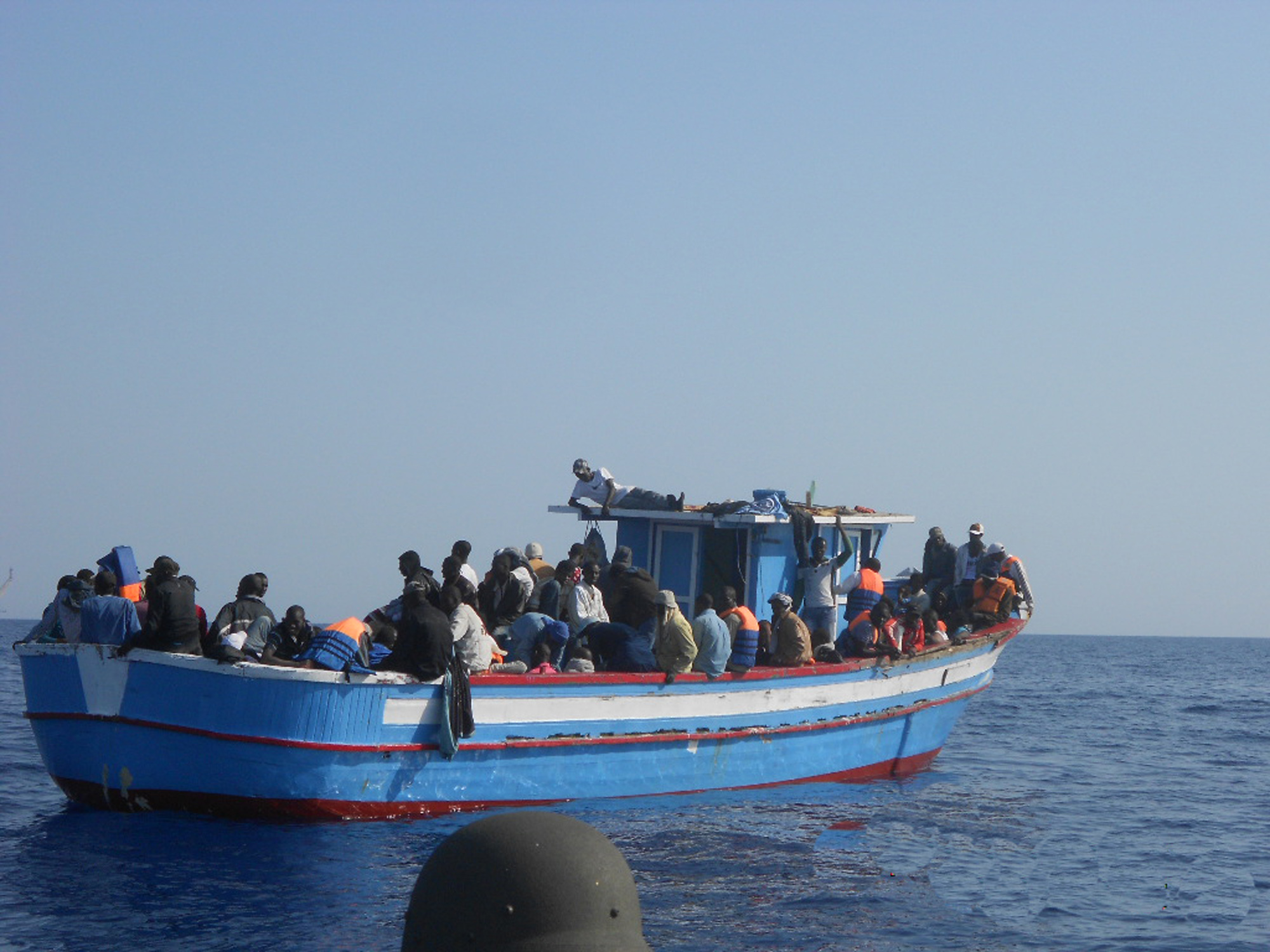
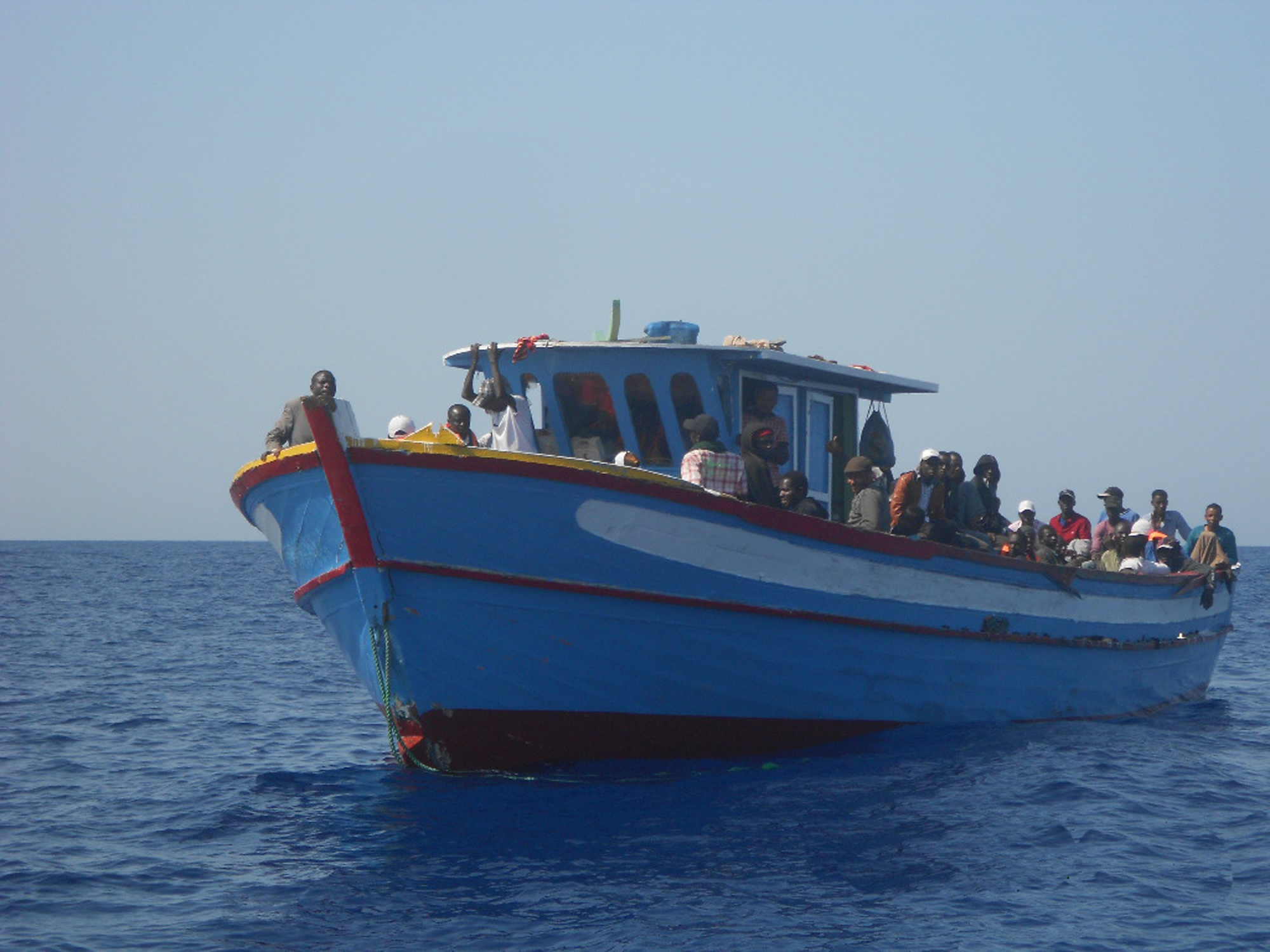
A Spanish Navy frigate, the Almirante Juan de Borbón, participating in NATO’s Operation Unified Protector, on Sunday rescued approximately 100 migrants who were in a disabled boat that reportedly left Zawiyah, Libya several days ago.  The migrants have been without food and water for at least two days.  Among the rescued persons are pregnant women and children.

It is not clear where the migrants will now be taken.  Some reports indicate that the Spanish Defence Ministry is hoping that Tunisia, Malta, or Italy will receive the migrants.  NATO is reportedly seeking a country to accept the migrants.  The migrants are reportedly from Libya, Tunisia, and Sub-Saharan Africa.

Hopefully the migrants will be disembarked quickly (assuming it has not already happened) in an appropriate location where any claims for international protection can be properly considered.  It would be problematic if the migrants are required to remain on the Spanish warship for an extended period and if nearby countries refuse to permit the disembarkation.

Click here (EN), here (ES), here (ES) and here (ES) for articles.

Click here and here for Spanish Defence Ministry and Navy press statements.  (ES)

These photos were released by the Ministerio de Defensa de España.

Photo Credit: Ministerio de Defensa de España (mde.es)

Photo Credit: Ministerio de Defensa de España (mde.es)


4 Comments

Filed under Italy, Libya, Malta, Mediterranean, News, Spain, Turkey

1000 Migrants Reach Andalucía by Boat in First Half of 2011

According to figures compiled by Europa Press, 1,003 migrants in 40 boats reached Andalucía (Almeria, Granada, Cádiz, Huelva and Malaga) between 1 January and 7 July 2011.  The majority of the migrants landed in the province of Granada.

Click here (ES) for article.

Leave a comment

Filed under Data / Stats, Eastern Atlantic, Mediterranean, Morocco, News, Spain

Head of Armed Forces of Malta Describes Malta’s Interpretation of Its SAR Responsibilities

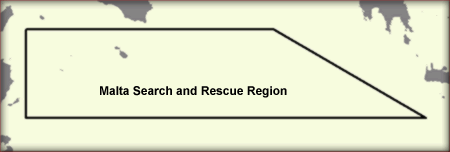
Brigadier Martin Xuereb, the head of the Armed Forces of Malta (AFM), spoke at a recent seminar sponsored by the European Parliament, “Europe’s new Mediterranean reality: Migration and asylum in Malta, Greece and Cyprus,” and summarised Malta’s interpretation of its search and rescue obligations.  Xuereb said that Malta is obligated to coordinate search and rescue operations within its SAR zone, but is not required to perform all rescue operations.

Xuereb said Malta believes rescued persons should be disembarked at the nearest place of safety which, given the size and location of the Maltese SAR, will sometimes mean that Italian territory, particularly Lampedusa, is closer.  Xuereb acknowledged that this interpretation is not shared by others.  Xuereb “said that Malta had consistently insisted that the arrangement that best represented the interests of rescued persons was one that saw them disembarked in the nearest place of safety.”  He said the Maltese Rescue Coordination Centre (RCC) has coordinated or assisted with 54 SAR cases so far this year.

Xuereb also confirmed that Malta would continue its refusal to host Frontex joint operations because of its objections to Frontex guidelines which are based “on a number of grounds, including the fact that [the guidelines] addressed matters deemed to be outside community competence and attempted to erode the rights that Malta enjoyed under the international legal framework. … In light of these guidelines, Malta considered the hosting of [Frontex] joint operations to be detrimental to its national interest.”  Malta objects to the guidelines because it believes they would require rescued migrants to be disembarked in the country hosting the joint operation.

Click here and here for articles.

Leave a comment

Filed under Frontex, Italy, Malta, Mediterranean, News

Italian Coast Guard: 44,000 Migrants Reach Italy by Boat in First Half of 2011

In a presentation on 28 June before the Italian Parliament’s Schengen Committee (Comitato parlamentare di controllo sull’attuazione dell’accordo di Schengen), officials from the Italian Coast Guard reported that at least 44,000 migrants have reached Italy by boat so far in 2011.

1,000 additional migrants arrived in Lampedusa over the 24 hour period Wednesay to Thursday of this week.  With the exception of one small boat carrying 8 Tunisians, all of the boats are believed to have left from Libya in recent days.

Click here, here, and here for articles.  (IT)

Leave a comment

Filed under Data / Stats, Italy, Libya, Mediterranean, News, Tunisia

Klepp, Int J Refugee Law, “A Double Bind: Malta and the Rescue of Unwanted Migrants at Sea, a Legal Anthropological Perspective on the Humanitarian Law of the Sea”

An article by Silja Klepp (Research Associate, Research Center for Sustainability Studies (artec), University of Bremen) entitled “A Double Bind: Malta and the Rescue of Unwanted Migrants at Sea, a Legal Anthropological Perspective on the Humanitarian Law of the Sea” has been published as an online advance access article by the International Journal of Refugee Law.

Abstract: “This paper discusses research results from anthropological fieldwork carried out in Malta in 2007. The island, which is situated in the central Mediterranean Sea between Tunisia, Libya and Italy, is a focal point regarding the continuing refugee situation. One of the research aims was to investigate the situation at sea concerning Search and Rescue (SAR) operations for migrants and refugees crossing the Mediterranean by boat. In the year 2006, 556 missing and drowned migrants were registered in the central Mediterranean between Libya, Malta and Italy, this number increased to 642 in 2008.1 The goal of the research in Malta was therefore to understand why an increasing number of migrants were dying at sea and what role the European security forces play in this context.

After introducing the research perspective of this article, background information concerning migration movements in the Mediterranean Sea between Libya, Italy and Malta in recent years is provided. Due to European regulations, which are considered unfavourable for the island, and its population density, Malta feels under pressure from migrants arriving by boat across the Mediterranean. Different concepts regarding a ‘place of safety’ to disembark rescued boat migrants are debated. The ambiguities in the responsibilities cause problems for the captains who rescue migrants in distress at sea. These ambiguities may in turn lead to a weakening of the SAR regime. Following discussion of the legal and political quarrels on the place of safety, the SAR operations at sea of the Armed Forces of Malta is analysed. The findings show that it is not merely a case of enforcing legal norms created by international law. The process is much more complex: legal gaps are filled by regional actors, through informal or even illegal practices, asserting their own claims at their convenience. Thus, transnationalization processes of law, such as the international SAR regime, are a fragmented and ambiguous set of regulations, creating space for negotiation and manoeuvre.2

Click here for link.  (Subscription or payment required.)

Also by Klepp from 2010, European Journal of Migration and Law: “A Contested Asylum System: The European Union between Refugee Protection and Border Control in the Mediterranean Sea.”

Leave a comment

Filed under Analysis, European Union, Italy, Malta, Mediterranean, UNHCR

Boats with Libyans Arrive in Tunisia

Two boats carrying Libyans have arrived in the Tunisian port of El Ktef in Ben Guerdane this week.  The port is located just west of the international border with Libya.  TAP reports that one boat arrived earlier this week carrying 38 Libyan civilians and military members.  A second boat arrived on Thursday carrying 48 people, 19 of whom were Libyan military or police members.

Click here and here for articles.  (FR)

Leave a comment

Filed under Libya, Mediterranean, News, Tunisia

Boat Carrying 840 Migrants Arrives in Lampedusa

A boat carrying 840 sub-Saharan asylum seekers from Libya reached Lampedusa on 22 June.   According to media reports this landing constitutes the largest single landing of a migrant boat on Lampedusa, though boats carrying larger numbers of persons have arrived elsewhere.   Among the 840 persons were 117 women and 28 children.   932 migrants landed in Pozzallo, Ragusa, several weeks ago.  Because the 20-metre long boat was dangerously overcrowded and unstable, Italian authorities boarded the vessel as it approached Lampedusa in order to redistribute weight and to steer the boat into the harbour in an effort to prevent the vessel from capsizing.

Click here (EN) and here (IT) for articles.

Leave a comment

Filed under Italy, Libya, Mediterranean, News

PACE Appoints Tineke Strik as Rapporteur to Investigate Mediterranean Sea Deaths

The Migration Committee of the Parliamentary Assembly of the Council of Europe has appointed Tineke Strik (Netherlands, SOC) to prepare a report on the deaths of boat people who have died in the Mediterranean since January 2011.

From the PACE press statement: “‘There have been allegations that migrants and refugees are dying after their appeals for rescue have been ignored,’ said Mrs Strik. ‘Such a grave allegation must be urgently investigated.  I intend to look into the manner in which these boats are intercepted – or not – by the different national coastguards, the EU’s border agency FRONTEX, or even military vessels. I also intend to speak to witnesses directly involved in reported incidents, and put questions to national authorities, the UNHCR, FRONTEX and NATO, among others.’  On 8 May, the Guardian newspaper reported that 61 boat people escaping from Libya had died after their appeals for rescue had been ignored by armed forces operating in the Mediterranean. The following day PACE President Mevlüt Çavusoglu called for ‘an immediate and comprehensive enquiry’ into the incident.”

Click here for PACE press statement.

1 Comment

Filed under Council of Europe, Frontex, Italy, Libya, Malta, Mediterranean, News, Tunisia

PACE Adopts Resolution and Recommendation Regarding the Interception and Rescue at Sea of Asylum Seekers, Refugees and Irregular Migrants

On 21 June 2011, PACE adopted Resolution 1821 and Recommendation 1974 both relating to “the interception and rescue at sea of asylum seekers, refugees and irregular migrants.” 

Here are extensive excerpts:

Provisional edition – The interception and rescue at sea of asylum seekers, refugees and irregular migrants – Resolution 1821 (2011)1

“1.       The surveillance of Europe’s southern borders has become a regional priority. The European continent is having to cope with the relatively large-scale arrival of migratory flows by boat from Africa, reaching Europe mainly through Italy, Malta, Spain, Greece and Cyprus.

[***]

5.       The Assembly notes that measures to manage these maritime arrivals raise numerous problems, of which five are particularly worrying:

5.1.       Despite several relevant international instruments satisfactorily setting out the rights and obligations of states and individuals applicable in this area, interpretations of their content appear to differ. Some states do not agree on the nature and extent of their responsibilities in specific situations and some states also call into question the application of the principle of non-refoulement on the high seas;

5.2.       While the absolute priority in the event of interception at sea is the swift disembarkation of those rescued to a “place of safety”, the notion of “place of safety” does not appear to be interpreted in the same way by all member states. Yet it is clear that the notion of “place of safety” should not be restricted solely to the physical protection of people, but necessarily also entails respect for their fundamental rights;

5.3.       Divergences of this kind directly endanger the lives of the persons to be rescued, in particular by delaying or preventing rescue measures, and are likely to dissuade seafarers from rescuing people in distress at sea. Furthermore, they could result in a violation of the principle of non-refoulement in respect of a number of persons, including some in need of international protection;

5.4.       Although the European Agency for the Management of Operational Cooperation at the External Borders of the Member states of the European Union (Frontex) plays an ever increasing role in interception at sea, the guarantees of respect for human rights and obligations arising under international and European Union law in the context of the joint operations it co-ordinates are inadequate;

5.5.       Finally, these sea arrivals place a disproportionate burden on the states located on the southern borders of the European Union. The goal of responsibilities being shared more fairly and greater solidarity in the migration sphere between European states is far from being attained.

6.       The situation is rendered more complex by the fact that these migratory flows are of a mixed nature and therefore call for specialised and tailored protection-sensitive responses in keeping with the status of those rescued. To respond to sea arrivals adequately and in line with the relevant international standards, the states must take account of this aspect in their migration management policies and activities.

[***]

8.       Finally and above all, the Assembly reminds the member states that they have both a moral and legal obligation to save persons in distress at sea without the slightest delay, and unequivocally reiterates the interpretation given by the Office of the United Nations High Commissioner for Refugees (UNHCR), which states that the principle of non-refoulement is equally applicable on the high seas. The high seas are not an area where states are exempt from their legal obligations, including those emerging from international human rights law and international refugee law.

9.       Accordingly, the Assembly calls on the member states, when conducting maritime border surveillance operations, whether in the context of preventing smuggling and trafficking in human beings or in connection with border management, be it in the exercise of de jure or de facto jurisdiction, to:

9.1.       fulfil without exception and without delay their obligation to save people in distress at sea;

9.2.       ensure that their border management policies and activities, including interception measures, recognise the mixed make-up of flows of individuals attempting to cross maritime borders;

9.3.       guarantee for all intercepted persons humane treatment and systematic respect for their human rights, including the principle of non-refoulement, regardless of whether interception measures are implemented within their own territorial waters, those of another state on the basis of an ad hoc bilateral agreement, or on the high seas;

9.4.       refrain from any practices that might be tantamount to direct or indirect refoulement, including on the high seas, in keeping with the UNHCR’s interpretation of the extraterritorial application of that principle and with the relevant judgements of the European Court of Human Rights;

9.5.       carry out as a priority action the swift disembarkation of rescued persons to a “place of safety” and interpret a “place of safety” as meaning a place which can meet the immediate needs of those disembarked and in no way jeopardises their fundamental rights, since the notion of “safety” extends beyond mere protection from physical danger and must also take into account the fundamental rights dimension of the proposed place of disembarkation;

9.6.       guarantee access to a fair and effective asylum procedure for those intercepted who are in need of international protection;

9.7.       guarantee access to protection and assistance, including to asylum procedures, for those intercepted who are victims of human trafficking or at risk of being trafficked;

9.8.       ensure that the placement in a detention facility of those intercepted – always excluding minors and vulnerable categories –, regardless of their status, is authorised by the judicial authorities and occurs only where necessary and on grounds prescribed by law, that there is no other suitable alternative and that such placement conforms to the minimum standards and principles set forth in Assembly Resolution 1707 (2010) on the detention of asylum seekers and irregular migrants in Europe;

9.9.       suspend any bilateral agreements they may have concluded with third states if the human rights of those intercepted are not appropriately guaranteed therein, particularly the right of access to an asylum procedure, and wherever these might be tantamount to a violation of the principle of non-refoulement, and conclude new bilateral agreements specifically containing such human rights guarantees and measures for their regular and effective monitoring;

9.10.       sign and ratify, if they have not already done so, the aforementioned relevant international instruments and take account of the Guidelines of the International Maritime Organisation (IMO) on the Treatment of Persons rescued at Sea;

9.11.       sign and ratify, if they have not already done so, the Council of Europe Convention on Action against Trafficking in Human Beings (CETS No. 197) and the so-called “Palermo Protocols” to the United Nations Convention against Transnational Organized Crime (2000);

9.12.       ensure that maritime border surveillance operations and border control measures do not affect the specific protection afforded under international law to vulnerable categories such as refugees, stateless persons, women and unaccompanied children, migrants, victims of trafficking or at risk of being trafficked, or victims of torture and trauma.

10.       The Assembly is concerned about the lack of clarity regarding the respective responsibilities of European Union states and Frontex and the absence of adequate guarantees for the respect of fundamental rights and international standards in the framework of joint operations co-ordinated by that agency. While the Assembly welcomes the proposals presented by the European Commission to amend the rules governing that agency, with a view to strengthening guarantees of full respect for fundamental rights, it considers them inadequate and would like the European Parliament to be entrusted with the democratic supervision of the agency’s activities, particularly where respect for fundamental rights is concerned.

[***]”

Provisional edition – The interception and rescue at sea of asylum seekers, refugees and irregular migrants – Recommendation 1974 (2011)1

“[***]

4.       [***] the Assembly reminds the Committee of Ministers of its dual responsibility: to support those member states that are in need, but also to make sure that all human rights obligations are complied with in the context of the interception and rescue at sea of asylum seekers, refugees and irregular migrants, including by guaranteeing to those intercepted access to a fair and efficient asylum procedure.

5.       The Assembly therefore calls on the Committee of Ministers to:

5.1.       include in the training material all necessary elements to enable the trained persons to proceed to a screening assessment of the international protection needs of intercepted persons and to ensure that staff involved in the operations of the European Agency for the Management of Operational Cooperation at the External Borders of the Member states of the European Union (Frontex) are trained accordingly;

5.2.       define, in close co-operation with the Office of the United Nations High Commissioner for Refugees (UNHCR), guidelines and standard operating procedures, when interception and rescue at sea takes place, determining minimum administrative procedures to guarantee that those persons with international protection needs are identified and provided with the appropriate protection;

5.3.       continue monitoring the situation of large-scale arrivals of irregular migrants and asylum seekers, and in particular the issue of interception and rescue at sea, including by holding extraordinary meetings on the situation, where appropriate, and use the good offices of the UNHCR with its representative at the Council of Europe, where relevant.”

Click here for full text of Resolution 1821 (2011).

Click here for full text of Recommendation 1974 (2011).

Click here  for speech by Tineke Strik (Netherlands, SOC) presenting the Resolution. (Scroll down page for the English text of speech.)

1 Comment

Filed under Aegean Sea, Council of Europe, Cyprus, Frontex, Greece, Italy, Libya, Malta, Mediterranean, News, Spain, Statements, UNHCR

Hirsi v Italy: UNHCR’s Oral Intervention Before ECtHR Grand Chamber

UNHCR released the text of its oral submission as a third party intervener before the ECtHR Grand Chamber in Hirsi and others v Italy, Requête no 27765/09.  The oral submission was made by Madeline Garlick, Head of Policy and Legal Support Unit, Bureau for Europe.

Note UNHCR’s disagreement with the Government of Italy’s position on the extraterritorial applicability of Article 4 of Protocol 4’s prohibition of collective expulsion:  “Although it is of primary importance to this case, UNHCR today will not address Article 4 of Protocol 4 of the European Convention on Human Rights, since the Office of the United Nations High Commissioner for Human Rights covers it comprehensively in its written submission. UNHCR supports and shares the views expressed in that submission, holding that the prohibition of collective expulsion is at stake in this case including in relation to extraterritorial acts.”

Click here for the full text of UNHCR’s oral submission.

1 Comment

Filed under Council of Europe, European Court of Human Rights, Italy, Judicial, Libya, Mediterranean, News, OHCHR, UNHCR

Hirsi v Italy: Summary of Oral Submission made by Govt. of Italy to Grand Chamber ECtHR

I have watched a portion of the web cast of yesterday’s oral submissions before the ECtHR Grand Chamber in Hirsi and others v Italy, Requête no 27765/09.  Here is a summary of the oral submissions made on behalf of the Respondent Government of Italy by Mrs. Silvia Coppari, Co-Agent, and Mr. Giuseppe Albenzio, Adviser.  NB while I think my notes are accurate, do not rely on them for exact quotes of any of the oral remarks.

Oral Submission by Mrs. Silvia Coppari, Co-Agent, Government of Italy

Introductory Remarks Critical of Applicants:

Coppari began her oral submission by saying that the Italian government did not intend to enter into the controversy raised by Applicants in their written submissions where the Italian government and its representatives were insulted and provoked by the Applicants’ statements that the arguments relied upon by the Italian government were purely formal or quite absurd and tendentious.  Coppari described the Applicants’ written submission as a political and ideological manifesto against the government and its policy.

Questioning Why Italy Was Singled Out:

Coppari said that the issues raised by the Applicants related to European public policy in general and therefore all EU Member States should be involved in the case.  Italy’s policies and actions were adopted and carried out in a manner consistent with the guidelines, objectives, and guidance set by the EU to curb illegal migration.

Reminding Court that Case is Limited to the Events of 6 May 2009 and is Not a Challenge to Italy’s Migration Policies:

Coppari emphasised that the Application was lodged only with respect to the events that took place on 6 May 2009 when the push-back operation involving the Applicants occurred and that the Application does not deal with the public policy or practices of the Government.

Admissibility Challenge No. 1:

Coppari recalled that the allegations lacked specific supporting evidence and noted that the Applicants themselves have not testified in any domestic proceedings and have not otherwise personally participated in the case. Coppari expressed misgivings about the validity and authenticity of the authorisations given to the Applicants’ legal representatives.  Coppari said there was no certainty as to the identity of the Applicants and therefore no likelihood of individually assigning a particular alleged offence to them or a possible violation of their rights under Art. 34 of the Convention.

Admissibility Challenge No. 2:

Coppari made a second inadmissibility objection due to the failure of the Applicants to lodge an appeal with the Italian courts in line with Art. 13.  The pursuit of such domestic remedies would have given the Italian authorities the opportunity to check whether those who were rescuing illegal migrants on the high seas were possibly liable for any rights violations.  Coppari emphasised that at present there are criminal proceedings underway at the domestic level in cases very similar to the instant case and that these cases will determine whether there was compliance with national and international standards and whether there was effective access to procedures for international protection for unidentified migrants intercepted at high seas and transported to Italian vessels. The existence of these ongoing domestic cases proves that domestic remedies do exist which were not pursued by the Applicants.

The Events of 6 May 2009:

Coppari said that the operations carried out on 6 May 2009 to intercept 3 makeshift migrant vessels were done to protect the migrants from danger and to control the flows of illegal migration towards Europe.  The migrant vessels were in distress on high seas in the Maltese SAR zone.  The migrants were rescued and returned to Libya on board Italian military vessels.  There is no evidence suggesting that requests for international protection were made to Italian authorities.  The migrants were in fact welcomed upon arrival in Libya.  The returns did not breach any basic rights of the Applicants.

Prohibition Against Collective Expulsions Does Not Apply Extraterritorially:

Coppari said that prohibition of collective expulsions provided by Art. 4 of Protocol 4 is not applicable to the case.  Coppari said that the use of the word “expulsion” is an obstacle to its application in the case of extraterritorial exercise of state jurisdiction.  Not only is it an apparent obstacle, it is in fact a logical obstacle which cannot be circumvented because an “expulsion” can only happen to people who are already on national territory or who have illegally crossed the border.  The transfer to a vessel on the high seas cannot be equated with entry upon national territory or permanent residence on national territory.

Giuseppe Albenzio, Adviser, Government of Italy

Introductory Remarks – Italy’s Policies Consistent with EU Principles:

Italy has acted in respect of principles handed down by the EU. The European pact on immigration and asylum provides for limits on migratory flows, the need to control illegal immigration by ensuring that illegal immigrants are returned to the country of origin or to a country of transit, the need to make border controls more effective, and to make partnerships with countries of origin or transit.

At the Time of the Events in Question, Libya Was a Country with an Adequate Protection System in Place:

Italy’s bi-lateral agreements with Libya at the time they were implemented recalled the general principles of international law and of human rights and therefore in face of these principles recognised in the agreements, the misgivings regarding Libya’s non-subscription to the UN Refugee Convention should not exist and are not justified especially since Libya has signed the similar African Union Convention for refugees.  It should also be underlined that at the time of the events in question, the UNHCR and IOM were both active in Tripoli and the operations that were carried out in the months after the bilateral treaty was implemented should be seen in this context.

After the first phase of the implementation of the bi-lateral treaty when Italian authorities took note of the fact that Libyan authorities had ordered the UNHCR office in Tripoli to close, which in turn made it difficult to guarantee the protection of fundamental rights on its territory, Italy’s methods for rescuing migrants on the high seas were modified and people who were on vessels coming from Libya would be accompanied to Italian soil after rescue.

The web cast of the hearing is available here.  (I was able to view this with IE but not with Firefox.)

1 Comment

Filed under Council of Europe, European Court of Human Rights, European Union, Italy, Judicial, Libya, Mediterranean, News, UNHCR