Category Archives: Greece

Details from Frontex General Report 2009 (Post 1 of 2)

There is nothing really unexpected in the Frontex General Report for 2009.  If anything, it disappoints with its limited information.

The number of illegal border crossings at EU borders was smaller by a third in 2009 compared to 2008 and Frontex’s budget increased by 25% to € 88.3 million.

Frontex continued to devote the biggest single portion of its expenditures to maritime enforcement.  Almost 40% of Frontex’s total budget, over € 34 million, was spent on sea operations in 2009.  This constitutes 55% of the operational budget.  The Report notes that this cost is due to the high operating costs of ships and surveillance aircraft.

Expenditures for Frontex facilitated return operations sharply increased by 500% in 2009 to almost € 5.5 million.

Limited Information in the Report – The Report explains that Frontex made a decision in 2008 to decrease the level of detail provided in the General Report.  Frontex’s justification is that the Report “is mainly directed towards the general public” and the reduced level of detail “is more suited to this audience.”  This practice was unfortunately continued in the 2009 Report.

General Statistics – Overall there were 106,200 “detections of illegal border-crossings” at EU external land and sea borders in 2009.  This represents a 33% decrease in overall detected crossings relative to 2008, with a 23% reduction of detections at sea and a 43% reduction at land borders.

The reductions are attributed by Frontex to the economic crisis and to bilateral “collaboration agreements with third countries of departure” such as Libya, Senegal, and Mauritania.

Applications for international protection within the EU were 2% fewer in number than in 2008 and were approximately 50% of the 2001-2002 peak when 420,000 applications for international protection were filed.

Cooperation with Non-EU / Non-Schengen Countries – The Report states that cooperation with third countries, including neighbouring countries and countries of origin, is the critical element in “integrated border management.”   It describes Operation HERA as Frontex’s most successful joint operation due to close cooperation with West African countries, particularly Senegal and Mauritania.  On other fronts, “considerable progress” was made with Turkey consisting of Turkey’s appointment of a “first point of contact for Frontex related coordination issues” and preparation of a draft text of a possible Working Arrangement agreement.  “Ad hoc operational co-operation” was pursued when a targeted country was not willing or able to enter into a formal Working Arrangement with Frontex.  An “overriding priority” for Frontex in 2010 is the development of “structured operational co-operation with neighbouring Mediterranean countries.”  The Report acknowledges the existence of the bilateral migration agreement between Italy and Libya, but says nothing about its provisions other than to say that there were “contrasting interpretations of the International Law of the Sea” between Member States.  There is no criticism in the Report whatsoever of the Italian push-back practice.  It is obviously difficult for Frontex to criticise Italy, but was it not possible to note that most people and organizations who have considered the push-back practice have concluded that the practice violates international law?

New Partner Organisations – Frontex formalised a co-operation plan with Europol in October, a Working Arrangement with Interpol in May, a co-operation plan with IOM in February, and made a tripartite agreement with the European Maritime Safety Agency (EMSA) and the Community Fisheries Control Agency (CFCA) relating to maritime surveillance.

More to follow: I will post a second summary with additional information from the General Report pertaining to the specific sea operations for which information is provided within the next day or two.

Click here for the Report.

2 Comments

Filed under Aegean Sea, Data / Stats, Eastern Atlantic, European Union, Frontex, Greece, Italy, Libya, Malta, Mauritania, Mediterranean, Reports, Senegal, Spain, Turkey

Exchange of Letters Between COE HR Commissioner and Greece

COE Human Rights Commissioner Thomas Hammarberg has released copies of the correspondence between his office and the Greek government concerning his February visit to Greece and his concerns over a variety of issues, including Greece’s treatment of asylum seekers.  According to the Commissioner’s web site “[t]he letters focus on the human rights of migrants, especially asylum seekers, minorities, and the conduct of members of law enforcement agencies.  In view of long-standing, serious shortcomings in the field of asylum, the Commissioner highlights the urgent need for the authorities to support the ongoing reform in this field with the necessary institutional capacity and tools for implementation. The Commissioner also urges the authorities to address the situation of unaccompanied or separated migrant children.”

Click here for link to the statement and the letters.

Leave a comment

Filed under Aegean Sea, Commissioner for Human Rights, Greece, News

Maroni: Italy’s Push-Back Agreement with Libya Has Resolved Italy’s Migrant Problem

Roberto Maroni, Italy’s Interior Minister, speaking to the Italian Parliament’s Schengen Committee, said that as a result of Italy’s 2009 push-back agreement with Italy, migratory flows have been mostly diverted to the west to Spain and to the east to Greece.  According to Maroni, to the extent that migrants are reaching Italy by sea, they are doing so by routes from Tunisia and other countries, but not from Libya.  Maroni said that “this resolves Italy’s problem, but not Europe’s problem.” [“Questo risolve i problemi dell’Itala, ma non dell’Europa.”]

According to Maroni there has been a 96% decrease in the arrival of irregular migrants in Italy over the first three months of 2010 compared with the same period last year: from 1 January to 4 April there have reportedly been 170 arrivals compared with 4,573 arrivals over the same period in 2009.

Maroni praised the push-back agreement by saying “We’ve had 28,000 fewer arrivals [since its May 2009 implementation] and we’ve saved countless lives. It’s an unprecedented and concrete achievement which is the result of Berlusconi’s diplomacy and the agreement he struck with Libya.”.

Click here (IT) and here (EN) for articles.

Leave a comment

Filed under Data / Stats, Greece, Italy, Libya, Mediterranean, News, Spain, Tunisia

COE Committee of Ministers: “Europe’s boat people: mixed migration flows by sea into southern Europe”

The Council of Europe’s Committee of Ministers on 31 March adopted its Reply to COE Parliamentary Assembly Recommendation 1850 (2008) on“Europe’s boat people: mixed migration flows by sea into southern Europe.”

Comments from the COE European Committee for the Prevention of Torture and Inhuman or Degrading Treatment or Punishment are attached to the Rely as an Appendix.

The Reply contains an acknowledgement that the Committee of Ministers was not able to reach agreement on the recommendation that guidelines be prepared for minimum standards to be applied to the detention of irregular migrants:

“5. The Committee of Ministers has taken note of the proposal that guidelines be prepared for minimum standards to be applied to the detention of irregular migrants and asylum seekers. However, the Committee of Ministers has not, at the present time, reached a common position with regard to examining possibilities for Council of Europe action in this area. The Committee of Ministers underlines the importance of the relevant instruments of the Council of Europe, such as the European Convention on Human Rights and the recommendations adopted by the Committee of Ministers in this field (see paragraph 9 below), as well as those emerging from the work of the CPT and the Commissioner for Human Rights. It notes the ongoing work in the European Union in this field, including the revision under way of the 2003 directive laying down minimum standards for the reception of asylum seekers.”

Parliamentary Assembly Recommendation 1850 was issued in 2008 prior to the implementation in 2009 of Italy’s push-back practice and the Committee of Ministers’ Reply does not make explicit reference to Italy’s push-back policy.  The Recommendation and Reply are focused on the treatment of irregular migrants as they arrive on the shores of member states.

But there are several statements in the Reply which should apply implicitly to the irregular migrants whether encountered upon arrival on shore or intercepted or rescued in international waters.

For example:

“6. Particularly significant instruments in this field, also to be borne in mind in the framework of any possible activity in this area, include Committee of Ministers’ Recommendation No. R (98) 13 of 18 September 1998 on the right of rejected asylum seekers to an effective remedy against decisions on expulsion in the context of Article 3 of the European Convention on Human Rights, Recommendation No. R (98) 15 on the training of officials who first come into contact with asylum seekers, in particular at border points and Recommendation Rec(2003)5 on measures of detention of asylum seekers. The Committee of Ministers would also signal the “Twenty guidelines on forced return” adopted on 20 May 2005 and the Guidelines on human rights protection in the context of accelerated asylum procedures adopted on 1 July 2009.”

“7. The Committee of Ministers would also refer to other texts relevant in this area, such as its reply to Parliamentary Assembly Recommendation 1755 (2006) on “Human rights of irregular migrants” in which it draws attention to the minimum safeguards provided for in the European Convention on Human Rights that can be applied to irregular migrants. It also recalls its Recommendation No. R (2000) 3 to member states on the right to satisfaction of basic material needs of persons in situations of extreme hardship, which provides a minimum threshold of rights which should be recognised regardless of their status.”

“10. The Committee of Ministers would also draw attention to the extensive work of the Commissioner for Human Rights in this field and to his recommendations to member states and his appeals for solidarity within Europe with those countries that are on the frontline and facing a very difficult situation. It also refers to the regular exchanges of views that it holds with the Commissioner during the year. These exchanges are both of a general nature but also concern specific country reports in which he addresses, inter alia, the protection of human rights of immigrants and asylum seekers, including, where relevant, those arriving by sea. [***]”

Click here for the full Committee of Ministers Reply.

1 Comment

Filed under Aegean Sea, Commissioner for Human Rights, Committee of Ministers, Council of Europe, Eastern Atlantic, European Committee for the Prevention of Torture and Inhuman or Degrading Treatment or Punishment, Greece, Italy, Mediterranean, Spain, Statements

Analysis of the Real Instituto Elcano- Frontex: Successful Blame Shifting of the Member States?

Analysis of the Real Instituto Elcano: “Frontex: Successful Blame Shifting of the Member States?” by Jorrit J. Rijpma, PhD European University Institute, Florence, and Lecturer in EU law, Europa Instituut, Leiden University.

Excerpts:

“Frontex in Short – Frontex can be seen as the outcome of a ‘re-balancing’ of powers between the Member States, the Council and the Commission following the communitarisation of the policy on external borders after the Treaty of Amsterdam, constituting an important shift from the intergovernmental coordination of operational activity under the Council to a more Community-based approach. [***]

Joint Operations at Sea – [***] Currently, the most controversial practice is that of the diversion by national border guards of ships back to their point of departure. This practice entails not only a real risk to the life and safety of the passengers on board these often unseaworthy ships, but as regards possible asylum seekers on board, it also risks violating the right to claim asylum and the prohibition of refoulement. The Greek coast guard has the questionable reputation of regularly diverting boats back to the Turkish shores. Italy has openly admitted to the interception and return of irregular migrants and asylum seekers from Libya under its 2008 Treaty on Friendship, Partnership and Cooperation with the latter country. Both within and outside the Hera operations, Spain has been returning people to Senegal and Mauritania, but here at least the interceptions are formally cast in terms of rescue operations and transfer to the nearest place of safety.

Frontex: the Lesser Evil?- There are many reasons why Frontex can be subject to criticism. It could be argued that it is an instrument of an essentially flawed EU migration and asylum policy. [***] Finally, it could be said that the Agency reinforces a securitised perception of what is essentially a humanitarian problem through its one-sided mandate, the background of most of its staff in national law-enforcement agencies and its military-style operations. [***] However, it is important to realise that for the moment the Agency’s scope for independent action remains very limited, both in practical and in legal terms. Serious human-rights violations are more likely to occur in operations from national border guards removed from the public eye, than in relatively well-scrutinised joint operations. Frontex, being a Community body, is subject to numerous reporting and evaluation duties, as well rules on transparency. [***]

Conclusion: Efforts should focus on ensuring full respect of international rules regarding international protection and search and rescue and an authoritative interpretation of these rules in a broad sense. These are essentially political decisions. It is the Member States and the Community institutions, not Frontex, that are to be reproached for the failure to do so. [***]”

Click here for full Analysis.

Leave a comment

Filed under Aegean Sea, Analysis, Eastern Atlantic, European Union, Frontex, Greece, Italy, Libya, Malta, Mauritania, Mediterranean, Senegal, Spain, Turkey

IMO Biannual Reports on “Unsafe Practices Associated with the Trafficking or Transport of Migrants by Sea”

The International Maritime Organization (IMO) has been collecting data on “unsafe practices associated with the trafficking or transport of illegal migrants by sea” since 1999.

Two times a year it releases a biannual report regarding incidents which are reported to the IMO by Member Governments.  The IMO describes the basis for the reporting as follows: “The Maritime Safety Committee, at its seventieth session (7 to 11 December 1998), in approving MSC/Circ.896 on Interim measures for combating unsafe practices associated with the trafficking or transport of illegal migrants by sea, invited Member Governments to promptly convey to the Organization reports on relevant incidents and measures taken to enable the updating or revising of the circular.”

In recent years (and perhaps since 1999), by far most of the reported incidents are provided by Greece.  Italy and Turkey have only reported a small number of incidents in recent years.  It is clear that most Member Governments do not routinely provide data for these biannual reports.

Even though a substantial number of incidents are not being reported and are therefore not documented in the reports, the biannual reports do contain an extensive amount of information dating back to 1999 regarding 2,030 incidents where 77,853 migrants were rescued or intercepted.

The reported data, when provided, include:

  • Ship’s name or description
  • Date and time of incident
  • Position of incident
  • Description of incident
  • Measures taken
  • Migrants (number and nationality; gender; adults/minor)

Click here for the Biannual Report issued 18 February 2010.

Click here for the Biannual Report issued 2 November 2009.

Leave a comment

Filed under Data / Stats, Greece, Italy, Reports, Turkey

COE Human Rights Commissioner Expresses Concern to ECtHR Over Greece’s Treatment of Asylum Seekers

Council of Europe Human Rights Commissioner Thomas Hammarberg has made public the third party intervention he submitted to the European Court of Human Rights on 10 March.  The intervention was made at the invitation of the ECtHR pursuant to Article 36, paragraph 2 of the ECHR, and is the first such submission of its kind by the Commissioner.

The intervention was submitted in case 26494/09 AHMED ALI v. the Netherlands and Greece, and thirteen related cases.  The cases all deal with the return of asylum seekers from the Netherlands to Greece pursuant to the EC Dublin Regulation.

The Commissioner’s Office notes in a Press Statement that “[w]ith the entry into force of Protocol No. 14 to the [ECHR], the Commissioner will [now] have the right to intervene proprio motu as third party in the Court’s proceedings.”

Excerpts from the Commissioner’s intervention before the ECtHR:

“Introduction – [***]

3. The protection of the human rights of asylum seekers and refugees is a priority theme of the Commissioner’s present work concerning all Council of Europe member states. The Commissioner has repeatedly stressed the importance of guaranteeing the individual right to seek and enjoy asylum and has addressed a number of relevant recommendations to member states. [***]

I. Observations on the current framework of refugee protection in Greece

6. The Commissioner is fully cognisant of the considerable, mixed migration (immigrants and asylum seekers) flow pressures that have been exerted on Greece, as is the case for other Mediterranean Council of Europe member states, for many years. The increase of irregular migration into Greece that has occurred particularly in the last five years has further strained this country’s resources. Nonetheless, the complex international phenomenon of migration should be dealt with by Greece and all other Council of Europe member states concerned in a manner which is not only efficient but also effectively respectful of the Council of Europe human rights standards.

7. Greece received the sixth largest number of refugee applicants in the EU during the first half of 2009 (9 800 applications).

8. In 2009, a total of 15 928 asylum applications were lodged in Greece; there were 11 recognitions of Convention refugee status and 18 grants of humanitarian status or subsidiary protection. The Commissioner has noted with concern that in 2009 the recognition rate at first instance was 0,04% for Convention refugee status and 0,06% for the other two statuses. The pending applications at first instance in 2009 reached 3 122. As regards asylum appeals in 2009, there were 12 095 appeals, 25 recognitions of Convention refugee status and 11 grants of humanitarian or subsidiary protection. The respective recognition rates on appeal were 2,87% and 1,26%. On 10 February 2010 the Commissioner was informed by the Minister of Citizen Protection of the fact that the total of pending asylum claims in early February 2010 was as high as 44 560, and found this to be worrying.

9. The Commissioner noted that during the first ten months of 2009 Greece received 7 857 applications from other EU member states to receive back refugee applicants under the Dublin Regulation. Of these applications, 2 770 were accepted and 106 rejected. The final transfers to Greece during that period totalled 995. [***]

II. Major issues concerning the asylum procedure in Greece and human rights safeguards

Legal framework  [***]

Asylum seekers’ access to domestic and international remedies

23. The Commissioner recalls his Recommendation concerning the rights of aliens wishing to enter a Council of Europe member State and the enforcement of expulsion orders, where he stresses the need for the right of judicial remedy within the meaning of Article 13 of the Convention not only to be guaranteed in law but also to be granted in practice when a person alleges that the competent authorities have contravened or are likely to contravene a right guaranteed by the Convention. [***]

27. In view of the above, the Commissioner is worried that asylum seekers in Greece face a serious, real risk of being deprived of their right to an effective remedy in respect of the violations of the Convention of which they allege to be victims, which is guaranteed under Article 13 of the Convention and Article 39 of the Directive 2005/85/EC. The notion of an effective remedy under Article 13 requires a scope of review conducted by a domestic court able to address the key elements of whether there has been a violation of the Convention.

28. As regards access to the European Court of Human Rights, although this is guaranteed in principle for every individual within Greece’s jurisdiction, lodging an application before the Court appears to be very difficult in practice. The same applies for requests made under Rule 39 of the Rules of the Court (interim measures): the number of such requests introduced from and against Greece seems to be quite low compared to other state parties, and can be linked to difficulties, described in other parts of the present written submission, in accessing interpretation services and lawyers, in particular for people in detention, and to the lack of proper legal information available in general.

Protection of asylum seekers from refoulement

29. During both his visits the Commissioner was informed by migrants he met and by Greek refugee lawyers about instances of non registration by the Police of asylum claims and of instances of refoulement, especially from Greece to Turkey. Such forced returns have occasionally taken place before the migrants were able to apply for asylum, but also concern ‘pink card’ holders registered as asylum seekers in Greece. Characteristically, during the Commissioner’s discussions with migrant detainees at the Feres border guard station in December 2008, one of them reported that of the group of 65 persons who were arrested in 2008, having crossed the Evros river, 50 of them were ‘immediately deported’. [***]

31. In this context, it is noted that despite the Commissioner’s recommendations, Greece has not as yet acceded to the 1963 Protocol No. 4 to the European Convention on Human Rights which, inter alia, proscribes the collective expulsion of aliens, while Turkey still adheres to the geographical limitation of the 1951 UN Refugee Convention, thus excluding from refugee status persons coming from outside of Europe.

32. During his visit to Greece in February 2010 the Commissioner was informed of and concerned at another reported case of refoulement concerning a group of 43 Kurds who had arrived at the town of Chania, Crete on 18 July 2009; 17 of them applied for refugee status. According to NGO reports, on 27 July 2009 they were all transferred to the aliens’ detention centre of Venna (North East Greece) from where they were subsequently expelled to Turkey. A series of other collective expulsions of migrant groups, ranging from 30 to 120 persons, to Turkey (through the land border of the Evros department) from various eastern Aegean islands were reported by Greek refugee lawyers to have occurred in July and August 2009. The Commissioner was informed by Greek refugee lawyers of more similar collective expulsions that have reportedly occurred in December 2009, January and February 2010.

33. The Commissioner underlines that such practices are not compatible with member states’ obligations recalled by the Committee of Ministers Twenty Guidelines on Forced Returns (especially Guideline 3 – prohibition of collective expulsion) and with the states’ fundamental obligation under the Convention not to return a person to a country where they would face a real risk of being subjected to treatment contrary to Article 3, or even Article 2. The Commissioner is concerned that asylum seekers returning to Greece by virtue of the Dublin Regulation may face such risks, jeopardising the enjoyment by them of their human rights enshrined in the Convention. [***]

Conclusions

47. In conclusion, the Commissioner considers that current asylum law and practice in Greece are not in compliance with international and European human rights standards. In particular:

– access to refugee protection remains highly problematic, notably due to the non-functioning of the first instance Advisory Refugee Committees, lack of proper information on asylum procedures and legal aid that should be available to potential or actual asylum seekers, widely reported instances of refoulement or non-registration of asylum claims;

– the quality of asylum decisions at first instance is inadequate, notably because of structural deficiencies and lack of procedural safeguards, in particular concerning the provision of legal aid and interpretation;

– existing domestic remedy against negative asylum applications is not effective;

– asylum seekers, including persons transferred under the Dublin Regulation, face extremely harsh living conditions in Greece.

48. Since the beginning of his mandate, the Commissioner has been following developments relating to migration, and especially asylum, in Greece. The Commissioner is pleased to note the new Greek government’s decision and willingness, shown to him during his visit in February 2010, to overhaul the refugee protection system and overcome its current serious, chronic and structural deficiencies.

49. The Commissioner fully supports these efforts and has urged the Greek authorities to proceed and engage with determination and commitment in the necessary legislative and administrative changes that would bring the Greek asylum system in line with international and European human rights standards.”

Click here for full submission to ECtHR.

Click here for the Commissioner’s Press Statement.
Leave a comment

Filed under Aegean Sea, European Court of Human Rights, Greece, Judicial, Statements

CARIM Mediterranean Migration 2008-2009 Report

Noted recently in the Newsletter of the Real Instituto Elcano:

CARIM MEDITERRANEAN MIGRATION 2008-2009 REPORT, Robert Schuman Centre for Advanced Studies, San Domenico di Fiesole (FI): European University Institute, October 2009, Edited by Philippe Fargues

MIGRATIONS MÉDITERRANÉENNES, RAPPORT 2008-2009, Octobre 2009, Sous la direction de Philippe Fargues

An excerpt:

“The period covered in this latest report, the years 2007 and 2008, is characterised by the accentuation of the migratory trends described in previous reports1: emigration from South and East Mediterranean countries (SEM) is continuing at a steady rate, while immigration to these countries is increasing, particularly in various irregular forms. [***]

Transit Migrants

Transit migrants in the SEM countries are people who cannot reach the destination of their choice (Europe) for lack of the required visa. They are waiting to find a way to reach this destination and over time their transit becomes stay. All the SEM countries, from Mauritania in the west to Turkey in the East, have, over the course of the last two decades, been transformed into transit countries for those travelling to Europe.

How many transit migrants are there in the SEM countries? The statistics in this area are even more inadequate than those for de facto refugees or irregular migrant workers. Aggregating figures provided by the police and various NGOs allows for a maximum estimation of 200,000 transit migrants in the region (Table 7).

Table 7: Transit migrants present in SEM countries around 2005

Country                        Estimated number

Algeria                           > 10,000

Turkey                           > 50,000

Libya                              > 10,000

Mauritania                   ± 30,000

Morocco                      > 10,000

Egypt, Israel, Jordan,

Lebanon, Palestine,

Syria, Tunisia              Not available

Total SEM                     < 200,000

Sources: CARIM, Irregular Migration Series http://www.carim.org/index.php?areaid=8&contentid=235&callTopic=7

According to data collected by an Italian NGO on deaths and disappearances at sea (Table 8), it would seem that the number of clandestine sea crossings from SEM countries to Europe is not increasing (in fact it may even have decreased in 2008) but the routes are changing. The most ancient route across the Straits of Gibraltar is being used less and less and has been successively replaced by that from Mauritania, or even Senegal, to the Canary Islands (on which traffic peaked in 2006), from Turkey to the Greek Islands of the Dodecanese (on which traffic peaked in 2007) and lastly from Libya to Italy on which traffic peaked in 2008).

How many transit migrants are there who attempt (sometimes successfully) the crossing to Europe? And for how many does transit in the SEM countries become a more long period of stay? The rare surveys carried out in the Maghreb or in Turkey do not allow us to assess this. With the extension of their stay in countries initially seen as a place of transit, transit migrants soon become mixed up with the more significant mass of migrant workers in irregular situation. On the other hand, it is not always possible to distinguish them from refugees. The two groups exist side by side in what the HCR calls flows of “mixed migration” where transit migrants and refugees, sometimes from the same countries of provenance, resort to the same smugglers and find themselves in the same circumstances.

Table 8: Dead and missing persons on sea routes of irregular migration from SEM to Europe 2000 – 2008

Year\ Route      Sicily +             Gibraltar +

Sardinia           Ceuta & Melilla

2000                   0                           127

2001                     8                           157

2002                     236                     106

2003                     413                     108

2004                     206                    64

2005                     437                    146

2006                     302                    215

2007                     621                    142

2008                     702                    216

Total                     2,925                1,281

Year\ Route      Canary              Aegean Sea

Islands

2000                   16                         32

2001                     40                        102

2002                     39                        94

2003                     130                      81

2004                     232                      103

2005                     185                      98

2006                     1,035                  73

2007                     745                      257

2008                      136                      181

Total                       2,558                 1,021

Year                Total All Routes

2000                 175

2001                   307

2002                   475

2003                   732

2004                   605

2005                   866

2006                   1,625

2007                   1,765

2008                   1,235

Total                  7,785

Source : http://fortresseurope.blogspot.com/

[***]”

Click here for link to full Report in both English and francais.

Leave a comment

Filed under Algeria, Data / Stats, Egypt, France, Greece, Italy, Libya, Malta, Mauritania, Mediterranean, Morocco, Portugal, Reports, Spain, Tunisia, Turkey

Frontex Presentation at European Defence Agency Annual Conference

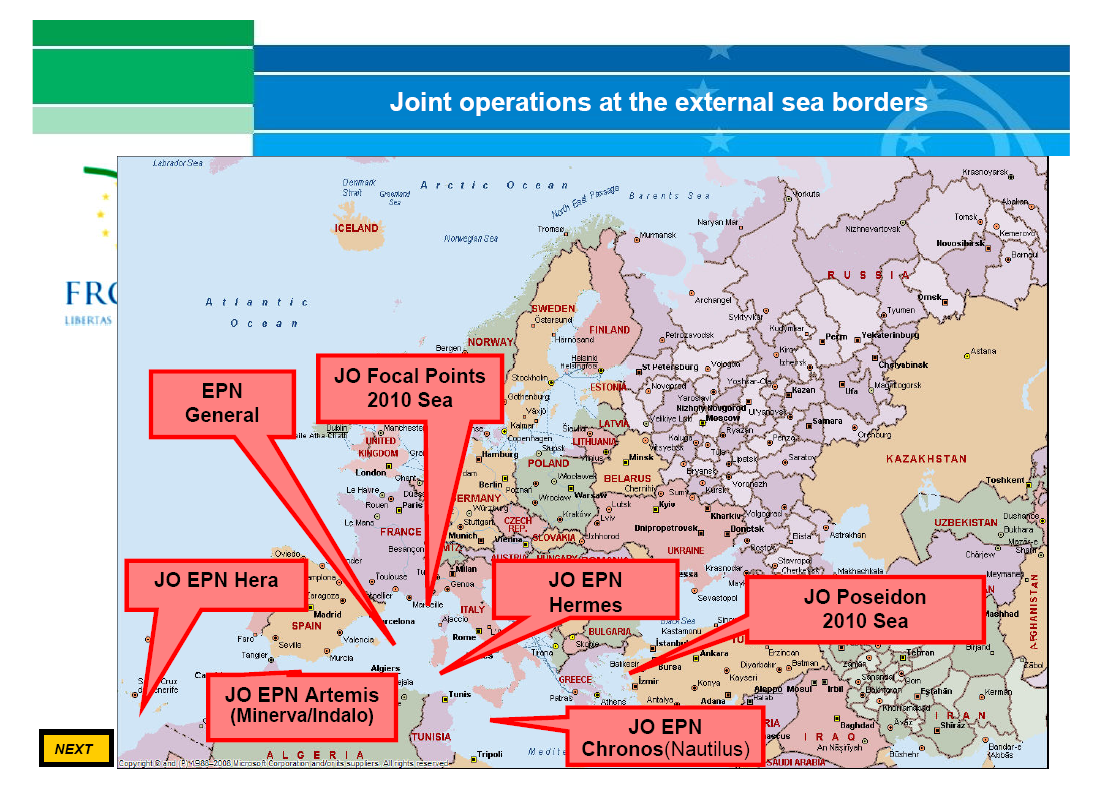
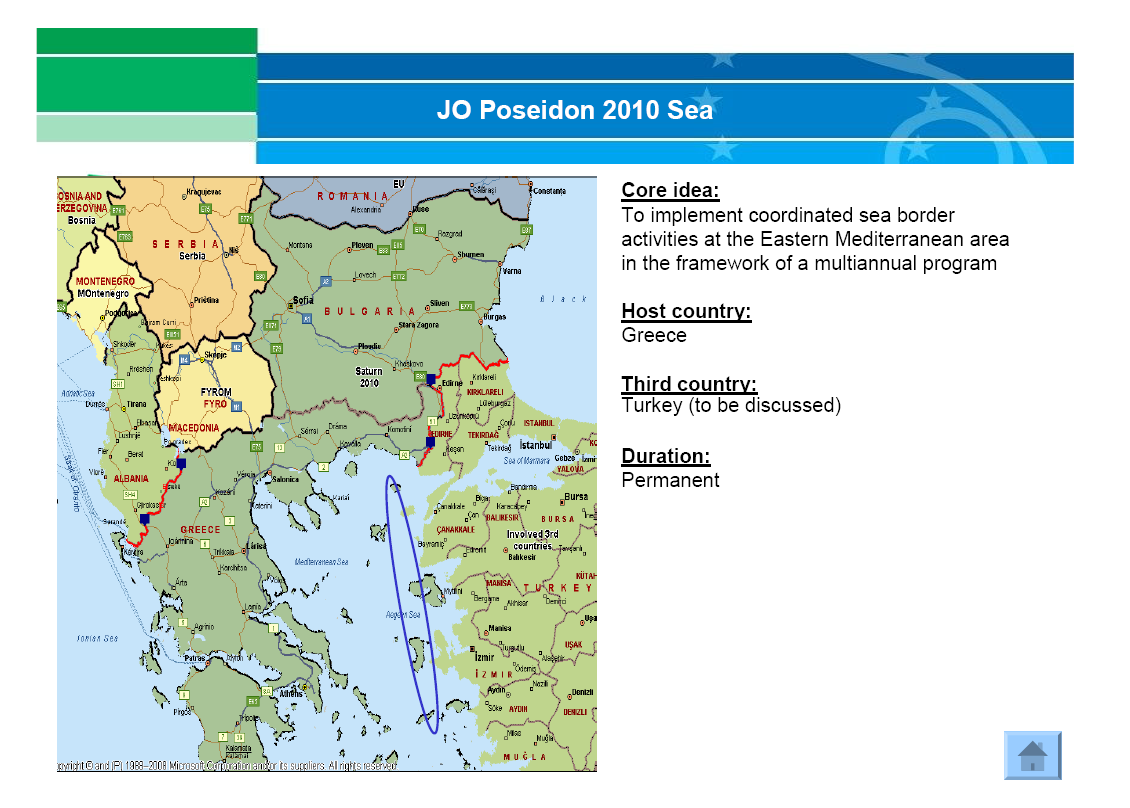
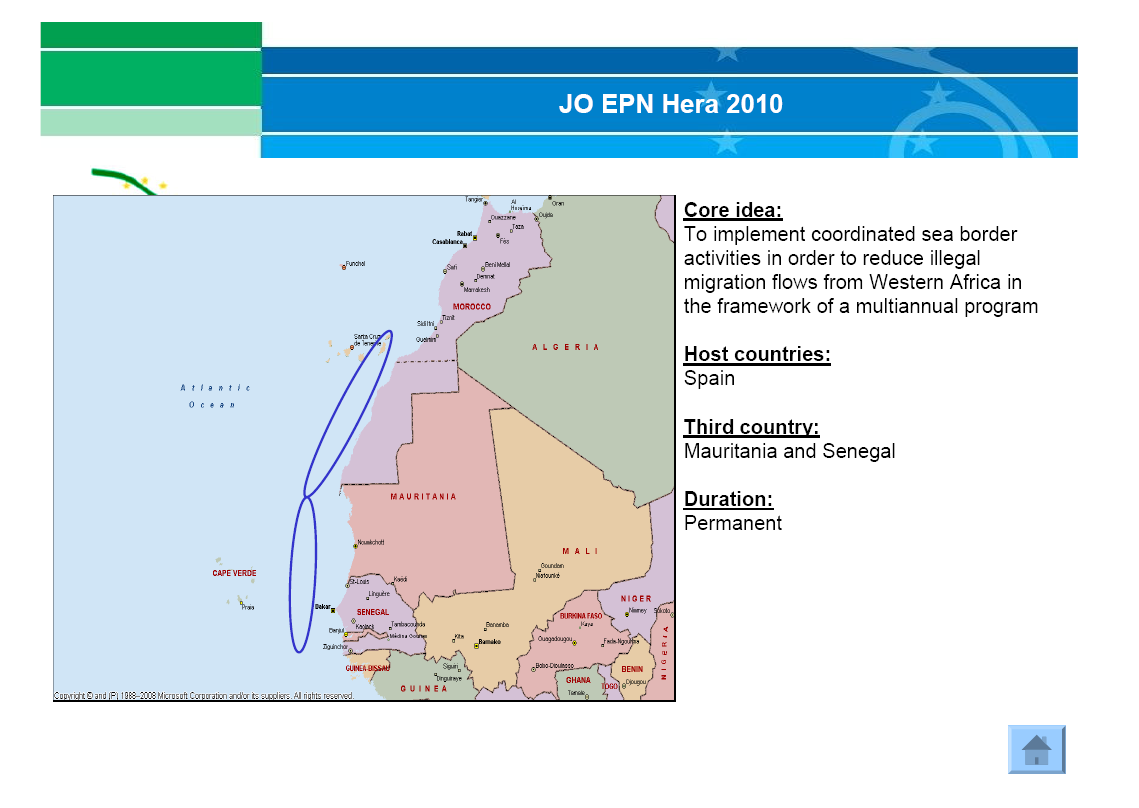
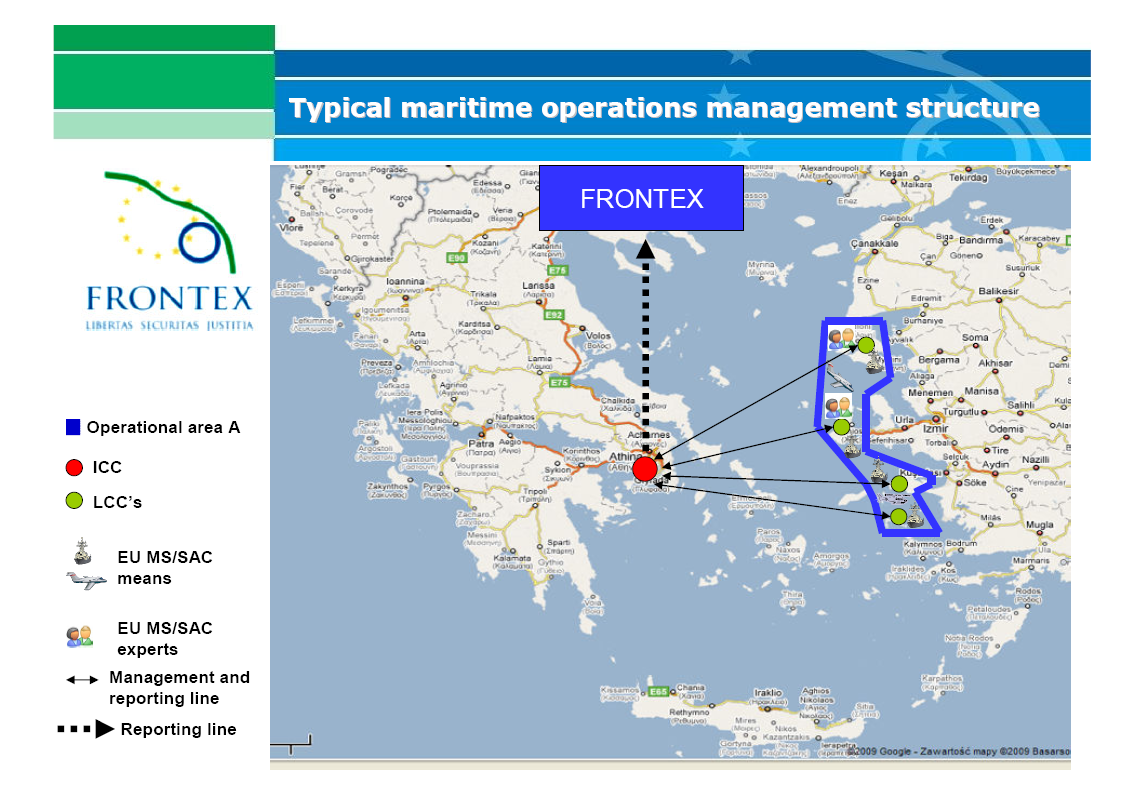
Rustamas Liubajevas, Head, Frontex Joint Operations Unit, presented a lecture entitled “Frontex within integrated Border management concept – Structural approach in planning capability” at the recent Annual Conference of the European Defence Agency.

Copies of some of his slides are reproduced here.

Click here for full slide presentation.

Leave a comment

Filed under Aegean Sea, Algeria, Colloques / Conferences, Eastern Atlantic, European Union, Frontex, Greece, Italy, Libya, Malta, Mauritania, Mediterranean, Morocco, News, Senegal, Spain, Turkey

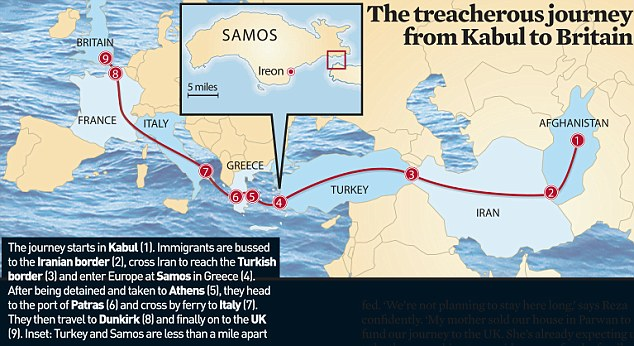
Daily Mail: from Kabul to the UK by way of Samos

The Daily Mail has a special report detailing the experiences and routes of irregular Afghan migrants traveling from Afghanistan to the UK by way of Turkey and Greece.

Click here for the full article.

Leave a comment

Filed under Aegean Sea, Greece, News, UK

Analysis of the Real Instituto Elcano: Controlling Migration in Southern Europe

Analysis of the Real Instituto Elcano: Controlling Migration in Southern Europe, Part 1: Fencing Strategies and Part 2: Gate-keeping Strategies by Anna Triandafyllidou.

“Part 1 Summary: Dealing with irregular migration has emerged as a policy priority at both the national and the EU level, although EU countries are not all affected by this phenomenon in the same way. Countries at the geographical periphery of the Union, and, in particular, southern EU member states that are close to important migration source and transit countries, face significant inflows from their land and sea borders.

This ARI discusses critically the policies adopted by different countries in southern Europe (Italy, Spain and Greece) for managing irregular migration, with a view to showing that reducing irregular migration cannot be achieved by tougher border controls only. Discourses of politicians and the media in announcing ‘floods’ or ‘waves’ of irregular migrants crossing the EU’s external borders and, on the basis of these ‘floods’, considering or indeed approving tougher border enforcement measures as the main means to effectively combat irregular migration need to be questioned by voters as well as by experts.”

Excerpt: “It is interesting to note that while sea-border patrolling and the related FRONTEX operation in the Atlantic Ocean in 2006 did not have substantial results (Triandafyllidou, 2007), the Spanish government’s diplomatic ‘offensive’ in West Africa did. Thus, during the last two years Spain has managed to sign re-admission agreements with Cape Verde, Mali, Guinea Conakry, Guinea Bissau and Nigeria and varied forms of cooperation agreements with other states in the region, with the result of a notable improvement in border management and hence a notable decrease of irregular arrivals from Africa (González Enríquez, 2009). Apprehensions of irregular migrants arriving at the Canary Islands have fallen from over 30,000 in 2006 to approximately 12,000 in 2007 (data from the Spanish Ministry of the Interior cited in Arango & Finotelli, 2008). This decrease is to some extent attributable to the intensification of sea-border patrols and joint FRONTEX operations in the area which led migrants and smugglers to try alternative routes.”

Click here for Part 1 and here for Part 2.

Leave a comment

Filed under Aegean Sea, Analysis, Eastern Atlantic, Greece, Italy, Mediterranean, Spain

First “Frontex Operational Office” to be Based in Greece

The Frontex Management Board has taken the decision to establish Frontex’s first Operational Office (“FOO”) in Piraeus, Greece.  According to the Frontex press release, the purpose of the office is to provide regionally-based support for Frontex coordinated activities such as joint operations and enhanced situational awareness.  If this pilot project is successful, it is expected that future FOOs would be established elsewhere such as the Western Mediterranean, the Western Balkans and Black Sea, and Eastern land borders.

According to the Frontex press release, Frontex Executive Director Laitinen said the establishment of this FOO “supports the possible enhancement of [the] Frontex mandate highlighted in the Stockholm Programme … I can even say this decision anticipates potential enlargement of the EU and Schengen zone. It gives Frontex a possibility to offer more support for the operational involvement of third countries, something that is essential for effective border management.”

Click here for Frontex statement.

Click here for the Final Report on the “Study on the feasibility of establishing specialised branches of Frontex.”  The specific functions of the new FOO are based in part on this feasibility study which was prepared in 2009.

Leave a comment

Filed under Aegean Sea, Frontex, Greece, Mediterranean, News, Turkey

Greece Seeks Talks With Turkey Over Migrants

Greek Citizen Protection Minister Michalis Chryssohoidis has written to Turkish Interior Minister Beşir Atalay asking for talks within the next month on the illegal immigration issue.

“ ‘Only systematic and close cooperation between Greece and Turkey can curb the flow of illegal immigration to the European Union,’ Chrysochoidis reportedly wrote in the letter. According to sources, Chrysochoidis has invited Atalay to Athens to discuss a set of proposals. These include the closer cooperation of Greek and Turkish coast guard officials to ensure that a bilateral pact for the repatriation of migrants is enforced. Turkish vessels currently make no effort to stop smuggling ships, the Greek coast guard says.”

Click here, here, and here for articles.

Leave a comment

Filed under Aegean Sea, Greece, News, Turkey

BLUEMASSMED: Project for Maritime Surveillance of the Mediterranean Area and the Atlantic Approaches

The Bluemassmed project is a new initiative from the European Commission designed to increase cooperation for maritime surveillance in the Mediterranean Sea and its Atlantic approaches, including surveillance of illegal immigration.  The inaugural meeting for the Project was held in Paris on 15 January 2010.

“France, Greece, Italy, Malta, Portugal and Spain [will] cooperate on this specific project to strengthen their common actions against illicit trafficking, illegal immigration and environmental pollution. It will also permit [the reinforcement of] the Search and Rescue efforts in the area. This pilot project granted by the European Commission and co-funded by 6 Member States countries (France, Greece, Italy, Malta, Portugal and Spain) is the first state-centred action to integrate such an important field between Member States countries.”

The project is a two year project “divided in two stages. The first one intends to define the requirements of the actors in terms of exchange of information and to submit a list of technical and legal proposals. The second stage will result in a demonstration, performed among partners and wider, with the help of a demonstrator prototype, connecting present information systems from partners, shaping a possible future network of State actors for maritime surveillance systems, in the framework of several realistic scenarios.”

“The [French] Secrétariat Général de la Mer is leader of the project. The Agenza Spaziale Italiana is Co-leader of the Steering group, composed by representatives from each Member States, which will define the strategic guidelines of the project.”

“BLUEMASSMED aims at being a catalyst for internal and external cooperation between Member States and maritime surveillance actors. The success of this project is directly linked to the involvement of the Partners, responsible to their governments. The prototype demonstrator will be carried out with the support of industry. Industrial involvement is considered as a key investment.”

Click here for Bluemassmed web site.

Click here for English Press Release or here for French Press Release from inaugural conference.

Click here for EC Directorate-General for Maritime Affairs and Fisheries Non-Paper on Maritime Surveillance, 13 Oct. 2008.

Leave a comment

Filed under Eastern Atlantic, European Union, France, Greece, Italy, Malta, Mediterranean, News, Portugal, Spain

Besson appelle l’UE à accélérer le renforcement de l’agence européenne Frontex et la surveillance des frontières européennes

“Les corps de neuf migrants morts noyés en tentant de gagner la Grèce à partir de la Turquie ont été découverts depuis cinq jours au large du port grec d’Alexandroupolis….

“Alors que les frontières extérieures de l’Union Européenne sont soumises en Grèce à une pression sans précédent des filières d’immigration irrégulière, plus de la moitié des entrées illégales dans l’espace Schengen ayant été enregistrées en 2009 à la frontière turco-grecque, Eric BESSON appelle l’Union Européenne à renforcer la surveillance des frontières européennes notamment en Méditerranée.

“Eric BESSON interviendra dans les prochains jours auprès du Commissaire européen chargé de l’immigration pour demander que les décisions prises par les Chefs d’Etat et de Gouvernement européens pour le renforcement de l’agence européenne Frontex soient mises en oeuvre sans délai.

“Ces décisions, adoptées sur proposition de la France par le Conseil européen du 30 octobre 2009, portent en particulier sur :

  • L’adoption de règles d’engagement claires pour les opérations de contrôle maritimes.
  • Une coopération opérationnelle accrue entre Frontex et les pays d’origine et de transit, notamment la Libye et la Turquie.
  • La possibilité d’affréter régulièrement des vols conjoints financés par Frontex pour des opérations groupées d’éloignement au niveau européen.

“Eric BESSON demandera également que la coopération de la Turquie dans la lutte contre les filières d’immigration irrégulière soit placée au centre des relations entre l’Union Européenne et ce pays.

“Eric BESSON proposera enfin à la présidence espagnole de l’Union Européenne que la prochaine réunion des Ministres européens en charge de l’immigration, le 21 janvier à Tolède, permette de définir une feuille de route précise pour l’application des décisions du Conseil européen et les relations avec la Turquie dans le domaine de la circulation des personnes.”

Click here for full Statement.

Leave a comment

Filed under Aegean Sea, European Union, France, Frontex, Greece, Mediterranean, Statements, Turkey