Category Archives: Malta

Statewatch Analysis: The Arab Spring and the death toll in the Mediterranean: the true face of Fortress Europe

Statewatch released an Analysis by Marie Martin entitled “The Arab Spring and the death toll in the Mediterranean: the true face of Fortress Europe.”

Excerpt: “Throughout the uprisings in North Africa, the EU has maintained a discourse of double standards: supporting calls for freedom and democracy but greeting resulting population displacement with hostility. This has contributed to a record number of people dying at Europe’s borders during the first seven months of 2011. It is all about numbers when it comes to migration; about how large a flow came in, how many people asked for protection and how many applicants were “failed” or “rejected.” Numbers quantify the “threat” (e.g. the “invasion” of irregular migrants) and serve as a bargaining tool with third countries (allowing the acceptance of the externalisation of border controls in exchange for facilitating the mobility of a specific number of nationals). Numbers demonstrate whether the target of “x” thousands of annual deportations of irregular migrants is met. Numbers released by public authorities are meant to justify the need for migration policies and to show how efficiently they are implemented. Yet hidden numbers question the legitimacy of these policies – the death toll of people dying at Europe’s borders is such an example. For several years, Gabriele del Grande has monitored the situation at the EU’s external borders and kept a record of the number of deaths occurring in the context of irregular bordercrossings [2] on the Fortress Europe website. According to the website’s latest update, the EU’s borders have never been so “murderous” [3]: there were 1,931 deaths during the first seven months of 2011. [4] In 2008, a petition was brought before the European Parliament by the ProAsyl organisation, denouncing the  deathtrap at the EU’s borders” [5]: it was a particularly “murderous” year, with 1,500 deaths. It is terrifying to realise that this toll was exceeded in the first seven months of 2011. …”

Click here for Analysis.

1 Comment

Filed under Algeria, Analysis, Egypt, European Union, France, Frontex, Italy, Libya, Malta, Mediterranean, Morocco, Spain, Tunisia, UK

Malmström: Europe Failed Refugees in 2011

Commissioner Cecilia Malmström wrote an opinion article in The Times of Malta of 19 January:  “Refugees: How Europe failed- European promises of solidarity with people in need were tested in 2011. It is worrying to note that Europe, collectively, did not pass the test. Now, all member states of the European Union must take responsibility and make sure that 2012 will be a better year for asylum matters. … In the first half of 2011, over 75 per cent of all asylum applications were made in only six EU member states. That leaves a long row of European countries that can and must do more. And as over 700,000 people were forced to flee the violence in Libya, many ended up in refugee camps in neighbouring countries. Of the 8,000 people identified by the UN as being in particular need of help, all EU member states only managed to promise to receive 400. Norway, a non EU-country, accepted nearly as many by itself.  Meanwhile, more than 50,000 migrants crossed the Mediterranean in rickety vessels to the EU. Far too many died trying. Others arrived at the Italian island of Lampedusa and Malta and, at a pledging conference last spring, European countries had the chance to show their solidarity. The result? A mere 300 refugees being relocated from Malta to other member states. …”

Click here for full article.


1 Comment

Filed under European Union, Italy, Libya, Malta, Mediterranean, News, Statements, Tunisia

PACE Rapporteur Completes Malta Trip

Ms Tineke Strik, the PACE Migration Committee rapporteur heading up the investigation into the deaths of boat people in the Mediterranean, completed a two day fact-finding visit to Malta.  From the Times of Malta reporting:  Ms Strik said that the “visit to Malta was important for my inquiry into who is responsible for lives lost in the Mediterranean Sea, and enabled me to piece together another part of the puzzle in the case of the ‘left-to-die boat’. … Nonetheless, the puzzle remains incomplete. Gaps remain and important questions still need to be answered. As time is precious in this kind of inquiry, I very much count on national authorities, NATO and the EU to provide me swiftly with the information I have requested.  … [T]he on-going dispute between Italy and Malta on their respective responsibility with regard to the disembarkation of boat people rescued at sea remains a cause of serious concern.”

Click here and here for articles.


Leave a comment

Filed under Council of Europe, European Union, Frontex, Italy, Libya, Malta, Mediterranean, News

PACE Rapporteur in Malta

Ms Tineke Strik, the PACE Migration Committee’s rapporteur who is heading up the investigation into the deaths of boat people in the Mediterranean, is in Malta today and tomorrow in connection with the ongoing inquiry.  PACE Press Statement:  Ms. Strik “will make a fact-finding visit to Malta from 15 to 16 December 2011.  During her visit, the rapporteur will meet refugees who arrived from Libya after January 2011 to gather testimony on their experiences, and will meet officials from the Maltese armed forces who are involved in organising rescues. She will also meet representatives of NGOs and European and UN officials dealing with refugee matters on the island, and the Maltese delegation to PACE. … Her report is expected in the spring of 2012.”

Click here for press statement.
 

Leave a comment

Filed under Council of Europe, Libya, Malta, Mediterranean, News

ICMC Europe Report: “MAYDAY! Strengthening responses of assistance and protection to boat people and other migrants arriving in Southern Europe”

ICMC has released a 150+ page report entitled “MAYDAY! Strengthening responses of assistance and protection to boat people and other migrants arriving in Southern Europe.”  I have just started reading the report and may post some additional excerpts in the coming days.  Here is an excerpt from the Foreword and Introduction:

“In the first months of 2011 alone, more than 2,000 migrants have died crossing the Mediterranean Sea. More than 2,500 unaccompanied children arrived just on Italian shores. Tragic, chronic figures like these are urgent and continuous reminders of the need for another approach to human mobility that goes far beyond simple enforcement and fundamentally recognises the rights to life and protection for all.

It is not so much the arrivals of migrants and refugees that should be put to question, but rather the response mechanisms which very often fail as much in the fields of prevention and rescue as in the processes deciding where and how people are permitted to move, disembark, stay or return. Protection today is provided only for a limited number of boat people who need it, and governed by systems of access and identification that are far too limited. Correct identification, differentiation and referral systems are needed for all migrants in distress and from the very moment of their arrival, not only because they are human beings, but also because such approaches reflect the quality of our societies….”

Scope of this report – Gathering the results of nearly a half thousand surveys of first responders and other actors as well as the migrants themselves, this report examines what happens—or does not happen— to identify migrants in need of protection and assistance upon their arrival in Europe. In particular, it sheds light on the mechanisms developed, and gaps both in practice and in policy in responses to boat people and other migrants arriving in mixed migratory movements in four countries at Europe’s Southern door: Greece, Italy, Malta and Spain.

Although rescue at sea at one end and voluntary or enforcement-related return at the other are highly relevant topics and areas of research per se, DRIVE has focused on the situation of migrants at point of arrival. As such, the project and this report look at first responses in the phase immediately upon and surrounding arrival, and then to identification, differentiation and referral mechanisms for legal protection and/or further assistance in subsequent phases following arrival.

The principal focus of the project was on boat arrivals, but the shift in routes in Greece during the project period and the sharp increase in land border crossings there compelled reflection upon responses to migrants crossing land borders as well as those arriving by sea. While the project maintained its focus on arrivals by sea, one of its findings is that most of the laws, policies, procedures and responses applicable to boat people pertain equally to those arriving across land borders—in particular, steps on identification, differentiation and referral for protection and assistance.

The DRIVE project set out to promote protection of the rights of all migrants in these situations, especially the most vulnerable, regardless of their immigration status. Nevertheless, the project has highlighted four groups whose members have come to be defined to a varying extent as having specific rights or special needs under international and European legal instruments: asylum seekers, victims of human trafficking, children, and victims of torture. It merits emphasising however, that other migrants also have special needs because of particular vulnerabilities,- notably people with serious health problems, disabled people, elderly people, pregnant women, single parents with minor children and persons who have been subjected to or witnessed torture, rape or other serious forms of psychological, physical or sexual violence.

Structure of this report – The report is composed of four main parts, plus annexes:

Part 1: Building policy responses to boat people and others arriving in mixed migration flows – Within this first part, Chapter 1 provides a brief history of the policy evolution and the organizations involved in the area of mixed migration. Chapter 2 gives an overview of legal obligations relating to the rights of the migrants composing these arrivals. The third chapter provides an analysis of the EU policy and legal framework with regards to mixed migration arrivals at its borders.

Part 2: A focus on post-arrival identification, differentiation and referral for assistance and protection – The first chapter explains what is meant and implied by “identification, differentiation and referral”in mixed migration contexts, the concept at the core of the DRIVE study. The second chapter seeks to focus on the legal obligations of member states to conduct identification of people in need of protection at the border, with in-depth legal analysis of the rights and state obligations that international and EU law articulate for asylum seekers, children, and victims of human trafficking and torture.

Part 3: What happens to people arriving irregularly by boat in Greece, Italy, Malta and Spain? – The first chapter gives a snapshot of the trends and figures of arrivals in the Mediterranean region. In Chapter 2, the summaries of the four country reports (each presented in its entirety in an annex) then provide a look at the procedures and practices on the ground for first reception, identification and referral. The third chapter presents the results of the extensive migrants surveys that the DRIVE project conducted in the four countries in an effort to give voice to the beneficiaries themselves. Chapter 4 concludes with a comparative analysis identifying the main gaps and challenges in those countries.

Part 4: Conclusions and recommendations – The focus on the four countries enabled consideration of practices and procedures which could either improve the quality of the process or prevent people from accessing protection and assistance. Recommendations therefore seek to address how identification, differentiation and referral can be improved in the Mediterranean, including how the international and European legal and policy framework can address this question in a more comprehensive manner.

Annexes: Detailed mapping of the situation in Greece, Italy, Malta and Spain are attached in the annexes, as well as a presentation of some relevant tools and guidelines….”

Click here for Report.
1 Comment

Filed under Analysis, Data / Stats, Eastern Atlantic, European Union, Greece, Italy, Malta, Mediterranean, Reports, Spain

ECRE Interview with Tineke Strik Regarding PACE Investigation into Migrants Deaths in Mediterranean

ECRE last week published an interview with Ms Tineke Strike regarding the PACE Migration Committee’s ongoing investigation into the almost 2000 migrant deaths that have occurred in the central Mediterranean this year.  The Committee is focusing in particular on the incident that occurred in late March 2011 when unknown ship(s) and aircraft observed and then failed to rescue a disabled migrant boat.  Approximately 60 persons subsequently died.

Excerpts from the ECRE interview:

“[***]  What are the main findings of your report on the death at the Mediterranean so far?

We have spoken with survivors and with the priest who received the request for assistance from the boat in distress, Italian border guards, and the Italian refugee agency, as well as the Italian Refugee Council (CIR), a Member of ECRE. We also talked to different people in Brussels, including NATO, the ambassador of the Council of Europe, Amnesty and several MEPs. Today, during the PACE hearing on November 30 in Paris, we had a discussion with a number of experts in international law, Frontex, UNHCR and ICRC. All in all a lot of information has been gathered.

We have already sent requests for information to find out via satellite maps and logs if there were boats near the distressed boat Once we know under which flags these boats were sailing, we will be able to track which governments might have been responsible and ask them whether they knew that the boat asking for help was in danger or not and how they acted upon that information.

We are actually still waiting for information for this information. It is unfortunate that it takes time to get this information but we are trying to get hold of it through different channels. We have approached High Representative Ashton and asked for her consent to provide us with information from the European Satellite Centre. We have already used this kind of information at the Council of Europe, for example to detect the illegal detention centres that the CIA was using. We therefore hope that Ashton once again will cooperate.

We also asked NATO to provide us with information and have asked all the countries who took part in the NATO action in Libya and who had ships in that region during that period to give us data on where their boats were and when. NATO has promised to request the Member States to provide us with this information, also if these boats were not under the command of NATO. If this does not succeed, we still have our own national parliamentarians that could push their governments in their own country if it is necessary to gather the information.

If countries were involved they might not want to admit that, which makes my position difficult. I am not a judge and I don’t have enforcement powers so I’m partly dependent on the cooperation of various parties.  But I think all parties can benefit from transparency on what has happened, in order to avoid such tragedies in the future.

[***]

How do you think the EU has responded to the turmoil and war in North Africa and, in particular, the following displacement of people in the region and the arrival of some of them to Europe?

In my report following the protests in North Africa, we see that by far the largest part of the people who have fled Libya went to Tunisia and Egypt. There was a lot of fuss in the EU about the 25,000 who eventually fled to Italy. Tunisia took half million, Egypt took a half a million which shows how big the contrast with the EU was, especially considering that Member States were reluctant to resettle refugees from camps in Tunisia. This while Tunisia and Egypt were in a very vulnerable position in the post-revolutionary period. If we really want to help and strengthen stability in the region, we must show these states that they are not alone. These countries generously opened their borders, they understood the situation of the people there and to a great extent we stood aside and just watched.

Then we failed to help out Italy and Malta, especially when countries like France and Denmark wanted to close their borders. This shows exactly how much we are still not politically ready for a common asylum system. We provide beautiful public statements but when it comes down to it, Member States do not want to lose their sovereignty or be troubled by developments elsewhere. I do not think you can have both: either you have a joint system and you show solidarity, or you close all the borders and reinvent the wheel.

Common policies go hand in hand with solidarity and in fact we should look beyond the European borders.  What you see now is that border controls at the external borders of the EU continue to shift to North Africa and sometimes even further. One cannot claim that our responsibilities only begin when people have reached our territory. I was therefore very disappointed when the European Commission replied to a question by MEP Hélène Flautre on this incident saying that the boat was in Libyan waters and therefore they had no power to get involved. If certain acts like push backs at high sea or bilateral agreements with unsafe third countries such as Libya, lead to death or inhumane treatment, EU member states or other countries of the Council of Europe are accountable for a violation of the European Convention on Human Rights. In that sense I have high expectations of the decision of the ECHR in the case of Hirsi and others v. Italy.

[***]

What do you think the impact of your work and the investigation will be?

I hope the report will raise the awareness of the international obligations and also the awareness of the importance of avoiding such tragedies. It is important that violating the obligation to rescue does not remain unmentioned or lead to impunity. If we succeed in proving which actors were wrong. Member States will be more careful and there will be more pressure to cooperate and share the responsibilities, and to establish practical and binding solutions. Being a parliamentary assembly of national parliamentarians, I also hope that the discussion will also take place in Member States. I find it really outrageous that such a tragedy can occur so close to our borders and that we have been so silent about it.

[***]”

Click here for full interview.

Click here for my last post on this topic.


Leave a comment

Filed under Council of Europe, European Union, Frontex, General, Italy, Libya, Malta, Mediterranean, News, Tunisia, UNHCR

Update Regarding PACE Investigation into Migrant Deaths in the Mediterranean

I have sought additional information from NATO and PACE regarding the 29 November hearing held in Paris by the PACE Migration Committee regarding the deaths of boat people in the Mediterranean.  I was informed by a PACE official that the minutes of the 29 November hearing will be released during or after the Committee’s next scheduled meeting which will take place in late January 2012.

In my previous post on this topic I incorrectly said that NATO officials attended the 29 November hearing.  Instead Ms Strik, the Committee’s rapporteur, met with a senior NATO official in Brussels on 28 November.  A NATO official informed me that “during the meeting [with Ms Strik], NATO offered to look into new details of the 28 March 2011 incident which were provided to NATO by Ms Strik. This process is ongoing and we will reply to the Council of Europe in due course.”

The NATO official reiterated to me that NATO ships were “fully aware of their responsibilities” to respond to vessels in distress and noted that during Operation Unified Protector “NATO ships have directly assisted in the rescue of more than 600 people in distress at sea.”  The official provided information about two incidents which have previously been reported on:

  • “[O]n 26 March 2011, NATO ships responded to information that two migrant ships with over 500 people on board were in distress, which were then provided direct assistance by the Italian authorities. That included a NATO ship using its helicopter to airlift two women and a newborn child to medical help”; and
  • “On 10 July 2011, a NATO ship responded to a vessel in distress approximately 75 miles off the coast of Libya. The NATO vessel provided medical support, food and offered mechanical assistance to the distressed migrants. In response to a deterioration of the humanitarian situation onboard, the 114 migrants were transferred onto the NATO ship in accordance with the Safety of Life at Sea (SOLAS) protocol and delivered to safety in Tunisia.”

The reference to the 26 March incident presumably relates in part to the Canadian warship, HMCS Charlottetown, which made contact with a disabled migrant boat carrying over 250 migrants on 25 March.  The Charlottetown provided food, waters, and repairs to the migrant boat and escorted it until 26 March when the Italian Coast Guard arrived on scene.  As far as I can tell from news reports from the time of this incident, there was only one migrant boat involved.   NATO’s current statement indicates there was a second migrant boat encountered by NATO at this time.

Click here and here for my previous posts on the March 2011 incident.

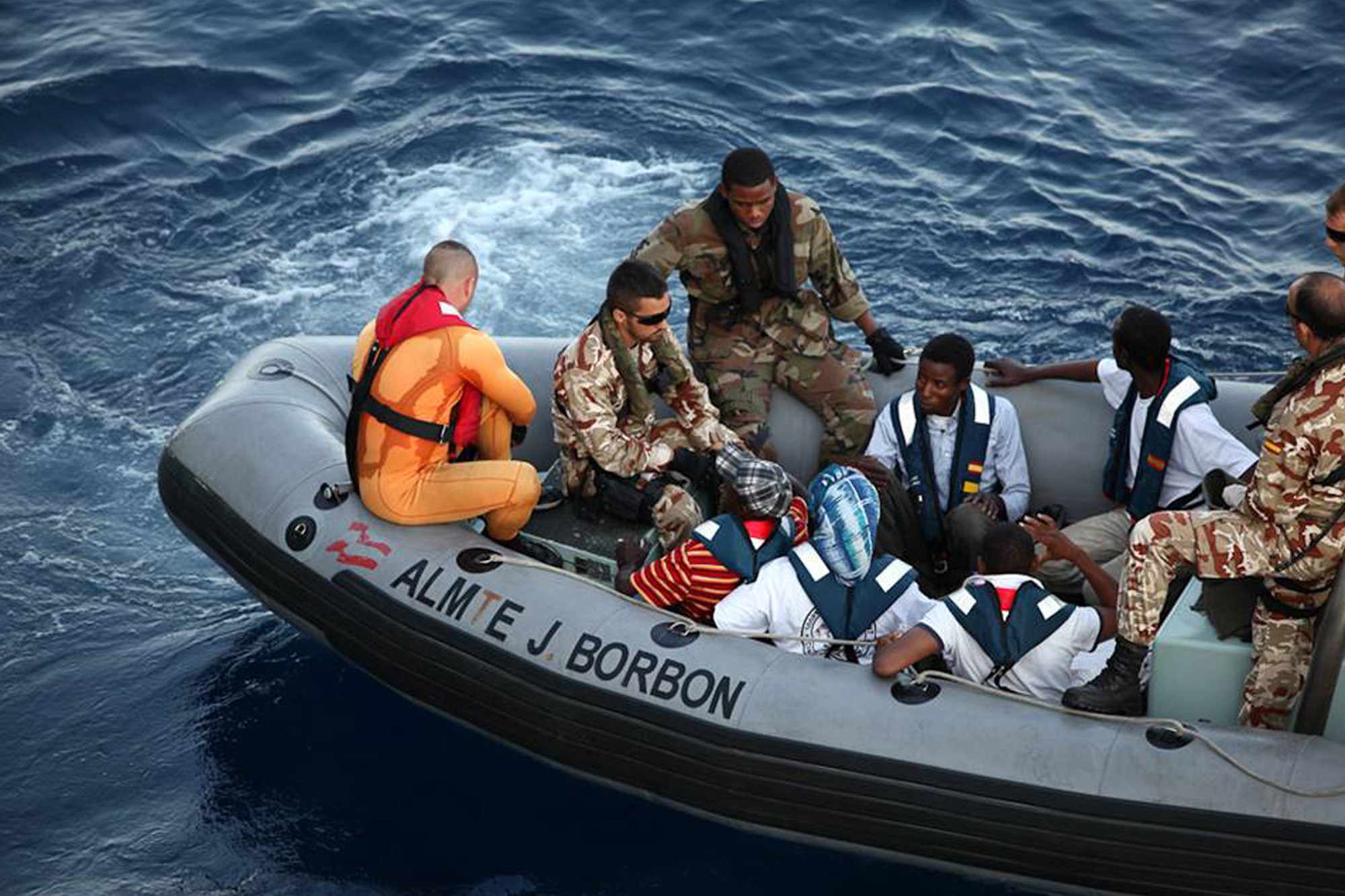
The 10 July incident relates to the rescue of over 100 migrants by the Spanish Navy frigate, the Almirante Juan de Borbón.  The rescued migrants remained onboard the Spanish frigate for six days after Malta and Italy refused to permit the NATO ship to enter port to disembark the rescued migrants.  The migrants were transferred to a Tunisian navy ship on 16 July and presumably then taken to Tunisia.

Click here and here for my previous posts on the July 2011 incident.

Neither of these two incidents relates to the events that occurred between 25 March and 10 April 2011 when a disabled migrant boat drifted for days during which time approximately 60 persons died.  Survivors from the migrant boat reported that at various times military ships and helicopters ignored their requests for assistance.  The Guardian reported extensively on this subject and the PACE Committee has been seeking information from NATO about this particular incident.

Click here and here for Guardian articles.

Click here for my last post of the PACE 29 Nov. hearing.

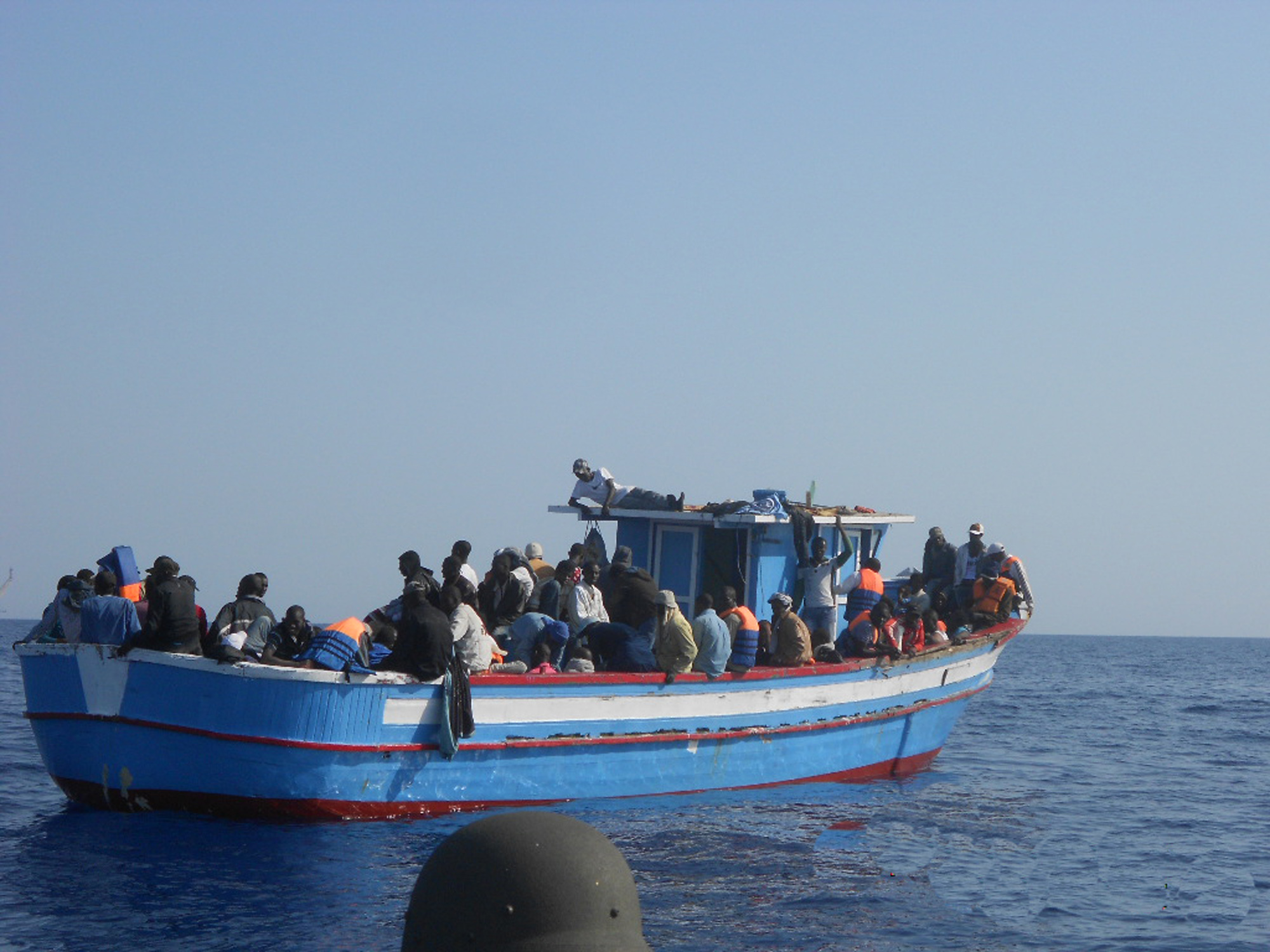
HMCS Charlottetown and migrant boat 25 March 2011.

Photo Credit: Lt(N) Michael McWhinnie, Department of National Defence and Canadian Forces

Spanish frigate Almirante Juan de Borbón rescuing migrant boat on 10 July 2011 and transferring migrants to Tunisian navy vessel on 16 July 2011.

Photo Credit: Ministerio de Defensa de España (mde.es)

Photo Credit: Ministerio de Defensa de España (mde.es)

2 Comments

Filed under Council of Europe, Italy, Libya, Malta, Mediterranean, News, Tunisia

Migrant Boat Rescued by Armed Forces of Malta

An Armed Forces of Malta patrol boat rescued 44 Somalis from a sinking 7 metre dingy early Tuesday morning.  The rescue took place about 70 nautical miles south of Malta.  The migrants have been taken to Malta.  The boat is believed to have departed from Libya on Saturday.  Survivors reported that two persons died during the voyage.

Click here and here (with video) for articles.

In an incident last week, the Moroccan Royal Navy rescued 53 migrants from a boat off Dar Kabdani.  At least four persons are known to have died in that incident.

Click here (EN) and here (IT) for articles.

Leave a comment

Filed under Libya, Malta, Mediterranean, Morocco, News, Somalia

CARIM Note: Impact of Arab Revolts on Migration

CARIM has published a Note by Dina Abdelfattah, American University of Cairo, entitled “Impact of Arab Revolts on Migration” focusing on Egypt and Libya.

“Abstract – This paper explores how the revolts taking place in the Arab World would affect the migratory outcomes within the region and internationally. The impact of the uprisings on migration will depend on whether the country is a country of origin or of destination. The paper focuses on two cases-studies: Egypt, being the main sending country in the region, and Libya, a main country of destination for migrants from the North African region as well as from Sub-Saharan Africa. The Arab countries are still going through the transition between an old regime and a new one, with major economic and political unrest and episodes of protests and sit ins as well as military actions and, what is more, this period of unrest is likely to last for some time. The impact of the revolutions on the economic and political status of the country is still to be debated and understood. With the lack of clarity in economic and political policies, migration will continue to be unpredictable.

Résumé – Cet article s’intéresse aux conséquences des révolutions arabes sur les migrations régionales et internationales. L’impact des révoltes diffère dans les pays d’émigration et les pays d’immigration. Ce texte traite de deux exemples : l’Egypte, qui est le principal pays d’émigration dans la région, et la Libye, qui est un important pays de destination pour des migrants nord-africains et subsahariens. Les pays arabes traversent une période de transition, qui risque de durer, entre un ancien et un nouveau régime, avec d’importantes protestations politiques et économiques, des manifestations, et des actions militaires. L’impact des révolutions sur la situation politique et économique des pays arabes doit encore être débattu et analysé. L’évolution des mouvements migratoires est difficile à prévoir en l’absence d’une vision claire des choix politiques et économiques à venir.”

Click here for Note.

1 Comment

Filed under Analysis, Egypt, European Union, Italy, Libya, Malta, Mediterranean

NATO Reportedly Agrees to Provide Additional Information to PACE Regarding Migrant Deaths in the Mediterranean

The PACE Committee on Migration, Refugees and Population, in connection with the preparation of a report by Ms Tineke Strik (Netherlands, SOC) on the deaths of boat people who have died in the Mediterranean, conducted a hearing in Paris on 29 November.  NATO officials who met with Ms Strik in Brussels before attended the hearing reportedly agreed to provide additional information, which might include satellite imagery, to the PACE Committee.

From PACE Press Statement, 30 November 2011:  “‘With 1971 boatpeople having perished in the Mediterranean Sea while trying to reach European soil from North Africa, the year 2011 sets a sad record as the deadliest year for boatpeople,’ PACE rapporteur Tineke Strik (Netherlands, SOC) said at the end of a hearing on this issue, organised by the Parliamentary Assembly of the Council of Europe (PACE) Migration Committee.  ‘Never before the Mediterranean Sea has been as closely monitored as this year because of the war in Libya and still more boat people than ever perished or disappeared,’ the rapporteur added.  ‘Is there a common understanding of a “distress situation”? Is it clear which legal framework is applicable and by whom? Do all ships, even warships, have to proceed with rescue operations even if they are situated beyond established search and rescue zones? Where does legal responsibility start and where does political responsibility end? These are some of the issues we are currently trying to clarify,’ she said.  Mrs Strik’s report will focus on an incident reported in March this year, during which 63 boat people escaping from Libya died after their appeals for rescue had allegedly been ignored. ‘The testimonies of survivors of this incident are coherent, but we have to continue to collect more data and information on who was when and where in the area and we now expect Nato and the EU to provide us with satellite imagery and other relevant information,’ she concluded.”

Click here, here, here, and here for articles.

Click here for PACE Press Statement.

Click here for my last post on the topic.

1 Comment

Filed under Council of Europe, Frontex, Italy, Libya, Malta, Mediterranean, Netherlands, News, Tunisia, UNHCR

Maltese Constitutional Court Awards Compensation to 2 Somalis Forcibly Repatriated to Libya in 2004

From the Times of Malta:  “Two Somali men have been awarded compensation of €10,000 each after the Constitutional Court found that they were forcibly repatriated to Libya from Malta and had not been given the opportunity for asylum.  …  [After fleeing Libya by boat t]heir boat was intercepted by a Maltese patrol boat and they were brought to Malta.  Upon their arrival they were taken to the Police Headquarters. Neither of them was given the opportunity to apply for asylum in Malta nor were they assisted by an interpreter. Twenty days later the two men, together with four other illegal immigrants were taken, handcuffed, to the airport and were forcibly sent back to Libya.  Both men asked to speak to the UNHCR representative in Malta but their request was refused.  Upon their arrival in Libya they were arrested, beaten and tortured while they were kept in prison for a week. They were transferred to another prison and, three months later, they were taken to court where they were tried without an interpreter.  The men were sentenced to one year’s imprisonment. During their time in prison they were again beaten and tortured. …  The case was instituted by Abdul Hakim Hassan Abdulle and Kasin Ibrahim Nur after they managed to endure torture in a Libyan jail and abandonment in the Sahara Desert before returning to Malta….  In their constitutional application the men claimed that their right to freedom from inhuman and degrading treatment had been violated by the fact that they had been forcibly repatriated to a country which was known to practise torture. They further claimed that their fundamental human right to an effective remedy had been violated as Malta had not allowed them to apply for asylum. Mr Justice Pace pointed out that in terms of law, an immigrant had to be informed of his right to seek asylum in Malta in a language he understood. This had not been done in this case….”

Thanks to Dr Neil Fazon (Aditus.org.mt) for pointing this out and for providing a copy of the Court’s decision.

Click here for article.

Click on this link Abdul Hakim et vs MJHA et for decision (Maltese).

1 Comment

Filed under Judicial, Libya, Malta, Mediterranean, News

PACE to Conduct Hearing: “Lives Lost in the Mediterranean Sea: Who is Responsible?” (Paris, 29 Nov)

The PACE Committee on Migration, Refugees and Population, in connection with the preparation of a report by Ms Tineke Strik (Netherlands, SOC) on the deaths of boat people who have died in the Mediterranean, will conduct a hearing in Paris on 29 November.  Ms Strik was appointed in June 2011 by the PACE Committee as Rapporteur to prepare a report on the deaths of boat people who have died in the Mediterranean since January 2011.

“The hearing will look at the loss of human life at sea, it will examine the right of families to receive information on the victims, and it will consider the rules applicable under international law and maritime law relevant to rescue at sea. The hearing will also examine international co-ordination regarding interception and rescue at sea, as well as the role of the national authorities, NATO and FRONTEX.  The participants include representatives of the International Committee of the Red Cross, the Office of the United Nations High Commissioner for Refugees, FRONTEX, the Italian Council for Refugees, and the International Institute of Humanitarian Law.”

The hearing seems to be open only to members of the press and will be held at the Council of Europe, 55 avenue Kléber, 75016 PARIS (Metro: Boissière).

Click here and here for more information.

Click here for my last post on this topic.

1 Comment

Filed under Council of Europe, Frontex, Italy, Libya, Malta, Mediterranean, News, Tunisia, UNHCR

Malta Rejects UNHCR Suggestion that Malta Failed to Carry Out SAR Obligations

The Times of Malta reports that the Armed Forces of Malta (AFM) and Maltese SAR authorities have rejected what they characterised as the “impression conveyed” by a UNHCR spokesperson that “Maltese SAR authorities abdicated from their responsibilities and did not cooperate with the relevant Italian authorities” in connection with the search for and subsequent rescue of 44 migrants on board a disabled boat on 9-10 November.  The migrants were rescued by the Italian Navy ship Foscari and transported to Sicily, not to Lampedusa or Malta which were the two closest ports.

The AFM statement reported by the Times of Malta outlines in detail the Maltese response to the distress call from the migrant boat and Malta and Frontex’s participation in the air and sea search.  The AFM statement said that “[t]he decision for the Italian Navy vessel Foscari to take the rescued migrants to an Italian port in Sicily was the result of Italian insistence that Lampedusa does not represent a place of safety for the disembarkation of migrants, despite it being a mere four hours from the position where the persons were rescued.  Under the relevant legal regime applicable with the Malta SRR, the persons should have been disembarked in Lampedusa which, despite declarations to the contrary, represented the nearest place of safety.”

Click here for article.

1 Comment

Filed under Frontex, Italy, Libya, Malta, Mediterranean, News, UNHCR

Migrant Boat Rescued by Italian Navy – Migrants to be Transferred to Sicily

The Italian Navy vessel Foscari rescued 44 migrants last night from a disabled boat that is believed to have departed from Libya about 4 days ago.  Maltese media reported that the Italians wanted to disembark the rescued migrants in Malta due to the earlier decision of Italian authorities to close Lampedusa for search and rescue purposes.  However Adnkronos news is reporting that the Foscari is taking the rescued migrants to Augusta, Sicily.

The first satellite phone distress call from the migrant boat was reportedly made when the boat was located within the Libyan SAR.  The migrant boat was finally sighted by an Italian fishing boat last night within the Maltese SAR.  The Italian Navy vessel Foscari rescued the migrants.  A Somali woman and her newborn infant who was born on the migrant boat were flown by helicopter to Lampedusa for medical care.  The remaining 42 rescued persons will now apparently be disembarked in Augusta some time tomorrow.  16 August was the last time a migrant boat reached Italy from Libya.

UNHCR issued a statement saying it was “grateful that the Italian navy took this initiative despite the fact that the boat was in Maltese search and rescue waters.”

Click here (EN), here (EN), here (IT), here (IT), and here (IT) for articles.

Click here for UNHCR statement.

Leave a comment

Filed under Frontex, Italy, Libya, Malta, Mediterranean, News, UNHCR

UNHCR Calls on Malta and Italy to Expand Search For Missing Migrant Boat

UNHCR’s Malta office issued the following statement on Thursday while search efforts for the migrant boat by the Armed Forces of Malta continued:

“The United Nations High Commissioner for Refugees (UNHCR) expresses deep concern for the fate of tens of migrants on board of a boat coming from Libya who have sent out SOS calls on Tuesday evening.   The presence of the migrants has reportedly also been confirmed by a number of Somali relatives in Italy who have received the distress calls.  The boat has not been sighted yet and this raises UNHCR concern, especially as it is much more dangerous to cross the Mediterranean in the current season. UNHCR calls on Malta and Italy to strengthen the search operations in order to save the lives of tens of persons at the mercy of the sea.”

Click here for link.

Leave a comment

Filed under Italy, Libya, Malta, Mediterranean, News