Category Archives: States

Terraferma, Emanuele Crialese’s Film About Migrants, Nominated as Italy’s Entry for Best Foreign Film Oscar Award

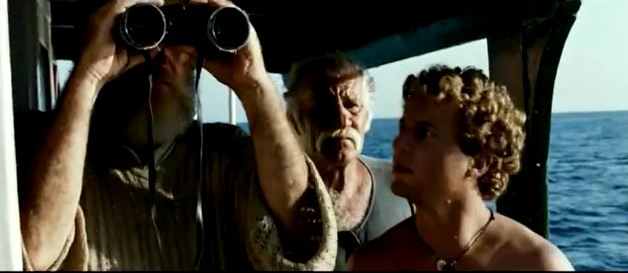
From Adnkronos News: “Movie director Emanuele Crialese’s new film about the plight of migrants landing on the southern Lampedusa island from Africa will be Italy’s contender for the 2012 Best Foreign Film Oscar, a jury decided Wednesday.  The film, ‘Terraferma’ (Dry Land) is Crialese’s fourth movie and won the Special Jury Prize at the 2011 Venice Film Festival earlier in September.  ‘I am very happy and honoured, it’s something I did not expect but hoped for,’ said Crialese commenting on Terraferma’s selection.  Like his 2002 film ‘Respiro’ the picture tells the story of Sicilian fishermen dealing with the influx of migrants who opt to rescue boat people from Africa and fall foul of the local coastguard.  In the movie, Crialese cast a real Ethiopian refugee, identified as Timnit T, to play the part of an illegally rescued pregnant woman, based on her real story. She now lives in northern Europe.  The Roman director has voiced public criticism of migrant deaths at sea and the response by authorities to the humanitarian crisis that has unfolded in the Mediterranean….”

Click here for link to article.

Click here for link to film’s FB page.


Leave a comment

Filed under Libya, Mediterranean, News

Italy Continues Shipboard Detention of Hundreds of Tunisians

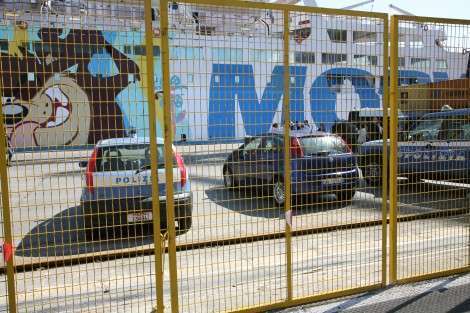
Several hundred Tunisian migrants continue to be detained on board two ships in the Palermo harbour.  Some of the migrants have been removed from the ships and relocated to reception centres or repatriated to Tunisia.  The group of 220 migrants who were transferred by a third ship to Cagliari, Sardinia were moved to the migrant reception centre at Elmas, near Cagliari.  Acting in response to a complaint made by members of civil society, the public prosecutor of Palermo opened a preliminary investigation pertaining to possible violations of law in connection with the ongoing shipboard detention of the migrants.  Professor Fulvio Vassallo Paleologo, Faculty of Law of Palermo, is quoted by news reports as questioning whether there is any legal authority to detain migrants on board ships.  Several local politicians who were allowed to board the ships and observe conditions reported that conditions were fine.  Adnkronos News reports that the ships that have been used to detain the Tunisians for the past week have been optioned for lease by the Interior Ministry through 31 December.

Click here, here, here, and here for articles. (IT)

1 Comment

Filed under Italy, Mediterranean, News, Tunisia

Gaddafi and the Mercenary Myth

An interesting article on Huff Post by Prof. Carina Ray, Assistant Professor of African and Black Atlantic History, Fordham University:

“One of the biggest headlines to emerge in the early days of the battle for Libya was that Muammar Gaddafi had unleashed Black African mercenaries to put down the revolution. This turned out to be a largely bogus claim, but it nonetheless found traction among many ordinary Libyans. Why?  The mercenary myth was successful in galvanizing popular support for the rebels because it contained a tiny of kernel of truth. More importantly, it tapped into the smoldering resentment that many Libyans harbored against Gaddafi’s gradual shift away from the Arab world in favor of Africa….”

Click here for full article.

Leave a comment

Filed under Analysis, Libya, Niger

Italian Ship Carrying 150-200 Detained Tunisian Migrants Reaches Sardinia

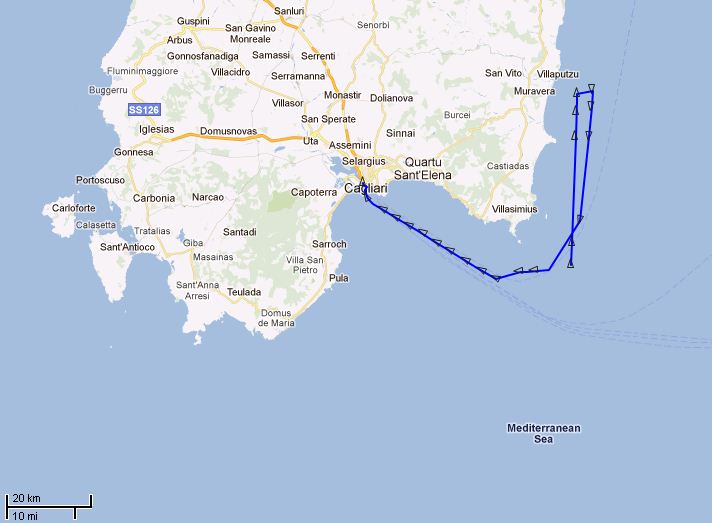
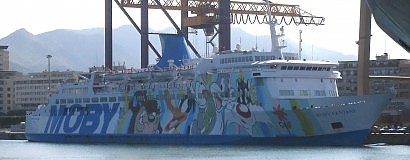
One of the three passenger ships being used by Italian authorities for the past four days to detain hundreds of Tunisian migrants reached Sardinia this morning (26 September) around 7.30 AM local time.  The ship, the Moby Fantasy, left Palermo around 12 midnight on the night of 24-25 September and took over 30 hours to sail to Cagliari, Sardinia.  The Moby Fantasy appears to have delayed its arrival in Cagliari by sailing for several hours up and down the south east coast of Sardinia. (See map below.)

It seems that the Moby Fantasy is carrying about 150 to 200 of the 700 Tunisian migrants who have been held on the ships for four days; another 600 or so migrants have been held on two other ships, Moby Vincent and Audacia, which have remained in Palermo, though some of the detained migrants may have been removed from the ships to migrant reception centres in Rome, Bari, and Pozzallo.

Click here and here for articles.  (IT)

1 Comment

Filed under General, Italy, Mediterranean, News, Tunisia

Italy Declares Lampedusa Unsafe; Rescued or Intercepted Migrants Will Be Taken to Sicily; 700 Migrants Detained On Board Ships for Past 3 Days

As a result of the violent disturbances on Lampedusa over the past week and a fire that damaged buildings at the island’s migrant reception centre, Italian officials have responded with drastic measures.  Lampedusa has been declared an unsafe port and newly intercepted or rescued migrants will not be brought to Lampedusa, but will instead be taken to Sicily.

Hundreds of Tunisians have continued to arrive on Lampedusa in recent weeks and severe overcrowding has again resulted.  The overcrowding culminated in the past week’s protests by the Tunisians.  Most of the 1200+ Tunisian migrants who were on Lampedusa have been moved from the island by ship or military planes.  Approximately 700 Tunisian migrants have been held for the past three days on board passenger ships in the Palermo harbour.   News reports say that three ships being used to detain the migrants are the Moby Vincent, Moby Fantasy, and Audacia.  AIS ship tracking information shows that as of early Sunday morning, 25 September, the Moby Vincent and Audacia are still in the harbour and that the Moby Fantasy left Palermo during the night of the 24th and is sailing towards Sardinia.  It is unclear whether the Moby Fantasy is carrying migrants or not.

Interior Minister Roberto Maroni was quoted on Saturday as saying that the migrants now in Palermo will all be repatriated within a few days.  (“Roberto Maroni ha assicurato che gli immigrati che sono stati prelevati da Lampedusa e che si trovano attualmente a Palermo ‘saranno tutti rimpatriati nel giro di pochi giorni’”.)  Maroni said that 600 Tunisians were repatriated last week and that ten repatriation flights were scheduled for the coming week.

Click here (IT), here (IT), here (FR), and here (EN) for articles.

Click here for the Euro-Police blog post on the situation.

Click here, here, here, here, here, and here for additional articles (All IT)

Leave a comment

Filed under Italy, Mediterranean, News, Tunisia

Australia’s Clarke and Dawe on “Boat Stopping Devices” and Offshore Refugee Processing (satire)

If you have 2 ½ minutes to spare, this is a humorous comment on the current very bad situation in Australia.  Click here for video.

(I saw this on the Migration Law listserv.)

Leave a comment

Filed under Australia, Indian Ocean, Statements

HRW Report: Frontex Exposes Migrants to Abusive Conditions in Greece

Human Rights Watch yesterday issued a report entitled “The EU’s Dirty Hands: Frontex Involvement in Ill-Treatment of Migrant Detainees in Greece” which “assesses Frontex’s role in and responsibility for exposing migrants to inhuman and degrading detention conditions during four months beginning late in 2010 when its first rapid border intervention team (RABIT) was apprehending migrants and taking them to police stations and migrant detention centers in Greece’s Evros region. … ‘Frontex has become a partner in exposing migrants to treatment that it knows is absolutely prohibited under human rights law,’ said Bill Frelick, Refugee Program director at Human Rights Watch. ‘To end this complicity in inhuman treatment, the EU needs to tighten the rules for Frontex operations and make sure that Frontex is held to account if it breaks the rules in Greece or anywhere else.’ … ‘It’s a disturbing contradiction that at the same time that the European Court of Human Rights was categorically ruling that sending migrants to detention in Greece violated their fundamental rights, Frontex, an EU executive agency, and border guards from EU states were knowingly sending them there,’ Frelick said. … ‘As new migration crises emerge in the Mediterranean basin and as Frontex’s responsibilities expand, there is an urgent need to shift EU asylum and migration policy from enforcement-first to protection-first.’ Frelick said. ‘This is not only legally required, but the EU, its agencies, and member states can and should respect and meet the EU’s own standards.’”

As the HRW report notes, the humanitarian crisis on the Greece-Turkey land border was many years in the making, but among the contributing factors to the increased flow of migrants seeking to enter the EU at this location, which by November 2010 accounted for 90% of the detected illegal crossings at EU borders, were the enhanced migration control measures in the Central Mediterranean and West Africa, specifically the bi-lateral push-back practice being implemented at the time by Italy and Libya and Spain’s bi-lateral agreements with West African countries.  Increased sea patrols along Greece’s maritime borders also contributed to the shifting of the flow to the land border.

Frontex issued a statement (or click here) responding to the HRW report in which it welcomed the report and said it was “satisfied to note that its comments on the original draft were taken on board. The report now highlights an issue, which we agree, is of great importance. We would like to recall that Frontex fully respects and strives for promoting Fundamental Rights in its border control operations which, however, do not include organisation of, and responsibility for, detention on the territory of the Member States, which remains their exclusive remit. … Frontex was receiving signals of concern from national officers deployed to the region. The Agency has been extremely concerned with the conditions at the detention centres – a point which we raised on several occasions both with the Greek authorities and with the European Commission. Nevertheless, we continue to stress that at the practical level abandoning emergency support operations such as RABIT 2011 is neither responsible, nor does it do anything to help the situation of irregular migrants on the ground….”

Here is Cecilia Malmström’s comment from her blog on the HRW report (translated from Swedish by Google translate):

“I also had a long meeting [on 21 September] with Human Rights Watch who has published a highly critical report on the asylum system in Greece . They argue that the EU agency Frontex, by its presence legitimizes the poor conditions at the border of Greece. We are well aware of the totally unacceptable situation at the reception centres in Greece and I am very frustrated that the situation is so slow to improve, especially in Evros. But probably the situation would have been even worse if Frontex had not been in place. We continue to put pressure on Greece and the new regulatory framework for Frontex, which I have proposed and was adopted by Parliament last week to strengthen its work on human rights significantly. The report will also be discussed in the FRONTEX Agency board meeting next week.”   (“Jag hade också ett långt möte med Human Rights Watch som har publicerat en mycket kritisk rapport om asylsystemet i Grekland . De menar att EU-organet Frontex genom sin närvaro legitimerar de usla förhållandena vid gränsen i Grekland. Vi är väl medvetna om den helt oacceptabla situationen vid mottagningscentren i Grekland och jag är väldigt frustrerad över att det går så långsamt att förbättra situationen särskilt i Evros. Men troligen hade situationen varit ännu värre om inte Frontex hade varit på plats. Vi fortsätter att sätta press på Grekland och i det nya regelverk för Frontex som jag har föreslagit och som Europaparlamentet antog förra veckan stärks arbetet med mänskliga rättigheter väsentligt. Rapporten skall också diskuteras på Frontex styrelsemöte nästa vecka.”)

Excerpts from the HRW Report:

Key Recommendations

To the European Commission, the European Parliament and the European Council

  • Amend the Frontex Regulation to make explicit, and thereby reinforce, the obligation not to expose migrants and asylum seekers to inhuman and degrading detention conditions.
  • Amend proposed Frontex Regulation Art. 26a to empower the Fundamental Rights Officer to refer Frontex to the Commission for investigation and where appropriate infringement proceedings in the event that the Frontex executive director fails to suspend operations despite persistent and serious violations of the Charter and/or in the event that members states and their agents persistently violate the Charter during Frontex operations.

To Participating European States 

  • Suspend any participation in Frontex operations that fail to adhere to binding international human rights standards.
  • Instruct border guards deployed on Frontex missions on their obligations under international law. Ensure that border guards are trained and conversant regarding all rules and standards pertaining to the transfer and treatment of detainees.

To the Frontex Management Board

  • Suspend the deployment of EU border guards to Greece unless migrant detainees can be transferred to facilities elsewhere in Greece (or outside of Greece) that meet EU and international standards or until the conditions of detention in the Evros region where migrants are currently detained are improved and no longer violate European and international standards.
  • Intervene with Greek officials and monitor compliance to ensure that migrants apprehended by guest guards are transferred to detention facilities that comply with European and international standards.
  • Conduct thorough assessments of the risk that human rights violations may occur before engaging in joint operations or deploying RABIT forces.

To Greece

  • Implement the recently adopted asylum reform package as fully and as quickly as possible.
  • Ensure access to asylum procedures at the border and in the border region.
  • Reduce overcrowding by using alternative facilities and alternatives to detention as much as possible.
  • Immediately improve detention conditions, and immediately create open reception centers for asylum seekers and members of vulnerable groups, such as children.”

Click here for HRW Report.

Click here for HRW Press Release.

Click here or here for Frontex response.

Click here (EN) and here (EN) and here (FR) for articles.

Leave a comment

Filed under Aegean Sea, European Union, Frontex, Greece, News, Reports, Turkey

AI: Refugees Forced Out of Libya Urgently Need Resettlement

Amnesty International released a briefing paper this morning describing the “totally inadequate response by EU states to refugees” who are stranded near Libya’s borders.  AI estimates that there are 5000 refugees currently living in limbo along the borders.

From the AI Press Release: “‘We have witnessed an abysmal response to the plight of displaced refugees on Europe’s doorstep,’ said Nicolas Beger, Director of Amnesty International’s European Institutions Office.  ‘This failure is particularly glaring given that some European countries, by participating in NATO operations in Libya, have been party to the very conflict that has been one of the main causes of the involuntary movement of people.  EU Home Affairs Ministers must urgently address the resettlement issue – they can start by putting it prominently on the agenda of the Justice & Home Affairs Council on 22 September.’… Australia, Canada and the USA have offered to resettle some of the refugees stranded at Libya’s borders.  But only eight European countries have offered to help, between them offering fewer than 700 slots. …”  “Amnesty International believes sub-Saharan Africans in Libya remain at high risk of abuse and arbitrary arrest by anti-Gaddafi forces and last week issued a major report calling on the [Libyan] NTC to do more to protect them from reprisal attacks.”

Click here for briefing paper.

Click here for press release.

Leave a comment

Filed under European Union, Libya, Mediterranean, Reports, Tunisia, UNHCR

IOM and Italy Sign Agreement to Facilitate Voluntary Returns for Migrants Recently Arrived from North Africa

Italy and IOM signed an agreement last week pursuant to which IOM will facilitate the voluntary returns of up to 600 migrants from Italy.  The agreement will be in place until the end of 2011.  The agreement is focused on assisting with the returns of migrants who have recently arrived in Italy from North Africa to their various countries of origin.

Click here for IOM statement on the programme.  (IT).

Click here for statement from the Dipartimento della Protezione Civile.  (IT).

Click here for article. (IT).

Leave a comment

Filed under Italy, Libya, Mediterranean, News, Tunisia

CoE Human Rights Commissioner Releases Report on Italy’s Treatment of Roma and Migrants

Council of Europe Commissioner for Human Rights, Thomas Hammarberg, just released a report on Italy based upon his visit to Italy on 26-27 May 2011.  The report addresses concerns relating to the treatment of the Roma and Sinti and relating to the treatment of migrants, including migrants arriving from North Africa.

Excerpts:

“Strasbourg, 7 September 2011 – CommDH(2011)26 – English only

Report by Thomas Hammarberg, Commissioner for Human Rights of the Council of Europe, following his visit to Italy from 26 to 27 May 2011

[***]

II. Protection of the human rights of migrants, including asylum seekers

Rescue operations and interceptions at sea

The Commissioner welcomes the invaluable efforts of the Italian authorities aimed at rescuing migrants on boats crossing the Mediterranean. He strongly encourages the Italian authorities to maintain their long-standing tradition of rescue, which is all the more indispensable in the current context of forced migration from Libya. He calls on the Italian authorities to ensure that in all cases where migrants are in distress at sea their rescue and safety enjoy absolute priority over all other considerations, including any lack of clarity and agreement, notably between Italy and Malta, about responsibilities for rescue. With reference to the operations carried out jointly with Libya in the central Mediterranean aimed at intercepting migrants fleeing Libya on boats and returning them there (so-called push-backs), the Commissioner urges the Italian authorities to discontinue and refrain from becoming involved in any practices in the field of interceptions at sea that may result in migrants being sent to places where they are at risk of ill treatment or onward refoulement.

[***]

II. Protection of the human rights of migrants, including asylum seekers

44. Following the political unrest in Tunisia and the armed conflict in Libya, the number of migrants, including asylum seekers, arriving on boats to Italy, and in particular Lampedusa, has increased sharply. Since mid-January, approximately 24 000 people have arrived from Tunisia. At the end of March 2011, migrants also started to arrive on boats from Libya (the biggest groups being nationals of Nigeria, Ghana, Mali, Ivory Coast, Bangladesh, Eritrea and Somalia) and by 23 June their number had almost reached 20 000. In addition to arrivals from Tunisia and Libya, some 2 000 migrants landed in southern Italy on boats coming from Egypt, Greece and Turkey. On 23 June, the total figure of arrivals by sea to Italy since January 2011 therefore stood at around 46 000.

45. It is clear that these events pose a number of challenges relating to a wide range of human rights, including the right to seek asylum and the right to life, notably in connection with rescue operations at sea. With most of the migrants from Northern Africa seeking refuge and a new life in “Europe” generally, and not specifically in the countries that they reach first, the European dimension of these challenges is equally clear. Certainly, the ongoing military operations in Libya and their impact on migratory movements bound to Europe has lent further visibility to this European and international dimension. Accordingly, the Commissioner has on many occasions called for a greater European role, in the form of solidarity and co-operation in meeting the human rights challenges relating to arrivals of migrants, including asylum seekers, from Northern Africa, but unfortunately the response has been limited. The Commissioner reiterates this call in respect of the situation with which Italy is confronted at the moment.

46. At the same time, the Commissioner wishes to stress that Italy must abide by its human rights obligations vis-à-vis all migrants, including asylum seekers, who find themselves within Italy’s jurisdiction – a responsibility which in the Commissioner’s view has not been met fully. While the Italian authorities have taken a number of steps to protect the human rights of these persons, from rescue at sea through to reception and access to asylum, concerns remain in different subject areas, some of which are highlighted below.

47. More generally, the Commissioner wishes to stress that a more objective and balanced representation of the migration movements prompted by the events in Northern Africa, and notably the conflict in Libya, would assist in ensuring a human rights compliant response to these phenomena in both Italy and Europe as a whole. In this respect, the Commissioner notes that the 20 000 arrivals from Libya to Italy mentioned above stand, at least for the moment, in stark contrast with the many times greater forecasts concerning the potential number of arrivals from Libya which had been made publicly in Italy at the beginning of the conflict. It is also sobering to note that these arrivals account for around 2% of the persons having left Libya as a result of the conflict. Indeed, 98% of the approximately 1 100 000 people who have left Libya so far have done so by crossing land borders into Tunisia, Egypt, Niger, Chad and Algeria.

a. Rescue operations and interceptions at sea

48. The Italian authorities, and particularly the coast guard and customs police, have been instrumental in saving the lives of many migrants who have attempted to reach European shores from Northern Africa on unseaworthy boats. Rescue operations have obviously intensified in recent months, reflecting the increase in departures of migrant boats from Tunisia and Libya since January 2011.

49. Over the same time period, however, at least as many as 1 500 persons have lost their lives while trying to cross the Mediterranean to seek a safe haven. The Commissioner notes that responsibilities remain to be ascertained in certain cases. For instance, in an episode which is currently being investigated by the Parliamentary Assembly of the Council of Europe, and which resulted in the death at sea of 61 persons, including over 20 women and children, a boat carrying 72 migrants was left adrift for two weeks in spite of its presence having reportedly been signalled to the authorities of Italy, Malta and NATO, and the boat itself having been spotted by a helicopter and a passing vessel of unidentified nationalities. The Commissioner notes that in some cases, lack of clarity and agreement, notably between Italy and Malta, about responsibilities for rescue may delay operations or otherwise put the lives of migrants in distress at risk. More generally, the Commissioner finds it difficult to accept that people in distress at sea can face death in one of the busiest areas of the Mediterranean, especially now with the large numbers of military and other vessels in the area.

50. The Commissioner also notes that since May 2009, and up to the beginning of the armed conflict in Libya in February 2011, the Italian authorities have carried out operations jointly with Libya in the central Mediterranean, aimed at intercepting migrants fleeing Libya on boats and returning them there (so-called respingimenti, or push-backs). The practice has been repeatedly criticised for violating international human rights law, as migrants, including asylum seekers, are returned to Libya where they risk being ill-treated or in turn deported to other countries where they are exposed to such a risk, without being given an opportunity to seek and enjoy international protection through an individual assessment of their case. Indeed, in a case that is currently pending before the Grand Chamber of the European Court of Human Rights, a group of Somali and Eritrean migrants who were travelling by boat from Libya have argued that the decision of the Italian authorities to intercept their vessels on the high seas and send them straight back to Libya exposed them to a risk of ill-treatment there, as well as to a serious threat of being sent back to their countries of origin, where they might also face ill-treatment.24

51. The Commissioner notes that the beginning of these operations started shortly after the conclusion of agreements between Italy and Libya in 2008 and 2009.25 In his 2009 report on Italy, the Commissioner expressed “his disapproval of bilateral or multilateral agreements for the forced return of irregular migrants to countries with long-standing, proven records of torture”,26 a concern which was shared by the Parliamentary Assembly in June 2010.27 In February 2011, following the beginning of the armed conflict in Libya, Italy announced that it had suspended the implementation of its agreements with Libya. However, the Commissioner also notes that on 17 June 2011, Italy signed with the Libyan National Transitional Council a Memorandum of Understanding, which refers to the commitments contained in the agreements previously signed with Libya and provides for mutual assistance and co-operation in combating irregular immigration, “including the repatriation of immigrants in an irregular situation.”28

Conclusions and recommendations

52. The Commissioner welcomes the invaluable efforts of the Italian authorities aimed at rescuing migrants on boats in the Mediterranean, which have saved thousands of lives over the past months and years. He strongly encourages the Italian authorities to maintain their long-standing tradition of rescue, a task which is all the more indispensable in the current context of forced migration from Libya.

53. At the same time, the Commissioner calls on the Italian authorities to ensure that in all cases where migrants are in distress at sea their rescue and safety enjoy absolute priority over all other considerations. The attention of the Italian authorities is drawn to the PACE resolution 1821 (2011)29 adopted in June 2011, which calls on member states to “fulfil without exception and without delay their obligation to save people in distress at sea.”30 In this connection, the Commissioner recalls that on 8 April, just two days after a boat from Libya carrying more than 220 migrants capsized near the Italian island of Lampedusa causing the death by drowning of more than 200 persons, UNHCR recommended that “[a]ny overcrowded boat leaving Libya these days should be considered to be in distress.” On the same occasion UNHCR also underlined that “[a] long-standing tradition of saving lives at sea may be at risk if it becomes an issue of contention between States as to who rescues whom.”

54. The Commissioner urges the Italian authorities to discontinue and refrain from becoming involved in any practices in the field of interceptions at sea that may result in migrants being sent to places where they are at risk of ill treatment or onward refoulement. The Commissioner wishes to highlight that when a state exercises effective control, authority or power over third-country nationals rescued or intercepted at sea (including the state’s own territorial waters, those of another state and international waters) its obligations include ensuring effective access to adequate asylum determination procedures and not returning individuals to countries where they would face a real risk of persecution or treatment contrary notably to Articles 2 (right to life) and 3 (prohibition of torture) of the ECHR.

55. In this connection, the Commissioner draws once more the attention of the Italian authorities to the PACE resolution 1821 (2011) which calls on member states to: “refrain from any practices that might be tantamount to direct or indirect refoulement, including on the high seas, in keeping with the UNHCR’s interpretation of the extraterritorial application of that principle and with the relevant judgements of the European Court of Human Rights”; and to “suspend any bilateral agreements they may have concluded with third states if the human rights of those intercepted are not appropriately guaranteed therein, particularly the right of access to an asylum procedure, and wherever these might be tantamount to a violation of the principle of non-refoulement […].”31

56. In accordance with UNHCR’s recommendations on protection with regard to people fleeing from Libya, the Commissioner strongly encourages the Italian authorities to continue to keep the country’s borders open for people who are forced to flee from Libya and are in need of international protection.32

[***]”

Click here for Report.

Click here for CoE Press Statement.

Click here for CoE Human Rights website regarding human rights of immigrants, refugees, and asylum seekers.

Leave a comment

Filed under Commissioner for Human Rights, Council of Europe, Italy, Libya, Malta, Mediterranean, News, Reports, Tunisia

PACE Rapporteur Conducts Interviews in Italy Regarding Mediterranean Migrant Deaths

Tineke Strik (Netherlands, SOC) concluded a two day fact-finding trip to Italy on 7 September as Rapporteur for the PACE Migration Committee.  She is investigating the deaths of boat people who have died in the Mediterranean since January 2011.  Strik interviewed Father Moses Zerai, an Eritrean priest, who was in satellite phone contact with several migrant boats during their voyages from Libya, including the disabled migrant boat that drifted for days in March-April this year and on which 61 persons are believed to have died.  In addition to Zerai, Strik interviewed three of the nine survivors from the boat, Italian Coastguard officials, and NGO and UNHCR staff.  Strik “is planning interviews with officials from Nato and the Maltese government, which the Italian coastguard says was alerted to the boat’s plight.”

From the PACE press statement: “‘There is an obligation to help all people in distress.  If anyone did not live up to this responsibility and deliberately did not assist them, they must not be allowed to get away with it. … The testimonies of witnesses directly involved in this incident are coherent, but we have to continue to collect more data and information on who was when and where in the area,’ Mrs Strik reported.  ‘My mission is to try to find out what went wrong, and if there was perhaps a gap in responsibility-sharing. The recommendation which will be contained in my report is aimed at establishing responsibilities and trying to determine how to deal with such incidents in the future. We have to draw the right lessons to prevent similar situations from occurring again.  … At the end of my inquiry, I expect national jurisdictions, governments and parliaments to carry on the investigations and I very much hope that the dynamic of truth … will pave the way,’ she concluded.”

Click here (EN), here (FR), and here (ES) for articles.

Click here for PACE press statement.

Click here for previous post.

2 Comments

Filed under Council of Europe, European Union, Frontex, Italy, Libya, Malta, Mediterranean, News, Tunisia, UNHCR

More Evidence that Gaddafi Government Facilitated Migrant Boat Departures from Libya

There has been evidence for many months that the Gaddafi regime was facilitating migrant boat departures from Libya towards Italy and Malta; here are two recent articles on the topic from the Los Angeles Times and the Telegraph.

LA Times: “… During its life as a military base, the impromptu camp [at Janzour / Zanzour] was heavily guarded, but in recent in months, several people from the area said, Kadafi’s government facilitated the entry of Africans hoping to migrate by boat to Europe. … The military base was run by a Kadafi operative named Zuhair, according to several people familiar with its operation. As rebels approached Tripoli, they said, Zuhair was seen taking off in a speedboat, accompanied by his top aide and two bodyguards. … [The base] is also the scene of one of Muammar Gaddafi’s most bizarre and cynical plans; an operation to flood Europe with black African illegal immigrants in revenge for Nato’s bombing campaign. For months until the uprising in Tripoli two weeks ago, men in uniform were seen around the port directing the loading of immigrants onto leaky boats bound for Italy. Africans who landed this summer on the tiny island of Lampedusa – a speck of rock south of Sicily – said they had paid nothing for their passage, in contrast to the $1,000 fee usually demanded by people smugglers. No boats have left since the rebels drove Gaddafi’s men out, but the human cargo is still stranded there; a thousand desperate black African men, women and children, clustered in the dirt under beached boats in utter squalor, hungry, scared, penniless, and desperate to escape….”

The Telegraph: “…[a] man, who would not give his name, claimed that the port [of Zanzour] had been controlled by a shadowy official called Zuhair, who had vanished when the rebels arrived. ‘He is a Palestinian originally, with several passports,’ the man said. ‘He had people under him and they sent the boats to Lampedusa.’ There seems little likelihood that the operation was being conducted without official sanction; Zanzour is located not on some remote, unpoliced stretch of coast but within an old military base, only about ten miles west of Tripoli, an area which was firmly under Gaddafi’s control until recently. … Laura Boldrini, of UNHCR, warned that illegal immigration could get much worse in the months ahead, adding that nobody knew how the new government would deal with the problem. ‘What happens depends on security,’ she said. ‘If violence explodes in Libya, there is a danger of a massive new influx of people trying to escape.’”

Click here and here for articles.

Click on these links for some previous posts on the subject:

Is Libyan Government Facilitating Migrant Boat Departures from Libya? (31/03/11)

IOM Reports Migrants Were Forced by Libyan Soldiers to Board Boats (10/05/11)

Libya: Because of NATO Aggression, We Cannot Be Guards of Europe (11/05/11)

Guardian: Libya Official Admits Migrant Ships Being Allowed to Sail as Protest Against Nato (11/05/11)

Maltese JHA Minister Doubts Migrants Are Being Pushed to Flee Libya (13/05/11)

1 Comment

Filed under European Union, Italy, Libya, Malta, Mediterranean, News, UNHCR

PACE Rapporteur to Begin Fact-Finding Mission to Italy to Investigate Mediterranean Migrant Deaths

Tineke Strik (Netherlands, SOC) will begin a two day fact-finding trip to Italy on 6 September as Rapporteur for the PACE Migration Committee (Parliamentary Assembly of the Council of Europe).  She is investigating the deaths of boat people who have died in the Mediterranean since January 2011.

From the PACE press statement of 2 September:  “Meetings are scheduled with survivors of a shipwreck, officers of Italian coastguard units, representatives of NGOs active in the field and representatives of the Office of the United Nations High Commissioner for Refugees.  During her visit the rapporteur will in particular look into the way boats are intercepted – or not intercepted – by national coastguard forces, or by military vessels under either NATO or national command.  Further to reports that migrants and refugees have perished after their distress calls were ignored, the PACE Committee on Migration, Refugees and Population appointed Ms Strik in June to conduct an inquiry into these matters.”

From the PACE press statement issued in June 2011: “‘There have been allegations that migrants and refugees are dying after their appeals for rescue have been ignored,’ said Mrs Strik. ‘Such a grave allegation must be urgently investigated.  I intend to look into the manner in which these boats are intercepted – or not – by the different national coastguards, the EU’s border agency FRONTEX, or even military vessels. I also intend to speak to witnesses directly involved in reported incidents, and put questions to national authorities, the UNHCR, FRONTEX and NATO, among others.’  On 8 May, the Guardian newspaper reported that 61 boat people escaping from Libya had died after their appeals for rescue had been ignored by armed forces operating in the Mediterranean. The following day PACE President Mevlüt Çavusoglu called for ‘an immediate and comprehensive enquiry’ into the incident.”

Presumably Ms. Strik’s investigation will also seek information from Maltese authorities.  The Maltese Rescue Coordination Centre run by the Armed Forces of Malta is in possession of relevant information pertaining to incidents within the Maltese Search and Rescue Area where many (perhaps most?) of the migrant deaths have occurred.

Click here and here for COE press statements.

Click here for link to COE’s web page regarding “PACE’s Response to Migrants and refugees arriving from North Africa.”

Click here and here for my previous posts on the topic.

1 Comment

Filed under Council of Europe, European Union, Frontex, Italy, Libya, Malta, Mediterranean, News, Reports, Tunisia

3rd Anniversary of Italy-Libya Treaty on Friendship, Partnership and Co-operation

This past Tuesday, 30 August, marked the third anniversary of the signing of the Treaty on Friendship, Partnership and Co-operation by Italy and Libya.  The Agreement was signed in Benghazi in 2008 by Prime Minister Silvio Berlusconi and then Libyan leader Gaddafi.  The Agreement included a provision calling for the “intensification of the ongoing cooperation in the context of the fight against terrorism, organized crime, drug trafficking and clandestine migration.” (See p. 2 of UNHCR’s Third Party submission to the European Court of Human Rights in the case of Hirsi and Others v. Italy (Application no. 27765/09) for more information regarding the history of the Agreement.)  The Agreement, which included a provision for the payment by Italy to Libya of $5 billion in compensation for colonial occupation, paved the way for Libya’s implementation of the  provisions of an earlier agreement signed in December 2007 which provided the basis for joint Italy-Libya maritime patrols and Italy’s so-called “push-back” practice.  The first push-back operations began in May 2009.  As I’ve noted in previous posts, the Libyan NTC has given Italy assurances that a new Libyan government will honour the terms of the Friendship Agreement.

Click here (IT), here (EN), and here (EN) for articles from 2008.

Click here for UNHCR’s Third Party Submission to the ECtHR in the Hirsi case.

Leave a comment

Filed under Italy, Libya, Mediterranean, News

UNHCR: Sub-Saharan Africans Targeted in Libya; 2 IOM Ships Evacuate Migrants from Tripoli

UNHCR said Friday that reports are emerging from Tripoli that “people being targeted because of their colour as the city fell to rebel forces”; UN High Commissioner for Refugees António Guterres called for sub-Saharan Africans to be protected.  “The High Commissioner has urged restraint from rebel forces and Libyan civilians. ‘We have seen at earlier stages in this crisis that such people, Africans especially, can be particularly vulnerable to hostility or acts of vengeance,’ he said.  ‘It is crucial that humanitarian law prevails through these climactic moments and that foreigners – including refugees and migrant workers – are being fully and properly protected from harm,’ he stressed.”

IOM has chartered ships in order to evacuate migrants from Tripoli to Benghazi.  According to IOM, 263 people were evacuated from Tripoli on Thursday night.  “Among those evacuated were Egyptians, Lebanese, Algerians, Filipinos, Americans, Swiss, Lebanese, Italians, Indians, Sudanese, a German, a Canadian and an Iraqi.”  A second IOM-chartered ship, probably the Fehim Bay (which according to MarineTraffic.com is currently a Moldovan flagged ship), was scheduled to evacuate a larger group of migrants on Saturday.  According to AIS tracking information, the ship as of Sunday morning is en route to Benghazi.  IOM reported that “the second evacuation operation will aim to assist groups of Bangladeshi, Chinese, Filipino, Indian and Egyptian migrants.”

From IOM statements: “IOM staff in Tripoli say that getting migrants scattered across [Tripoli] to the port is the single most challenging issue of the operation.  Continued fighting in parts of the city, the many checkpoints and sniper fire represent the main obstacles to movement within the city as well as lack of fuel.  ‘Movement is extremely slow as well as dangerous. Crossing checkpoints manned by different groups with different demands is very challenging,’ says IOM Regional Director for the Middle East and North Africa Pasquale Lupoli. ‘And then there are snipers.’  Although IOM managed to get the 263 migrants to the port through arrangements with some concerned embassies and other parties, the Organization remains deeply concerned that migrants who want and need evacuation assistance may not be able to get it because they cannot get to the port. Some, such as Sub-Saharan Africans, are largely on the outskirts of Tripoli and far from the port vicinity.”

Click here for UNHCR press statement.

Click here and here for IOM press statements.

Leave a comment

Filed under Libya, Mediterranean, News, UNHCR