Category Archives: United Nations

UNHCR: Sub-Saharan Africans Targeted in Libya; 2 IOM Ships Evacuate Migrants from Tripoli

UNHCR said Friday that reports are emerging from Tripoli that “people being targeted because of their colour as the city fell to rebel forces”; UN High Commissioner for Refugees António Guterres called for sub-Saharan Africans to be protected.  “The High Commissioner has urged restraint from rebel forces and Libyan civilians. ‘We have seen at earlier stages in this crisis that such people, Africans especially, can be particularly vulnerable to hostility or acts of vengeance,’ he said.  ‘It is crucial that humanitarian law prevails through these climactic moments and that foreigners – including refugees and migrant workers – are being fully and properly protected from harm,’ he stressed.”

IOM has chartered ships in order to evacuate migrants from Tripoli to Benghazi.  According to IOM, 263 people were evacuated from Tripoli on Thursday night.  “Among those evacuated were Egyptians, Lebanese, Algerians, Filipinos, Americans, Swiss, Lebanese, Italians, Indians, Sudanese, a German, a Canadian and an Iraqi.”  A second IOM-chartered ship, probably the Fehim Bay (which according to MarineTraffic.com is currently a Moldovan flagged ship), was scheduled to evacuate a larger group of migrants on Saturday.  According to AIS tracking information, the ship as of Sunday morning is en route to Benghazi.  IOM reported that “the second evacuation operation will aim to assist groups of Bangladeshi, Chinese, Filipino, Indian and Egyptian migrants.”

From IOM statements: “IOM staff in Tripoli say that getting migrants scattered across [Tripoli] to the port is the single most challenging issue of the operation.  Continued fighting in parts of the city, the many checkpoints and sniper fire represent the main obstacles to movement within the city as well as lack of fuel.  ‘Movement is extremely slow as well as dangerous. Crossing checkpoints manned by different groups with different demands is very challenging,’ says IOM Regional Director for the Middle East and North Africa Pasquale Lupoli. ‘And then there are snipers.’  Although IOM managed to get the 263 migrants to the port through arrangements with some concerned embassies and other parties, the Organization remains deeply concerned that migrants who want and need evacuation assistance may not be able to get it because they cannot get to the port. Some, such as Sub-Saharan Africans, are largely on the outskirts of Tripoli and far from the port vicinity.”

Click here for UNHCR press statement.

Click here and here for IOM press statements.

Leave a comment

Filed under Libya, Mediterranean, News, UNHCR

UNHCR Calls on All Sides in Libya to Protect Third-Country Nationals

From UNHCR: “UN High Commissioner for Refugees António Guterres today [22 August] called on all sides of the conflict in Libya to ensure that the thousands of third-country nationals trapped in Tripoli and other areas by the continuing fighting are properly protected from harm. ‘Thousands of third-country nationals in Libya will be feeling great fear and uncertainty at this time,’ he said. ‘We have seen at earlier stages in this crisis that such people, Africans especially, can be particularly vulnerable to hostility or acts of vengeance. It is crucial that humanitarian law prevails through these climactic moments and that foreigners – including refugees and migrant workers – are being fully and properly protected from harm.’…”

Click here for full press statement.

Leave a comment

Filed under Libya, News, UNHCR

Klepp, Int J Refugee Law, “A Double Bind: Malta and the Rescue of Unwanted Migrants at Sea, a Legal Anthropological Perspective on the Humanitarian Law of the Sea”

An article by Silja Klepp (Research Associate, Research Center for Sustainability Studies (artec), University of Bremen) entitled “A Double Bind: Malta and the Rescue of Unwanted Migrants at Sea, a Legal Anthropological Perspective on the Humanitarian Law of the Sea” has been published as an online advance access article by the International Journal of Refugee Law.

Abstract: “This paper discusses research results from anthropological fieldwork carried out in Malta in 2007. The island, which is situated in the central Mediterranean Sea between Tunisia, Libya and Italy, is a focal point regarding the continuing refugee situation. One of the research aims was to investigate the situation at sea concerning Search and Rescue (SAR) operations for migrants and refugees crossing the Mediterranean by boat. In the year 2006, 556 missing and drowned migrants were registered in the central Mediterranean between Libya, Malta and Italy, this number increased to 642 in 2008.1 The goal of the research in Malta was therefore to understand why an increasing number of migrants were dying at sea and what role the European security forces play in this context.

After introducing the research perspective of this article, background information concerning migration movements in the Mediterranean Sea between Libya, Italy and Malta in recent years is provided. Due to European regulations, which are considered unfavourable for the island, and its population density, Malta feels under pressure from migrants arriving by boat across the Mediterranean. Different concepts regarding a ‘place of safety’ to disembark rescued boat migrants are debated. The ambiguities in the responsibilities cause problems for the captains who rescue migrants in distress at sea. These ambiguities may in turn lead to a weakening of the SAR regime. Following discussion of the legal and political quarrels on the place of safety, the SAR operations at sea of the Armed Forces of Malta is analysed. The findings show that it is not merely a case of enforcing legal norms created by international law. The process is much more complex: legal gaps are filled by regional actors, through informal or even illegal practices, asserting their own claims at their convenience. Thus, transnationalization processes of law, such as the international SAR regime, are a fragmented and ambiguous set of regulations, creating space for negotiation and manoeuvre.2

Click here for link.  (Subscription or payment required.)

Also by Klepp from 2010, European Journal of Migration and Law: “A Contested Asylum System: The European Union between Refugee Protection and Border Control in the Mediterranean Sea.”

Leave a comment

Filed under Analysis, European Union, Italy, Malta, Mediterranean, UNHCR

PACE Adopts Resolution and Recommendation Regarding the Interception and Rescue at Sea of Asylum Seekers, Refugees and Irregular Migrants

On 21 June 2011, PACE adopted Resolution 1821 and Recommendation 1974 both relating to “the interception and rescue at sea of asylum seekers, refugees and irregular migrants.” 

Here are extensive excerpts:

Provisional edition – The interception and rescue at sea of asylum seekers, refugees and irregular migrants – Resolution 1821 (2011)1

“1.       The surveillance of Europe’s southern borders has become a regional priority. The European continent is having to cope with the relatively large-scale arrival of migratory flows by boat from Africa, reaching Europe mainly through Italy, Malta, Spain, Greece and Cyprus.

[***]

5.       The Assembly notes that measures to manage these maritime arrivals raise numerous problems, of which five are particularly worrying:

5.1.       Despite several relevant international instruments satisfactorily setting out the rights and obligations of states and individuals applicable in this area, interpretations of their content appear to differ. Some states do not agree on the nature and extent of their responsibilities in specific situations and some states also call into question the application of the principle of non-refoulement on the high seas;

5.2.       While the absolute priority in the event of interception at sea is the swift disembarkation of those rescued to a “place of safety”, the notion of “place of safety” does not appear to be interpreted in the same way by all member states. Yet it is clear that the notion of “place of safety” should not be restricted solely to the physical protection of people, but necessarily also entails respect for their fundamental rights;

5.3.       Divergences of this kind directly endanger the lives of the persons to be rescued, in particular by delaying or preventing rescue measures, and are likely to dissuade seafarers from rescuing people in distress at sea. Furthermore, they could result in a violation of the principle of non-refoulement in respect of a number of persons, including some in need of international protection;

5.4.       Although the European Agency for the Management of Operational Cooperation at the External Borders of the Member states of the European Union (Frontex) plays an ever increasing role in interception at sea, the guarantees of respect for human rights and obligations arising under international and European Union law in the context of the joint operations it co-ordinates are inadequate;

5.5.       Finally, these sea arrivals place a disproportionate burden on the states located on the southern borders of the European Union. The goal of responsibilities being shared more fairly and greater solidarity in the migration sphere between European states is far from being attained.

6.       The situation is rendered more complex by the fact that these migratory flows are of a mixed nature and therefore call for specialised and tailored protection-sensitive responses in keeping with the status of those rescued. To respond to sea arrivals adequately and in line with the relevant international standards, the states must take account of this aspect in their migration management policies and activities.

[***]

8.       Finally and above all, the Assembly reminds the member states that they have both a moral and legal obligation to save persons in distress at sea without the slightest delay, and unequivocally reiterates the interpretation given by the Office of the United Nations High Commissioner for Refugees (UNHCR), which states that the principle of non-refoulement is equally applicable on the high seas. The high seas are not an area where states are exempt from their legal obligations, including those emerging from international human rights law and international refugee law.

9.       Accordingly, the Assembly calls on the member states, when conducting maritime border surveillance operations, whether in the context of preventing smuggling and trafficking in human beings or in connection with border management, be it in the exercise of de jure or de facto jurisdiction, to:

9.1.       fulfil without exception and without delay their obligation to save people in distress at sea;

9.2.       ensure that their border management policies and activities, including interception measures, recognise the mixed make-up of flows of individuals attempting to cross maritime borders;

9.3.       guarantee for all intercepted persons humane treatment and systematic respect for their human rights, including the principle of non-refoulement, regardless of whether interception measures are implemented within their own territorial waters, those of another state on the basis of an ad hoc bilateral agreement, or on the high seas;

9.4.       refrain from any practices that might be tantamount to direct or indirect refoulement, including on the high seas, in keeping with the UNHCR’s interpretation of the extraterritorial application of that principle and with the relevant judgements of the European Court of Human Rights;

9.5.       carry out as a priority action the swift disembarkation of rescued persons to a “place of safety” and interpret a “place of safety” as meaning a place which can meet the immediate needs of those disembarked and in no way jeopardises their fundamental rights, since the notion of “safety” extends beyond mere protection from physical danger and must also take into account the fundamental rights dimension of the proposed place of disembarkation;

9.6.       guarantee access to a fair and effective asylum procedure for those intercepted who are in need of international protection;

9.7.       guarantee access to protection and assistance, including to asylum procedures, for those intercepted who are victims of human trafficking or at risk of being trafficked;

9.8.       ensure that the placement in a detention facility of those intercepted – always excluding minors and vulnerable categories –, regardless of their status, is authorised by the judicial authorities and occurs only where necessary and on grounds prescribed by law, that there is no other suitable alternative and that such placement conforms to the minimum standards and principles set forth in Assembly Resolution 1707 (2010) on the detention of asylum seekers and irregular migrants in Europe;

9.9.       suspend any bilateral agreements they may have concluded with third states if the human rights of those intercepted are not appropriately guaranteed therein, particularly the right of access to an asylum procedure, and wherever these might be tantamount to a violation of the principle of non-refoulement, and conclude new bilateral agreements specifically containing such human rights guarantees and measures for their regular and effective monitoring;

9.10.       sign and ratify, if they have not already done so, the aforementioned relevant international instruments and take account of the Guidelines of the International Maritime Organisation (IMO) on the Treatment of Persons rescued at Sea;

9.11.       sign and ratify, if they have not already done so, the Council of Europe Convention on Action against Trafficking in Human Beings (CETS No. 197) and the so-called “Palermo Protocols” to the United Nations Convention against Transnational Organized Crime (2000);

9.12.       ensure that maritime border surveillance operations and border control measures do not affect the specific protection afforded under international law to vulnerable categories such as refugees, stateless persons, women and unaccompanied children, migrants, victims of trafficking or at risk of being trafficked, or victims of torture and trauma.

10.       The Assembly is concerned about the lack of clarity regarding the respective responsibilities of European Union states and Frontex and the absence of adequate guarantees for the respect of fundamental rights and international standards in the framework of joint operations co-ordinated by that agency. While the Assembly welcomes the proposals presented by the European Commission to amend the rules governing that agency, with a view to strengthening guarantees of full respect for fundamental rights, it considers them inadequate and would like the European Parliament to be entrusted with the democratic supervision of the agency’s activities, particularly where respect for fundamental rights is concerned.

[***]”

Provisional edition – The interception and rescue at sea of asylum seekers, refugees and irregular migrants – Recommendation 1974 (2011)1

“[***]

4.       [***] the Assembly reminds the Committee of Ministers of its dual responsibility: to support those member states that are in need, but also to make sure that all human rights obligations are complied with in the context of the interception and rescue at sea of asylum seekers, refugees and irregular migrants, including by guaranteeing to those intercepted access to a fair and efficient asylum procedure.

5.       The Assembly therefore calls on the Committee of Ministers to:

5.1.       include in the training material all necessary elements to enable the trained persons to proceed to a screening assessment of the international protection needs of intercepted persons and to ensure that staff involved in the operations of the European Agency for the Management of Operational Cooperation at the External Borders of the Member states of the European Union (Frontex) are trained accordingly;

5.2.       define, in close co-operation with the Office of the United Nations High Commissioner for Refugees (UNHCR), guidelines and standard operating procedures, when interception and rescue at sea takes place, determining minimum administrative procedures to guarantee that those persons with international protection needs are identified and provided with the appropriate protection;

5.3.       continue monitoring the situation of large-scale arrivals of irregular migrants and asylum seekers, and in particular the issue of interception and rescue at sea, including by holding extraordinary meetings on the situation, where appropriate, and use the good offices of the UNHCR with its representative at the Council of Europe, where relevant.”

Click here for full text of Resolution 1821 (2011).

Click here for full text of Recommendation 1974 (2011).

Click here  for speech by Tineke Strik (Netherlands, SOC) presenting the Resolution. (Scroll down page for the English text of speech.)

1 Comment

Filed under Aegean Sea, Council of Europe, Cyprus, Frontex, Greece, Italy, Libya, Malta, Mediterranean, News, Spain, Statements, UNHCR

Hirsi v Italy: UNHCR’s Oral Intervention Before ECtHR Grand Chamber

UNHCR released the text of its oral submission as a third party intervener before the ECtHR Grand Chamber in Hirsi and others v Italy, Requête no 27765/09.  The oral submission was made by Madeline Garlick, Head of Policy and Legal Support Unit, Bureau for Europe.

Note UNHCR’s disagreement with the Government of Italy’s position on the extraterritorial applicability of Article 4 of Protocol 4’s prohibition of collective expulsion:  “Although it is of primary importance to this case, UNHCR today will not address Article 4 of Protocol 4 of the European Convention on Human Rights, since the Office of the United Nations High Commissioner for Human Rights covers it comprehensively in its written submission. UNHCR supports and shares the views expressed in that submission, holding that the prohibition of collective expulsion is at stake in this case including in relation to extraterritorial acts.”

Click here for the full text of UNHCR’s oral submission.

1 Comment

Filed under Council of Europe, European Court of Human Rights, Italy, Judicial, Libya, Mediterranean, News, OHCHR, UNHCR

Hirsi v Italy: Summary of Oral Submission made by Govt. of Italy to Grand Chamber ECtHR

I have watched a portion of the web cast of yesterday’s oral submissions before the ECtHR Grand Chamber in Hirsi and others v Italy, Requête no 27765/09.  Here is a summary of the oral submissions made on behalf of the Respondent Government of Italy by Mrs. Silvia Coppari, Co-Agent, and Mr. Giuseppe Albenzio, Adviser.  NB while I think my notes are accurate, do not rely on them for exact quotes of any of the oral remarks.

Oral Submission by Mrs. Silvia Coppari, Co-Agent, Government of Italy

Introductory Remarks Critical of Applicants:

Coppari began her oral submission by saying that the Italian government did not intend to enter into the controversy raised by Applicants in their written submissions where the Italian government and its representatives were insulted and provoked by the Applicants’ statements that the arguments relied upon by the Italian government were purely formal or quite absurd and tendentious.  Coppari described the Applicants’ written submission as a political and ideological manifesto against the government and its policy.

Questioning Why Italy Was Singled Out:

Coppari said that the issues raised by the Applicants related to European public policy in general and therefore all EU Member States should be involved in the case.  Italy’s policies and actions were adopted and carried out in a manner consistent with the guidelines, objectives, and guidance set by the EU to curb illegal migration.

Reminding Court that Case is Limited to the Events of 6 May 2009 and is Not a Challenge to Italy’s Migration Policies:

Coppari emphasised that the Application was lodged only with respect to the events that took place on 6 May 2009 when the push-back operation involving the Applicants occurred and that the Application does not deal with the public policy or practices of the Government.

Admissibility Challenge No. 1:

Coppari recalled that the allegations lacked specific supporting evidence and noted that the Applicants themselves have not testified in any domestic proceedings and have not otherwise personally participated in the case. Coppari expressed misgivings about the validity and authenticity of the authorisations given to the Applicants’ legal representatives.  Coppari said there was no certainty as to the identity of the Applicants and therefore no likelihood of individually assigning a particular alleged offence to them or a possible violation of their rights under Art. 34 of the Convention.

Admissibility Challenge No. 2:

Coppari made a second inadmissibility objection due to the failure of the Applicants to lodge an appeal with the Italian courts in line with Art. 13.  The pursuit of such domestic remedies would have given the Italian authorities the opportunity to check whether those who were rescuing illegal migrants on the high seas were possibly liable for any rights violations.  Coppari emphasised that at present there are criminal proceedings underway at the domestic level in cases very similar to the instant case and that these cases will determine whether there was compliance with national and international standards and whether there was effective access to procedures for international protection for unidentified migrants intercepted at high seas and transported to Italian vessels. The existence of these ongoing domestic cases proves that domestic remedies do exist which were not pursued by the Applicants.

The Events of 6 May 2009:

Coppari said that the operations carried out on 6 May 2009 to intercept 3 makeshift migrant vessels were done to protect the migrants from danger and to control the flows of illegal migration towards Europe.  The migrant vessels were in distress on high seas in the Maltese SAR zone.  The migrants were rescued and returned to Libya on board Italian military vessels.  There is no evidence suggesting that requests for international protection were made to Italian authorities.  The migrants were in fact welcomed upon arrival in Libya.  The returns did not breach any basic rights of the Applicants.

Prohibition Against Collective Expulsions Does Not Apply Extraterritorially:

Coppari said that prohibition of collective expulsions provided by Art. 4 of Protocol 4 is not applicable to the case.  Coppari said that the use of the word “expulsion” is an obstacle to its application in the case of extraterritorial exercise of state jurisdiction.  Not only is it an apparent obstacle, it is in fact a logical obstacle which cannot be circumvented because an “expulsion” can only happen to people who are already on national territory or who have illegally crossed the border.  The transfer to a vessel on the high seas cannot be equated with entry upon national territory or permanent residence on national territory.

Giuseppe Albenzio, Adviser, Government of Italy

Introductory Remarks – Italy’s Policies Consistent with EU Principles:

Italy has acted in respect of principles handed down by the EU. The European pact on immigration and asylum provides for limits on migratory flows, the need to control illegal immigration by ensuring that illegal immigrants are returned to the country of origin or to a country of transit, the need to make border controls more effective, and to make partnerships with countries of origin or transit.

At the Time of the Events in Question, Libya Was a Country with an Adequate Protection System in Place:

Italy’s bi-lateral agreements with Libya at the time they were implemented recalled the general principles of international law and of human rights and therefore in face of these principles recognised in the agreements, the misgivings regarding Libya’s non-subscription to the UN Refugee Convention should not exist and are not justified especially since Libya has signed the similar African Union Convention for refugees.  It should also be underlined that at the time of the events in question, the UNHCR and IOM were both active in Tripoli and the operations that were carried out in the months after the bilateral treaty was implemented should be seen in this context.

After the first phase of the implementation of the bi-lateral treaty when Italian authorities took note of the fact that Libyan authorities had ordered the UNHCR office in Tripoli to close, which in turn made it difficult to guarantee the protection of fundamental rights on its territory, Italy’s methods for rescuing migrants on the high seas were modified and people who were on vessels coming from Libya would be accompanied to Italian soil after rescue.

The web cast of the hearing is available here.  (I was able to view this with IE but not with Firefox.)

1 Comment

Filed under Council of Europe, European Court of Human Rights, European Union, Italy, Judicial, Libya, Mediterranean, News, UNHCR

HRC Adopts Resolution on Migrants and Asylum Seekers Fleeing North Africa; Calls for Inquiry Into Allegations of Failures to Rescue Boats in Distress

The UN Human Rights Council, 17th Session, on Friday, 17 June, adopted a resolution (A/HRC/17/L.13) on Migrants and Asylum Seekers Fleeing from Events in North Africa.  The Resolution recalls states’ obligations under human rights, humanitarian, and refugee law, including the obligation of non-refoulement and called for ships patrolling the Mediterranean Sea to provide assistance to non-seaworthy boats leaving North Africa.

The Resolution also calls for “a comprehensive inquiry into the very troubling allegations that sinking vessels carrying migrants and asylum seekers fleeing the events in North Africa were abandoned to their fate despite the alleged ability of European ships in the vicinity to rescue them, and welcomes the call made by the Council of Europe in this regard on 9 May 2011.”  [NB – this quoted text is taken from a 15 June version of the Resolution and may not reflect the final approved language. frenzen]

The Resolution was adopted by a vote of 32 in favour, 14 against, and no abstentions:

In favour (32): Angola; Argentina; Bahrain; Bangladesh; Brazil; Burkina Faso; Cameroon; Chile; China; Cuba; Djibouti; Ecuador; Gabon; Ghana; Guatemala; Jordan; Kyrgyzstan; Malaysia; Maldives; Mauritania; Mauritius; Mexico; Nigeria; Pakistan; Qatar; Russian Federation; Saudi Arabia; Senegal; Thailand; Uganda; Uruguay and Zambia.

Against (14): Belgium; France; Hungary; Japan; Norway; Poland; Republic of Korea; Republic of Moldova; Slovakia; Spain; Switzerland; Ukraine; United Kingdom and United States.

Excerpts from the Afternoon 17 June summary of the HRC meeting:

“OSITADINMA ANAEDU (Nigeria), introducing draft resolution L.13, said the African Group recognized that due to the recent crisis situation in North Africa, migrants had suffered great hardship. Migrants were fleeing, not flowing out of North Africa. People were running away because their lives were at risk. Other root causes for migration did not apply in this case.  This resolution had been difficult to establish. Nigeria thanked all partners for their efforts in developing the draft resolution. The information emanating from North Africa was such that while neighboring countries did quite a lot in accommodating migrants, there were substantial difficulties in traveling from North Africa. Some people had even died at sea. Nigeria took note that some countries did provide assistance through their offices of migration or other mechanisms. The hardship suffered by migrants should be investigated in order to clarify the problems that arose and ensure this situation was not repeated. Nigeria believed that the Special Rapporteur, working with the High Commissioner, would be able to provide information about how to deal with such a situation in the future. The African Group would appreciate if the draft resolution would be approved by consensus.

[***]

ANDRAS DEKANY (Hungary), speaking on behalf of the European Union in an explanation of the vote before the vote, noted that the European Union had assisted greatly with the humanitarian effort in Libya. From the outset the European Union had been at the forefront of humanitarian response. The European Union had been active in repatriating third country nationals.  This had been vital in reducing the stress on neighboring countries. The draft text was circulated late. The European Union had engaged in a constructive spirit on the text, while retaining a specific focus that would address the issue at stake in a more balanced and legally accurate manner, notably when referring to issues related to refugee law and law of the sea. It noted that this was particularly true with regard to PP7 and operative paragraphs, which introduced new language that was not consistent with public international law. The resolution did not capture the multi-dimensional aspects of the problem. There was no reference to the overall human rights situation in the region, and therefore the root causes of the plight of migrants.  The resolution did not refer to the responsibility of criminal traffickers and continued to characterize the situation in an unbalanced way. The European Union and its Member States had continued to observe the principle of non-refoulement. Not a single refugee had been subjected to refoulement. The European Union called for a vote and noted that it would vote against the resolution.

EILEEN CHAMBERLAIN (United States), speaking in an explanation of the vote before the vote on L. 13, said the United States shared concern for the migrants and asylum seekers fleeing the violence in Libya. A resolution requiring countries to recognize their obligations under international law and support victims of violence and migrants from Libya was important.  However, this resolution assigned the sole responsibility to countries of destination and avoided reference to the root causes of the problem. The draft resolution used language that misconstrued State obligations and responsibilities regarding those migrants and asylum seekers. The sponsors had delayed introduction of the draft resolution, thus allowing only a restricted period to review and provide comments on the draft resolution. The United States regretted that the manner the resolution was developed belied its importance and sent the wrong message to the Gaddafi forces.”

Click here for UN News Centre summary.

Click here for the AFTERNOON 17 June 2011 summary of the HRC meeting.

Click here or on this link [ L.13 Document As Received ] for Resolution “document as received.”

Click here for Resolution “document as issued.” [NB – this may not be the final approved version.]

Click here  or on this link [ L.13 Oral Revision ] for Resolution “oral revision.”

Click herehere or here for final versions of resolutions when available.  [HRC Extranet registration may be required.]

1 Comment

Filed under Hungary, Libya, Mediterranean, News, OHCHR, Statements, United Nations, United States

Italy and Libyan National Transitional Council Sign Migration Agreement

Foreign Minister Franco Frattini and Mahmud Jabril, the head of the Libyan National Transitional Council (NTC), signed a migration agreement today in Naples.  The agreement provides for “mutual assistance and cooperation in combating illegal migration, including repatriation of illegal immigrants.” Frattini is quoted by media reports that Italy “is ready to help the NTC in terms of equipment and facilities, as we did with Tunisia, providing the tools to patrol and prevent the illegal trips.” Jabril said that with the agreement “we reaffirm the commitment of the NTC to respect previous agreements by Libya” with Italy and that “illegal immigration in our opinion will shape relations between Europe and Africa for the next 25 years.”

Click here, here, here, and here for articles.  (IT)

1 Comment

Filed under Italy, Libya, Mediterranean, News, UNHCR

UNHCR Denies Any Involvement with Italy-Libyan National Transitional Council Migrant Agreement

UNHCR spokesperson Laura Boldrini has said that the UNHCR was surprised at Foreign Minister Frattini’s claim that UNHCR was somehow involved in any new migration agreement between Italy and the Libyan National Transitional Council.  According to TM News Boldrini said  “there is no involvement of any kind relating to these operations and [UNHCR] reiterates its opposition to any action of expulsion at sea of ​​migrants heading for the Italian coast.”

Click here (IT) for article.

[UPDATE:   Click here and here for articles where Frattini clarifies he did not intend to suggest that UNHCR would be involved in the new agreement.   The agreement in question is being referred to as a Memorandum of Understanding for Cooperation in the Fight Against Illegal Immigration, Terrorism, Organized Crime and Drug Trafficking.  (Un Memorandum d’ Intesa per la collaborazione nella lotta all’ immigrazione clandestina, al terrorismo, alla criminalità organizzata ed al traffico di stupefacenti.)

2 Comments

Filed under Italy, Libya, Mediterranean, News, Statements, UNHCR

Frattini Says Migrant Repatriation Agreement to be Signed Tomorrow with Libyan National Transitional Council

Italian Foreign Minister Franco Frattini said earlier today that an agreement would be signed tomorrow between the Italian government and the Libyan National Transitional Council (NTC).  While no specific details of the agreement are being reported yet, the agreement will supposedly commit the NTC to taking steps to prevent the departure of migrants and also includes a repatriation agreement.  Frattini also said that the UNHCR will be a party to the agreement.  Frattini is quoted as saying that “unlike what happened with Gaddafi this agreement sees the UNHCR fully involved.”

Click here (IT), here (FR), here (IT), here (IT), and here (IT) for articles.

[Update: UNHCR has expressed suprise at Frattini’s statement and said that it has no invovlement with this new agreement.]

Leave a comment

Filed under Italy, Libya, Mediterranean, News, UNHCR

RFI: Le régime libyen soupçonné de favoriser l’émigration vers l’Europe

“Le régime libyen est-il à l’origine d’une nouvelle filière d’immigration ? Selon plusieurs témoignages, les pro-Kadhafi organisent des départs à prix réduit en bateau depuis Tripoli ou Zouara, à l’ouest, pour des réfugiés, direction l’Europe. Avec un objectif politique : inonder les côtes européennes d’immigrés. La filière recruterait maintenant directement au camp de Choucha, à la frontière tunisienne, un camp ouvert il y a trois mois et dans lequel les conditions de vie se dégradent. Le Haut commissariat aux réfugiés reste prudent sur la question, mais dit enquêter sur les rumeurs. Dossier de la rédaction avec notre envoyé spécial…..”

Cliquez ici pour l’article complet.

1 Comment

Filed under European Union, Italy, Libya, Mediterranean, News, Tunisia, UNHCR

Update Regarding Migrant Boat Sinking Off Tunisian Coast

Tunisian authorities continue to recover the bodies of victims from the migrant boat that capsized off the coast of the Kerkennah islands  last week.  TAP reported that 26 additional bodies were recovered on Sunday, 5 June.  Poor weather conditions on Sunday made recovery operations difficult.  According to TAP, 577 persons were rescued from the boat and 200 to 270 persons are believed to have drowned.  There are conflicting media reports regarding the numbers of confirmed deaths.  Some reports indicate that at least 150 bodies have been recovered in addition to the 26 bodies reportedly recovered on 5 June.

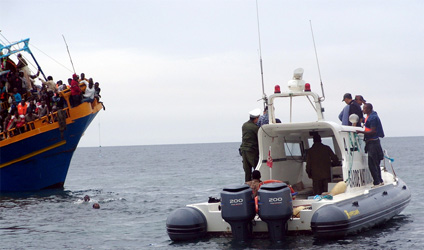
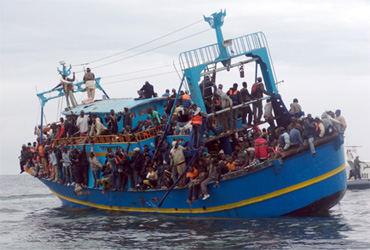
The boat, named The Wave, ran around last week, probably on Wednesday, 1 June.  The boat did not capsize until after rescue boats had arrived on the scene.   Tunisian coast guard and local fishing boats were involved in the rescue efforts.  The rescue boats did not have the capacity to rescue all of the migrants from the stranded migrant boat and some people jumped into the water and others moved to one side of the migrant boat causing it to capsize.  Media pictures show the vessel in an upright position with some rescue boats already on scene.  A France24 video report contains cell phone video shot immediately after the boat capsized.  (See pictures below.)

UNHCR and IOM staff have conducted interviews with some of the survivors.  According to UNHCR, the boat left Tripoli on 28 May with up to 850 people on board.  The passengers were primarily from West Africa, Pakistan, and Bangladesh. The crew was recruited on an ad hoc basis and had little or no maritime experience. The France24 video report states that survivors said Libyan military assisted them in leaving Libya.  The boat became lost after leaving Tripoli and on Wednesday, 1 June, it ran around near the Kerkennah islands.  UNHCR spokesman Adrian Edwards said that the boat “capsized as desperate passengers rushed to one side, seeking rescue by the Tunisian coast guard and fishing boats that had approached the vessel. Many fell into the water.”  IOM staff reported that at least one survivor said that during the boat’s voyage some people were thrown overboard alive.  The boat reportedly had run out of food and water.

Click here for a France24 video news report (EN) with cell phone video shot immediately after the migrant boat capsized.

Click here and here for UNHCR reports on the incident.

Click here for IOM Press Briefing Note.

Click here, here, here, and here for Tunisian articles. (FR)

Click here, here, and here for articles.  (EN)

Photo Agence Tunis Afrique Presse 04 juin 2011

La Garde maritime à Sfax au secours du chalutier libyen bloqué au large de Kerkennah (Photo AFP)

France24 03 June 2011 - Screen shot

France24 03 June 2011 - Screen Shot


1 Comment

Filed under Data / Stats, European Union, Italy, Libya, Mediterranean, News, Tunisia, UNHCR

UNODC Report: The Role of Organized Crime in the Smuggling of Migrants from West Africa to the EU

UNODC released a report on 30 May: The Role of Organized Crime in the Smuggling of Migrants from West Africa to the European Union.  From the UNODC web page: “… The new report by the United Nations Office on Drugs and Crime (UNODC) investigates the involvement of organized criminal groups in the smuggling of migrants from West Africa towards the European Union (EU).  The involvement of organized crime in the smuggling of migrants is a sensitive and controversial issue in West African countries, as the report discusses at various points. The publication contributes to better understand the underlying mechanisms and actors involved in this criminal process as a basis for policy reforms in countries affected.

Information in the report was compiled by a team of researchers from West Africa and Europe using both documentary studies and field research conducted in Mali, the Niger, Nigeria and Spain. …  UNODC, as guardian of the Protocol against the Smuggling of Migrants by Land, Sea and Air, supplementing the United Nations Convention against Transnational Organized Crime, possesses specific expertise and experience that could be put at the service of all countries affected to support them in matters linked to prevention, legislation, operations or prosecution.”

From the Report’s Summary:  “The United Nations Office on Drugs and Crime (UNODC), through the European Union-funded ‘Law enforcement capacity-building to prevent and combat smuggling of migrants in the ECOWAS region and Mauritania (Impact)’, undertook to investigate the role played by organized criminal groups in the smuggling of migrants from West Africa to Europe.

The present report is aimed primarily at decision makers, law enforcement and judicial officials, but also at a wider audience interested in irregular migration. It contributes to a better understanding of the underlying mechanisms and actors involved in this criminal process as a basis for policy reforms in the West African countries concerned.  This report was prepared through desk and field research, conducted in Mali, Morocco, the Niger, Nigeria, Senegal and Spain. Interviews were conducted with over 200 people in Africa and Europe belonging to three main groups: migrants, national authorities and non-governmental organizations, and smugglers.

Four main findings can be mentioned:

• Transnational organized criminal groups are generally involved in the smuggling of migrants from West Africa to Europe. However, there are important differences among them in terms of specialization and professionalism. With regard to trafficking in persons and the smuggling of non-African irregular migrants, criminal groups are clearly well organized and structured, and keep close contacts with operatives in several countries. On the other hand, other would-be migrants in West Africa have to deal with loose networks that are not permanently structured. Various groups of actors usually collaborate for one particular operation, and there are no exclusive relationships between those criminal groups.

• Specialization and the building of transnational criminal networks usually come as a result of increased efficiency in border interdiction. Within West Africa, freedom of movement gives little incentive, if any, to engage in the smuggling of migrants. However, the situation changes when there are natural obstacles, such as the sea, or man-made obstacles, such as surveillance

• In most cases, smugglers are migrants themselves. Realizing that their knowledge acquired through (often painful) experience may be used by other migrants in exchange for remuneration, some migrants decide to enter the business of smuggling of migrants. They may then become specialized professional smugglers, or they use their knowledge to finance the completion of their journey to Europe.

• Irregular migrants generally do not see themselves as victims, and smugglers do not see themselves as criminals. A complex relationship exists between irregular migrants and smugglers. The latter have an interest in maintaining the flow and feeding youngsters with dreams of success. These dreams are also kept alive in some West African countries by families and circles where important social value is attached to those who decide to leave, as well as by those who have made it to Europe, be it legally or illegally, even though their situation in Europe is often worse than it was at home….”

Click here for Report.

Click here for article on UNDOC web page.

Leave a comment

Filed under Analysis, Eastern Atlantic, European Union, Mauritania, Mediterranean, Morocco, Niger, Reports, Senegal, Spain, United Nations, UNODC

Some Refugees Who Fled Libya Return in Effort to Board Boats to Europe

Last week, UNHCR reported that hundreds of people who recently fled Libya to Tunisia and Egypt are returning to Libya in an effort to board boats for Europe.  “Among them are refugees, including members of the Somali, Ethiopian and Eritrean communities in the camps at Choucha near Tunisia’s border with Libya.”  UNHCR is warning of the dangers of trying to reach Europe by sea and of returning to Libya.  “UNHCR has met with refugees in Tripoli who are planning to make the perilous sea journey. ‘They are all aware of the high death toll, but they told us that they feel they have nothing to lose. One Eritrean man told us he would rather die trying to reach safety than continue to live in danger,’ [UNHCR’s chief spokesperson, Melissa] Fleming said.”  “Fleming [also] said that UNHCR had learnt with sadness ‘that people on track for resettlement, following interviews last year in Libya, lost their lives while trying to reach Europe recently. People in the middle of the resettlement process and vulnerable cases are prioritized in our interview schedule.’”

Click here for UNHCR statement.

Leave a comment

Filed under Egypt, European Union, Italy, Libya, Mediterranean, News, Tunisia, UNHCR

Maltese JHA Minister: Migrant Boats Have Rights of Passage and Rescue Not Always Needed

Maltese Justice and Home Affairs Minister Carm Mifsud Bonnici is quoted by AP as saying that migrant boats leaving Libya “have the right of passage and nobody can stop them, not even our forces or a NATO ship.  As long as [the boats] are not in distress, then [there] is no issue.”

While Mifsud Bonnici’s observation about the right of passage in international waters is technically correct, given that all or virtually all of the migrant boats that have left Libya in recent weeks have been severely overloaded, all migrant boats leaving North Africa under the current situation should be considered to be in distress and in need of rescue.  Migrant boats departing from Libya with few exceptions must pass through the Maltese Search and Rescue Area and Malta should not avoid its rescue at sea obligations under international law by claiming that it is respecting a vessel’s right of passage.  The UNHCR has called upon “states, commercial shipping companies and others present in the Mediterranean to consider that all boats leaving Libya for Europe are likely to require assistance.”

Click here or here for AP article.

Click here for UNHCR statement.

Leave a comment

Filed under Libya, Malta, Mediterranean, News, UNHCR