Tag Archives: Refugees

Migrant Boat Rescued by Armed Forces of Malta

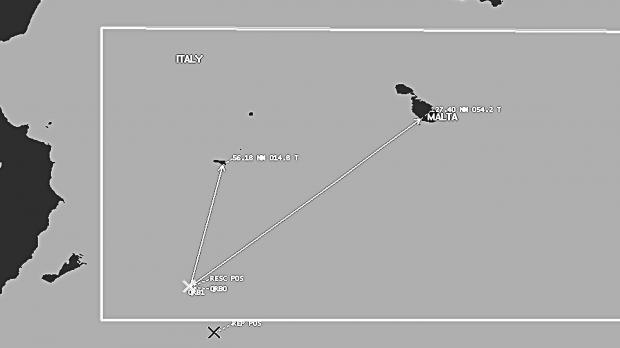
An Armed Forces of Malta patrol boat rescued 44 Somalis from a sinking 7 metre dingy early Tuesday morning.  The rescue took place about 70 nautical miles south of Malta.  The migrants have been taken to Malta.  The boat is believed to have departed from Libya on Saturday.  Survivors reported that two persons died during the voyage.

Click here and here (with video) for articles.

In an incident last week, the Moroccan Royal Navy rescued 53 migrants from a boat off Dar Kabdani.  At least four persons are known to have died in that incident.

Click here (EN) and here (IT) for articles.

Leave a comment

Filed under Libya, Malta, Mediterranean, Morocco, News, Somalia

Libyan Interception of Migrant Boat Carrying 400 May Have Been Staged

Libyan officials yesterday claimed that Libya intercepted a migrant boat shortly after it left Libya attempting to sail to Italy.  The boat was carrying over 400 migrants from sub-Saharan countries including Ethiopia, Ghana, Ivory Coast, and Nigeria.  Journalists who interviewed some of the arrested migrants reported the incident appeared to have been staged.  Some migrants who “spoke briefly to Reuters said they had paid more than $1,000 each for the trip, and many believed the boat’s captain had had no intention of ever making for the European coast, but had handed them straight to the Libyan authorities. ‘We were deceived by these people, Libyans,’ said Isaac Okyere, a 27 year-old Ghanaian.  ‘They marched us to the Navy people,’ he said, adding that the boat was intercepted about 45 minutes after setting sail.”  Libyan officials denied the arrests were staged, but did admit that the boat’s captain (who apparently was not arrested) alerted officials in advance of the boat’s departure.  It was not reported where the arrested migrants have been taken or what will now happen to them.

Interior Minister Fawzi Abd al All told a news conference that the interception and arrests showed the new government was serious about stopping illegal migration to Europe:  “Despite a lack of means, we were able to prevent illegal immigration of people who were heading for Italy. … Illegal immigration was a means of pressure used by the former regime to blackmail Europe. Now this issue will be treated differently. …We expect support from the world” in preventing such trafficking.

Click here (EN), here (EN), here (IT), and here (FR) for articles.

Click here for video.

Leave a comment

Filed under European Union, Italy, Libya, Mediterranean, News

NATO Reportedly Agrees to Provide Additional Information to PACE Regarding Migrant Deaths in the Mediterranean

The PACE Committee on Migration, Refugees and Population, in connection with the preparation of a report by Ms Tineke Strik (Netherlands, SOC) on the deaths of boat people who have died in the Mediterranean, conducted a hearing in Paris on 29 November.  NATO officials who met with Ms Strik in Brussels before attended the hearing reportedly agreed to provide additional information, which might include satellite imagery, to the PACE Committee.

From PACE Press Statement, 30 November 2011:  “‘With 1971 boatpeople having perished in the Mediterranean Sea while trying to reach European soil from North Africa, the year 2011 sets a sad record as the deadliest year for boatpeople,’ PACE rapporteur Tineke Strik (Netherlands, SOC) said at the end of a hearing on this issue, organised by the Parliamentary Assembly of the Council of Europe (PACE) Migration Committee.  ‘Never before the Mediterranean Sea has been as closely monitored as this year because of the war in Libya and still more boat people than ever perished or disappeared,’ the rapporteur added.  ‘Is there a common understanding of a “distress situation”? Is it clear which legal framework is applicable and by whom? Do all ships, even warships, have to proceed with rescue operations even if they are situated beyond established search and rescue zones? Where does legal responsibility start and where does political responsibility end? These are some of the issues we are currently trying to clarify,’ she said.  Mrs Strik’s report will focus on an incident reported in March this year, during which 63 boat people escaping from Libya died after their appeals for rescue had allegedly been ignored. ‘The testimonies of survivors of this incident are coherent, but we have to continue to collect more data and information on who was when and where in the area and we now expect Nato and the EU to provide us with satellite imagery and other relevant information,’ she concluded.”

Click here, here, here, and here for articles.

Click here for PACE Press Statement.

Click here for my last post on the topic.

1 Comment

Filed under Council of Europe, Frontex, Italy, Libya, Malta, Mediterranean, Netherlands, News, Tunisia, UNHCR

New Italian Foreign Minister: Reactivation of Italy-Libya Friendship Treaty is Crucial

In a speech on 30 November to Parliament, Italy’s new Foreign Minister, Giulio Terzi, said the 2008 Italian-Libyan Friendship Agreement is crucial to bilateral relations between the two countries and that it therefore needs to be reactivated.  He announced he will travel to Libya as soon as the new Libyan government is ready to receive him.

Click here, here, and here for articles.  (IT).

Leave a comment

Filed under Italy, Libya, Mediterranean, News

Maltese Constitutional Court Awards Compensation to 2 Somalis Forcibly Repatriated to Libya in 2004

From the Times of Malta:  “Two Somali men have been awarded compensation of €10,000 each after the Constitutional Court found that they were forcibly repatriated to Libya from Malta and had not been given the opportunity for asylum.  …  [After fleeing Libya by boat t]heir boat was intercepted by a Maltese patrol boat and they were brought to Malta.  Upon their arrival they were taken to the Police Headquarters. Neither of them was given the opportunity to apply for asylum in Malta nor were they assisted by an interpreter. Twenty days later the two men, together with four other illegal immigrants were taken, handcuffed, to the airport and were forcibly sent back to Libya.  Both men asked to speak to the UNHCR representative in Malta but their request was refused.  Upon their arrival in Libya they were arrested, beaten and tortured while they were kept in prison for a week. They were transferred to another prison and, three months later, they were taken to court where they were tried without an interpreter.  The men were sentenced to one year’s imprisonment. During their time in prison they were again beaten and tortured. …  The case was instituted by Abdul Hakim Hassan Abdulle and Kasin Ibrahim Nur after they managed to endure torture in a Libyan jail and abandonment in the Sahara Desert before returning to Malta….  In their constitutional application the men claimed that their right to freedom from inhuman and degrading treatment had been violated by the fact that they had been forcibly repatriated to a country which was known to practise torture. They further claimed that their fundamental human right to an effective remedy had been violated as Malta had not allowed them to apply for asylum. Mr Justice Pace pointed out that in terms of law, an immigrant had to be informed of his right to seek asylum in Malta in a language he understood. This had not been done in this case….”

Thanks to Dr Neil Fazon (Aditus.org.mt) for pointing this out and for providing a copy of the Court’s decision.

Click here for article.

Click on this link Abdul Hakim et vs MJHA et for decision (Maltese).

1 Comment

Filed under Judicial, Libya, Malta, Mediterranean, News

Criminal Charges Brought in Italy Against 5 Men Accused of Murdering Passengers On Disabled Migrant Boat

Italian authorities in Agrigento have brought criminal charges, including charges of unlawful killing, against 5 men from Ghana and Nigeria who are accused of throwing fellow migrant passengers into the sea from a disabled migrant boat this past August. The victims are alleged to been selected based upon their ethnicity or nationality. The boat in question was carrying over 300 migrants from Libya towards Lampedusa in August when it became disabled.  Italian patrol boats rescued the survivors on 4 August.  Italian authorities at the time accused NATO of failing to act to assist with the rescue of the boat.

Click here (EN), here (IT) and here (IT) for articles.

Click here and here for my earlier posts on the August incident.

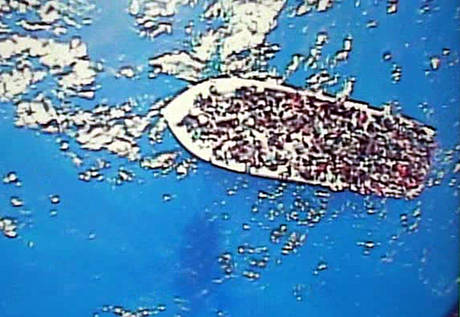
Image of migrant boat from monitor inside Italian rescue helicopter

Leave a comment

Filed under European Union, Italy, Judicial, Libya, Mediterranean, News

Malta Rejects UNHCR Suggestion that Malta Failed to Carry Out SAR Obligations

The Times of Malta reports that the Armed Forces of Malta (AFM) and Maltese SAR authorities have rejected what they characterised as the “impression conveyed” by a UNHCR spokesperson that “Maltese SAR authorities abdicated from their responsibilities and did not cooperate with the relevant Italian authorities” in connection with the search for and subsequent rescue of 44 migrants on board a disabled boat on 9-10 November.  The migrants were rescued by the Italian Navy ship Foscari and transported to Sicily, not to Lampedusa or Malta which were the two closest ports.

The AFM statement reported by the Times of Malta outlines in detail the Maltese response to the distress call from the migrant boat and Malta and Frontex’s participation in the air and sea search.  The AFM statement said that “[t]he decision for the Italian Navy vessel Foscari to take the rescued migrants to an Italian port in Sicily was the result of Italian insistence that Lampedusa does not represent a place of safety for the disembarkation of migrants, despite it being a mere four hours from the position where the persons were rescued.  Under the relevant legal regime applicable with the Malta SRR, the persons should have been disembarked in Lampedusa which, despite declarations to the contrary, represented the nearest place of safety.”

Click here for article.

1 Comment

Filed under Frontex, Italy, Libya, Malta, Mediterranean, News, UNHCR

Foster and Pobjoy, Int J Refugee Law, “A Failed Case of Legal Exceptionalism? Refugee Status Determination in Australia’s ‘Excised’ Territory”

The latest edition of the International Journal of Refugee Law contains an article by Michelle Foster (Associate Professor and Director, Research Programme in International Refugee Law, Institute for International Law and the Humanities, Melbourne Law School) and Jason Pobjoy (PhD candidate in Law, Gonville and Caius College, University of Cambridge; Hauser Visiting Doctoral Researcher, New York University School of Law) entitled “A Failed Case of Legal Exceptionalism? Refugee Status Determination in Australia’s ‘Excised’ Territory.

Abstract: “One of the hallmarks of contemporary state practice in the field of refugee law is the attempt by many states to exclude potential refugees from the international rule of law by implementing creative policies and practices designed to create ‘zones of exception’. This article analyses one of the most blatant attempts at creating a zone of exception in recent times, namely, the creation of more than 4,891 excised places in Australia in which the ordinary safeguards enshrined in the onshore domestic system of refugee protection were intended to be excluded. The article traces the history of the purported excision, outlines the key features of the so-called ‘non-statutory’ process that has subsequently been instituted on Christmas Island as an alternative to the onshore domestic system of refugee status determination, assesses its compatibility with international law, and describes and analyses a recent landmark decision of the High Court of Australia that unanimously and categorically rejected the notion that such a scheme could validly operate outside the (domestic) rule of law. It concludes by considering the domestic and international law ramifications of this decision for Australia’s current proposals for a new regional solution to its perceived refugee problem and, in particular, its recent ‘refugee swap’ arrangement with Malaysia.”

Click here for link.  (subscription or payment required.)

Leave a comment

Filed under Analysis, Australia, Indian Ocean

Chatham House Briefing Paper: Responding to Migration from Complex Humanitarian Emergencies: Lessons Learned from Libya

A new Chatham House Briefing Paper by Dr Khalid Koser entitled “Responding to Migration from Complex Humanitarian Emergencies: Lessons Learned from Libya” has been released.

Summary:

  • At its peak during the Libyan conflict, migration to Tunisia and Egypt was massive, even in the context of a region where large-scale migration has become the norm.
  • In the case of Libya, at least five categories of migration can be distinguished: evacuating migrant workers, Libyan nationals moving into Egypt and Tunisia, ‘boat people’ arriving in the EU, internally displaced persons (IDPs), and asylum-seekers and refugees.
  • The international policy response in Libya was hampered by restricted access. IDPs therefore received limited assistance and protection, and migrant workers, especially from sub-Saharan Africa, experienced harassment and abuse.
  • The policy response in neighbouring states, especially Egypt and Tunisia, was far more robust.
  • The political response in the EU to the relatively small proportion of migrants who reached Europe is considered by many commentators to have been disproportionate.
  • The crisis has highlighted a gap in the international regime for protecting IDPs, and in particular migrant workers. It has also called into question the relevance to modern humanitarian crises of a dated refugee definition. More positively, the response has demonstrated how international agencies can cooperate, and there has been unprecedented cooperation between IOM and UNHCR to respond to ‘mixed flows’ from Libya.
  • Responsibility for managing migration now falls to the new government in Libya.

Click here for paper.

1 Comment

Filed under Analysis, European Union, Libya, Mediterranean, UNHCR

Ashton in Tripoli – EU Ready to Resume Negotiations on Framework Agreement / Prepared to Immediately Fund Re-Activation of Suspended Migration Programmes

EU High Representative Catherine Ashton travelled to Tripoli on 12 November to open the new EU Delegation office (headed by James Moran) and to meet with Libyan NTC Chairman Mustafa Abdel-Jalil.

From an EU Press Release:  “…  The EU also stands ready to resume negotiations on a Framework Agreement which can serve as a basis for political, economic, social and cultural dialogue and cooperation with the new Libya, whenever the new authorities decide that is the right moment to do so. The same principle applies to the possibility of having Libya joining regional initiatives where the EU is involved….”

“…Beyond tackling the most pressing humanitarian needs, the EU is already preparing both immediate measures to support the stabilisation priorities of the National Transitional Council (NTC), as well as longer-term support programmes. It was agreed at the international conference in Paris on 2 September 2011 that the EU will conduct needs assessment for the following sectors: border management; strengthening civil society and women’s rights, and media/strategic communications, while the UN and the World Bank, with which the EU is working very closely, will lead assessments in other areas. In addition, the EU has already deployed experts in communications, civil society, border management and security, and procurement.   In addition to its humanitarian assistance, the European Commission can make up to €30 million available for immediate stabilisation needs, including through the re-activation of programmes in the field of migration that were suspended when conflict began….” [emphasis added]

Click here for full press release.

Leave a comment

Filed under European Union, Libya, Mediterranean, News

Migrant Boat Rescued by Italian Navy – Migrants to be Transferred to Sicily

The Italian Navy vessel Foscari rescued 44 migrants last night from a disabled boat that is believed to have departed from Libya about 4 days ago.  Maltese media reported that the Italians wanted to disembark the rescued migrants in Malta due to the earlier decision of Italian authorities to close Lampedusa for search and rescue purposes.  However Adnkronos news is reporting that the Foscari is taking the rescued migrants to Augusta, Sicily.

The first satellite phone distress call from the migrant boat was reportedly made when the boat was located within the Libyan SAR.  The migrant boat was finally sighted by an Italian fishing boat last night within the Maltese SAR.  The Italian Navy vessel Foscari rescued the migrants.  A Somali woman and her newborn infant who was born on the migrant boat were flown by helicopter to Lampedusa for medical care.  The remaining 42 rescued persons will now apparently be disembarked in Augusta some time tomorrow.  16 August was the last time a migrant boat reached Italy from Libya.

UNHCR issued a statement saying it was “grateful that the Italian navy took this initiative despite the fact that the boat was in Maltese search and rescue waters.”

Click here (EN), here (EN), here (IT), here (IT), and here (IT) for articles.

Click here for UNHCR statement.

Leave a comment

Filed under Frontex, Italy, Libya, Malta, Mediterranean, News, UNHCR

UNHCR Calls on Malta and Italy to Expand Search For Missing Migrant Boat

UNHCR’s Malta office issued the following statement on Thursday while search efforts for the migrant boat by the Armed Forces of Malta continued:

“The United Nations High Commissioner for Refugees (UNHCR) expresses deep concern for the fate of tens of migrants on board of a boat coming from Libya who have sent out SOS calls on Tuesday evening.   The presence of the migrants has reportedly also been confirmed by a number of Somali relatives in Italy who have received the distress calls.  The boat has not been sighted yet and this raises UNHCR concern, especially as it is much more dangerous to cross the Mediterranean in the current season. UNHCR calls on Malta and Italy to strengthen the search operations in order to save the lives of tens of persons at the mercy of the sea.”

Click here for link.

Leave a comment

Filed under Italy, Libya, Malta, Mediterranean, News

Director Laitinen Describes Frontex Response to the 2011 Migratory Flows from North Africa

In a recent opinion article published on Publicservice.co.uk, Frontex Director Ilkka Laitinen described the challenges faced by Frontex and provided a description of Frontex’s “unprecedented” activities over the past 12 months in the operational theatre, referring to the first RABIT deployment in October 2010 and the response to the migratory flows from North Africa beginning in January 2011.

Extensive excerpts regarding the response to the migratory flows from North Africa:

“…  Since January 2011, world attention has been focused as never before on the Arab world. The ‘Arab Spring’ uprisings in North Africa and the Middle East once again redrew the European migration map, and Frontex’s operational capacity was tested again. With the arrival of almost 5,000 migrants on the tiny Italian island of Lampedusa, the agency was once more called upon to assist. However, the support required was in a very different form than that in Greece.

African exodus
The migratory flows from North Africa towards the EU external borders – predominantly to Italy and Malta – have been very different from those to Greece. Initially, almost all were economic migrants from Tunisia seeking work in Europe.

The modus operandi of the facilitation networks behind the phenomenon was a familiar one to Frontex, namely, over-packing unseaworthy vessels with inadequately experienced crews and little life-saving equipment, if any. This created a predominantly humanitarian need for search and rescue activities at sea. It also created an administrative challenge on shore, to process usually undocumented migrants, establish their nationalities and identities and take care of their immediate needs, as well as to transfer them to better equipped facilities on the mainland and start return procedures where appropriate. There was no call from Italy for a RABIT deployment, however. Italy is very well equipped for maritime border control, as well as for search and rescue activities. Where the Italian authorities requested most support was in Frontex’s other areas of specialisation – intelligence gathering, situational awareness, and the deployment of experts to the field to assist in the screening and debriefing of migrants (establishing probable nationality and gathering evidence of people smuggling respectively). Long before being called on by the Italian Ministry of Interior, Frontex’s Situation Centre and Risk Analysis Unit were busy identifying the full range of possible scenarios in Egypt, Tunisia and Libya, as well as monitoring developments in other countries in the region.

Since the first waves of migrants from Tunisia, the situation has evolved constantly, with ever more sub-Saharan migrants and refugees seeking international protection. Such changeable flows require flexibility and constant adjustment to the operational response. For each possible scenario, an appropriate operational response was planned by the Joint Operations Unit and all necessary steps were taken to ensure that a rapid response could be launched anywhere in the operational area at any time.

This is an ongoing process and a challenge to which expert staff at the agency’s Warsaw HQ, and the Frontex Operational Office in Piraeus, Athens, continue to respond. This readiness ensures operational flexibility. It also demonstrates another important area in which Frontex adds value to member states’ activities at the EU’s external borders. It must always be borne in mind that it is the member states themselves that remain at all times responsible for their own borders; Frontex’s role is to provide support when requested. Keeping member states up to date with detailed and accurate intelligence is one of the ways the agency works behind the scenes to maximise member states’ effectiveness. Another way is by providing a platform for exchange of data and other information. Equally, experts in the field debrief migrants to build up a clearer picture of the routes used, prices paid and other modi operandi of the smuggling networks involved.

The cruel sea
The maritime domain remains the most complicated for border control, not least legally. The provisions of national and international maritime law and their impact on migration management, make the seas the most challenging environment for operations. It is for this reason that for many years, Frontex has been encouraging greater coordination between the southern member states themselves through the European Patrols Network (EPN) – an initiative to increase efficiency, improve information sharing and reduce overlapping of efforts and the incumbent gaps they leave in surveillance. It was the existing EPN provisions in the Mediterranean that formed the basis of Frontex’s operational response to the migration flows from North Africa. And it is the EPN that will be strengthened as a combined surveillance response going forward. EPN will form an essential component of EUROSUR, the common European surveillance system now being developed. It will also help to enhance Europe’s search-and-rescue capacity in the Mediterranean.

But as has been said many times, border control is no panacea. It is the last line of control and rescue. Its rightful place is at the heart of a far-reaching IBM [Integrated Border Management] system that includes deterrents against illegal migration as well as incentives for legal migration, and that tackles the root causes of such migration in countries of origin and transit. To put it simply, prevention is better than cure, and by the time migrants reach the external EU border it is often too late.

The most effective way to tackle the dangers of illegal migration by sea is to deter migrants from setting out in the first place. Only when this principle is enshrined at the EU policy level can it be claimed that the Union is seriously tackling illegal migration and cross-border crime.”

Click here for link to full text of article.
Leave a comment

Filed under European Union, Frontex, Greece, Italy, Libya, Malta, Mediterranean, News, Tunisia

Malmström: Commission Hopes Migration Talks With Libya Will Begin Soon

In response to a parliamentary question submitted by Italian MEP Fiorello Provera (EFD, Northern League) regarding the “control of migratory flows in the southern Mediterranean”, Commissioner Cecilia Malmström provided a written response on 25 October in which she stated that “[t]he Commission hopes [migration discussions] will start as soon as possible with the Libyan authorities.”

In his question, MEP Provera praised the Italy-Libya Friendship Agreement:  “In an example of successful migration control, Italy and Libya signed a friendship treaty in 2008, which included measures to put Libya in charge of its 2 000 km coastline to stem the flow of illegal migrants into the EU. The agreement had an enormous impact: in 2008, 40 000 migrants attempted to cross illegally into Italy, but according to The Economist, the number of migrants was reduced to 4 406 in 2010. However, following the popular uprising against Gaddafi forces at the start of 2011, 27 000 immigrants managed to cross from Libya into Europe.”

Full text of Ms Malmström’s written response:   “The Commission would like to underline that the discussions which were held on 4 October 2010 in Tripoli by the Members of the Commission responsible for Home Affairs and Enlargement and European Neighbourhood Policy took place in a context, and with interlocutors, which have profoundly changed.

Although the tentative list of common actions identified in October 2010 (1) may still represent a basis for future cooperation between the EU and Libya in the areas of migration, asylum, visa policy and border management, it is clear that the pattern and content of this future cooperation will have to be substantially revised on the basis of new discussions. The Commission hopes these will start as soon as possible with the Libyan authorities.

The revision of the cooperation with Libya, in any case, is necessary also to take into account several important changes which have taken place not only in Libya but also in the EU since the spring.

In particular, the European Council of 24 June 2011 which approved a new policy approach towards the Southern Mediterranean countries. This approach will be characterised by the launch of a Dialogue on Migration, Mobility and Security with these countries aimed at reinforcing cooperation and strengthening relations with Europe’s southern neighbours.

(1) ‘common actions aimed at preventing irregular migration, addressing more effectively its consequences and root causes, promoting the use of the regular channels of migration and mobility, avoiding further loss of migrants’ lives as well as to protecting their fundamental rights’.”

Click here for Question and here for Answer.

Click here for article. (EN)

Leave a comment

Filed under European Union, Italy, Libya, Mediterranean, News

Reports of First Post-Gaddafi Migrant Boat [UPDATED 2345 GMT – Lampedusa “Closed” for SAR Operations]

Italian media is reporting this afternoon that a satellite telephone distress call has been received from a disabled migrant boat carrying about 50 persons from Libya.  A search in the Maltese SAR zone is being undertaken.  The boat is reportedly drifting about 70 miles south of Lampedusa.  If the report is accurate, this would appear to be the first known migrant boat to have left Libya since the overthrow of Gaddafi.

Click here and here for articles.  (IT)  Click here for article. (EN)

[UPDATE 23:45 GMT – A Malta Today report suggests, as has been the case before, there may be  disagreement between Maltese and Italian officials regarding who has responsibility for coordinating SAR operations.  Malta Today reports that Malta is now coordinating SAR operations due to the “closure” of Lampedusa by Italian officials.  Click here for article.]

Leave a comment

Filed under European Union, Frontex, Italy, Libya, Malta, Mediterranean, News