Tag Archives: Tunisia

Hundreds of Tunisians Who Sailed to Lampedusa in 2011 Remain Missing

Hundreds of Tunisians who departed Tunisia for Lampedusa by sea in early 2011 remain missing.  Some of the missing almost certainly died at sea, but family members remain hopeful that others survived the voyage and are now in Italy or elsewhere in Europe.  Earlier this week dozens of mothers of the missing demonstrated outside the Tunisian Ministry of Foreign Affairs during a visit by an Italian parliamentary delegation led by Margherita Boniver. The mothers have been holding daily demonstrations calling for assistance from Tunisian and Italian authorities.  The two governments have been asked to cross check fingerprint information.  Tunisia collects fingerprint information for national identity cards and Italian authorities have collected fingerprint information from arriving migrants.  There is speculation that some of the migrants may have used false names upon reaching Italy and as a result are more difficult to locate.

Click here (IT), here (IT), here (FR), and here (FR) for articles.

Click here for Facebook Page dedicated to finding missing Tunisians.

Click here for Storie Migranti Petition for missing Tunisian migrants / Appello per i migranti tunisini disperse / نداء من أجل التونسيين المهاجرين المفقودين / Appel pour les migrants tunisiens disparus.

Leave a comment

Filed under Italy, Mediterranean, News, Tunisia

Amnesty International Report: Year of Rebellion – The State of Human Rights in the Middle East and North Africa

Amnesty International this morning released a report entitled “Year of Rebellion – The State of Human Rights in the Middle East and North Africa” focusing on the events of 2011 in Tunisia, Egypt, Libya, Yemen, Syria, Bahrain, and Iraq.  Additional chapters in the Report address the “International response”, the “Failure to put human rights first”, “Protection of displaced people”, and “Arms transfers”, among other topics.

Excerpts:

“This report describes the events of this historic, tumultuous year, one which saw so much suffering and sadness but also spread so much hope within the region and beyond, to countries where other people face repression and everyday abuse of their human rights. Amnesty International too was challenged, as never before, to respond to the events by documenting the violations that were committed and, most of all, by mobilizing its members and supporters to extraordinary lengths in support and solidarity with the people in the streets of Cairo, Benghazi, Sana’a, Manama, Dera’a and elsewhere who were truly “in the frontline” in demanding reform, accountability and real guarantees for human rights. This report is dedicated to them, their suffering and their momentous achievements.”

“Protection of Displaced People- … Many of those who fled Libya sought safety in neighbouring countries, mainly in Egypt and Tunisia. However, around 5,000 sub-Saharan refugees and asylum-seekers remain stranded in desert camps in Tunisia and makeshift tents in Saloum, a remote border point in Egypt. When Amnesty International visited the camps in June and July, poor conditions and insecurity prevailed, making life extremely challenging for those living there. Unlike the thousands of migrants who were repatriated during the initial stages of the conflict, these people cannot return to their home countries because they would then be at risk of persecution. Nor can they remain in Egypt and Tunisia, which have been unwilling to offer long-term solutions to refugees. Returning to Libya is also not an option, despite the fall of the al-Gaddafi regime, as Libya cannot currently offer a safe haven for refugees. The only solution is for other countries where they would be safe to resettle them. How many are resettled and how quickly this happens depends on the speed and extent with which the international community fulfils its responsibility to them. So far, the international community’s response has been miserably poor, with European countries offering fewer than 800 resettlement places between them in response to a refugee crisis unfolding on Europe’s doorstep. Many of those who fled Libya attempted the dangerous sea-crossing to Europe, often in overcrowded and barely sea-worthy boats. Among them were people who initially fled from Libya to Tunisia, but then crossed back into Libya frustrated at the lack of durable solutions for refugees in the camps. At least 1,500 men, women and children are estimated to have drowned while attempting this journey. The true total was probably far higher. Governments and institutions failed to put in place effective mechanisms to prevent such deaths at sea, including by increasing search and rescue operations, and by ensuring that rescue operations comply fully with human rights and refugee law….”

Click here for Report.

Click here for AI Press Release.

2 Comments

Filed under Algeria, Egypt, Libya, Mediterranean, Morocco, Reports, Tunisia, Yemen

Statewatch Analysis: The EU’s self-interested response to unrest in north Africa: the meaning of treaties and readmission agreements between Italy and north African states

Statewatch released an Analysis by Yasha Maccanico entitled “The EU’s self-interested response to unrest in north Africa: the meaning of treaties and readmission agreements between Italy and north African states.”  The Analysis provides a description of Italy’s responses to the migrant arrivals in 2011 caused by the unrest in North Africa.

Excerpts:  “The ‘crisis’ reveals questionable practices and routine abuses – The measures adopted in response to the increasing number of migrants arriving from north African countries serve to highlight a number of practices that have become commonplace in Italy in recent years.

The first of these is a widening of the concept of ‘emergency.’ Calling an emergency gives the government a wider remit to derogate from specified laws so as to resolve situations that cannot be dealt with through ordinary measures….

Although the situation in north Africa was worrying, the emergency was called when slightly over 5,000 migrants had arrived. An analysis by Massimiliano Vrenna and Francesca Biondi Dal Monte for ASGI notes that the government has repeatedly called and extended states of emergency since 2002 to deal with immigration, which is treated as though it were a “natural calamity” even when there is a wholly predictable influx of people from third countries. The urgent need specified in decrees declaring a state of emergency is to conduct ‘activities to counter the exceptional – later referred to as massive – influx of immigrants on Italian territory’ (as happened on 11 December 2002, 7 November 2003, 23 December 2004, 28 October 2005, 16 March 2007, 31 December 2007, 14 February 2008 for Sicily, Calabria and Apulia and was extended to the whole nation on 25 July 2008 and 19 November 2009), stemming from a prime ministerial decree of 20 March 2002. Thus, Vrenna and Biondi Dal Monte’s observation that the emergency is ‘structural’ appears well-founded. It has serious repercussions for the treatment of migrants (see below) and the awarding of contracts outside of normal procedures, with the involvement of the civil protection department whose competencies have been expanding considerably.

The second practice involves the expulsion, refoulement or deportation of migrants outside the limits and procedures established by legislation for this purpose. The failure to identify people, to issue formal decisions on an individual basis to refuse them entry or expel them, or to give them the opportunity to apply for asylum or other forms of protection, was a key concern when boats were intercepted at sea and either the vessels or their passengers were taken back to Libya between May and September 2009, when 1,329 people were returned. These rights were also denied to people arriving from Egypt and Tunisia in application of readmission agreements in the framework of the fight against illegal migration. Their presumed nationality was deemed sufficient to enact expulsions to these countries, because ongoing cooperation and good relations with Italy appeared sufficient to indicate that they were not in need of protection, regardless of the situation in their home countries. ….

The third practice is the ill-treatment of migrants held in detention centres. Without dealing with this issue in depth, it is worth noting that what could be viewed as arbitrary detention is occurring on a large scale, in the absence of formal measures decreeing detention and without the possibility of appealing against decisions. In fact, after landing, migrants are summarily identified as either ‘illegal’ migrants or asylum seekers, largely on the basis of their nationality….”

Click here for Analysis.

1 Comment

Filed under Analysis, Egypt, European Union, Frontex, Italy, Libya, Mediterranean, Tunisia

Migrant Boat Reaches Lampedusa

A rubber dinghy carrying 69 sub-Saharan migrants landed on Saturday on Lampedusa without having been intercepted.  The migrants are believed to be Somali.  At least one media report states that the migrants are believed to have departed from Tunisia.  Several of the boat’s passengers were hospitalized.  The main migrant detention centre on Lampedusa remains closed.

Click here and here for articles. (IT)

Leave a comment

Filed under Italy, Mediterranean, News, Somalia, Tunisia

ECRE Interview with Tineke Strik Regarding PACE Investigation into Migrants Deaths in Mediterranean

ECRE last week published an interview with Ms Tineke Strike regarding the PACE Migration Committee’s ongoing investigation into the almost 2000 migrant deaths that have occurred in the central Mediterranean this year.  The Committee is focusing in particular on the incident that occurred in late March 2011 when unknown ship(s) and aircraft observed and then failed to rescue a disabled migrant boat.  Approximately 60 persons subsequently died.

Excerpts from the ECRE interview:

“[***]  What are the main findings of your report on the death at the Mediterranean so far?

We have spoken with survivors and with the priest who received the request for assistance from the boat in distress, Italian border guards, and the Italian refugee agency, as well as the Italian Refugee Council (CIR), a Member of ECRE. We also talked to different people in Brussels, including NATO, the ambassador of the Council of Europe, Amnesty and several MEPs. Today, during the PACE hearing on November 30 in Paris, we had a discussion with a number of experts in international law, Frontex, UNHCR and ICRC. All in all a lot of information has been gathered.

We have already sent requests for information to find out via satellite maps and logs if there were boats near the distressed boat Once we know under which flags these boats were sailing, we will be able to track which governments might have been responsible and ask them whether they knew that the boat asking for help was in danger or not and how they acted upon that information.

We are actually still waiting for information for this information. It is unfortunate that it takes time to get this information but we are trying to get hold of it through different channels. We have approached High Representative Ashton and asked for her consent to provide us with information from the European Satellite Centre. We have already used this kind of information at the Council of Europe, for example to detect the illegal detention centres that the CIA was using. We therefore hope that Ashton once again will cooperate.

We also asked NATO to provide us with information and have asked all the countries who took part in the NATO action in Libya and who had ships in that region during that period to give us data on where their boats were and when. NATO has promised to request the Member States to provide us with this information, also if these boats were not under the command of NATO. If this does not succeed, we still have our own national parliamentarians that could push their governments in their own country if it is necessary to gather the information.

If countries were involved they might not want to admit that, which makes my position difficult. I am not a judge and I don’t have enforcement powers so I’m partly dependent on the cooperation of various parties.  But I think all parties can benefit from transparency on what has happened, in order to avoid such tragedies in the future.

[***]

How do you think the EU has responded to the turmoil and war in North Africa and, in particular, the following displacement of people in the region and the arrival of some of them to Europe?

In my report following the protests in North Africa, we see that by far the largest part of the people who have fled Libya went to Tunisia and Egypt. There was a lot of fuss in the EU about the 25,000 who eventually fled to Italy. Tunisia took half million, Egypt took a half a million which shows how big the contrast with the EU was, especially considering that Member States were reluctant to resettle refugees from camps in Tunisia. This while Tunisia and Egypt were in a very vulnerable position in the post-revolutionary period. If we really want to help and strengthen stability in the region, we must show these states that they are not alone. These countries generously opened their borders, they understood the situation of the people there and to a great extent we stood aside and just watched.

Then we failed to help out Italy and Malta, especially when countries like France and Denmark wanted to close their borders. This shows exactly how much we are still not politically ready for a common asylum system. We provide beautiful public statements but when it comes down to it, Member States do not want to lose their sovereignty or be troubled by developments elsewhere. I do not think you can have both: either you have a joint system and you show solidarity, or you close all the borders and reinvent the wheel.

Common policies go hand in hand with solidarity and in fact we should look beyond the European borders.  What you see now is that border controls at the external borders of the EU continue to shift to North Africa and sometimes even further. One cannot claim that our responsibilities only begin when people have reached our territory. I was therefore very disappointed when the European Commission replied to a question by MEP Hélène Flautre on this incident saying that the boat was in Libyan waters and therefore they had no power to get involved. If certain acts like push backs at high sea or bilateral agreements with unsafe third countries such as Libya, lead to death or inhumane treatment, EU member states or other countries of the Council of Europe are accountable for a violation of the European Convention on Human Rights. In that sense I have high expectations of the decision of the ECHR in the case of Hirsi and others v. Italy.

[***]

What do you think the impact of your work and the investigation will be?

I hope the report will raise the awareness of the international obligations and also the awareness of the importance of avoiding such tragedies. It is important that violating the obligation to rescue does not remain unmentioned or lead to impunity. If we succeed in proving which actors were wrong. Member States will be more careful and there will be more pressure to cooperate and share the responsibilities, and to establish practical and binding solutions. Being a parliamentary assembly of national parliamentarians, I also hope that the discussion will also take place in Member States. I find it really outrageous that such a tragedy can occur so close to our borders and that we have been so silent about it.

[***]”

Click here for full interview.

Click here for my last post on this topic.


Leave a comment

Filed under Council of Europe, European Union, Frontex, General, Italy, Libya, Malta, Mediterranean, News, Tunisia, UNHCR

Update Regarding PACE Investigation into Migrant Deaths in the Mediterranean

I have sought additional information from NATO and PACE regarding the 29 November hearing held in Paris by the PACE Migration Committee regarding the deaths of boat people in the Mediterranean.  I was informed by a PACE official that the minutes of the 29 November hearing will be released during or after the Committee’s next scheduled meeting which will take place in late January 2012.

In my previous post on this topic I incorrectly said that NATO officials attended the 29 November hearing.  Instead Ms Strik, the Committee’s rapporteur, met with a senior NATO official in Brussels on 28 November.  A NATO official informed me that “during the meeting [with Ms Strik], NATO offered to look into new details of the 28 March 2011 incident which were provided to NATO by Ms Strik. This process is ongoing and we will reply to the Council of Europe in due course.”

The NATO official reiterated to me that NATO ships were “fully aware of their responsibilities” to respond to vessels in distress and noted that during Operation Unified Protector “NATO ships have directly assisted in the rescue of more than 600 people in distress at sea.”  The official provided information about two incidents which have previously been reported on:

  • “[O]n 26 March 2011, NATO ships responded to information that two migrant ships with over 500 people on board were in distress, which were then provided direct assistance by the Italian authorities. That included a NATO ship using its helicopter to airlift two women and a newborn child to medical help”; and
  • “On 10 July 2011, a NATO ship responded to a vessel in distress approximately 75 miles off the coast of Libya. The NATO vessel provided medical support, food and offered mechanical assistance to the distressed migrants. In response to a deterioration of the humanitarian situation onboard, the 114 migrants were transferred onto the NATO ship in accordance with the Safety of Life at Sea (SOLAS) protocol and delivered to safety in Tunisia.”

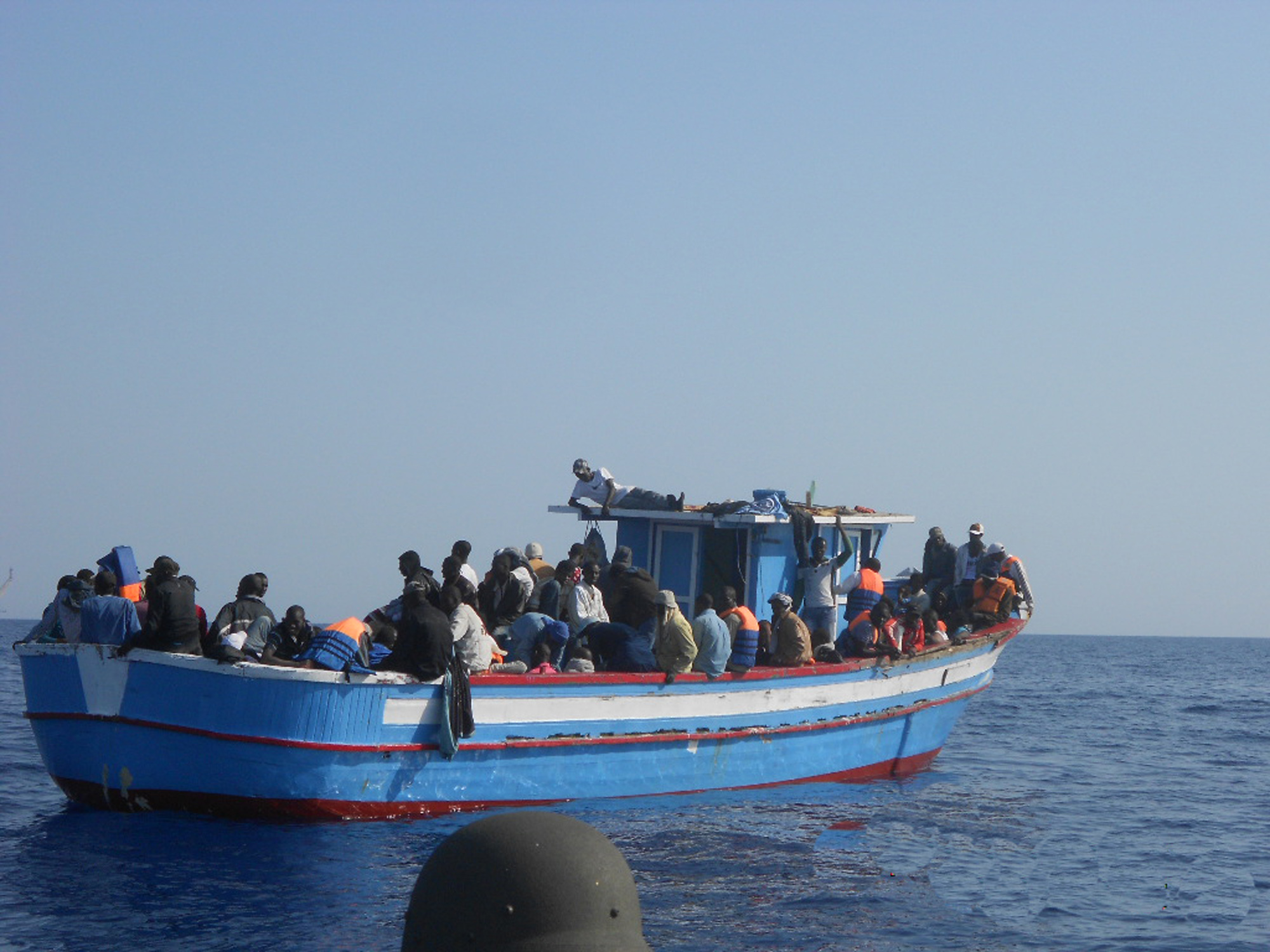
The reference to the 26 March incident presumably relates in part to the Canadian warship, HMCS Charlottetown, which made contact with a disabled migrant boat carrying over 250 migrants on 25 March.  The Charlottetown provided food, waters, and repairs to the migrant boat and escorted it until 26 March when the Italian Coast Guard arrived on scene.  As far as I can tell from news reports from the time of this incident, there was only one migrant boat involved.   NATO’s current statement indicates there was a second migrant boat encountered by NATO at this time.

Click here and here for my previous posts on the March 2011 incident.

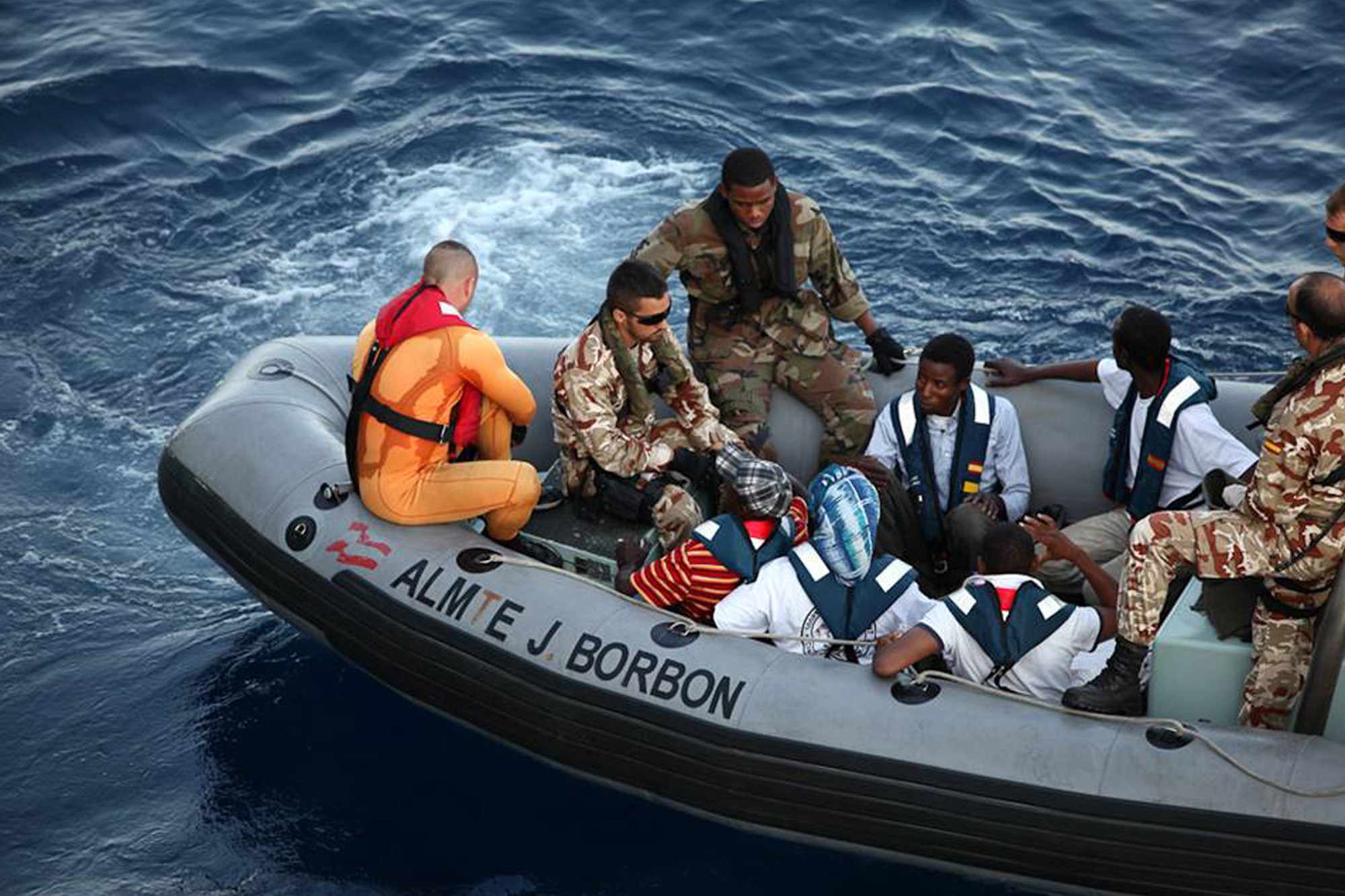
The 10 July incident relates to the rescue of over 100 migrants by the Spanish Navy frigate, the Almirante Juan de Borbón.  The rescued migrants remained onboard the Spanish frigate for six days after Malta and Italy refused to permit the NATO ship to enter port to disembark the rescued migrants.  The migrants were transferred to a Tunisian navy ship on 16 July and presumably then taken to Tunisia.

Click here and here for my previous posts on the July 2011 incident.

Neither of these two incidents relates to the events that occurred between 25 March and 10 April 2011 when a disabled migrant boat drifted for days during which time approximately 60 persons died.  Survivors from the migrant boat reported that at various times military ships and helicopters ignored their requests for assistance.  The Guardian reported extensively on this subject and the PACE Committee has been seeking information from NATO about this particular incident.

Click here and here for Guardian articles.

Click here for my last post of the PACE 29 Nov. hearing.

HMCS Charlottetown and migrant boat 25 March 2011.

Photo Credit: Lt(N) Michael McWhinnie, Department of National Defence and Canadian Forces

Spanish frigate Almirante Juan de Borbón rescuing migrant boat on 10 July 2011 and transferring migrants to Tunisian navy vessel on 16 July 2011.

Photo Credit: Ministerio de Defensa de España (mde.es)

Photo Credit: Ministerio de Defensa de España (mde.es)

2 Comments

Filed under Council of Europe, Italy, Libya, Malta, Mediterranean, News, Tunisia

EJML Article, B Nascimbene and A Di Pascale: “The ‘Arab Spring’ and the Extraordinary Influx of People who Arrived in Italy from North Africa”

The latest edition of the European Journal of Migration and Law, Volume 13, Number 4, contains an article by Bruno Nascimbene, Professor of European Union Law, Faculty of Law, University of Milan, and Alessia Di Pascale, Research Fellow, European Union Law, Faculty of Law, University of Milan, entitled “The ‘Arab Spring’ and the Extraordinary Influx of People who Arrived in Italy from North Africa”.

Abstract: “The ‘Arab spring’ which spread in early 2011 and the consequent exceptional influx of people that arrived on the Italian coasts from North Africa put the national reception and asylum systems under particular pressure, also raising the debate on the status to be attributed to these people. Faced with a situation out of the ordinary, Italy immediately addressed a request for help to the European Union, which has revealed the difference of views and mistrust existing between Member States in relation to these issues. This episode also calls into question the scope and effectiveness of the EU migration management framework, particularly in case of strong and unexpected pressure, and its implementation in a true spirit of solidarity.”

Click here for link.  (Subscription or payment required.)

1 Comment

Filed under Analysis, European Union, Frontex, Italy, Libya, Mediterranean, Tunisia, UNHCR

NATO Reportedly Agrees to Provide Additional Information to PACE Regarding Migrant Deaths in the Mediterranean

The PACE Committee on Migration, Refugees and Population, in connection with the preparation of a report by Ms Tineke Strik (Netherlands, SOC) on the deaths of boat people who have died in the Mediterranean, conducted a hearing in Paris on 29 November.  NATO officials who met with Ms Strik in Brussels before attended the hearing reportedly agreed to provide additional information, which might include satellite imagery, to the PACE Committee.

From PACE Press Statement, 30 November 2011:  “‘With 1971 boatpeople having perished in the Mediterranean Sea while trying to reach European soil from North Africa, the year 2011 sets a sad record as the deadliest year for boatpeople,’ PACE rapporteur Tineke Strik (Netherlands, SOC) said at the end of a hearing on this issue, organised by the Parliamentary Assembly of the Council of Europe (PACE) Migration Committee.  ‘Never before the Mediterranean Sea has been as closely monitored as this year because of the war in Libya and still more boat people than ever perished or disappeared,’ the rapporteur added.  ‘Is there a common understanding of a “distress situation”? Is it clear which legal framework is applicable and by whom? Do all ships, even warships, have to proceed with rescue operations even if they are situated beyond established search and rescue zones? Where does legal responsibility start and where does political responsibility end? These are some of the issues we are currently trying to clarify,’ she said.  Mrs Strik’s report will focus on an incident reported in March this year, during which 63 boat people escaping from Libya died after their appeals for rescue had allegedly been ignored. ‘The testimonies of survivors of this incident are coherent, but we have to continue to collect more data and information on who was when and where in the area and we now expect Nato and the EU to provide us with satellite imagery and other relevant information,’ she concluded.”

Click here, here, here, and here for articles.

Click here for PACE Press Statement.

Click here for my last post on the topic.

1 Comment

Filed under Council of Europe, Frontex, Italy, Libya, Malta, Mediterranean, Netherlands, News, Tunisia, UNHCR

PACE to Conduct Hearing: “Lives Lost in the Mediterranean Sea: Who is Responsible?” (Paris, 29 Nov)

The PACE Committee on Migration, Refugees and Population, in connection with the preparation of a report by Ms Tineke Strik (Netherlands, SOC) on the deaths of boat people who have died in the Mediterranean, will conduct a hearing in Paris on 29 November.  Ms Strik was appointed in June 2011 by the PACE Committee as Rapporteur to prepare a report on the deaths of boat people who have died in the Mediterranean since January 2011.

“The hearing will look at the loss of human life at sea, it will examine the right of families to receive information on the victims, and it will consider the rules applicable under international law and maritime law relevant to rescue at sea. The hearing will also examine international co-ordination regarding interception and rescue at sea, as well as the role of the national authorities, NATO and FRONTEX.  The participants include representatives of the International Committee of the Red Cross, the Office of the United Nations High Commissioner for Refugees, FRONTEX, the Italian Council for Refugees, and the International Institute of Humanitarian Law.”

The hearing seems to be open only to members of the press and will be held at the Council of Europe, 55 avenue Kléber, 75016 PARIS (Metro: Boissière).

Click here and here for more information.

Click here for my last post on this topic.

1 Comment

Filed under Council of Europe, Frontex, Italy, Libya, Malta, Mediterranean, News, Tunisia, UNHCR

Chatham House Briefing Paper: Responding to Migration from Complex Humanitarian Emergencies: Lessons Learned from Libya

A new Chatham House Briefing Paper by Dr Khalid Koser entitled “Responding to Migration from Complex Humanitarian Emergencies: Lessons Learned from Libya” has been released.

Summary:

  • At its peak during the Libyan conflict, migration to Tunisia and Egypt was massive, even in the context of a region where large-scale migration has become the norm.
  • In the case of Libya, at least five categories of migration can be distinguished: evacuating migrant workers, Libyan nationals moving into Egypt and Tunisia, ‘boat people’ arriving in the EU, internally displaced persons (IDPs), and asylum-seekers and refugees.
  • The international policy response in Libya was hampered by restricted access. IDPs therefore received limited assistance and protection, and migrant workers, especially from sub-Saharan Africa, experienced harassment and abuse.
  • The policy response in neighbouring states, especially Egypt and Tunisia, was far more robust.
  • The political response in the EU to the relatively small proportion of migrants who reached Europe is considered by many commentators to have been disproportionate.
  • The crisis has highlighted a gap in the international regime for protecting IDPs, and in particular migrant workers. It has also called into question the relevance to modern humanitarian crises of a dated refugee definition. More positively, the response has demonstrated how international agencies can cooperate, and there has been unprecedented cooperation between IOM and UNHCR to respond to ‘mixed flows’ from Libya.
  • Responsibility for managing migration now falls to the new government in Libya.

Click here for paper.

1 Comment

Filed under Analysis, European Union, Libya, Mediterranean, UNHCR

Director Laitinen Describes Frontex Response to the 2011 Migratory Flows from North Africa

In a recent opinion article published on Publicservice.co.uk, Frontex Director Ilkka Laitinen described the challenges faced by Frontex and provided a description of Frontex’s “unprecedented” activities over the past 12 months in the operational theatre, referring to the first RABIT deployment in October 2010 and the response to the migratory flows from North Africa beginning in January 2011.

Extensive excerpts regarding the response to the migratory flows from North Africa:

“…  Since January 2011, world attention has been focused as never before on the Arab world. The ‘Arab Spring’ uprisings in North Africa and the Middle East once again redrew the European migration map, and Frontex’s operational capacity was tested again. With the arrival of almost 5,000 migrants on the tiny Italian island of Lampedusa, the agency was once more called upon to assist. However, the support required was in a very different form than that in Greece.

African exodus
The migratory flows from North Africa towards the EU external borders – predominantly to Italy and Malta – have been very different from those to Greece. Initially, almost all were economic migrants from Tunisia seeking work in Europe.

The modus operandi of the facilitation networks behind the phenomenon was a familiar one to Frontex, namely, over-packing unseaworthy vessels with inadequately experienced crews and little life-saving equipment, if any. This created a predominantly humanitarian need for search and rescue activities at sea. It also created an administrative challenge on shore, to process usually undocumented migrants, establish their nationalities and identities and take care of their immediate needs, as well as to transfer them to better equipped facilities on the mainland and start return procedures where appropriate. There was no call from Italy for a RABIT deployment, however. Italy is very well equipped for maritime border control, as well as for search and rescue activities. Where the Italian authorities requested most support was in Frontex’s other areas of specialisation – intelligence gathering, situational awareness, and the deployment of experts to the field to assist in the screening and debriefing of migrants (establishing probable nationality and gathering evidence of people smuggling respectively). Long before being called on by the Italian Ministry of Interior, Frontex’s Situation Centre and Risk Analysis Unit were busy identifying the full range of possible scenarios in Egypt, Tunisia and Libya, as well as monitoring developments in other countries in the region.

Since the first waves of migrants from Tunisia, the situation has evolved constantly, with ever more sub-Saharan migrants and refugees seeking international protection. Such changeable flows require flexibility and constant adjustment to the operational response. For each possible scenario, an appropriate operational response was planned by the Joint Operations Unit and all necessary steps were taken to ensure that a rapid response could be launched anywhere in the operational area at any time.

This is an ongoing process and a challenge to which expert staff at the agency’s Warsaw HQ, and the Frontex Operational Office in Piraeus, Athens, continue to respond. This readiness ensures operational flexibility. It also demonstrates another important area in which Frontex adds value to member states’ activities at the EU’s external borders. It must always be borne in mind that it is the member states themselves that remain at all times responsible for their own borders; Frontex’s role is to provide support when requested. Keeping member states up to date with detailed and accurate intelligence is one of the ways the agency works behind the scenes to maximise member states’ effectiveness. Another way is by providing a platform for exchange of data and other information. Equally, experts in the field debrief migrants to build up a clearer picture of the routes used, prices paid and other modi operandi of the smuggling networks involved.

The cruel sea
The maritime domain remains the most complicated for border control, not least legally. The provisions of national and international maritime law and their impact on migration management, make the seas the most challenging environment for operations. It is for this reason that for many years, Frontex has been encouraging greater coordination between the southern member states themselves through the European Patrols Network (EPN) – an initiative to increase efficiency, improve information sharing and reduce overlapping of efforts and the incumbent gaps they leave in surveillance. It was the existing EPN provisions in the Mediterranean that formed the basis of Frontex’s operational response to the migration flows from North Africa. And it is the EPN that will be strengthened as a combined surveillance response going forward. EPN will form an essential component of EUROSUR, the common European surveillance system now being developed. It will also help to enhance Europe’s search-and-rescue capacity in the Mediterranean.

But as has been said many times, border control is no panacea. It is the last line of control and rescue. Its rightful place is at the heart of a far-reaching IBM [Integrated Border Management] system that includes deterrents against illegal migration as well as incentives for legal migration, and that tackles the root causes of such migration in countries of origin and transit. To put it simply, prevention is better than cure, and by the time migrants reach the external EU border it is often too late.

The most effective way to tackle the dangers of illegal migration by sea is to deter migrants from setting out in the first place. Only when this principle is enshrined at the EU policy level can it be claimed that the Union is seriously tackling illegal migration and cross-border crime.”

Click here for link to full text of article.

Leave a comment

Filed under European Union, Frontex, Greece, Italy, Libya, Malta, Mediterranean, News, Tunisia

Italy Extends Temporary Permits for Tunisians Who Arrived Before 6 April 2011 and Extends Declaration of State of Emergency Relating to Influx of Migrants from North Africa

Italy has extended for an additional six month period the temporary residency permits issued to Tunisian migrants who arrived in Italy after 1 January 2011 and before 6 April 2011.  Italy also extended until 31 December 2012 the “Declaration of a state of humanitarian emergency in relation to the exceptional influx of citizens from the countries of North Africa.” (“Proroga dello stato di emergenza umanitaria in relazione all’eccezionale afflusso di cittadini appartenenti ai paesi del Nord Africa.”)

The decree granting the extension of the temporary residency permits noted the positive actions that have been undertaken by the Tunisian government pursuant to the bi-lateral agreement of 5 April 2011 between Italy and Tunisia, specifically the increased supervision of the Tunisian coast, Tunisia’s actions to prevent and fight against illegal immigration, and Tunisia’s cooperation with the repatriation of Tunisian nationals.  The decree noted that the new Tunisian government which will be formed after elections later this month will be expected to confirm and strengthen bi-lateral relations, especially in regard to the voluntary return programme and immigration controls.

(… “Rilevato che, in base all’accordo del 5 aprile 2011 tra il  Governo italiano e quello  tunisino,  sono  proseguite  con  risultati  molto positivi sia l’attivita’  di  vigilanza  sulle  coste  tunisine,  sia l’azione di prevenzione e di  contrasto  dell’immigrazione  illegale, sia le operazioni di  rimpatrio  dei  cittadini  tunisini  giunti  in Italia successivamente alla citata data del 5 aprile 2011; Preso atto delle rinnovate richieste, che  pervengono  dal  Governo provvisorio tunisino, di proseguire nelle  linee  di  cooperazione  e collaborazione gia’ avviate;  Considerato altresi’ che tale  rapporto  di  collaborazione  dovra’ essere confermato ed ulteriormente rafforzato con  il  nuovo  Governo tunisino che si insediera’ all’esito delle  consultazioni  elettorali per l’Assemblea Costituente del 23 ottobre 2011, in  particolar  modo per  il  proseguimento  dei  programmi  di  rimpatrio  volontario  e assistito e per una efficace politica di programmazione dei flussi;…”)

Click here for text of temporary residency decree.  (IT)

Click here for text of extension of humanitarian emergency decree.  (IT)

Click here and here for articles.  (IT)

Click here for link to ASGI web page with relevant information.

Leave a comment

Filed under European Union, Italy, Libya, Mediterranean, News, Tunisia

6 Month Temporary Residency Permits Issued in April by Italy to 12,000 Tunisian Migrants Set to Expire

In April of this year Italy issued temporary residency permits to most of the Tunisian migrants who arrived in Italy between 1 January and 6 April.  Accelerated return procedures facilitated by a new bi-lateral agreement with Tunisia were implemented for Tunisians who arrived in Italy on or after 6 April.  The issuance of the temporary residency permits triggered the temporary closures of internal EU borders by France and other Schengen countries.

Approximately 11,800 temporary permits were issued by Italy and they are now beginning to expire.  Everyone Group reported over the weekend that a decision has been reached by the Italian government to extend the residency permits for an additional six month period.

Click here and here for articles. (IT)

Click here for report from Everyone Goup. (EN)

Click here for my previous post on the temporary residency permits.

Leave a comment

Filed under European Union, Italy, Mediterranean, News, Tunisia

PACE Report: Lampedusa Reception Centres Not Suitable Holding Facilities for Migrants

The PACE Ad Hoc Sub-Committee on the large-scale arrival of irregular migrants, asylum-seekers and refugees on Europe’s southern shores has issued a report on the migrant reception centres on Lampedusa.  A delegation of the sub-committee members visited Lampedusa in May of this year.

From the PACE Press Release:  “The reception centres in Lampedusa are not suitable holding facilities for irregular migrants, in particular Tunisians. In practice, they are imprisoned there without access to a judge, according to the Parliamentary Assembly of the Council of Europe (PACE) Ad Hoc Sub-Committee on the large-scale arrival of irregular migrants, asylum-seekers and refugees on Europe’s southern shores, in its report on its visit to Lampedusa*, which was declassified today [3 October 2011]. ‘The reception centres should remain just that and not be turned into holding centres,’ said Christopher Chope (United Kingdom, EDG), Chair of the ad hoc sub-committee and of the PACE Committee on Migration, Refugees and Population.  In this context, the ad hoc sub-committee is concerned by the tensions on the island, which have increased exponentially: arson in the main reception centre on 20 September caused serious damage and led to an upsurge in violence, leading the Italian authorities to declare Lampedusa an ‘unsafe port’. ‘These acts of violence are to be strongly condemned. They do not acknowledge the efforts of both the local population of Lampedusa and the Italian coastguards, who day after day do their utmost to rescue people at sea and to offer them temporary shelter on the island,’ declared the members of the ad hoc sub-committee….”

Excerpts from the Report:

“XV. Conclusions and recommendations

82. Much of the work observed by the delegation on Lampedusa warrants admiration, praise and broad support, even if some of the images provided in the media in the past have conveyed a rather more negative image. However some of the underlying problems noted by the delegation during its visit have manifested themselves in recent events, notably the arson attacks on the centre and the rising violence. Unfortunately what happened recently was foreseeable by the authorities and was inherent in the challenges of handling mixed flows of migrants and asylum seekers in the context of detention in a centre designed for reception.

83. What’s done is done, but lessons can usefully be learnt from the episode which has been painful both for Lampedusa and for the migrants, refugees and asylum-seekers who have been subjected to appalling conditions.

84. Lampedusa is still in the front line for arrivals of mixed migration flows by sea, in particular from Libya. The arrivals have not decreased in intensity and Italy and Europe must be ready to face up to a potentially even larger influx.

85. However, if we look at the number of arrivals so far, this is not a crisis for Italy or for Europe, but it is for Lampedusa.

86. In the immediate future, as soon as the situation is settled and the port is again considered safe, Lampedusa must remedy its limited reception capacity as the centres are immediately saturated by the arrival of boats with more and more people on board.

87. In the possibly very near future, if the number and frequency of arrivals increase, reception capacities in Italy will have to be brought into line. At the time of the visit, the Vice-Prefect and the Mayor were optimistic and convinced that the transfer system put in place was working, and that the situation would not deteriorate to the point reached earlier in the year. Furthermore, they considered that the transfer capacity could be increased through the planned provision of an additional boat. The members of the Sub-Committee at the time was confident that the Italian authorities would continue to do everything necessary to manage arrivals, even if their number were to increase. However, these measures – mostly designed for dealing with refugees and asylum-seekers fleeing Libya – have been proved insufficient to handle the challenge of handling the situation of the Tunisian migrants.

88. The Ad Hoc Sub-Committee wishes to voice its concern regarding a new agreement which the Italian authorities are reported to have signed with the authorities in Benghazi in Libya. The situation in Libya is not safe enough for people to be returned there and UNHCR’s position on this question remains unchanged. Furthermore, any attempt to deny access to persons entitled to international protection (and there are many of them in Libya) would be a clear breach of Italy’s international obligations.

89. There remains the issue of minimising loss of lives at sea and the need to ensure that all states fulfill their obligations of rescue at sea and the provision of access to international protection following any intervention.

90. Due to its proximity to North-Africa, Lampedusa is a key island to avoid even greater deaths at sea. If the boat people cannot hope to reach Lampedusa, their already highly dangerous journeys will become longer and therefore even more unsafe. To avoid more tragedies, Lampedusa’s reception capacities must be rebuild and improved as soon as possible.

91. The Ad Hoc Sub-Committee urges the Italian national, regional and local authorities to maintain their co-ordinated effort to manage arrivals of mixed migration flows in Lampedusa while complying with the relevant international standards and in co-operation with the international organisations and NGOs present on the island.

92. On the basis of its observations, the Ad Hoc Sub-Committee calls on the Italian authorities:

  • i. to continue to comply immediately and without exception with their obligation to rescue persons in distress at sea and to guarantee international protection, including the right of asylum and nonrefoulement;
  • ii. to introduce flexible measures for increasing reception capacities on Lampedusa;
  • iii. to improve conditions at the existing centres, and in particular the Loran base, while ensuring as a matter of priority that health and safety conditions meet existing standards – even when the centres are overcrowded – and carrying out strict and frequent checks to ensure that the private company responsible for running the centres is complying with its obligations;
  • iv. to ensure that new arrivals are able to contact their families as quickly as possible, even during their stay on Lampedusa, particularly at the Loran base, where there are problems in this regard;
  • v. to provide appropriate reception facilities for unaccompanied minors, ensuring that they are not detained and are kept separate from adults;
  • vi. to clarify the legal basis for the de facto detention in the reception centres in Lampedusa;
  • vii. where Tunisians in particular are concerned, only to keep irregular migrants in administrative detention under a procedure prescribed by law, authorised by a judicial authority and subject to periodic judicial review;
  • viii. to continue to guarantee the rapid transfer of new arrivals to reception centres elsewhere in Italy, even if their number were to increase;
  • ix. to consider the requests by the population of Lampedusa for support commensurate with the burden it has to bear, particularly in economic terms;
  • x. not to conclude bilateral agreements with the authorities of countries which are not safe and where the fundamental rights of the persons intercepted are not properly guaranteed, as in Libya.

93. Recalling the Assembly’s Resolution 1820 (2011) on “Asylum-seekers and refugees in Europe: sharing responsibilities”, the Ad Hoc Sub-Committee also recommends that all Council of Europe member states, and particularly the European Union member states, display greater solidarity by providing direct assistance to the countries, including Italy, which are currently faced with arrivals from the southern Mediterranean, and by accepting relocations within Europe where appropriate.

94. The Sub-Committee also urges member states to follow the example of the close co-operation between the Italian authorities and the member organisations of the “Praesidium Project” (UNHCR, IOM and the Red Cross) in managing arrivals and reception centres.

95. The Ad Hoc Sub-Committee invites the Italian authorities, through the Italian Delegation to the Parliamentary Assembly, to keep the Committee on Migration, Refugees and Population, appraised of progress on the 10 specific issues raised above on a six monthly basis.”

Click here for Report.

Click here for PACE Press Release.

Click here for my previous post.

Leave a comment

Filed under Analysis, Council of Europe, Italy, Libya, Mediterranean, News, Reports, Tunisia

Frontex Quarterly Reports for 2011 Q1 and Q2

The Frontex Risk Analysis Unit (RAU) released its 2nd Quarter Report (April-June) for 2011 on 4 October.  The 1st Quarter Report (Jan-March 2011) was released on 21 July.  As always, while the information is a few months old, the reports contain a significant amount of information, graphs, and statistical tables regarding detections of illegal border crossings, irregular migration routes, detections of facilitators, detections of illegal stays, refusals of entry, asylum claims, and more.

Here are extensive excerpts from the Q2 Report:

“Executive summary

In Q2 2011, all Frontex irregular-migration indicators increased compared to the previous quarter. The most important indicator, detections of illegal border-crossing, increased to a level not seen since Q3 2008 and correspondingly asylum applications are now at nearly the highest level since data collection began. What’s more, migration pressure at the border from migrants attempting to enter and stay in the EU increased even more than EU-level figures suggest, as they are offset against extensive reductions in Albanian circular migration.

In 2011 there were major and extensive developments in irregular-migration pressure at the external border of the EU, resulting from two simultaneous but independent hotspots of illegal border-crossings: the first was seasonally increased activity at the Greek land border with Turkey, where a wide variety of migrants continued to be detected at very high levels. The second, and the undeniable hotspot for illegal border-crossing into the EU in Q2 2011, was in the Central Mediterranean, where vast numbers of sub-Saharan migrants landed in Italy and Malta mostly having been forcibly expelled from Libya. [***]

4. Main points Q2 2011

  • All irregular migration indicators increased relative to the previous quarter
  • Compared to a year ago, there were significant EU-level increases in several irregular migration indicators, such as detections of illegal border-crossing, clandestine entries, and refusals of entry. There were also increased asylum applications
  • Despite detections of Afghan migrants falling by a third compared to last year, they were still the most common nationality detected illegally crossing the EU external border. Most were previously resident as refugees in Iran
  • In contrast, detections of all the other highly-ranked nationalities (Tunisians, Nigerians, Pakistanis, Ghanaians) increased massively relative to the same period last year
  • In total there were over 40 000 detections of illegal border-crossings, a 50% increase compared to Q2 2010. These were the result of two simultaneous but independent routes of irregular migration: the Eastern Mediterranean and the Central Mediterranean routes:

1. In the Eastern Mediterranean:

– There were over 11 000 detections of illegal border-crossing, almost exclusively at the Greek land border with Turkey, which is comparable with the same period in 2010

– This flow currently attracts migrants from north Africa, sub-Saharan Africa and Asia

– Groups of Dominicans were detected travelling to Turkey to enter the EU via the Greek land border

– Secondary movements are assumed from detections of (i) illegal border-crossings in the Western Balkans, (ii) false documents on flights to major EU airports from Turkey as well as Greece, and (iii) landings in southern Italy from Greece, Turkey and Albania

2. In the Central Mediterranean:

– Following a bilateral return-agreement between Italy and Tunisia, the massive influx of Tunisians to Lampedusa reported in the previous quarter decreased, but remained significant

– A very wide range of sub-Saharan Africans were detected on this route, some having been forcibly departed from Libya

– Italy reported more detections of illegal border-crossing in Sicily than ever before, a three-fold increase compared to the previous quarter; the increased flow was composed of migrants from Côte d’Ivoire as well as Tunisia and a range of other nationalities

– There were also increased detections of Egyptian migrants and facilitators landing in Sicily and Southern Italy from Egypt

– Italy and Malta reported huge increases in the number of asylum applications submitted by sub-Saharan African migrants. In Italy increases were particularly marked for Nigerians and Ghanaians

  • Following their new visa-free status, fewer Albanians were detected illegally crossing the EU border, and illegally staying within the EU (both mainly in Greece). Instead they were increasingly refused entry to Greece and they were also increasingly detected at the UK border, either as clandestine entry or using false documents
  • There was an increased flow of Georgian migrants towards Belarus (air and land), with increased illegal entries and asylum applications in Poland and Lithuania
  • In Q2, Libya was the most significant source of irregular migration to the EU. However, more recently the ability of the Gaddafi regime to forcibly expel its migrant population to the EU has become compromised; the situation remains dynamic and uncertain[.]

4.1 Detections of illegal border-crossing

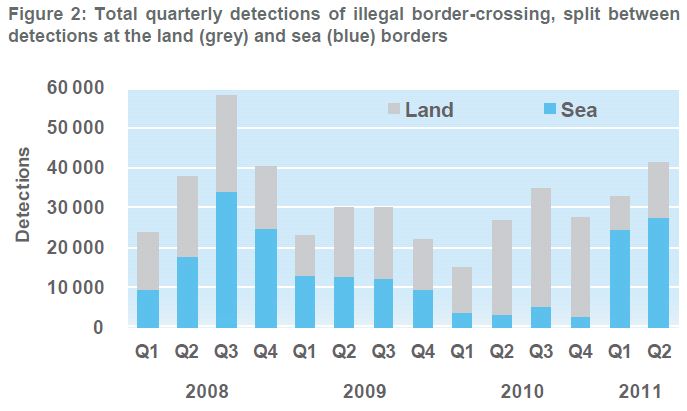
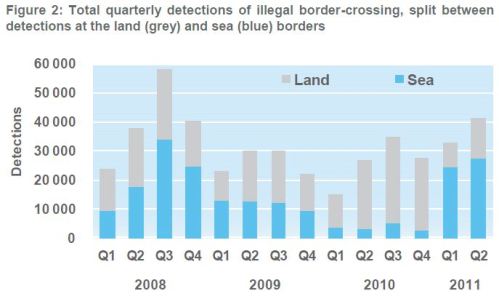
At the EU level, in Q2 2011 there were more detections of illegal border-crossing since Q3 2008. The total of 41 245 detections during this reporting period is a 25% increase compared the previous quarter and a 53% increase compared to the same period last year (Fig. 2). Without question there were major and extensive developments in illegal migration pressure at the external border of the EU, resulting from two simultaneous but independent hotspots of illegal border-crossings. The first was increased activity at the Greek land border with Turkey, where a range of Asian, north African and sub-Saharan African migrants were increasingly detected at very high levels. The second, and the undisputed hotspot for illegal border-crossing into the EU in Q2 2011, was at the Italian islands in the Central Mediterranean, where vast numbers of Tunisians, Nigerians and other sub-Saharan migrants landed in small sea vessels, the majority of which in Q2 had been forcibly departed from Libya.

Figure 2 shows the evolution of the FRAN indicator 1A – detections of illegal border-crossing, and the proportion of detections between the land and sea borders of the EU per quarter since the beginning of 2008. In Q2 2011 there were more detections of illegal border-crossing since the peak of Q3 2008 nearly three years ago. Compared to a year ago, detections at the EU land border decreased by 42% to 13 742 in Q2 2011, almost exclusively due to fewer detections of Albanian nationals following their new visa-free status; elsewhere at the land border (including Greece) trends were roughly stable. In contrast, at the sea border detections increased nine-fold to some 27 500 detections (Fig. 2), the vast majority of which (95%) were in the central Mediterranean, forming the major development in irregular migration to the EU in 2011.
[***]

At the EU level, detections of illegal border-crossing increased by 53% compared to a year ago (Fig. 3). However, this level masks a lot of variation among Member States. First, and most importantly to the current situation, was a 4 200% increase in detections of almost exclusively African migrants in Italy. Related to this central Mediterranean flow, was a concurrent and massive increase in detections reported from Malta (from 0 to 710), and also increases further west into Spain (+61%). As a result, all these countries have seen increases in other indicators such as asylum applications of the most common nationalities (see relevant sections). [***]

Routes

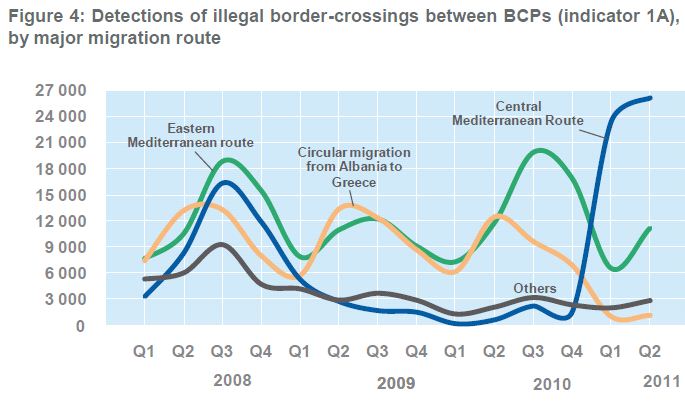
As illustrated in Figure 4, for just the second time since records began in early 2008, in Q2 2011 detections of illegal border-crossings on the Central Mediterranean route, which comprises the blue borders of Italy and Malta, exceeded those reported from both the (i) Eastern Mediterranean route of the land and sea borders of Greece, Bulgaria and Cyprus, and (ii) circular migration from Albania to Greece.
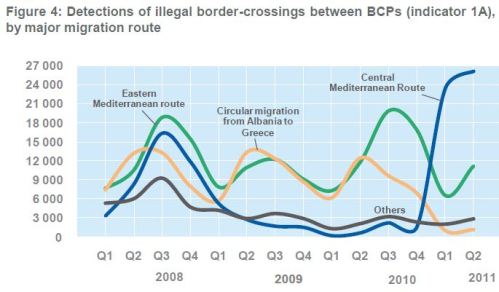
Without question, in Q2 2011 the single most important irregular-immigration route in terms of detections of illegal border-crossing was the Central Mediterranean route, where detections increased in the beginning of 2011 to previously unprecedented levels (Fig. 4). In the first quarter of 2011, and uniquely compared to previous surges of illegal immigration, this flow was restricted to a single nationality – Tunisian, most of whom were responding to civil unrest in their home country by leaving towards the Italian Island of Lampedusa. In response to this almost unmanageable influx of irregular migration at a single and isolated location, a bilateral return agreement was signed between Italy and Tunisia, which allowed for the accelerated repatriation of newly arrived individuals. Hence, during the current reporting period, the flow of Tunisian migrants fell from over 20 200 in the previous quarter to 4 300 in Q2 2011.

However, civil uprising commonly referred to as the Arab Spring, and its effects on migration in the area, was not limited to Tunisia. For example according to multiple sources, in next-door Libya, migrants from sub-Saharan countries were in Q2 2011 being coerced to move towards the EU by the Gaddafi regime in response to the NATO Operation Unified Protector which commenced on March 27 under United Nations Security Council Resolution 1973. Thus, in Q2 2011, besides some continued departures from Tunisia, the flow in the central Mediterranean was composed of a single flow of large numbers migrants from sub-Saharan countries departing Libya in small vessels. [***]

4.1.1 Eastern Mediterranean route

Detections of illegal border-crossings on this route increased seasonally and in line with previous years, from 6 504 in Q1 2011 to 11 137 in Q2 2011, almost exclusively due to a massive increase in detections at the Greek land border with Turkey, where detections increased from 6 057 to 10 582. [***]

4.1.2 Central Mediterranean route

In Q2 2011 there were 26 167 detections of illegal border-crossings on the Central Mediterranean route, a 10% increase even compared to the ‘peak’ reported during the previous quarter, and evidently a massive increase compared to the negligible detections throughout all of 2010. The vast majority of detections on this route were reported from Italy (25 500) where detections increased by 13% even compared to the ‘influx’ of migrants reported during Q1 2011. In Italy, Central African, Tunisian, Nigerian and Ghanaian were the mostly commonly detected nationalities, 90% of which were detected in the Pelagic Islands (14 300), most notably Lampedusa (Fig. 7). However, in Q2 2011 there were also more detections of illegal border-crossing reported from Sicily (2 260) than ever before; this figure is nearly three times bigger than that reported in the previous quarter and more than twenty times higher than during the same period last year (100). Compared to the previous quarter, in Sicily there were more detections of migrants from a very wide range of countries such as Egypt, Côte d’Ivoire and Tunisia. There were also over 710 detections reported from Malta, which is a sustained peak from the previous quarter (820) and extremely high compared to the negligible detections throughout 2010. In Malta there were much fewer detections of Somalis and Eritreans but there were increased detections of Nigerians and migrants from Côte d’Ivoire. However, migrants from Tunisia, Algeria and Egypt often claim to originate from sub-Saharan Africa in an attempt to appear as refugees, a fact which may render such comparisons of nationalities somewhat misleading.

In the previous FRAN Quarterly (Q1 2011) it was reported a surge of irregular immigration (20 000 detections) on the Central Mediterranean route that was almost entirely restricted to a single nationality: Tunisian (Fig. 8). As a result of this influx, on 20 February the JO EPN-Hermes Extension 2011 commenced in the central Mediterranean, and a bilateral agreement was reached between Italy and Tunisia on 5 April 2011, which resulted in the strengthening of police surveillance along the Tunisian coast and regular repatriations of Tunisian nationals from Italy. For example, according to data collected under JO Hermes 2011, some 1 696 Tunisians were repatriated between 5 April and 23 August 2011. The repatriation agreement is probably an effective deterrent, combining as it does, returns and surveillance, however some migrants have reported their boats being spotted by military patrols that did not take any action. According to the FRAN data, in Q2 2011 some 4 286 Tunisian migrants were still detected illegally crossing the border into Italy. Although a massive reduction, this still represents a very large and significant flow of irregular migrants into the EU.

In comparison to the reduction in flow from Tunisia, in Q2 2011 there was a large increase in migrants who had departed from Libya (Fig. 9). The migrants departing from Libya were mostly nationals from countries in the Horn of Africa, the sub-Saharan and Central African regions and, to a lesser extent, Asia. According to intelligence collected during JO EPN-Hermes Extension 2011, most of these migrants had already been in Libya for over a year, originally heading to Tripoli via the traditional routes for sub-Saharan and Central African migrants. In Q2 2011, migrants tended to reach Italy on large fishing vessels that had departed directly from Tripoli or the nearby ports of Medina and Janzour. Most of these deported African nationals did not want to leave the country as their standard of living in Libya was high compared to their home countries. Several even stated that they would choose to return to Libya after the war. In Q2 2011 reports suggest that some migrants were instructed to reach embarkation areas on their own but had been caught by the military or police and then detained in camps or disused barracks until they were transported to embarkation areas and onto vessels bound for Italy. In each case the migrants were searched by the military before boarding and all their belongings were confiscated. According to reports, nationals of the sub-Saharan and Central African regions as well as from Horn of African countries have been recruited by the Libyan army/police to manage their compatriot migrants at gathering places or camps. In some cases the destination of vessels from Libya was Sicily, where the flow was characterised by waves of landings. For example there were around 11 landings on 13 May and 7 between 11 and 29 June, with the majority of boats arriving from Libya and Egypt. [***]

4.1.3 Western Mediterranean route

In Q1 2011 there were 1 569 detections of illegal border-crossings on this route to Southern Spain, which is nearly double compared to the previous quarter (890), and more than a 50% increase compared to a year ago (973). Some of this increase is due to better weather conditions at this time of year, but irregular migration pressure on this route is clearly higher than it was at the same time last year. [***]

In the longer-term, irregular immigration to southern Spain has been consistently decreasing since the beginning of 2006. Commonly cited reasons are Frontex Joint Operations in the area, effective bilateral agreements and more recently rising unemployment in Spain, particularly in sectors typified by migrants.* Nationalities traditionally associated with this route were Algerian, Moroccan and Ghanaian. [***]

4.1.4 Western African route

The cooperation and bilateral agreements between Spain and the rest of the Western African countries (Mauritania, Senegal and Mali) are developing steadily. They are one of the main reasons for the decrease in arrivals on this route over the last year, as are the presence of patrolling assets near the African coast. In Q4 2010 Frontex reported a slight increase in the number of detections of illegal border-crossing at the Canary Islands, from a maximum of 50 during each of the previous 4 quarters, to 113 in Q4 2010. This increased level of detections persisted into the first quarter of this year (154), exclusively due to Moroccan nationals (152) displaced after the dismantling of migrant camps near the dispute Western Saharan region. However, during the current reporting period detections on this route decreased massively to a negligible 24 detections. [***]”

Click here for 2011 Q2 Report.

Click here for Frontex Statement regarding 2011 Q2 Report.

Click here for 2011 Q1 Report.

Click here for Frontex Statement regarding 2011 Q1 Report.
3 Comments

Filed under Aegean Sea, Algeria, Analysis, Cyprus, Data / Stats, Eastern Atlantic, Egypt, European Union, Frontex, General, Greece, Italy, Libya, Malta, Mauritania, Mediterranean, Morocco, News, Reports, Senegal, Spain, Tunisia, Turkey