Photo Credit: Finlands Ambassade Oslo (Facebook page)

People gathered outside Cathedral Square, Oslo, Saturday night. Photo: Monica Strømdahl / Aftenposten

Photo Credit: Finlands Ambassade Oslo (Facebook page)
People gathered outside Cathedral Square, Oslo, Saturday night. Photo: Monica Strømdahl / Aftenposten
Filed under General
Since the beginning of July there has been a surge in the number of irregular migrants entering the North African Spanish autonomous cities of Ceuta and Melilla. Over 200 migrants have entered Ceuta mostly by swimming or using small rafts to enter the territory from Morocco. Melilla has reportedly had approximately 207 migrants reach its territory during the same period. This is the largest number of irregular entries by sea in recent years, though the number is small compared to the events of 2005 when numerous migrants were able to traverse the border fences of the two cities.
The CETI (Centre for Temporary Stay of Immigrants) in Melilla is at roughly twice its capacity and is holding over 730 immigrants. The CETI in Ceuta has an official capacity of 512 and is now holding over 680 migrants. The three main political groups in Ceuta’s local government have called on the Spanish government to transfer migrants from Ceuta to the mainland in order to relief the overcrowding.
Francisco Javier Velázquez, the director general of the Spanish police and Civil Guard just completed a visit to Rabat to seek greater cooperation from Morocco in controlling the migratory flow towards the Spanish territories. Several media reports suggest that Moroccan authorities have reduced police and border guard patrols near the Spanish cities because they were deployed elsewhere in Morocco in response to the large demonstrations surrounding the referendum on the new Moroccan constitution. With the internal demonstrations becoming smaller and less frequent, Spanish authorities believe that the Moroccan border patrols will soon be restored.
Click here, here, here, here, here, and here for articles. (all ES)
Filed under Data / Stats, Mediterranean, Morocco, News, Spain
A coalition of migrants’ rights organisations, including Migeurop, Cimade, Gisti, FIDH, and others hope to organise a humanitarian “flotilla which will undertake maritime surveillance so that assistance is finally provided to people in danger. The participatory organisations call on European bodies and governments on both sides of the Mediterranean to establish relations within this common area on the basis of exchange and reciprocity. This flotilla will embark political figures, journalists, artists, and representatives of the organisations involved in the project. Any organisation, trade-union, political representative, seafarer, journalist, artist or other individual interested in this initiative may join this mailing list : « Mediterranean Intervention ».” To subscribe to the mailing list, please send an email to migreurop07@yahoo.it.
Click here for full Migreurop statement.
Filed under European Union, Frontex, Italy, Libya, Malta, Mediterranean, News, Statements, Tunisia
In October 2008, a migrant boat attempting to sail from Algeria to Italy ran around near Tabarka, Tunisia. The boat’s 43 passengers (39 Algerians, 3 Tunisians, and 1 Moroccan), between the ages of 16 and 22, were detained by the Tunisian Coast Guard. There has been no word on their fate since shortly after their arrest. Last week a group of Algerian families travelled to Tunis and held a press conference asking the new Tunisian government for information about what happened to their family members. Past efforts to obtain information from the Tunisian government have been unsuccessful.
Click here (FR), here (FR), here (FR), here (FR) and here (IT) for articles.
Filed under Algeria, Italy, Mediterranean, News, Tunisia
According to information provided by the Spanish Ministry of Defence, the Spanish frigate Almirante Juan de Borbón sailed to Tunisia earlier this morning (16 July) and, while remaining outside Tunisian waters near Zarzis, transferred the remaining 106 rescued migrants to the Carthage, a Tunisian naval vessel. 114 migrants were initially rescued by the Spanish ship. 5 of the migrants were airlifted to Malta for medical reasons on 13 July. On 11 July, shortly after the initial rescue of the migrant boat, 3 migrants were evacuated and turned over to Tunisian authorities. The original 114 consisted of 88 men, 20 women (5 of whom are pregnant), and 6 children. The Defence Ministry said that the decision to transfer the migrants to Tunisian authorities was a NATO decision.
While the decision to disembark the migrants in Tunisia is better than sending them to eastern Libya (something I was fearful would occur), Tunisia is problematic for several reasons. The migrant boat was reportedly carrying Tunisians. To the extent that any of them may have had claims for international protection, the claims have been effectively eliminated. It is not known whether any efforts were made to assess whether any of the Tunisians had claims for international protection. And to the extent that any of the non-Tunisians have claims for international protection, Tunisia is clearly less able to handle such claims and less able to provide care for asylum seekers relative to Malta, Italy, or Spain (or any of the NATO countries participating in Operation Unified Protector).
[17 July update – NATO’s OUP Press Office informed me earlier today that any questions regarding who made the decision to transfer the migrants to Tunisia and whether any of the migrants were screened for claims for international protection had to directed to the Spanish Ministry of Defence.]
Click here (EN), here (ES), and here (ES) for articles.
Click here for Spanish Ministry of Defence press statement and additional photos. (ES)
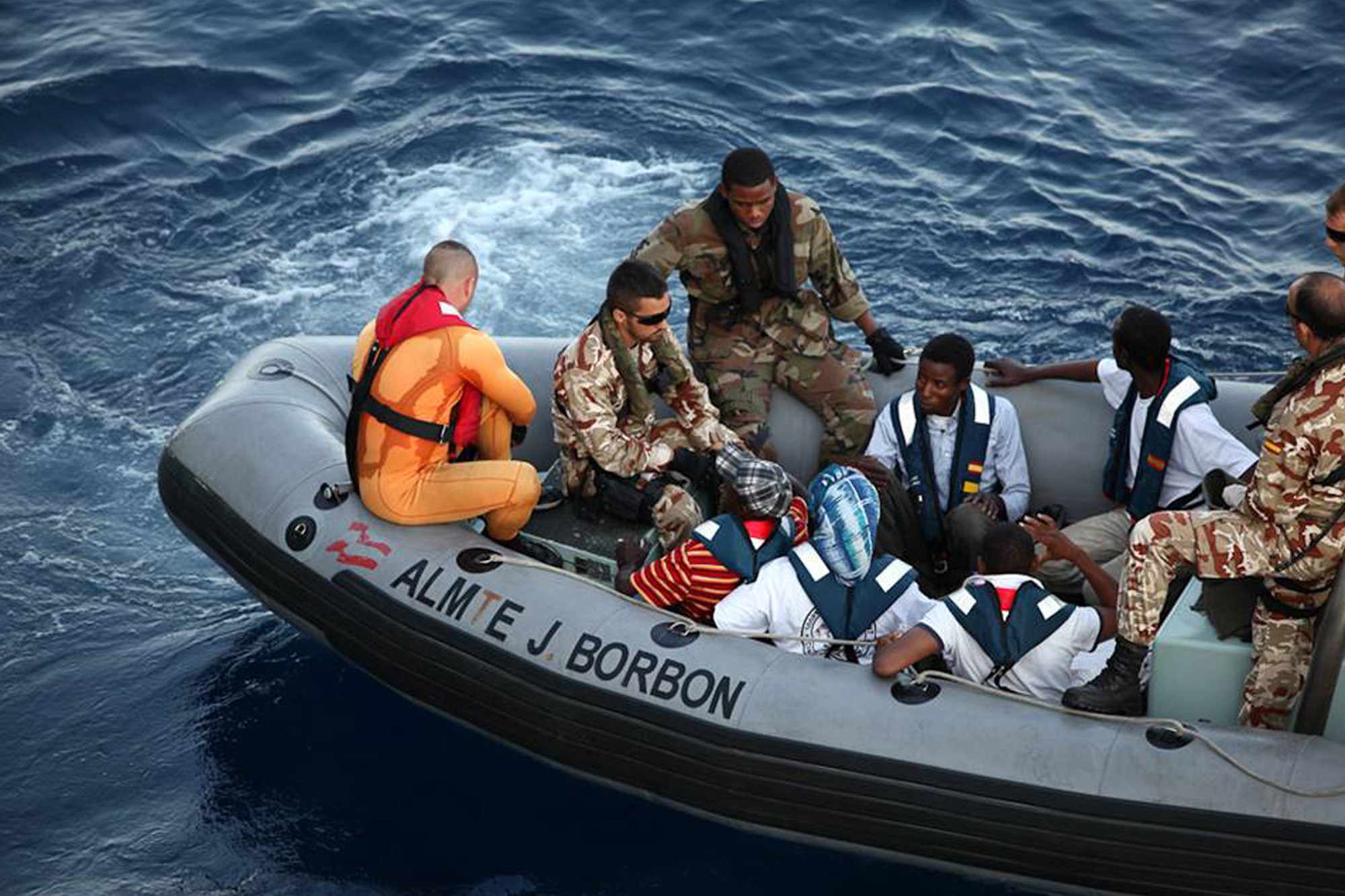
Photo Credit: Ministerio de Defensa de España (mde.es)
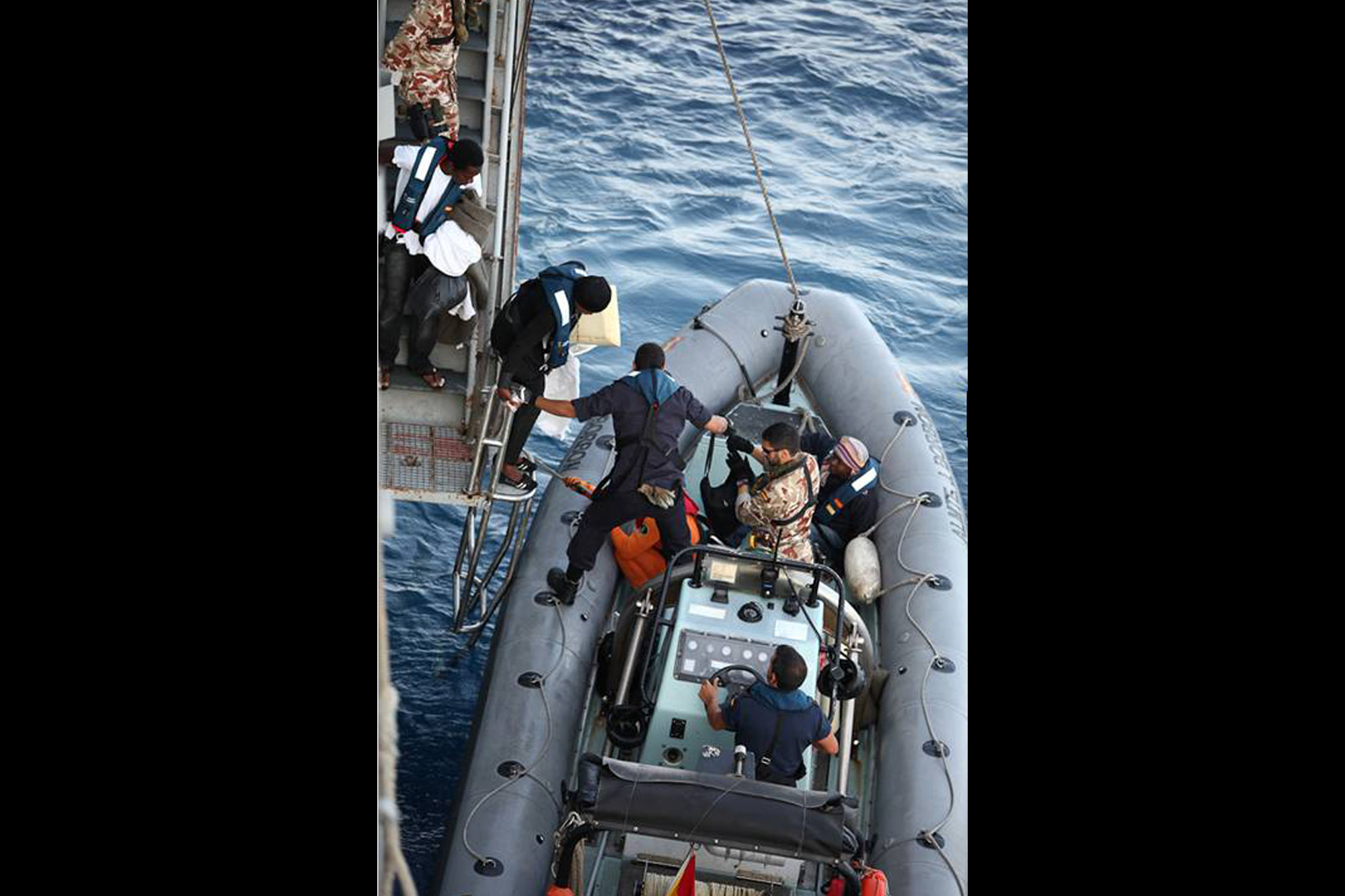
Photo Credit: Ministerio de Defensa de España (mde.es)
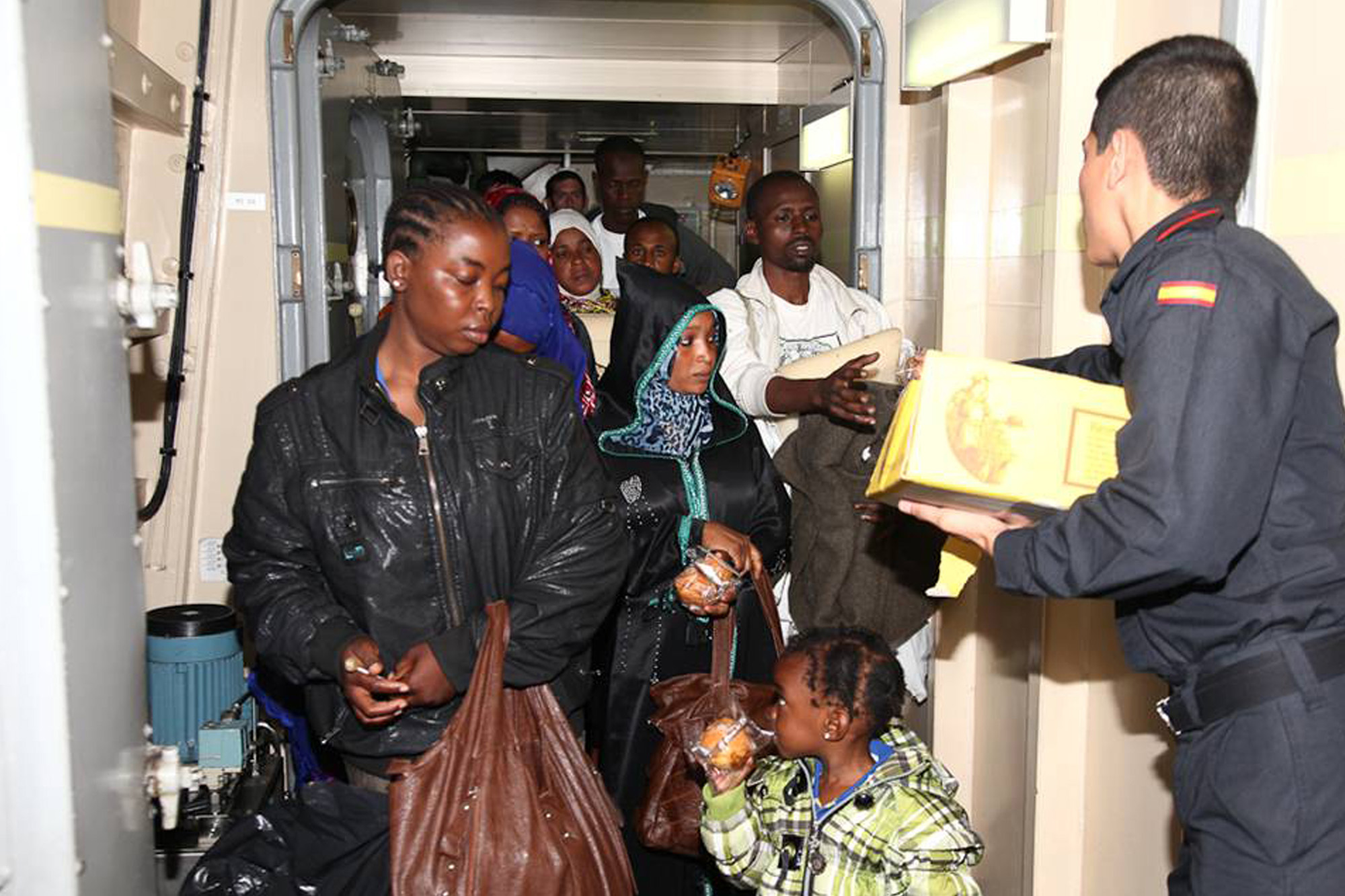
Photo Credit: Ministerio de Defensa de España (mde.es)
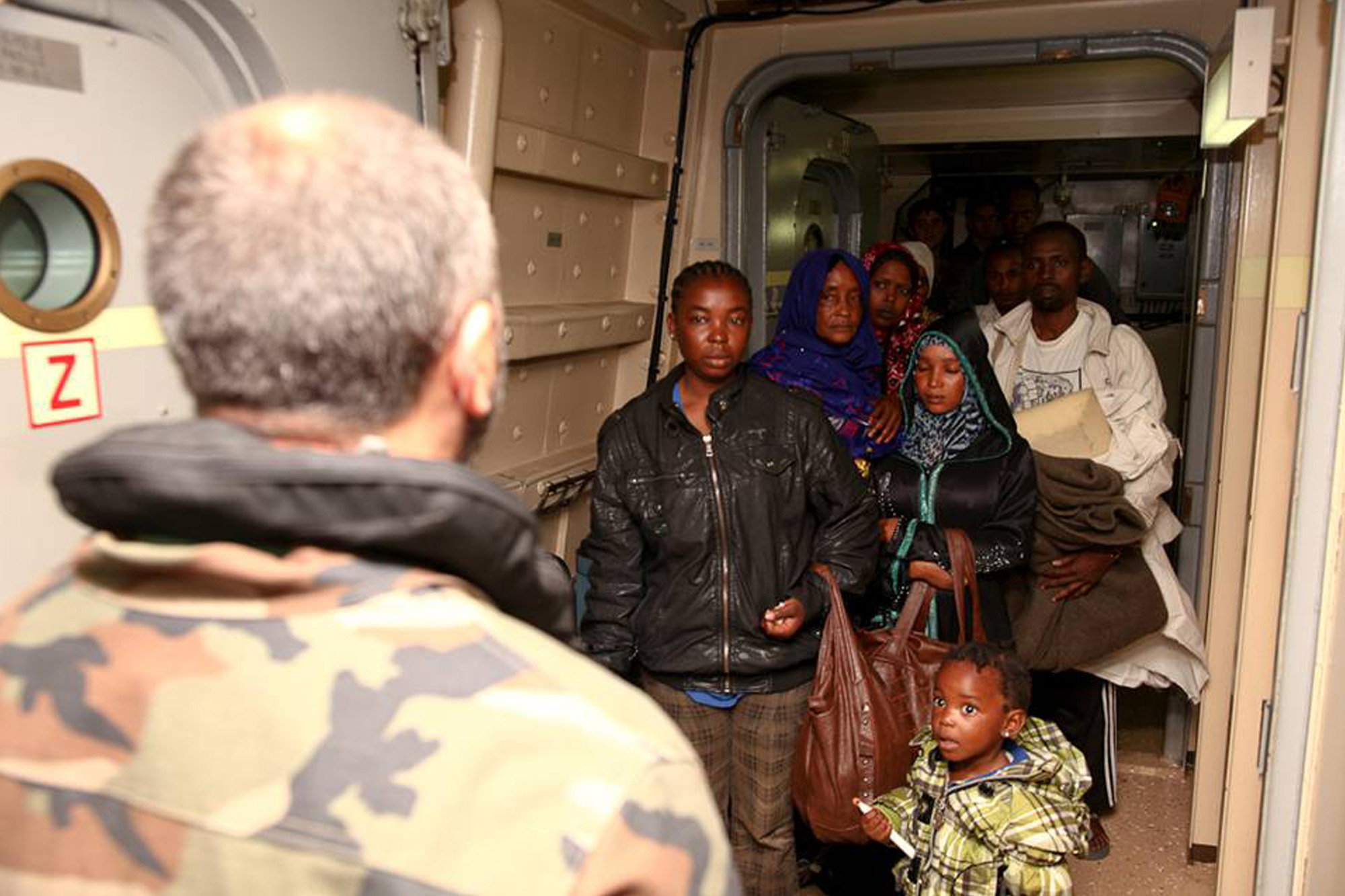
Photo Credit: Ministerio de Defensa de España (mde.es)
The stand-off between Malta, Spain, and NATO continues. 111 rescued migrants remain on board the Spanish Navy frigate, the Almirante Juan de Borbón. Maltese authorities criticised the attempt to bring the rescued migrants to Malta and have said that the migrants should have been taken to Tunisia or Italy because both locations were closer to the original point of rescue. Malta has now allowed a total of 5 migrants to be airlifted to Malta for medical care. The frigate remains at sea near Malta with the 111 migrants, including women and children, and a crew of 250 sailors.
At a press conference yesterday, Maltese Interior Minister, Carmelo Mifsud Bonnici, said that while Malta decided to allow the transfer of several rescued migrants to Malta for emergency medical treatment, it has no intention of allowing the other rescued migrants to be disembarked in Malta. According to the Times of Malta, Mifsud Bonnici said “the problem is not Malta’s, it is Nato’s. Malta is a sovereign state and it demands that it be respected as such. This is not a standoff with Spain or Italy and we await Nato’s replies.”
It is unclear from various media reports whether Italian authorities formally refused permission to the Spanish frigate to dock in Lampedusa, but some reports suggest there was communication with Italian authorities who said that Lampedusa’s immigrant reception facilities were at capacity. Well over a thousand migrants have landed in Lampedusa in recent days.
There are also some media reports which suggest that the Spanish government may be taking the position that since the Spanish frigate is under NATO command as part of Operation Unified Protector, NATO therefore must decide where the migrants are to be disembarked.
The head of the Armed Forces of Malta has taken the bizarre position that the Spanish ship is well-equipped to care for the rescued migrants and that therefore there is no urgency in regard to removing the migrants from the ship for humanitarian reasons.
Meanwhile, the NATO naval embargo of Libya is missing one ship. NATO had 17 ships under its command patrolling the Central Mediterranean, now there are 16 ships. The Spanish frigate has been effectively removed from its embargo duties as it waits for a resolution to the stand-off. If and when another migrant boat requires rescue by a ship under NATO command, will the NATO embargo be further weakened? The obligations of NATO ships to rescue migrant boats in distress under SOLAS are clear, and NATO has repeatedly said that it will rescue migrant boats when required, but one must be fearful of a situation arising, as it does with commercial ships, where a NATO vessel’s commander may be less willing to conclude that a migrant boat is in need of rescue knowing that the act of rescuing the migrants may result in the NATO ship being removed from its mission because it is unable to quickly disembark the rescued migrants.
Click here (EN), here (EN), here (ES), here (IT), and here (IT) for articles.
A statement from Aditus, “an independent, voluntary & non-profit organisation established with a view to monitor, act & report on access to fundamental human rights by individuals & groups”, which is based in Malta:
14 July 2011
“’Once again, political discussions take precedence over human lives. It is at times like these that our consciences are called to do what is right, to ensure a full respect for the fundamental human rights of all persons irrespectively of colour, origin and status.’
It appears that the Maltese and Italian authorities are once again disagreeing over where to disembark a group of around 100 rescued migrants. Rescued earlier today by a Spanish frigate, the Almirante Juan de Borbón, the group of migrants seems to be largely composed of men but also includes several women and children. According to news reports, the stranded migrants were rescued in Sunday morning yet the date of departure from Libyan shores is as yet unconfirmed.
It is important to emphasise that the rescued persons have fled a situation of civil war, and have possibly been through several harrowing experiences. ‘It is unclear when they left Libya, yet they have definitely been out at sea for over 5 days. This can only mean that they are probably exhausted, dehydrated and are in urgent need of physical and psychological assistance. A warship is definitely not the place to provide this urgent assistance’, commented aditus Chairperson Dr. Neil Falzon.
aditus applauds the crew of the Juan de Borbón for rescuing the persons in distress, yet urges the Italian and Maltese authorities to immediately relieve the warship of rescued migrants, in the interests of both the latter and of the crew itself. aditus further recalls that international maritime law requires a prompt disembarkation at a place of safety for all persons rescued at sea, and that any prolonged period spent aboard the warship poses severe security, humanitarian and human rights concerns.
aditus therefore appeals to the Italian and Maltese authorities to allow the immediate disembarkation of the rescued persons so that their safety may be guaranteed.
For the longer-term, the two States are urged to seek resolution to this on-going legal impasse that too often has resulted in these tragic incidents. To this end, aditus strongly recommends the involvement of competent international and regional agencies particularly the European Union, the International Maritime Organisation and NATO.”
Click here for statement.
Filed under Italy, Libya, Malta, Mediterranean, Spain, Statements
A political and diplomatic standoff is underway between Malta, Italy, Spain and NATO. The Times of Malta is reporting that the Spanish frigate, the Almirante Juan de Borbón, carrying the 100 rescued migrants attempted to dock at Lampedusa after the rescue, “but the Italian authorities refused it entry and directed the vessel to Malta, which also refused entry, arguing that Lampedusa was the nearest safe port.” “The Spanish warship is now off Maltese waters while talks are held between Maltese, Italian and Spanish diplomats. A meeting which included the Prime Minister and Home Affairs Minister Carm Mifsud Bonnici was being held this afternoon at the Auberge de Castille. Nato is understood to have appealed to both Italy and Malta to accept the migrants.” The Times of Malta also reported that a 10 month old baby was flown yesterday from the Spanish frigate to Malta for medical treatment and that a man and pregnant woman were airlifted to Malta today.
Click here for Times of Malta article.
Click here and here for previous posts.
Filed under European Union, Italy, Libya, Malta, Mediterranean, News
According to information provided to me today by the NATO Public Affairs Office for Operation Unified Protector, most of the migrants who were rescued on 10-11 July by a NATO warship are still on board the Spanish Navy frigate. An unspecified number of the migrants in need of immediate medical attention have been “off-loaded to safety” to an unidentified location.
While the NATO Public Affairs Office did not identify the NATO ship or its nationality, the Spanish Defence Ministry and Navy have previously confirmed that the Spanish frigate Almirante Juan de Borbón is the NATO ship that performed the rescue.
According to NATO, “the NATO Frigate responded [on 10 July] to a vessel in distress some 75 miles off the coast of Libya. A NATO ship [then] … provided medical support, food and offered mechanical assistance to the distressed civilians. [On the] 11th of July, the migrants (approximately 100), Ghanaians, Tunisians and Libyans, were transferred onto the NATO ship in accordance with the Safety of Life at Sea (SOLAS) protocol…”
Most of the migrants remain on board the Spanish frigate. NATO says that “the appropriate legal, diplomatic and military authorities are being consulted to determine future course of action.”
I have asked for further information regarding to what location the migrants who were in need of immediate medical attention have been taken. The possibilities presumably are another ship with appropriate medical facilities, Tunisia, Libya, Italy, Malta, or Spain.
Click here for my previous post on this topic.
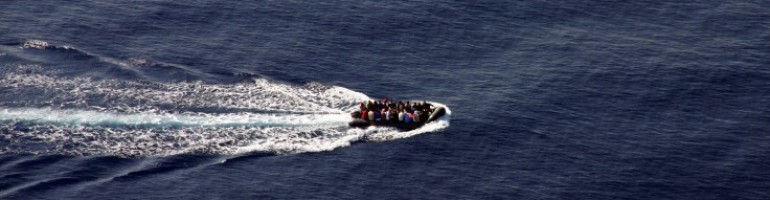
A Spanish Navy frigate, the Almirante Juan de Borbón, participating in NATO’s Operation Unified Protector, on Sunday rescued approximately 100 migrants who were in a disabled boat that reportedly left Zawiyah, Libya several days ago. The migrants have been without food and water for at least two days. Among the rescued persons are pregnant women and children.
It is not clear where the migrants will now be taken. Some reports indicate that the Spanish Defence Ministry is hoping that Tunisia, Malta, or Italy will receive the migrants. NATO is reportedly seeking a country to accept the migrants. The migrants are reportedly from Libya, Tunisia, and Sub-Saharan Africa.
Hopefully the migrants will be disembarked quickly (assuming it has not already happened) in an appropriate location where any claims for international protection can be properly considered. It would be problematic if the migrants are required to remain on the Spanish warship for an extended period and if nearby countries refuse to permit the disembarkation.
Click here (EN), here (ES), here (ES) and here (ES) for articles.
Click here and here for Spanish Defence Ministry and Navy press statements. (ES)
These photos were released by the Ministerio de Defensa de España.
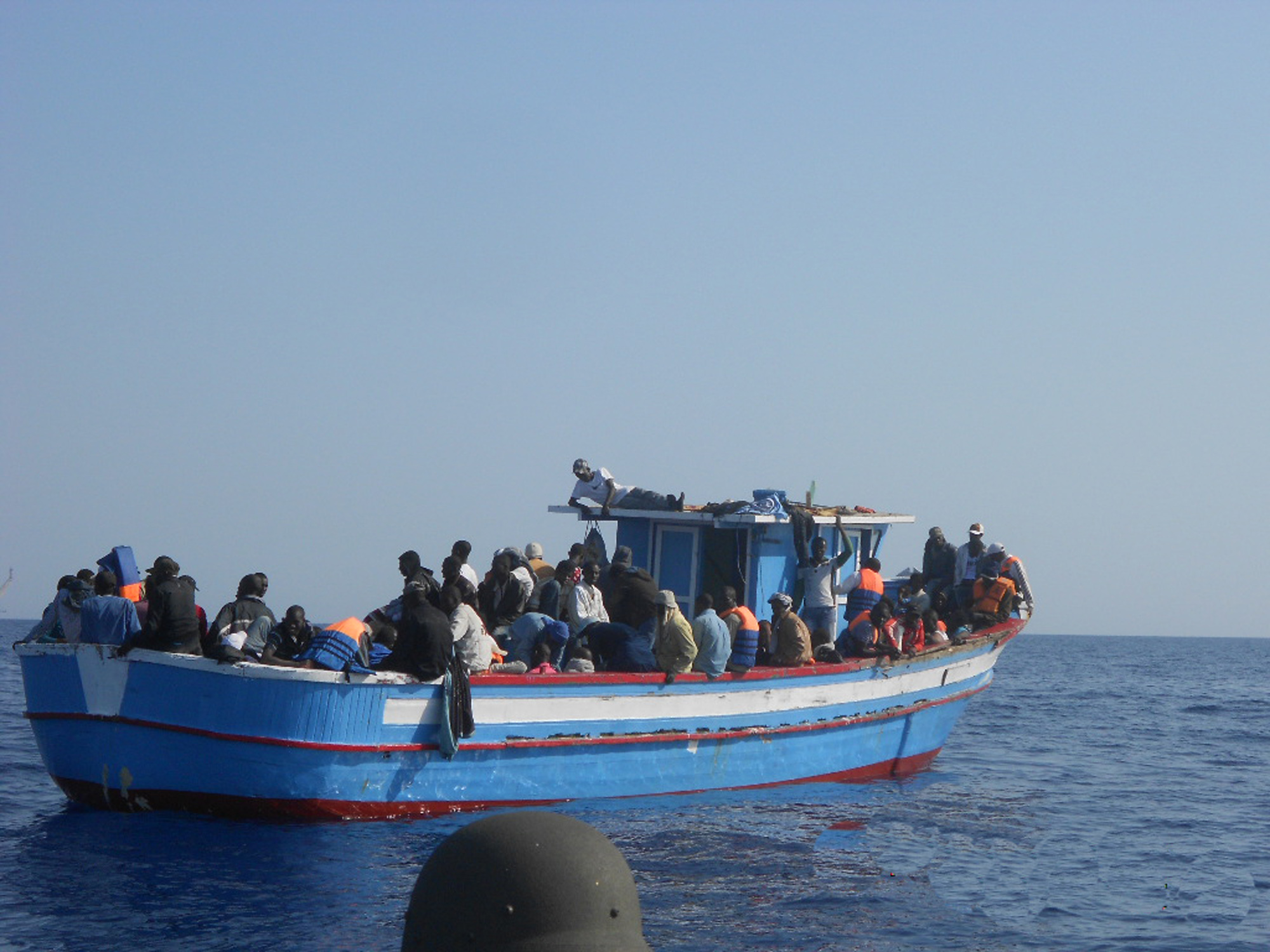
Photo Credit: Ministerio de Defensa de España (mde.es)
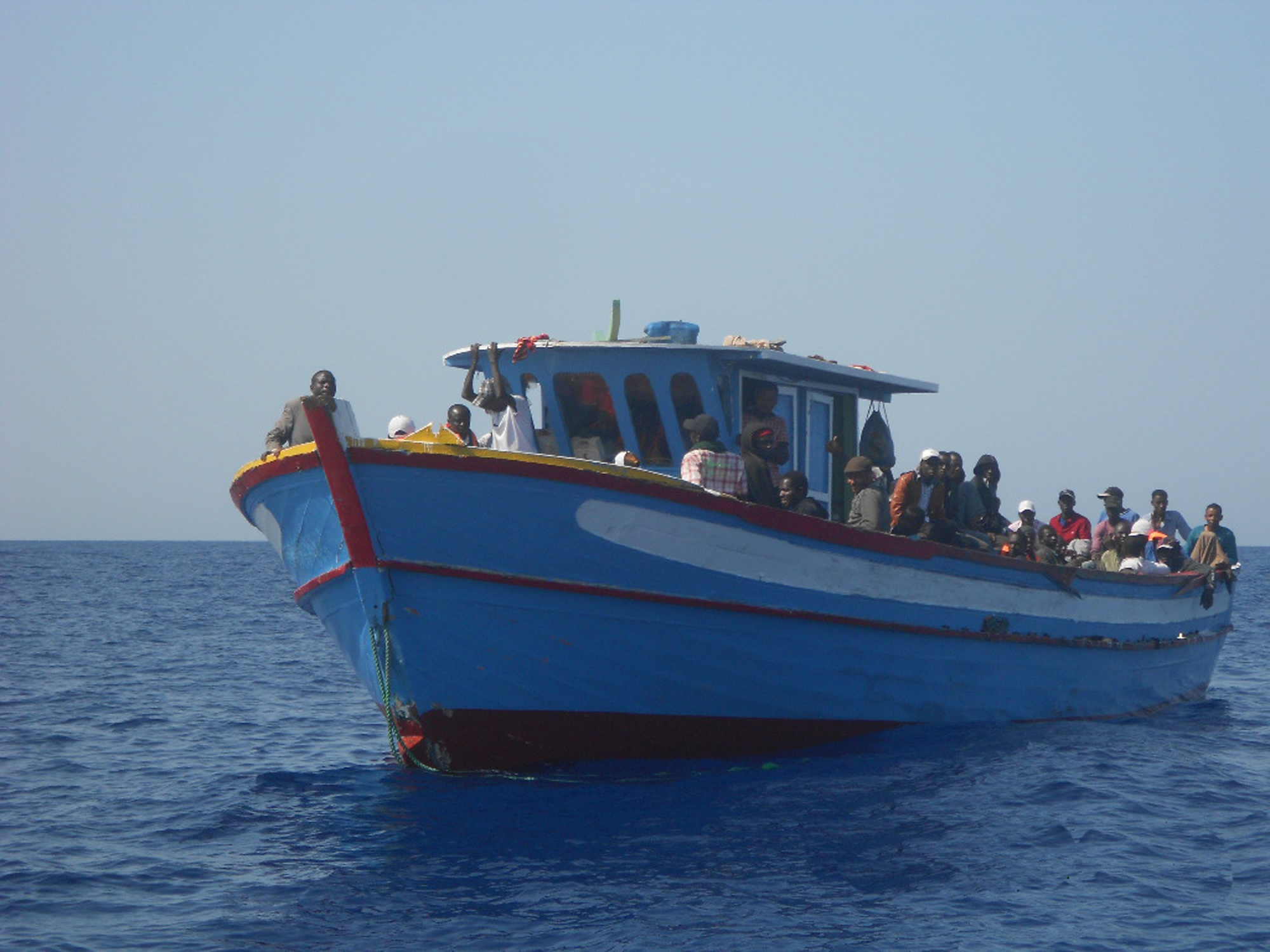
Photo Credit: Ministerio de Defensa de España (mde.es)
I am not sure for how long this has been available, but Commissioner Malmström noted in a blog post yesterday that she is making some (emphasis on “some”) of her public correspondence available on-line: “… I am posting my correspondence online (the correspondence with private persons is excepted). I am trying to get more Commissioners to do the same and I am striving for a greater transparency throughout the Commission. There is much more to do in this respect….”
The correspondence is being made available via “CAROL“: “CAROL is a prototype register where you can find Commissioner Malmström’s correspondence. This site is a pilot project of the European Commission promoting transparency and access to information and is bound by the general rules on access to Commission documents.”
I have spent a little time searching and accessing a few of the posted documents. There appear to be at least 2,100 documents that have been identified as of 7 July, but for many of the listed documents there is no associated document that can be read. In these cases it is unclear whether a decision has been made to simply identify the existence and subject matter of the particular document without releasing the document itself or whether the document will be posted in the future once it is scanned – to be seen. The documents date from April 2010 to the present. This is clearly a positive step in the right direction and let’s hope that more documents will be made public and easily accessible.
Click here or here for links to the search pages. (Note that entering some search criteria on the first link will result in an advance search page appearing, where you can search using more specific criteria. Clicking on the second link should open the advanced search page.)
Here is a sample of what I reviewed when searching for documents relating to the EU-Libya Framework negotiations in 2010:
Letter from the Commissioner dated 15 July 2010 addressed to:
“Mr Michael SCHÖPF, Regional Director
Mr Stefan KEßLER, Senior Policy & Advocacy Officer
JESUIT REFUGEE SERVICE-EUROPE AISBL, BRUXELLES
[***]
As you may know, the European Council, in the context of the fight against irregular immigration and taking into consideration the global approach to migration, tasked last year the Commission to step up the dialogue and cooperation with transit countries in the Mediterranean, in particular Libya. The Commission considers that it is through dialogue and cooperation with Libya that the EU can improve the situation, in particular for persons in need of international protection.
We consider that the conclusion of the EU-Libya Framework Agreement, which will commit partners to respect a number of important principles and pave the way for a more structured dialogue with Libya, will provide a more effective framework for inter alia establishing an effective system of protection of persons in need of international protection in Libya.
Pending such outcome, the Commission intervenes in Libya by providing its financial support to UNHCR and its local partner organisations, which are active in visiting and screening migrants in detention centres, and in identifying and assisting those out of them that are in need of international protection.
Finally, in your letter you mention also the forced returns to Libya of migrants intercepted at high sea which were carried out by Italy from May 2009, asking the Commission to call on this Member State to suspend this activity. The Commission has already drawn the attention of the Italian authorities on the risks that forced returns embodied as regard the possibility to violate the principle of non-refoulement and the migrants’ human rights in case certain safeguards were not taken. On the basis of the information available to the Commission, since August 2009 no more forced returns have been carried out by Italian authorities, and the migrants that subsequently were intercepted or rescued at high sea by the latter were all brought to Italian territory.
Yours sincerely,
s/
Cecilia MALMSTRÖM”
Click here or here for links to the search pages. (Note that entering some search criteria on the first link will result in an advance search page appearing, where you can search using more specific criteria. Clicking on the second link should open the advanced search page.)
Click here for the Commissioner’s blog post.
Filed under European Union, News
According to figures compiled by Europa Press, 1,003 migrants in 40 boats reached Andalucía (Almeria, Granada, Cádiz, Huelva and Malaga) between 1 January and 7 July 2011. The majority of the migrants landed in the province of Granada.
Click here (ES) for article.
Filed under Data / Stats, Eastern Atlantic, Mediterranean, Morocco, News, Spain
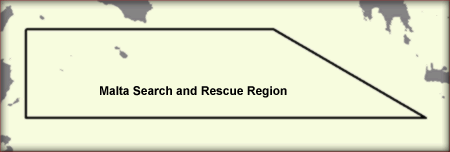
Brigadier Martin Xuereb, the head of the Armed Forces of Malta (AFM), spoke at a recent seminar sponsored by the European Parliament, “Europe’s new Mediterranean reality: Migration and asylum in Malta, Greece and Cyprus,” and summarised Malta’s interpretation of its search and rescue obligations. Xuereb said that Malta is obligated to coordinate search and rescue operations within its SAR zone, but is not required to perform all rescue operations.
Xuereb said Malta believes rescued persons should be disembarked at the nearest place of safety which, given the size and location of the Maltese SAR, will sometimes mean that Italian territory, particularly Lampedusa, is closer. Xuereb acknowledged that this interpretation is not shared by others. Xuereb “said that Malta had consistently insisted that the arrangement that best represented the interests of rescued persons was one that saw them disembarked in the nearest place of safety.” He said the Maltese Rescue Coordination Centre (RCC) has coordinated or assisted with 54 SAR cases so far this year.
Xuereb also confirmed that Malta would continue its refusal to host Frontex joint operations because of its objections to Frontex guidelines which are based “on a number of grounds, including the fact that [the guidelines] addressed matters deemed to be outside community competence and attempted to erode the rights that Malta enjoyed under the international legal framework. … In light of these guidelines, Malta considered the hosting of [Frontex] joint operations to be detrimental to its national interest.” Malta objects to the guidelines because it believes they would require rescued migrants to be disembarked in the country hosting the joint operation.
Click here and here for articles.
Filed under Frontex, Italy, Malta, Mediterranean, News
The Sudanese Media Centre reported on Tuesday that a boat carrying migrants from Sudan to Saudi Arabia caught fire and capsized near Atibia, Sudan. The report said the boat was carrying Somalis, Eritreans, Ethiopians, and Sudanese. 197 persons were reportedly killed and three rescued. Al Jazeera reported that the accident may have occurred this past Saturday.
Click here (AR) and here (EN) for articles.
Filed under Gulf of Aden, News, Yemen
In a presentation on 28 June before the Italian Parliament’s Schengen Committee (Comitato parlamentare di controllo sull’attuazione dell’accordo di Schengen), officials from the Italian Coast Guard reported that at least 44,000 migrants have reached Italy by boat so far in 2011.
1,000 additional migrants arrived in Lampedusa over the 24 hour period Wednesay to Thursday of this week. With the exception of one small boat carrying 8 Tunisians, all of the boats are believed to have left from Libya in recent days.
Click here, here, and here for articles. (IT)
Filed under Data / Stats, Italy, Libya, Mediterranean, News, Tunisia


 MIGRANTS AT SEA