Category Archives: Italy

PACE Report on “Lives Lost in the Mediterranean Sea: Who is Responsible?” Scheduled for Release on 29 March

The draft report prepared by Tineke Strik (Netherlands, SOC), “Lives lost in the Mediterranean Sea: who is responsible?”, will be considered on 29 March in a closed session by the PACE Committee on Migration, Refugees and Displaced Persons.

If the draft report receives committee approval it will be released to the public by Ms. Strik at a press conference scheduled for 2 p.m. CET.  Representatives from HRW and FIDH will participate in the press conference.  (Click here for HRW press release.) The report will be next be considered during “plenary debate by the 318-member Parliamentary Assembly, probably on Tuesday 24 April during its spring session in Strasbourg.”

Full text of PACE press release:  “Strasbourg, 26.03.2012 – Tineke Strik (Netherlands, SOC), rapporteur for the Parliamentary Assembly of the Council of Europe (PACE) on ‘Lives lost in the Mediterranean Sea: who is responsible?’ will present her draft report at a press conference in Brussels on Thursday 29th March 2012.

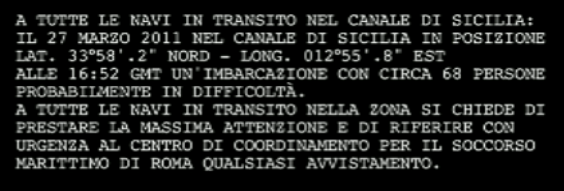
The report is the result of a nine-month inquiry, launched at the request of 34 Assembly members, following a March 2011 incident in which it is alleged that 63 people attempting to flee the conflict in Libya died at sea after their appeals for rescue were ignored, including by armed forces operating in the area.

Ahead of her presentation, Ms Strik commented: ‘Since the beginning of 2011 at least 1,500 people are known to have perished in the Mediterranean trying to reach European soil – despite this being one of the busiest and best-monitored seas in the world. My inquiry has focused on one particularly tragic incident, in which 63 people died, to try to establish who bears responsibility for their deaths. I have been deeply shocked by what I have learned.’

As part of her inquiry, Tineke Strik spoke at length with survivors, search and rescue authorities from Italy and Malta, as well as NATO and EU officials, and put detailed written questions to a number of governments, including those with vessels with aircraft-carrying facilities in the area at the time. She also obtained a reconstruction of the voyage using the science of forensic oceanography.

The same day, prior to the press conference, Ms Strik will present her report to PACE’s Committee on Migration, Refugees and Displaced Persons, meeting in closed session. If approved by the committee, the report will go forward for plenary debate by the 318-member Parliamentary Assembly, probably on Tuesday 24 April during its spring session in Strasbourg.

* * *

Notes for editors

Press conference

The press conference will take place at 2 p.m. on Thursday 29th March at the Council of Europe office in Brussels (Avenue des Nerviens 85 / Nerviërslaan 85, B-1040 Brussels). The rapporteur will be joined by representatives of the International Federation for Human Rights (FIDH) and Human Rights Watch. A video recording of the press conference will be made available at the link above, and on the PACE website, as soon as possible after it ends.

Copies of the report

If approved by the committee, the full text of the report will be posted on the Assembly’s website at around 2 p.m. Central European Time.

Contacts

Angus Macdonald, PACE Communication Division, mobile +33 (0)6 30 49 68 20.
Andrew Cutting, Council of Europe Office in Brussels, mobile +32 (0)485 21 72 02.

Motion: the request for an inquiry

PACE President’s statement, May 2011

Web file and timeline: Europe’s boat people

Video recording of press conference (when available)

Click here for PACE Press Release of 26 March.

Click here for Committee meeting agenda.

Click here for HRW Press Release of 26 March.

Leave a comment

Filed under Council of Europe, European Union, Frontex, Italy, Libya, Malta, Mediterranean, News, Reports, Tunisia

Hirsi v. Italy: Prohibition of Collective Expulsion Extends to Extra-Territorial Actions

Article 4 of Protocol No. 4 of the ECHR reads in its entirety as follows:  “Collective expulsion of aliens is prohibited.”

The provision was first defined by the European Commission of Human Rights in 1975 in Henning Becker v. Denmark (no. 7011/75, decision of 3 October 1975).  The Commission defined the “‘collective expulsion of aliens’ as being ‘any measure of the competent authority compelling aliens as a group to leave the country, except where such a measure is taken after and on the basis of a reasonable and objective examination of the particular cases of each individual alien of the group’.” [para. 166]

The Court has only once previously found a violation of the collective expulsion prohibition and that was in Čonka v. Belgium (no. 51564/99, ECHR 2002-I). [para. 183]

The majority of collective expulsion cases previously considered by the Commission and the Court have “involved persons who were on the territory at issue.”  [para. 167]  One extra-territorial exception involved the case of Xhavara and Others v. Italy and Albania ((dec), no. 39473/98, 11 January 2001) involving “Albanian nationals who had attempted to enter Italy illegally on board an Albanian vessel and who had been intercepted by an Italian warship approximately 35 nautical miles off the Italian coast. The Italian ship had attempted to prevent the parties concerned from disembarking on national territory, leading to the death of fifty-eight people….”  The Court however “rejected the complaint on the ground of incompatibility ratione personae, as [the applicants challenged an Italian law which] had not been applied to their case, and [the Court therefore] did not rule on the [extra-territorial] applicability of Article 4 of Protocol No. 4…”  [para. 168]

In Hirsi the Court “for the first time” considered the question of whether the prohibition of collective expulsion “applies to a case involving the removal of aliens to a third State carried out outside national territory.”  [para. 169]

Italy argued that the prohibition “came into play only in the event of the expulsion of persons [already] on the territory of a State or who had crossed the national border illegally” and therefore did not apply to the Hirsi applicants who had not entered on to Italian territory. According to Italy, “the measure at issue was a refusal to authorise entry into national territory rather than ‘expulsion’.” [para. 160]

The Court rejected Italy’s interpretation:

“173.  The Court does not share the Government’s opinion on this point. It notes firstly that while the cases thus far examined have concerned individuals who were already, in various forms, on the territory of the country concerned, the wording of Article 4 of Protocol No. 4 does not in itself pose an obstacle to its extra-territorial application. It must be noted that Article 4 of Protocol No. 4 contains no reference to the notion of ‘territory’, whereas the wording of Article 3 of the same Protocol, on the contrary, specifically refers to the territorial scope of the prohibition on the expulsion of nationals. Likewise, Article 1 of Protocol No. 7 explicitly refers to the notion of territory regarding procedural safeguards relating to the expulsion of aliens lawfully resident in the territory of a State. In the Court’s view, that wording cannot be ignored.

[***]

175.  It remains to be seen, however, whether [an extra-territorial] application [of the prohibition] is justified. To reply to that question, account must be taken of the purpose and meaning of the provision at issue, which must themselves be analysed in the light of the principle, firmly rooted in the Court’s case-law, that the Convention is a living instrument which must be interpreted in the light of present-day conditions. [***] Furthermore, it is essential that the Convention is interpreted and applied in a manner which renders the guarantees practical and effective and not theoretical and illusory (see Marckx v. Belgium, 13 June 1979, § 41, Series A no. 31; [***]).

176.  A long time has passed since Protocol No. 4 was drafted. Since that time, migratory flows in Europe have continued to intensify, with increasing use being made of the sea, although the interception of migrants on the high seas and their removal to countries of transit or origin are now a means of migratory control, in so far as they constitute tools for States to combat irregular immigration.

The economic crisis and recent social and political changes have had a particular impact on certain regions of Africa and the Middle East, throwing up new challenges for European States in terms of immigration control.

177.  The Court has already found that, according to the established case-law of the Commission and of the Court, the purpose of Article 4 of Protocol No. 4 is to prevent States being able to remove certain aliens without examining their personal circumstances and, consequently, without enabling them to put forward their arguments against the measure taken by the relevant authority. If, therefore, Article 4 of Protocol No. 4 were to apply only to collective expulsions from the national territory of the States Parties to the Convention, a significant component of contemporary migratory patterns would not fall within the ambit of that provision, notwithstanding the fact that the conduct it is intended to prohibit can occur outside national territory and in particular, as in the instant case, on the high seas. Article 4 would thus be ineffective in practice with regard to such situations, which, however, are on the increase. The consequence of that would be that migrants having taken to the sea, often risking their lives, and not having managed to reach the borders of a State, would not be entitled to an examination of their personal circumstances before being expelled, unlike those travelling by land.

178.  It is therefore clear that, while the notion of ‘jurisdiction’ is principally territorial and is presumed to be exercised on the national territory of States (see paragraph 71 above), the notion of expulsion is also principally territorial, in the sense that expulsions are most often conducted from national territory. Where, however, as in the instant case, the Court has found that a Contracting State has, exceptionally, exercised its jurisdiction outside its national territory, it does not see any obstacle to accepting that the exercise of extraterritorial jurisdiction by that State took the form of collective expulsion. To conclude otherwise, and to afford that last notion a strictly territorial scope, would result in a discrepancy between the scope of application of the Convention as such and that of Article 4 of Protocol No. 4, which would go against the principle that the Convention must be interpreted as a whole. Furthermore, as regards the exercise by a State of its jurisdiction on the high seas, the Court has already stated that the special nature of the maritime environment cannot justify an area outside the law where individuals are covered by no legal system capable of affording them enjoyment of the rights and guarantees protected by the Convention which the States have undertaken to secure to everyone within their jurisdiction (see Medvedyev and Others, cited above, § 81).

[***]

180.  Having regard to the foregoing, the Court considers that the removal of aliens carried out in the context of interceptions on the high seas by the authorities of a State in the exercise of their sovereign authority, the effect of which is to prevent migrants from reaching the borders of the State or even to push them back to another State, constitutes an exercise of jurisdiction within the meaning of Article 1 of the Convention which engages the responsibility of the State in question under Article 4 of Protocol No. 4.

[***]

185.  In the instant case, the Court can only find that the transfer of the applicants to Libya was carried out without any form of examination of each applicant’s individual situation. It has not been disputed that the applicants were not subjected to any identification procedure by the Italian authorities, which restricted themselves to embarking all the intercepted migrants onto military ships and disembarking them on Libyan soil. Moreover, the Court notes that the personnel aboard the military ships were not trained to conduct individual interviews and were not assisted by interpreters or legal advisers.

That is sufficient for the Court to rule out the existence of sufficient guarantees ensuring that the individual circumstances of each of those concerned were actually the subject of a detailed examination.

186.  Having regard to the above, the Court concludes that the removal of the applicants was of a collective nature, in breach of Article 4 of Protocol No. 4. Accordingly, there has been a violation of that Article.”

Click here (EN) and here (FR) for the Grand Chamber’s Judgment.

Click here (EJIL: Talk!), here (ECHR Blog), here (UK Human Rights Blog), and here (Open Society Blog)  for more analysis of the Judgment.

Click here for my previous post “Hirsi v. Italy: The Issue of Jurisdiction Under ECHR Article 1.”

3 Comments

Filed under Analysis, Council of Europe, European Court of Human Rights, Italy, Judicial, Libya, Mediterranean

Hirsi v. Italy: The Issue of Jurisdiction Under ECHR Article 1

The Court found that ECHR Article 1 jurisdiction existed because “the applicants were under the continuous and exclusive de jure and de facto control of the Italian authorities” from the point in time when the applicants’ boats were intercepted and the applicants were transferred to the Italian ships up until the point when the applicants were turned over to Libyan authorities in Tripoli. [para. 81]

The Court noted that the jurisdiction of a State is essentially territorial and therefore “the Court has accepted only in exceptional cases that acts of the Contracting States performed, or producing effects, outside their territories can constitute an exercise of jurisdiction by them within the meaning of Article 1 of the Convention (see Drozd and Janousek v. France and Spain, 26 June 1992, § 91, Series A no. 240; Bankoviç, decision cited above, § 67; and Ilaşcu and Others, cited above, § 314).” [para. 72].

“73.  [***] In each case, the question whether exceptional circumstances exist which require and justify a finding by the Court that the State was exercising jurisdiction extra-territorially must be determined with reference to the particular facts, for example full and exclusive control over a prison or a ship (see Al-Skeini and Others v. the United Kingdom [GC], no. 55721/07, § 132 and 136, 7 July 201; Medvedyev and Others, cited above, § 67).

74.  Whenever the State through its agents operating outside its territory exercises control and authority over an individual, and thus jurisdiction, the State is under an obligation under Article 1 to secure to that individual the rights and freedoms under Section 1 of the Convention that are relevant to the situation of that individual. In this sense, therefore, the Court has now accepted that Convention rights can be ‘divided and tailored’ (see Al-Skeini, cited above, § 136 and 137; compare Banković, cited above, § 75).”

The Court rejected Italy’s jurisdictional arguments.  While Italy acknowledged that the events in question took place on board its military ships, Italy asserted that due to the nature of the operation, the military ships and their personnel never exercised “absolute and exclusive control” over the applicants. [para. 64] Italy argued that its actions constituted a “rescue on the high seas of persons in distress” and therefore “could in no circumstances be described as a maritime police operation.” [para. 65] Italy argued that the UN Convention on the Law of the Sea obligated it to rescue persons in distress and that carrying out its obligations under the Convention on the Law of the Sea  “did not in itself create a link between the State and the persons concerned establishing the State’s jurisdiction.” [para. 65]

The Court concluded that Italy “[could not] circumvent its ‘jurisdiction’ under the [ECHR] by describing the events at issue as rescue operations on the high seas.”   The Court took note of the events in the case of Medvedyev and Others where French military personnel intercepted a vessel flying the flag of a third State and took control of crew members who remained on board the intercepted vessel. [para. 80]

“81.  The Court observes that in the [Hirsi] case the events took place entirely on board ships of the Italian armed forces, the crews of which were composed exclusively of Italian military personnel. In the Court’s opinion, in the period between boarding the ships of the Italian armed forces and being handed over to the Libyan authorities, the applicants were under the continuous and exclusive de jure and de facto control of the Italian authorities. Speculation as to the nature and purpose of the intervention of the Italian ships on the high seas would not lead the Court to any other conclusion.

82.  Accordingly, the events giving rise to the alleged violations fall within Italy’s ‘jurisdiction’ within the meaning of Article 1 of the Convention.”

In some respects, the Article 1 jurisdictional issue was easier to address because the applicants were removed from their vessels and taken on board the Italian military vessels.  The Court noted that under “relevant provisions of the law of the sea, a vessel sailing on the high seas is subject to the exclusive jurisdiction of the State of the flag it is flying” [para. 77] and further that this principle is contained within the Italian Navigation Code. [para. 78]  The Court accordingly found that de jure control had been exercised over the applicants after they were transferred from their boats to the Italian ships.

It seems clear that Italy intends in the future to resume some sort of bi-lateral immigration control measures with Libya.  It remains to be seen whether Italy will try to implement some modified form of the push-back practice that has now been condemned by the Court.  One of the provisions in one of the bi-lateral agreements between Italy and Libya mentioned in the Hirsi judgment provides for the deployment of

“maritime patrols with joint crews, made up of equal numbers of Italian and Libyan personnel having equivalent experience and skills. The patrols shall be conducted in Libyan and international waters under the supervision of Libyan personnel and with participation by Italian crew members, and in Italian and international waters under the supervision of Italian personnel and with participation by the Libyan crew members.”  Additional Protocol of 4 February 2009 [para. 19]

The question arises whether Italy could evade jurisdiction and circumvent its Convention obligations by lessening its control over a new push-back scheme.  How would the Court have viewed the push-back events had they occurred, as the operational protocol above contemplates, “in … international waters under the supervision of Libyan personnel and with participation by Italian crew members”?

Click here (EN) and here (FR) for the Grand Chamber’s judgment.

Click here (EJIL: Talk!), here (ECHR Blog), here (UK Human Rights Blog) and here (Open Society Blog) for more analysis of the Judgment.

3 Comments

Filed under Analysis, Council of Europe, European Court of Human Rights, Italy, Judicial, Libya, Mediterranean

ECtHR Grand Chamber: Italy’s Maritime Push-Back Practice Amounts to Collective Expulsion and Exposes Migrants to Risks of Torture and Ill-Treatment

The Grand Chamber of the European Court of Human Rights issued a unanimous judgment earlier today in the case of Hirsi Jamaa and Others v. Italy (application no. 27765/09) holding that “There had been two violations of [ECHR] Article 3 (prohibition of inhuman or degrading treatment) … because the applicants had been exposed to the risk of ill-treatment in Libya and of repatriation to Somalia or Eritrea; There had been a violation of Article 4 of Protocol No. 4 (prohibition of collective expulsions); There had been a violation of Article 13 (right to an effective remedy) taken in conjunction with Article 3 and with Article 4 of Protocol No.4.”

More to follow once I have had a chance to closely read the 80+ page judgment.

Click here (EN) and here (FR) for the Grand Chamber’s judgment.

Click here (EN) and here (FR) for Press Statements from the Court Registry.

Click here, here, and here for UNHCR press statements.

Click here for Amnesty International statement.

Excerpt from the Registry Press Release:

“Decision of the Court

The question of jurisdiction under Article 1

Only in exceptional cases did the Court accept that acts of the member States performed, or producing effects, outside their territories could constitute an exercise of jurisdiction by them. Whenever the State, through its agents operating outside its territory, exercised control and authority over an individual, and thus its jurisdiction, the State was under an obligation to secure the rights under the Convention to that individual.

Italy did not dispute that the ships onto which the applicants had been embarked had been fully within Italian jurisdiction. The Court reiterated the principle of international law, enshrined in the Italian Navigation Code, that a vessel sailing on the high seas was subject to the exclusive jurisdiction of the State of the flag it was flying. The Court could not accept the Government’s description of the operation as a “rescue operation on the high seas” or that Italy had exercised allegedly minimal control over the applicants. The events had taken place entirely on board ships of the Italian armed forces, the crews of which had been composed exclusively of Italian military personnel. In the period between boarding the ships and being handed over to the Libyan authorities, the applicants had been under the continuous and exclusive de jure and de facto control of the Italian authorities. Accordingly, the events giving rise to the alleged violations had fallen within Italy’s jurisdiction within the meaning of Article 1.

Article 3 – Risk of suffering ill-treatment in Libya

The Court was aware of the pressure on States resulting from the increasing influx of migrants, which was a particularly complex phenomenon when occurring by sea, but observed that this could not absolve a State of its obligation not to remove any person who would run the risk of being subjected to treatment prohibited under Article 3 in the receiving country. Noting that the situation in Libya had deteriorated after April 2010, the Court decided to confine its examination of the case to the situation prevailing in Libya at the material time. It noted that the disturbing conclusions of numerous organisations (2)  regarding the treatment of clandestine immigrants were corroborated by the report of the Committee for the Prevention of Torture (CPT) of 2010 (3).

Irregular migrants and asylum seekers, between whom no distinction was made, had been systematically arrested and detained in conditions described as inhuman by observers (4), who reported cases of torture among others. Clandestine migrants had been at risk of being returned to their countries of origin at any time and, if they managed to regain their freedom, had been subjected to particularly precarious living conditions and exposed to racist acts. The Italian Government had maintained that Libya was a safe destination for migrants and that Libya complied with its international commitments as regards asylum and the protection of refugees. The Court observed that the existence of domestic laws and the ratification of international treaties guaranteeing respect for fundamental rights were not in themselves sufficient to ensure adequate protection against the risk of ill-treatment where reliable sources had reported practices contrary to the principles of the Convention. Furthermore, Italy could not evade its responsibility under the Convention by referring to its subsequent obligations arising out of bilateral agreements with Libya. The Court noted, further, that the Office of the UNHCR in Tripoli had never been recognised by the Libyan Government. That situation had been well-known and easy to verify at the relevant time. The Court therefore considered that when the applicants had been removed, the Italian authorities had known or should have known that they would be exposed to treatment in breach of the Convention. Furthermore, the fact the applicants had not expressly applied for asylum had not exempted Italy from its responsibility. The Court reiterated the obligations on States arising out of international refugee law, including the “non-refoulement principle” also enshrined in the Charter of Fundamental Rights of the European Union. The Court attached particular weight in this regard to a letter of 15 May 2009 from Mr Jacques Barrot, Vice-President of the European Commission, in which he reiterated the importance of that principle (5).

The Court, considering that the fact that a large number of irregular immigrants in Libya had found themselves in the same situation as the applicants did not make the risk concerned any less individual, concluded that by transferring the applicants to Libya the Italian authorities had, in full knowledge of the facts, exposed them to treatment proscribed by the Convention. The Court thus concluded that there had been a violation of Article 3.

Risk of suffering ill-treatment in the applicants’ country of origin

The indirect removal of an alien left the State’s responsibility intact, and that State was required to ensure that the intermediary country offered sufficient guarantees against arbitrary refoulement particularly where that State was not a party to the Convention. The Court would determine whether there had been such guarantees in this case. All the information in the Court’s possession showed prima facie that there was widespread insecurity in Somalia – see the Court’s conclusions in the case of Sufi and Elmi v. the United Kingdom (6) – and in Eritrea – individuals faced being tortured and detained in inhuman conditions merely for having left the country irregularly. The applicants could therefore arguably claim that their repatriation would breach Article 3 of the Convention. The Court observed that Libya had not ratified the Geneva Convention and noted the absence of any form of asylum and protection procedure for refugees in the country. The Court could not therefore subscribe to the Government’s argument that the UNHCR’s activities in Tripoli represented a guarantee against arbitrary repatriation. Moreover, Human Rights Watch and the UNHCR had denounced several forced returns of asylum seekers and refugees to highrisk countries. Thus, the fact that some of the applicants had obtained refugee status in Libya, far from being reassuring, might actually have increased their vulnerability.

The Court concluded that when the applicants were transferred to Libya, the Italian authorities had known or should have known that there were insufficient guarantees protecting them from the risk of being arbitrarily returned to their countries of origin. That transfer accordingly violated Article 3.

Article 4 of Protocol No.4 – Admissibility of the complaint

The Court was required, for the first time, to examine whether Article 4 of Protocol No. 4 applied to a case involving the removal of aliens to a third State carried out outside national territory. It had to ascertain whether the transfer of the applicants to Libya constituted a collective expulsion within the meaning of Article 4 of Protocol No. 4. The Court observed that neither the text nor the travaux préparatoires of the Convention precluded the extraterritorial application of that provision. Furthermore, were Article 4 of Protocol No. 4 to apply only to collective expulsions from the national territory of the member States, a significant component of contemporary migratory patterns would not fall within the ambit of that provision and migrants having taken to the sea, often risking their lives, and not having managed to reach the borders of a State, would not be entitled to an examination of their personal circumstances before being expelled, unlike those travelling by land. The notion of expulsion, like the concept of “jurisdiction”, was clearly principally territorial. Where, however, the Court found that a State had, exceptionally, exercised its jurisdiction outside its national territory, it could accept that the exercise of extraterritorial jurisdiction by that State had taken the form of collective expulsion. The Court also reiterated that the special nature of the maritime environment did not make it an area outside the law. It concluded that the complaint was admissible.

Merits of the complaint

The Court observed that, to date, the Čonka v. Belgium (7) case was the only one in which it had found a violation of Article 4 of Protocol No. 4. It reiterated that the fact that a number of aliens were subject to similar decisions did not in itself lead to the conclusion that there was a collective expulsion if the case of each person concerned had been duly examined. In the present case the transfer of the applicants to Libya had been carried out without any examination of each individual situation. No identification procedure had been carried out by the Italian authorities, which had merely embarked the applicants and then disembarked them in Libya. The Court concluded that the removal of the applicants had been of a collective nature, in breach of Article 4 of Protocol No. 4.

Article 13 taken in conjunction with Article 3 and with Article 4 of Protocol No.4

The Italian Government acknowledged it had not been possible to assess the applicants’ personal circumstances on board the military ships. The applicants alleged that they had been given no information by the Italian military personnel, who had led them to believe that they were being taken to Italy and had not informed them as to the procedure to be followed to avoid being returned to Libya. That version of events, though disputed by the Government, was corroborated by a large number of witness statements gathered by the UNHCR, the CPT and Human Rights Watch. The applicants had thus been unable to lodge their complaints under Article 3 of the Convention and Article 4 of Protocol No. 4 with a competent authority and to obtain a thorough and rigorous assessment of their requests before the removal measure was enforced.

Even if a remedy under the criminal law against the military personnel on board the ship were accessible in practice, this did not satisfy the criterion of suspensive effect. The Court reiterated the requirement flowing from Article 13 that execution of a measure be stayed where the measure was contrary to the Convention and had potentially irreversible effects. Having regard to the irreversible consequences if the risk of torture or ill-treatment materialised, the suspensive effect of an appeal should apply where an alien was returned to a State where there were serious grounds for believing that he or she faced a risk of that nature. The Court concluded that there had been a violation of Article 13 taken in conjunction with Article 3 and Article 4 of Protocol No. 4.

Article 41

Under Article 41 (just satisfaction), the Court held that Italy was to pay each applicant 15,000 euros (EUR) in respect of non-pecuniary damage and EUR 1,575.74 to the applicants jointly in respect of costs and expenses.

2 International bodies and non-governmental organisations; see paragraphs 37 – 41 of the judgment.

3 Report of 28 April 2010 of the Committee for the Prevention of Torture and Inhuman or Degrading Treatment or Punishment (CPT) of the Council of Europe after a visit to Italy.

4 The UNHCR, Human Rights Watch and Amnesty International.

5 Paragraph 34 of the judgment.

6 Judgment of 28.06.2011.

7 Judgment of 05.02.2002.”

Click here (EN) and here (FR) for the Grand Chamber’s judgment.

Click here (EN) and here (FR) for Press Statements from the Court Registry.

Click here, here, and here for UNHCR press statements.

Click here for Amnesty International statement

3 Comments

Filed under Council of Europe, European Court of Human Rights, Italy, Judicial, Libya, Mediterranean, News

ECtHR Grand Chamber to Deliver Judgement in Hirsi v Italy on 23 February

The decision in Hirsi and others v Italy, Requête no 27765/09, is scheduled to be released by the Grand Camber of the European Court of Human Rights next Thursday, 23 February.  The case was filed on 26 May 2009 by 11 Somalis and 13 Eritreans who were among the first group of about 200 migrants interdicted by Italian authorities and summarily returned to Libya under the terms of the Libya-Italy agreement which took effect on 4 February 2009.  The Applicants were intercepted on 6 May 2009 approximately 35 miles south of Lampedusa.   On 17 November 2009 the Second Section of the Court communicated the case and then subsequently relinquished jurisdiction in favour of the Grand Chamber.  The argument before the Grand Chamber occurred on 22 June 2011.

Today’s statement from the CoE web site:

“Human rights judges will soon deliver their judgement in a case which involved Italy intercepting Somalian and Eritrean migrants at sea and returning them to Libya.  The European Court of Human Rights’ Grand Chamber final judgment in the case of Hirsi Jamaa and Others v. Italy (application no. 27765/09), is expected at a public hearing scheduled for Thursday 23 February.

Principal facts

The applicants are 11 Somalian and 13 Eritrean nationals. They were part of a group of about 200 people who left Libya in 2009 on board three boats bound for Italy. On 6 May 2009, when the boats were 35 miles south of Lampedusa (Agrigento), within the maritime search and rescue region under the responsibility of Malta, they were intercepted by Italian Customs and Coastguard vessels. The passengers were transferred to the Italian military vessels and taken to Tripoli.

The applicants say that during the journey the Italian authorities did not tell them where they were being taken, or check their identity. Once in Tripoli they were handed over to the Libyan authorities.

At a press conference on 7 May 2009 the Italian Minister of the Interior explained that the interception of the vessels on the high seas and the return of the migrants to Libya was in accordance with the bilateral agreements with Libya that entered into force on 4 February 2009, marking a turning point in the fight against illegal immigration.

Complaint

The applicants consider that their case falls within the jurisdiction of Italy. Relying on Article 3 of the European Convention on Human Rights (prohibition of inhuman or degrading treatment), they argue that the decision of the Italian authorities to send them back to Libya exposed them to the risk of ill-treatment there, as well as to the serious threat of being sent back to their countries of origin (Somalia and Eritrea), where they might also face ill-treatment.

They also complain that they were subjected to collective expulsion prohibited by Article 4 of Protocol No. 4 (prohibition of collective expulsion of aliens) of the Convention. Lastly, relying on Article 13 (right to an effective remedy), they complain that they had no effective remedy against the alleged violations of Article 3 and Article 4 of Protocol No. 4.

The application was lodged with the European Court of Human Rights on 26 May 2009.

On 15 February 2011 the Chamber to which the case had been allocated relinquished jurisdiction in favour of the Grand Chamber. A hearing took place in public in the Human Rights Building, Strasbourg on 22 June 2011.

The following have been authorised to intervene as a third party (under Article 36 § 2 of the Convention):

– the Office of the United Nations High Commissioner for Refugees,

– the Office of the United Nations High Commissioner for Human Rights,

– the non-governmental organisations Aire Center, Amnesty International, and International Federation for Human Rights (FIDH),

– the non-governmental organisation Human Rights Watch, and

– the Columbia Law School Human Rights Clinic.”

Click here for CoE Statement.

Click here for Press Statement from ECtHR.

Click here for previous post on the argument before the Grand Chamber.

Leave a comment

Filed under Council of Europe, European Court of Human Rights, Italy, Judicial, Libya, Mediterranean, News

Mare Deserto: RSI documentary about the failure to rescue and subsequent deaths of 60 migrants in the Mediterranean in March 2011

RSI LA1, the Swiss Italian-language television network, last month broadcasted a one hour documentary,  Mare deserto , produced by Emiliano Bos and Paul Nicol.  The documentary is in Italian.  It investigates the events that occurred between 25 March and 10 April 2011 when a disabled migrant boat attempting to travel from Libya to Italy drifted for days during which time approximately 60 persons died.  Survivors from the migrant boat reported that at various times military ships and helicopters ignored their requests for assistance.  The producers located and interviewed 9 of the known survivors in Italy, Tunisia and Norway.

Click here or here for a link to the documentary.  (IT)

Click here and here for some of my previous posts on the incident and the ongoing PACE investigation into the incident.

2 Comments

Filed under Council of Europe, Italy, Libya, Mediterranean, News, Reports, UNHCR

Il Diritto alla Protezione- Study on the state of the asylum system in Italy and proposals for its development

ASGI has issued a comprehensive study on the state of asylum in Italy focusing primarily on the 2008-2010 period.   The 400+ page report is in Italian, but its last Chapter, ”Final Considerations and Proposals for the Future of the Right of Asylum in Italy”, is written in English.

Excerpts from the announcement on the ASGI web site (Google translation):  “The research ‘The Right to Protection’  is a comprehensive study on the state of asylum in Italy, whose realization was made ​​possible by funding from a project of the European Refugee Fund 2008-2013, … produced by ASGI (leader), together with AICCRE (Associazione Italiana per il Consiglio dei Comuni e Regioni d’Europa), Caritas Italiana, Communitas Onlus, Ce.S.Pi. (Centro Studi politiche internazionali).

Research through the development and the intersection of many national and regional level data, as well as through meetings with a large number of witnesses between institutional actors and associations (over 300) has attempted to fill, at least partially, the gap in studies on the issue of asylum seekers in our country…

The multidisciplinary composition of the research team has made ​​it possible to combine the legal analysis of EU and national legislation, practices and application of the prevailing case law, by giving itself the objective sociological analysis to identify major problem areas is the examination procedure of asylum applications that the system of reception of asylum seekers and beneficiaries of international protection and humanitarian assistance, photographing the actual ‘health’” of the asylum system as a whole.

The research took as a reference span the period between 2008 (taking the news as a watershed in terms of reception introduced by Legislative Decree 25/08 and Legislative Decree 159/08) and the end of 2010, so you can draw an overall picture of the Italian asylum system in the crucial years of its evolution.

On the other hand, the tumultuous events that marked the political and social life of the Maghreb in 2011 have produced these effects in our country to make some essential supplement to the initial plan of research: therefore were then taken into consideration also the changes introduced in first half of 2011…

Each chapter of the report concludes with a section devoted to the display of detailed legislative proposals for overcoming the problems encountered in the more or less serious topic on which the chapter.

The reform proposals are divided into interventions that can be made ​​to existing legislation, practice and correcting erroneous applications and proposals for amending the primary rule or regulation.

Of particular significance is the chapter 13, of which the following chapter 14 is translated into English, which describes the main proposals contained in the various chapters, especially in light of proposals concerning the recasting of European directives and procedures as well as the Dublin Regulation II and offers a course of reform of the asylum in Italy, and the hospitality trade in particular, divided into ‘short-term actions’ and ‘medium-term actions.’”

Click here for Report. (IT) (Except for final Chapter 14 which is EN)

Click here for link to ASGI statement regarding Report. (IT)

2 Comments

Filed under Analysis, Data / Stats, European Union, Italy, Reports

UNHCR: “Mediterranean takes record as most deadly stretch of water for refugees and migrants in 2011”

Full Text of UNHCR Briefing Note, 31 January:

“This is a summary of what was said by UNHCR spokesperson Sybella Wilkes – to whom quoted text may be attributed – at the press briefing, on 31 January 2012, at the Palais des Nations in Geneva.

According to UNHCR estimates, more than 1,500 people drowned or went missing while attempting to cross the Mediterranean to reach Europe in 2011. This makes 2011 the deadliest year for this region since UNHCR started to record these statistics in 2006. The previous high was in 2007 when 630 people were reported dead or missing.

Last year is also a record in terms of the massive number of arrivals in Europe via the Mediterranean, with more than 58,000 people arriving. The previous high was in 2008 when 54,000 people reached Greece, Italy and Malta. During 2009 and 2010, border control measures sharply reduced arrivals in Europe. The frequency of boat arrivals increased in early 2011 as the regimes in Tunisia and Libya collapsed.

Our teams in Greece, Italy, Libya and Malta, warn that the actual number of deaths at sea may be even higher. Our estimates are based on interviews with people who reached Europe on boats, telephone calls and e-mails from relatives, as well as reports from Libya and Tunisia from survivors whose boats either sank or were in distress in the early stages of the journey.

Survivors told UNHCR staff harrowing stories of being forced onboard by armed guards, particularly during April and May in Libya. The actual journey took place on unseaworthy vessels with refugee and migrant passengers often forced into having to skipper boats themselves. In addition, some survivors told UNHCR that fellow passengers beat and tortured them. Judicial investigations are ongoing in Italy following these reports.

The majority of last year’s arrivals by sea landed in Italy (56,000, of whom 28,000 were Tunisian) while Malta and Greece received 1,574 and 1,030 respectively. The vast majority arrived in the first half of the year. Most were migrants, not asylum-seekers. Only three boats landed from mid-August to the end of the year. In addition, according to Greek government figures, some 55,000 irregular migrants crossed the Greek-Turkish land border at Evros.

We are disturbed that since the beginning of 2012, despite high seas and poor weather conditions, three boats have attempted this perilous journey from Libya, with one going missing at sea. This boat, carrying at least 55 people raised the alarm on 14 January, warning of engine failure. Libyan coast guards informed UNHCR that 15 dead bodies, all identified as Somali, were found washed up on the beaches last week, including 12 women, two men and a baby girl. On Sunday, three more bodies were recovered. It was confirmed later that all those that perished were Somali residents of the makeshift site in Tripoli known as the Railway Project.

The other two boats that made it to Malta and Italy in January required rescuing. The first rescue of 72 Somali nationals by the Italian coast guard took place on 13 January. Those rescued included a pregnant woman and 29 children.

The second boat was rescued by the Maltese Armed Forces on 15 January with the support of the US Navy and a commercial vessel. In total 68 people were rescued from a dinghy found drifting some 56 nautical miles from Malta. A baby girl was born on one of the rescue vessels. Another woman reported a miscarriage during the voyage.

UNHCR welcomes the ongoing efforts of the Italian, Maltese and Libyan authorities to rescue boats in distress in the Mediterranean. We renew our call to all shipmasters in the Mediterranean, one of the busiest stretches of water in the world, to remain vigilant and to carry out their duty of rescuing vessels in distress.

For further information on this topic, please contact:

In Rome: Laura Boldrini on mobile +39 33 55 403 194

In Valetta: Fabrizio Ellul on mobile +356 99 69 0081

In Geneva: Sybella Wilkes on mobile +41 79 557 91 38”

Click here for link to statement.

Leave a comment

Filed under Data / Stats, European Union, Greece, Italy, Libya, Malta, Mediterranean, News, Statements, Tunisia, UNHCR

Libya Asks EU to Assist with Renovation of Migrant Detention Centres

At a press conference held last week, Libyan Interior Minister Fawzi Abdelali asked the European Union for assistance in dealing with new immigration flows and specifically requested assistance to renovate 19 existing migrant detention centres.  (Global Detention Project identified 27 dedicated immigration detention centres in Libya as of late 2009.)

Libyan officials have said recently that irregular migration flows are resuming.  AFP reported that Libyan interior ministry spokesman General Abdelmonem al-Tunsi said on 19 January “that illegal immigration had resumed since the end of the anti-Kadhafi revolt” and “thousands of people from … Syria were also entering through the Massad terminal on the border with Egypt, apart from Africans infiltrating through the southern borders.”

Italian Prime Minister Mario Monti traveled to Tripoli on 21 January to meet with the Libyan NTC.  Prior to his trip Amnesty International sent Monti a letter urging him to address numerous matters with the Libyans, including the eradication of torture, reforming the criminal justice system, and ratifying the Refugee Convention.

Amnesty also called upon Italy not to resume push-back operations at sea and to refrain from cooperating with Libya on other migration control practices until appropriate reforms are instituted within Libya.  There are fears that Italy is moving towards resuming coordination with Libya on immigration control matters.  Italian Interior Minister Anne Marie Cancellieri is reportedly scheduled to travel to Tripoli next month to discuss bilateral cooperation on immigration.

Translated excerpts from Amnesty’s press statement regarding the AI letter to PM Monti:

“With regard to cooperation on migration between Italy and Libya, Amnesty International calls on the Italian Government:

  • To desist from conducting any operation of ‘refoulement’ (deportation) at sea to Libya and cooperating with Libya to intercept migrants and reject them;
  • To set aside the Memorandum of Understanding on ‘migration control’, signed with the National Transitional Council (CNT) on June 17, 2011, until a thorough review is conducted of the impact on human rights agreements signed by the two countries in this area, and until the necessary changes have been introduced in order to ensure that the ‘immigration control’ is never carried out at the expense of human rights;
  • To ensure that all forms of cooperation with the Libyan authorities are absolutely transparent and subject to the commitment and ability of both parties to fully respect the human rights of asylum seekers, refugees and migrants, and are consistent with the international law of human rights and international refugee law….”

Click here for AI Letter. (IT)

Click here (EN), here (IT), here (EN), here (IT), and here (IT) for articles.

Leave a comment

Filed under European Union, Italy, Libya, Mediterranean, News

Rescued Somali Asylum Seekers in Malta Describe Dangerous Conditions in Libya

The first group of rescued migrants for 2012 arrived in Malta on 15 January after being rescued by an Armed Forces of Malta patrol boat and an Italian cargo ship.  The 68 rescued migrants are Somali asylum seekers and had left Libya four days earlier.  Another boat carrying 72 migrants was rescued by the Italian coastguard on the 13th.  This boat is also believed to have departed from Libya.  UNHCR officials have interviewed the asylum seekers in Malta: “The new arrivals confirmed to UNHCR that the situation in Libya is still not stable and that it is particularly precarious for Sub-Saharan nationals. One Somali woman told UNHCR that they were afraid to go outside the house. Some even described the situation in parts of Libya as being similar to the lawlessness of Somalia. They explained that smugglers provided them with the only possible way out at this point.”  The Times of Malta reported that two of the asylum seekers said “they paid armed Libyan militiamen $400 each to facilitate their crossing of the Mediterranean.”

Click here, here, and here for articles.

Click here (IT) for article.

Leave a comment

Filed under Italy, Libya, Malta, Mediterranean, News, UNHCR

Statewatch Analysis: The Arab Spring and the death toll in the Mediterranean: the true face of Fortress Europe

Statewatch released an Analysis by Marie Martin entitled “The Arab Spring and the death toll in the Mediterranean: the true face of Fortress Europe.”

Excerpt: “Throughout the uprisings in North Africa, the EU has maintained a discourse of double standards: supporting calls for freedom and democracy but greeting resulting population displacement with hostility. This has contributed to a record number of people dying at Europe’s borders during the first seven months of 2011. It is all about numbers when it comes to migration; about how large a flow came in, how many people asked for protection and how many applicants were “failed” or “rejected.” Numbers quantify the “threat” (e.g. the “invasion” of irregular migrants) and serve as a bargaining tool with third countries (allowing the acceptance of the externalisation of border controls in exchange for facilitating the mobility of a specific number of nationals). Numbers demonstrate whether the target of “x” thousands of annual deportations of irregular migrants is met. Numbers released by public authorities are meant to justify the need for migration policies and to show how efficiently they are implemented. Yet hidden numbers question the legitimacy of these policies – the death toll of people dying at Europe’s borders is such an example. For several years, Gabriele del Grande has monitored the situation at the EU’s external borders and kept a record of the number of deaths occurring in the context of irregular bordercrossings [2] on the Fortress Europe website. According to the website’s latest update, the EU’s borders have never been so “murderous” [3]: there were 1,931 deaths during the first seven months of 2011. [4] In 2008, a petition was brought before the European Parliament by the ProAsyl organisation, denouncing the  deathtrap at the EU’s borders” [5]: it was a particularly “murderous” year, with 1,500 deaths. It is terrifying to realise that this toll was exceeded in the first seven months of 2011. …”

Click here for Analysis.

1 Comment

Filed under Algeria, Analysis, Egypt, European Union, France, Frontex, Italy, Libya, Malta, Mediterranean, Morocco, Spain, Tunisia, UK

Deaths at Sea: Tourists and Migrants

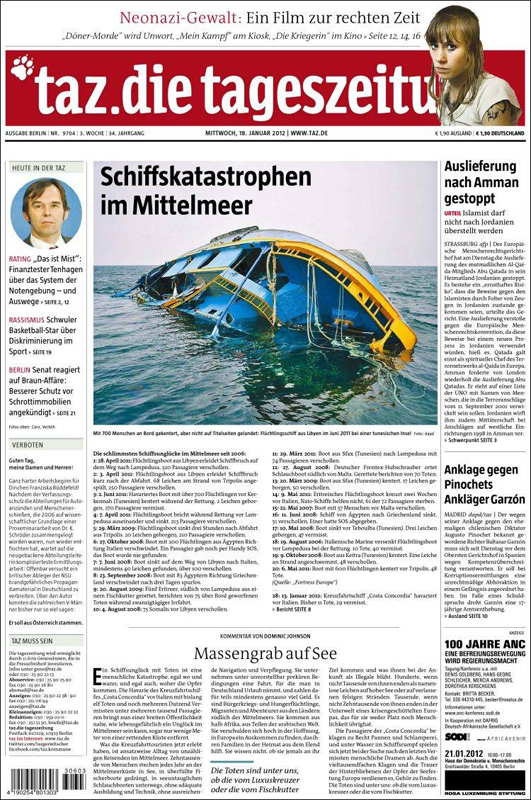
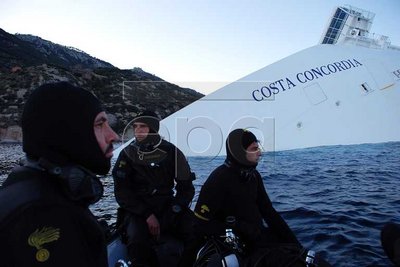
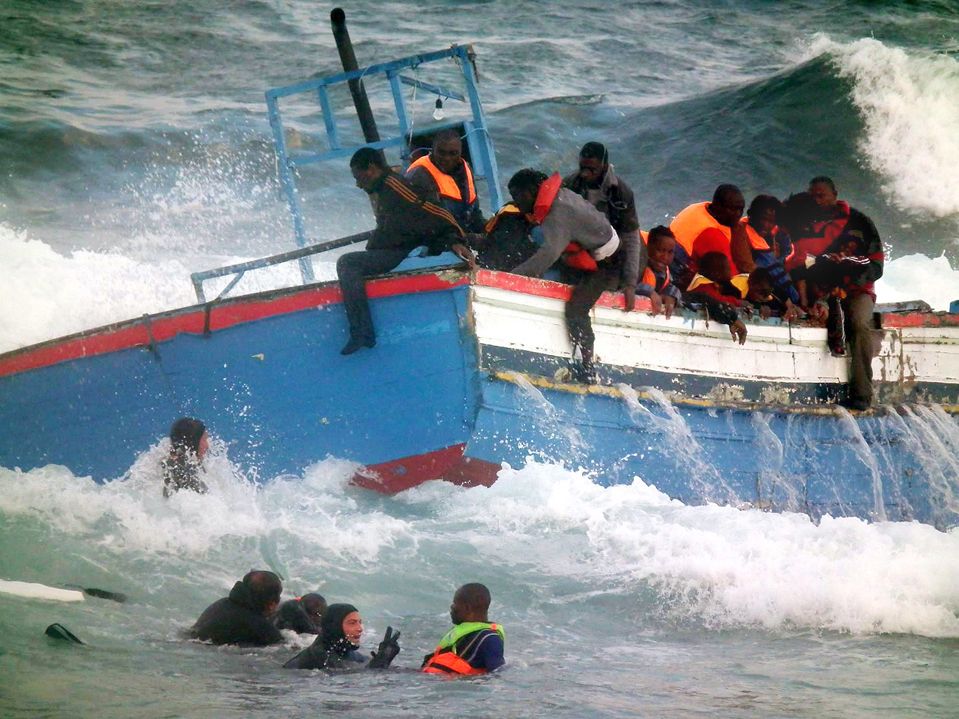
Presseurop reproduced a commentary article by Dominic Johnson from the Berlin newspaper Taz (Die Tageszeitung) contrasting the sinking of the Costa Concordia (and the extensive media coverage) with the more common and numerous sinking of migrant boats.  Without minimizing the loss of lives on board the Costa Concordia, and the ongoing efforts by Italian rescuers who continue to put their lives in danger as they search the wreckage, the striking contrast in the media coverage is worth noting.

Taz: “A boating accident with death is a human catastrophe, no matter where and when, and also no matter where the victims are from. … What happened to the cruise ship passengers is common to countless other travelers in the Mediterranean. Tens of thousands of people each year set out to sea on the Mediterranean, pushed into overcrowded fishing boats, inflatable boats, traveling in unseaworthy vessels, without adequate training or equipment without adequate navigation and catering.  They do the unimaginable under precarious conditions, a journey which we take as a holiday in Germany, and pay for it at least as much money. … They are civil war and famine refugees, migrants and others from the countries south of the Mediterranean. … Hundreds if not thousands of them end up as nameless corpses at sea or on deserted rocky beaches. Thousands if not tens of thousands of them end up in the underworld of a crisis-ridden Europe, which has left them no room for humanity yet. The passengers on the ‘Costa Concordia’ are right to complain about [what has happened].  But many thousands of times over, the grief of the bereaved families of the victims of the sea of fortress Europe also deserve to be heard. The dead are among us, whether from luxury cruisers or from the fishing boat.”  [Google translation from German]

Click here and here for articles from Die Tageszeitung. (DE)

Via European Pressphoto Agency- handout photo released by the Italian Police- EPA/ITALIAN POLICE HANDOUT EDITORIAL USE ONLY/NO SALES

AFP PHOTO/ Francesco Malavolta/Getty Images

2 Comments

Filed under European Union, Italy, Mediterranean, News

Malmström: Europe Failed Refugees in 2011

Commissioner Cecilia Malmström wrote an opinion article in The Times of Malta of 19 January:  “Refugees: How Europe failed- European promises of solidarity with people in need were tested in 2011. It is worrying to note that Europe, collectively, did not pass the test. Now, all member states of the European Union must take responsibility and make sure that 2012 will be a better year for asylum matters. … In the first half of 2011, over 75 per cent of all asylum applications were made in only six EU member states. That leaves a long row of European countries that can and must do more. And as over 700,000 people were forced to flee the violence in Libya, many ended up in refugee camps in neighbouring countries. Of the 8,000 people identified by the UN as being in particular need of help, all EU member states only managed to promise to receive 400. Norway, a non EU-country, accepted nearly as many by itself.  Meanwhile, more than 50,000 migrants crossed the Mediterranean in rickety vessels to the EU. Far too many died trying. Others arrived at the Italian island of Lampedusa and Malta and, at a pledging conference last spring, European countries had the chance to show their solidarity. The result? A mere 300 refugees being relocated from Malta to other member states. …”

Click here for full article.


1 Comment

Filed under European Union, Italy, Libya, Malta, Mediterranean, News, Statements, Tunisia

Hundreds of Tunisians Who Sailed to Lampedusa in 2011 Remain Missing

Hundreds of Tunisians who departed Tunisia for Lampedusa by sea in early 2011 remain missing.  Some of the missing almost certainly died at sea, but family members remain hopeful that others survived the voyage and are now in Italy or elsewhere in Europe.  Earlier this week dozens of mothers of the missing demonstrated outside the Tunisian Ministry of Foreign Affairs during a visit by an Italian parliamentary delegation led by Margherita Boniver. The mothers have been holding daily demonstrations calling for assistance from Tunisian and Italian authorities.  The two governments have been asked to cross check fingerprint information.  Tunisia collects fingerprint information for national identity cards and Italian authorities have collected fingerprint information from arriving migrants.  There is speculation that some of the migrants may have used false names upon reaching Italy and as a result are more difficult to locate.

Click here (IT), here (IT), here (FR), and here (FR) for articles.

Click here for Facebook Page dedicated to finding missing Tunisians.

Click here for Storie Migranti Petition for missing Tunisian migrants / Appello per i migranti tunisini disperse / نداء من أجل التونسيين المهاجرين المفقودين / Appel pour les migrants tunisiens disparus.

Leave a comment

Filed under Italy, Mediterranean, News, Tunisia

Statewatch Analysis: The EU’s self-interested response to unrest in north Africa: the meaning of treaties and readmission agreements between Italy and north African states

Statewatch released an Analysis by Yasha Maccanico entitled “The EU’s self-interested response to unrest in north Africa: the meaning of treaties and readmission agreements between Italy and north African states.”  The Analysis provides a description of Italy’s responses to the migrant arrivals in 2011 caused by the unrest in North Africa.

Excerpts:  “The ‘crisis’ reveals questionable practices and routine abuses – The measures adopted in response to the increasing number of migrants arriving from north African countries serve to highlight a number of practices that have become commonplace in Italy in recent years.

The first of these is a widening of the concept of ‘emergency.’ Calling an emergency gives the government a wider remit to derogate from specified laws so as to resolve situations that cannot be dealt with through ordinary measures….

Although the situation in north Africa was worrying, the emergency was called when slightly over 5,000 migrants had arrived. An analysis by Massimiliano Vrenna and Francesca Biondi Dal Monte for ASGI notes that the government has repeatedly called and extended states of emergency since 2002 to deal with immigration, which is treated as though it were a “natural calamity” even when there is a wholly predictable influx of people from third countries. The urgent need specified in decrees declaring a state of emergency is to conduct ‘activities to counter the exceptional – later referred to as massive – influx of immigrants on Italian territory’ (as happened on 11 December 2002, 7 November 2003, 23 December 2004, 28 October 2005, 16 March 2007, 31 December 2007, 14 February 2008 for Sicily, Calabria and Apulia and was extended to the whole nation on 25 July 2008 and 19 November 2009), stemming from a prime ministerial decree of 20 March 2002. Thus, Vrenna and Biondi Dal Monte’s observation that the emergency is ‘structural’ appears well-founded. It has serious repercussions for the treatment of migrants (see below) and the awarding of contracts outside of normal procedures, with the involvement of the civil protection department whose competencies have been expanding considerably.

The second practice involves the expulsion, refoulement or deportation of migrants outside the limits and procedures established by legislation for this purpose. The failure to identify people, to issue formal decisions on an individual basis to refuse them entry or expel them, or to give them the opportunity to apply for asylum or other forms of protection, was a key concern when boats were intercepted at sea and either the vessels or their passengers were taken back to Libya between May and September 2009, when 1,329 people were returned. These rights were also denied to people arriving from Egypt and Tunisia in application of readmission agreements in the framework of the fight against illegal migration. Their presumed nationality was deemed sufficient to enact expulsions to these countries, because ongoing cooperation and good relations with Italy appeared sufficient to indicate that they were not in need of protection, regardless of the situation in their home countries. ….

The third practice is the ill-treatment of migrants held in detention centres. Without dealing with this issue in depth, it is worth noting that what could be viewed as arbitrary detention is occurring on a large scale, in the absence of formal measures decreeing detention and without the possibility of appealing against decisions. In fact, after landing, migrants are summarily identified as either ‘illegal’ migrants or asylum seekers, largely on the basis of their nationality….”

Click here for Analysis.

1 Comment

Filed under Analysis, Egypt, European Union, Frontex, Italy, Libya, Mediterranean, Tunisia