Category Archives: Italy

25 Persons Dead from Asphyxiation on Board Migrant Boat at Lampedusa

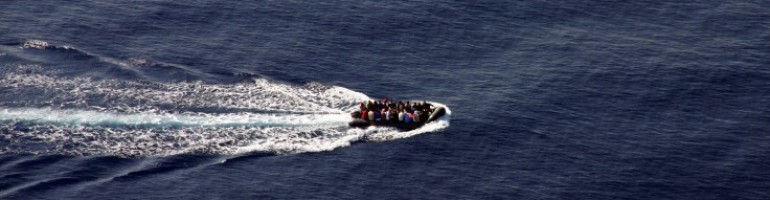
Italian authorities responded to a migrant boat in distress Sunday night near Lampedusa.  The boat was carrying about 270 migrants.  Seas were too rough to transfer the migrants to the Italian vessels and the migrant boat was escorted towards Lampedusa.  The boat broke down about one mile from Lampedusa and a transfer operation was begun this morning.  During the transfer 25 bodies were discovered in the boat.  It is believed that the deaths were probably caused by asphyxiation because the boat was overloaded and packed very tightly with passengers.

Click here, here, and here for articles.  (IT)

Leave a comment

Filed under Italy, Libya, Mediterranean, News

[Post Updated 4 August] Spanish Defence Ministry: NATO Instructed Spanish Navy to Transfer Rescued Migrants to Tunisia

A press release issued yesterday by the Spanish Ministry of Defence states that the 114 migrants who were rescued by the Spanish frigate Almirante Juan de Borbón on 11 July were transferred to Tunisian authorities on 16 July pursuant to orders issued by NATO command.

I previously have sought clarification from both NATO and the Spanish Defence Ministry regarding who made the decision to turn the rescued migrants over to Tunisian authorities and what procedures, if any, were followed to screen rescued migrants before the transfer.  NATO’s Operation Unified Protector press office informed me that all inquiries had to be directed to the Spanish Defence Ministry.  The Defence Ministry’s press office in turn has ignored my inquiries.

[Update – 4 August – I received information today from Communication Office of the Spanish Ministry of Defence reiterating that the Spanish frigate was under NATO command as an asset participating in NATO’s Operation Unified Protector.  According to the Communication Office, after the Spanish frigate commander made the decision that the migrants needed to be rescued, all of the frigate’s subsequent actions were carried out pursuant to specific commands issued by the NATO command, including the final order to transfer the migrants to Tunisian authorities.  Spanish authorities were never involved in discussions or negotiations with other countries regarding the rescued migrants.  The Communication Office referred me to NATO’s OUP Press Office for information regarding any further details of the operation.  I will try again with NATO.]

The press release issued yesterday pertains to a visit made to the Spanish  frigate Almirante Juan de Borbón by Italian Rear Admiral Filippo Maria Foffi, Commander of the NATO naval task group for Operation Unified Protector, where he praised the crew of the frigate for the rescue operation.

The press release goes on to state that after the migrants were taken on board the frigate on 11 July, “on orders from NATO command, the Juan de Borbón sailed to Malta and took a position 40 miles off the coast of that country. On 16 July, instructed by the command of NATO, the Spanish frigate headed for the coast of Tunisia to start the transfer to the Tunisian Navy patrol boat Carthage of the 106 immigrants who were still on board, after the earlier evacuation of eight persons for health and medical reasons.”

(“…siguiendo órdenes del mando de la OTAN, la ‘Juan de Borbón’ puso rumbo a Malta posicionándose a 40 millas frente a las costas de ese país.  El pasado 16 de julio, siguiendo instrucciones del mando de la Alianza, se dirigió hacia las costas de Túnez para iniciar el traslado al patrullero Carthage de la Armada tunecina, de los 106 inmigrantes que aún permanecían a bordo tras la evacuación de ocho personas por motivos médicos y de salud…”)

The Spanish government and NATO are rightfully to be praised for the rescue operation.  What is unfortunate is the lack of transparency on the part of both NATO and the Spanish Defence Ministry in regard to why the decision was made to transfer the migrants to Tunisia and what procedures, if any, were used to screen the migrants for claims to international protection.

Click here for Defence Ministry Press Release. (ES)

Click here for my last post on this topic.

2 Comments

Filed under Italy, Libya, Malta, Mediterranean, News, Spain, Tunisia

20th Anniversary of the Arrival at Bari, Italy of 15,000 Albanian Boat People

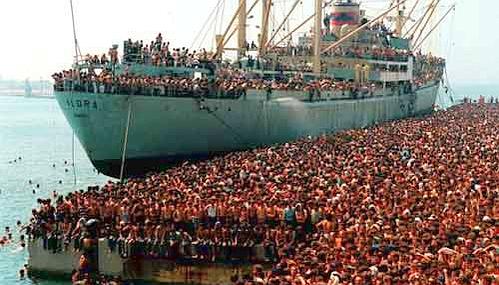
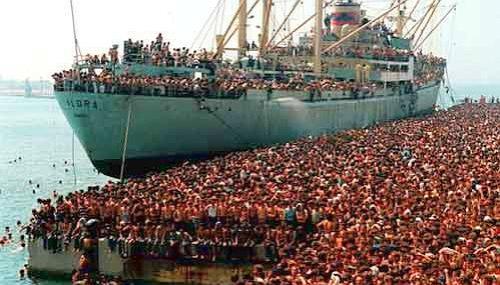
Twenty years ago, on 8 August 1991, several ships carrying approximately 15,000 Albanian migrants succeeded in entering the port of Bari, Italy.  The Italian government’s response was harsh.  Most of the Albanians were detained in a sports stadium without adequate food, water, or access to bathrooms.  Italian authorities dropped supplies to the detained migrants by helicopter.  Within several weeks most of the migrants were deported to Albania.  Their harsh treatment was criticised by human rights organisations and the Pope, but was justified by the Italian government as necessary to deter further irregular migration from Albania.

Excerpts from the 27 January 1992 PACE Report on the Exodus of Albanian Nationals:

“[***]

THE MASS EXODUS FROM ALBANIA

13.       Albania’s forty years of isolation from the rest of the world, combined with its disastrous economic, social and political situation, have had a traumatic effect on its citizens. They feel overwhelmed by hopelessness in the face of Albania’s domestic situation, and although their knowledge of other countries is based solely on what they have heard, or seen on Italian television, they long for the opportunity to start a new life abroad.

14.       This general mood became evident after mid-1990 when increasing numbers of asylum-seekers started to leave the country. Distressing images reminded the public in the rest of Europe of a part of the continent which they had forgotten existed.

15.       In July 1990, Western embassies in Tirana were besieged by large numbers of Albanian nationals. Some 5 000 people sought to leave the country. Thanks to the mediation of international organisations, and after intensive negotiations, a large number of them managed to obtain visas and were granted political asylum in several European countries, particularly Germany, Italy and France. Some have apparently since returned to Albania.

16.       At the end of 1990, some 3 000 Albanian nationals had arrived in Greece by crossing the border between the two countries without meeting any resistance from Albanian border guards. By mid-March 1991, 20 000 Albanians, many of them of Greek ethnic origin, were estimated to have entered Greece. Some of these Albanian nationals have applied to the Greek authorities for political asylum. However, interviews of asylum-seekers have shown clearly that the exodus was not politically motivated but directly linked to the difficult situation prevailing in Albania. The Greek authorities granted work permits to those who found a job and temporary residence permits to the others. Repatriation programmes for all those wishing to return voluntarily were carried out in close co-operation with the Office of the United Nations High Commissioner for Refugees (UNHCR).

17.       On 5 March 1991, a large number of Albanians gathered before the German, French, Greek and Italian Embassies in Tirana, where it was rumoured that visas were going to be distributed. The following day (according to various sources), several boats left the Albanian port of Durres with 20 000 Albanians on board.

18.       On 7 March 1991, Albanian ships began arriving at ports in southern Italy (Brindisi, Bari, Otranto and Monopoli). In spite of the Italian authorities’ public refusal to allow the Albanians to land, many managed to do so.

19.       On the following day, 8 March 1991, hygiene on the boats had deteriorated to such an extent that landing was unavoidable. Crowds of Albanians settled on the quays of Italian ports to await aid which took several days to arrive, as the Italian authorities were overwhelmed by their sheer number.

20.       The Italian authorities claim that 20 000 Albanians arrived in Italy between 7 and 10 March 1991. Negotiations between the authorities in Tirana and Rome subsequently brought the exodus to an end, and Italy has undertaken to discuss with Albania how to eliminate its root causes.

21.       Also in March 1991, an undetermined number of Albanians of Serbian and Montenegrin origin attempted to enter Yugoslavia illegally.

22.       In June 1991, the Albanian authorities requested the United Nations Development Programme to organise an interagency mission in order to undertake an assessment of Albania’s urgent humanitarian needs. In the field of migration, the mission concluded that the great majority of Albanians who had left the country were seeking improved economic conditions and recommended to the Albanian government that it provide incentives so as to encourage Albanians to remain in their country.

23.       During the first days of August 1991 thousands of Albanians reached the western port of Durres and the southern port of Vlora, in the hope of going on board ships that would take them to Italy.

24.       The Albanian authorities tried in vain to prevent its citizens from leaving the country by putting the ports under military control and halting passenger trains.

25.       On 8 August 1991 an estimated 10 000 Albanian nationals aboard several ships forced their way into the port of Bari in the south-east of Italy and approximately 1 000 into the port of Otranto. Moreover, 675 Albanians aboard two other ships who tried unsuccessfully to land at ports in Sicily, were diverged to Malta and later returned to Albania.

26.       After several hours of waiting in the port of Bari, the Italian authorities allowed the Albanians to disembark for humanitarian reasons and led them to La Vittoria Sports Stadium. As the Italian authorities started forced repatriation using military transport planes and ferries, clashes broke out between policemen and Albanians. The Albanians barricaded themselves in the stadium refusing to return to their country; some 300 succeeded in escaping.

27.       The Italian authorities offered the Albanians 50 000 lire (40 US dollars) each and new clothes if they would return home. As this offer did not attract the Albanians, forced repatriation continued.

28.       At the same time the Italian Government increased its financial aid to Albania. Right after the repatriation operations food and emergency aid was sent to Albania. On 12 August 1991, the European Community announced an extra 2,3 million US dollars of emergency aid to be used to buy food and medicines.

29.       The large majority of Albanians arriving in Italy were claiming to be looking for work and escaping the poor economic situation in their country. The failure to repatriate the 7 000 Albanians who arrived in March 1991 as well as rumours of an immigration agreement between Albania and Italy seemed to encourage this last flow.

30.       All of Europe witnessed the dramatic scenes, captured on television news, showing the Albanians being expelled by Italian officials. Although repatriation was legally justified, the way in which the operation was conducted was problematic. The vast majority of the Albanians, according to their accounts of the exodus, fled their country because they felt “buried alive” there. They explained that when the news spread like wildfire that it was possible to leave Albania, lorries were seized in the ensuing rush, ships commandeered, and their crews forced to set sail. It was a form of mass psychosis. It is difficult to determine whether this psychosis was triggered deliberately; rumours suggest that this was the case, but there is no conclusive evidence to support this.

31.       The Albanians’ deportation from Italy was beset with problems, and on a number of occasions the police were deployed. The Albanians were particularly distressed to find that despite promises from the Italian authorities to allow some of them to travel to new homes in Italy, they were still sent straight back to Albania.

32.       It should be noted, however, that the Italian authorities provided the Albanians with food, clothing and some money.

33.       Although there was remarkable sympathy for the Albanians in Italy, the official Italian position was that these persons were seeking economic betterment in Italy and consequently could not be considered as political refugees.

34.       From 15 to 17 August the International Organisation for Migration (IOM) and UNHCR sent a joint mission to Albania. It discussed with the Albanian authorities issues related to migration, such as:

–       the continuation of voluntary return projects from neighbouring countries;

–       the planned and orderly emigration of a small number of Albanians to work in industrialised countries;

–       the implementation of an information project aimed at informing Albanians of the economic and social situation in neighbouring countries;

–       the need to promote, in the mid-term, the reinsertion of returning Albanians, through appropriate vocational training before their return.

35.       It must also be recalled that, at the request of the Italian authorities, IOM and UNHCR, in conjunction with the Italian Red Cross, established a programme of voluntary return. As at the end of August 1991, 1 130 Albanians had been assisted by IOM in their voluntary return. The programme was financed by the Italian Government.

36.       By the end of December 1991 more than 200 000 Albanians were estimated to have left their country since the exodus began in July 1990. However, the UNHCR considers this figure could be substantially higher.

[***]”

Click here for 27 January 1992 PACE Report on the Exodus of Albanian Nationals:

Click here and here for articles about events in Bari marking the anniversary. (IT)
32 Comments

Filed under Council of Europe, Italy, News

Call for a Humanitarian Flotilla to Stop Deaths in the Mediterranean

A coalition of migrants’ rights organisations, including Migeurop, Cimade, Gisti, FIDH, and others hope to organise a humanitarian “flotilla which will undertake maritime surveillance so that assistance is finally provided to people in danger. The participatory organisations call on European bodies and governments on both sides of the Mediterranean to establish relations within this common area on the basis of exchange and reciprocity. This flotilla will embark political figures, journalists, artists, and representatives of the organisations involved in the project.  Any organisation, trade-union, political representative, seafarer, journalist, artist or other individual interested in this initiative may join this mailing list : « Mediterranean Intervention ».” To subscribe to the mailing list, please send an email to migreurop07@yahoo.it.

Click here for full Migreurop statement.

Leave a comment

Filed under European Union, Frontex, Italy, Libya, Malta, Mediterranean, News, Statements, Tunisia

Missing Since 2008 – Algerians Seek Information About 43 Family Members Who Disappeared After Arrest by Tunisian Coast Guard

In October 2008, a migrant boat attempting to sail from Algeria to Italy ran around near Tabarka, Tunisia.  The boat’s 43 passengers (39 Algerians, 3 Tunisians, and 1 Moroccan), between the ages of 16 and 22, were detained by the Tunisian Coast Guard.  There has been no word on their fate since shortly after their arrest.  Last week a group of Algerian families travelled to Tunis and held a press conference asking the new Tunisian government for information about what happened to their family members.  Past efforts to obtain information from the Tunisian government have been unsuccessful.

Click here (FR), here (FR), here (FR), here (FR) and here (IT) for articles.

Leave a comment

Filed under Algeria, Italy, Mediterranean, News, Tunisia

NATO Transfers Rescued Migrants to Tunisia

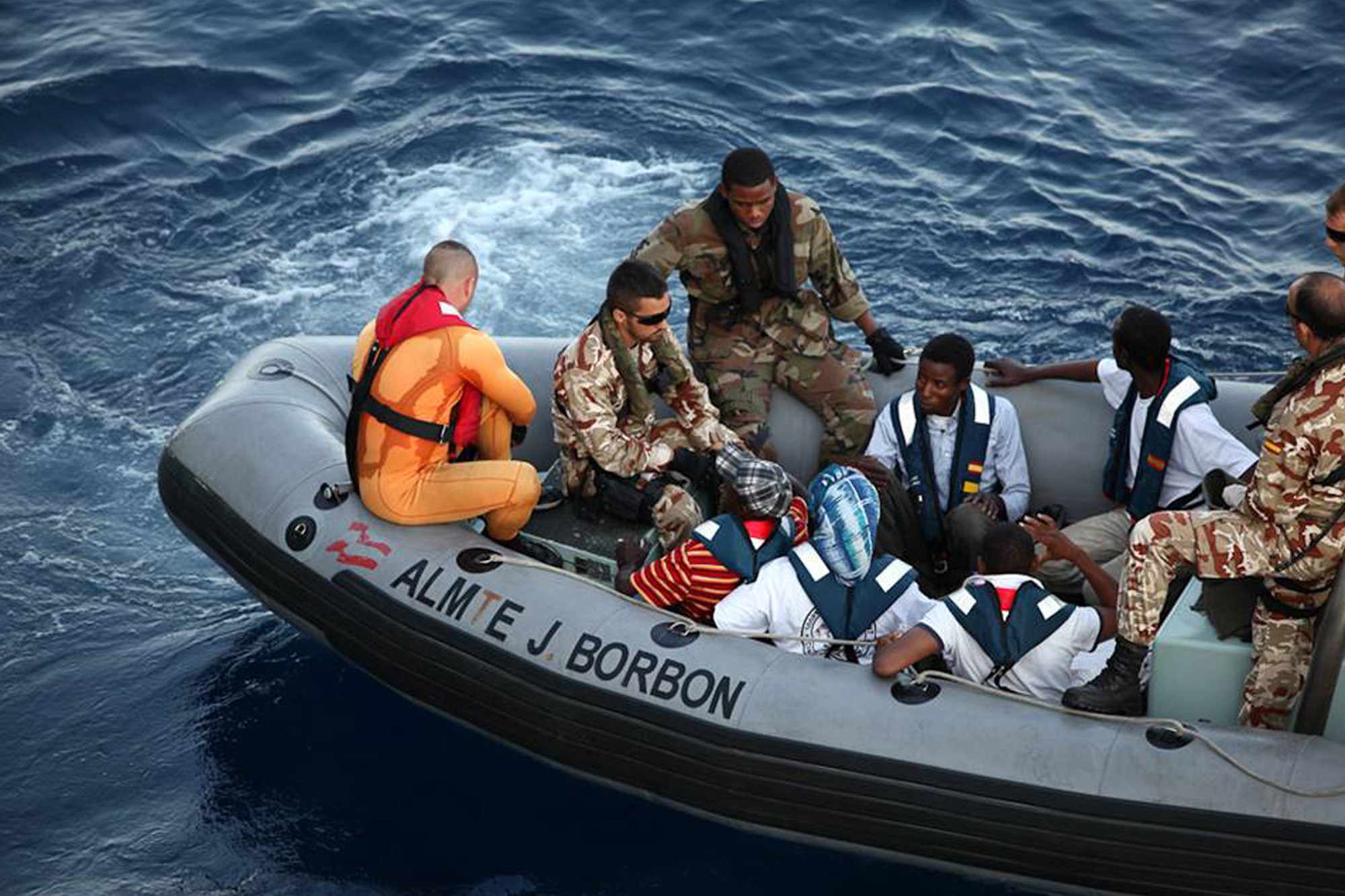
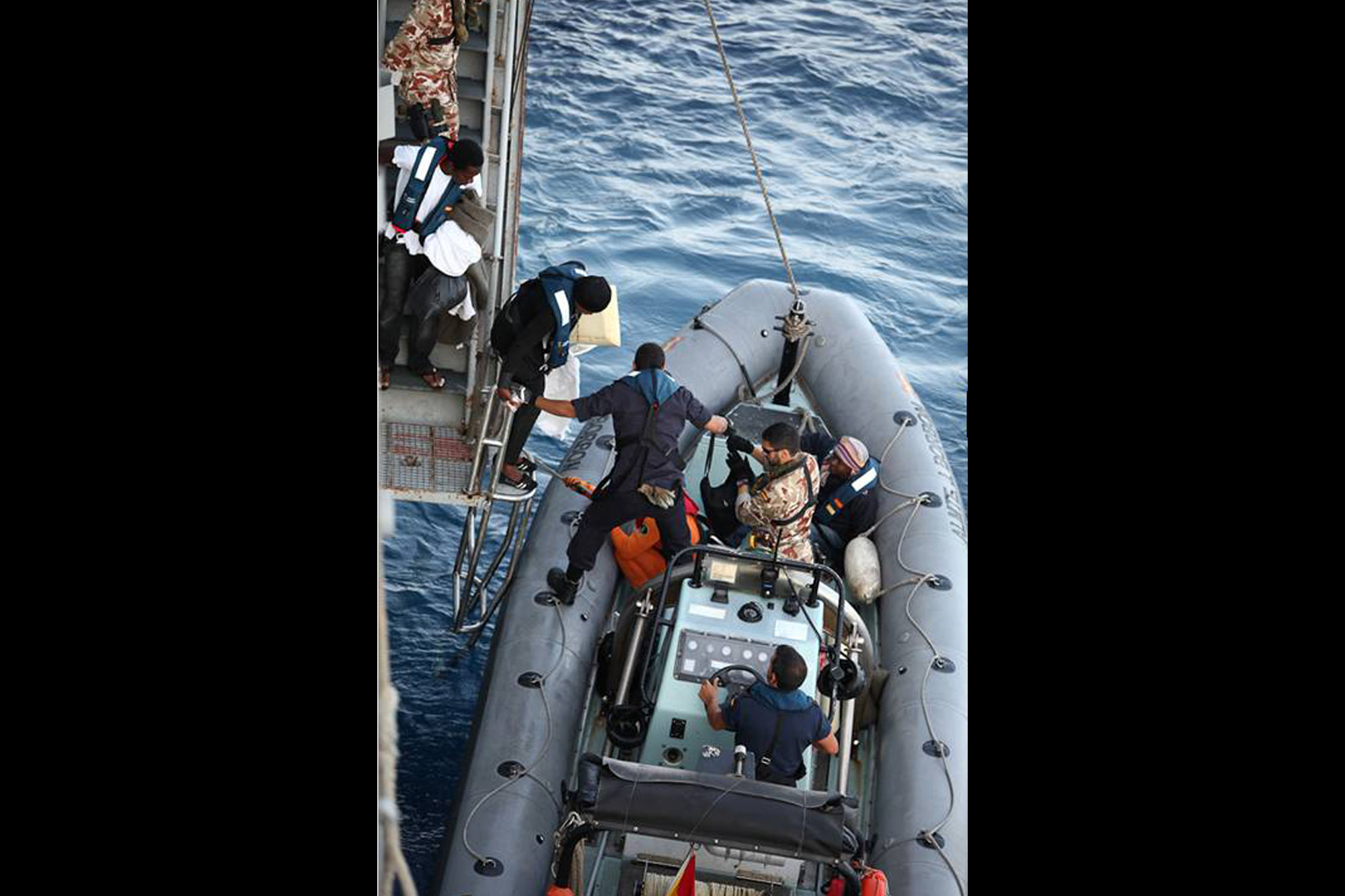
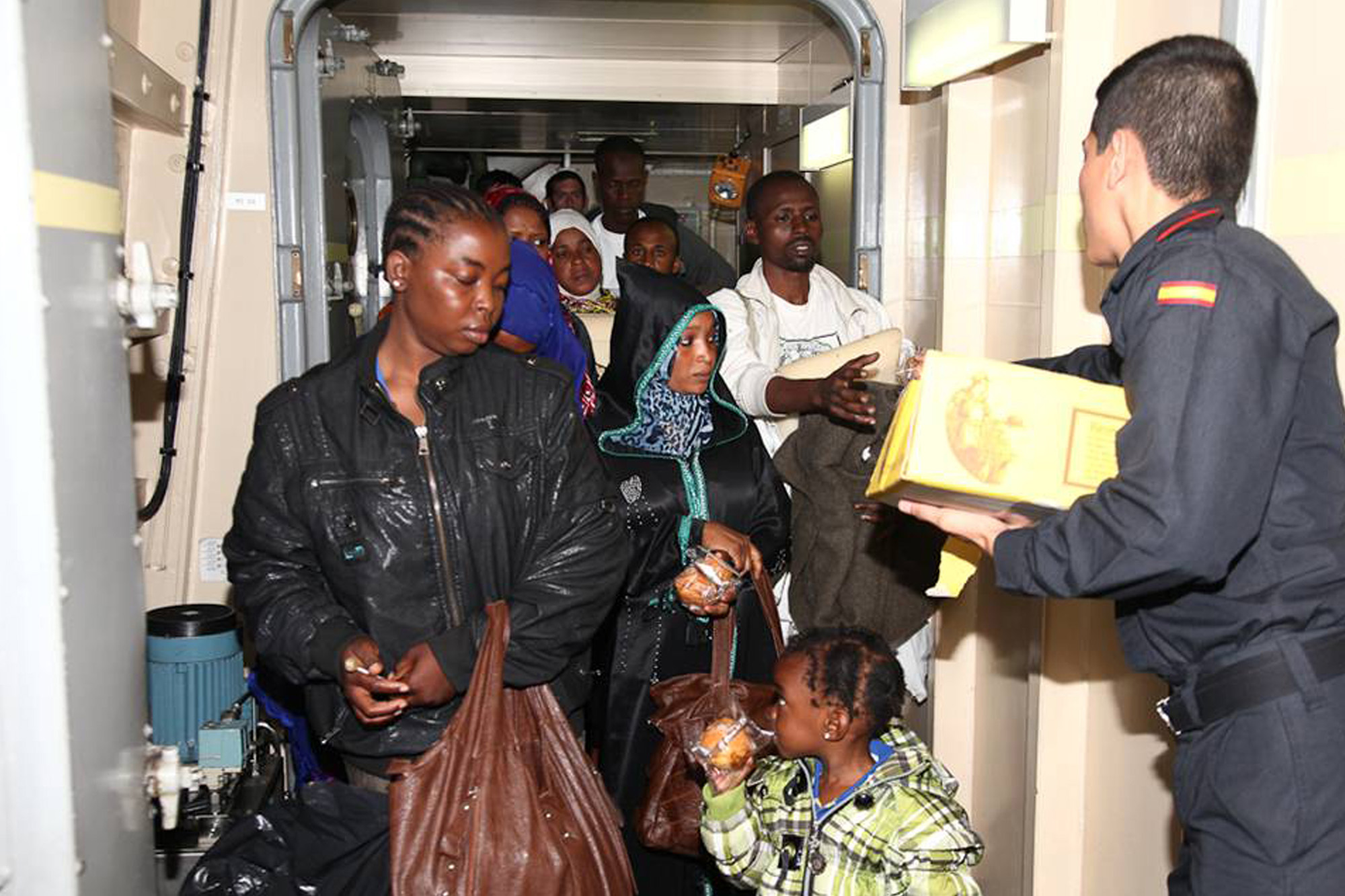
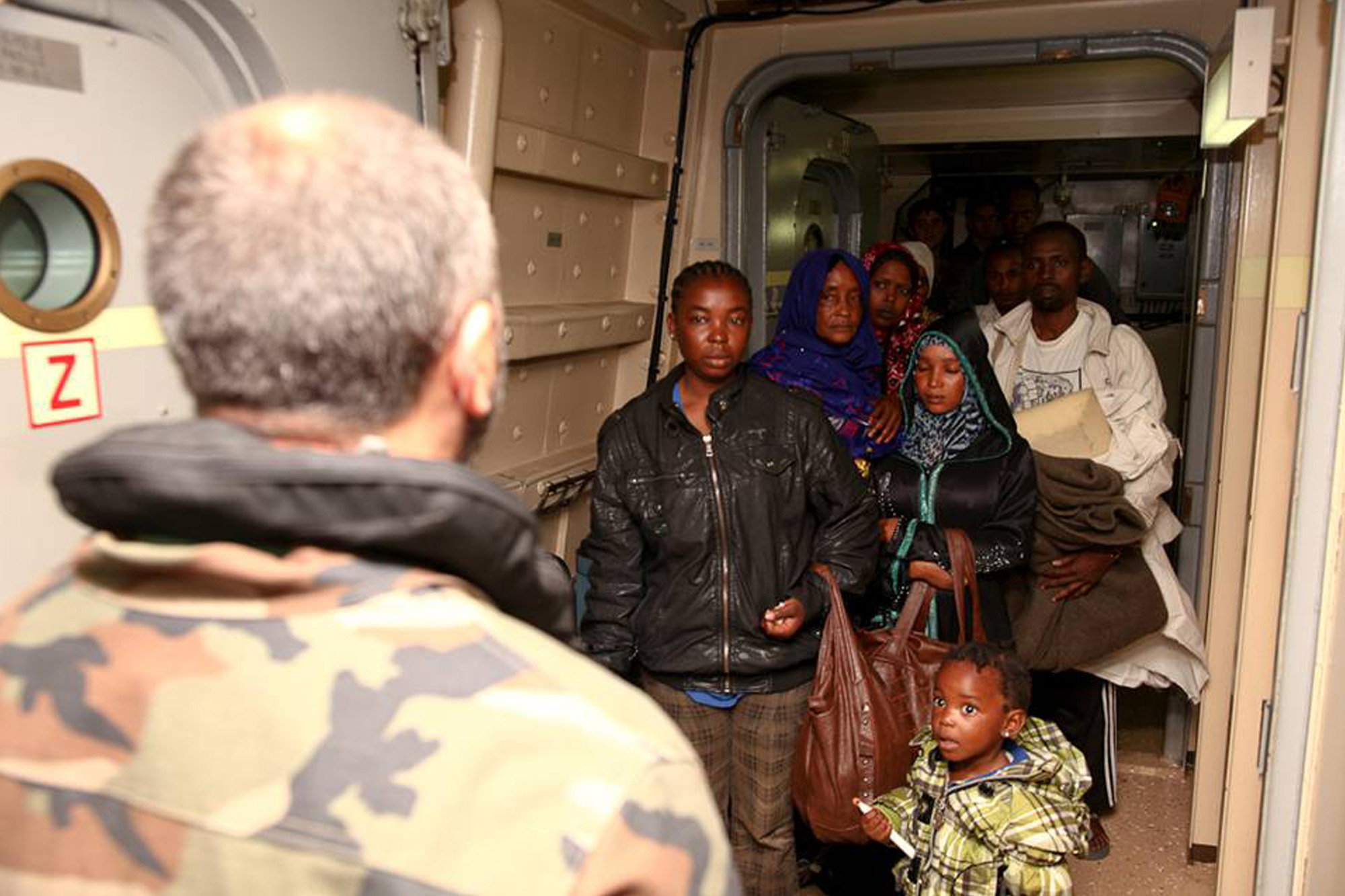
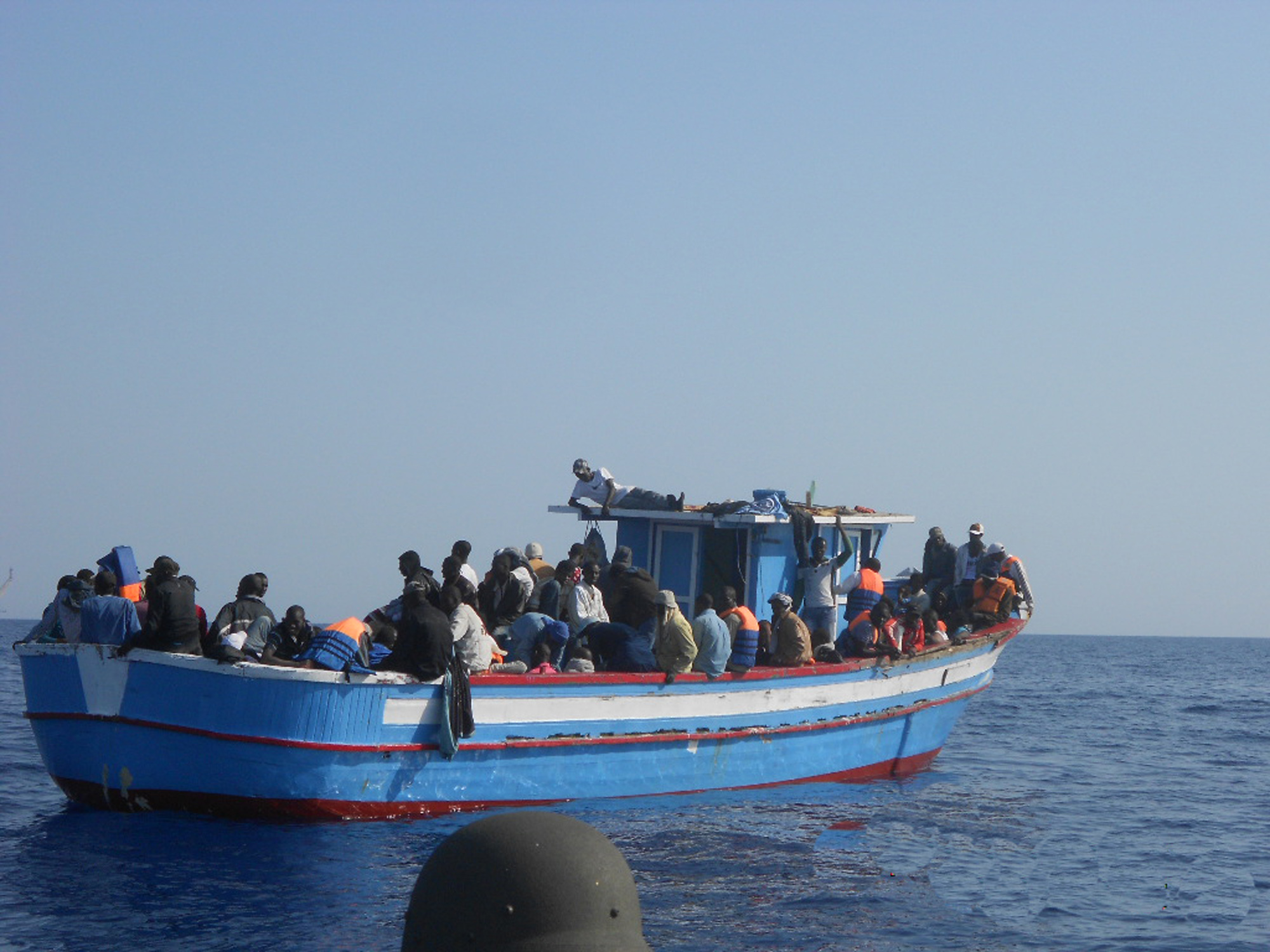
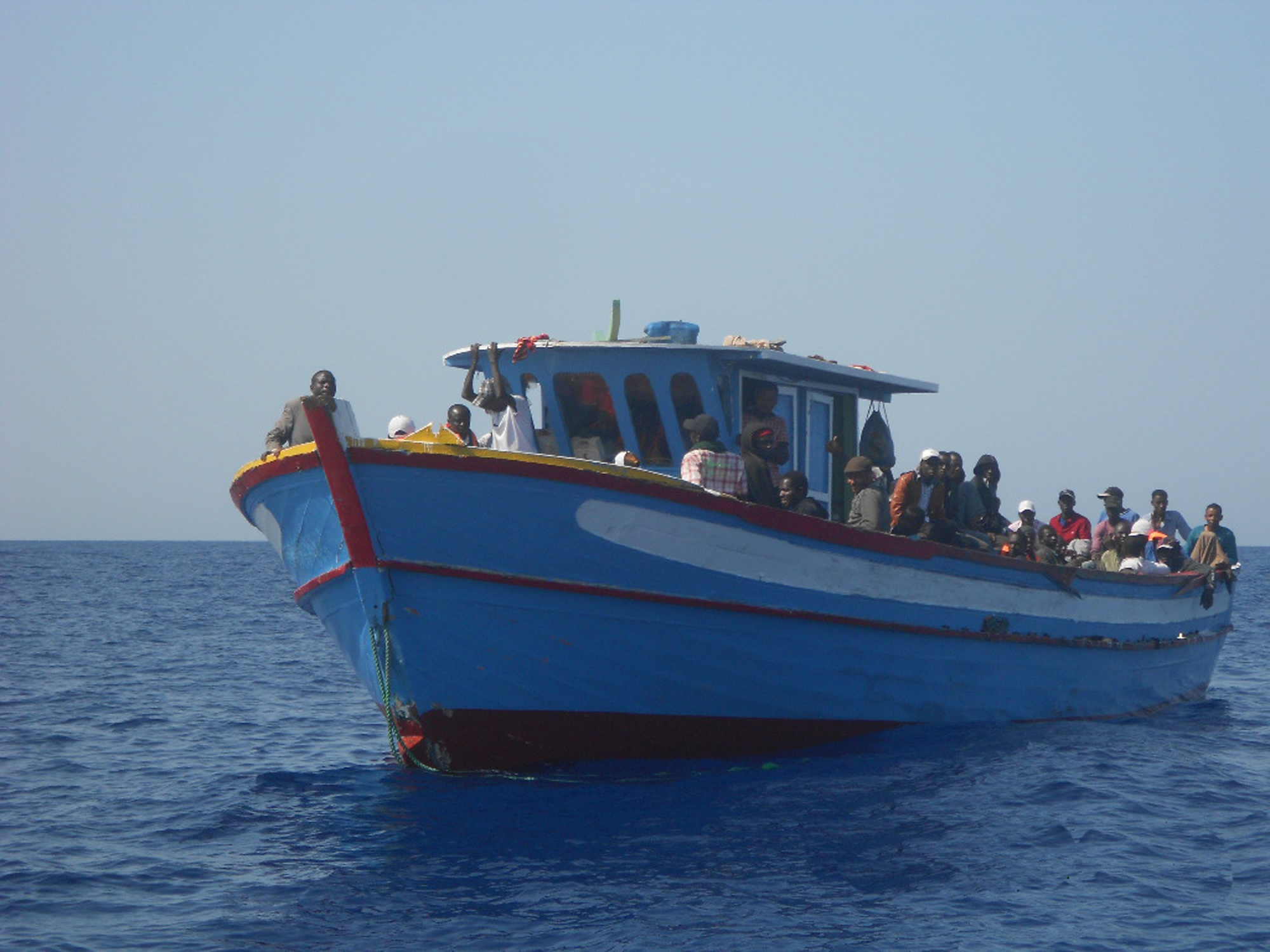
According to information provided by the Spanish Ministry of Defence, the Spanish frigate Almirante Juan de Borbón sailed to Tunisia earlier this morning (16 July) and, while remaining outside Tunisian waters near Zarzis, transferred the remaining 106 rescued migrants to the Carthage, a Tunisian naval vessel.  114 migrants were initially rescued by the Spanish ship.  5 of the migrants were airlifted to Malta for medical reasons on 13 July.  On 11 July, shortly after the initial rescue of the migrant boat, 3 migrants were evacuated and turned over to Tunisian authorities.  The original 114 consisted of 88 men, 20 women (5 of whom are pregnant), and 6 children. The Defence Ministry said that the decision to transfer the migrants to Tunisian authorities was a NATO decision.

While the decision to disembark the migrants in Tunisia is better than sending them to eastern Libya (something I was fearful would occur), Tunisia is problematic for several reasons.  The migrant boat was reportedly carrying Tunisians.  To the extent that any of them may have had claims for international protection, the claims have been effectively eliminated.   It is not known whether any efforts were made to assess whether any of the Tunisians had claims for international protection.   And to the extent that any of the non-Tunisians have claims for international protection, Tunisia is clearly less able to handle such claims and less able to provide care for asylum seekers relative to Malta, Italy, or Spain (or any of the NATO countries participating in Operation Unified Protector).

[17 July update – NATO’s OUP Press Office informed me earlier today that any questions regarding who made the decision to transfer the migrants to Tunisia and whether any of the migrants were screened for claims for international protection had to directed to the Spanish Ministry of Defence.]

Click here (EN), here (ES), and here (ES) for articles.

Click here for Spanish Ministry of Defence press statement and additional photos. (ES)

Photo Credit: Ministerio de Defensa de España (mde.es)

Photo Credit: Ministerio de Defensa de España (mde.es)

Photo Credit: Ministerio de Defensa de España (mde.es)

Photo Credit: Ministerio de Defensa de España (mde.es)

4 Comments

Filed under General, Italy, Libya, Malta, Mediterranean, News, Spain, Tunisia

Malta Says the 111 Rescued Migrants Aboard Spanish Frigate Are NATO’s Problem, Not Malta’s Problem

The stand-off between Malta, Spain, and NATO continues.  111 rescued migrants remain on board the Spanish Navy frigate, the Almirante Juan de Borbón.  Maltese authorities criticised the attempt to bring the rescued migrants to Malta and have said that the migrants should have been taken to Tunisia or Italy because both locations were closer to the original point of rescue.  Malta has now allowed a total of 5 migrants to be airlifted to Malta for medical care.  The frigate remains at sea near Malta with the 111 migrants, including women and children, and a crew of 250 sailors.

At a press conference yesterday, Maltese Interior Minister, Carmelo Mifsud Bonnici, said that while Malta decided to allow the transfer of several rescued migrants to Malta for emergency medical treatment, it has no intention of allowing the other rescued migrants to be disembarked in Malta.  According to the Times of Malta, Mifsud Bonnici said “the problem is not Malta’s, it is Nato’s.  Malta is a sovereign state and it demands that it be respected as such. This is not a standoff with Spain or Italy and we await Nato’s replies.”

It is unclear from various media reports whether Italian authorities formally refused permission to the Spanish frigate to dock in Lampedusa, but some reports suggest there was communication with Italian authorities who said that Lampedusa’s immigrant reception facilities were at capacity.  Well over a thousand migrants have landed in Lampedusa in recent days.

There are also some media reports which suggest that the Spanish government may be taking the position that since the Spanish frigate is under NATO command as part of Operation Unified Protector, NATO therefore must decide where the migrants are to be disembarked.

The head of the Armed Forces of Malta has taken the bizarre position that the Spanish ship is well-equipped to care for the rescued migrants and that therefore there is no urgency in regard to removing the migrants from the ship for humanitarian reasons.

Meanwhile, the NATO naval embargo of Libya is missing one ship.  NATO had 17 ships under its command patrolling the Central Mediterranean, now there are 16 ships.  The Spanish frigate has been effectively removed from its embargo duties as it waits for a resolution to the stand-off.  If and when another migrant boat requires rescue by a ship under NATO command, will the NATO embargo be further weakened?  The obligations of NATO ships to rescue migrant boats in distress under SOLAS are clear, and NATO has repeatedly said that it will rescue migrant boats when required, but one must be fearful of a situation arising, as it does with commercial ships, where a NATO vessel’s commander may be less willing to conclude that a migrant boat is in need of rescue knowing that the act of rescuing the migrants may result in the NATO ship being removed from its mission because it is unable to quickly disembark the rescued migrants.

Click here (EN), here (EN), here (ES), here (IT), and here (IT) for articles.

1 Comment

Filed under Italy, Libya, Malta, Mediterranean, News, Spain

Aditus Calls for Immediate Disembarkation of Stranded Migrants

A statement from Aditus, “an independent, voluntary & non-profit organisation established with a view to monitor, act & report on access to fundamental human rights by individuals & groups”, which is based in Malta:

14 July 2011

“’Once again, political discussions take precedence over human lives.  It is at times like these that our consciences are called to do what is right, to ensure a full respect for the fundamental human rights of all persons irrespectively of colour, origin and status.’

It appears that the Maltese and Italian authorities are once again disagreeing over where to disembark a group of around 100 rescued migrants.  Rescued earlier today by a Spanish frigate, the Almirante Juan de Borbón, the group of migrants seems to be largely composed of men but also includes several women and children.  According to news reports, the stranded migrants were rescued in Sunday morning yet the date of departure from Libyan shores is as yet unconfirmed.

It is important to emphasise that the rescued persons have fled a situation of civil war, and have possibly been through several harrowing experiences.  ‘It is unclear when they left Libya, yet they have definitely been out at sea for over 5 days.  This can only mean that they are probably exhausted, dehydrated and are in urgent need of physical and psychological assistance.  A warship is definitely not the place to provide this urgent assistance’, commented aditus Chairperson Dr. Neil Falzon.

aditus applauds the crew of the Juan de Borbón for rescuing the persons in distress, yet urges the Italian and Maltese authorities to immediately relieve the warship of rescued migrants, in the interests of both the latter and of the crew itself.  aditus further recalls that international maritime law requires a prompt disembarkation at a place of safety for all persons rescued at sea, and that any prolonged period spent aboard the warship poses severe security, humanitarian and human rights concerns.

aditus therefore appeals to the Italian and Maltese authorities to allow the immediate disembarkation of the rescued persons so that their safety may be guaranteed.

For the longer-term, the two States are urged to seek resolution to this on-going legal impasse that too often has resulted in these tragic incidents.  To this end, aditus strongly recommends the involvement of competent international and regional agencies particularly the European Union, the International Maritime Organisation and NATO.”

Click here for statement.

Leave a comment

Filed under Italy, Libya, Malta, Mediterranean, Spain, Statements

Italy and Malta Turn Back NATO Ship Carrying 100 Rescued Migrants

A political and diplomatic standoff is underway between Malta, Italy, Spain and NATO.  The Times of Malta is reporting that the Spanish frigate, the Almirante Juan de Borbón, carrying the 100 rescued migrants attempted to dock at Lampedusa after the rescue, “but the Italian authorities refused it entry  and directed the vessel to Malta, which also refused entry, arguing that Lampedusa was the nearest safe port.”  “The Spanish warship is now off Maltese waters while talks are held between Maltese, Italian and Spanish diplomats.  A meeting which included the Prime Minister and Home Affairs Minister Carm Mifsud Bonnici was being held this afternoon at the Auberge de Castille.  Nato is understood to have appealed to both Italy and Malta to accept the migrants.”  The Times of Malta also reported that a 10 month old baby was flown yesterday from the Spanish frigate to Malta for medical treatment and that a man and pregnant woman were airlifted to Malta today.

Click here for Times of Malta article.

Click here and here for previous posts.

1 Comment

Filed under European Union, Italy, Libya, Malta, Mediterranean, News

Rescued Migrants Remain on NATO Ship While Consultations Continue Regarding Place of Disembarkation

According to information provided to me today by the NATO Public Affairs Office for Operation Unified Protector, most of the migrants who were rescued on 10-11 July by a NATO warship are still on board the Spanish Navy frigate.  An unspecified number of the migrants in need of immediate medical attention have been “off-loaded to safety” to an unidentified location.

While the NATO Public Affairs Office did not identify the NATO ship or its nationality, the Spanish Defence Ministry and Navy have previously confirmed that the Spanish frigate Almirante Juan de Borbón is the NATO ship that performed the rescue.

According to NATO, “the NATO Frigate responded [on 10 July] to a vessel in distress some 75 miles off the coast of Libya. A NATO ship [then] … provided medical support, food and offered mechanical assistance to the distressed civilians. [On the] 11th of July, the migrants (approximately 100), Ghanaians, Tunisians and Libyans, were transferred onto the NATO ship in accordance with the Safety of Life at Sea (SOLAS) protocol…”

Most of the migrants remain on board the Spanish frigate.  NATO says that “the appropriate legal, diplomatic and military authorities are being consulted to determine future course of action.”

I have asked for further information regarding to what location the migrants who were in need of immediate medical attention have been taken.  The possibilities presumably are another ship with appropriate medical facilities, Tunisia, Libya, Italy, Malta, or Spain.

Click here for my previous post on this topic.

1 Comment

Filed under Italy, Libya, Malta, Mediterranean, News, Spain, Tunisia

NATO Warship Rescues 100 Migrants from Boat Off Libya; Where Will Migrants Be Disembarked?

A Spanish Navy frigate, the Almirante Juan de Borbón, participating in NATO’s Operation Unified Protector, on Sunday rescued approximately 100 migrants who were in a disabled boat that reportedly left Zawiyah, Libya several days ago.  The migrants have been without food and water for at least two days.  Among the rescued persons are pregnant women and children.

It is not clear where the migrants will now be taken.  Some reports indicate that the Spanish Defence Ministry is hoping that Tunisia, Malta, or Italy will receive the migrants.  NATO is reportedly seeking a country to accept the migrants.  The migrants are reportedly from Libya, Tunisia, and Sub-Saharan Africa.

Hopefully the migrants will be disembarked quickly (assuming it has not already happened) in an appropriate location where any claims for international protection can be properly considered.  It would be problematic if the migrants are required to remain on the Spanish warship for an extended period and if nearby countries refuse to permit the disembarkation.

Click here (EN), here (ES), here (ES) and here (ES) for articles.

Click here and here for Spanish Defence Ministry and Navy press statements.  (ES)

These photos were released by the Ministerio de Defensa de España.

Photo Credit: Ministerio de Defensa de España (mde.es)

Photo Credit: Ministerio de Defensa de España (mde.es)


4 Comments

Filed under Italy, Libya, Malta, Mediterranean, News, Spain, Turkey

Head of Armed Forces of Malta Describes Malta’s Interpretation of Its SAR Responsibilities

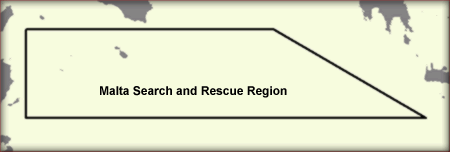
Brigadier Martin Xuereb, the head of the Armed Forces of Malta (AFM), spoke at a recent seminar sponsored by the European Parliament, “Europe’s new Mediterranean reality: Migration and asylum in Malta, Greece and Cyprus,” and summarised Malta’s interpretation of its search and rescue obligations.  Xuereb said that Malta is obligated to coordinate search and rescue operations within its SAR zone, but is not required to perform all rescue operations.

Xuereb said Malta believes rescued persons should be disembarked at the nearest place of safety which, given the size and location of the Maltese SAR, will sometimes mean that Italian territory, particularly Lampedusa, is closer.  Xuereb acknowledged that this interpretation is not shared by others.  Xuereb “said that Malta had consistently insisted that the arrangement that best represented the interests of rescued persons was one that saw them disembarked in the nearest place of safety.”  He said the Maltese Rescue Coordination Centre (RCC) has coordinated or assisted with 54 SAR cases so far this year.

Xuereb also confirmed that Malta would continue its refusal to host Frontex joint operations because of its objections to Frontex guidelines which are based “on a number of grounds, including the fact that [the guidelines] addressed matters deemed to be outside community competence and attempted to erode the rights that Malta enjoyed under the international legal framework. … In light of these guidelines, Malta considered the hosting of [Frontex] joint operations to be detrimental to its national interest.”  Malta objects to the guidelines because it believes they would require rescued migrants to be disembarked in the country hosting the joint operation.

Click here and here for articles.

Leave a comment

Filed under Frontex, Italy, Malta, Mediterranean, News

Italian Coast Guard: 44,000 Migrants Reach Italy by Boat in First Half of 2011

In a presentation on 28 June before the Italian Parliament’s Schengen Committee (Comitato parlamentare di controllo sull’attuazione dell’accordo di Schengen), officials from the Italian Coast Guard reported that at least 44,000 migrants have reached Italy by boat so far in 2011.

1,000 additional migrants arrived in Lampedusa over the 24 hour period Wednesay to Thursday of this week.  With the exception of one small boat carrying 8 Tunisians, all of the boats are believed to have left from Libya in recent days.

Click here, here, and here for articles.  (IT)

Leave a comment

Filed under Data / Stats, Italy, Libya, Mediterranean, News, Tunisia

Klepp, Int J Refugee Law, “A Double Bind: Malta and the Rescue of Unwanted Migrants at Sea, a Legal Anthropological Perspective on the Humanitarian Law of the Sea”

An article by Silja Klepp (Research Associate, Research Center for Sustainability Studies (artec), University of Bremen) entitled “A Double Bind: Malta and the Rescue of Unwanted Migrants at Sea, a Legal Anthropological Perspective on the Humanitarian Law of the Sea” has been published as an online advance access article by the International Journal of Refugee Law.

Abstract: “This paper discusses research results from anthropological fieldwork carried out in Malta in 2007. The island, which is situated in the central Mediterranean Sea between Tunisia, Libya and Italy, is a focal point regarding the continuing refugee situation. One of the research aims was to investigate the situation at sea concerning Search and Rescue (SAR) operations for migrants and refugees crossing the Mediterranean by boat. In the year 2006, 556 missing and drowned migrants were registered in the central Mediterranean between Libya, Malta and Italy, this number increased to 642 in 2008.1 The goal of the research in Malta was therefore to understand why an increasing number of migrants were dying at sea and what role the European security forces play in this context.

After introducing the research perspective of this article, background information concerning migration movements in the Mediterranean Sea between Libya, Italy and Malta in recent years is provided. Due to European regulations, which are considered unfavourable for the island, and its population density, Malta feels under pressure from migrants arriving by boat across the Mediterranean. Different concepts regarding a ‘place of safety’ to disembark rescued boat migrants are debated. The ambiguities in the responsibilities cause problems for the captains who rescue migrants in distress at sea. These ambiguities may in turn lead to a weakening of the SAR regime. Following discussion of the legal and political quarrels on the place of safety, the SAR operations at sea of the Armed Forces of Malta is analysed. The findings show that it is not merely a case of enforcing legal norms created by international law. The process is much more complex: legal gaps are filled by regional actors, through informal or even illegal practices, asserting their own claims at their convenience. Thus, transnationalization processes of law, such as the international SAR regime, are a fragmented and ambiguous set of regulations, creating space for negotiation and manoeuvre.2

Click here for link.  (Subscription or payment required.)

Also by Klepp from 2010, European Journal of Migration and Law: “A Contested Asylum System: The European Union between Refugee Protection and Border Control in the Mediterranean Sea.”

Leave a comment

Filed under Analysis, European Union, Italy, Malta, Mediterranean, UNHCR

Boat Carrying 840 Migrants Arrives in Lampedusa

A boat carrying 840 sub-Saharan asylum seekers from Libya reached Lampedusa on 22 June.   According to media reports this landing constitutes the largest single landing of a migrant boat on Lampedusa, though boats carrying larger numbers of persons have arrived elsewhere.   Among the 840 persons were 117 women and 28 children.   932 migrants landed in Pozzallo, Ragusa, several weeks ago.  Because the 20-metre long boat was dangerously overcrowded and unstable, Italian authorities boarded the vessel as it approached Lampedusa in order to redistribute weight and to steer the boat into the harbour in an effort to prevent the vessel from capsizing.

Click here (EN) and here (IT) for articles.

Leave a comment

Filed under Italy, Libya, Mediterranean, News