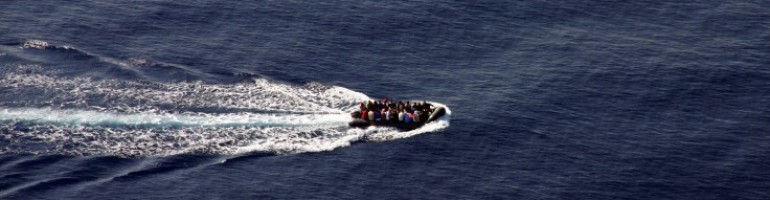
Two large migrant boats reached Lampedusa over the past weekend. One of the boats was carrying about 250 persons, believed to be Sub-Saharan Africans, and is thought to have departed from Libya. The boat was a 15 meter wooden fishing vessel and appears to be one of the first non-inflatable boats used in many months. A second boat carrying about 125 Tunisians arrived around the same time. Smaller boats carrying mostly Tunisians have been steadily reaching Lampedusa in recent weeks. In response to the apparent increase in the numbers of persons reaching Lampedusa, former Italian Interior Minister Roberto Maroni (Northern League) wrote on his Facebook page and called for a resumption of Italy’s Push-Back practice to halt new boats. (“Tornano i barconi a Lampedusa. RESPINGIMENTI, come facevo io, questo serve per fermare l’invasione.”) Given the decision in the Hirsi case by the European Court of Human Rights, Italy is not likely to resume the push-back practice. 81 Sub-Saharan migrants on a disabled boat were rescued by Italian authorities on Monday. The detention centre on Lampedusa is over its 350 person capacity and Italian authorities have begun to transfer migrants to facilities elsewhere.
Tag Archives: Migrants
400 Migrants Reach Lampedusa Over Past Weekend; Detention Centre Over Capacity; Former Interior Minister Maroni Calls for Resumption of Italy’s Push-Back Practice
Filed under European Union, Frontex, Italy, Libya, Mediterranean, News, Tunisia
6 Persons Die During Rescue Off Malta; 235 Migrants Reach Malta Over Past Week
A rescue operation that began last week off Malta was successful in saving 158 persons on board two separate migrant boats. Six persons died. Two fell into the sea and were lost while being transferred from their boat to a passing merchant ship, the Victoria VI. Two died on board the migrant boat before the rescue. And two died after the rescue. The 68 survivors were rescued by the Victoria VI on 14 August. They were then transferred to AFM vessels and taken to Malta. An AFM patrol boat rescued 90 other migrants from a second boat on 15 August. The migrants are reportedly from Somalia and Eritrea.
Click here, here, and here for articles.
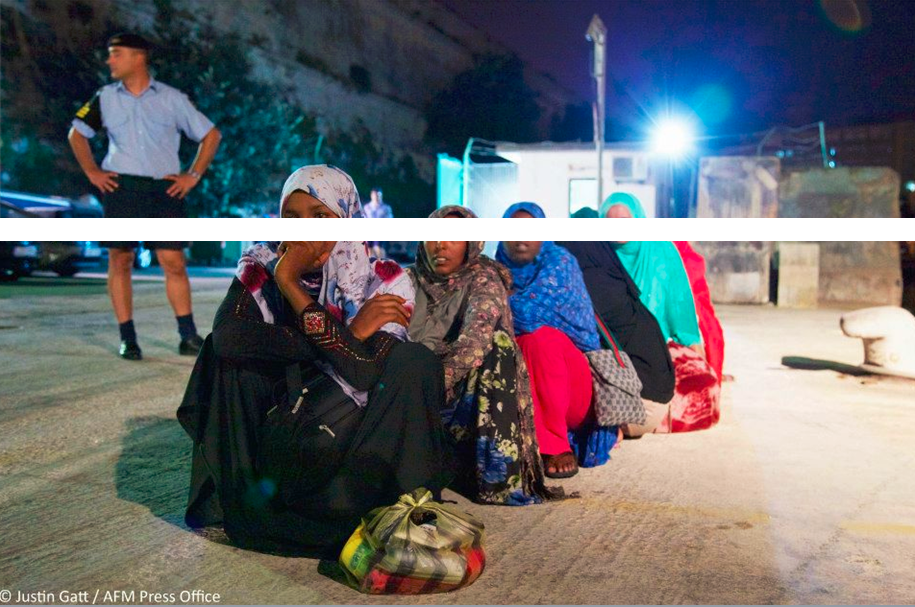
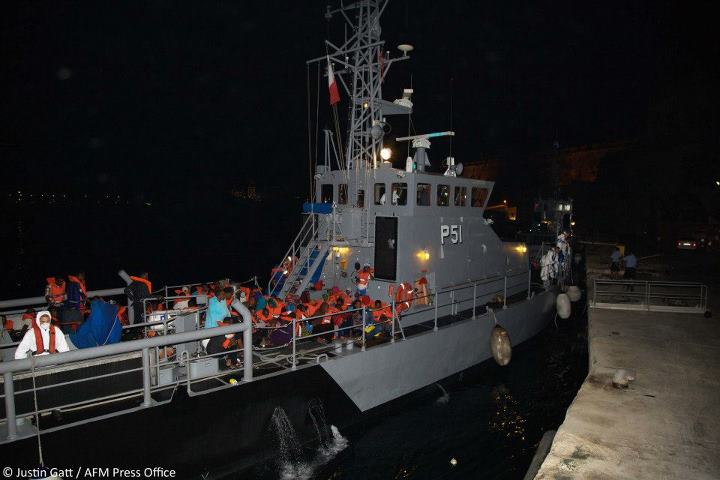
A third boat carrying 77 migrants was rescued yesterday, 20 August, by the AFM.
Click here for AFM press statement and here for article.
Pictures below from 20 August 2012 rescue.
Filed under European Union, Libya, Malta, Mediterranean, News
Boat with 120 Syrians Lands in Italy
A boat carrying about 160 persons, including 124 Syrians, was intercepted near Crotone in southern Italy. Italian authorities arrested two Turkish nationals on board the vessel who are suspected of human smuggling. It is doubtful that the boat sailed from Syria which is a distance of about 1,800 km by sea from this part of Italy. Reuters quoted a local Italian official as saying that most migrant boats that reach the area originate from Greece.
Filed under Italy, Mediterranean, News, Syria
Malta Expresses Interest in Use of Drones for Migrant Surveillance at Sea
Malta Today reported last week that the Armed Forces of Malta (AFM) “have expressed interest in benefitting from a European Union-sponsored project involving the deployment of unmanned drones to assist in migrant patrols at sea.” “An AFM spokesman told Malta Today that while the armed forces are ‘fully involved in the development of the system’ it is however ‘not participating in the testing of such drones.’”
The use of drones for land and sea border surveillance is contemplated by the EU Commission’s EUROSUR proposal which is currently being considered by the European Parliament. The Heinrich Böll Foundation’s recent report, “Borderline – The EU’s new border surveillance initiatives”, noted that “[w]hile FRONTEX has demonstrated a great amount of interest in the use of drones, it remains to be seen whether the agency will purchase its own UAVs. According to the 2012 FRONTEX Work Programme, the agency’s Research and Development Unit is currently engaged in a nine-month study to ‘identify more cost efficient and operational effective solutions for aerial border surveillance in particular Unmanned Aircraft Systems (UAS) with Optional Piloted Vehicles (OPV) that could be used in FRONTEX Joint Operations (sea and land).’”
The United States has been using drones for some years now to monitor land and sea borders and is currently planning to expand the use of drones in the Caribbean and Gulf of Mexico despite serious questions that are being raised about the effectiveness of surveillance drones operating over the sea. According to a recent Los Angeles Times article the Predator drones that are currently being operated by the Department of Homeland Security over the Caribbean “have had limited success spotting drug runners in the open ocean. The drones have largely failed to impress veteran military, Coast Guard and Drug Enforcement Agency officers charged with finding and boarding speedboats, fishing vessels and makeshift submarines ferrying tons of cocaine and marijuana to America’s coasts.” “‘I’m not sure just because it’s a UAV [unmanned aerial vehicle] that it will solve and fit in our problem set,’ the top military officer for the region, Air Force Gen. Douglas M. Fraser, said recently. … For the recent counter-narcotics flights over the Bahamas, border agents deployed a maritime variant of the Predator B called a Guardian with a SeaVue radar system that can scan large sections of open ocean. … But test flights for the Guardian [drone] showed disappointing results in the Bahamas, according to two law enforcement officials familiar with the program who were not authorized to speak publicly. During more than 1,260 hours in the air off the southeastern coast of Florida, the Guardian assisted in only a handful of large-scale busts, the officials said….”
Filed under European Union, Frontex, Malta, News
Slight Decrease in Number of Migrants Arriving by Boat in Spain in First Half of 2012
Frontex reports a 3% decrease in the number of irregular migrants arriving by boat in Spain over the first half of 2012 compared to the same period in 2011: 2,637 in 2011 versus 2,559 in 2012. Most migrant boats attempt to reach the Spanish mainland along the coasts of Andalusia and elsewhere in eastern Spain. Frontex reports an increase of 6.5% in the number of migrants reaching the Spanish mainland, but this increase is offset by a reduction in the number of migrant arrivals in the Canary Islands.
EFE quoted Gil Arias, Frontex deputy director, as stating that “[t]he decline [in Spain] is in line with the trend of the EU…” where there has been an overall reduction of more than 50% in the number of irregular migrants crossing land and sea borders of Member States during the same six month period: 74,200 in 2011 versus 36,741 in 2012. Arias noted that the number of arrivals in Spain is “insignificant” relative to the overall EU, accounting for about 7% of the EU total with Italy accounting for 12% and Greece 67%.
Note that there are other media reports which provide slightly different figures from those reported by Frontex. Europapress reported that an estimated 3,000 migrants have been rescued so far this year (apparently though late July) along the Andalusian coast by rescue services.
Filed under Algeria, Data / Stats, Eastern Atlantic, European Union, Frontex, Mauritania, Mediterranean, Morocco, News, Somalia, Spain
Israel’s African Question
An interesting opinion article in today’s Haaretz by Craig D. Smith, a doctoral candidate in political science at the University of Toronto and a research fellow in the department of international relations at the Hebrew University:
“Some 60,000 Africans have crossed the Egyptian border into Israel over the past five years, most of them from Eritrea. Like the world’s other 30 to 40 million ‘irregular’ migrants, they came uninvited, and Israeli society has largely decided they are an unwelcome addition to an already fractured cultural landscape. There are no channels for integration under Israel’s Jewish-only citizenship laws, no political appetite for blanket amnesties, and no chance for migrants to go about their lives without being noticed. Israel thus faces an ‘African question’: What to do with a growing number of people who are inassimilable and unwanted, and how to prevent more from coming? Politicians have decided the answer includes withholding asylum status, deporting the most expedient cases, interning the remainder – and, most significantly for Israel’s neighbors, sealing the Egyptian border. While such tactics face resistance from a vocal minority, they enjoy support across most of the political spectrum. In the meantime, African migrants in Israel face assault, destitution and intimidation, encouraged by the rhetoric of democratically elected politicians….”
Click here for full article.
European Ombudsman Opens Public Consultation on Frontex and EU Charter of Fundamental Rights; NGOs and Public Invited to Submit Comments
Text of 19 July 2012 press release from the European Ombudsman: “The European Ombudsman, P. Nikiforos Diamandouros, has invited individuals, NGOs, and other organisations active in the area of fundamental rights protection to submit comments in his ongoing inquiry concerning the EU Borders Agency, Frontex. Frontex coordinates the operational cooperation between Member States in the field of border security. In March 2012, the Ombudsman asked Frontex a number of questions about the implementation of its fundamental rights obligations. Frontex replied in May 2012. Comments on Frontex’s response can be submitted to the Ombudsman until 30 September 2012.
Fundamental rights organisations and NGOs invited to submit comments
In 2009, the Charter of Fundamental Rights became legally binding on Frontex, which is based in Warsaw. Since then, a number of civil society organisations have questioned whether Frontex is doing enough to comply with the Charter, for example, in its deployment of EU border guards to Greece where migrant detainees were kept in detention centres under conditions which have been criticised by the European Court of Human Rights.
In October 2011, the European Parliament and the Council adopted a Regulation setting out additional specific fundamental rights obligations for Frontex. In March 2012, the Ombudsman asked Frontex a number of questions about how it is fulfilling these obligations, including the obligation to draw up a fundamental rights strategy, as well as codes of conduct applicable to its operations.
Frontex submitted its opinion in May 2012. It explained that, since 2010, it has developed a fundamental rights strategy, as well as a binding code of conduct for those participating in its activities. Frontex also listed other measures it is currently taking to ensure full respect for fundamental rights.
The Ombudsman considers that, before proceeding further, it would be useful to seek information and views from NGOs and other organisations active in the area of fundamental rights protection. He therefore invites interested parties to make observations on Frontex’s opinion. The Ombudsman has also invited the EU Fundamental Rights Agency to give its views.
All documents related to the inquiry, including Frontex’s opinion, are available at: http://www.ombudsman.europa.eu/en/cases/correspondence.faces/en/11757/html.bookmark ”
From the Ombudsman’s website:
What the Ombudsman is looking for
The present inquiry concerns the implementation by Frontex of its fundamental rights obligations. The Ombudsman would, therefore, be highly interested in receiving feedback from interested parties, such as NGOs and other organisations specialised in the areas covered by his inquiry, on Frontex’s answers to the questions he put to it.
The present inquiry is not intended to examine and solve individual cases involving Frontex’s fundamental rights obligations. Such cases can of course be submitted to the Ombudsman through individual complaints. A complaint form that can be used for this purpose is available on this website.
How to contribute
Comments should be sent to the Ombudsman by 30 September 2012.
- By letter: European Ombudsman, 1 avenue du Président Robert Schuman, CS 30403, F – 67001 Strasbourg Cedex, France;
- By fax: +33 (0)3 88 17 90 62;
- By e-mail: http://www.ombudsman.europa.eu/shortcuts/contacts.faces
Click here for press release.
Click here for all documents related to the inquiry.
Click here for Frontex’s 17 May 2012 response.
Filed under European Ombudsman, European Union, Frontex, News, Reports
Article: M Tondini, “The legality of intercepting boat people under search and rescue and border control operations with reference to recent Italian interventions in the Mediterranean Sea and the ECtHR decision in the Hirsi case”
A new article by Matteo Tondini, Ph.D., “The legality of intercepting boat people under search and rescue and border control operations with reference to recent Italian interventions in the Mediterranean Sea and the ECtHR decision in the Hirsi case”, has been published in Vol. 18 of the Journal of International Maritime Law (subscription required).
Here is the abstract: “This article briefly addresses the legal grounds for the interception of boat people on the high seas by military vessels, taking into account the Italian Navy’s [experience] on the matter. If interceptions are conducted within the framework of an `extraterritorial’ border control operation, their legality is hardly sustainable. Conversely, when interventions are implemented as search and rescue (SAR) operations, their legal basis is much wider, provided that intervening states’ obligations under the SAR legal regime are coupled with those stemming from the prohibition of refoulement under international refugee law. As a result, rescued migrants can only be disembarked to `safe third countries’, namely countries in which they do not run the real risk of being persecuted or returned to other countries `at risk’. According to some very recent international and national jurisprudence, including the European Court of Human Rights’ decision in the Hirsi, before disembarking migrants, intervening states should in principle carry out a positive assessment on the functionality of the recipient country’s asylum system. In order to assess clearly the legality per se of interceptions, this article supports the necessity of applying a prevalence criterion, according to which if the SAR character prevails over the objective of preventing irregular migration, the intervention in question should be considered an authentic and lawful salvage operation.”
Also of note by the same author is his October 2010 paper, “Fishers of Men? The Interception of Migrants in the Mediterranean Sea and Their Forced Return to Libya.”
Filed under Analysis, European Court of Human Rights, Italy, Libya, Mediterranean, Tunisia
HRW Report on Malta’s Migrant Detention Policy: “Boat Ride to Detention”
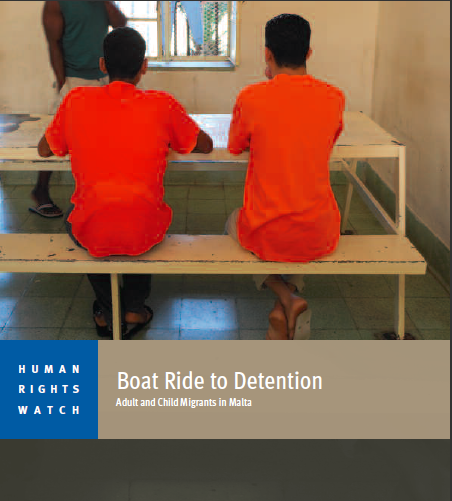
Human Rights Watch has issued a report, “Boat Ride to Detention – Adult and Child Migrants in Malta”, documenting the treatment of migrants and asylum seekers arriving by boat in Malta and concluding that the mandatory detention policy violates international law.
Excerpts:
“Summary – Malta routinely detains an average of 1,500 people per year, including children, who arrive in the country by boat without permission, or ‘irregularly.’ These are migrants and asylum seekers, typically from Somalia, Eritrea, and other sub-Saharan African countries, who travel to Europe fleeing persecution or in search of a better life. Many have fled violence and conflict, and almost all have made an arduous journey, taking months to cross the Sahara and travel north through Libya. The last stage of that journey is a perilous, multiday trip across the Mediterranean, typically in overcrowded vessels that are not seaworthy, and without enough food, water, or fuel, before they reach Maltese shores or are intercepted at sea by the Armed Forces of Malta.
Boat migrants arriving in Malta are taken straight to detention if they lack an entry visa (as they virtually all do). This report addresses their arbitrary, indiscriminate, and unfair detention. The report focuses on those who arrive in Malta by boat, as migrants who arrive in Malta by air for the most part are not detained, even if they enter under false pretenses or subsequently claim asylum. Asylum seekers who arrive by boat are detained for up to 12 months, and migrants who do not apply for asylum, or whose asylum claims are rejected, can be detained for up to 18 months. Under international law migrants who do not have permission to enter or stay in a country may be subject to detention, in certain circumstances, and also may be subject to safeguards. However in Malta, the detention policy operates in an automated, indiscriminate, and blanket manner in violation of international law.
In the course of this virtually automated detention policy, Malta routinely detains unaccompanied migrant children whose age is in question. ‘Unaccompanied children’ are migrants under the age of 18 (typically between 14 and 17) who travel without parents or caregivers. Migrants who claim to be unaccompanied children go through an age determination procedure, which relies on interviews and occasional medical testing to establish age. In 2007 and 2008, for example, around 400 children each year arrived in Malta claiming to be unaccompanied.1 While they register for and undergo the age determination procedure, Malta keeps these children in detention. [***]
While Malta justifies its prolonged detention of migrants as a legitimate response to irregular entry, the practice amounts to arbitrary detention prohibited by international law. Prolonged administrative custody, without the possibility of meaningful review, violates the prohibition on arbitrary detention in article 9 of the International Covenant on Civil and Political Rights, and the European Court of Human Rights has found Malta’s detention policy to violate the European Convention’s provisions on the right to liberty. Children enjoy particular protection under the law: in principle, migrant children should not be detained, and where they are detained it must be as a last resort for the shortest appropriate period of time. [***]
Flawed Maltese and European Migration Policies
Malta’s detention policy is part of flawed approaches to migration, both by Malta itself and by the European Union (EU). The central Mediterranean migration route—typically from Libya to Malta or Italy—is a major entrance point to the EU. Since 2002, approximately 15,000 migrants have reached Malta by this route, some intentionally, many by mistake as they stumble across the small island country while hoping to reach Italy. While the number of migrants arriving in Malta is low in absolute terms, Malta now has the highest number of asylum seekers relative to the national population of any country in the industrialized world. Malta, a country of only 400,000 people, received 20.1 asylum seekers per 1,000 inhabitants in the years 2007-2011, whereas France, the EU member state receiving the largest number of asylum seekers in absolute terms in 2011, received about 3 per 1,000.
Although migrants have been traveling this migration route—in higher or lower numbers— for some ten years, neither Malta nor the EU has developed a sound policy that either respects migrants’ human rights or that addresses the high burden placed on Malta. EU asylum rules mean that member states at EU borders sometimes are forced to assume responsibility for a vastly disproportionate share of migrants and asylum seekers. The Dublin II regulation, promulgated in 2003, mandates that an individual’s asylum application must be processed in the country where the individual first entered the EU. This places an unfair burden on Malta, which must process these asylum applications in-country and which is obliged to accept the return of any asylum seekers whose first port of entry in the EU was Malta.
The EU has taken some steps towards mitigating this burden, for instance by relocating recognized refugees from Malta to other EU states and providing limited financial support. But these steps have been insufficient to assist Malta in meeting migrants’ needs. The case of Malta, like that of Greece, shows the need to revise the Dublin II regulation to permit greater burden sharing in processing and hosting asylum seekers, rather than insisting on the country of first arrival as the primary factor in assessing member state responsibility.
Malta’s arbitrary detention policy, in addition to violating international standards, does not work to deter migrants from landing on its shores. Migrants may not intend to travel to Malta, and indeed the boats in which they travel lack navigational equipment that would enable them to choose their destination. Some migrants Human Rights Watch spoke with said they did not even know that Malta existed as a country before they landed there.
Though Malta’s burden is disproportionately large, detention is neither a legal nor a sound response to boat migration in the central Mediterranean. Both Malta and the EU should enact new policies to respond to their legal obligations to uphold migrants’ rights.
- Malta should allow detention of migrants only in exceptional circumstances, with individualized determinations, and access to procedures to challenge detention.
- Malta should treat those who claim to be children as such pending the outcome of age determination proceedings, and release all those with pending claims from detention.
- The EU should reform the Dublin system by having the Dublin regulation take into account equitable burden-sharing among member countries.
[***]
IV. Conclusion
[***] Malta must revise its migrant detention policies for adult and child migrants alike, and end the continued mental stress imposed on migrants kept in prolonged detention. Maltese laws should allow detention of migrants only in exceptional circumstances, with individualized determinations, and access to procedures to challenge detention.”
Click here or here for Report.
Click here for HRW press release.
Filed under European Union, Malta, Mediterranean, Reports
CoE Human Rights Commissioner Welcomes Italian Declarations that Migrant Push-Back Policy Will No Longer Be Applied
Council of Europe Human Rights Commissioner Nils Muižnieks completed a four day visit to Italy between 3-6 July. The visit was “focused on the human rights of Roma and Sinti and on the human rights of migrants, including asylum seekers.” A report on the visit will be issued in the future. In the meantime the Commissioner released a statement on 9 July in which he “welcomed recent declarations [in Italy] at the highest political level that the ‘push-back’ policy will no longer be applied, in the light of the Hirsi Jamaa judgment of the Strasbourg Court [and stated his appreciation for] the efforts throughout the country to accommodate persons arriving from North Africa in the first half of 2011…” The Commissioner further “recommended that the system of reception centres be unified, guaranteeing an adequate level of protection everywhere, and capable of responding to fluctuating migratory flows. The Commissioner also pointed out that once officially recognized, refugees and other beneficiaries of international protection do not receive the crucial support they need to integrate into Italian society, and are therefore forced to live in destitute conditions. The Commissioner said ‘I personally witnessed the intolerable circumstances faced by 800 such persons, struggling to survive in an abandoned building in Rome. This is unacceptable in a country like Italy’.”
Click here for full statement.
Filed under Commissioner for Human Rights, Italy, Mediterranean, Statements
Heinrich Böll Foundation Study: Borderline- The EU’s New Border Surveillance Initiatives, Assessing the Costs and Fundamental Rights Implications of EUROSUR and the ‘Smart Borders’ Proposals
The Heinrich Böll Foundation released a study written by Dr. Ben Hayes from Statewatch and Mathias Vermeulen (editor of The Lift- Legal Issues in the Fight Against Terrorism blog) entitled “Borderline – The EU’s new border surveillance initiatives: assessing the costs and fundamental rights implications of EUROSUR and the ‘Smart Borders’ Proposals.” The Study was presented to the European Parliament last month. As Mathias Vermeulen noted in an email distributing the study, “the European Parliament is currently negotiating the legislative proposal for Eurosur, and the European Commission is likely to present a legislative proposal on ‘smart borders’ in September/October.”
Excerpts from the Preface and Executive Summary of the Study:
“Preface
The upheavals in North Africa have lead to a short-term rise of refugees to Europe, yet, demonstrably, there has been no wave of refugees heading for Europe. By far most refugees have found shelter in neighbouring Arab countries. Nevertheless, in June 2011, the EU’s heads of state precipitately adopted EU Council Conclusions with far-reaching consequences, one that will result in new border policies ‘protecting’ the Union against migration. In addition to new rules and the re-introduction of border controls within the Schengen Area, the heads of state also insisted on upgrading the EU’s external borders using state-of-art surveillance technology, thus turning the EU into an electronic fortress.
The Conclusions passed by the representatives of EU governments aims to quickly put into place the European surveillance system EUROSUR. This is meant to enhance co-operation between Europe’s border control agencies and promote the surveillance of the EU’s external borders by FRONTEX, the Union’s agency for the protection of its external borders, using state-of-the-art surveillance technologies. To achieve this, there are even plans to deploy unmanned aerial vehicles (UAVs) over the Mediterranean and the coasts of North Africa. Such high-tech missions have the aim to spot and stop refugee vessels even before they reach Europe’s borders. A EUROSUR bill has been drafted and is presently being discussed in the European Council and in the European Parliament. [***]
EUROSUR and ‘smart borders’ represent the EU’s cynical response to the Arab Spring. Both are new forms of European border controls – new external border protection policies to shut down the influx of refugees and migrants (supplemented by internal controls within the Schengen Area); to achieve this, the home secretaries of some countries are even willing to accept an infringement of fundamental rights.
The present study by Ben Hayes and Mathias Vermeulen demonstrates that EUROSUR fosters EU policies that undermine the rights to asylum and protection. For some time, FRONTEX has been criticised for its ‘push back’ operations during which refugee vessels are being intercepted and escorted back to their ports of origin. In February 2012, the European Court of Human Rights condemned Italy for carrying out such operations, arguing that Italian border guards had returned all refugees found on an intercepted vessel back to Libya – including those with a right to asylum and international protection. As envisioned by EUROSUR, the surveillance of the Mediterranean using UAVs, satellites, and shipboard monitoring systems will make it much easier to spot such vessels. It is to be feared, that co-operation with third countries, especially in North Africa, as envisioned as part of EUROSUR, will lead to an increase of ‘push back’ operations.
Nevertheless, the EU’s announcement of EUROSUR sounds upbeat: The planned surveillance of the Mediterranean, we are being told, using UAVs, satellites, and shipboard monitoring systems, will aid in the rescue of refugees shipwrecked on the open seas. The present study reveals to what extent such statements cover up a lack of substance. Maritime rescue services are not part of EUROSUR and border guards do not share information with them, however vital this may be. Only just recently, the Council of Europe issued a report on the death of 63 migrants that starved and perished on an unseaworthy vessel, concluding that the key problem had not been to locate the vessel but ill-defined responsibilities within Europe. No one came to the aid of the refugees – and that in spite of the fact that the vessel’s position had been known. [***]
The EU’s new border control programmes not only represent a novel technological upgrade, they also show that the EU is unable to deal with migration and refugees. Of the 500,000 refugees fleeing the turmoil in North Africa, less than 5% ended up in Europe. Rather, the problem is that most refugees are concentrated in only a very few places. It is not that the EU is overtaxed by the problem; it is local structures on Lampedusa, in Greece’s Evros region, and on Malta that have to bear the brunt of the burden. This can hardly be resolved by labelling migration as a novel threat and using military surveillance technology to seal borders. For years, instead of receiving refugees, the German government along with other EU countries has blocked a review of the Dublin Regulation in the European Council. For the foreseeable future, refugees and migrants are to remain in the countries that are their first point of entry into the Union.
Within the EU, the hostile stance against migrants has reached levels that threaten the rescue of shipwrecked refugees. During FRONTEX operations, shipwrecked refugees will not be brought to the nearest port – although this is what international law stipulates – instead they will be landed in a port of the member country that is in charge of the operation. This reflects a ’nimby’ attitude – not in my backyard. This is precisely the reason for the lack of responsibility in European maritime rescue operations pointed out by the Council of Europe. As long as member states are unwilling to show more solidarity and greater humanity, EUROSUR will do nothing to change the status quo.
The way forward would be to introduce improved, Europe-wide standards for the granting of asylum. The relevant EU guidelines are presently under review, albeit with the proviso that the cost of new regulations may not exceed the cost of those in place – and that they may not cause a relative rise in the number of asylum requests. In a rather cynical move, the EU’s heads of government introduced this proviso in exactly the same resolution that calls for the rapid introduction of new surveillance measures costing billions. Correspondingly, the budget of the European Asylum Support Office (EASO) is small – only a ninth what goes towards FRONTEX.
Unable to tackle the root of the problem, the member states are upgrading the Union’s external borders. Such a highly parochial approach taken to a massive scale threatens some of the EU’s fundamental values – under the pretence that one’s own interests are at stake. Such an approach borders on the inhumane.
Berlin/Brussels, May 2012
Barbara Unmüßig
President Heinrich-Böll-Stiftung
Ska Keller
Member of the European Parliament
Executive Summary
The research paper ‘Borderline’ examines two new EU border surveillance initiatives: the creation of a European External Border Surveillance System (EUROSUR) and the creation of the so-called ‘smart borders package’…. EUROSUR promises increased surveillance of the EU’s sea and land borders using a vast array of new technologies, including drones (unmanned aerial vehicles), off-shore sensors, and satellite tracking systems. [***]
The EU’s 2008 proposals gained new momentum with the perceived ‘migration crisis’ that accompanied the ‘Arab Spring’ of 2011, which resulted in the arrival of thousands of Tunisians in France. These proposals are now entering a decisive phase. The European Parliament and the Council have just started negotiating the legislative proposal for the EUROSUR system, and within months the Commission is expected to issue formal proposals for the establishment of an [Entry-Exit System] and [Registered Traveller Programme]. [***]
The report is also critical of the decision-making process. Whereas the decision to establish comparable EU systems such as EUROPOL and FRONTEX were at least discussed in the European and national parliaments, and by civil society, in the case of EUROSUR – and to a lesser extent the smart borders initiative – this method has been substituted for a technocratic process that has allowed for the development of the system and substantial public expenditure to occur well in advance of the legislation now on the table. Following five years of technical development, the European Commission expects to adopt the legal framework and have the EUROSUR system up and running (albeit in beta form) in the same year (2013), presenting the European Parliament with an effective fait accomplit.
The EUROSUR system
The main purpose of EUROSUR is to improve the ‘situational awareness’ and reaction capability of the member states and FRONTEX to prevent irregular migration and cross-border crime at the EU’s external land and maritime borders. In practical terms, the proposed Regulation would extend the obligations on Schengen states to conducting comprehensive ‘24/7’ surveillance of land and sea borders designated as high-risk – in terms of unauthorised migration – and mandate FRONTEX to carry out surveillance of the open seas beyond EU territory and the coasts and ports of northern Africa. Increased situational awareness of the high seas should force EU member states to take adequate steps to locate and rescue persons in distress at sea in accordance with the international law of the sea. The Commission has repeatedly stressed EUROSUR’s future role in ‘protecting and saving lives of migrants’, but nowhere in the proposed Regulation and numerous assessments, studies, and R&D projects is it defined how exactly this will be done, nor are there any procedures laid out for what should be done with the ‘rescued’. In this context, and despite the humanitarian crisis in the Mediterranean among migrants and refugees bound for Europe, EUROSUR is more likely to be used alongside the long-standing European policy of preventing these people reaching EU territory (including so-called push back operations, where migrant boats are taken back to the state of departure) rather than as a genuine life-saving tool.
The EUROSUR system relies on a host of new surveillance technologies and the interlinking of 24 different national surveillance systems and coordination centers, bilaterally and through FRONTEX. Despite the high-tech claims, however, the planned EUROSUR system has not been subject to a proper technological risk assessment. The development of new technologies and the process of interlinking 24 different national surveillance systems and coordination centres – bilaterally and through FRONTEX – is both extremely complex and extremely costly, yet the only people who have been asked if they think it will work are FRONTEX and the companies selling the hardware and software. The European Commission estimates that EUROSUR will cost €338 million, but its methods do not stand up to scrutiny. Based on recent expenditure from the EU External Borders Fund, the framework research programme, and indicative budgets for the planned Internal Security Fund (which will support the implementation of the EU’s Internal Security Strategy from 2014–2020), it appears that EUROSUR could easily end up costing two or three times more: as much as €874 million. Without a cap on what can be spent attached to the draft EUROSUR or Internal Security Fund legislation, the European Parliament will be powerless to prevent any cost overruns. There is no single mechanism for financial accountability beyond the periodic reports submitted by the Commission and FRONTEX, and since the project is being funded from various EU budget lines, it is already very difficult to monitor what has actually been spent.
In its legislative proposal, the European Commission argues that EUROSUR will only process personal data on an ‘exceptional’ basis, with the result that minimal attention is being paid to privacy and data protection issues. The report argues that the use of drones and high-resolution cameras means that much more personal data is likely to be collected and processed than is being claimed. Detailed data protection safeguards are needed, particularly since EUROSUR will form in the future a part of the EU’s wider Common Information Sharing Environment (CISE), under which information may be shared with a whole range of third actors, including police agencies and defence forces. They also call for proper supervision of EUROSUR, with national data protection authorities checking the processing of personal data by the EUROSUR National Coordination Centres, and the processing of personal data by FRONTEX, subject to review by the European Data Protection Supervisor. EUROSUR also envisages the exchange of information with ‘neighbouring third countries’ on the basis of bilateral or multilateral agreements with member states, but the draft legislation expressly precludes such exchanges where third countries could use this information to identify persons or groups who are at risk of being subjected to torture, inhuman and degrading treatment, or other fundamental rights violations. The authors argue that it will be impossible to uphold this provision without the logging of all such data exchanges and the establishment of a proper supervisory system. [***]”
Filed under Analysis, European Union, Frontex, Mediterranean, Reports
UNHCR: More people are risking lives in the Caribbean to reach safety
Full text of 13 July 2012 statement: UNHCR is very concerned by the loss of life we are seeing in maritime incidents in the Caribbean among people trying to escape difficult conditions in Haiti.
On Tuesday July 10, a woman drowned when a boat carrying more than 100 Haitian migrants ran aground near the Bahamas. In an earlier tragedy, on June 12, more than a dozen Haitians lost their lives in Bahamian and US waters while trying to reach the shores of Florida. These events are a reminder of the extremes that people in difficult situations sometimes resort to.
Continuing difficulties in Haiti following the 2010 earthquake are leading thousands of Haitians to flee their homeland each year, often in unseaworthy vessels. Although no firm statistics exist, it is estimated that hundreds of deaths occur yearly as a result.
US Coast Guard data shows that since December 2011 over 900 people have been found on boats in rescue or interception operations including some 652 Haitians, 146 Cubans and 111 people from the Dominican Republic. [See US Coast Guard statistics here.]
Inside Haiti, internal displacement remains significant with 421,000 individuals still living in camps in and around Port-au-Prince and elsewhere in the country. The political situation remains tense, and a rise is reported in criminality and insecurity. A cholera outbreak has continued.
UNHCR is also concerned about countries that are returning the Haitians to Haiti, ignoring an earlier joint-appeal by UNHCR and OHCHR asking states not to return Haitians, for humanitarian reasons, without adequate individual protection screening. The joint call was made in view of the daunting humanitarian challenges that Haiti still faces, exacerbated by the January 2010 earthquake.
UNHCR continues to advocate for the inclusion of adequate protection safeguards for individuals apprehended at sea, and hopes that such tragedies can be avoided in the future through enhanced international cooperation in the region.
Click here for statement.
Click here for link to US Coast Guard “Alien Migrant Interdiction” statistics page.
Filed under Caribbean - West Indies, Data / Stats, Haiti, News, UNHCR
1000+ Migrants / 44 Boats Reach Andalusian Coast in First Half of 2012; Frontex JOs Indalo and Minerva Underway
Europa Press reported that 1,037 migrants on board 44 boats have been detected arriving on the Andalusian coast from 1 January 2012 to 9 July 2012. Most of the arrivals have occurred in the provinces of Granada and Almeria. Frontex’s 2012 Joint Operation Indalo, which began in May , is focused on detecting irregular migration in the Western Mediterranean and specifically on migration from Morocco and Algeria towards Andalusia. The ABC newspaper reported that some Spanish officials are again concerned that the Frontex enforcement efforts will divert migrant boats further north along the coast of Alicante. The first boat of the year was detected arriving on the Alicante coast on 9 July. ABC reported that a source with the Guardia Civil predicted that the numbers of boats attempting to reach Alicante would be less this year due to the stabilizing of conditions in North Africa and the poor Spanish economy. Frontex’s Joint Operation Minerva will launch on 13 July and is focused on increased surveillance and inspection of passengers arriving in Spain by ferry from Morocco and arrivals in Ceuta.
Click here, here, here, and here for articles. (ES)
Click here and here for Frontex descriptions of 2011 JO Indalo and Minerva.
Filed under Algeria, Data / Stats, European Union, Frontex, Mediterranean, News, Spain
Statement from PACE Rapporteur Tineke Strik on Most Recent Deaths in Mediterranean Sea: “When will this ever end?”
Full Text (FR ci-dessous): Strasbourg, 11.07.2012 – “Yet again, a dinghy with 55 people on board drifted for 15 days on the Mediterranean. This time, only one person survived. When will this ever end?,” today asked Tineke Strik (Netherlands, SOC), rapporteur of the Parliamentary Assembly of the Council of Europe (PACE) on “Lives lost in the Mediterranean Sea: who is responsible?”. She expressed her great sadness and anger over the deaths of another 54 boat people fleeing Libya towards Italy.
“It is still not safe in Libya and the boats will continue to arrive. Europe knows that. I had hoped my report on the ‘left-to-die boat’ would serve as an eye-opener to prevent such tragedies happening time and time again. States must never hesitate to undertake immediate action to rescue people, even if they think someone else should be responsible: every minute counts,” said Senator Strik.
“Governments in Europe, and not only in the countries on the southern shores of Europe, must react, and take an equal share in the protection of asylum seekers arriving from Africa,” she added.
“It is all the more important that the resolution adopted by the Assembly in April this year is implemented and that the remaining questions are answered by NATO and by European governments. I am therefore now making public my most recent requests to member States and NATO, which remain unanswered,” she concluded.
The UNHCR estimates that this year over 170 people have lost their lives attempting to reach Italy by sea. Over 1 300 have arrived from Libya to Italy, and over 1 000 to Malta.
Letter to the Defence Secretary the United Kingdom
Letter to the Defence Minister of Spain
Letter to the NATO Deputy Assistant Secretary General for Operations
PACE Resolution 1872 (2012) (PDF)
Tineke Strik’s full report (PDF)
Strasbourg, 11.07.2012 – « Une fois de plus, un canot pneumatique avec 55 personnes à son bord a dérivé pendant 15 jours en Méditerranée. Cette fois, il n’y a eu qu’un seul survivant. Quand cela s’arrêtera-t-il ? », s’interroge Tineke Strik (Pays-Bas, SOC), l’auteur du rapport de l’Assemblée parlementaire du Conseil de l’Europe (APCE) « Vies perdues en Méditerranée : qui est responsable ? ». Elle a exprimé aujourd’hui sa profonde tristesse et sa colère à l’annonce de la mort de 54 personnes qui fuyaient la Libye pour l’Italie.
« La situation en Libye n’est toujours pas sûre et d’autres bateaux continueront d’arriver. L’Europe le sait. J’avais espéré que mon rapport sur le « bateau cercueil » provoquerait une prise de conscience et empêcherait que ces tragédies ne se reproduisent toujours et encore. Les États ne doivent jamais hésiter à prendre des mesures immédiates pour sauver des personnes, même s’ils estiment que quelqu’un d’autre devrait être responsable : chaque minute compte », a déclaré la sénatrice Strik.
« Les gouvernements européens, et pas seulement ceux des pays du rivage sud de la Méditerranée, doivent réagir et prendre une part égale dans la protection des demandeurs d’asile venant d’Afrique », a-t-elle ajouté.
« Il est d’autant plus important que la résolution adoptée par l’Assemblée en avril de cette année soit mise en œuvre et que l’OTAN et les gouvernements européens répondent aux questions encore en suspens. C’est pourquoi je rends publiques mes dernières demandes aux Etats membres et à l’OTAN, qui sont restées sans réponse », conclut-elle.
Le Haut-Commissariat de l’ONU pour les réfugiés estime que plus de 170 personnes ont péri cette année en tentant de gagner l’Italie par la mer. Plus de 1.300 personnes en provenance de Libye sont arrivées en Italie, et plus de 1.000 à Malte.
Lettre au Secrétaire d’Etat à la Défense du Royaume-Uni
Lettre au Ministre de la Défense de l’Espagne
Lettre au Secrétaire général adjoint délégué, Division des opérations de l’OTAN
Filed under Council of Europe, European Union, Italy, Libya, Malta, Mediterranean, News, Statements, UNHCR
Boats4People Releases Mapping Platform to Monitor the Maritime Borders of the EU for Violations of Migrants’ Rights
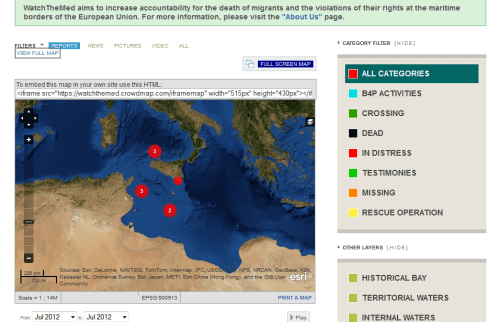
Boats4People announced last week the release of a mapping platform to monitor “in almost real-time reported cases of migrants in distress at sea”. The project is called WatchTheMed and “is a collaboration between the Forensic Oceanography research project at Goldsmiths College and Boats4People, a campaign led by an international coalition of NGOs aiming at bringing an end to the death of migrants at sea and foster solidarity between both sides of the Mediterranean.”
Press Release: 03.07.2012 WatchTheMed
Boats4People Mapping Platform to Monitor the Maritime Borders of the EU for Violations of Migrants’ Rights
While Boats4People’s Oloferne boat is at sea, many other participants are contributing from the land in Italy, Tunisia, across Africa and Europe and even as far as the USA. Amongst them, researchers of the Forensic Oceanography research project at Goldsmiths, University of London, who, in the frame of the B4P campaign, have launched a new online mapping platform to monitor in almost real time the death of migrants and violations of their rights at the Maritime Borders of the EU.
Acting as a “civilian watchtower” over the Mediterranean, WatchTheMed aims to collect all possible sources of information concerning incidents at sea: distress signals send out by Coast Guards, news articles, reports by different partners, testimonies from migrants, satellite imagery. It inscribes these incidents within the complex political ecology of the Mediterranean: overlapping Search and Rescue zones, maritime patrols, radar coverage.
By assembling these multiple sources of information so as to document with the highest possible degree of precision incidents at sea and by spatialising this data, the aim is to develop a new tool to increase accountability in the Mediterranean.
During the three weeks of the B4P journey, the WatchTheMed platform will be regularly updated. Help us monitor the maritime borders of the EU by reporting an incident, maritime patrols or means of surveillance on the website www.watchthemed.crowdmap.com or send us an email at: obs@boats4people.org.
For more information on the Forensic Oceanography project visit:
http://www.forensic-architecture.org/investigations/forensic-oceanography/
WatchTheMed
Una piattaforma per mappare le violazioni dei diritti dei migranti ai confini marittimi dell’ EU.
WatchTheMed è una collaborazione fra Boats4People e il progetto di ricerca Forensic Oceanography del Goldsmiths College.
WatchTheMed vuole essere uno strumento per mettere fine all’impunità per la morte dei migranti in mare e la violazione dei loro diritti ai confini marittimi dell’UE. Per fare questo, monitora e mappa in tempo (quasi) reale casi di migranti in difficoltà in mare, di violazioni dei loro diritti e di decessi. Questi episodi vengono inscritti nell’ambito della complessa ecologia politica del Mediterraneo, con un attenzione particolare al Canale di Sicilia.
Questa mappa è un progetto pilota partito nel luglio 2012. Aiutaci a monitorare i confini marittimi dell’ Unione Europea, visita il sito www.watchthemed.crowdmap.com.
WatchTheMed
Une plateforme pour cartographier les violations des droits des migrants aux frontières maritimes de l’UE
WatchTheMed est une collaboration entre Boats4People et le projet de recherche Forensic Oceanography de l’Université de Goldsmiths, Londres.
WatchTheMed vise à être un outil pour mettre un terme à l’impunité qui entoure les morts des migrants et les violations de leurs droits aux frontières maritimes de l‘ UE. A cette fin, le projet observe et cartographie en temps presque réel les cas rapportés de détresse, de violations du droit et de morts en mer, et inscrit ceux-ci dans la structure complexe de la Méditerranée, en mettant l’accent sur le Canal de Sicile.
Cette carte est un projet pilote lancé en juillet 2012. Aidez nous à observer les frontières maritimes de l’UE, rapportez un incident en visitant le site www.watchthemed.crowdmap.com.
Filed under European Union, Frontex, Italy, Libya, Malta, Mediterranean, News, Reports, Tunisia