Author Archives: Niels Frenzen

Niels Frenzen's avatar

About Niels Frenzen

Clinical Professor of Law, Gould School of Law, University of Southern California, Los Angeles, USA. Contact: frenzen@usc.edu; @migrantsatsea

Colloque: les trajectoires migratoires vers l’UE au XXIe siècle (Marseille, 18-19 juin)

La PLAGE co-organise avec la Bibliothèque Marseillaise à Vocation Régionale, l’Alcazar, et le programme MIMED (MMSH-Migration en Méditerranée), deux journées de rencontres et de débats sur le thème des migrations vers l’Union Européenne.

La première journée sera consacrée d’une part à la présentation et à la clôture de l’exposition cartographique et géographique de Philippe Rekacewicz « Frontières, migrants et réfugiés » … et d’autre part à une rencontre sous le titre : « Du Sahara à la Mer Egée : Horizon Europe ».

Nous aborderons lors de la deuxième journée la question des camps de rétention – « L’enfermement, une étape dans les trajectoires migratoires ? » – puis celle du travail associatif et des relations entre la société civil et l’administration, notamment dans le contexte marseillais.

RDV vendredi 18 et samedi 19 juin à l’Alcazar, 58 cours belsunce, 13001 Marseille.”

Cliquez ici ou ici pour télécharger le programme.

Leave a comment

Filed under Aegean Sea, Colloques / Conferences, European Union

EASO Regulation Published in EU Official Journal

Regulation (EU) No 439/2010 of the European Parliament and of the Council of 19 May 2010 establishing a European Asylum Support Office was published in the Official Journal of the EU on 29 May 2010.

Click here for the link to the Journal.

Leave a comment

Filed under European Union, News, UNHCR

Malta: Italian Sea Patrols are Secretive But Effective

A Malta Today article quotes an unidentified source within the Armed Forces of Malta as saying that Italy’s anti-migrant operations are effective but are veiled in a suspicious secrecy:

“‘Nothing is happening [in regard to migrants], because the Italians are effective with joint patrolling, donations of sea vessels, and hands-on training,’ an informed officer said.  Developments on the Libyan sea-front, where the Italian army is engaged in joint repatriations of migrant traffic, seem to be veiled in a suspicious secrecy. The same officer said ‘we don’t know what the Italians are doing’, and as the first months of 2010 saw no significant migrant arrivals, observers feel the situation may not alter radically.  There seems to be consensus that the deal forged between the Italian and Libyan leaders has stemmed the migrant tide in the Mediterranean.”

Click here for article.

Leave a comment

Filed under Italy, Libya, Malta, Mediterranean, News

Frontex’s 5th Anniversary

Yesterday, 25 May, marked Frontex’s fifth anniversary.  Frontex marked the occasion by holding a conference, European Day for Border Guards, “publicising the work of 400,000 border guards in Europe [and] providing a forum for discussion and the exchange of best practices.”

Here is an interesting and thoughtful post on the Frontex anniversary by Professor J. Peter Burgess:

“… FRONTEX is quickly and quietly evolving into a kind of moral testing ground for Europe. It is here that the airy principles of European construction meet the pavement, where decisions are made about the role of rights and responsibilities in the management of Europe’s most dilemma-ridden challenge: the management of its external borders.  Border control is the operational theater where Europe meets its others: other worlds, other human beings, other values. It is here where the aspirations of those who long to embrace Europe, to be European, live under the protection of Europe’s social and economic well-being are confronted with European ideals of tolerance and universal rights. It’s also the place where Europe meets its ‘other’ other: trafficking, smuggling and other forms of cross-border criminality. The coherence with which Europe manages its others in both these forms is one measure of the success of the European project.….”

Click here for the full post.

Leave a comment

Filed under Analysis, European Union, Frontex, News

IMO Information Resources on Stowaways/Illegal Migrants/Treatment of Persons Rescued at Sea

The International Maritime Organization’s (IMO) Maritime Knowledge Centre has posted an updated 20+ page Information Resources document to “assist those who are conducting research in the area of ‘Stowaways/Illegal Migrants/Treatment of Persons Rescued at Sea’.”

The document contains a wealth of information, citations, and links to IMO documents, publications, circulars, and reports, as well as non-IMO citations and / or links to many other resources, including relevant UN reports, resolutions, and treaties.

For example the contents include:

Provisions in UN and IMO Treaties…

IMO Material on the Website …

IMO Documents…

IMO Sub-Committee on Radiocommunication and Search and Rescue documents…

IMO Legal Committee documents…

IMO Maritime Safety Committee documents…

IMO Publications …

UN Materials …

Click here for the IMO Information Resources document.

Leave a comment

Filed under Analysis, Reports

Spain and Senegal Renew Agreement Permitting Frontex to Operate From Dakar

Spain and Senegal have renewed a bi-lateral agreement permitting Frontex to operate from a base in Dakar for another year.

The Frontex mission in Senegal currently consists of two Spanish Guardia Civil patrol boats, a Spanish National Police helicopter, and a private airplane leased by the Spanish Defence Ministry.  One Frontex patrol boat also operates from Nuadibú, Mauritania.

Spanish Interior Minister Alfredo Pérez Rubalcaba said that France and Italy will soon be deploying additional assets and personnel to the Frontex mission in Senegal consisting of a ship and plane from Italy and a French security force team.  Rubalcaba stated that this new assistance demonstrates that “Spain is not alone” in the fight against the mafias responsible for the illegal boat arrivals to the coast this country. (“España no está sola” en la lucha contra las mafias responsables de las llegadas de embarcaciones irregulares a las costas de este país.)

Senegalese Interior Minister Ousmane Ngom, said that so far this year a total of 101 canoes from the coast of Senegal with 450 people aboard have been identified by the patrols. In 2006, the figures were 901 boats, with 35,490 irregular migrants.

Click here for article.  (ES)

1 Comment

Filed under Data / Stats, Eastern Atlantic, France, Frontex, Italy, Mauritania, News, Senegal, Spain

Concerns Over Italy’s Push-Back Practices in HRC’s UPR Report

The 14th regular session of the Human Rights Council begins on 31 May.   The report of the Working Group on Universal Period Review on Italy will be considered by the Council on 9 June.

The Working Group’s report identifies concerns with Italy’s treatment of migrants and asylum seekers, including whether migrants or asylum-seekers have been transferred to another country without proper assessment of the need for refugee or other protection and whether persons intercepted at sea have access to proper assessment of their asylum claims in accordance with international human rights standards.

Italy’s general response to date has been that “in cases of human trafficking, international law permitted the return of migrants to their countries of origin, unless they were in need of urgent medical assistance and had not expressed the intent to apply for asylum or other forms of international protection.”

Excerpts from the Report of the Working Group:

A. Presentation by the State under review [***]

11. Over the past few years, the country had been exposed to a massive inflow of migrants, which increased by 250 per cent over the last few years, and could, in some instances, affect public order. Italy is at the forefront of efforts to rescue migrants and asylum-seekers on the high seas. It affirmed that, in cases of human trafficking, international law permitted the return of migrants to their countries of origin, unless they were in need of urgent medical assistance and had not expressed the intent to apply for asylum or other forms of international protection. [***]

B. Interactive dialogue and responses by the State under review [***]

52. Italy noted that it had a comprehensive system of asylum and that new arrivals were regularly informed about their right to international protection. With nearly 50 per cent positive responses to all applications made, Italy’s rate of acceptance was above the EU average. Italy once again highlighted its efforts to provide rescue at sea, not only in its own waters, but also beyond. [***]

72. Denmark asked Italy to elaborate on criticism regarding the transfer of migrants and asylum-seekers to another country without proper assessment of the need for refuge and other protection. ***  [***]

76. New Zealand *** requested details on measures taken by Italy to ensure the individual circumstances of each asylum-seeker are genuinely considered. *** [***]

II. Conclusions and/or recommendations

84. The following recommendations will be examined by Italy, which will provide responses in due time, but no later than the fourteenth session of the Human Rights Council: [***]

67. To strengthen efforts to protect asylum-seekers and refugees (Yemen); to continue the implementation of laws on migration and amendments, to ensure that the laws are always fully in line with international standards (Kyrgyzstan); to make additional efforts in work with refugees and migrants (Kyrgyzstan); and to take further steps to ensure the full respect of the fundamental rights of migrants, asylum-seekers and refugees (Sweden);

68. To strengthen cooperation with UNHCR in order to guarantee access to a just procedure in identifying the protection needs of those travelling to or are in Italian territory (Mexico);

69. With regard to the concerns expressed in the Italian-Libyan agreement to prevent ships with immigrants from sailing to Italy, to ensure that intercepted persons have access to proper assessment of their asylum claims in accordance with international human rights standards (Netherlands);

70. To ensure satisfactory asylum procedures for all migrants and asylum seekers rescued at sea (Denmark);

71. To review its legislation and practices, ensuring that they comply fully with the principle of non-refoulement, and to ensure the accountability of persons responsible for any violation thereof (Czech Republic);

72. To take appropriate legislative measures to decriminalize irregular entry and stay in Italy (Brazil); to eliminate the provision criminalizing irregular entry and stay on Italian territory as contained in law No. 94 of 2009, as well as those provisions that regard non-documented status as an aggravating circumstance in the commission of criminal offence, and the creation of vigilante groups, as contained in law No. 125 of 2008 (Mexico); [***]

77. To increase the transparency of arrival and return procedures concerning immigrants and refugees (Japan);

78. To intensify efforts in the resettlement of refugees, especially with regard to the protracted refugee situations identified by UNHCR (Morocco);

79. To ensure the full enjoyment of human rights for those hoping to find a better life in Italy, especially by strengthening structures to guarantee the rights of migrants (Burkina Faso);

80. To strengthen respect for the human rights of migrants, including those in detention centres (Cuba);

81. To repeal all discriminatory laws against irregular migrants and take action to investigate and prosecute discriminatory acts by public and security officials, in particular where racial and religious motives are aggravating factors (Pakistan);

82. To continue close cooperation with countries of origin and transit in finding an effective solution to the problem of illegal immigration (Viet Nam);

83. To continue measures to end trafficking in human beings (Yemen); and to strengthen further its efforts to end trafficking in women and children, and to take effective measures to prosecute and punish trafficking in persons (Canada);

84. To increase measures to identify women and child victims of trafficking effectively in order to provide them with adequate assistance, and to consider not penalizing them for crimes committed as a direct result of being trafficked (Philippines);

85. To strengthen efforts to combat trafficking in women and children, and to take effective measures to prosecute and punish trafficking in persons, as raised by the Committee on the Rights of the Child and the Committee against Torture (Japan); and to take effective measures to prosecute and punish trafficking and the exploitation of persons, as recommended by the Committee against Torture (Israel); [***]

Click here for the Report of the WG.
Leave a comment

Filed under Human Rights Council, Italy, Mediterranean, News, Reports

Italy Gives 2 Patrol Boats to Egypt

On 5 May Italian authorities transferred two naval patrol boats to Egypt for use in anti-immigration patrols and port security.  Italy has previously given patrol boats to Egypt.

Click here and here for articles. (AR)

Leave a comment

Filed under Egypt, Italy, Mediterranean, News

Mass Human Trafficking Trials Continue in Libya

The criminal trials involving almost 500 defendants charged with human trafficking are still ongoing in Tripoli.  Some new defence attorneys are reportedly involved in the case and have complained that the prosecutor’s office is relying on reports provided by Italian authorities and on reports on the topic of illegal immigration which were prepared for distribution to the media.  Some defence lawyers have said that the criminal charges are motivated by media and political pressure brought against the Libyan government.  Defence lawyers have also reportedly asserted that the special State Security Court trying the cases does not have jurisdiction over charges relating to illegal immigration.

Click here for earlier post.

Click here and here for articles. (in Arabic)

1 Comment

Filed under Italy, Libya, Mediterranean, News

European–US–African Joint Military Exercises

16 years after withdrawing its military forces from Equatorial Guinea, Spanish armed forces members are now present in Mali, Mauritania, Senegal and Nigeria.  Spanish forces recently completed a three week multinational military exercise known as Flintlock 10 along with forces from other EU countries (France, Germany, the UK, and the Netherlands), the US, and 7 African countries.  Flintlock 10 was conducted in coordination with the US military’s Africa Command, Africom. (If you are not familiar with the US Military’s Africa Command, a quick look at its “2009 Posture Statement” will give you a feel for its very very extensive activities within Africa.)

Spain’s decision to resume a military presence in Africa was identified in its Africa Plan (“el Plan África”), adopted in 2006, which was intended to provide “‘a comprehensive approach to relations with neighbouring continent,’ sa[id] one expert, ‘but [also to] respond[ ] to the urgent need to curb the wave at the source of illegal immigration.’”  (Click here for the 2009Plan África.)

A joint maritime military exercise known as Exercise Phoenix Express 2010 began last week.  This exercise includes training of the Moroccan and Senegalese military by US and Spanish military personnel.  According to an Africom press release, Moroccan and Senegalese Maritime Interdiction Operations Teams are being trained on tactics, techniques, and procedures associated with Maritime Interdiction Operations.  Last month Spanish and US naval forces were involved in similar training exercises off the coast of Senegal under Africom’s Africa Partnership Station.

The current exercise, according to Africom, includes a focus on maritime interdiction operations.  Participating forces “will track and board suspect vessels carrying suspicious cargo, and Maritime Patrol Aircraft and Automated Identification Systems, along with MIOs like SARs and Visit, Board, Search and Seizures will be performed.”

Click here for El Pais article about Spain’s military’s return to Africa.

Click here and  here for Africom press releases.

Click here for US Naval Forces Africa press release.

1 Comment

Filed under Eastern Atlantic, Mauritania, Mediterranean, News, Senegal, Spain, United States

CSDP and Maritime Surveillance

The May edition of the ISIS European Security Review contains an article reviewing the Spanish EU Presidency and the Common Security and Defence Policy (CSDP, formerly ESDP).  The article notes that a main priority of the Spanish Presidency has been an “Integrated Maritime Surveillance.” “[T]he Spanish Government has clearly followed the Swedish Presidency in many areas, especially in the creation of an Integrated Maritime Surveillance, probably the most notable accomplishment of this EU Presidency on defence policy. *** The attention paid by Spain to naval protection is not something new: Spanish interest in increasing patrolling across Europe’s coastlines has been proven during the last decade, especially through its support to FRONTEX assistance in the Mediterranean Sea and the Canary Islands. Beyond that, the project of a common management of external borders has resulted in a need for protection of European interests away from the official maritime borders, moving also to trade routes where the EU economic interest is at stake.”

Click here for the ISIS May 2010 Newsletter.

Leave a comment

Filed under Eastern Atlantic, European Union, Frontex, Mediterranean, News, Spain

UPR of Spain Largely Ignores Interdiction and Readmission Practices

Spain was one of 15 countries whose records were reviewed during the 8th session of the Human Rights Council’s Universal Periodic Review (UPR) Working Group from 3-15 May 2010.  While reference is made to the treatment of asylum seekers and migrants who reach Spanish territory, little attention was directed (at least not in the national report or the Working Group’s Draft report) to the treatment of migrants intercepted at sea before reaching Spanish territory in the Canary Islands or elsewhere.  Likewise little attention was paid to the provisions and implementation of Spain’s several bilateral readmission agreements with various countries such as Senegal.

According to the Draft report, Spain agreed with a general recommendation to “[t]ake all measures necessary to ensure that actions related to unaccompanied minors (migrants, asylum seekers, refugees, victims of trafficking) are in line with international standards.” [Section II, Para. 84(54).]  But Spain did not agree to several more specific recommendations, instead agreeing only to “examine” and “provides responses” to the recommendations no later than September 2010 when the Human Rights Council meets for its 15th session.

Three of the more detailed recommendations were:

  • “Respect fully the principle of non-refoulement and ensure effective access to asylum procedures, taking into account the objectives of UNHCR’s 10-Point Plan on Mixed Migration” (New Zealand);
  • “Undertake a review of its readmission agreements with respect to refugees and asylum-seekers, and amend them as necessary to ensure that they contain human rights guarantees in line with international standards” (Canada); and
  • “Consider access to asylum procedures for victims of trafficking (Costa Rica).

[Section II, Para. 86(28-30).]

Click here for link to UPR site for Spain.

Click here for the Draft report of the Working Group.

Click here for Spain’s national report submitted to the Working Group.

Leave a comment

Filed under Eastern Atlantic, Mediterranean, News, OHCHR, Reports, Spain, UNHCR

Large Drop in Irregular Algerian Migrants Arriving in Italy in 2009

Italy’s Ambassador to Algeria, Giampaolo Cantini, held a press conference this week and said that the number of harragas, irregular migrants, who were found attempting to enter Italy from Algeria dropped from 1599 in 2008 to 804 in 2009.  The press coverage described the reduction as a 70% reduction, but given the cited numbers, it seems the drop is about 50%.  Cantini noted that not a single migrant departing Algeria for Italy has been detected since 30 April 2010.

Cantini attributed the reduction to the increased level of bilateral cooperation between Italy and Algeria on the migration issue and the increased surveillance of the Algerian coast by Algerian authorities.

Click here and here for articles (both FR).

Leave a comment

Filed under Algeria, Data / Stats, Italy, Mediterranean, News

UNHCR to Frontex: Information on Operational Activities at Sea Are Limited

UNHCR has had a liaison officer assigned to work with Frontex since 2007.  The current UNHCR senior liaison officer is Michele Simone.  In a Q&A interview posted on the UNHCR web site Mr Simone expressed some concerns about Frontex operations at sea (in addition to speaking on other topics):

“It remains difficult to evaluate the impact of [UNHCR’s asylum and protection] training [of border officials] while information on operational activities at the borders, especially at sea, remains rather limited.”

“Frontex operations should ensure disembarkation of those intercepted at sea to a place where they are not only safe physically, but where their basic rights – including the rights to seek asylum and receive protection – are respected. This is spelled out in the recently adopted European Union guidelines for maritime border operations. In any event, the operations should anticipate that some of those intercepted at sea will be particularly vulnerable, notably unaccompanied children, women and torture victims. At this time, we believe there are not enough qualified staff at sea or land entry points to identify and support such vulnerable cases. To assist border guards in this identification process, UNHCR is currently discussing with Frontex the elaboration of ad hoc protection guidelines for some selected joint operations.”

Click here for full interview.

1 Comment

Filed under Frontex, News, UNHCR

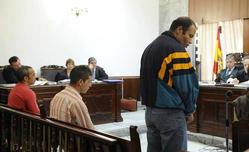
Canary Island Trial of 3 Accused in Deaths of 25 Drowned Migrant Children

The trial of 3 Moroccan men (YF, MSB and BJ) accused of murder of 25 young African migrants began on 18 May in Gran Canaria before the Sixth Section of Audiencia Provincial de Las Palmas.  The migrants who died were all between the ages of 8 and 16.  The young migrants drowned when their boat sank 20 meters from the shore in Lanzarote, Canary Islands on 15 February 2009.  The boat had departed from Guelmin, Morocco on 13 February.  The migrants reportedly paid between 500 and 1000 euros to be transported to the Canary Islands.  The prosecution has asserted that the boat was designed for use as a small fishing boat close to shore and was not designed for travel on the open sea.  Six persons on the boat survived, several of them were rescued by a local surfer.

Click here, here, here, and here for articles (all ES).

Click here for video – Antena 3 Canarias televisión de difusión de noticias 17 May with video of rescue operation.

Leave a comment

Filed under Eastern Atlantic, Morocco, News, Spain