Category Archives: Reports

Details from Frontex General Report 2009 (Post 2 of 2)

Last week I posted a summary of the first part of Frontex’s 2009 General Report.  This second post summarizes the portion of the Report pertaining to Frontex’s sea operations.

The General Report 2009 provides selective information regarding the six major Joint Operations conducted at the sea borders.  With only one exception, no information or data is provided regarding the specific numbers of intercepted migrants or vessels.

Instead of numbers, the Report provides various descriptive terms which could mean almost anything.  For example, Operation Hera led to a “drastic decrease of migrants,” during Operation Nautilus there was a “remarkable decrease” in migrants, and during Operation Hermes, the numbers of migrants arriving and dying at sea “decreased dramatically.” The one exception is for Operation Indalo where the Report states that 750 irregular migrants and 10 facilitators were detected.

When desired, the Report provides details and numbers.  For example, Operation Poseidon utilized 4 open sea vessels, 6 coastal patrol vessels, 13 coastal patrol boats, six airplanes, 4 helicopters, and 152 experts who delivered 2680 man days of operational activities, but no data regarding the total number of irregular migrants intercepted at sea is provided.

Here is a summary of the information provided in the Report for each of the six major Joint Operations:

Poseidon 2009, Eastern Mediterranean (365 Days)

Poseidon was conducted along land borders as well as at sea.  Interpreters were deployed on board ships to facilitate the identification process of intercepted migrants.  Less than 10% of the interviewed migrants claimed their original nationality.  There was an overall reduction in migrant flow of 16% (land and sea) compared to 2008.  “The main operational objectives of the joint operation were achieved but there is a clear need for closer cooperation between local authorities.”

Hera 2009, Atlantic Ocean waters between North Western African countries and Canary Islands (365 Days)

Due to the permanent implementation of Joint Operation Hera and better cooperation from “involved African countries”, there was a notable reduction in migrants reaching the Canary Islands, 2280 in 2009 compared with 9200 in 2008.  Aerial and maritime surveillance conducted close to the territory of Senegal and Mauritania and local cooperation from police led to the decrease in migrants.  “Despite these clear successes, participation of more member States would greatly increase effectiveness and outcomes.”  [NF- While the Report does provide migrant arrival data for the Canary Islands, it is silent on the number of migrants intercepted at sea or within Senegal or Mauritania.]

Nautilus 2009, Central Mediterranean (172 Days)

There was a remarkable decrease in migrant arrivals in Malta.  A “significant obstacle to the effectiveness of the Joint Operation lay in the contrasting interpretations of the International Law of the Sea by Member States….”  The effectiveness of the operation compared with 2008 was not improved.

Hermes 2009, Central Mediterranean (184 Days)

“Due to the bilateral agreement between Italy and Libya, the number of people arriving from Libya, as well as the number of migrants died at sea, decreased dramatically….”  “In addition, the first examples of co-operation with Algeria should also be considered as promising.”  As with Nautilus, “differing interpretations of the International Law of the Sea led to a limited contribution by the Member States to the joint operation by maritime surface means.”  The effectiveness of the operation compared with 2008 can be considered as increased.

Minerva 2009, Western Mediterranean (39 Days)

The launch of the operation was delayed in 2009.  Its effectiveness compared with 2008 has remained the same.

Indalo 2009, Western Mediterranean (50 Days)

The lack of cooperation from Algeria is an obstacle for operational activities.  10 Facilitators and 750 irregular migrants were identified.

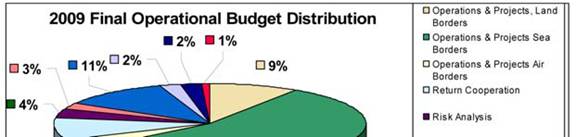
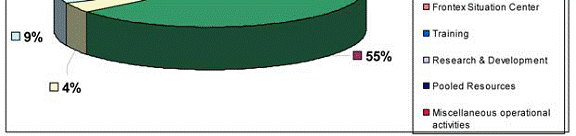
And as I noted in my earlier post, Frontex continued to devote the biggest single portion of its expenditures to maritime enforcement.  Almost 40% of Frontex’s total budget, over € 34 million, was spent on sea operations in 2009, constituting 55% of the operational budget.

This chart from the Report (p 23) shows the breakdown of expenditures within the 2009 Operational Budget (which was 71% of the total 2009 Frontex budget).
Click here for previous post.

Click here for the Frontex General Report 2009.

2 Comments

Filed under Aegean Sea, Algeria, Data / Stats, Eastern Atlantic, Frontex, Greece, Italy, Libya, Malta, Mauritania, Mediterranean, Reports, Senegal, Spain

Details from Frontex General Report 2009 (Post 1 of 2)

There is nothing really unexpected in the Frontex General Report for 2009.  If anything, it disappoints with its limited information.

The number of illegal border crossings at EU borders was smaller by a third in 2009 compared to 2008 and Frontex’s budget increased by 25% to € 88.3 million.

Frontex continued to devote the biggest single portion of its expenditures to maritime enforcement.  Almost 40% of Frontex’s total budget, over € 34 million, was spent on sea operations in 2009.  This constitutes 55% of the operational budget.  The Report notes that this cost is due to the high operating costs of ships and surveillance aircraft.

Expenditures for Frontex facilitated return operations sharply increased by 500% in 2009 to almost € 5.5 million.

Limited Information in the Report – The Report explains that Frontex made a decision in 2008 to decrease the level of detail provided in the General Report.  Frontex’s justification is that the Report “is mainly directed towards the general public” and the reduced level of detail “is more suited to this audience.”  This practice was unfortunately continued in the 2009 Report.

General Statistics – Overall there were 106,200 “detections of illegal border-crossings” at EU external land and sea borders in 2009.  This represents a 33% decrease in overall detected crossings relative to 2008, with a 23% reduction of detections at sea and a 43% reduction at land borders.

The reductions are attributed by Frontex to the economic crisis and to bilateral “collaboration agreements with third countries of departure” such as Libya, Senegal, and Mauritania.

Applications for international protection within the EU were 2% fewer in number than in 2008 and were approximately 50% of the 2001-2002 peak when 420,000 applications for international protection were filed.

Cooperation with Non-EU / Non-Schengen Countries – The Report states that cooperation with third countries, including neighbouring countries and countries of origin, is the critical element in “integrated border management.”   It describes Operation HERA as Frontex’s most successful joint operation due to close cooperation with West African countries, particularly Senegal and Mauritania.  On other fronts, “considerable progress” was made with Turkey consisting of Turkey’s appointment of a “first point of contact for Frontex related coordination issues” and preparation of a draft text of a possible Working Arrangement agreement.  “Ad hoc operational co-operation” was pursued when a targeted country was not willing or able to enter into a formal Working Arrangement with Frontex.  An “overriding priority” for Frontex in 2010 is the development of “structured operational co-operation with neighbouring Mediterranean countries.”  The Report acknowledges the existence of the bilateral migration agreement between Italy and Libya, but says nothing about its provisions other than to say that there were “contrasting interpretations of the International Law of the Sea” between Member States.  There is no criticism in the Report whatsoever of the Italian push-back practice.  It is obviously difficult for Frontex to criticise Italy, but was it not possible to note that most people and organizations who have considered the push-back practice have concluded that the practice violates international law?

New Partner Organisations – Frontex formalised a co-operation plan with Europol in October, a Working Arrangement with Interpol in May, a co-operation plan with IOM in February, and made a tripartite agreement with the European Maritime Safety Agency (EMSA) and the Community Fisheries Control Agency (CFCA) relating to maritime surveillance.

More to follow: I will post a second summary with additional information from the General Report pertaining to the specific sea operations for which information is provided within the next day or two.

Click here for the Report.

2 Comments

Filed under Aegean Sea, Data / Stats, Eastern Atlantic, European Union, Frontex, Greece, Italy, Libya, Malta, Mauritania, Mediterranean, Reports, Senegal, Spain, Turkey

2009 Frontex General Report

Frontex’s 2009 General Report is available on the Frontex web site.  I have not had a chance to review it yet.

Click here for the report.

1 Comment

Filed under Frontex, Reports

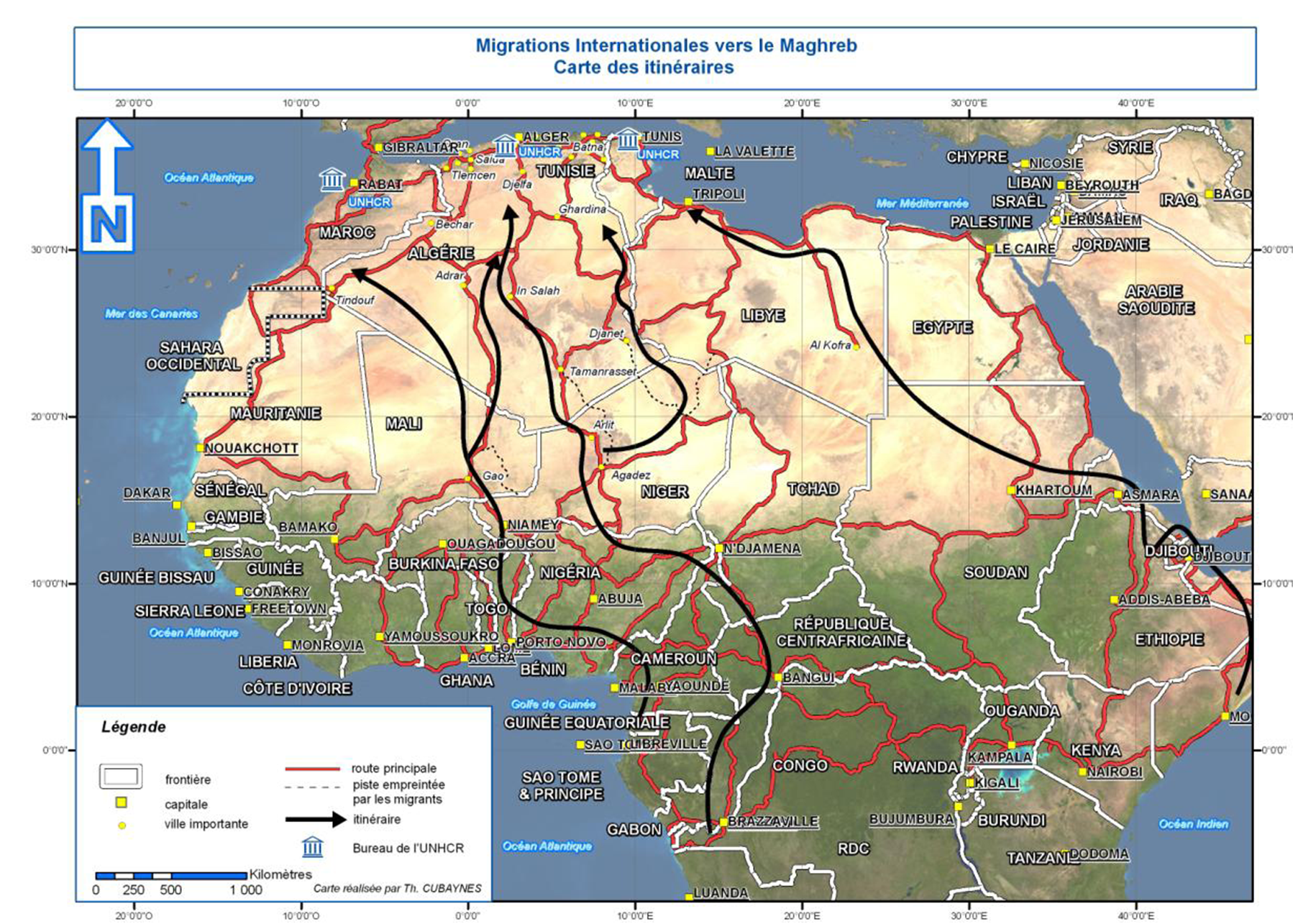
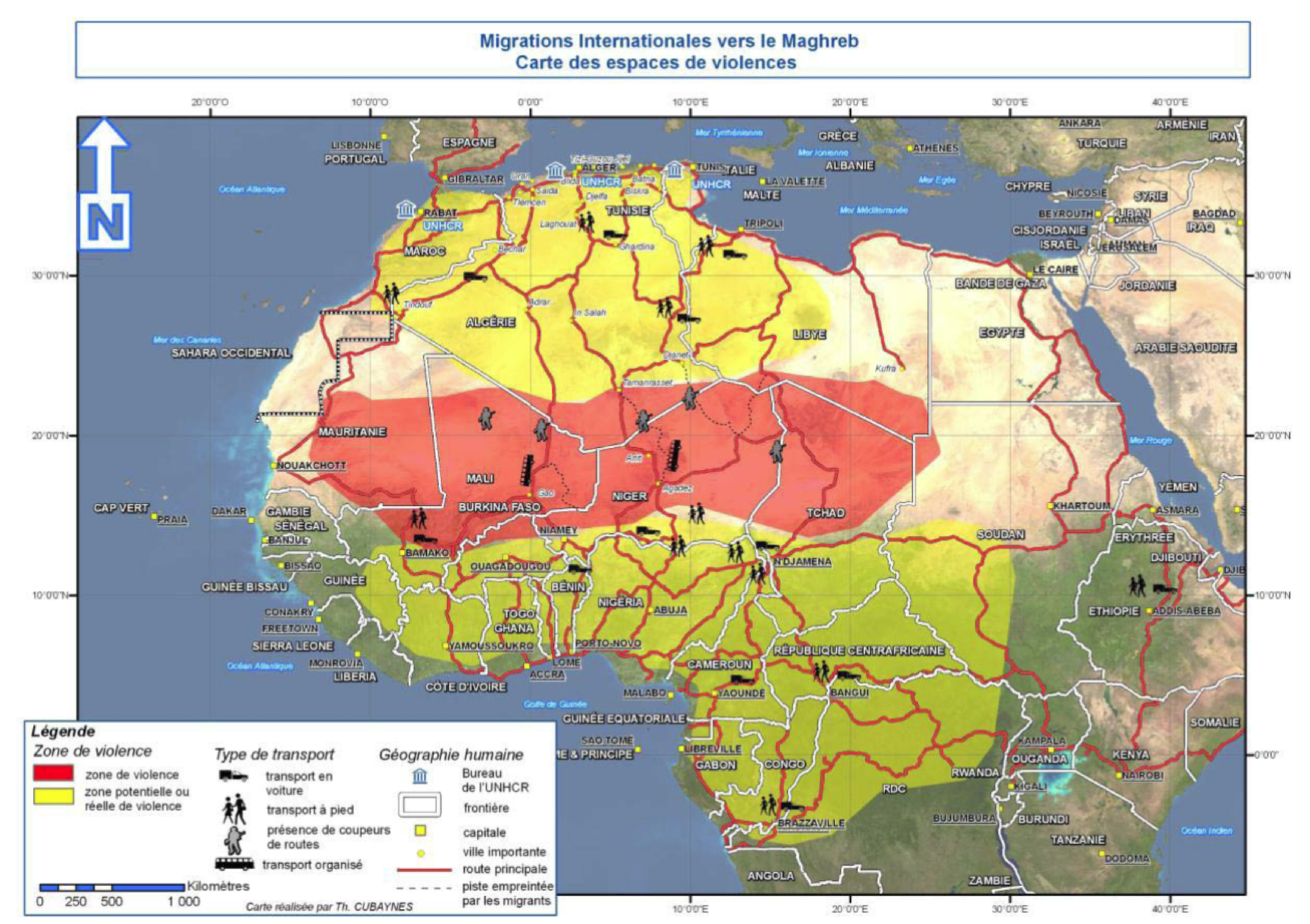
UNHCR Research Paper: Les violences faites aux femmes pendant leur voyage clandestin: Algérie, France, Espagne, Maroc

Un nouveau rapport du HCR (UNHCR Research Paper) par Smaïn Laacher a été publié: “Les violences faites aux femmes  pendant leur voyage clandestin: Algérie, France, Espagne, Maroc.”

Extraits:

“L‟objet de notre mission a porté sur les violences faites aux femmes migrantes pendant leur voyage clandestin. Les femmes qui constituent la population de notre étude sont des femmes qui ont quitté illégalement leur pays et ont voyagé jusqu‟au Maroc, en Algérie, en Espagne, et en France. *** Les violences subies par les femmes pendant leur voyage clandestine … , dont la plus destructrice est la violence sexuelle, visent principalement des êtres sans défense, c‟est-à-dire des femmes qui n‟ont pu ou qui ne peuvent pas être défendues, précisément parce qu‟elles n‟existent pour personne, si ce n‟est que pour elles-mêmes et pour leurs agresseurs. ***”

Cliquez ici pour télécharger le rapport.

Cliquez ici pour télécharger le rapport.

1 Comment

Filed under Algeria, France, Morocco, Reports, Spain, UNHCR

UNODC Migrant Smuggling Issue Papers

The UN Office on Drugs and Crime’s (UNODC) Anti-Human Trafficking and Migrant Smuggling Unit has posted two Issue Papers on migrant smuggling on its web site: “A Short Introduction to Migrant Smuggling” and “Migrant Smuggling by Air.”  The occasional “Issue Papers [discuss] aspects of the crime of migrant smuggling and the global response to it. Issue Papers bring together expertise from practitioners around the world in an effort to support information sharing between those working in various capacities to prevent migrant smuggling, protect smuggled migrants and prosecute those who commit the crime.”

Click here for link to Issue Papers.

1 Comment

Filed under Analysis, Reports, UNODC

Council of Europe’s Committee for the Prevention of Torture Report is Highly Critical of Italy’s Push-Back Practice

The Council of Europe’s Committee for the Prevention of Torture and Inhuman or Degrading Treatment or Punishment (CPT) published on 28 April its report on its visit to Italy in July 2009 and the official response to the report from the Italian Government.

In the CPT’s view, “Italy’s [push-back] policy, in its present form, of intercepting migrants at sea and obliging them to return to Libya or other non-European countries, violates the principle of non-refoulement, which forms part of Italy’s obligations under Article 3 of the European Convention on Human Rights.”

“The so-called push-back policy, as pursued by the Italian authorities and described in this report, does not meet [the] requirements [ of the ECHR]. The CPT urges the Italian authorities to substantially review forthwith the current practice of intercepting migrants at sea, so as to ensure that all persons within Italy’s jurisdiction – including those intercepted at sea outside Italian territorial waters by Italian-controlled vessels – receive the necessary humanitarian and medical care that their condition requires and that they have effective access to procedures and safeguards capable of guaranteeing respect for the principle of non-refoulement.”

The CPT is also very critical of the lack of cooperation received from the Italian Government: “Regrettably, the co-operation received at the central level [of the Italian Government] was, in certain respects, unsatisfactory. The delegation was denied access to some documents and information it had requested, which did not facilitate its task. Other information requested by the delegation prior to and in the course of the visit was not provided in a timely manner and when eventually furnished was, moreover, incomplete.”

“For instance, information requested pertaining, inter alia, to the logbooks from each push-back operation and the names of personnel responsible for the operations, which the authorities undertook to provide to the delegation, was subsequently refused on grounds of confidentiality. Also, the Italian authorities denied the existence of a list/inventory of objects seized from migrants in the course of a push-back operation, a copy of which the delegation had requested, and yet certain representatives of the Navy had told the delegation that such a list had indeed been compiled.”

“Further, the CPT’s delegation learned from the press, and not from the Italian authorities, that during the visit, on 29-30 July 2009, a push-back operation took place. … In the Committee’s view, when a CPT delegation carries out a visit to a Party to the Convention focussing on a specific issue made known in advance, the State authorities should, in a spirit of co-operation, endeavour to keep the visiting delegation informed of significant events pertaining to that same issue.”

Click here for CPT Press Release.

Click here for the CPT Report.

Click here for the Response of the Italian Government.

1 Comment

Filed under European Committee for the Prevention of Torture and Inhuman or Degrading Treatment or Punishment, Italy, Libya, Mediterranean, Reports

MSF: Violence sexuelle et migration sur la route de l’Europe

Comme indiqué sur le blog EuroMed-MigrAsyl: Un nouveau rapport a été publié par la section espagnole de Médecins Sans Frontières: “Violence sexuelle et migration: La réalité cachée des femmes subsahariennes arrêtées au Maroc sur la route de l’Europe.”

“Ce document vise à faire connaître la problématique de la violence sexuelle subie par les femmes migrantes d’origine subsaharienne qui arrivent au Maroc alors qu’elles tentent de gagner l’Europe. Au travers des données et témoignages recueillis lors de ses projets d’action médico-humanitaire, Médecins Sans Frontières souhaite contribuer à la recherche d’une réponse globale à cette problématique qui touche toujours plus de femmes, et des femmes de plus en plus jeunes.”

“La violence est toujours présente et dans les mêmes proportions que dans les années précédentes : 39 % des [des migrants subsahariens] interrogés pendant  le recensement ont reconnu avoir subi une agression.”

Cliquez ici pour télécharger l’article.

3 Comments

Filed under Data / Stats, Morocco, Reports

EDA Report on Maritime Surveillance in Support of CSDP

The “Wise Pen Team” Final Report to the EDA Steering Board on Maritime Surveillance in Support of the Common Security and Defence Policy (CSDP) was released on 26 April.

The EDA Press Release states: “the Ministerial Steering Board received the report of the Wise Pen Team of five retired admirals on Maritime Surveillance in support of CSDP. The central message of the report is the need for linking national and international military and civilian assets in order to create a federated maritime surveillance network. The report contains concrete recommendations and will provide an important contribution to the activities on Integration of Maritime Surveillance, led by the European Commission.  ‘The Wise Pen Team’s report has already had a major impact. It has brought different actors together, civilian and military, which will be crucial for developing effective Integrated Maritime Surveillance’, Catherine Ashton stated. She added: ‘My dual-hat capacity as High Representative and Vice-President of the Commission has exactly been created to realise the synergies we need in the EU between the civilian and military sides in areas like Maritime Surveillance.’”

Executive  Summary: “[***] Increasing maritime insecurity, not least terrorism, piracy and illegal immigration, has highlighted the need to improve European security by integrating maritime policy making, sharing information more effectively and transparently and coordinating a collective response to security challenges. Many useful initiatives are already underway, but there is the need to make graduated improvements in co-ordination and integration which are affordable and not technologically difficult. [***]”

I have not attempted to read this 50+ page document yet, but it may of interest to some.

Here is the Table of Contents:

  • Introduction: Trends in the Economy and Maritime Security Context
  • The Interim Conclusions of the Intermediate Report
  • Changes Since the Issue of the Intermediate Report
  • Maritime Surveillance. Its Aims and Purposes
  • Naviesʼ Contribution to Maritime Surveillance
  • Tools and Networks
  • Alternative Organisational Approaches
  • Data, Information, Knowledge
  • Preferable Approaches
  • Conclusions and Recommendations

Click here for the Report.

Click here for EDA Press Release.

Leave a comment

Filed under European Union, Reports

IMO Biannual Reports on “Unsafe Practices Associated with the Trafficking or Transport of Migrants by Sea”

The International Maritime Organization (IMO) has been collecting data on “unsafe practices associated with the trafficking or transport of illegal migrants by sea” since 1999.

Two times a year it releases a biannual report regarding incidents which are reported to the IMO by Member Governments.  The IMO describes the basis for the reporting as follows: “The Maritime Safety Committee, at its seventieth session (7 to 11 December 1998), in approving MSC/Circ.896 on Interim measures for combating unsafe practices associated with the trafficking or transport of illegal migrants by sea, invited Member Governments to promptly convey to the Organization reports on relevant incidents and measures taken to enable the updating or revising of the circular.”

In recent years (and perhaps since 1999), by far most of the reported incidents are provided by Greece.  Italy and Turkey have only reported a small number of incidents in recent years.  It is clear that most Member Governments do not routinely provide data for these biannual reports.

Even though a substantial number of incidents are not being reported and are therefore not documented in the reports, the biannual reports do contain an extensive amount of information dating back to 1999 regarding 2,030 incidents where 77,853 migrants were rescued or intercepted.

The reported data, when provided, include:

  • Ship’s name or description
  • Date and time of incident
  • Position of incident
  • Description of incident
  • Measures taken
  • Migrants (number and nationality; gender; adults/minor)

Click here for the Biannual Report issued 18 February 2010.

Click here for the Biannual Report issued 2 November 2009.

Leave a comment

Filed under Data / Stats, Greece, Italy, Reports, Turkey

New CARIM Migration Profile on Mauritania

CARIM has issued an updated migration profile for Mauritania.  Excerpts pertaining to irregular migration by sea include:

“Mauritania has worked with Spain and FRONTEX since 2006 to combat irregular emigration by readmitting foreign nationals who transited through the country and who are placed in detention camps before repatriation….”

“Due to Mauritania’s position as a juncture between Northern and Sub-Saharan Africa, its proximity with a peripheral part of EU territory (the Canary Islands) as well as its relatively lax border controls, today’s challenges include managing clandestine and transit migration, and sensitizing the local population and government officials to the human rights of asylum seekers and undocumented migrants. In spite of a flourishing civil society advocating democracy and a human-rightist approach towards migration governance, Mauritania has been severely criticized for its treatment of undocumented immigrants and refugees in the last years (Amnesty International Report 2008)….”

Click here for the full March 2010 profile.

Leave a comment

Filed under Analysis, Eastern Atlantic, Mauritania, Reports

UNHCR Report on EU Member State Implementation of the Asylum Procedures Directive

The UNHCR has released a comprehensive report entitled “Improving Asylum Procedures: Comparative Analysis and Recommendations for Law and Practice: A UNHCR research project on the application of key provisions of the Asylum Procedures Directive in selected Member States.”

From the Report’s introduction:

“In the exercise of its supervisory role under Article 35 of the 1951 Convention relating to the Status of Refugees … UNHCR has undertaken a wide-ranging comparative analysis of the transposition of key provisions of the [2005 Asylum Procedures Directive] into national law by selected EU Member States, and the practical application of those provisions….

The research and recommendations also aim to inform negotiations in the Council and the European Parliament on possible amendments to the APD, as put forward by the Commission in October 2009. They also seek to provide constructive input to preparations for the work of the European Asylum Support Office (EASO). The EASO has a mandate to facilitate practical cooperation on asylum among Member States, and Member States have underlined their interest in prioritizing the promotion of quality asylum decision-making among its tasks. In that context, this report will provide helpful material.

The research addressed 18 articles of the APD, as they are transposed in law and implemented in practice in the twelve participating states: Belgium, Bulgaria, Czech Republic, Finland, France, Germany, Greece, Italy, the Netherlands, Slovenia, Spain and the United Kingdom. As such, the research and recommendations do not address all provisions in the APD, nor the law and practice in every Member State bound by the Directive. This project does not seek to focus scrutiny on any particular Member State.  Where gaps or problematic practices have been observed, UNHCR hopes that this research provides an opportunity to discuss and address them, and to draw on the numerous good practices which have also been observed.”

The UNHCR press release states that the “study found not only that member states are applying the Asylum Procedures Directive in diverging ways, but, in some cases, in ways that may breach international refugee law. Researchers reported that applicants were not always afforded personal interviews, or were not given enough time to prepare for interviews or to explain their claims. Interpreters were not always available or qualified…. These and other practices, the study concludes, create the risk that protection needs are not properly identified and people may be sent back to countries where they face persecution or grave personal harm.  At the same time, the research identified many good practices, including the provision of clear information on how to appeal negative decisions, codes of conduct for interviewers and interpreters, careful recording of interviews and of decisions, and good cross-cultural communication skills on the part of interviewers.”

Click here or here for the Report.

Click here for UNHCR press release.

Leave a comment

Filed under European Union, Reports, UNHCR

EP Report: “What system of burden-sharing between Member States for the reception of asylum seekers?”

At the beginning of March, a 200+ page report assessing the cost of asylum seekers on EU member states was released by the European Parliament’s Directorate General for Internal Policies, Policy Department C: Citizens’ Rights and Constitutional Affairs.

The report is entitled: “What system of burden-sharing between Member States for the reception of asylum seekers?”

Excerpts from the Executive Summary:

“Background –  [***] Moreover, although asylum figures today are higher than in the mid 1980s, the number of asylum applications has not been steadily increasing as many assume. … There has been increased concern in tackling irregular migration among the European Member States, which has led to an increasing focus on preventing irregular migrants from reaching the EU. Consequently, joint efforts at border management, under the auspices of FRONTEX, have exposed grey areas in the international protection regime. For example, the extent of States’ responsibilities towards asylum seekers rescued or intercepted in international waters has been subject to debate. Operation Nautilus in 2008 illustrated the difficulties Member States face in agreeing on who should be responsible for asylum seekers amongst irregular migrants intercepted at sea. Member States have also been hampered by the lack of an agreed protocol to assign responsibility for any asylum seekers amongst the irregular migrants.

Some Member States, notably Malta, have protested at the uneven distribution of asylum seekers between EU Member States, and their experiences of particular pressures resulting from their geographical situation. Linked to this, European parliamentarians, NGOs, some Member States and other stakeholders have repeatedly pointed out that the Dublin system allocates responsibility for asylum seekers without attempting to share it equitably. The pressures on EU border countries have been a particularly contentious part of this discussion, but the discussion is not limited to these. In the last six years, Sweden has for example received 40% of the 100,000 Iraqis who have claimed asylum in the EU8….

Aim of the study – The current study aims to provide information and evidence to inform the ongoing debates. This is largely based on three overarching questions:

• What are the asylum related costs borne by Member States?

• Which of these costs could be shared at European level?

• How could these costs be shared? [***]

Key Findings

• Overall refugee numbers in Europe are relatively low. In 2007 Europe only hosted 14 per cent of the world’s refugees or people in refugee-like situations. In 2007 about 220,000 asylum applications were received within the EU27, only just over half the 2001-02 peak of over 420,000 asylum seekers, and about a third of the peak of 1992. This is equivalent to less than one asylum seeker per 2200 European inhabitants.

• The total size of asylum spending reported by Member States is relatively low. The total size of direct spending by each Member State has generally not been more than the equivalent of 1/14th of the international aid target of 0.7 per cent of Gross National Income. At €4,160m EU wide, these total asylum-related costs to EU Member States in 2007 are less than what UK citizens spent on pets and pet food in the same year….

• Some countries face disproportionately high asylum costs, with the share of asylum spending in relation to GDP being 1000 times higher in some Member States (e.g. Malta) than others (e.g. Portugal) in 2007. When cost of living is taken into account, the differences remain large….

• If no additional responsibility sharing measures are introduced and current proposals are not implemented, there will continue to be a highly uneven distribution of asylum costs and pressures across Europe. This study shows that there are critical differences between Member States and the costs they carry for receiving asylum seekers….

• Only physical relocation of asylum seekers will make a significant contribution to a more equitable distribution of asylum costs across Member States. If this is to avoid generating significant human costs and additional costs to the Member States, it is crucial that this is based on a voluntary relocation of the asylum seeker….”

Click here for the full report.

Click here for EP Press Service article about the Report.

Leave a comment

Filed under Aegean Sea, Eastern Atlantic, European Union, Frontex, Malta, Mediterranean, Reports

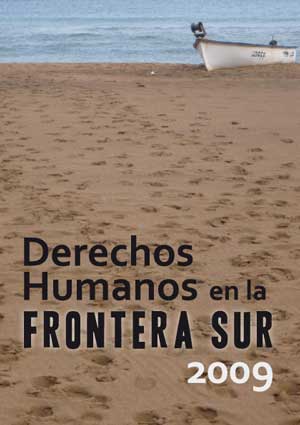
Apdha: Nuevo Informe “Derechos Humanos en la Frontera Sur 2009”

La Asociación Pro Derechos Humanos de Andalucía viene realizando desde 1997 un seguimiento de la evolución de los flujos migratorios referidos a España y de las políticas desarrolladas por la Unión Europea y los sucesivos gobiernos españoles para abordarlos y en general reprimirlos y contenerlos….

Según los datos de la APDHA [Asociación Pro Derechos Humanos de Andalucía] viene, 8.728 personas han sido detenidas al llegar a las costas españolas durante el año 2009, trescientas más que las que recuenta el Ministerio del Interior. En todo caso, ello supone un descenso en las llegadas por esta vía de más del 45% con respecto a 2008, cuando las detenciones alcanzaron la cifra de 15.572 personas….

Sobre un 30% de las personas que intentan llegar a nuestro país, finalmente lo consiguen… Por tanto, las cifras de personas interceptadas sólo reflejan una parte de la realidad. … [L]as cifras aportadas por el Ministerio del Interior no se reflejan el número de personas interceptadas en las costas africanas. Estas son, cada vez más, otro de los resultados del control de los flujos migratorios que la política de externalización ha trasladado a los países africanos. Resulta difícil concluir cuántas personas son interceptadas en la aplicación de estas políticas de externalización en las costas africanas o aledaños.

La APDHA, con muchas dificultades, ha seguido informes de la operativa Frontex, de la Marina Nacional Argelina, de la Gendarmería marroquí y de su Gobierno, o de la policía costera mauritana. Pocas cifras proporciona la guardia costera de Senegal, por no referirnos a Guinea, Gambia o Cabo Verde. Pero de todo ello, desde la APDHA hemos llegado a la conclusión que no menos de 11.000 personas han sido detenidas en las costas africanas a lo largo de 2009, alcanzando así la cifra de 19.728 personas detenidas intentando llegar a España durante el 2009.

Insistimos en que todas estas cifras no son sino un reflejo de la realidad, que ponen de manifiesto dos cuestiones: un acusado descenso de los flujos migratorios que, paradójicamente, se solapan con un acusado incremento de las razones que obligan a la emigración….

La vigilancia de las costas es cada vez más férrea por parte de Mauritania, Senegal o Marruecos. Pero a ello hay que añadir el efecto de la implementación de crecientes y férreos controles en las fronteras que cercan el Sahel que tienen sin duda, a nuestro modesto entender, mayor importancia que los propios controles en las costas y aguas por parte de España y el Frontex….

En todo caso, no está de más resaltar aquí que esos procesos de externalización y creciente militarización de las fronteras africanas están provocando graves sufrimientos y violaciones de derechos en las mismas. La APDHA reivindica que el respeto a los derechos humanos, también en las fronteras, no puede obviarse por razones de control de las migraciones. Y entre ellos, sin duda, se encuentra el derecho a salir y regresar al propio país, tal como recoge el art. 13.2 de la Declaración Universal de los Derechos Humanos….”

Click here for full Report.

Click here for article about the Report.

Leave a comment

Filed under Data / Stats, Eastern Atlantic, European Union, Frontex, Gambia, Mauritania, Mediterranean, Morocco, Reports, Senegal, Spain

CARIM Mediterranean Migration 2008-2009 Report

Noted recently in the Newsletter of the Real Instituto Elcano:

CARIM MEDITERRANEAN MIGRATION 2008-2009 REPORT, Robert Schuman Centre for Advanced Studies, San Domenico di Fiesole (FI): European University Institute, October 2009, Edited by Philippe Fargues

MIGRATIONS MÉDITERRANÉENNES, RAPPORT 2008-2009, Octobre 2009, Sous la direction de Philippe Fargues

An excerpt:

“The period covered in this latest report, the years 2007 and 2008, is characterised by the accentuation of the migratory trends described in previous reports1: emigration from South and East Mediterranean countries (SEM) is continuing at a steady rate, while immigration to these countries is increasing, particularly in various irregular forms. [***]

Transit Migrants

Transit migrants in the SEM countries are people who cannot reach the destination of their choice (Europe) for lack of the required visa. They are waiting to find a way to reach this destination and over time their transit becomes stay. All the SEM countries, from Mauritania in the west to Turkey in the East, have, over the course of the last two decades, been transformed into transit countries for those travelling to Europe.

How many transit migrants are there in the SEM countries? The statistics in this area are even more inadequate than those for de facto refugees or irregular migrant workers. Aggregating figures provided by the police and various NGOs allows for a maximum estimation of 200,000 transit migrants in the region (Table 7).

Table 7: Transit migrants present in SEM countries around 2005

Country                        Estimated number

Algeria                           > 10,000

Turkey                           > 50,000

Libya                              > 10,000

Mauritania                   ± 30,000

Morocco                      > 10,000

Egypt, Israel, Jordan,

Lebanon, Palestine,

Syria, Tunisia              Not available

Total SEM                     < 200,000

Sources: CARIM, Irregular Migration Series http://www.carim.org/index.php?areaid=8&contentid=235&callTopic=7

According to data collected by an Italian NGO on deaths and disappearances at sea (Table 8), it would seem that the number of clandestine sea crossings from SEM countries to Europe is not increasing (in fact it may even have decreased in 2008) but the routes are changing. The most ancient route across the Straits of Gibraltar is being used less and less and has been successively replaced by that from Mauritania, or even Senegal, to the Canary Islands (on which traffic peaked in 2006), from Turkey to the Greek Islands of the Dodecanese (on which traffic peaked in 2007) and lastly from Libya to Italy on which traffic peaked in 2008).

How many transit migrants are there who attempt (sometimes successfully) the crossing to Europe? And for how many does transit in the SEM countries become a more long period of stay? The rare surveys carried out in the Maghreb or in Turkey do not allow us to assess this. With the extension of their stay in countries initially seen as a place of transit, transit migrants soon become mixed up with the more significant mass of migrant workers in irregular situation. On the other hand, it is not always possible to distinguish them from refugees. The two groups exist side by side in what the HCR calls flows of “mixed migration” where transit migrants and refugees, sometimes from the same countries of provenance, resort to the same smugglers and find themselves in the same circumstances.

Table 8: Dead and missing persons on sea routes of irregular migration from SEM to Europe 2000 – 2008

Year\ Route      Sicily +             Gibraltar +

Sardinia           Ceuta & Melilla

2000                   0                           127

2001                     8                           157

2002                     236                     106

2003                     413                     108

2004                     206                    64

2005                     437                    146

2006                     302                    215

2007                     621                    142

2008                     702                    216

Total                     2,925                1,281

Year\ Route      Canary              Aegean Sea

Islands

2000                   16                         32

2001                     40                        102

2002                     39                        94

2003                     130                      81

2004                     232                      103

2005                     185                      98

2006                     1,035                  73

2007                     745                      257

2008                      136                      181

Total                       2,558                 1,021

Year                Total All Routes

2000                 175

2001                   307

2002                   475

2003                   732

2004                   605

2005                   866

2006                   1,625

2007                   1,765

2008                   1,235

Total                  7,785

Source : http://fortresseurope.blogspot.com/

[***]”

Click here for link to full Report in both English and francais.

Leave a comment

Filed under Algeria, Data / Stats, Egypt, France, Greece, Italy, Libya, Malta, Mauritania, Mediterranean, Morocco, Portugal, Reports, Spain, Tunisia, Turkey

Frontex Programme of Work 2010

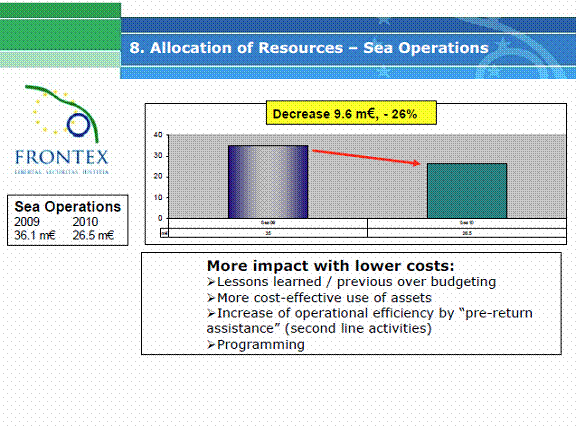
Frontex issued its 2010 Work Programme some time in late 2009.  I have not taken the time to closely read the full 90 page document, but it is worth noting that Frontex sea operations continue to constitute the largest share of the Frontex operational budget, over 26.5 M €.  Due to delayed payments from member states, Frontex is planning on cutting its sea operation budget by 9.7 M € in 2010.

Here are some excerpts from the Programme for Work relevant to sea operations:

“Executive Summary – Frontex’ Programme of Work 2010, as the output of a cyclical planning process, is the operative plan of the Agency to be used as reference for the governance process of assessing and evaluating operational activities carried out during 2010. Frontex’ Programme of Work also seeks to ensure the highest possible level of transparency towards the citizen of the European Union. [***]

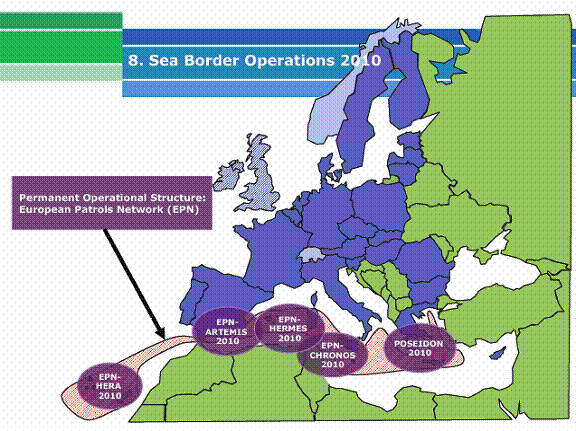
Sea Borders has the biggest share of the budget for operational activities: 26.5 M €. This is a decrease of 9.7 M €. Based on experiences from 2007 and 2008 the budget allocated to Sea Borders has been reduced as payments have been lagging seriously behind and it seems logical that the level of ambition has to be (at least temporarily) adjusted downward. However, the presently foreseen budget does give sufficient room for 7 to 9 projects within the EPN European Patrols Network and 6-7 joint operations in different geographical areas to decrease the illegal immigration flows and to detect facilitators (26.3 M €). Other activities carried out by Sea Borders will be:

– Improved working conditions and improved operational value of interrogation experts (0.1 M €);

– Improved level of awareness in ICCs and regional centers during JOs. (0.1 M €). [***]”

“1.6. Outlook for the situation at the external borders in 2010

General trends –  [***] In May 2009 Libya agreed to direct repatriation of illegal migrants, increasing in the process the deterrent effect of Frontex coordinated Joint Operations in the area. Likewise, Joint Operation Poseidon 2009 has introduced pilot measures to gauge the magnitude of the phenomenon of nationality swapping. When extended and systematized, this measure will facilitate return, determination of illegal migration routes correctly and spotting any displacement in a more timely manner. [***]”

“External maritime borders of the Member States – With significantly lower number of migrants departing from Libya and a decreasing trend of arrivals in the Canary Islands, the relative importance of Algeria, Morocco, Tunisia and possibly Egypt as departure points is likely to grow throughout 2009 and 2010. Efforts by authorities there against illegal migration will be crucial for limiting the flow towards Italy and Spain.  Gambia is expected to take over from Senegal the role of a major embarkation point on the West African coast. That said, in absolute numbers the Aegean Sea (at the border between Turkey and Greece) is expected to remain the main entry point at external sea borders in 2010 should cooperation with Turkey continue to be limited. With the strengthening of the southern EU maritime borders, migrants who initially considered sea crossing might opt for alternative way of entry. One of them might be the use of air borders, either with forged documents or after obtaining visa on false pretence.  At the moment, such a shift has not yet been detected and the risk is considered rather low for 2010, but the situation at the air border should nevertheless continue to be monitored with vigilance. [***]”

“1.7.1. Priority locations by border type

(1) At the external sea borders, operational cooperation should continue to focus on the southern maritime areas where large number of illegal migrants have been detected and where migrants’ life is most at risk, namely the maritime areas leading to: the Canary Islands, the Spanish south-eastern Mediterranean coast, the Island of Lampedusa, Malta—taking into account possible displacement to Sicily and/or Crete—, Sardinia and the Greek Islands close to the Turkish coasts (Lesvos, Chios, Samos, Patmos, Leros and Kos).

Even though decreases detections of illegal border crossing have been reported during the first semester 2009 on the West African and Central Mediterranean routes, operational cooperation should continue to include these areas, on the one hand because the decrease might only be temporary, and on the other because Frontex coordinated Joint Operations in these areas as one factor have contributed to the decrease. [***]”

“1.7.2.2. Recommendations for operational cooperation at the sea borders

(18) All efforts, from diplomatic to technical ones, should continue to be explored to break the deadlock situation of illegal migrants, as advised by facilitators, purposely turning sea surveillance patrols into rescue operations, thereby using surveillance measures as part of their modus operandi. As of mid-2009, such situation was still prevailing in the Aegean Sea.

(19) Joint Operations at the sea borders should aim at developing a permanent linguistic expertise pool, combined with debriefing techniques. Alternatively, language expertise could be outsourced to vetted private sector.

(20) At the sea borders where migrants arrive in big groups, special attention should be given to the rapid identification of victims of THB, especially women and children, with a view to gaining information leading to the identification and prosecution of the traffickers. In this process victim protection should be paramount. [***]”

Click here for a link to the full document.  Note that the document is 90 pages in length but for some reason the 90 page document available at this link is in triplicate, i.e. it is 270 pages in length.  But it is the same 90 page document thrice.

Click here for a link to Slides used by Frontex to summarize some aspects of the Programme.

Leave a comment

Filed under Aegean Sea, Eastern Atlantic, Frontex, Mediterranean, News, Reports