Category Archives: Tunisia

Fortress Europe Calculates 1,931 Deaths in the Mediterranean During First 7 Months of 2011

According to calculations made by Fortress Europe, 2011 is the deadliest year in the Mediterranean since at least 1994.  1,931 people have died during the first seven months of 2011.  This number is higher than the total number of deaths in all of 2008, the year with the previous highest death toll of 1,274.  Fortress Europe estimates that 1,674 (87%) of the 1,931 deaths have occurred in the Sicilian Channel and that most of the deaths in the Sicilian Channel have involved migrants travelling from Libya towards Europe.

Click here for Fortress Europe post.  (IT)

Click here for Clandestina blog post.  (EN)

From Fortress Europe:

Vittime del Canale di Sicilia dal 2002 ai primi 7 mesi del 2011
Anno 2002 2003 2004 2005 2006 2007 2008 2009 2010 2011
Morti 236 413 206 437 302 556 1274 425 20 1674

Leave a comment

Filed under Data / Stats, European Union, Italy, Libya, Malta, Mediterranean, News, Tunisia

[Post Updated 4 August] Spanish Defence Ministry: NATO Instructed Spanish Navy to Transfer Rescued Migrants to Tunisia

A press release issued yesterday by the Spanish Ministry of Defence states that the 114 migrants who were rescued by the Spanish frigate Almirante Juan de Borbón on 11 July were transferred to Tunisian authorities on 16 July pursuant to orders issued by NATO command.

I previously have sought clarification from both NATO and the Spanish Defence Ministry regarding who made the decision to turn the rescued migrants over to Tunisian authorities and what procedures, if any, were followed to screen rescued migrants before the transfer.  NATO’s Operation Unified Protector press office informed me that all inquiries had to be directed to the Spanish Defence Ministry.  The Defence Ministry’s press office in turn has ignored my inquiries.

[Update – 4 August – I received information today from Communication Office of the Spanish Ministry of Defence reiterating that the Spanish frigate was under NATO command as an asset participating in NATO’s Operation Unified Protector.  According to the Communication Office, after the Spanish frigate commander made the decision that the migrants needed to be rescued, all of the frigate’s subsequent actions were carried out pursuant to specific commands issued by the NATO command, including the final order to transfer the migrants to Tunisian authorities.  Spanish authorities were never involved in discussions or negotiations with other countries regarding the rescued migrants.  The Communication Office referred me to NATO’s OUP Press Office for information regarding any further details of the operation.  I will try again with NATO.]

The press release issued yesterday pertains to a visit made to the Spanish  frigate Almirante Juan de Borbón by Italian Rear Admiral Filippo Maria Foffi, Commander of the NATO naval task group for Operation Unified Protector, where he praised the crew of the frigate for the rescue operation.

The press release goes on to state that after the migrants were taken on board the frigate on 11 July, “on orders from NATO command, the Juan de Borbón sailed to Malta and took a position 40 miles off the coast of that country. On 16 July, instructed by the command of NATO, the Spanish frigate headed for the coast of Tunisia to start the transfer to the Tunisian Navy patrol boat Carthage of the 106 immigrants who were still on board, after the earlier evacuation of eight persons for health and medical reasons.”

(“…siguiendo órdenes del mando de la OTAN, la ‘Juan de Borbón’ puso rumbo a Malta posicionándose a 40 millas frente a las costas de ese país.  El pasado 16 de julio, siguiendo instrucciones del mando de la Alianza, se dirigió hacia las costas de Túnez para iniciar el traslado al patrullero Carthage de la Armada tunecina, de los 106 inmigrantes que aún permanecían a bordo tras la evacuación de ocho personas por motivos médicos y de salud…”)

The Spanish government and NATO are rightfully to be praised for the rescue operation.  What is unfortunate is the lack of transparency on the part of both NATO and the Spanish Defence Ministry in regard to why the decision was made to transfer the migrants to Tunisia and what procedures, if any, were used to screen the migrants for claims to international protection.

Click here for Defence Ministry Press Release. (ES)

Click here for my last post on this topic.
2 Comments

Filed under Italy, Libya, Malta, Mediterranean, News, Spain, Tunisia

Call for a Humanitarian Flotilla to Stop Deaths in the Mediterranean

A coalition of migrants’ rights organisations, including Migeurop, Cimade, Gisti, FIDH, and others hope to organise a humanitarian “flotilla which will undertake maritime surveillance so that assistance is finally provided to people in danger. The participatory organisations call on European bodies and governments on both sides of the Mediterranean to establish relations within this common area on the basis of exchange and reciprocity. This flotilla will embark political figures, journalists, artists, and representatives of the organisations involved in the project.  Any organisation, trade-union, political representative, seafarer, journalist, artist or other individual interested in this initiative may join this mailing list : « Mediterranean Intervention ».” To subscribe to the mailing list, please send an email to migreurop07@yahoo.it.

Click here for full Migreurop statement.

Leave a comment

Filed under European Union, Frontex, Italy, Libya, Malta, Mediterranean, News, Statements, Tunisia

Missing Since 2008 – Algerians Seek Information About 43 Family Members Who Disappeared After Arrest by Tunisian Coast Guard

In October 2008, a migrant boat attempting to sail from Algeria to Italy ran around near Tabarka, Tunisia.  The boat’s 43 passengers (39 Algerians, 3 Tunisians, and 1 Moroccan), between the ages of 16 and 22, were detained by the Tunisian Coast Guard.  There has been no word on their fate since shortly after their arrest.  Last week a group of Algerian families travelled to Tunis and held a press conference asking the new Tunisian government for information about what happened to their family members.  Past efforts to obtain information from the Tunisian government have been unsuccessful.

Click here (FR), here (FR), here (FR), here (FR) and here (IT) for articles.

Leave a comment

Filed under Algeria, Italy, Mediterranean, News, Tunisia

NATO Transfers Rescued Migrants to Tunisia

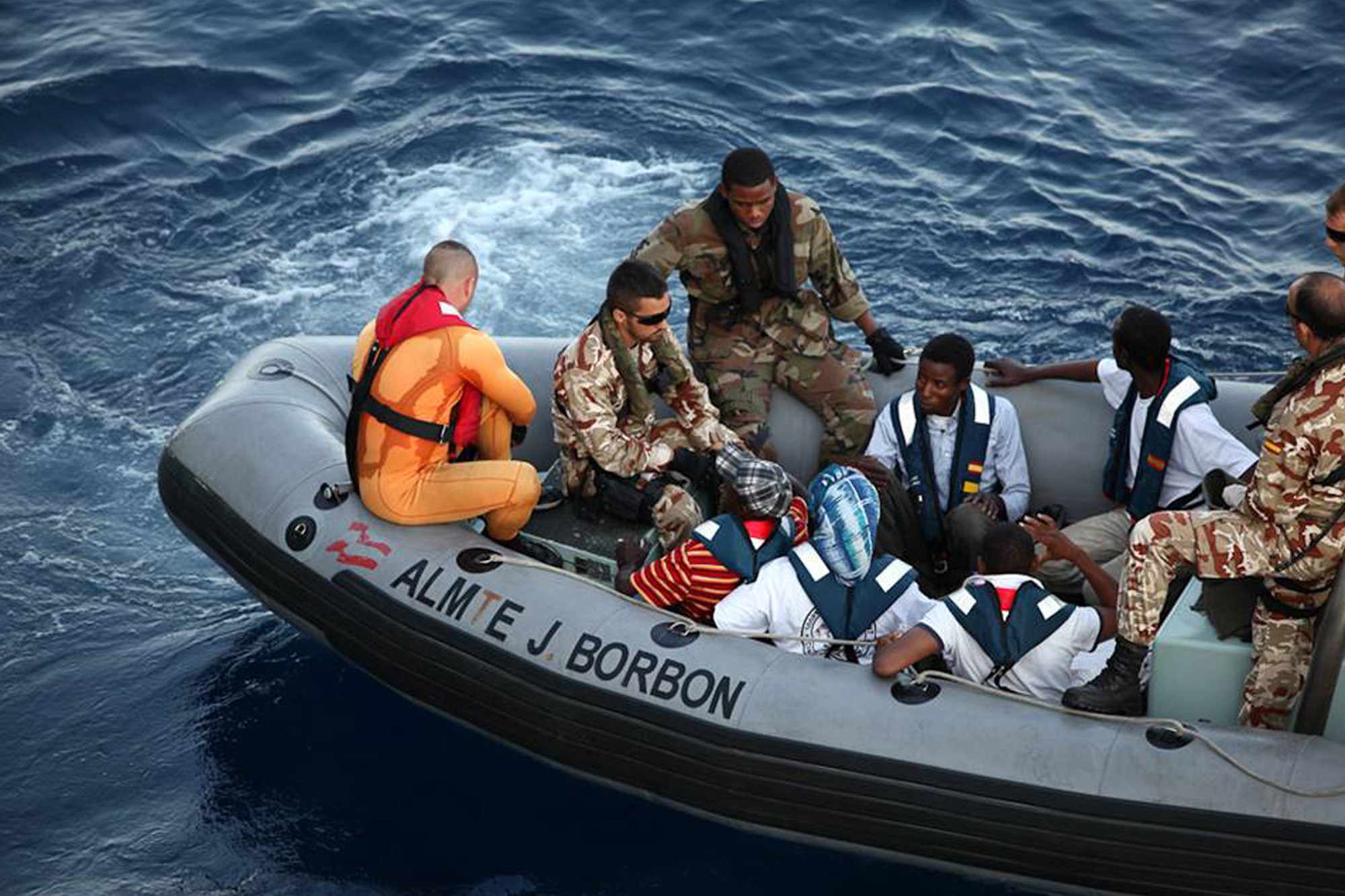
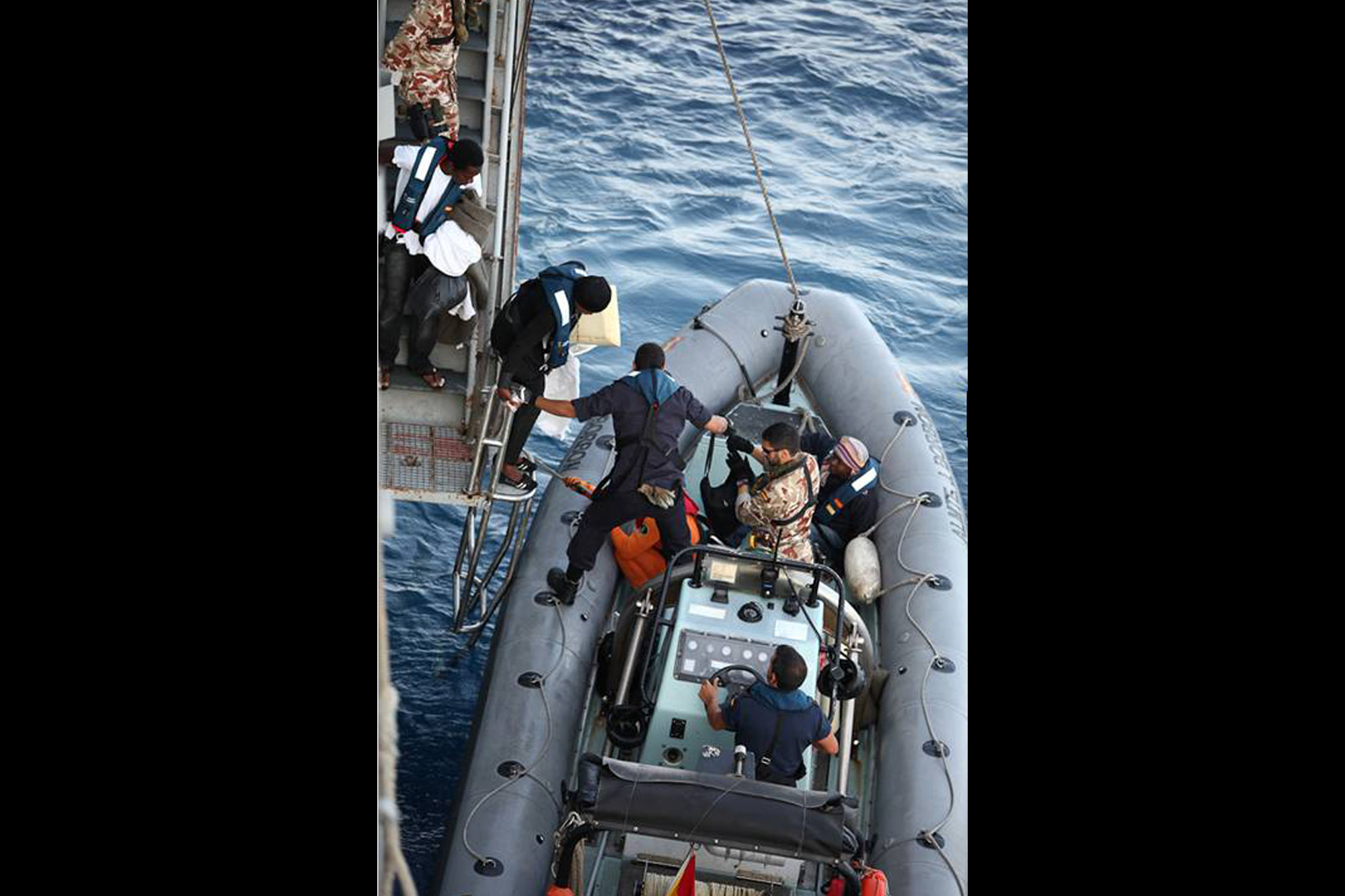
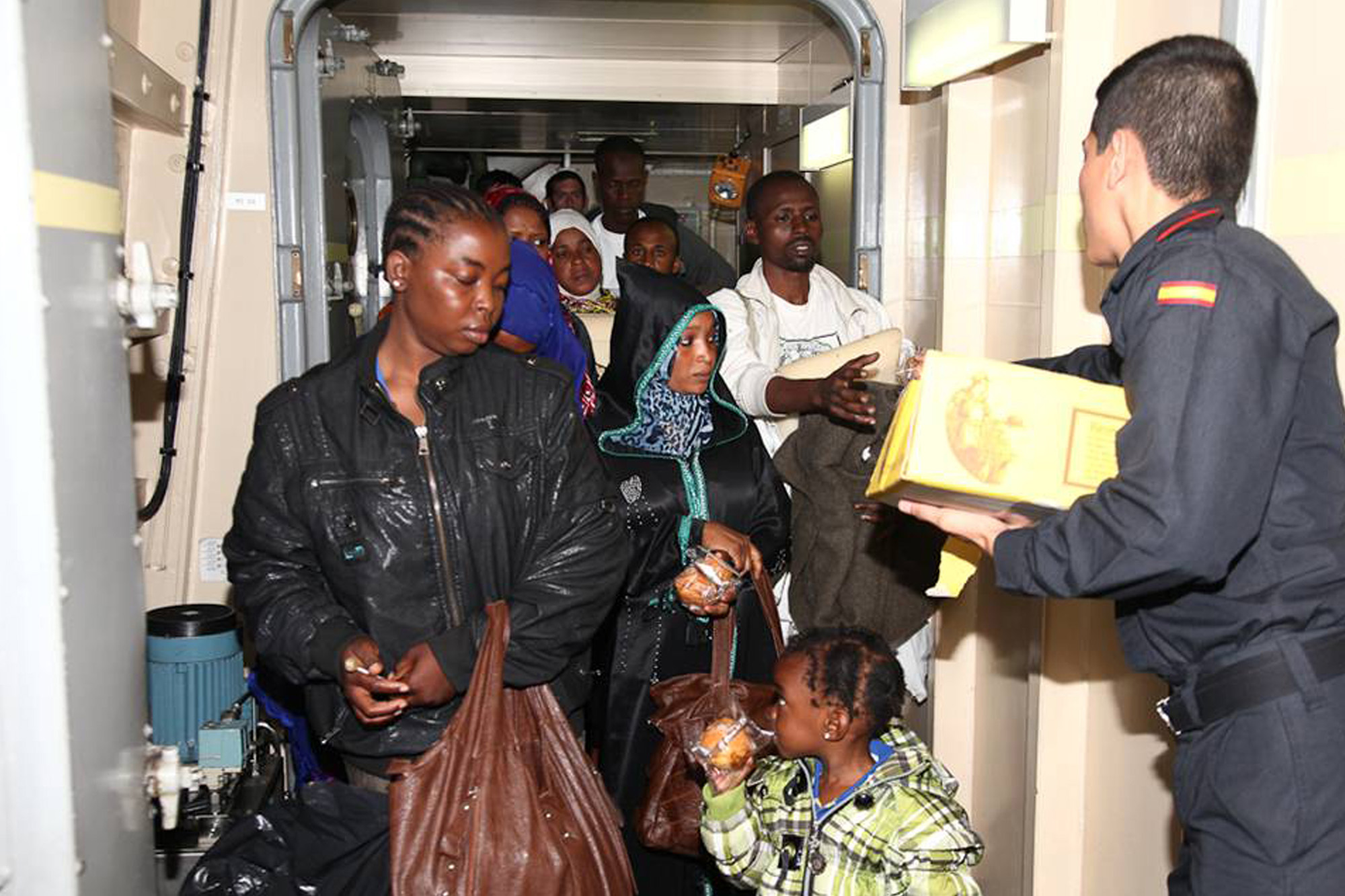
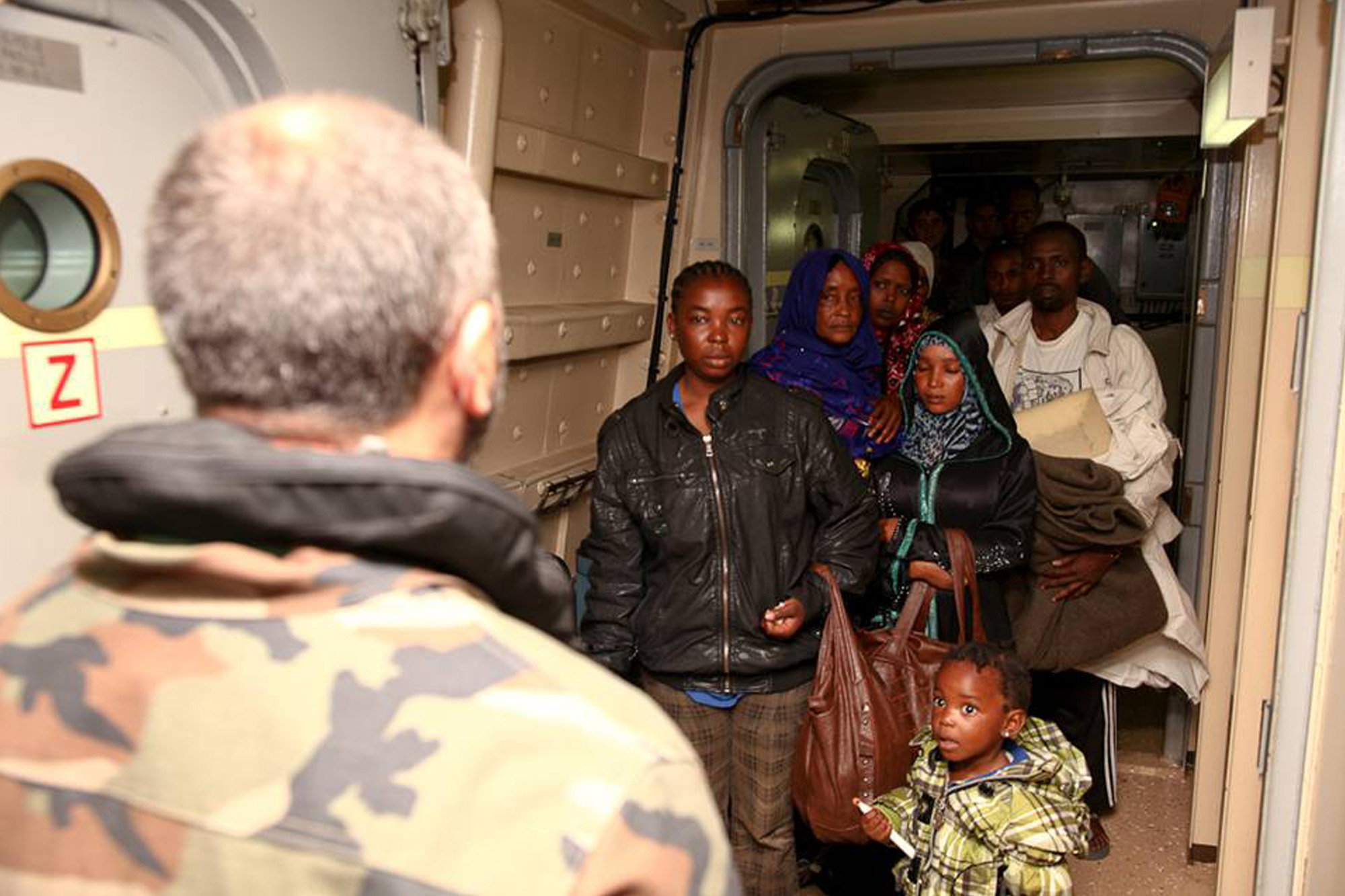
According to information provided by the Spanish Ministry of Defence, the Spanish frigate Almirante Juan de Borbón sailed to Tunisia earlier this morning (16 July) and, while remaining outside Tunisian waters near Zarzis, transferred the remaining 106 rescued migrants to the Carthage, a Tunisian naval vessel.  114 migrants were initially rescued by the Spanish ship.  5 of the migrants were airlifted to Malta for medical reasons on 13 July.  On 11 July, shortly after the initial rescue of the migrant boat, 3 migrants were evacuated and turned over to Tunisian authorities.  The original 114 consisted of 88 men, 20 women (5 of whom are pregnant), and 6 children. The Defence Ministry said that the decision to transfer the migrants to Tunisian authorities was a NATO decision.

While the decision to disembark the migrants in Tunisia is better than sending them to eastern Libya (something I was fearful would occur), Tunisia is problematic for several reasons.  The migrant boat was reportedly carrying Tunisians.  To the extent that any of them may have had claims for international protection, the claims have been effectively eliminated.   It is not known whether any efforts were made to assess whether any of the Tunisians had claims for international protection.   And to the extent that any of the non-Tunisians have claims for international protection, Tunisia is clearly less able to handle such claims and less able to provide care for asylum seekers relative to Malta, Italy, or Spain (or any of the NATO countries participating in Operation Unified Protector).

[17 July update – NATO’s OUP Press Office informed me earlier today that any questions regarding who made the decision to transfer the migrants to Tunisia and whether any of the migrants were screened for claims for international protection had to directed to the Spanish Ministry of Defence.]

Click here (EN), here (ES), and here (ES) for articles.

Click here for Spanish Ministry of Defence press statement and additional photos. (ES)

Photo Credit: Ministerio de Defensa de España (mde.es)

Photo Credit: Ministerio de Defensa de España (mde.es)

Photo Credit: Ministerio de Defensa de España (mde.es)

Photo Credit: Ministerio de Defensa de España (mde.es)

4 Comments

Filed under General, Italy, Libya, Malta, Mediterranean, News, Spain, Tunisia

Rescued Migrants Remain on NATO Ship While Consultations Continue Regarding Place of Disembarkation

According to information provided to me today by the NATO Public Affairs Office for Operation Unified Protector, most of the migrants who were rescued on 10-11 July by a NATO warship are still on board the Spanish Navy frigate.  An unspecified number of the migrants in need of immediate medical attention have been “off-loaded to safety” to an unidentified location.

While the NATO Public Affairs Office did not identify the NATO ship or its nationality, the Spanish Defence Ministry and Navy have previously confirmed that the Spanish frigate Almirante Juan de Borbón is the NATO ship that performed the rescue.

According to NATO, “the NATO Frigate responded [on 10 July] to a vessel in distress some 75 miles off the coast of Libya. A NATO ship [then] … provided medical support, food and offered mechanical assistance to the distressed civilians. [On the] 11th of July, the migrants (approximately 100), Ghanaians, Tunisians and Libyans, were transferred onto the NATO ship in accordance with the Safety of Life at Sea (SOLAS) protocol…”

Most of the migrants remain on board the Spanish frigate.  NATO says that “the appropriate legal, diplomatic and military authorities are being consulted to determine future course of action.”

I have asked for further information regarding to what location the migrants who were in need of immediate medical attention have been taken.  The possibilities presumably are another ship with appropriate medical facilities, Tunisia, Libya, Italy, Malta, or Spain.

Click here for my previous post on this topic.

1 Comment

Filed under Italy, Libya, Malta, Mediterranean, News, Spain, Tunisia

Italian Coast Guard: 44,000 Migrants Reach Italy by Boat in First Half of 2011

In a presentation on 28 June before the Italian Parliament’s Schengen Committee (Comitato parlamentare di controllo sull’attuazione dell’accordo di Schengen), officials from the Italian Coast Guard reported that at least 44,000 migrants have reached Italy by boat so far in 2011.

1,000 additional migrants arrived in Lampedusa over the 24 hour period Wednesay to Thursday of this week.  With the exception of one small boat carrying 8 Tunisians, all of the boats are believed to have left from Libya in recent days.

Click here, here, and here for articles.  (IT)

Leave a comment

Filed under Data / Stats, Italy, Libya, Mediterranean, News, Tunisia

Boats with Libyans Arrive in Tunisia

Two boats carrying Libyans have arrived in the Tunisian port of El Ktef in Ben Guerdane this week.  The port is located just west of the international border with Libya.  TAP reports that one boat arrived earlier this week carrying 38 Libyan civilians and military members.  A second boat arrived on Thursday carrying 48 people, 19 of whom were Libyan military or police members.

Click here and here for articles.  (FR)

Leave a comment

Filed under Libya, Mediterranean, News, Tunisia

PACE Appoints Tineke Strik as Rapporteur to Investigate Mediterranean Sea Deaths

The Migration Committee of the Parliamentary Assembly of the Council of Europe has appointed Tineke Strik (Netherlands, SOC) to prepare a report on the deaths of boat people who have died in the Mediterranean since January 2011.

From the PACE press statement: “‘There have been allegations that migrants and refugees are dying after their appeals for rescue have been ignored,’ said Mrs Strik. ‘Such a grave allegation must be urgently investigated.  I intend to look into the manner in which these boats are intercepted – or not – by the different national coastguards, the EU’s border agency FRONTEX, or even military vessels. I also intend to speak to witnesses directly involved in reported incidents, and put questions to national authorities, the UNHCR, FRONTEX and NATO, among others.’  On 8 May, the Guardian newspaper reported that 61 boat people escaping from Libya had died after their appeals for rescue had been ignored by armed forces operating in the Mediterranean. The following day PACE President Mevlüt Çavusoglu called for ‘an immediate and comprehensive enquiry’ into the incident.”

Click here for PACE press statement.

1 Comment

Filed under Council of Europe, Frontex, Italy, Libya, Malta, Mediterranean, News, Tunisia

Italy Surpasses Greek-Turkish Border as Main Entry Point to EU for Irregular Migrants

Frontex Deputy Executive Director Gil Arias announced today at a press conference that during the first quarter of 2011 most irregular migrants have entered the EU through Italy, primarily at Lampedusa.  In 2010 the Greek-Turkish border was the main entry point for irregular migrants.

A total of 32,906 irregular migrants were detected at the EU borders during the 1st Quarter 2011 compared with a total of 14,857 during the 1st Quarter of 2010.  Of the 32,906, 22,000 entered through Italy during the 1st Quarter, mostly at or around Lampedusa, and 7,200 entered the EU through Greece.

So far this year, January 1 to present, approximately 41,000 irregular migrants have entered the EU in the area around Lampedusa and other nearby islands.

Click here (EN), here (EN), here (IT), and here (IT) for articles.

1 Comment

Filed under Data / Stats, European Union, Frontex, Greece, Italy, Libya, Mediterranean, News, Tunisia, Turkey

Gisti Calls for NATO to Use Its Surveillance Capabilities to Prevent Migrant Deaths at Sea

From Gisti:

“…  Faced with hundreds of fatal wrecks in the Mediterranean, can we simply denounce the deafening silence in which lives are lost at our doors? Should we accept being powerless in the face of immigration politics which we cannot change? Those who have drowned are not the victims of natural disasters, but of political decisions carried out by persons whose responsibility must be marked. In response to these attacks on the most fundamental right – the right to life – we must ensure that procedures are undertaken and that justice is done. We must stop this carnage. [***] These wrecks, sinking boats transformed into floating coffins of men, women and children, deaths from exposure,  hunger and thirst after drifting at sea, have become commonplace.  [***] But things have changed since an international coalition and NATO forces intervened in Libya. Today, AWACS, drones, planes, helicopters, radar, and warships watch everything that moves in the Mediterranean. They can not fail to see the boats of exiles from sub-Saharan Africa who seek to flee from Libya. [***] By not intervening, they are guilty of failing to assist persons in danger. This can not go unpunished. [***]>>

<<[***] Face aux centaines de naufrages mortels en Méditerranée, peut-on se contenter de dénoncer le silence assourdissant dans lequel des vies disparaissent à nos portes ? Doit-on se résoudre à l’impuissance devant des politiques migratoires auxquelles on ne pourrait rien changer ? Ces noyées ne sont pas les victimes de catastrophes naturelles, mais de décisions politiques mises en œuvre par des exécutants dont les responsabilités doivent être pointées. Devant ces atteintes au droit le plus fondamental – le droit à la vie – il faut que des procédures soient engagées et que justice soit rendue. Il faut mettre fin à cette hécatombe. [***]  De ces naufrages, des épaves transformées en cercueils flottants d’hommes, de femmes et d’enfants morts d’épuisement, de faim et de soif après de longues dérives en mer, l’opinion a pris l’habitude. [***]  Mais la donne a changé depuis qu’une coalition internationale et les forces de l’OTAN interviennent en Libye. Aujourd’hui, awacs, drones, avions, hélicoptères, radars et bâtiments de guerre surveillent tout ce qui bouge en Méditerranée. Ils ne peuvent pas ne pas voir les bateaux des exilés originaires d’Afrique subsaharienne qui cherchent à fuir la Libye. [***] En n’intervenant pas, ils se rendent coupables de non-assistance à personne en danger. Ceci ne peut rester impuni. [***] >>

Click here for full statement.  (FR)

2 Comments

Filed under European Union, Frontex, Italy, Libya, Mediterranean, Statements, Tunisia

CoE HR Commissioner: Europe should increase air surveillance to spot and rescue migrant boats

Council of Europe Human Rights Commissioner Thomas Hammarberg issued a new Comment, “African migrants are drowning in the Mediterranean,” in which he voices the concern that “preventing migrants from coming [to Europe] has become more important than saving lives” and calls for a dramatic increase in “surveillance – from the air – along the Libyan coast and further out in order to spot any fragile [migrant] vessels at sea and safely prepare a rescue.”

Excerpts:

“The drowning tragedies in the Mediterranean are not a new phenomenon; … [European deterrent measures] ha[ve] not prevented people from trying to reach Europe, but it has made the journey more dangerous and given the smugglers a reason to increase their prices. The boats have become more and more overcrowded and more of them have capsized.  Smugglers have a responsibility; they take on board much too many migrants in much too unsuitable boats – and thereby put lives at risk. …

Europe has a role in this. The imperative principle of ‘rescue at sea’ must not only be respected for those close to a sinking ship; there is also a need to increase dramatically surveillance – from the air – along the Libyan coast and further out in order to spot any fragile vessels at sea and safely prepare a rescue.  In view of the ongoing military operations it would be difficult to argue that there are no resources for such reconnaissance activity. Indeed, the escalation of the armed conflict has contributed to the acute situation of the sub-Saharan migrants.

European governments and institutions have more responsibility for this crisis than they have demonstrated so far. Their silence and passivity are difficult to accept. When preventing migrants from coming has become more important than saving lives, something has gone dramatically wrong.”

Click here (EN) or here (FR) for full statement.

Leave a comment

Filed under Council of Europe, Italy, Libya, Malta, Mediterranean, Statements, Tunisia

RFI: Le régime libyen soupçonné de favoriser l’émigration vers l’Europe

“Le régime libyen est-il à l’origine d’une nouvelle filière d’immigration ? Selon plusieurs témoignages, les pro-Kadhafi organisent des départs à prix réduit en bateau depuis Tripoli ou Zouara, à l’ouest, pour des réfugiés, direction l’Europe. Avec un objectif politique : inonder les côtes européennes d’immigrés. La filière recruterait maintenant directement au camp de Choucha, à la frontière tunisienne, un camp ouvert il y a trois mois et dans lequel les conditions de vie se dégradent. Le Haut commissariat aux réfugiés reste prudent sur la question, mais dit enquêter sur les rumeurs. Dossier de la rédaction avec notre envoyé spécial…..”

Cliquez ici pour l’article complet.

1 Comment

Filed under European Union, Italy, Libya, Mediterranean, News, Tunisia, UNHCR

CARIM: Libya Migration Profile

CARIM has published an updated Migration Profile for Libya.  The profile includes IOM data regarding migrant departures from Libya between 20 February and 26 May 2011 which again highlights the humanitarian burden imposed on Tunisia and Egypt relative to Italy and the EU.

Tunisia received 232,856 individuals from Libya during this period (185,442 of whom were TCNs) which is 43.8% of the total number of migrants who have fled Libya.  Egypt received 172,318 individuals (74,911 TCNs) which constitutes 32.4% of the migrants who have fled.  Italy received 13,110 individuals (all TCNs) which constitutes 2.5% of the total.   Niger received 13.1% of the total, Chad 5.1%, Algeria 2.3%, and Malta 0.3%.

Click here for the Profile.

Leave a comment

Filed under Algeria, Analysis, Data / Stats, Egypt, European Union, Italy, Libya, Malta, Mediterranean, Niger, Reports, Tunisia

Interview with Frontex Spokesperson Michal Parzyszek

Frontex spokesperson Michal Parzyszek was interviewed by the Sofia News Agency on 27 May.  Here are some excerpts:

Current Frontex sea operations: “Operation Hera, which is in the territorial waters of Senegal and Mauritania; Operation Indalo in Spanish waters; Operation Hermes in Italian waters; Operation Aeneas in Italian waters; Operation Poseidon in Greek waters.”

Frontex operations in Italy: “The help on part of Frontex in the southern waters, including in Italy, is more on providing risk analysis – to give a better idea of what is going on, and what can happen.  …  So in terms of [Frontez] assets, there are just two airplanes and two boats which are deployed there under Frontex in the waters south of Sardinia and south of Lampedusa.  …  There are 10-15 Frontex experts that are identifying the migrants once they reach the reception facilities there. They are deployed to Caltanissetta, Catania, Trapani, Crotone, and Bari….”

Arrivals to Lampedusa:  “It varies every day. You have days when you have no arrivals, and then suddenly you have 1 000 people arriving to Lampedusa. Since the start of the operation on February 20, 2011, there have been almost 31 000 people that arrived to Lampedusa.”

Irregular migrants prefer entering Greece rather than Bulgaria: “… In the case of Greece, a readmission agreement with Turkey doesn’t truly work; in the case of Bulgaria, the cooperation with Turkey is much better so the Turkish authorities – if they receive proper documentation and justification – they accept people back.  This is a very important element – potential migrants know that if they cross the border between Turkey and Bulgaria, there is high probability that they will be sent back to Turkey so they don’t choose that way….”

(HT to Euro-Police.)

Click here for full interview.

Leave a comment

Filed under Aegean Sea, Black Sea, Bulgaria, Eastern Atlantic, European Union, Frontex, Greece, Italy, Libya, Mauritania, Mediterranean, News, Senegal, Spain, Tunisia, Turkey