Category Archives: UNHCR

Migreurop: What Price Will Europe Pay if Gaddafi Authorises UNHCR’s Return to Libya?

Migreurop takes the position that Libya’s recent decision to expel the UNHCR is a negotiating tactic that will be used to leverage more money and concessions from the European Union in the context of the ongoing EU-Libya partnership negotiations and poses the important question:  What Price Will Europe Pay if Gaddafi Again Authorises UNHCR’s Return to Libya?  The UNHCR’s presence in Libya has played an essential role in Europe’s immigration policy, specifically Europe’s migration management and border outsourcing:

“Thanks to UNHCR’s presence in Tripoli, Europe and Italy, which concluded its agreement with Libya in August 2008, were able to claim that the boat people who were forcibly returned to Libya could find a minimal level of security and protection. Everyone knows full well that this was a smokescreen: the conditions under which migrants are treated in Libya are well documented and well known to European authorities and institutions.”

“The presence of the UNHCR in Libya justified the policy of externalisation and deportation carried out by the EU. … Libya has now raised the stakes and the UNHCR is an accomplice in the sordid negotiations:  UNHCR’s return is already planned.…”

Click here or here for Migreurop’s full statement / analysis (FR).

Click here for previous post.

Leave a comment

Filed under Analysis, European Union, Italy, Libya, Mediterranean, UNHCR

More on Libya’s Decision to Expel UNHCR

Libya’s decision to expel the UNHCR from Libya was made public during the seventh round of Framework Agreement talks between the EU and Libya.  The talks concluded yesterday in Tripoli.  “[Libya’s Deputy Foreign Minister Mohammed Tahar] Sayala said the main stumbling blocks to progress were illegal immigration and the International Criminal Court (ICC), which Libya does not recognise.  [Sayala] said Libya wanted financing and equipment [from the EU] for the surveillance of its borders, both on land and sea.”

Amnesty International criticized the decision to expel the UNHCR and called on Libya to reverse the decision:

“[***] The move to expel the UNHCR came against the backdrop of the 7th round of negotiations, which started on 6 June in Tripoli, between Libya and the EU over a Framework Agreement, which addresses bilateral cooperation in the control of irregular migration, among other issues, including potential readmission agreements for third-country nationals, who have transited through Libya on their way to Europe. EU member states, most notably Italy, have been seeking Libya’s assistance in decreasing the flow of arrivals of asylum-seekers and migrants to European shores. The expulsion of the UNHCR further casts doubt on Libya’s commitment to respect its obligations under the Organization of African Unity Convention Governing the Specific Aspects of Refugee Problems in Africa. It also shows how essential it is to include effective human rights safeguards and adequate standards of protection in any bilateral agreements with Libya in the field of the control of migration. [***]”

The European Commission also expressed “concern” with Libya’s decision “but sees it as one more reason to engage in ‘dialogue’ with General Gaddafi’s country on immigration and asylum.”

And as noted by Michèle Morel on International Law Observer, even though Libya is not a signatory to the UN Refugee Convention, Libya is bound by customary international law which prohibits refoulement to countries where there is a risk of torture, “[t]herefore, while Libya itself has no asylum system for the examination of asylum seekers’ situations, refusing to allow UNHCR to carry out its activities in Libya would amount to a violation of international human rights law.”

Click here, here, here (EN), and here (AR) for articles.

Click here for Amnesty International’s statement.

Click here for link to ILO post.

3 Comments

Filed under European Union, Libya, Mediterranean, News, UNHCR

Libya Orders UNHCR Office Closed – Possible Link to EU-Libya Talks on Partnership Accord

The Libyan government has ordered the UNHCR office in Libya to halt all activities and to close it office.  UNHCR has been working in Libya since 1991 even though Libya is not a signatory to the UN Refugee Convention.

The UNHCR said it was not given a reason for the Libyan decision.  Reuters reported that Libya’s Foreign Ministry considers the UNHCR presence within Libya to be illegal since Libya is not a signatory to the Refugee Convention.  Reuters also says that JANA, the Libyan news agency, accused a UNHCR official of carrying out an unspecified illegal activity.

The Libyan newspaper Oya and other reports say that the EU is pressuring Libya in the ongoing EU-Libya Partnership Talks to sign the Refugee Convention and that illegal immigration is one of the main areas of disagreement in the current negotiations.

The UNHCR said in a press release “[i]n the absence of a national asylum system, UNHCR has carried out registration and refugee status determination, visiting detention facilities and providing medical and humanitarian assistance to detainees.”  Among the asylum seekers detained in Libya over the past year are persons who were forcibly returned to Libya by Italian authorities pursuant to the Italy-Libya migration agreement.

Click here for UNHCR press release.

Click here for Oya article (AR).

Click here, here, and here for articles (EN).

2 Comments

Filed under European Union, Libya, Mediterranean, News, UNHCR

UNHCR Criticises Delay by Italy and Malta in Launching Search and Rescue of Migrant Boat

“UNHCR is concerned about delays in a search-and-rescue operation on Sunday and Monday [6-7 June]  involving a boat carrying more than 20 people, mostly Eritreans, near Malta. Distress calls were received on Sunday evening, including by UNHCR, and passed to Maltese and Italian maritime authorities. It is unclear which country had search-and-rescue responsibility when the distress calls were first sent. According to information made available to UNHCR, the boat was only rescued late on Monday, and by Libyan vessels.”

The persons on board the boat have reportedly been taken to Libya.

Click here for UNHCR statement.

Click here and here for articles.

Leave a comment

Filed under Italy, Libya, Malta, Mediterranean, News, UNHCR

Spanish Court Rules that Schengen Treaty Prevents Asylees From Leaving Ceuta and Melilla

As noted on Diario de la Inmigración, a Spanish Court in Ceuta (el Juzgado Contencioso Administrativo número 2 de Ceuta) has ruled that persons granted asylum or subsidiary protection may not leave Ceuta for the Spanish peninsula.  The court agreed with the position of the Spanish government and ruled that the two autonomous cities of Ceuta and Melilla are not part of the Schengen area and that proper documentation is therefore required to enter the Schengen area from the cities.  The court concluded that the “yellow card” (“tarjeta amarilla”) issued to persons granted asylum or subsidiary protection is insufficient documentation to enter the Schengen area.

The UNHCR and CEAR have previously criticised the Spanish’s government new policy of restricting the free movement of persons in Ceuta and Melilla who have been granted asylum or subsidiary protection.  UNHCR believes that the restrictions on free movement violate article 5 of Spain’s 2009 asylum law (la ley 12/2009, de 30 de octubre).

Click here, here, and here for articles (all ES).

Leave a comment

Filed under European Union, Judicial, Mediterranean, News, Spain, UNHCR

EASO Regulation Published in EU Official Journal

Regulation (EU) No 439/2010 of the European Parliament and of the Council of 19 May 2010 establishing a European Asylum Support Office was published in the Official Journal of the EU on 29 May 2010.

Click here for the link to the Journal.

Leave a comment

Filed under European Union, News, UNHCR

UPR of Spain Largely Ignores Interdiction and Readmission Practices

Spain was one of 15 countries whose records were reviewed during the 8th session of the Human Rights Council’s Universal Periodic Review (UPR) Working Group from 3-15 May 2010.  While reference is made to the treatment of asylum seekers and migrants who reach Spanish territory, little attention was directed (at least not in the national report or the Working Group’s Draft report) to the treatment of migrants intercepted at sea before reaching Spanish territory in the Canary Islands or elsewhere.  Likewise little attention was paid to the provisions and implementation of Spain’s several bilateral readmission agreements with various countries such as Senegal.

According to the Draft report, Spain agreed with a general recommendation to “[t]ake all measures necessary to ensure that actions related to unaccompanied minors (migrants, asylum seekers, refugees, victims of trafficking) are in line with international standards.” [Section II, Para. 84(54).]  But Spain did not agree to several more specific recommendations, instead agreeing only to “examine” and “provides responses” to the recommendations no later than September 2010 when the Human Rights Council meets for its 15th session.

Three of the more detailed recommendations were:

  • “Respect fully the principle of non-refoulement and ensure effective access to asylum procedures, taking into account the objectives of UNHCR’s 10-Point Plan on Mixed Migration” (New Zealand);
  • “Undertake a review of its readmission agreements with respect to refugees and asylum-seekers, and amend them as necessary to ensure that they contain human rights guarantees in line with international standards” (Canada); and
  • “Consider access to asylum procedures for victims of trafficking (Costa Rica).

[Section II, Para. 86(28-30).]

Click here for link to UPR site for Spain.

Click here for the Draft report of the Working Group.

Click here for Spain’s national report submitted to the Working Group.

Leave a comment

Filed under Eastern Atlantic, Mediterranean, News, OHCHR, Reports, Spain, UNHCR

UNHCR to Frontex: Information on Operational Activities at Sea Are Limited

UNHCR has had a liaison officer assigned to work with Frontex since 2007.  The current UNHCR senior liaison officer is Michele Simone.  In a Q&A interview posted on the UNHCR web site Mr Simone expressed some concerns about Frontex operations at sea (in addition to speaking on other topics):

“It remains difficult to evaluate the impact of [UNHCR’s asylum and protection] training [of border officials] while information on operational activities at the borders, especially at sea, remains rather limited.”

“Frontex operations should ensure disembarkation of those intercepted at sea to a place where they are not only safe physically, but where their basic rights – including the rights to seek asylum and receive protection – are respected. This is spelled out in the recently adopted European Union guidelines for maritime border operations. In any event, the operations should anticipate that some of those intercepted at sea will be particularly vulnerable, notably unaccompanied children, women and torture victims. At this time, we believe there are not enough qualified staff at sea or land entry points to identify and support such vulnerable cases. To assist border guards in this identification process, UNHCR is currently discussing with Frontex the elaboration of ad hoc protection guidelines for some selected joint operations.”

Click here for full interview.

1 Comment

Filed under Frontex, News, UNHCR

UNHCR Research Paper: Les violences faites aux femmes pendant leur voyage clandestin: Algérie, France, Espagne, Maroc

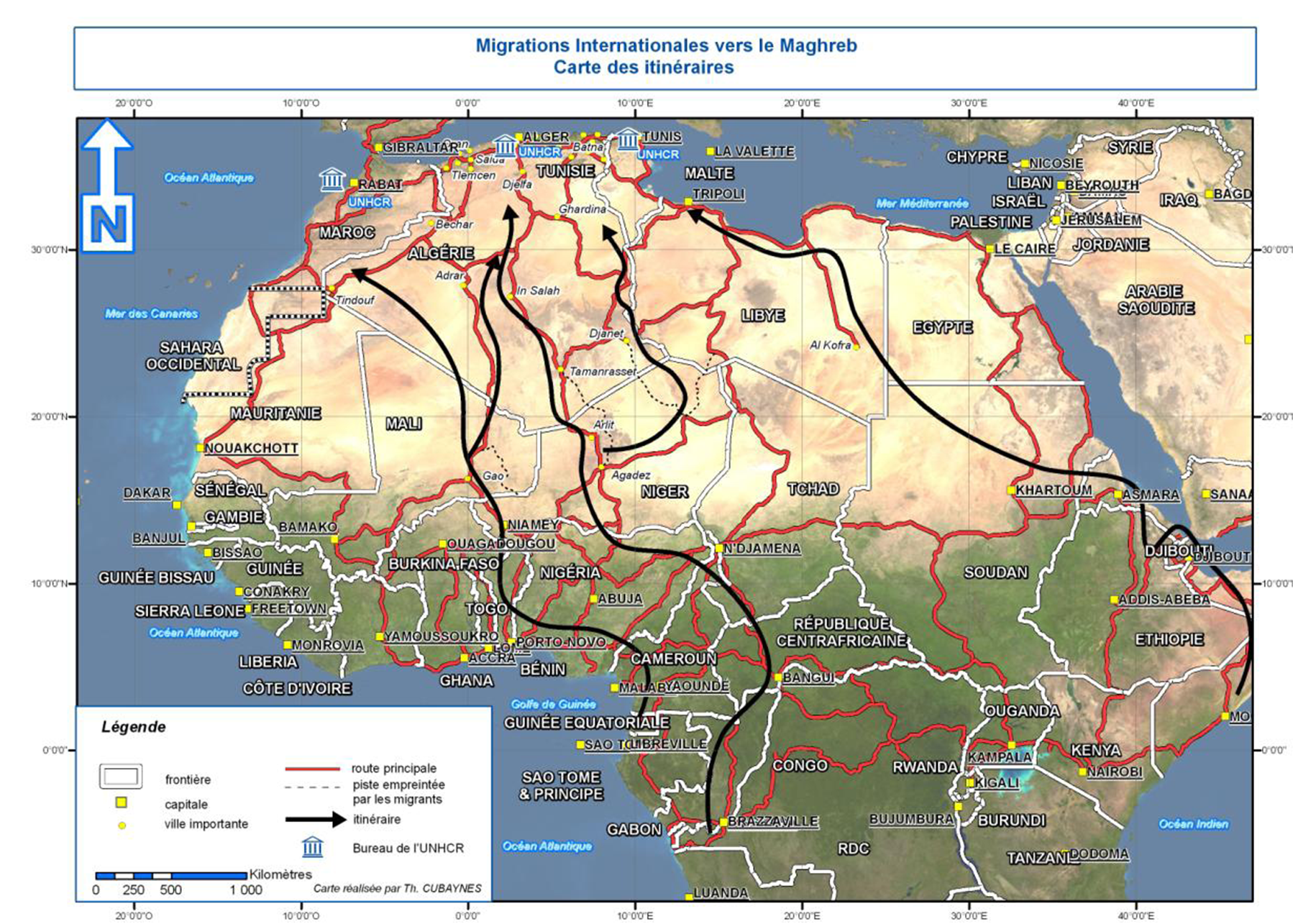
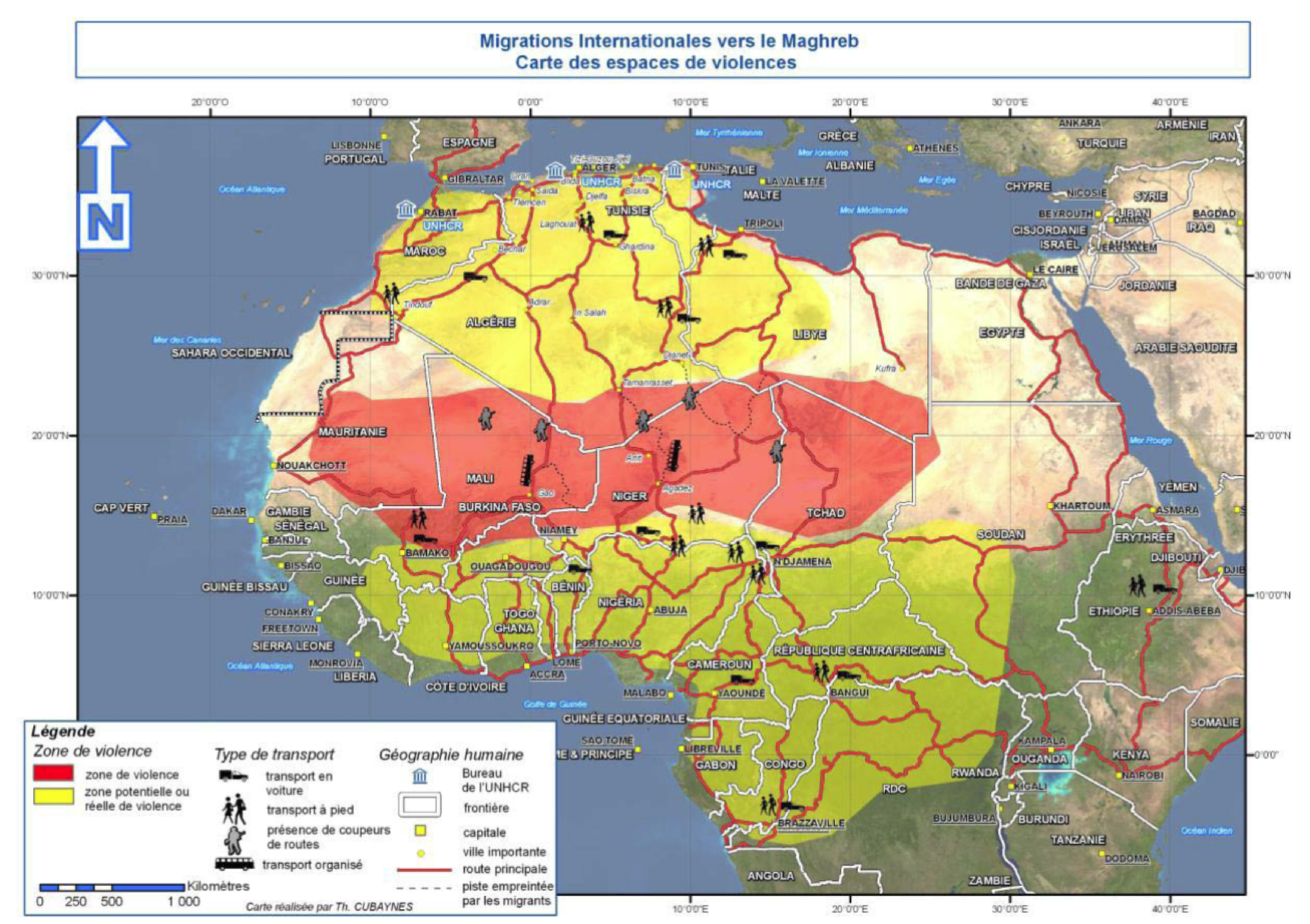
Un nouveau rapport du HCR (UNHCR Research Paper) par Smaïn Laacher a été publié: “Les violences faites aux femmes  pendant leur voyage clandestin: Algérie, France, Espagne, Maroc.”

Extraits:

“L‟objet de notre mission a porté sur les violences faites aux femmes migrantes pendant leur voyage clandestin. Les femmes qui constituent la population de notre étude sont des femmes qui ont quitté illégalement leur pays et ont voyagé jusqu‟au Maroc, en Algérie, en Espagne, et en France. *** Les violences subies par les femmes pendant leur voyage clandestine … , dont la plus destructrice est la violence sexuelle, visent principalement des êtres sans défense, c‟est-à-dire des femmes qui n‟ont pu ou qui ne peuvent pas être défendues, précisément parce qu‟elles n‟existent pour personne, si ce n‟est que pour elles-mêmes et pour leurs agresseurs. ***”

Cliquez ici pour télécharger le rapport.

Cliquez ici pour télécharger le rapport.

1 Comment

Filed under Algeria, France, Morocco, Reports, Spain, UNHCR

LIBE-Odysseus Network Round Table (26 April) and LIBE Meeting Agenda

A Round Table on “Towards a Common European Asylum System: A study on some horizontal issues” will be held on 26 April at 15.00 – 18.30. The meeting is organised by the LIBE Committee and the Policy Department Citizens’ Rights and Constitutional Affairs with the participation of the National Parliaments and the Odysseus Network.  The Round Table meeting precedes the two day meeting, 27-28 April, of the LIBE Committee which will be considering numerous agenda topics including:

  • Creation of an immigration liaison officers network;
  • The establishment of a joint EU resettlement programme;
  • Discussion concerning the European Refugee Fund; and
  • Institutional aspects of accession by the European Union to the European Convention for the Protection of Human Rights and Fundamental Freedoms.

The final agenda item is a Meeting with UN High Commissioner for Refugees, Antonió Guterres on matters relating to asylum policy, co-chaired by the Committee on Development and the Subcommittee on Human Rights.

Click here for Round Table agenda.

Click here for LIBE meeting documents.

Leave a comment

Filed under Colloques / Conferences, European Union, News, UNHCR

6 Month Refugee Boat Stand-Off Ends in Indonesia

200 Sri Lankans, mostly Tamil refugees, have agreed to leave the boat on which they have been living since October 2009.  The boat has been under guard in the Indonesian port of Merak since it was intercepted by Indonesian authorities at the request of Australia.  The boat and its passengers were trying to reach Australia.  The migrants have been moved to the Indonesian immigration centre at Tanjung Pinang where their claims for asylum will be assessed by UNHCR.  Australia has reportedly been paying the Indonesian government to intercept migrants seeking to sail to Australia.  Some of the migrants on the boat recently managed to escape and reportedly used smugglers to reach Australia’s Christmas Island where they are now seeking asylum.

Click here and here for articles.

Click here for earlier post.

Leave a comment

Filed under Australia, Indian Ocean, Indonesia, News, UNHCR

UNHCR Reports 50% Reduction in African Migrant Flow to Yemen

UNHCR reports a significant decline in the numbers of migrants travelling by sea from the Horn of Africa to Yemen.  UNHCR said that “violence within Somalia could be preventing many would-be migrants from reaching their port of departure.  An estimated 9,400 people from across the Horn of Africa have reached the shores of Yemen since the beginning of this year, compared to nearly 17,000 between January and March 2009….”

Click here for UNHCR statement.

Leave a comment

Filed under Data / Stats, Gulf of Aden, News, Somalia, UNHCR, Yemen

Annual GDISC Asylum Conference

From 8-10 March the German Federal Office for Migration and Refugees and the Directors General of Immigration Services Conference GDISC – organised the annual GDISC Asylum Conference in Nuremberg.

Representatives from 24 European countries, the EC, UNHCR, and IGC discussed the current situation in the field of asylum as it relates to the issues of unaccompanied minors, quality management of asylum services, the impact of the proposed changes on the EU directives to the field of asylum, and the functioning of the asylum support teams within the European Asylum Support Office (EASO).  The next GDISC conference will be held in Prague on 15-15 June 2010.

Click here for the Draft Summary Conclusions of the Conference.

Leave a comment

Filed under European Union, Germany, News, UNHCR

UNHCR Comments on Malta’s Decision Not to Host Frontex Missions

Times of Malta reports on comments made by the head of UNHCR’s Malta Office, Jon Hoisaeter, who said that “international law was not clearly defined when it came to the disembarkation of migrants after rescue operations.”

“There are situations when urgent health and safety considerations would require that those rescued are brought to the nearest safe port of call. In fact, even the new Frontex guidelines acknowledge this… Asylum seekers should be brought to a territory where their situation and claims can be individually assessed in a fair manner.  Of course, close cooperation among relevant states will often be crucial to successfully undertake rescue-at-sea operations.”

“The UNHCR supports the development of guidelines that can facilitate rescue and reduce the risk of lives being lost at sea. However, with or without support from Frontex, search and rescue operations are primarily the responsibility of states.”

Click here for article.

Leave a comment

Filed under Frontex, Malta, Mediterranean, News, UNHCR

UNHCR Report on EU Member State Implementation of the Asylum Procedures Directive

The UNHCR has released a comprehensive report entitled “Improving Asylum Procedures: Comparative Analysis and Recommendations for Law and Practice: A UNHCR research project on the application of key provisions of the Asylum Procedures Directive in selected Member States.”

From the Report’s introduction:

“In the exercise of its supervisory role under Article 35 of the 1951 Convention relating to the Status of Refugees … UNHCR has undertaken a wide-ranging comparative analysis of the transposition of key provisions of the [2005 Asylum Procedures Directive] into national law by selected EU Member States, and the practical application of those provisions….

The research and recommendations also aim to inform negotiations in the Council and the European Parliament on possible amendments to the APD, as put forward by the Commission in October 2009. They also seek to provide constructive input to preparations for the work of the European Asylum Support Office (EASO). The EASO has a mandate to facilitate practical cooperation on asylum among Member States, and Member States have underlined their interest in prioritizing the promotion of quality asylum decision-making among its tasks. In that context, this report will provide helpful material.

The research addressed 18 articles of the APD, as they are transposed in law and implemented in practice in the twelve participating states: Belgium, Bulgaria, Czech Republic, Finland, France, Germany, Greece, Italy, the Netherlands, Slovenia, Spain and the United Kingdom. As such, the research and recommendations do not address all provisions in the APD, nor the law and practice in every Member State bound by the Directive. This project does not seek to focus scrutiny on any particular Member State.  Where gaps or problematic practices have been observed, UNHCR hopes that this research provides an opportunity to discuss and address them, and to draw on the numerous good practices which have also been observed.”

The UNHCR press release states that the “study found not only that member states are applying the Asylum Procedures Directive in diverging ways, but, in some cases, in ways that may breach international refugee law. Researchers reported that applicants were not always afforded personal interviews, or were not given enough time to prepare for interviews or to explain their claims. Interpreters were not always available or qualified…. These and other practices, the study concludes, create the risk that protection needs are not properly identified and people may be sent back to countries where they face persecution or grave personal harm.  At the same time, the research identified many good practices, including the provision of clear information on how to appeal negative decisions, codes of conduct for interviewers and interpreters, careful recording of interviews and of decisions, and good cross-cultural communication skills on the part of interviewers.”

Click here or here for the Report.

Click here for UNHCR press release.

Leave a comment

Filed under European Union, Reports, UNHCR