Tag Archives: Deaths at sea

UNHCR: “Mediterranean takes record as most deadly stretch of water for refugees and migrants in 2011”

Full Text of UNHCR Briefing Note, 31 January:

“This is a summary of what was said by UNHCR spokesperson Sybella Wilkes – to whom quoted text may be attributed – at the press briefing, on 31 January 2012, at the Palais des Nations in Geneva.

According to UNHCR estimates, more than 1,500 people drowned or went missing while attempting to cross the Mediterranean to reach Europe in 2011. This makes 2011 the deadliest year for this region since UNHCR started to record these statistics in 2006. The previous high was in 2007 when 630 people were reported dead or missing.

Last year is also a record in terms of the massive number of arrivals in Europe via the Mediterranean, with more than 58,000 people arriving. The previous high was in 2008 when 54,000 people reached Greece, Italy and Malta. During 2009 and 2010, border control measures sharply reduced arrivals in Europe. The frequency of boat arrivals increased in early 2011 as the regimes in Tunisia and Libya collapsed.

Our teams in Greece, Italy, Libya and Malta, warn that the actual number of deaths at sea may be even higher. Our estimates are based on interviews with people who reached Europe on boats, telephone calls and e-mails from relatives, as well as reports from Libya and Tunisia from survivors whose boats either sank or were in distress in the early stages of the journey.

Survivors told UNHCR staff harrowing stories of being forced onboard by armed guards, particularly during April and May in Libya. The actual journey took place on unseaworthy vessels with refugee and migrant passengers often forced into having to skipper boats themselves. In addition, some survivors told UNHCR that fellow passengers beat and tortured them. Judicial investigations are ongoing in Italy following these reports.

The majority of last year’s arrivals by sea landed in Italy (56,000, of whom 28,000 were Tunisian) while Malta and Greece received 1,574 and 1,030 respectively. The vast majority arrived in the first half of the year. Most were migrants, not asylum-seekers. Only three boats landed from mid-August to the end of the year. In addition, according to Greek government figures, some 55,000 irregular migrants crossed the Greek-Turkish land border at Evros.

We are disturbed that since the beginning of 2012, despite high seas and poor weather conditions, three boats have attempted this perilous journey from Libya, with one going missing at sea. This boat, carrying at least 55 people raised the alarm on 14 January, warning of engine failure. Libyan coast guards informed UNHCR that 15 dead bodies, all identified as Somali, were found washed up on the beaches last week, including 12 women, two men and a baby girl. On Sunday, three more bodies were recovered. It was confirmed later that all those that perished were Somali residents of the makeshift site in Tripoli known as the Railway Project.

The other two boats that made it to Malta and Italy in January required rescuing. The first rescue of 72 Somali nationals by the Italian coast guard took place on 13 January. Those rescued included a pregnant woman and 29 children.

The second boat was rescued by the Maltese Armed Forces on 15 January with the support of the US Navy and a commercial vessel. In total 68 people were rescued from a dinghy found drifting some 56 nautical miles from Malta. A baby girl was born on one of the rescue vessels. Another woman reported a miscarriage during the voyage.

UNHCR welcomes the ongoing efforts of the Italian, Maltese and Libyan authorities to rescue boats in distress in the Mediterranean. We renew our call to all shipmasters in the Mediterranean, one of the busiest stretches of water in the world, to remain vigilant and to carry out their duty of rescuing vessels in distress.

For further information on this topic, please contact:

In Rome: Laura Boldrini on mobile +39 33 55 403 194

In Valetta: Fabrizio Ellul on mobile +356 99 69 0081

In Geneva: Sybella Wilkes on mobile +41 79 557 91 38”

Click here for link to statement.

Leave a comment

Filed under Data / Stats, European Union, Greece, Italy, Libya, Malta, Mediterranean, News, Statements, Tunisia, UNHCR

Report of Migrant Boat Sinking Off Libyan Coast – 15 Dead, 40 Missing

According to AFP , the Somali envoy in Tripoli has reported that a migrant boat carrying approximately 50 migrants sank off the coast of Misrata on Wednesday last week.   The boat was reportedly carrying about 55 migrants from Somalia.  15 bodies have been recovered.

Click here (EN) and here (IT) for articles.

Leave a comment

Filed under Libya, Mediterranean, News

UNHCR: Record Number of Refugees and Migrants Cross to Yemen in 2011

The UNHCR reports that there has been an almost 100% increase in the number of refugees, asylum-seekers, and migrants who crossed the Gulf of Aden and Red Sea from Africa to Yemen in 2011 compared to 2010.  103,000 migrants are estimated to have made the sea crossing in 2011 compared to an estimated 53,000 in 2010.  130 persons are known to have drowned.  Ethiopians now make up the largest nationality making the voyage, accounting for about 75% of the total.  Prior to 2009 Somalis were the largest group.

Click here (EN), here (EN) and here (FR) for UNHCR statements.

4 Comments

Filed under Data / Stats, Eritrea, Ethiopia, Gulf of Aden, News, Somalia, UNHCR, Yemen

Statewatch Analysis: The Arab Spring and the death toll in the Mediterranean: the true face of Fortress Europe

Statewatch released an Analysis by Marie Martin entitled “The Arab Spring and the death toll in the Mediterranean: the true face of Fortress Europe.”

Excerpt: “Throughout the uprisings in North Africa, the EU has maintained a discourse of double standards: supporting calls for freedom and democracy but greeting resulting population displacement with hostility. This has contributed to a record number of people dying at Europe’s borders during the first seven months of 2011. It is all about numbers when it comes to migration; about how large a flow came in, how many people asked for protection and how many applicants were “failed” or “rejected.” Numbers quantify the “threat” (e.g. the “invasion” of irregular migrants) and serve as a bargaining tool with third countries (allowing the acceptance of the externalisation of border controls in exchange for facilitating the mobility of a specific number of nationals). Numbers demonstrate whether the target of “x” thousands of annual deportations of irregular migrants is met. Numbers released by public authorities are meant to justify the need for migration policies and to show how efficiently they are implemented. Yet hidden numbers question the legitimacy of these policies – the death toll of people dying at Europe’s borders is such an example. For several years, Gabriele del Grande has monitored the situation at the EU’s external borders and kept a record of the number of deaths occurring in the context of irregular bordercrossings [2] on the Fortress Europe website. According to the website’s latest update, the EU’s borders have never been so “murderous” [3]: there were 1,931 deaths during the first seven months of 2011. [4] In 2008, a petition was brought before the European Parliament by the ProAsyl organisation, denouncing the  deathtrap at the EU’s borders” [5]: it was a particularly “murderous” year, with 1,500 deaths. It is terrifying to realise that this toll was exceeded in the first seven months of 2011. …”

Click here for Analysis.

1 Comment

Filed under Algeria, Analysis, Egypt, European Union, France, Frontex, Italy, Libya, Malta, Mediterranean, Morocco, Spain, Tunisia, UK

Deaths at Sea: Tourists and Migrants

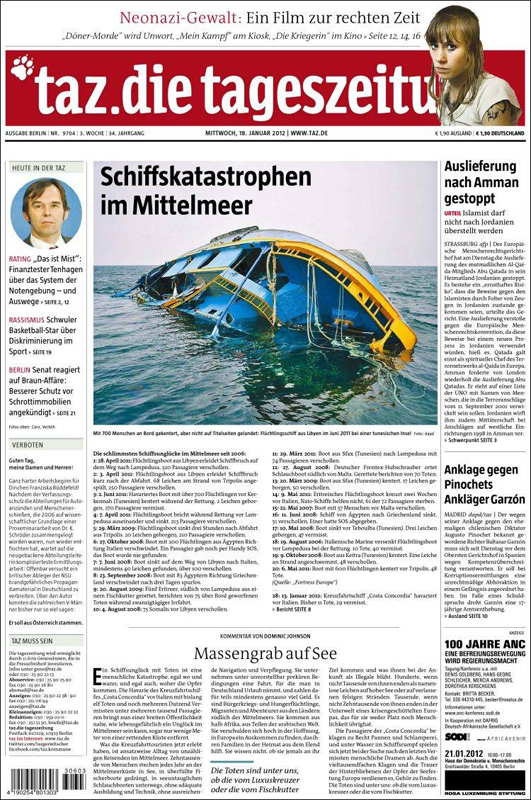
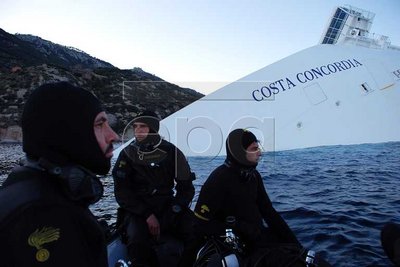
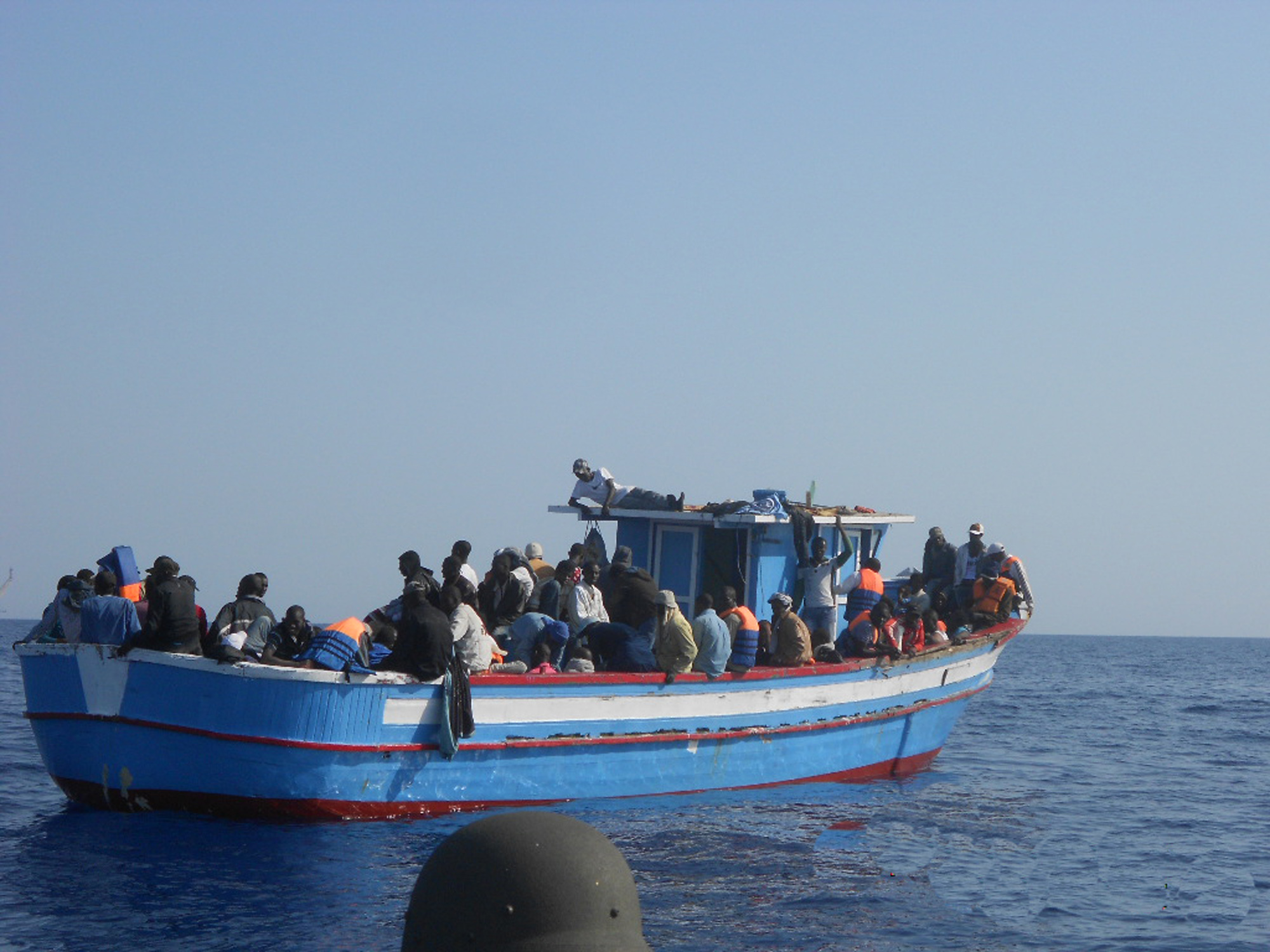
Presseurop reproduced a commentary article by Dominic Johnson from the Berlin newspaper Taz (Die Tageszeitung) contrasting the sinking of the Costa Concordia (and the extensive media coverage) with the more common and numerous sinking of migrant boats.  Without minimizing the loss of lives on board the Costa Concordia, and the ongoing efforts by Italian rescuers who continue to put their lives in danger as they search the wreckage, the striking contrast in the media coverage is worth noting.

Taz: “A boating accident with death is a human catastrophe, no matter where and when, and also no matter where the victims are from. … What happened to the cruise ship passengers is common to countless other travelers in the Mediterranean. Tens of thousands of people each year set out to sea on the Mediterranean, pushed into overcrowded fishing boats, inflatable boats, traveling in unseaworthy vessels, without adequate training or equipment without adequate navigation and catering.  They do the unimaginable under precarious conditions, a journey which we take as a holiday in Germany, and pay for it at least as much money. … They are civil war and famine refugees, migrants and others from the countries south of the Mediterranean. … Hundreds if not thousands of them end up as nameless corpses at sea or on deserted rocky beaches. Thousands if not tens of thousands of them end up in the underworld of a crisis-ridden Europe, which has left them no room for humanity yet. The passengers on the ‘Costa Concordia’ are right to complain about [what has happened].  But many thousands of times over, the grief of the bereaved families of the victims of the sea of fortress Europe also deserve to be heard. The dead are among us, whether from luxury cruisers or from the fishing boat.”  [Google translation from German]

Click here and here for articles from Die Tageszeitung. (DE)

Via European Pressphoto Agency- handout photo released by the Italian Police- EPA/ITALIAN POLICE HANDOUT EDITORIAL USE ONLY/NO SALES

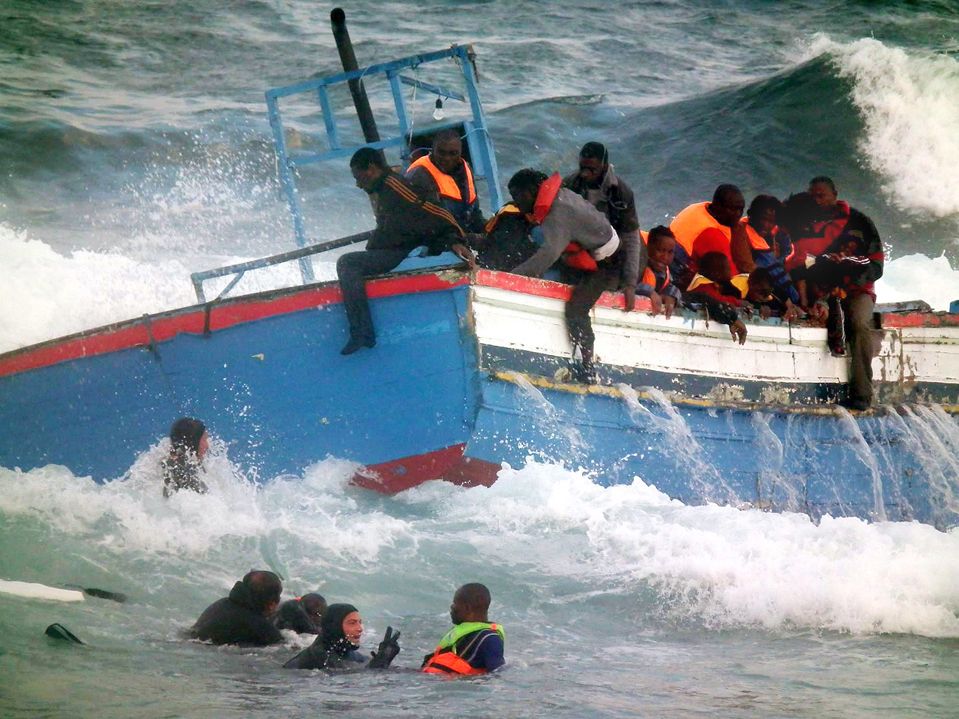
AFP PHOTO/ Francesco Malavolta/Getty Images

2 Comments

Filed under European Union, Italy, Mediterranean, News

Hundreds of Tunisians Who Sailed to Lampedusa in 2011 Remain Missing

Hundreds of Tunisians who departed Tunisia for Lampedusa by sea in early 2011 remain missing.  Some of the missing almost certainly died at sea, but family members remain hopeful that others survived the voyage and are now in Italy or elsewhere in Europe.  Earlier this week dozens of mothers of the missing demonstrated outside the Tunisian Ministry of Foreign Affairs during a visit by an Italian parliamentary delegation led by Margherita Boniver. The mothers have been holding daily demonstrations calling for assistance from Tunisian and Italian authorities.  The two governments have been asked to cross check fingerprint information.  Tunisia collects fingerprint information for national identity cards and Italian authorities have collected fingerprint information from arriving migrants.  There is speculation that some of the migrants may have used false names upon reaching Italy and as a result are more difficult to locate.

Click here (IT), here (IT), here (FR), and here (FR) for articles.

Click here for Facebook Page dedicated to finding missing Tunisians.

Click here for Storie Migranti Petition for missing Tunisian migrants / Appello per i migranti tunisini disperse / نداء من أجل التونسيين المهاجرين المفقودين / Appel pour les migrants tunisiens disparus.

Leave a comment

Filed under Italy, Mediterranean, News, Tunisia

Statewatch Analysis: The EU’s self-interested response to unrest in north Africa: the meaning of treaties and readmission agreements between Italy and north African states

Statewatch released an Analysis by Yasha Maccanico entitled “The EU’s self-interested response to unrest in north Africa: the meaning of treaties and readmission agreements between Italy and north African states.”  The Analysis provides a description of Italy’s responses to the migrant arrivals in 2011 caused by the unrest in North Africa.

Excerpts:  “The ‘crisis’ reveals questionable practices and routine abuses – The measures adopted in response to the increasing number of migrants arriving from north African countries serve to highlight a number of practices that have become commonplace in Italy in recent years.

The first of these is a widening of the concept of ‘emergency.’ Calling an emergency gives the government a wider remit to derogate from specified laws so as to resolve situations that cannot be dealt with through ordinary measures….

Although the situation in north Africa was worrying, the emergency was called when slightly over 5,000 migrants had arrived. An analysis by Massimiliano Vrenna and Francesca Biondi Dal Monte for ASGI notes that the government has repeatedly called and extended states of emergency since 2002 to deal with immigration, which is treated as though it were a “natural calamity” even when there is a wholly predictable influx of people from third countries. The urgent need specified in decrees declaring a state of emergency is to conduct ‘activities to counter the exceptional – later referred to as massive – influx of immigrants on Italian territory’ (as happened on 11 December 2002, 7 November 2003, 23 December 2004, 28 October 2005, 16 March 2007, 31 December 2007, 14 February 2008 for Sicily, Calabria and Apulia and was extended to the whole nation on 25 July 2008 and 19 November 2009), stemming from a prime ministerial decree of 20 March 2002. Thus, Vrenna and Biondi Dal Monte’s observation that the emergency is ‘structural’ appears well-founded. It has serious repercussions for the treatment of migrants (see below) and the awarding of contracts outside of normal procedures, with the involvement of the civil protection department whose competencies have been expanding considerably.

The second practice involves the expulsion, refoulement or deportation of migrants outside the limits and procedures established by legislation for this purpose. The failure to identify people, to issue formal decisions on an individual basis to refuse them entry or expel them, or to give them the opportunity to apply for asylum or other forms of protection, was a key concern when boats were intercepted at sea and either the vessels or their passengers were taken back to Libya between May and September 2009, when 1,329 people were returned. These rights were also denied to people arriving from Egypt and Tunisia in application of readmission agreements in the framework of the fight against illegal migration. Their presumed nationality was deemed sufficient to enact expulsions to these countries, because ongoing cooperation and good relations with Italy appeared sufficient to indicate that they were not in need of protection, regardless of the situation in their home countries. ….

The third practice is the ill-treatment of migrants held in detention centres. Without dealing with this issue in depth, it is worth noting that what could be viewed as arbitrary detention is occurring on a large scale, in the absence of formal measures decreeing detention and without the possibility of appealing against decisions. In fact, after landing, migrants are summarily identified as either ‘illegal’ migrants or asylum seekers, largely on the basis of their nationality….”

Click here for Analysis.

1 Comment

Filed under Analysis, Egypt, European Union, Frontex, Italy, Libya, Mediterranean, Tunisia

UNODC Issue Paper: Smuggling of Migrants by Sea

UNODC yesterday released an Issue Paper entitled “Smuggling of Migrants by Sea.” The paper, drafted by Ms Marika McAdam under the supervision of Ms Morgane Nicot (UNODC), is based largely on “answers received to questionnaires and discussions that took place in the context of an expert group meeting held in Vienna, Austria on the 13th to the 15th of September 2011.”

Excerpts from UNODC statement: “While the smuggling of migrants by sea accounts for only a small proportion of the total number of migrants smuggled worldwide, it accounts for the highest number of deaths among smuggled migrants. … The paper covers the international legal framework relating to the smuggling of migrants by sea, current responses to and challenges posed by such smuggling and recommendations to strengthen responses. … It is hoped that the practical experiences of responding to the smuggling of migrants by sea, addressed by the issue paper from the perspectives of countries of origin, countries of transit and countries of destination, will help other Member States in formulating their responses to suit their local contexts.”

Executive Summary: “Smuggling of migrants is defined by Article 3 of the Migrant Smuggling Protocol supplementing the United Nations Transnational Organized Crime Convention (UNTOC), as ‘…the procurement, in order to obtain, directly or indirectly, a financial or other material benefit, of the illegal entry of a person into a state party of which the person is not a national.’ The specific nature of the sea-based component of the smuggling journey resulted in a dedicated section on the issue in the Migrant Smuggling Protocol. While smuggling by sea accounts only for a small portion of overall migrant smuggling around the world, the particular dangers of irregular travel at sea make it a priority for response; though more migrant smuggling occurs by air, more deaths occur by sea.

The journey of the migrant smuggled by sea often starts a significant distance away from the coast of departure. Some journeys to the coast may take mere days, but others can take place over years during which the migrant must work en route to raise money for his passage. Arduous desert crossings and victimization by smugglers and other criminals en route mean that some do not survive overland journeys to the coast. Contrasted with these extreme experiences, economically empowered migrants can afford a higher level of smuggling service and may experience no particular hardship, simply travelling through various international airport hubs toward the coastal country from where their sea journey commences.

The type and size of vessel used to smuggle migrants by sea depends on the time, place and financial capacity of migrants undertaking the smuggling journey. In some countries, boats of only a handful of passengers are commonly intercepted by authorities, while in others vessels of several hundred people have been used. While voyages may be comfortable when conditions at sea are mild and the vessel is equipped with adequate food, water and sanitation, the journey is a harrowing one for the majority of migrants who report rough conditions, terrible cold and scarce food and water.

The nature of the crime and its relationship with smuggling of migrants by land and by air means that it is a successful crime type that yields high profits for smugglers with all the risks being borne by migrants. Indeed, migrant smuggling by sea can be understood as a criminal business, which is competitively run as such. Smuggling by sea is generally carried out by flexible criminal groups or individuals operating on the basis of repeated contractual arrangements, rather than by hierarchical organizations.

There are two methods used when vessels approach coasts of destination. One aims to reach land by evading detection by authorities, the other sets out to be detected and intercepted or rescued by authorities in territorial waters of destination coastal countries. In both situations, detecting smuggling vessels at sea is a key challenge for coastal states which may have limited resources and large search and rescue areas of responsibility.

Upon detecting vessels, the key challenge is to balance objectives with obligations at international law, including the Migrant Smuggling Protocol. Smugglers are generally well‐informed about states’ protection obligations and act to exploit them, instructing migrants what to do upon interception to increase their chances of gaining entry into and remaining in countries of destination. For instance, officials responsible for intercepting vessels at sea have been faced with situations of people sabotaging their own vessels to force authorities to carry out rescues. Suggestions made in respect of encountering migrant smuggling at sea include increased support of coastal states through joint patrols and provision of resources, and increased compliance with international legal standards and obligations in carrying out interceptions of smuggling vessels at sea.

While responding to the situation at hand and ensuring that persons on board are appropriately assisted, a key challenge is to seize evidentiary opportunities to investigate smuggling‐related crimes. The complex nature of migrant smuggling networks and their modus operandi means that smugglers cannot be identified purely by looking to smugglers who may be on board boats; the transnational criminal network itself must be traced from a smuggling vessel, back to the coast of embarkation, and from there back to countries of transit and origin. Suggestions made for improved investigation and prosecution of migrant smuggling by sea include harmonizing domestic legislation with the UNTOC and the Migrant Smuggling Protocol. Further it is suggested that sentences imposed for smuggling offences be publicized as a means of deterring would-be smugglers. Capacity building measures are also suggested so as to increase identification of smugglers on vessels, and to better link sea-based crimes with land-based smugglers.

Preventing migrant smuggling by sea requires states to balance their obligations in international law with their legitimate interests in protecting state sovereignty from violation by organized crime groups. But law enforcement efforts alone are not adequate to prevent migrant smuggling by sea; the Migrant Smuggling Protocol stresses that prevention efforts must address root causes that lead a person into the hands of smugglers in the first place. Suggestions made for preventing migrant smuggling at sea include raising awareness about the dangers of sea smuggling journeys and the criminality of smuggling. Suggestions are also made to raise awareness of those who influence political and policy decisions, so policies put in place protect state sovereignty, uphold international obligations, and are not vulnerable to exploitation by smugglers. Also emphasised is the responsibility of coastal states of departure to intercept smuggling vessels before they embark on sea journeys. Beyond this, comprehensive data collection, analysis and research are suggested to strengthen evidence-based responses.

Experts from countries of origin, transit and destination unanimously agree that the most essential ingredient for effective and comprehensive response to migrant smuggling by sea is strengthened international cooperation to remove areas of impunity for smugglers along smuggling routes. Suggestions made for cooperating in response to migrant smuggling at sea include aligning activities with the Migrant Smuggling Protocol and increasing the role of UNODC in facilitating cooperative response. The value of bilateral and regional cooperation arrangements is stressed, with emphasis on flexible cooperative networks for effective and efficient on-the-ground response. Regular coordination meetings and joint operations are suggested to improve strategic and operational interagency coordination, as is the empowerment of central designated authorities to address migrant smuggling by sea.

In short, while it is difficult to make generalizations about migrant smuggling by sea, two key points hold true around the world. Firstly, migrant smuggling by sea is the most dangerous type of smuggling for the migrants concerned, making it a priority concern for State response. Secondly, efforts to combat smuggling of migrants will be unsuccessful unless cooperation is strengthened not only between countries of sea departure and arrival, but also among the countries of origin, transit and destination along the entire smuggling route.”

Click here for Issue Paper.

Click here for UNODC statement.
2 Comments

Filed under Analysis, Reports, UNODC

PACE Rapporteur Completes Malta Trip

Ms Tineke Strik, the PACE Migration Committee rapporteur heading up the investigation into the deaths of boat people in the Mediterranean, completed a two day fact-finding visit to Malta.  From the Times of Malta reporting:  Ms Strik said that the “visit to Malta was important for my inquiry into who is responsible for lives lost in the Mediterranean Sea, and enabled me to piece together another part of the puzzle in the case of the ‘left-to-die boat’. … Nonetheless, the puzzle remains incomplete. Gaps remain and important questions still need to be answered. As time is precious in this kind of inquiry, I very much count on national authorities, NATO and the EU to provide me swiftly with the information I have requested.  … [T]he on-going dispute between Italy and Malta on their respective responsibility with regard to the disembarkation of boat people rescued at sea remains a cause of serious concern.”

Click here and here for articles.


Leave a comment

Filed under Council of Europe, European Union, Frontex, Italy, Libya, Malta, Mediterranean, News

Australia-Bound Boat Sinks Off Java – Hundreds Feared Dead

A migrant boat attempting to reach Australia sank off the coast of Java on Saturday.  The boat was believed to be carrying about 250 persons from Afghanistan, Turkey, and Iran.  About 25 persons, including children, have been rescued.

Click here, here, and here for articles.

Leave a comment

Filed under Australia, Indian Ocean, Indonesia, News

PACE Rapporteur in Malta

Ms Tineke Strik, the PACE Migration Committee’s rapporteur who is heading up the investigation into the deaths of boat people in the Mediterranean, is in Malta today and tomorrow in connection with the ongoing inquiry.  PACE Press Statement:  Ms. Strik “will make a fact-finding visit to Malta from 15 to 16 December 2011.  During her visit, the rapporteur will meet refugees who arrived from Libya after January 2011 to gather testimony on their experiences, and will meet officials from the Maltese armed forces who are involved in organising rescues. She will also meet representatives of NGOs and European and UN officials dealing with refugee matters on the island, and the Maltese delegation to PACE. … Her report is expected in the spring of 2012.”

Click here for press statement.
 

Leave a comment

Filed under Council of Europe, Libya, Malta, Mediterranean, News

ECRE Interview with Tineke Strik Regarding PACE Investigation into Migrants Deaths in Mediterranean

ECRE last week published an interview with Ms Tineke Strike regarding the PACE Migration Committee’s ongoing investigation into the almost 2000 migrant deaths that have occurred in the central Mediterranean this year.  The Committee is focusing in particular on the incident that occurred in late March 2011 when unknown ship(s) and aircraft observed and then failed to rescue a disabled migrant boat.  Approximately 60 persons subsequently died.

Excerpts from the ECRE interview:

“[***]  What are the main findings of your report on the death at the Mediterranean so far?

We have spoken with survivors and with the priest who received the request for assistance from the boat in distress, Italian border guards, and the Italian refugee agency, as well as the Italian Refugee Council (CIR), a Member of ECRE. We also talked to different people in Brussels, including NATO, the ambassador of the Council of Europe, Amnesty and several MEPs. Today, during the PACE hearing on November 30 in Paris, we had a discussion with a number of experts in international law, Frontex, UNHCR and ICRC. All in all a lot of information has been gathered.

We have already sent requests for information to find out via satellite maps and logs if there were boats near the distressed boat Once we know under which flags these boats were sailing, we will be able to track which governments might have been responsible and ask them whether they knew that the boat asking for help was in danger or not and how they acted upon that information.

We are actually still waiting for information for this information. It is unfortunate that it takes time to get this information but we are trying to get hold of it through different channels. We have approached High Representative Ashton and asked for her consent to provide us with information from the European Satellite Centre. We have already used this kind of information at the Council of Europe, for example to detect the illegal detention centres that the CIA was using. We therefore hope that Ashton once again will cooperate.

We also asked NATO to provide us with information and have asked all the countries who took part in the NATO action in Libya and who had ships in that region during that period to give us data on where their boats were and when. NATO has promised to request the Member States to provide us with this information, also if these boats were not under the command of NATO. If this does not succeed, we still have our own national parliamentarians that could push their governments in their own country if it is necessary to gather the information.

If countries were involved they might not want to admit that, which makes my position difficult. I am not a judge and I don’t have enforcement powers so I’m partly dependent on the cooperation of various parties.  But I think all parties can benefit from transparency on what has happened, in order to avoid such tragedies in the future.

[***]

How do you think the EU has responded to the turmoil and war in North Africa and, in particular, the following displacement of people in the region and the arrival of some of them to Europe?

In my report following the protests in North Africa, we see that by far the largest part of the people who have fled Libya went to Tunisia and Egypt. There was a lot of fuss in the EU about the 25,000 who eventually fled to Italy. Tunisia took half million, Egypt took a half a million which shows how big the contrast with the EU was, especially considering that Member States were reluctant to resettle refugees from camps in Tunisia. This while Tunisia and Egypt were in a very vulnerable position in the post-revolutionary period. If we really want to help and strengthen stability in the region, we must show these states that they are not alone. These countries generously opened their borders, they understood the situation of the people there and to a great extent we stood aside and just watched.

Then we failed to help out Italy and Malta, especially when countries like France and Denmark wanted to close their borders. This shows exactly how much we are still not politically ready for a common asylum system. We provide beautiful public statements but when it comes down to it, Member States do not want to lose their sovereignty or be troubled by developments elsewhere. I do not think you can have both: either you have a joint system and you show solidarity, or you close all the borders and reinvent the wheel.

Common policies go hand in hand with solidarity and in fact we should look beyond the European borders.  What you see now is that border controls at the external borders of the EU continue to shift to North Africa and sometimes even further. One cannot claim that our responsibilities only begin when people have reached our territory. I was therefore very disappointed when the European Commission replied to a question by MEP Hélène Flautre on this incident saying that the boat was in Libyan waters and therefore they had no power to get involved. If certain acts like push backs at high sea or bilateral agreements with unsafe third countries such as Libya, lead to death or inhumane treatment, EU member states or other countries of the Council of Europe are accountable for a violation of the European Convention on Human Rights. In that sense I have high expectations of the decision of the ECHR in the case of Hirsi and others v. Italy.

[***]

What do you think the impact of your work and the investigation will be?

I hope the report will raise the awareness of the international obligations and also the awareness of the importance of avoiding such tragedies. It is important that violating the obligation to rescue does not remain unmentioned or lead to impunity. If we succeed in proving which actors were wrong. Member States will be more careful and there will be more pressure to cooperate and share the responsibilities, and to establish practical and binding solutions. Being a parliamentary assembly of national parliamentarians, I also hope that the discussion will also take place in Member States. I find it really outrageous that such a tragedy can occur so close to our borders and that we have been so silent about it.

[***]”

Click here for full interview.

Click here for my last post on this topic.


Leave a comment

Filed under Council of Europe, European Union, Frontex, General, Italy, Libya, Malta, Mediterranean, News, Tunisia, UNHCR

Update Regarding PACE Investigation into Migrant Deaths in the Mediterranean

I have sought additional information from NATO and PACE regarding the 29 November hearing held in Paris by the PACE Migration Committee regarding the deaths of boat people in the Mediterranean.  I was informed by a PACE official that the minutes of the 29 November hearing will be released during or after the Committee’s next scheduled meeting which will take place in late January 2012.

In my previous post on this topic I incorrectly said that NATO officials attended the 29 November hearing.  Instead Ms Strik, the Committee’s rapporteur, met with a senior NATO official in Brussels on 28 November.  A NATO official informed me that “during the meeting [with Ms Strik], NATO offered to look into new details of the 28 March 2011 incident which were provided to NATO by Ms Strik. This process is ongoing and we will reply to the Council of Europe in due course.”

The NATO official reiterated to me that NATO ships were “fully aware of their responsibilities” to respond to vessels in distress and noted that during Operation Unified Protector “NATO ships have directly assisted in the rescue of more than 600 people in distress at sea.”  The official provided information about two incidents which have previously been reported on:

  • “[O]n 26 March 2011, NATO ships responded to information that two migrant ships with over 500 people on board were in distress, which were then provided direct assistance by the Italian authorities. That included a NATO ship using its helicopter to airlift two women and a newborn child to medical help”; and
  • “On 10 July 2011, a NATO ship responded to a vessel in distress approximately 75 miles off the coast of Libya. The NATO vessel provided medical support, food and offered mechanical assistance to the distressed migrants. In response to a deterioration of the humanitarian situation onboard, the 114 migrants were transferred onto the NATO ship in accordance with the Safety of Life at Sea (SOLAS) protocol and delivered to safety in Tunisia.”

The reference to the 26 March incident presumably relates in part to the Canadian warship, HMCS Charlottetown, which made contact with a disabled migrant boat carrying over 250 migrants on 25 March.  The Charlottetown provided food, waters, and repairs to the migrant boat and escorted it until 26 March when the Italian Coast Guard arrived on scene.  As far as I can tell from news reports from the time of this incident, there was only one migrant boat involved.   NATO’s current statement indicates there was a second migrant boat encountered by NATO at this time.

Click here and here for my previous posts on the March 2011 incident.

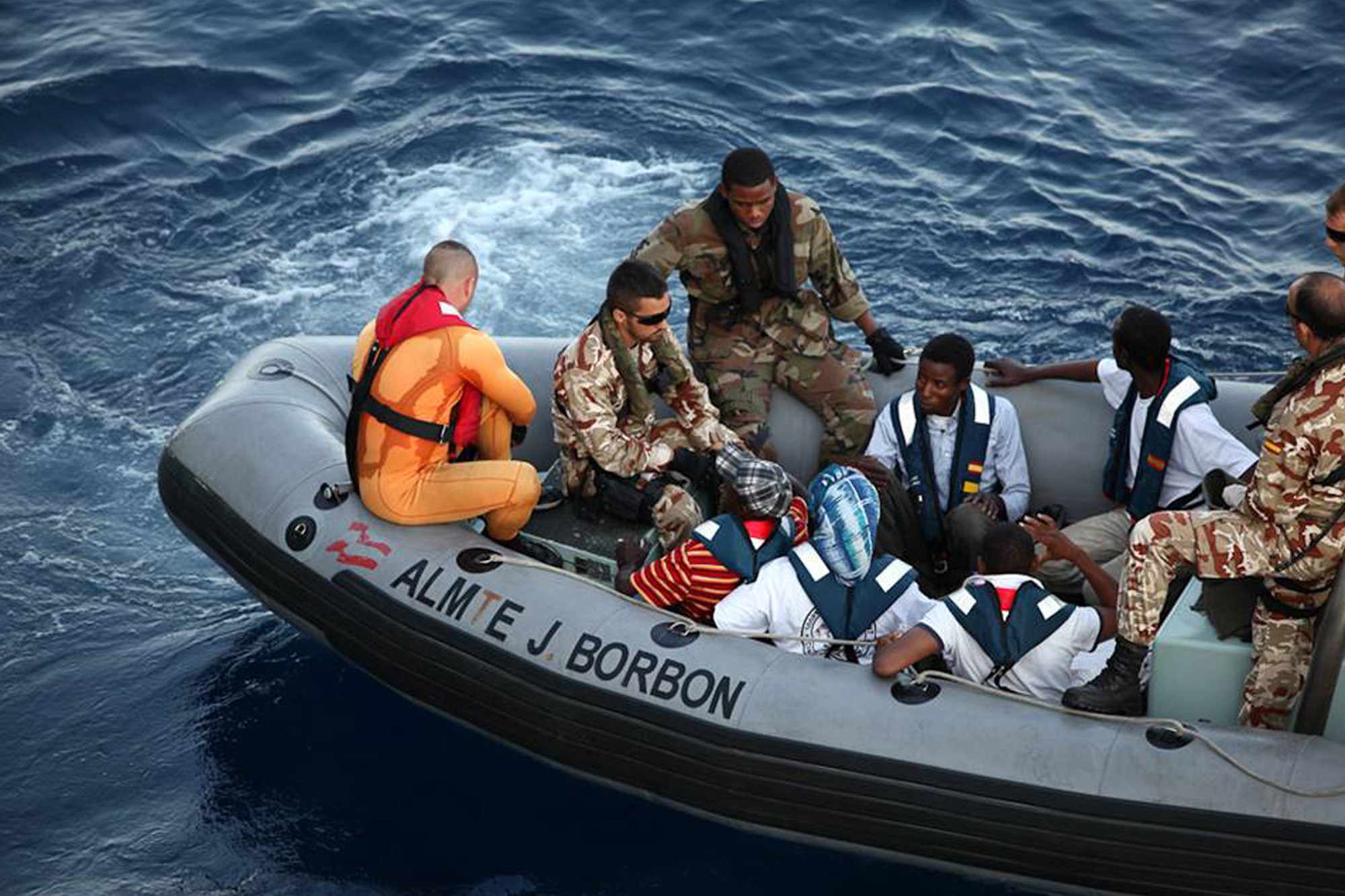
The 10 July incident relates to the rescue of over 100 migrants by the Spanish Navy frigate, the Almirante Juan de Borbón.  The rescued migrants remained onboard the Spanish frigate for six days after Malta and Italy refused to permit the NATO ship to enter port to disembark the rescued migrants.  The migrants were transferred to a Tunisian navy ship on 16 July and presumably then taken to Tunisia.

Click here and here for my previous posts on the July 2011 incident.

Neither of these two incidents relates to the events that occurred between 25 March and 10 April 2011 when a disabled migrant boat drifted for days during which time approximately 60 persons died.  Survivors from the migrant boat reported that at various times military ships and helicopters ignored their requests for assistance.  The Guardian reported extensively on this subject and the PACE Committee has been seeking information from NATO about this particular incident.

Click here and here for Guardian articles.

Click here for my last post of the PACE 29 Nov. hearing.

HMCS Charlottetown and migrant boat 25 March 2011.

Photo Credit: Lt(N) Michael McWhinnie, Department of National Defence and Canadian Forces

Spanish frigate Almirante Juan de Borbón rescuing migrant boat on 10 July 2011 and transferring migrants to Tunisian navy vessel on 16 July 2011.

Photo Credit: Ministerio de Defensa de España (mde.es)

Photo Credit: Ministerio de Defensa de España (mde.es)

2 Comments

Filed under Council of Europe, Italy, Libya, Malta, Mediterranean, News, Tunisia

Migrant Boat Rescued by Armed Forces of Malta

An Armed Forces of Malta patrol boat rescued 44 Somalis from a sinking 7 metre dingy early Tuesday morning.  The rescue took place about 70 nautical miles south of Malta.  The migrants have been taken to Malta.  The boat is believed to have departed from Libya on Saturday.  Survivors reported that two persons died during the voyage.

Click here and here (with video) for articles.

In an incident last week, the Moroccan Royal Navy rescued 53 migrants from a boat off Dar Kabdani.  At least four persons are known to have died in that incident.

Click here (EN) and here (IT) for articles.

Leave a comment

Filed under Libya, Malta, Mediterranean, Morocco, News, Somalia

NATO Reportedly Agrees to Provide Additional Information to PACE Regarding Migrant Deaths in the Mediterranean

The PACE Committee on Migration, Refugees and Population, in connection with the preparation of a report by Ms Tineke Strik (Netherlands, SOC) on the deaths of boat people who have died in the Mediterranean, conducted a hearing in Paris on 29 November.  NATO officials who met with Ms Strik in Brussels before attended the hearing reportedly agreed to provide additional information, which might include satellite imagery, to the PACE Committee.

From PACE Press Statement, 30 November 2011:  “‘With 1971 boatpeople having perished in the Mediterranean Sea while trying to reach European soil from North Africa, the year 2011 sets a sad record as the deadliest year for boatpeople,’ PACE rapporteur Tineke Strik (Netherlands, SOC) said at the end of a hearing on this issue, organised by the Parliamentary Assembly of the Council of Europe (PACE) Migration Committee.  ‘Never before the Mediterranean Sea has been as closely monitored as this year because of the war in Libya and still more boat people than ever perished or disappeared,’ the rapporteur added.  ‘Is there a common understanding of a “distress situation”? Is it clear which legal framework is applicable and by whom? Do all ships, even warships, have to proceed with rescue operations even if they are situated beyond established search and rescue zones? Where does legal responsibility start and where does political responsibility end? These are some of the issues we are currently trying to clarify,’ she said.  Mrs Strik’s report will focus on an incident reported in March this year, during which 63 boat people escaping from Libya died after their appeals for rescue had allegedly been ignored. ‘The testimonies of survivors of this incident are coherent, but we have to continue to collect more data and information on who was when and where in the area and we now expect Nato and the EU to provide us with satellite imagery and other relevant information,’ she concluded.”

Click here, here, here, and here for articles.

Click here for PACE Press Statement.

Click here for my last post on the topic.

1 Comment

Filed under Council of Europe, Frontex, Italy, Libya, Malta, Mediterranean, Netherlands, News, Tunisia, UNHCR