Tag Archives: Human Trafficking

ICMC Europe Report: “MAYDAY! Strengthening responses of assistance and protection to boat people and other migrants arriving in Southern Europe”

ICMC has released a 150+ page report entitled “MAYDAY! Strengthening responses of assistance and protection to boat people and other migrants arriving in Southern Europe.”  I have just started reading the report and may post some additional excerpts in the coming days.  Here is an excerpt from the Foreword and Introduction:

“In the first months of 2011 alone, more than 2,000 migrants have died crossing the Mediterranean Sea. More than 2,500 unaccompanied children arrived just on Italian shores. Tragic, chronic figures like these are urgent and continuous reminders of the need for another approach to human mobility that goes far beyond simple enforcement and fundamentally recognises the rights to life and protection for all.

It is not so much the arrivals of migrants and refugees that should be put to question, but rather the response mechanisms which very often fail as much in the fields of prevention and rescue as in the processes deciding where and how people are permitted to move, disembark, stay or return. Protection today is provided only for a limited number of boat people who need it, and governed by systems of access and identification that are far too limited. Correct identification, differentiation and referral systems are needed for all migrants in distress and from the very moment of their arrival, not only because they are human beings, but also because such approaches reflect the quality of our societies….”

Scope of this report – Gathering the results of nearly a half thousand surveys of first responders and other actors as well as the migrants themselves, this report examines what happens—or does not happen— to identify migrants in need of protection and assistance upon their arrival in Europe. In particular, it sheds light on the mechanisms developed, and gaps both in practice and in policy in responses to boat people and other migrants arriving in mixed migratory movements in four countries at Europe’s Southern door: Greece, Italy, Malta and Spain.

Although rescue at sea at one end and voluntary or enforcement-related return at the other are highly relevant topics and areas of research per se, DRIVE has focused on the situation of migrants at point of arrival. As such, the project and this report look at first responses in the phase immediately upon and surrounding arrival, and then to identification, differentiation and referral mechanisms for legal protection and/or further assistance in subsequent phases following arrival.

The principal focus of the project was on boat arrivals, but the shift in routes in Greece during the project period and the sharp increase in land border crossings there compelled reflection upon responses to migrants crossing land borders as well as those arriving by sea. While the project maintained its focus on arrivals by sea, one of its findings is that most of the laws, policies, procedures and responses applicable to boat people pertain equally to those arriving across land borders—in particular, steps on identification, differentiation and referral for protection and assistance.

The DRIVE project set out to promote protection of the rights of all migrants in these situations, especially the most vulnerable, regardless of their immigration status. Nevertheless, the project has highlighted four groups whose members have come to be defined to a varying extent as having specific rights or special needs under international and European legal instruments: asylum seekers, victims of human trafficking, children, and victims of torture. It merits emphasising however, that other migrants also have special needs because of particular vulnerabilities,- notably people with serious health problems, disabled people, elderly people, pregnant women, single parents with minor children and persons who have been subjected to or witnessed torture, rape or other serious forms of psychological, physical or sexual violence.

Structure of this report – The report is composed of four main parts, plus annexes:

Part 1: Building policy responses to boat people and others arriving in mixed migration flows – Within this first part, Chapter 1 provides a brief history of the policy evolution and the organizations involved in the area of mixed migration. Chapter 2 gives an overview of legal obligations relating to the rights of the migrants composing these arrivals. The third chapter provides an analysis of the EU policy and legal framework with regards to mixed migration arrivals at its borders.

Part 2: A focus on post-arrival identification, differentiation and referral for assistance and protection – The first chapter explains what is meant and implied by “identification, differentiation and referral”in mixed migration contexts, the concept at the core of the DRIVE study. The second chapter seeks to focus on the legal obligations of member states to conduct identification of people in need of protection at the border, with in-depth legal analysis of the rights and state obligations that international and EU law articulate for asylum seekers, children, and victims of human trafficking and torture.

Part 3: What happens to people arriving irregularly by boat in Greece, Italy, Malta and Spain? – The first chapter gives a snapshot of the trends and figures of arrivals in the Mediterranean region. In Chapter 2, the summaries of the four country reports (each presented in its entirety in an annex) then provide a look at the procedures and practices on the ground for first reception, identification and referral. The third chapter presents the results of the extensive migrants surveys that the DRIVE project conducted in the four countries in an effort to give voice to the beneficiaries themselves. Chapter 4 concludes with a comparative analysis identifying the main gaps and challenges in those countries.

Part 4: Conclusions and recommendations – The focus on the four countries enabled consideration of practices and procedures which could either improve the quality of the process or prevent people from accessing protection and assistance. Recommendations therefore seek to address how identification, differentiation and referral can be improved in the Mediterranean, including how the international and European legal and policy framework can address this question in a more comprehensive manner.

Annexes: Detailed mapping of the situation in Greece, Italy, Malta and Spain are attached in the annexes, as well as a presentation of some relevant tools and guidelines….”

Click here for Report.

1 Comment

Filed under Analysis, Data / Stats, Eastern Atlantic, European Union, Greece, Italy, Malta, Mediterranean, Reports, Spain

Europol 2011 Organised Crime Threat Assessment – Illegal Immigration and THB

Europol just issued its 2011 Organised Crime Threat Assessment (OCTA) (OCTA_2011-1).  The report contains Europol’s assessments regarding “current and expected trends in organised crime affecting the European Union.”  Among the topics discussed are the facilitation of illegal immigration and trafficking in human beings.

The report notes that the increased control of the external borders of the EU, combined with other immigration controls, has resulted in irregular migrants turning to organised crime groups to facilitate their entry to the EU.  The report notes that increased enforcement activities which successfully reduce illegal immigration in certain areas may result in substantial increases in illegal immigration in other areas.

The report indicates that organised criminal groups are exploiting and will continue to exploit the social and political unrest in North Africa and that organised crime groups are responsible for facilitating the movement of the thousands of Tunisians who have entered Italy.

The report notes that the accession of Bulgaria and Romania to the Schengen zone “may yield increased illicit traffic through these countries and the possible displacement of illegal immigration flows from the Turkish-Greek border.”

Excerpts from the 38 page report pertaining to the facilitation of illegal immigration:

“[I]ncreasing control of external borders, the introduction of higher quality travel documents and other protective measures implemented by destination countries are making illegal immigration more difficult for individual migrants, forcing them to seek the services of organised crime groups.

International agreements and coordinated law enforcement activities have a significant impact on the flows of illegal immigrants along established routes. In 2010, a sharp reduction in the use of sea routes was accompanied by a substantial increase in illegal overland entries, overwhelmingly concentrated on the Turkish-Greek border.

Besides being the natural gateway for immigrants from the Middle East and Asia, Turkey is now the final step towards the EU for migrants with many other origins, including North and West Africans. Its geographical position, the presence of historical smuggling routes and the comparative ease with which entry visas may be obtained have transformed Turkey into the main nexus point for illegal immigrants on their way to Europe.

[***]

Legislation aimed at safeguarding certain inalienable individual or social rights is manipulated by organised crime groups with specialist expertise. Political asylum requests, and family reunions following marriages of convenience with EU citizens, are among the most frequently abused procedures. In addition, a prevalent tactic is to exploit loopholes and the lack of harmonisation in current legislation.

[***]

Criminal Groups

Organised crime groups involved in the facilitation of illegal immigrants tend to be structured in loose networks of smaller groups with ethnic or other cultural connections to customers. By the same token, illegal immigrants tend to be recruited by, or approach facilitators from, the same ethnic background. However, few criminal groups have the capacity to manage all stages from source to destination country. The further migrants get from their country of origin, the greater the chance that their facilitators will be of an ethnic origin different from their own. Along the route, small local criminal groups receive and house transiting illegal immigrants, facilitating their passage to the next stage. In the often extended time between stages, transiting migrants are frequently exploited in illicit labour, thus marking a point of contact between illegal immigration and trafficking in human beings (THB).

Organised crime groups in destination countries play a fundamental role in the smuggling of migrants. Criminals, often legitimately resident in the EU, facilitate the last step of the migrants’ journey, in some cases collecting final instalments of transportation fees, and are in an ideal position to profit from newly arrived migrants, sometimes employing forms of exploitation typical of THB.

The most widely reported organised crime groups involved in the facilitation of illegal immigration are of Chinese, Turkish, Albanian, Indian, Iraqi, and Russian origin. Chinese, Vietnamese, Indian, Pakistani, and some West African groups are among the most capable, managing all successive phases of illegal immigration from source to destination countries. Although these groups may sub-contract part of the transportation or the production of falsified documents, they maintain effective control over the illegal immigrants throughout.

The growing importance of Turkey as a nexus point for migrants is likely to be further exploited by Turkish organised crime groups already extremely skilled in managing routes for illicit commodities and will make the most of their resources and contacts in the EU to maximise profits from this lucrative criminal market….

[***]

Criminal hubs

Political and legislative initiatives impact on regional dynamics, resulting in frequent shifts between hubs and preferred nexus points outside the EU.

Migrant flows across the Mediterranean Sea and illicit entries at the Eastern land borders have both significantly decreased. Greece is now the focus for illegal entry to the EU, and while levels of illegal migration connected with seasonal work patterns between Albania and Greece have decreased in the last year, illicit entries of migrants from Turkey have increased by over 500 per cent between 2009 and 2010

The South East criminal hub is therefore under the heaviest pressure. As a result also of its proximity to the Western Balkans, the hub’s centre of gravity for this criminal problem is currently Greece.

[***]

The Southern criminal hub is a landing zone for many immigrants who have entered the EU through Greece, and who either remain in Italy or proceed to other MS. Illegal immigrants are often exploited or employed by organised crime groups active in the hub.

Emerging and Future Issues

The social and political unrest pervading North Africa since January 2011 is likely to have a significant impact on the internal security of Southern Europe. By exploiting the present political vacuum and the diminution of police capability to maintain public order and combat criminal activity, organised crime groups are facilitating several thousands of illegal immigrants, mainly of Tunisian origin, in their attempt to cross the Mediterranean and reach Europe. This carries an inherent risk to the internal security of the EU.

The large and growing number of illegal immigrants from countries and regions in which Islamist terrorist groups are active – such as Chechnya, Afghanistan, Iraq, Pakistan and Somalia – raises the possibility that channels for illegal immigration will be used increasingly by those seeking to engage in terrorist activity in the EU.

In the absence of any significant harmonisation of standards with regards to visa issue for a variety of purposes (including settlement for marriage and family reunions) a further increase in the abuse of legitimate migration procedures is likely.

The possible accession of Romania and Bulgaria to the Schengen Zone will greatly widen the Eastern green and blue borders. This has the potential to release the pressure on the Turkish-Greek border, and lead to increased targeting of Bulgaria and the Black Sea coast by illegal immigrants and their facilitators.

Turkish organised crime groups, currently in a dominant position at the biggest nexus point for migrants, will exploit further opportunities for delivering illegal immigrants to the EU by means of the Black Sea and the flourishing Turkish diaspora in Bulgaria….

[***]

… The role of the Western Balkans as a logistical hub will be sustained and may even grow further, while the proposed accession of Bulgaria and Romania to the Schengen zone may yield increased illicit traffic through these countries and the possible displacement of illegal immigration flows from the Turkish-Greek border. In this event, Member States in South East Europe may require additional operational support. In light of the continued prominence throughout the EU of Albanian speaking criminal groups, strategic and operational partnerships with authorities in the Western Balkans will be increasingly important.

Ongoing political instability in countries close to the borders of the EU and transit areas for illicit commodities has the potential to alter trafficking routes and create new illegal migration flows. In countries such as Tunisia and Egypt the process by which serving regimes are replaced may result in power and investment vacuums in both the public and private sectors. Some of these could be filled by those with sufficient resources to exploit the instability for criminal ends, including EU organised crime groups. In politically fragile environments organised crime can also prosper by providing essential services such as transport infrastructure, and food and fuel supply. The effects of illegal immigration as a result of instability in North Africa – already experienced by Italy – are likely to spread if levels of unrest persist or increase. Should living conditions deteriorate in the longer term, the EU is likely to see an increase also in victims of THB from this region….

[***]”

Click on this link OCTA_2011-1 for OCTA report.

Click here for Europol press release.

Leave a comment

Filed under Aegean Sea, Analysis, Black Sea, Eastern Atlantic, European Union, Mediterranean, News, Reports

Is Libyan Government Facilitating Migrant Boat Departures from Libya?

Gaddafi and other Libyan officials in recent weeks have made statements to the effect that Libya will no longer prevent irregular migrants from leaving Libya and have made threats that Libya will encourage irregular migration.  (6 March, Gaddafi: “I want to make myself understood: if one threatens [Libya], if one seeks to destabilize [Libya], there will be chaos, Bin Laden, armed factions.  That is what will happen. You will have immigration, thousands of people will invade Europe from Libya. And there will no longer be anyone to stop them….”)

Now that migrants boats are again leaving Libya and arriving in Italy and Malta, it is unclear what role, if any, the Libyan government may be playing.  In an article in yesterday’s Times of Malta there is a short statement by an Eritrean man who had just arrived in Malta from Libya on a migrant boat.  His statement suggests that the Libyan government may be facilitating the departures:  “[a] man said he had been in Libya for five years and this was not the first time he had tried to escape.  ‘The boats were organised by the same people,’ he said, referring to a Libyan racket which was widely believed to enjoy the support of the North African regime.  The migrants said they paid between $500 and $1,000 for their journey – meaning that those who organised the boats were pocketing an average of $200,000.”

Click here for article.

2 Comments

Filed under Italy, Libya, Malta, Mediterranean, News

“Non-Stop” Boat Arrivals Continue in Lampedusa; Maroni Says Libyan Smuggling Organisations Now Operating From Tunisia

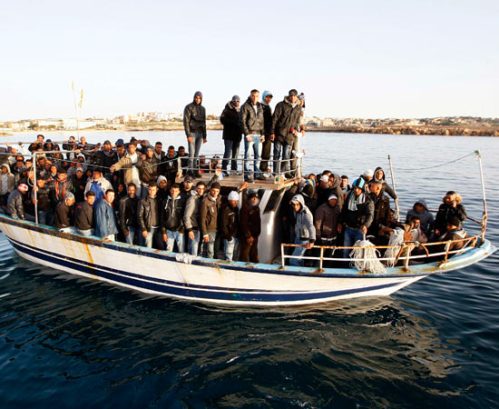
Boats containing over 1000 Tunisians arrived in Lampedusa on Monday.  The boats are reportedly leaving Tunisia from the southern coast from the port of Zarsis and the island of Djerba, an area near the border with Libya.

Interior Minister Roberto Maroni said on Monday that “we know that criminal organizations that operated by moving illegal immigrants from Libya have reappeared and are now repositioning themselves in the south of Tunisia.  (“Al ministro dell’Interno Roberto Maroni che parla di altre ‘migliaia e migliaia di persone pronte a partire’ e lancia un allarme: ‘abbiamo notizia – spiega – che sono riapparse le organizzazioni criminali che operavano prima in Libia facendo partire i clandestini e che adesso si stanno riposizionando nel sud della Tunisia’.)  Maroni said that “Italian intelligence had reported ‘thousands and thousands of young people’ heading for … Zarzis and Djerba, and that it would require a ‘significant commitment’ from EU countries to block their departure.”

Click here (IT), here (IT), here (IT), and here (EN) for articles.


Credit: Lampedusa, ancora sbarchi dalla Tunisia-FOTOGALLERY- LASTAMPA.it:


Leave a comment

Filed under European Union, Frontex, Italy, Libya, Mediterranean, News, Tunisia

Interview with Frontex Director Regarding the 5000 Tunisians in Italy

Frontex Director Ilkka Laitinen was interviewed by Spiegel Online.  He expressed the view that Frontex’s main task in regard to the 5000 or so Tunisian migrants who have reached Italy over the past several weeks will be facilitating the return of most of them to Tunisia.  According to Laitinen, only a “very few” of the Tunisians have sought asylum protection.  He also said that Frontex “experts [had] come to the conclusion that the flight of the 5,000 had been planned for a long time. ‘Twenty human traffickers have already been arrested[.] They had just been waiting for the right opportunity.’”

While the view that most of the Tunisians who have arrived to date in Italy will not qualify for asylum or subsidiary protection is shared by many others, if and when people begin fleeing directly from Libya, whether they be Libyan or non-Libyan, there will almost certainly be a much larger number of qualified asylum seekers in any new migrants flows, especially if the Gaddafi regime remains in power.

Click here for article.

1 Comment

Filed under European Union, Frontex, Italy, Libya, Mediterranean, News, Tunisia

COE Seminar: Human rights dimensions of migration in Europe (Istanbul, 17-18 Feb)

Thomas Hammarberg, COE Commissioner for Human Rights, and the Turkish Chairmanship of the Council of Europe Committee of Ministers are holding a migration and human rights seminar in Istanbul, 17-18 February.  From the Commissioner’s web site:  The seminar “aims to exchange views on the most important discrepancies between European migration laws and practices and human rights standards, as well as on optimal ways to provide assistance to states in reflecting on and revisiting their migration policies.”

Three general topics will be addressed: Human rights challenges of migration in Europe, Unaccompanied migrant children, and Smuggling of migrants.  Scheduled speakers and participants include:

  • Karim Atassi, UNHCR Deputy Representative to Turkey;
  • Tina Acketoft, PACE Committee on Migration, Refugees and Population;
  • Emily Logan, Irish Ombudsman for Children;
  • Rebecca O’Donnell, Save the Children, Brussels;
  • Elisabet Fura, ECtHR Judge;
  • Martin Fowke, Unit on Trafficking in Persons and Smuggling of Migrants, UNODC;
  • Richard Ares Baumgartner, Frontex Senior External Relations Officer ;
  • Professor Dr. Nuray Ekşi, Chair of Private International Law Department at the Law Faculty of ĺstanbul Kültür University;
  • Professor Theodora Kostakopoulou;

Click here for draft programme.

2 Comments

Filed under Aegean Sea, Colloques / Conferences, Commissioner for Human Rights, Committee of Ministers, Council of Europe, European Court of Human Rights, Frontex, Turkey, UNHCR, UNODC

Euro-Africa Conference on Illegal Immigration, Human Trafficking, Drug Trafficking, and Terrorism (Napoli, 7-9 February)

The Italian Interior Ministry and the Direzione Centrale dell’Immigrazione e della Polizia delle Frontiere are conducting a three day conference, beginning today, in Napoli, 7-9 February.  In attendance will be top police officials from 45 African countries, 25 EU countries as well as officials from agencies including Interpol, Europol, Frontex and, as observers, representatives of the US FBI and Dept. of Homeland Security.  Among those scheduled to attend are Rodolfo Ronconi, Direttore Centrale dell’Immigrazione e della Polizia delle Frontiere, Interior Minister Roberto Maroni, INTERPOL Secretary General Ronald Noble, EUROPOL Director Rob Wainwright, and Frontex Director Ilkka Laitinen.

According to a draft agenda for the conference, discussion topics will include:

  • Immigration Group – The African continent as a source and place of transit for migratory flows towards Europe across the Mediterranean Sea.  Internal migration within African. Threat assessment, ongoing bilateral initiatives, multilateral initiatives, and methods of law enforcement;
  • Group on human trafficking and organized crime – Criminal networks involved in smuggling: prevention and law enforcement investigative techniques, with particular reference to flows from Greece and Central Africa to Europe;
  • Drug Trafficking Group – African continent: new narcotrafficking directed towards Europe;
  • Group on Terrorism – Cyberspace as a new platform for radicalization: comparing experiences.

Original Italian:

  • Gruppo Immigrazione – Il  Continente africano quale origine e transito dei flussi migratory diretti in Europa attraverso il Mar Mediterraneo.  I fenomeni migratori interni al Continente africano.  Valutazione della minaccia, iniziative bilaterali, multilaterali e metodologie di contrasto;
  • Gruppo Tratta degli esseri umani e criminalità organizzata sul tema “Le reti criminali coinvolte nel traffico di migranti: tecniche di investigazione preventiva e repressiva, con particolare riferimento ai flussi provenienti dalla Grecia e dal Centro Africa verso l’Europa”;
  • Gruppo Traffico di Stupefacenti sul tema “Il Continente africano: nuovo crocevia del narcotraffico diretto verso l’Europa?”;
  • Gruppo Terrorismo sul tema “Il Cyberspazio quale nuova piattaforma per la radicalizzazione: esperienze a confronto”;

Click here (IT) for short article.

Click here (IT) for draft agenda.

I would love to know more about the substance of the conference – if anyone has any information or documents to share, please do so. ( nfrenzen@law.usc.edu ).

2 Comments

Filed under Aegean Sea, Colloques / Conferences, European Union, Frontex, Greece, Italy, Mediterranean, News

Eritreans Diverted from Libya Held by Human Smugglers at Egypt-Israel Border

Several organizations, including Gruppo EveryOne, are making an appeal on behalf of a group of 80 Eritreans who are reportedly being held by traffickers at the Egypt-Israel border. The Eritreans apparently departed Tripoli en route to Israel.  This incident provides anecdotal evidence that African asylum seekers are attempting to enter Israel because the Central Mediterranean sea route to Europe has for all practical purposes been closed by the Italian-Libyan push-back practice in effect since May 2009.

Click here (EN) or here (IT) for the Gruppo EveryOne appeal.

1 Comment

Filed under Egypt, Eritrea, Israel, Italy, Libya, Mediterranean, News

Increased Human Smuggling to Cyprus

According to an article in the Turkish newspaper Today’s Zaman, Turkish Interior Ministry data indicates that human smuggling in Turkey has decreased since 2007, but that one consequence of increased enforcement within Turkey has been a diversion of human smuggling to the Turkish controlled northern portion of Cyprus.

“According to the ministry, the total number of illegal immigrants, asylum seekers and immigrants caught at land and sea borders with Syria, Iran, Iraq, Georgia, Greece and Bulgaria declined to 28,355 in 2009.”  This number is in contrast to the 50,800 migrants reportedly arrested in 2008 and 7,465 arrested over the first six months of 2010.

The Ministry also reported a decline in known deaths: “In line with the drop in the number of immigrants trying to get to the West through Turkey, there has been a decline in the number of illegal immigrant deaths. In 2007, 82 immigrants died in accidents on the Aegean Sea and 102 went missing. The number of deaths dropped to 76 in 2008 and to 43 in 2008. The number of deaths in the first half of 2010 was nine.”

According to the article, there has been a diversion of smuggling operations towards Turkish controlled Cyprus and as a result the “KKTC [the self-declared Turkish Republic of Northern Cyprus] [is] facing the biggest migration move ever in its history.”  “In 2008, the number [of irregular migrants] doubled and increased to 568. It continued to increase in 2009. According to estimates, 750 migrants entered the island in 2009. … Illegal immigrants are brought by ships to Cyprus during the night and left in places that are far from settlement areas in Dipkarpaz and the İskele region. In addition to the KKTC, a similar number of immigrants are brought to Greek Cyprus.  It is believed that illegal immigrants pay between $2,000-$3,000 on average to human smugglers to enter the KKTC. In the latest smuggling cases in Turkey, they pay $5,000-$10,000.”

Click here for article.

Click here Turkish Ministry of Foreign Affairs web site on Illegal Migration.

1 Comment

Filed under Aegean Sea, Cyprus, Data / Stats, Greece, Mediterranean, News, Turkey

Libyan Court Delays Ruling in Mass Trafficking Trial

According to the Libyan newspaper Oya (or Oea), the State Security Court has delayed its ruling in the mass human trafficking trial involving approximately 520 defendants until 17 October.

Click here for article. (AR)

Click here for previous post.

Leave a comment

Filed under Italy, Judicial, Libya, Mediterranean, News

Libyan State Security Court Expected to Rule Soon in Human Trafficking Trial Involving 500+ Defendants

The Libyan newspaper Oya (or Oea) reported this past week that the State Security Court is expected to issue a ruling on 26 September in a mass human trafficking trial involving approximately 520 defendants.  The trials have been ongoing since at least May 2010.  The defendants reportedly include members of the armed forces, public security, and Navy. They have been charged with offences relating to human trafficking and facilitating illegal immigration from Libya to Italy.

Click here for article. (AR) (Recently I have not been able to get Google Translate to work with Arabic.  I am therefore “reading” Arabic via these two sites: http://www.appliedlanguage.com/web_translation.shtml?s=dd and http://translation.babylon.com/ .)

Click here and here for previous posts on the trial.

2 Comments

Filed under Italy, Judicial, Libya, Mediterranean, News

UNODC Publication: Smuggling of Migrants into, through and from North Africa

UNODC has issued a new publication entitled “Smuggling of Migrants into, through and from North Africa: A thematic review and annotated bibliography of recent publications.”  Most of the reviewed literature and data are from 2008 and earlier dates and therefore the publication does not include references to more recent events, e.g. the Italy-Libya migration agreement.  But it is a comprehensive and useful publication.  The 16 page Annotated Bibliography is a very good resource.

According to the UNODC web site, the publication “focuses primarily on the patterns and dynamics of migrant smuggling, as it concerns the North African region. Recognizing, however, that irregular migration and smuggling flows are transnational in nature, the review goes beyond North Africa, to also cover sub- Saharan African and European countries affected along the various smuggling routes.  The aim of the review is twofold: to describe major findings on smuggling of migrants; into, through and from North Africa, and to highlight the need for further research on specific issues that have not yet been studied.”

Table of Contents:

  • I. Introduction
  • II. Quantifying irregular migration and smuggling of migrants
  • III. Migrant smuggling routes
  • IV. Profiles and characteristics of smuggled migrants
  • V. Smuggler-migrant relationships
  • VI. Organizational structures of migrant-smuggling networks
  • VII. Modus operandi of migrant smuggling
  • VIII. Smuggling fees
  • IX. The human and social costs of smuggling
  • X. Summary of findings
  • XI. Annotated bibliography

Click here for the publication.

Leave a comment

Filed under Aegean Sea, Algeria, Analysis, Data / Stats, Eastern Atlantic, Egypt, France, Greece, Italy, Libya, Malta, Mauritania, Mediterranean, Morocco, Reports, Senegal, Spain, Tunisia, Turkey, UNODC

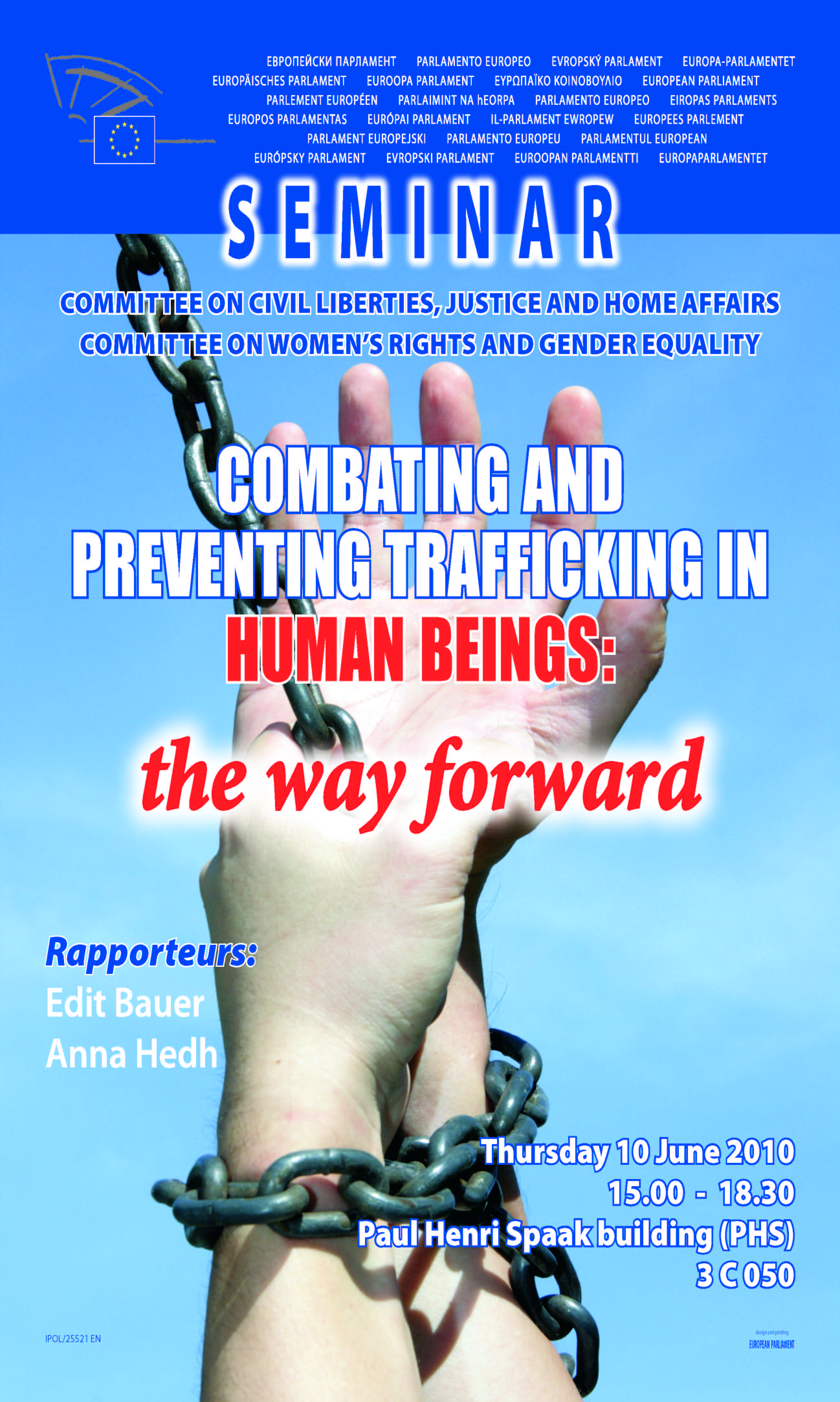
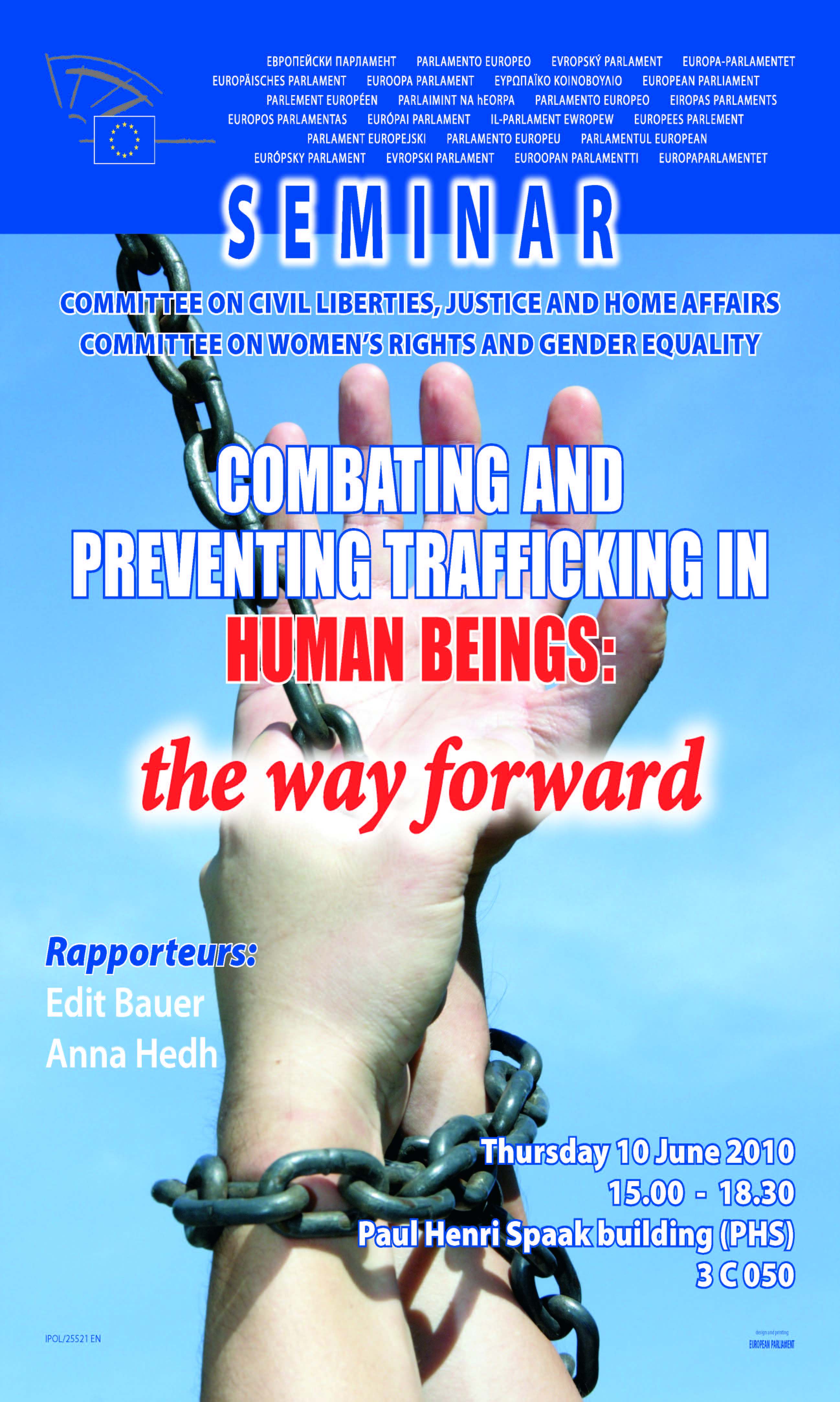
EP Seminar on Combating and Preventing Trafficking in Human Beings (10 June, Brussels)

NB – Registration to attend must be emailed by 16.00, Monday, 7 June.

“On Thursday 10 June 2010 LIBE will hold jointly with the Women’s Rights and Gender Equality Committee (FEMM) a seminar on “Combating and preventing trafficking in human beings: the way forward” to have an exchange of views contributing to drafting a co-decision report by Anna HEDH (S&D, SE) (LIBE) and Edit BAUER (EPP, SK) (FEMM).”

“REGISTRATION – This Round Table meeting is open to the public. We would ask the participants to send their registration before Monday 7 June at 16.00.  For security reasons, participants who do not have a European Parliament access badge must obtain a pass in advance.  Please send the following information to the joint FEMM-LIBE mailbox: ip-femm-libe@europarl.europa.eu:

LAST NAME-First name-date of birth*-place of birth*-address*-company/institution/ organisation

It is essential to provide us with this information. Without it the Security Service will not provide entry passes. If you already have an entrance pass, indicate it in the e-mail. In this case the information marked with asterisk (*) is not needed.”

Click here for more information.


Leave a comment

Filed under Colloques / Conferences, European Union

Mass Human Trafficking Trials Continue in Libya

The criminal trials involving almost 500 defendants charged with human trafficking are still ongoing in Tripoli.  Some new defence attorneys are reportedly involved in the case and have complained that the prosecutor’s office is relying on reports provided by Italian authorities and on reports on the topic of illegal immigration which were prepared for distribution to the media.  Some defence lawyers have said that the criminal charges are motivated by media and political pressure brought against the Libyan government.  Defence lawyers have also reportedly asserted that the special State Security Court trying the cases does not have jurisdiction over charges relating to illegal immigration.

Click here for earlier post.

Click here and here for articles. (in Arabic)

1 Comment

Filed under Italy, Libya, Mediterranean, News

Mass Human Trafficking Trial in Libya

Over 450 defendants are being criminally tried in Libya, charged with human trafficking and facilitating illegal immigration.  The defendants are reportedly being jointly tried in groups of 30.  Among the defendants are members of the armed forces, public security, and Navy.  The trials are being conducted in special security courts.  ANSA reports that the special court proceedings are being used because the conduct has endangered Libyan national security.

According to an article in the Italian magazine Panorama (owned by Silvio Berlusconi (?)), this is the first such trial of its kind in Libya.  Apparently, only Oea, a Libyan newspaper (described by Panorama as a non-governmental paper) is being permitted to be present at the trials. An article in Oea describes a comment from a lawyer for one defendant saying that the case was difficult given the large number of defendants and the lack of adequate information.

Panorama describes the trials as a possible signal from Gaddafi and one which reveals what has always been suspected, that there has been complicity between traffickers and Libyan police.  Panorama concludes its article by asking whether the trials are genuine or merely propaganda.

Click here (IT) and here (Arabic) for articles.

2 Comments

Filed under Italy, Libya, Mediterranean, News