Tag Archives: Refugees

Background Note Pertaining to Proposed Guidelines for Frontex Operations at Sea

Given the strong objections by Malta and Italy to the proposed Guidelines for Frontex Operations at Sea, the “Note for the File” pertaining to the “Draft Council Decision supplementing the Schengen Borders Code as regards sea border surveillance in the context of operational cooperation coordinated by FRONTEX (COM(2009)658) as amended by the Council on 25 January 2010” is worth reading.

The “Note” explains the origins of the Guidelines and the additional procedures which will need to be completed before the Guidelines take effect:

“Note for the File:

The questions of who is responsible for saving people at sea and where they should be disembarked have been subject to intense debates in the context of surveillance operations concerning the EU’s sea borders coordinated by Frontex. The operations take place in a highly complex legal and political environment and touch upon international law issues and on the EU’s relations with third countries.

After long preparatory work, including a study on the relevant international law instruments completed in 2007, the Commission drafted a set of guidelines intended to

  • ensure that international rules are uniformly applied by all Member States taking part in surveillance operations coordinated by Frontex (Convention on the Law of the Sea (UNCLOS), conventions on safety at sea and search and rescue, international law on refugees and fundamental rights) and
  • create a basis in EU law enabling one Member State to carry out surveillance of another Member States’ maritime borders.

The Commission presented the draft guidelines in the form of an implementing measure, based on Article 12 (5) of the Schengen Borders Code.  This provision, together with Article 33 of the Borders Code, authorises the Commission to adopt additional measures governing border surveillance in accordance with the regulatory procedure with scrutiny as laid down in Council Decision 1999/468/EC (“comitology decision”).

After the entry into force of the Treaty of Lisbon this procedure continues to apply until the basic legal act, the Schengen Borders Code, has been aligned to the framework of the Treaty of Lisbon. Therefore, the regulatory procedure with scrutiny applies to the present draft measure.

The draft was first submitted to the Borders Code Committee. Member States’ experts failed to agree on the draft; therefore, the Committee did not issue a formal opinion. One of the controversial issues was whether the Commission’s draft went beyond its implementing powers.

On 7 December 2009, the Commission submitted a revised draft to the Council and to the Parliament, in the form of a draft Council Decision (COM(2009)658).

In accordance with the regulatory procedure with scrutiny the Council, acting by qualified majority, had the following options:

  • · oppose the proposed measure, in which case it will not be adopted; the Commission may submit an amended proposal or present a legislative proposal (option 1)
  • · envisage adopting the proposed measure, in which case it shall without delay submit it to the European Parliament (option 2)
  • · not act within the two months, in which case the Commission shall without delay submit the measures to the Parliament.

The Council had to act within a deadline of two months, i.e. before 7 February 2010.  On 25 January 2010 the Council, with Italy and Malta abstaining, decided to envisage adopting draft Council Decision and submit the draft Council Decision to the European Parliament. Furthermore, the Council agreed on an additional declaration to be adopted by the Council if Parliament does not oppose the measure, asking Frontex to report on the practical implementation of this decision.

European Parliament’s role in the procedure and deadline

In accordance with the regulatory procedure with scrutiny, Parliament has four months in total, starting from the date of referral on 7 December 2009, to scrutinise the draft measure. In practice, Parliament now has two more months to take position before 7 April 2010.

Parliament’s options in the regulatory procedure with scrutiny are limited to the following. Parliament may, acting by a majority of its component Members,

  • · oppose the adoption of the measure; in this case, Parliament must justify its opposition, stating that the proposed measure exceeds the implementing powers granted to the Commission in the basic instrument, or is not compatible with the aim or the content of the basic instrument or does not respect the principles of subsidiarity or proportionality; if Parliament opposes, the draft measure shall not be adopted; the Commission may submit an amended proposal or present a legislative proposal
  • · not oppose the adoption of the draft measure; in this case, the draft measure may be adopted by the Council or the Commission.

LIBE, as the committee responsible, will prepare Parliament’s position, in accordance with Rule 88 of the Rules of Procedure. The Member responsible in LIBE is Michael Cashman, rapporteur for the basic act, the Schengen Borders Code. Once the Council’s position, adopted on 25 February 2010, has been officially referred to the Parliament, the chairman will set a deadline for Members who wish to propose that the committee objects to the draft measure. If the committee decides to object, it shall table a motion for a resolution to the plenary for adoption before 7 April 2010.

Action undertaken by LIBE so far:

On 11 January 2010, LIBE, as the committee responsible, heard presentations of the Commission (Mr Henrik Nielsen, Head of Unit, DG JLS) and the Spanish Presidency (Mr Burgos Nieto, JHA Counsellor) and held a first exchange of views on the file.

During the debate, several Members highlighted the political importance of the decision on the guidelines (Mr Busuttil, Mrs Flautre, Mr Moraes, Mrs Hennis-Plasschaert) and the fact that this was a long-standing discussion in the Council. The Executive Director of Frontex (Mr Laitinen) underlined the swift adoption of guidelines would enhance the efficiency of Frontex’ operations.

Next steps:

The Council will refer its position, which was adopted on 25 January 2010, to the Parliament within a few days. Then it will be Parliament’s turn to take a position before the expiry of the deadline on 7 April 2010.

In order to prepare LIBE’s position, the rapporteur recommends that an opinion be requested from the Parliament’s legal service, which should answer the following questions:

1)

a) Having regard to the delineation between “rules” and “guidelines” for Member States in the draft measure as amended by the Council, could the content be considered a “non-essential element” of the final legal framework shaping the role of the Member States and Frontex?

b) Has the Commission exceeded its implementing powers under Article 12 (5) of the Schengen Borders Code by proposing the present draft measure?

2) In case the content or a part of the content of the draft measure touches upon essential elements of the basic act, could the objectives of the measure be achieved by a legislative act, notably by amending the basic act, i.e. the Schengen Borders Code?

OPERATIONAL INFORMATION:

Documents:

  • · Proposal for a Council Decision supplementing the Schengen Borders Code as regards the surveillance of the sea external borders in the context of the operational cooperation coordinated by Frontex, COM(2009)658 of 27.11.2009, as amended by the Council on 25 January 2010
  • · Commission staff working document, Study on the international law instruments in relation to illegal immigration by sea, SEC (2007)691 of 15.5.2007, available in EN and FR.

Contacts:

European Parliament:

Member responsible: Michael CASHMAN

Asisstant to Mr Cashman: Renaud-Raphaël Savignat, tel. – 47759

S&D political Advisor: Mrs Annie Lemarchal, tel. – 43057

Desk officer responsible in the LIBE Secretariat: Lotte Madlen Tittor, tel. -40785

European Commission:

Desk officer responsible in DG JLS: Ana Isabel Sanchez Ruiz, tel. 02-2998239, email: Ana-Isabel.Sanchez-Ruiz@ec.europa.eu

Head of the responsible Unit in DG JLS: Henrik Nielsen, tel. 02-2991641, email: Henrik.Nielsen@ec.europa.eu

Council General Secretariat:

Desk officer: Mr Bent Mejborn, tel. 02-2816722, email: bent.mejborn@consilium.europa.eu

Spanish Presidency:

Mr Eugenio Burgos Nieto, JHA Counsellor, email: eugenio.burgos@reper.maec.es”

Click here for link to Document.

1 Comment

Filed under Analysis, European Union, Frontex, Italy, Malta, Mediterranean

Guidelines for Frontex Operations at Sea

NB –I believe this document is the final version of the proposed guidelines approved by the Council on 25 January 2010, with Italy and Malta abstaining, and which has now been forwarded to the Parliament for scrutiny.  I will remove or amend this post if I discover this is not the final version approved by the Council.

What follows are relevant excerpts from Document COM(2009)658 (Brussels, 27.11.2009), the final Proposal for a COUNCIL DECISION supplementing the Schengen Borders Code as regards the surveillance of the sea external borders in the context of the operational cooperation coordinated by the European Agency for the Management of Operational Cooperation at the External Borders – Frontex.

As noted, Malta and Italy oppose these guidelines and have threatened to withdraw from future Frontex missions if these guidelines take effect.

Guidelines for Frontex operations at sea

1. GENERAL PRINCIPLES

1.1 Measures taken for the purpose of the surveillance operation should be conducted in a way that does not put at risk the safety of the persons intercepted or rescued as well as of the participating units.

1.2. The special needs of children, victims of trafficking, persons in need of urgent medical assistance, persons in need of international protection and other persons in a particularly vulnerable situation should be considered throughout all the operation.

1.3. These guidelines should be applied by Member States in accordance with fundamental rights. Member States should ensure that border guards participating in the surveillance operation are trained with regard to relevant provisions of human rights and refugee law, and are familiar with the international regime on search and rescue.

2. INTERCEPTION

2.1 Upon detection, the ship or other sea craft (“ship”) should be approached in order to observe its identity and nationality and, pending further measures, should be surveyed at a prudent distance. [***]

2.4. Measures taken in the course of the surveillance operation against ships or other sea craft with regard to which there are reasonable grounds for suspecting that they carry persons intending to circumvent the checks at border crossing points may include: [***]

(f) conducting the ship or persons on board to a third country or otherwise handing over the ship or persons on board to the authorities of a third country;

(g) conducting the ship or persons on board to the host Member State or to another Member State participating in the operation.

3. SEARCH AND RESCUE SITUATIONS ARISING IN THE COURSE OF THE OPERATION

3.1. Participating units shall provide assistance to any vessel or person in distress at sea. They shall do so regardless of the nationality or status of such a person or the circumstances in which that person is found.

3.2. When facing in the course of the operation a situation in which uncertainty or apprehension exists as to the safety of a ship or of any person on board, the participating unit should forward as soon as possible all available information to the Rescue Coordination Centre responsible for the search and rescue region where the situation is taking place.

In cases where the Rescue Coordination Centre of the third country responsible for the search and rescue region does not respond to the notification transmitted by the participating unit, the latter should contact the Rescue Coordination Centre of the host Member State that is geographically the closest to the emergency.

While awaiting instructions from the Rescue Coordination Centre, participating units should take all the appropriate measures to ensure the safety of the persons concerned. [***].

4. DISEMBARKATION

4.1. The operational plan should spell out the modalities for the disembarkation of the persons intercepted or rescued, in accordance with international law and any applicable bilateral agreements.

Subject to section 4.2, priority should be given to disembarkation in the third country from where the persons departed or through the territorial waters or search and rescue region of which the persons transited or, if this is not possible, to disembarkation in the geographically closest place where the safety of the persons can be ensured.

4.2. No person should be disembarked in or otherwise handed over to the authorities of a country with regard to which there are substantial grounds for believing that he or she would be subjected to persecution or to torture or to other forms of inhuman or degrading treatment or punishment, or from which there is a risk of expulsion or return towards such a country. The persons intercepted or rescued must be informed in an appropriate way so that they can express any reasons for believing that they would be subject to such treatment in the proposed place of disembarkation.

4.3. The coordination centre should be informed of the presence of persons within the meaning of paragraph 4.2, and should convey that information to the competent authorities of the host Member State.

Click here for full Document.

Click here for a “Note to the File” pertaining to the Draft Council Decision supplementing the Schengen Borders Code as regards sea border surveillance in the context of operational cooperation coordinated by FRONTEX (COM(2009)658) as amended by the Council on 25 January 2010.

1 Comment

Filed under European Union, Frontex, General, Italy, Malta, Mediterranean

Sarkozy: On ne laissera pas de nouvelles filières d’immigration se développer en France

Le président Sarkozy, en déplacement en Corse, a dit “[L]a France ne peut donner une prime aux organisations mafieuses. Les côtes de la Corse sont une des frontières de l’Europe … ceux qui ont fait ça seront retrouvés et seront punis. … Mais surtout que les mafias sachent que nous laisserons pas faire cela.”

Click here and here for articles.

Leave a comment

Filed under France, Mediterranean, News

Proposed Changes to Interdiction Patrol Rules Jeopardise Malta and Italian Cooperation with Frontex

The Malta Times reports that “a Frontex official said [yesterday] the new [maritime interdiction] guidelines were specifically aimed at avoiding disputes such as the ones that broke out between Malta and Italy. In the past, immigrants were stuck on the high seas as the two countries were locked in a diplomatic wrangle on who was responsible for the people rescued. ‘Everyone recalls these incidents and the Commission’s intervention. Brussels ended up as a referee in these disputes and we don’t think that’s our role. This is specifically why we needed to have a specific code of conduct to guide future Frontex missions. This will put participating member states’ minds at rest,’ the official said.”

The proposed changes would require migrants to be taken to the country hosting the Frontex mission if it was not possible to return the migrants to their country of departure and could go into effect as early as April when Frontex interdiction patrols are scheduled to resume in the central Mediterranean under the new mission name of Operation Chronos.

“Both Malta and Italy objected strongly [to the proposed changes] on the basis of the fact that the guidelines go beyond international legal obligations, which say that migrants should be taken to the nearest safe port [which in Malta’s case] often meant the Italian island of Lampedusa.”

Click here for article.

1 Comment

Filed under European Union, Frontex, Italy, Malta, Mediterranean, News

Greece Seeks Talks With Turkey Over Migrants

Greek Citizen Protection Minister Michalis Chryssohoidis has written to Turkish Interior Minister Beşir Atalay asking for talks within the next month on the illegal immigration issue.

“ ‘Only systematic and close cooperation between Greece and Turkey can curb the flow of illegal immigration to the European Union,’ Chrysochoidis reportedly wrote in the letter. According to sources, Chrysochoidis has invited Atalay to Athens to discuss a set of proposals. These include the closer cooperation of Greek and Turkish coast guard officials to ensure that a bilateral pact for the repatriation of migrants is enforced. Turkish vessels currently make no effort to stop smuggling ships, the Greek coast guard says.”

Click here, here, and here for articles.

Leave a comment

Filed under Aegean Sea, Greece, News, Turkey

Frontex: Operation “Nautilus” to become Operation “Chronos”

During a recent briefing to the Civil Liberties Committee of the European Parliament, Frontex Executive Director Ilkka Laitinen revealed that the Frontex name for its four year old interdiction operation in the central Mediterranean will change from “Nautilus” to “Chronos” as of April 2010.

“According to figures given by Frontex [at the briefing], only 3,300 illegal immigrants reached Malta and Lampedusa last year, less than half the number registered in the previous year.  In the case of Malta, there were 2,775 arrivals in 2008 and 1,475 in 2009.”

Click here for article.

1 Comment

Filed under Data / Stats, Frontex, Malta, Mediterranean, News

France: Le droit d’asile à nouveau bafoué

“Les organisations soussignées dénoncent l’arrestation et les mesures d’expulsion (reconduite à la frontière) prises à l’encontre de la centaine d’exilés débarqués le 22 janvier à Bonifacio (Corse). Dès leur prise en charge dans un gymnase de la ville réquisitionné, ils ont été détenus, sans pouvoir recevoir devisite, hormis les personnes introduites par la police pour une assistance humanitaire, jusqu’à leur transfert – certains d’entre eux menottes aux mains – par autocar le lendemain, 23 janvier, vers des avions qui les ont conduits dans des centres de rétention administrative (CRA) – éparpillés sur le continent, où ils étaient toujours privés de liberté. Les demandeurs d’asile ont droit au séjour provisoire le temps qu’il soit répondu à leur demande. La France est signataire de la Convention de Genève sur les réfugiés, qui la lie, et interdit les mesures de renvoi dans leur pays d’origine qui ont pourtant été immédiatement prononcées. …”

Signataires : L’ADDE, Amnesty International France, L’ANAFÉ, European Legal Network for Asylum (ELENA), Le GISTI, La LDH, Le SAF, Le SM

Click here for full statement.

Leave a comment

Filed under France, Mediterranean, Statements

Oxford Refugee Studies Centre: International Summer School in Forced Migration

International Summer School in Forced Migration: 5 – 23 July 2010

The Refugee Studies Centre’s International Summer School fosters dialogue between academics, practitioners and policymakers working to improve the situation of refugees and other forced migrants. It provides the time and space for them to reflect on their experiences and to think critically about some of the aims and assumptions underlying their work.

Who is the summer school for?

Policy makers and practitioners involved with humanitarian assistance and policy making for forced migrants. Participants typically include host government officials, intergovernmental and non-governmental agency personnel engaged in planning, administering and co-ordinating assistance.

Researchers specialising in the study of forced migration.

Click here for link.


Leave a comment

Filed under General, UK

Malta Objects to Proposed Changes in Frontex High-Seas Interception Guidelines

The Government of Malta has reportedly objected to proposed changes to Frontex operational guidelines and has threatened to possibly end its participation in patrols overseen by Frontex.

The proposed changes to the Frontex guidelines were made by the European Council and will be considered by the European Parliament.  The changes would require that migrants intercepted at sea be sent to the country hosting the Frontex mission if the migrants could not be returned to the country from which they last departed.  Currently intercepted migrants are to be taken to the nearest port.

“In terms of the new guidelines, should Malta host a Frontex mission, as it has done in the past two years, it will have to take all the immigrants rescued, even if they were picked up outside its search and rescue region and closer to other countries. ‘We will still continue to follow our international obligations to the letter as we’ve always done but we will not accept changes to these international obligations,’ a Malta government spokesman said.

Even if Frontex guidelines were to be changed, Italy will presumably continue its policy of forcibly returning to Libya migrants intercepted by Italian authorities.

Click here for full article.

Leave a comment

Filed under European Union, Frontex, Malta, Mediterranean, News

Le Monde, Point de vue: 2010, l’année du droit à migrer ?

“En annonçant que la centaine de boat people débarqués à Bonifacio le 22 janvier bénéficierait d’un examen individuel de situation, les autorités françaises ont laissé entendre que certains pourraient se voir reconnaître le droit d’asile. Au même moment, le ministre de l’immigration proposait pourtant “le déploiement immédiat de renforts opérationnels européens sous l’égide de l’agence européenne de surveillance des frontières (Frontex)”, pour éviter “que la Corse ne devienne une destination des candidats à l’immigration comme l’île italienne de Lampedusa”.  Autrement dit, d’empêcher qu’à l’avenir, d’autres personnes fuyant les persécutions ne trouvent protection en France. … ”

Click here for full Le Monde opinion article by Emmanuel Blanchard, Olivier Clochard et Claire Rodier , membres du réseau euro-africain Migreurop et ont coordonné l’Atlas des migrants en Europe. Géographie critique des politiques migratoires, Paris, Armand Colin, 2009.

Leave a comment

Filed under Analysis, European Union, France, Mediterranean

La Réponse d’Eric Besson au Débarquement en Corse

Conclusions de la réunion interministérielle du 25 janvier 2010:

“[Le débarqument en Corse] souligne une fois de plus l’urgence de mettre fin au trafic d’êtres humains en Méditerranée. Comme des centaines d’autres chaque année, les étrangers qui ont débarqué en Corse auraient pu perdre la vie dans leur dangereux périple.

La lutte contre les filières d’immigration clandestine nécessite de nouvelles mesures aux plans national, européen et international. J’ai donc pris les décisions suivantes :

1. Renforcer le contrôle de nos frontières nationales.

· La lutte contre l’immigration irrégulière constituera une priorité de la nouvelle fonction « gardes-côtes » créée par le comité interministériel de la mer du 8 décembre 2009.

– Dans les prochains jours, je soumettrai au Premier Ministre des propositions pour que la lutte contre les filières d’immigration clandestine soit placée au centre de l’action de l’Etat en Mer, sous l’autorité du Secrétaire général de la Mer et des préfets maritimes.

– Afin d’assurer la continuité des opérations en mer et à terre, je proposerai au Ministre de l’Intérieur que la direction centrale de la police aux frontières et la direction générale de la gendarmerie nationale participent au centre opérationnel de la fonction « gardescôtes ».

2. Renforcer le contrôle des frontières européennes.

· Dès le 22 janvier, j’ai demandé à la présidence espagnole de l’Union Européenne d’organiser un sommet de crise sur la lutte contre l’immigration irrégulière en Méditerranée. Tous les ministres des pays méditerranéens de l’Union Européenne m’ont immédiatement apporté leur soutien. Je souhaite que ce sommet prenne des décisions concrètes et immédiates pour :

– Généraliser les patrouilles conjointes entre pays riverains de l’Union Européenne en Méditerranée, sur le modèle de ce que nous mettons en oeuvre à terre dans le cadre du traité de Prüm.

– Déployer des renforts opérationnels européens sous l’égide de Frontex.

– Mettre en oeuvre de nouvelles capacités d’analyse des flux d’immigration irrégulière en Méditerranée.

· Afin d’avancer vers la création d’une police aux frontières européenne, j’ai présenté à l’ensemble des ministres européens, le 21 septembre 2009, un plan d’action pour le renforcement de l’agence européenne Frontex :

– Adoption de nouvelles règles d’engagement maritime tournées vers l’interception et la reconduite.

– Création d’un bureau de coordination des opérations de Frontex en Méditerranée.

– Renforcement de la coopération avec les Etats de transit, notamment pour l’organisation de patrouilles conjointes.

– Organisation de vols groupés pour des opérations de reconduite conjointes au niveau européen.

– Mise en place d’un programme européen de formation des gardes frontières.

En vue d’accélérer la mise en oeuvre de ce plan d’action dans le prolongement des décisions

prises par les Chefs d’Etat et de Gouvernement européens le 30 octobre dernier, je rencontrerai prochainement, avec Pierre Lellouche, la nouvelle commissaire européenne en charge des affaires intérieures, Mme Cécilia Malmström.

3. Développer le renseignement pour démanteler les filières internationales de l’immigration clandestine.

En accord avec les Ministres de l’Intérieur et de la Défense :

· J’inviterai chaque mois le directeur général de la sécurité extérieure et le directeur central de la police aux frontières, ainsi que le coordonnateur national du renseignement, à participer à un groupe « renseignement contre les filières d’immigration irrégulière » que je présiderai.

· Au cours des prochains mois, l’Office Central pour la Répression de l’Immigration irrégulière et de l’Emploi d’Etrangers Sans Titre (OCRIEST) généralisera ses coopérations avec les principaux pays d’origine des filières, en vue de s’attaquer à ces réseaux criminels à la source.

4. Enfin, je présenterai devant le Conseil des ministres, avant la fin du premier semestre 2010, un projet de loi sur l’immigration, qui comportera de puissantes mesures de lutte contre les filières clandestines.

Ce projet de loi prévoira en particulier des règles particulières permettant de mieux faire face à des situations d’urgence comme celle que nous avons vécue le 22 janvier à Bonifacio, mais aussi des mesures de dissuasion, comme l’interdiction de retour sur l’ensemble du territoire européen pendant une durée de 5 ans pour toutes les personnes ayant fait l’objet d’une mesure de reconduite.”

Click here for full document.

Click here for Le Point article.

Leave a comment

Filed under European Union, France, Frontex, Mediterranean, Statements

BLUEMASSMED: Project for Maritime Surveillance of the Mediterranean Area and the Atlantic Approaches

The Bluemassmed project is a new initiative from the European Commission designed to increase cooperation for maritime surveillance in the Mediterranean Sea and its Atlantic approaches, including surveillance of illegal immigration.  The inaugural meeting for the Project was held in Paris on 15 January 2010.

“France, Greece, Italy, Malta, Portugal and Spain [will] cooperate on this specific project to strengthen their common actions against illicit trafficking, illegal immigration and environmental pollution. It will also permit [the reinforcement of] the Search and Rescue efforts in the area. This pilot project granted by the European Commission and co-funded by 6 Member States countries (France, Greece, Italy, Malta, Portugal and Spain) is the first state-centred action to integrate such an important field between Member States countries.”

The project is a two year project “divided in two stages. The first one intends to define the requirements of the actors in terms of exchange of information and to submit a list of technical and legal proposals. The second stage will result in a demonstration, performed among partners and wider, with the help of a demonstrator prototype, connecting present information systems from partners, shaping a possible future network of State actors for maritime surveillance systems, in the framework of several realistic scenarios.”

“The [French] Secrétariat Général de la Mer is leader of the project. The Agenza Spaziale Italiana is Co-leader of the Steering group, composed by representatives from each Member States, which will define the strategic guidelines of the project.”

“BLUEMASSMED aims at being a catalyst for internal and external cooperation between Member States and maritime surveillance actors. The success of this project is directly linked to the involvement of the Partners, responsible to their governments. The prototype demonstrator will be carried out with the support of industry. Industrial involvement is considered as a key investment.”

Click here for Bluemassmed web site.

Click here for English Press Release or here for French Press Release from inaugural conference.

Click here for EC Directorate-General for Maritime Affairs and Fisheries Non-Paper on Maritime Surveillance, 13 Oct. 2008.

Leave a comment

Filed under Eastern Atlantic, European Union, France, Greece, Italy, Malta, Mediterranean, News, Portugal, Spain

Le HCR appele Paris à s’assurer que toutes les personnes arrivées clandestinement puissent demander l’asile

“Le Haut commissariat des Nations unies pour les réfugiés (HCR) a appelé Paris à ‘s’assurer que toutes les personnes’ arrivées clandestinement en Corse puissent demander l’asile et bénéficier d’un ‘examen complet et équitable’ de leur situation. Selon le HCR, les 124 personnes découvertes vendredi [le 22 janvier] sur une plage corse ont été dirigées samedi vers des centres de rétention à Rennes, Marseille, Toulouse, Lyon et Nîmes. … Le président de France Terre d’Asile, Pierre Henry, s’est lui aussi inquiété de la rapidité avec laquelle les clandestins ont été placés sous le régime de la rétention administrative.”

Click here for article.

Leave a comment

Filed under France, Mediterranean, News

US to Haitians: Don’t Rush to the Boats

While there have been few, if any, Haitians attempting to leave Haiti since the 12 January earthquake, and while the US has deployed a significant naval force in Haitian waters for the purpose of providing humanitarian relief, the deployment of the US Coast Guard vessels serves the dual purpose of discouraging boat people.

The US Air Force is flying a C-130 plane along the Haitian coastline broadcasting AM radio messages to Haitians on the ground – among the pre-recorded Kreyol language broadcast is a message from the Haitian Ambassador to the US, Raymond Joseph:

“Listen, don’t rush on boats to leave the country.  If you do that, we’ll all have even worse problems. Because I’ll be honest with you: If you think you will reach the U.S. and all the doors will be wide open to you, that’s not at all the case.  And they will intercept you right on the water and send you back home where you came from.”

The US is also erecting tents and other facilities at the Guantanamo Naval Base in Cuba in preparation for the mass detention of thousands of Haitians should there be a sudden surge in departures from Haiti.

The research office of the US Congress has issued an updated report on Haitian migration warning of possible mass migration:

“There are growing concerns that the crisis conditions in Haiti may result in mass migration from the country. Not only has there been massive displacement of people caused by the earthquake, but observers of the situation warn of potential and widespread lawlessness as well as outbreaks of disease. These health, safety, and security factors—individually or in combination—could trigger an exodus of Haitians seeking refuge in nearby countries, including the United States. At least five federal agencies now handle Haitian migrants: DHS’s Coast Guard (interdiction); Customs and Border Protection (apprehensions and inspections); Immigration and Customs Enforcement (detention); U.S. Citizenship and Immigration Services (credible fear determination); and DOJ’s EOIR (asylum and removal hearings). DHS would take the lead in handling a potential mass migration and has long had a set of operational plans in place to respond to such a situation. In her TPS announcement, Secretary Napolitano warned of the consequences of Haitians fleeing to the United States.

At this moment of tragedy in Haiti it is tempting for people suffering in the aftermath of the earthquake to seek refuge elsewhere. But attempting to leave Haiti now will only bring more hardship to the Haitian people and nation…. It is important to note that TPS will apply only to those individuals who were in the United States as of January 12, 2010. Those who attempt to travel to the United States after January 12, 2010 will not be eligible for TPS and will be repatriated.

The balancing of DHS’s border security and immigration control responsibilities in the midst of a humanitarian disaster poses a unique challenge.”

Click here and here for articles.

Click here for US Congressional Research Service Report.

Leave a comment

Filed under Caribbean - West Indies, Haiti, News, Reports, United States

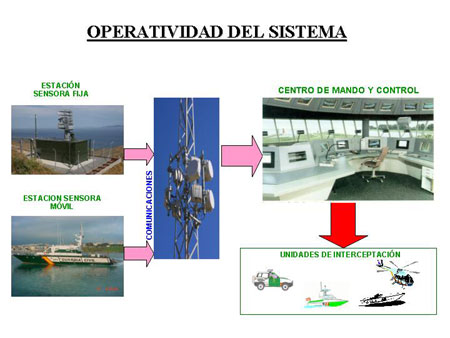
La Guardia Civil espera una avalancha de pateras con los radares del Sistema de Vigilancia Exterior (SIVE) averiado

“…Según fuentes de la Guardia Civil consultadas por ABC, los agentes que se encargan de la vigilancia marítima en Alicante -un servicio mermado por las bajas- esperan que en la segunda quincena del mes de enero se produzca una auténtica «avalancha» de pateras lanzadas desde las costas de Argelia y Marruecos.

Dos factores explican el estado de alerta de la Guardia Civil. De un lado, la llegada de las primeras pateras del año a las costas de Motril y Cartagena, este fin de semana. Y de otro, el hecho de que a partir del 15 de enero empiecen las calmas en el mar Mediterráneo, que facilitan el tránsito de pateras desde el norte de África.

La certeza de la futura llegada de nuevas pateras a las costas alicantinas se conjuga, además, con la desalentadora realidad de que el SIVE, un sistema cuya implantación en Alicante -donde existen cuatro radares fijos y uno móvil conectados a la Comandancia de la Guardia Civil- ha costado 8,5 millones de euros, es incapaz de detectar la llegada de la mayoría de embarcaciones….”

Click here and here for articles.

Click here for more information from la Guardia Civil y el Sistema Integrado de Vigilancia Exterior (SIVE)

Leave a comment

Filed under Mediterranean, News, Spain