Category Archives: Mediterranean

22 June, 09.15 CEST, ECtHR Grand Chamber Hearing in Hirsi and Others v. Italy

[Update:  A web cast of the hearing is available here (I was able to view this with IE but not with Firefox.)]

The case of Hirsi and others v Italy, Requête no 27765/09, will be heard by the Grand Chamber of the European Court of Human Rights today, 22 June, 09.15 am CEST.

Given the events in Libya and the resulting halt to the Italian push-back practice, there may have been a moment some weeks ago when the question of mootness of the case might have been considered, but given the recently executed Memorandum of Understanding between Italy and the Libyan National Transitional Council and the public promises made by the leadership of the NTC to respect and implement the migration and other agreements made by the Gaddafi government, it would appear Italy hopes to revive the push-back practice at some point in the future.

From the Registrar’s Press Release:

“The case concerns a group of Somalian and Eritrean migrants travelling from Libya who were intercepted at sea by the Italian authorities and sent back to Libya. The applicants are eleven Somalian and thirteen Eritrean nationals. They were part of a group of about 200 people who left Libya in 2009 on board three boats bound for Italy. Among them were women who were pregnant at the time and children. On 6 May 2009, when the boats were 35 miles south of Lampedusa (Agrigento), in waters under Maltese jurisdiction for search and rescue purposes, they were intercepted by Italian Customs and Coastguard vessels. The passengers were transferred to the Italian military vessels and taken to Tripoli. The applicants say that during the journey the Italian authorities did not tell them where they were being taken, or check their identity. Once in Tripoli they were handed over to the Libyan authorities. At a press conference on 7 May 2009 the Italian Minister of the Interior explained that the interception of the vessels on the high seas and the return of the migrants to Libya was in accordance with the bilateral agreements with Libya that entered into force on 4 February 2009, marking a turning point in the fight against illegal immigration. The applicants consider that their case falls within the jurisdiction of Italy. Relying on Article 3 of the Convention (prohibition of inhuman or degrading treatment), they argue that the decision of the Italian authorities to intercept the vessels on the high seas and send the applicants straight back to Libya exposed them to the risk of ill-treatment there, as well as to the serious threat of being sent back to their countries of origin (Somalia and Eritrea), where they might also face ill-treatment. They also complain that they were subjected to collective expulsion prohibited by Article 4 of Protocol No. 4 (prohibition of collective expulsion of aliens). Lastly, relying on Article 13 of the Convention (right to an effective remedy), they complain that they had no effective remedy against the alleged violations of Articles 3 of the Convention and 4 of Protocol No. 4. The application was lodged with the European Court of Human Rights on 26 May 2009. The Chamber to which the case was assigned relinquished jurisdiction in favour of the Grand Chamber on 15 February 2011.”

From my previous post of 16 March:

The case of Hirsi and others v Italy, Requête no 27765/09, has been scheduled for a hearing on 22 June 2011, 9.15 am, before the Grand Chamber of the European Court of Human Rights.

Proceedings before the Grand Chamber were initiated on 1 March 2011 when the Second Section of the Court relinquished jurisdiction.  On 17 November 2009 the Second Section of the Court communicated the case.  The case was filed on 26 May 2009 by 11 Somalis and 13 Eritreans who were among the first group of about 200 migrants interdicted by Italian authorities and summarily returned to Libya under the terms of the Libya-Italy agreement which took effect on 4 February 2009.  The Applicants were intercepted on 6 May 2009 approximately 35 miles south of Lampedusa.

The Applicants allege violations of numerous provisions of the European Convention on Human Rights:

Protocol 4, Art. 4 Prohibition of collective expulsion of aliens;

Art. 3 Torture;

Art. 1 (1) General undertaking/HPC;

Art. 13 Effective remedy/national authority; and

Art. 3 Inhuman or degrading treatment.

The Statement of facts, complaints and questions (EXPOSÉ DES FAITS et QUESTIONS AUX PARTIES ET DEMANDES D’INFORMATIONS) issued by the Second Section to the parties is available only in French:

GRIEFS

Invoquant l’article 3 de la Convention, lu en conjonction avec l’article 1 de la Convention, les requérants se plaignent de ce que les modalités de leur renvoi en Libye, ainsi que leur séjour dans ce pays ou leur rapatriement dans leurs pays respectifs les soumettrait au risque de subir des tortures ou des traitements inhumains et dégradants.

Invoquant l’article 4 du Protocole no 4, lu en conjonction avec l’article 1 de la Convention, ils affirment avoir fait l’objet d’une expulsion collective atypique et dépourvue de toute base légale.

Invoquant l’article 13, les requérants dénoncent l’impossibilité de contester devant les autorités italiennes leur renvoi en Libye et le risque de rapatriement dans leurs pays d’origine.

QUESTIONS AUX PARTIES ET DEMANDES D’INFORMATIONS

QUESTIONS

1.  Les faits dont les requérants se plaignent en l’espèce relèvent-ils de la juridiction de l’Italie ?

2.  La décision des autorités italiennes d’intercepter en haute mer les embarcations et de renvoyer immédiatement les requérants, compte tenu notamment des informations provenant de sources internationales et concernant les conditions des migrants clandestins en Libye, a-t-elle exposé les requérants au risque d’être soumis à des traitements contraires à l’article 3 de la Convention dans ce pays ?

3.  Compte tenu des allégations des requérants (voir formulaire de requête annexé), y a-t-il des motifs sérieux de craindre que le rapatriement dans leurs pays d’origine, soit la Somalie et l’Érythrée, les exposerait à des traitements contraires à l’article 3 ?

4.  Le renvoi des requérants en Libye de la part des autorités italiennes s’analyse-t-il en une expulsion contraire à l’article 4 du Protocole no 4 ?

5.  Les intéressés ont-ils eu accès à un recours effectif devant une instance nationale garanti par l’article 13 de la Convention pour faire valoir leurs droits garantis par les articles 3 et 4 du Protocole no 4 ?

DEMANDES D’INFORMATIONS

Le gouvernement défendeur est également invité à fournir à la Cour toute information disponible concernant :

– Le nombre de migrants irréguliers arrivés mensuellement sur les côtes italiennes, et en particulier à Lampedusa, au cours des dernières années ;

– L’entité et l’origine du phénomène migratoire en Libye ; la législation en la matière en vigueur dans ce pays ; le traitement réservé par les autorités libyennes aux migrants irréguliers arrivés en Libye directement ou suite au renvoi depuis l’Italie.

Le Gouvernement est également invité à produire à la Cour les textes des accords signés par les gouvernement italien et le gouvernement libyen les 27 décembre 2007 et 4 février 2009.

Il est enfin invité à expliquer à la Cour le rapport existant entre les opérations prévues par les accords bilatéraux avec la Libye et l’activité de l’ « Agence européenne pour la gestion de la coopération opérationnelle aux frontières extérieures des États membres de l’Union européenne (Frontex) ».

Click here (FR) for EXPOSÉ DES FAITS et QUESTIONS AUX PARTIES ET DEMANDES D’INFORMATIONS.

Click here, here, and here for my previous posts on the case.

Also, click here for a post by Costanza Hermanin, an Open Society Justice Initiative consultant.

Leave a comment

Filed under Council of Europe, European Court of Human Rights, Italy, Judicial, Libya, Mediterranean, News

ANSA Video Shows Libyan Rebel Forces Abusing Sub-Saharan Migrants

ANSA has posted a cell phone video reportedly made by a Nigerian migrant who is now in Lampedusa.  The ANSA article says the video was taken in Kufra, near the Libya-Sudan border, but does not say when the video was taken.  According to ANSA the video shows a group of migrants blocked by anti-government forces. “The refugees, including some children can be seen, their hands are tied by the military and are forced to grovel. The images show men in uniform, armed with machine guns Kalashnikov, striking the immigrants with some whips.”

(“I profughi, tra i quali si notano alcuni minori, hanno le mani legate e sono costretti dai militari a strisciare per terra. Le immagini riprendono gli uomini in divisa, armati con mitra Kalasnikov, mentre colpiscono gli immigrati con alcuni frustini.”)

Click here for article and here for video. (IT)

Leave a comment

Filed under Italy, Libya, Mediterranean, News

PACE Migration Committee to Designate Rapporteur to Conduct Inquiry into Deaths of Boat People

PACE President Mevlüt Cavusoglu announced today that the PACE Migration Committee will conduct an inquiry into the incident that occurred in April when 61 migrants died at sea after leaving Libya.  Survivors from the boat reported that several ships, including naval ships, ignored their calls for assistance.  The Committee will designate a Rapporteur this week who will look into this incident as well as “other cases where better interception and rescue co-ordination could have saved human lives.”

Click here and here for PACE press statements.

Click here and here for previous posts.

Leave a comment

Filed under Council of Europe, Libya, Mediterranean, News

Memorandum of Understanding Between Italy and Libyan NTC

The MOU between Italy and the Libyan National Transitional Council signed last Friday, 17 June, is a short 1 ½ page memorandum that makes reference to four previous agreements signed by the Libyan and Italian governments.

Thank you to ASGI – Associazione per gli Studi Giuridici sull’Immigrazione for bringing this document to my attention.  See ASGI’s press release where it sets forth its doubt about the legality of this new agreement with the NTC.

Excerpts from the MOU (using Google translate):

“[***]

[The Italian Government and the NTC] [c]onfirm their commitment to a shared management of migration, primarily through the application of the Italian-Libyan cooperation in combating terrorism, organized crime, trafficking in narcotic drugs and psychotropic substances and illegal immigration , signed in Rome 13 December 2000 and subsequent Protocols of cooperation on migration of December 29, 2007, with its Additional Act of February 4, 2009, – and 7 December 2010.

In this context, the Parties will exchange information on the flows of illegal immigrants on criminal organizations that promote them, on modus operandi and the routes taken and the organizations specialized in forging documents and passports, as well as mutual assistance and cooperation in the fight against illegal migration, including repatriation of illegal immigrants.

To this end, agree to perform, as soon as there are conditions, regular consultations between the respective competent bodies, according to art. 5 of the said Agreement.”

“[***]

Confermano l’impegno ad una gestione condivisa del fenomeno migratorio, in primo luogo attraverso l’applicazione dell’Accordo italo-libico per la collaborazione nella lotta al terrorismo, alla criminalità organizzata, al traffico di stupefacenti e di sostanze psicotrope ed all’immigrazione clandestina, firmato a Roma il 13 dicembre 2000 e dei successivi Protocolli di collaborazione in materia migratoria del 29 dicembre 2007, con relativo Atto aggiuntivo del 04 febbraio 2009,- e del 7 dicembre 2010.

In tale ambito, le Parti procederanno allo scambio di informazioni sui flussi di immigrazione illegale, sulle organizzazioni criminali che li favoriscono, sui modus operandi e sugli itinerari seguiti e sulle organizzazioni specializzate nella falsificazione di documenti e di passaporti, nonché alla reciproca assistenza e cooperazione nella lotta all’immigrazione illegale, incluso il rimpatrio di immigrati in posizione irregolare.

A tal fine convengono di effettuare, non appena ve ne saranno le condizioni, regolari consultazioni tra i competenti rispettivi organismi, come previsto dall’art. 5 del suddetto Accordo.”

Click here for MOU. (IT)

Click here for ASGI Press Release. (IT)

1 Comment

Filed under Italy, Libya, Mediterranean, News

NATO Ships Rescue Migrant Boat Off Spanish Coast

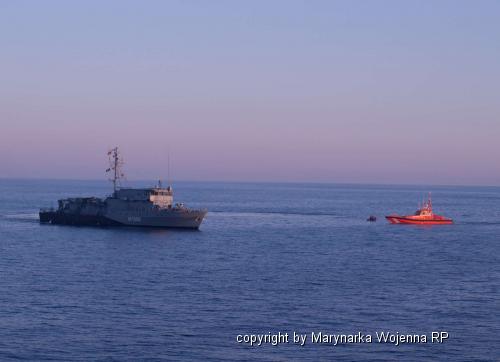
Two NATO ships, the Polish warship Kontradmiral Xawery Czernicki and the German warship Datteln, rescued 9 migrants in an inflatable boat on 16 June.  The incident occurred 80 km off the Spanish coast.  The German warship initially provided water to the migrants on the inflatable.  Spanish rescue services were notified when it appeared the migrant boat was taking on water.  A Spanish Salvamento Marítimo boat took the migrants on board and transported them to Spain.  The two NATO ships were participating in NATO Operation Active Endeavour which is the post-9/11 anti-terrorism operation in the Mediterranean and northern Red Sea aimed at protecting merchant vessels against attacks by terrorists.

Click here for Polish Navy press statement.

Click here (EN) and here (PL) for articles.

German warship Datteln and Spanish Salvamento Marítimo boat. © Polish Navy / Marynarka Wojenna RP

Leave a comment

Filed under Germany, Mediterranean, News, Spain

HRC Adopts Resolution on Migrants and Asylum Seekers Fleeing North Africa; Calls for Inquiry Into Allegations of Failures to Rescue Boats in Distress

The UN Human Rights Council, 17th Session, on Friday, 17 June, adopted a resolution (A/HRC/17/L.13) on Migrants and Asylum Seekers Fleeing from Events in North Africa.  The Resolution recalls states’ obligations under human rights, humanitarian, and refugee law, including the obligation of non-refoulement and called for ships patrolling the Mediterranean Sea to provide assistance to non-seaworthy boats leaving North Africa.

The Resolution also calls for “a comprehensive inquiry into the very troubling allegations that sinking vessels carrying migrants and asylum seekers fleeing the events in North Africa were abandoned to their fate despite the alleged ability of European ships in the vicinity to rescue them, and welcomes the call made by the Council of Europe in this regard on 9 May 2011.”  [NB – this quoted text is taken from a 15 June version of the Resolution and may not reflect the final approved language. frenzen]

The Resolution was adopted by a vote of 32 in favour, 14 against, and no abstentions:

In favour (32): Angola; Argentina; Bahrain; Bangladesh; Brazil; Burkina Faso; Cameroon; Chile; China; Cuba; Djibouti; Ecuador; Gabon; Ghana; Guatemala; Jordan; Kyrgyzstan; Malaysia; Maldives; Mauritania; Mauritius; Mexico; Nigeria; Pakistan; Qatar; Russian Federation; Saudi Arabia; Senegal; Thailand; Uganda; Uruguay and Zambia.

Against (14): Belgium; France; Hungary; Japan; Norway; Poland; Republic of Korea; Republic of Moldova; Slovakia; Spain; Switzerland; Ukraine; United Kingdom and United States.

Excerpts from the Afternoon 17 June summary of the HRC meeting:

“OSITADINMA ANAEDU (Nigeria), introducing draft resolution L.13, said the African Group recognized that due to the recent crisis situation in North Africa, migrants had suffered great hardship. Migrants were fleeing, not flowing out of North Africa. People were running away because their lives were at risk. Other root causes for migration did not apply in this case.  This resolution had been difficult to establish. Nigeria thanked all partners for their efforts in developing the draft resolution. The information emanating from North Africa was such that while neighboring countries did quite a lot in accommodating migrants, there were substantial difficulties in traveling from North Africa. Some people had even died at sea. Nigeria took note that some countries did provide assistance through their offices of migration or other mechanisms. The hardship suffered by migrants should be investigated in order to clarify the problems that arose and ensure this situation was not repeated. Nigeria believed that the Special Rapporteur, working with the High Commissioner, would be able to provide information about how to deal with such a situation in the future. The African Group would appreciate if the draft resolution would be approved by consensus.

[***]

ANDRAS DEKANY (Hungary), speaking on behalf of the European Union in an explanation of the vote before the vote, noted that the European Union had assisted greatly with the humanitarian effort in Libya. From the outset the European Union had been at the forefront of humanitarian response. The European Union had been active in repatriating third country nationals.  This had been vital in reducing the stress on neighboring countries. The draft text was circulated late. The European Union had engaged in a constructive spirit on the text, while retaining a specific focus that would address the issue at stake in a more balanced and legally accurate manner, notably when referring to issues related to refugee law and law of the sea. It noted that this was particularly true with regard to PP7 and operative paragraphs, which introduced new language that was not consistent with public international law. The resolution did not capture the multi-dimensional aspects of the problem. There was no reference to the overall human rights situation in the region, and therefore the root causes of the plight of migrants.  The resolution did not refer to the responsibility of criminal traffickers and continued to characterize the situation in an unbalanced way. The European Union and its Member States had continued to observe the principle of non-refoulement. Not a single refugee had been subjected to refoulement. The European Union called for a vote and noted that it would vote against the resolution.

EILEEN CHAMBERLAIN (United States), speaking in an explanation of the vote before the vote on L. 13, said the United States shared concern for the migrants and asylum seekers fleeing the violence in Libya. A resolution requiring countries to recognize their obligations under international law and support victims of violence and migrants from Libya was important.  However, this resolution assigned the sole responsibility to countries of destination and avoided reference to the root causes of the problem. The draft resolution used language that misconstrued State obligations and responsibilities regarding those migrants and asylum seekers. The sponsors had delayed introduction of the draft resolution, thus allowing only a restricted period to review and provide comments on the draft resolution. The United States regretted that the manner the resolution was developed belied its importance and sent the wrong message to the Gaddafi forces.”

Click here for UN News Centre summary.

Click here for the AFTERNOON 17 June 2011 summary of the HRC meeting.

Click here or on this link [ L.13 Document As Received ] for Resolution “document as received.”

Click here for Resolution “document as issued.” [NB – this may not be the final approved version.]

Click here  or on this link [ L.13 Oral Revision ] for Resolution “oral revision.”

Click herehere or here for final versions of resolutions when available.  [HRC Extranet registration may be required.]

1 Comment

Filed under Hungary, Libya, Mediterranean, News, OHCHR, Statements, United Nations, United States

Italian Minister Proposes that NATO Ships Block Migrant Boats from Departing Libya

Italian Interior Minister Roberto Maroni is calling for the NATO maritime blockade of Libya to be expanded to block the departure of migrant boats attempting to flee Libya.  Maroni said “I think you can intervene immediately by asking the NATO vessels already along the Libyan coast … to also be used to block people from leaving … This can be done right away if NATO agrees. It would be a solution to the problem.”

Click here and here for articles.

1 Comment

Filed under Italy, Libya, Mediterranean, News

Italy and Libyan National Transitional Council Sign Migration Agreement

Foreign Minister Franco Frattini and Mahmud Jabril, the head of the Libyan National Transitional Council (NTC), signed a migration agreement today in Naples.  The agreement provides for “mutual assistance and cooperation in combating illegal migration, including repatriation of illegal immigrants.” Frattini is quoted by media reports that Italy “is ready to help the NTC in terms of equipment and facilities, as we did with Tunisia, providing the tools to patrol and prevent the illegal trips.” Jabril said that with the agreement “we reaffirm the commitment of the NTC to respect previous agreements by Libya” with Italy and that “illegal immigration in our opinion will shape relations between Europe and Africa for the next 25 years.”

Click here, here, here, and here for articles.  (IT)

1 Comment

Filed under Italy, Libya, Mediterranean, News, UNHCR

UNHCR Denies Any Involvement with Italy-Libyan National Transitional Council Migrant Agreement

UNHCR spokesperson Laura Boldrini has said that the UNHCR was surprised at Foreign Minister Frattini’s claim that UNHCR was somehow involved in any new migration agreement between Italy and the Libyan National Transitional Council.  According to TM News Boldrini said  “there is no involvement of any kind relating to these operations and [UNHCR] reiterates its opposition to any action of expulsion at sea of ​​migrants heading for the Italian coast.”

Click here (IT) for article.

[UPDATE:   Click here and here for articles where Frattini clarifies he did not intend to suggest that UNHCR would be involved in the new agreement.   The agreement in question is being referred to as a Memorandum of Understanding for Cooperation in the Fight Against Illegal Immigration, Terrorism, Organized Crime and Drug Trafficking.  (Un Memorandum d’ Intesa per la collaborazione nella lotta all’ immigrazione clandestina, al terrorismo, alla criminalità organizzata ed al traffico di stupefacenti.)

2 Comments

Filed under Italy, Libya, Mediterranean, News, Statements, UNHCR

Frattini Says Migrant Repatriation Agreement to be Signed Tomorrow with Libyan National Transitional Council

Italian Foreign Minister Franco Frattini said earlier today that an agreement would be signed tomorrow between the Italian government and the Libyan National Transitional Council (NTC).  While no specific details of the agreement are being reported yet, the agreement will supposedly commit the NTC to taking steps to prevent the departure of migrants and also includes a repatriation agreement.  Frattini also said that the UNHCR will be a party to the agreement.  Frattini is quoted as saying that “unlike what happened with Gaddafi this agreement sees the UNHCR fully involved.”

Click here (IT), here (FR), here (IT), here (IT), and here (IT) for articles.

[Update: UNHCR has expressed suprise at Frattini’s statement and said that it has no invovlement with this new agreement.]

Leave a comment

Filed under Italy, Libya, Mediterranean, News, UNHCR

1400 Migrant Landings in Malta in First 5 Months of 2011; 91% of Protection Applications Approved

According to information presented by Maltese Justice Minister Carmelo Mifsud Bonnici, 1,451 migrants have reached Malta during the first five months of 2011.  There were no arrivals during the first two months of the year.  819 people arrived in March, 288 in April, and 347 in May.  Most of the migrants were Somali (411) and Eritrean (280).

In a separate statement, Maltese Refugee Commissioner Mario Guido Friggieri said that a total of 1,530 migrants in seven boats have arrived in Malta to date in 2011.  This would suggest that there have been 79 migrant arrivals so far during the month of June.

Friggieri also reported that the Refugee Office has received 600 applications for protection of which 420 have been decided: 5 migrants have been granted refugee status, 370 granted subsidiary protection, 8 granted temporary humanitarian protection status, and 1 was granted “special protection.” 36 applications have been rejected.  91% of the applications for protection decided to date have been approved in some fashion.

As of the end of the month of April, there were 1,048 migrants being detained in detention centres and 2,294 in open centres.

Click here, here, and here for articles.

Leave a comment

Filed under Data / Stats, European Union, Libya, Malta, Mediterranean, News

Frattini Says He Expects Libyan Rebels Will Soon Take Steps to Stop Migrant Departures

Italian Foreign Minister Franco Frattini said during a TV interview earlier today that “the [Libyan] rebels have said they will keep the international commitments of the Libyan state” relating to illegal immigration (”I ribelli hanno detto che manterranno gli impegni internazionali dello stato libico…”) and that he expects an “important political signal [from the rebels] in the coming days.”  (“Mi aspetto da parte loro un segnale politico importante gia’ nei prossimi giorni”.)

Libyan rebel leader, Mustafa Abdel Jalil, has previously said that a post-Gaddafi Libyan Government would respect “all agreements with Italy by the [Gaddafi] regime, including those involving combating illegal migration and oil contracts with Eni.” Specifically, Jalil has said that the rebels would “respect the Italian-Libyan Treaty signed by Prime Minister Silvio Berlusconi and Colonel Muammar Gaddafi. … Any treaty or agreement [which was done] we respect it” and “we will try to implement the treaties.”

Click here, here, or here for article. (IT)

Click here for previous post on Jalil’s statement.

3 Comments

Filed under Italy, Libya, Mediterranean, News

Italy Surpasses Greek-Turkish Border as Main Entry Point to EU for Irregular Migrants

Frontex Deputy Executive Director Gil Arias announced today at a press conference that during the first quarter of 2011 most irregular migrants have entered the EU through Italy, primarily at Lampedusa.  In 2010 the Greek-Turkish border was the main entry point for irregular migrants.

A total of 32,906 irregular migrants were detected at the EU borders during the 1st Quarter 2011 compared with a total of 14,857 during the 1st Quarter of 2010.  Of the 32,906, 22,000 entered through Italy during the 1st Quarter, mostly at or around Lampedusa, and 7,200 entered the EU through Greece.

So far this year, January 1 to present, approximately 41,000 irregular migrants have entered the EU in the area around Lampedusa and other nearby islands.

Click here (EN), here (EN), here (IT), and here (IT) for articles.

1 Comment

Filed under Data / Stats, European Union, Frontex, Greece, Italy, Libya, Mediterranean, News, Tunisia, Turkey

Moreno-Lax, Int J Refugee Law, “Seeking Asylum in the Mediterranean: Against a Fragmentary Reading of EU Member States’ Obligations Accruing at Sea”

The latest edition of the International Journal of Refugee Law, contains an article by Violeta Moreno-Lax (PhD Candidate at Université catholique de Louvain; Visiting Fellow 2010-11 at Refugee Studies Centre, University of Oxford) entitled “Seeking Asylum in the Mediterranean: Against a Fragmentary Reading of EU Member States’ Obligations Accruing at Sea.”

Abstract: “Although both international and EU law impose a number of obligations on the EU Member States with regard to persons in distress at sea, their effective implementation is limited by the manner in which they are being interpreted. The fact that the persons concerned are migrants, who may seek asylum upon rescue, has given rise to frequent disputes and to episodes of non-compliance. Frontex missions and the Italian 2009 push-back campaign illustrate the issue. With the objective of clarifying the scope of common obligations and to establish minimum operational arrangements for joint maritime operations, the EU has adopted a set of common guidelines for the surveillance of the external maritime borders. On the basis of the principle of systemic interpretation, this article intends to contribute to the clarification of the main obligations in international and European law binding upon the EU Member States when they operate at sea.”

This is a revised and updated version of the paper presented at the 12th IASFM Conference held in Nicosia, 28 June-2 July 2009.  [The article was written and sent for typesetting before the various uprisings in North Africa – IJRL Editor, 4 March 2011]

Click here for link.  (Subscription or payment required.)

Leave a comment

Filed under Analysis, Eastern Atlantic, European Court of Human Rights, European Union, Frontex, Greece, Italy, Libya, Malta, Mauritania, Mediterranean, Senegal, Spain

42,000 Migrant Landings in Italy in First 5 Months of 2011

Italian officials report that 42,807 migrants landed in Italy during the first five months of 2011.  The arrivals involved 507 separate landings.  This number contrasts with 4,406 arrivals in all of 2010 involving 159 separate landings.

Most of the migrants in 2011 have been Tunisian nationals (24,356) whereas Afghans (1699) were the largest group in 2010.  Most migrants crossed the Adriatic in 2010 whereas the central Mediterranean is now the location of most migrant voyages.

2010:   Afghanistan (1699), Tunisia (650), Egypt (551), Algeria (297), Iraq (161), Iran (159) , Palestine (128), Turkey (112), Syria (100), Somalia (61), Eritrea (55).

January–May 2011:   Tunisia (24,356), Somalia, Eritrea, Ethiopia (combined total of 4,157), Nigeria (1689), Ghana (1312), Mali (1134), Bangladesh (827), Egypt (761), Côte d’Ivoire (730), Afghanistan (713), Pakistan (530).

Click here and here for articles.  (IT)

1 Comment

Filed under Data / Stats, Italy, Mediterranean, News