Category Archives: Libya

Commission Communication on Migration of 4 May

The European Commission today issued a Communication on Migration (COM(2011) 248 final) in response to the ongoing arrivals of migrants and asylum seekers in Italy and Malta and in response to the calls by Italy and France for changes in the implementation or interpretation of the Schengen Agreement.

France has welcomed the Commission’s Communication: “We note with interest that the Commission is considering establishing a mechanism for the temporary reintroduction of controls on some sections of internal borders in cases of difficulties or failures of a Member State. We also welcome the emphasis on strengthening the operational capacity of Frontex, the prospect of ultimately creating a European border guard that France has repeatedly called for. Finally, we welcome with satisfaction the intention of the Commission to propose a suspension clause of the liberalization of visa abuse.” (“Nous relevons ainsi avec intérêt que la Commission envisage l’établissement d’un mécanisme permettant la réintroduction temporaire des contrôles à certaines sections des frontières intérieures en cas de difficultés ou de défaillances d’un État membre. Nous nous félicitons aussi de l’accent mis sur le renforcement des capacités opérationnelles de FRONTEX, avec la perspective de créer à terme un système européen de garde-frontières que la France a régulièrement appelé de ses vœux. Nous accueillons enfin avec satisfaction l’intention de la Commission de proposer une clause de suspension de la libéralisation des visas en cas d’abus.”)

Excerpts from the Commission’s Communication on Migration:

“[***]

The purpose of this Communication is to set recent and future policy proposals in a framework that takes account of all relevant aspects and allows the EU and its Member States to manage asylum, migration and mobility of third-country nationals in a secure environment.

[***]

The continuously evolving situation in our Southern Neighbourhood requires rapid responses. Building upon the European Council Conclusions of 11 and 25 March, the European Parliament’s Resolution of 5 April1, and, the joint Communication of the Commission and the High Representative of 8 March, the Commission will present on 24 May a package of proposals to ensure a coherent EU approach in the area of migration, mobility and security with the Southern Mediterranean countries.

However, the need to address this challenging and evolving situation should not lead to a short-term approach limited to border control without taking account of long-term issues.

[***]

The EU should also ensure that it has in place safe and efficient asylum procedures for people in need of protection. Sixty years after the signature of the Geneva Convention on the Status of Refugees, it is time for the EU to reaffirm its commitment to offer protection to any persecuted third country national or stateless person arriving on its territory. A Common European Asylum System, offering a high level of protection and reducing the disparities among Member States’ asylum systems, must be completed by 2012, as agreed by the European Council.

[***]

At the same time, as recent events have starkly illustrated, the EU continues to face serious challenges in the development of its migration policy. The vulnerability of some sections of the EU’s external borders is a clear example, notably in the Southern Mediterranean and at the land border between Greece and Turkey. In particular, measures must be taken to prevent large numbers of irregular migrants, often exploited by unscrupulous criminal networks, from arriving in the EU. The EU should accordingly pursue a migration policy based on ensuring that inward migration is effectively managed and ensure that the need for enhanced mobility does not undermine the security of the Union’s external borders. While this Communication naturally focuses on regions of most immediate concern, the EU’s migration policy follows a geographically comprehensive approach.

[***]

However, while the current crisis confirms the need for increased solidarity at the European level and better sharing of responsibility, it must be recognised that the EU is not fully equipped to help those Member States most exposed to massive migratory movements.

[***]

Building on the experience gained so far with the current pilot project on relocation from Malta, the Commission will support an extension of this project in view of the current influx of migrants seeking international protection there, to be implemented in close cooperation with the United Nations High Commissioner for Refugees and the International Organisation for Migration.

However, the currently available instruments fall short of fulfilling all the needs and providing a comprehensive response. They can only be resorted to in an ad hoc manner, and are entirely dependent on the will of Member States to voluntarily offer assistance – in whatever form – at a given point in time. This in turn exposes the EU to criticism and risks undermining the trust of the citizens in the EU.

The Commission will closely monitor the continuously evolving situation and may decide, if the relevant conditions are met, to trigger the Temporary Protection Directive3 to provide immediate and temporary protection to displaced persons from third countries that are unable to return to their country of origin.

The Commission will make further proposals during 2011 on delivering solidarity in a holistic manner and how concretely such assistance can be delivered. A number of different approaches are currently being studied, with a view to developing alternatives that will allow urgent needs to be responded to in a more rapid and structured fashion. This initiative will build on the appropriate legal basis of the Lisbon Treaty, such as Articles 80 and 78 paragraph 3, and will draw lessons from the situation in Greece, particularly at the land border between Greece and Turkey, and the crisis in the Southern Mediterranean; it will include possible ad hoc measures to be resorted to in case of particular temporary pressure on one or several Member States, as well as more structural means of ensuring solidarity, both financial and in the form of practical cooperation and technical assistance (e.g. via FRONTEX, EASO, joint operations).

[***]

FRONTEX’s role is key in channelling resources to places where the border is under pressure, as shown by the deployment – for the first time ever – of rapid border intervention teams to the Greek-Turkish land border in 2010 and the deployment of the joint naval operation HERMES to support Italy in 2011. FRONTEX’s legal framework needs be updated to allow it to be more effective in terms of its operational capacity to act at the external border. The Commission proposed the necessary changes in February last year5 and it is now urgent, especially in the light of recent events, that the Council and the Parliament approve this proposal before the end of this semester, as called for by the European Council.

[***]

[A] clear system for Schengen governance is needed. Currently the Union still relies on an intergovernmental system of peer reviews to ensure the application of the common rules. The current revision of the Schengen evaluation mechanism should be based on a Community approach with participation of experts from Member States, FRONTEX and lead by the Commission. The proposed mechanism would ensure more transparency and improve the follow-up of shortcomings identified during the experts’ evaluations. The Commission will also issue guidelines to ensure a coherent implementation and interpretation of the Schengen rules.

A mechanism must also be put in place to allow the Union to handle situations where either a Member State is not fulfilling its obligations to control its section of the external border, or where a particular portion of the external border comes under unexpected and heavy pressure due to external events. A coordinated Community-based response by the Union in critical situations would undoubtedly increase trust among Member States. It would also reduce recourse to unilateral initiatives by Member States to temporarily reintroduce internal border controls or to intensify police checks in internal border regions which inevitably slow down the crossing of internal borders for everyone. Such a mechanism may therefore need to be introduced, allowing for a decision at the European level defining which Member States would exceptionally reintroduce internal border control and for how long. The mechanism should be used as a last resort in truly critical situations, until other (emergency) measures have been taken to stabilise the situation at the relevant external border section either at European level, in a spirit of solidarity, and/or at national level, to better comply with the common rules. The Commission is exploring the feasibility of introducing such a mechanism, and may present a proposal to this effect shortly.

[***]

One of the main purposes of the Common European Asylum System is to reduce the wide divergence in the outcome of asylum applications lodged in different countries of the EU, and to ensure a common set of procedural and substantive rights which can be relied on across the Union, while ensuring full compliance with the 1951 Geneva Convention on refugees and other relevant international obligations.

In 2010, there were some 257 800 asylum seekers registered in the EU, or 515 applicants per million inhabitants. Ten Member States accounted for more than 90% of applicants registered in the EU17.

It is time to complete the Common European Asylum System by reaching agreement on a balanced package by the 2012 deadline agreed by the European Council in December 2009. To that end, the Commission will shortly put forward modified proposals on the Reception Conditions and the Asylum Procedures Directives. A balanced agreement on the revision of the Dublin Regulation must be reached, including on a last resort emergency mechanism in case of exceptional pressures, and on the revised Eurodac system.

[***]”

Click here for the Communication – COM(2011) 248 final.

Click here for Commission Press Statement and here for Commission FAQs.

Click here for French Government’s Point de Presse.

3 Comments

Filed under Communiqués, European Union, France, Frontex, Italy, Libya, Malta, Mediterranean, News, Tunisia

Draft Commission Communication on Migration

[UPDATE 4 May 2011 – the FINAL Communication on Migration was released today.  Click here for Communication and click here for my updated post.]

The European Commission will consider and likely adopt a Communication on migration on Wednesday, 4 May.  Below are excerpts from a draft document which appears to have been under consideration as of 15 April.  The draft Communication  [DRAFT 15-04-2011] includes proposals for burden sharing under certain circumstances and “a mechanism [for the introduction of] a coordinated and temporary reintroduction of [internal EU border] controls. 

Excerpts from the draft:

“Table of Contents

1……….. Introduction

2……….. Crossing the borders

2.1…….. Coping with the crisis: the short-term measures

2.2…….. Border controls

2.3…….. Schengen governance

2.4…….. Preventing irregular immigration

3……….. Moving and living in an area without internal borders

3.1…….. Organised mobility

3.2…….. A consistent policy on mobility including visas

3.3…….. A properly managed legal migration

3.4…….. Building an inclusive society by integrating immigrants

4……….. Providing international protection to persons in need

5……….. Migration in External relations beyond the crisis

5.1…….. The Global approach to migration

5.2…….. Beyond the crisis: the EU and the Southern Mediterranean in partnership

1.  Introduction

[***]

Some Member States, such as Italy, Malta, Greece and Cyprus are more directly exposed to massive arrivals of irregular migrants and, to a limited extent, of persons in need of international protection. This is not a national problem alone, but needs also to be addressed at the EU level and requires true solidarity amongst Member States.

The EU must ensure quick assistance to all persons in need – as it has done notably at the Tunisian-Libyan border – and provide shelter to those in need of international protection. Whilst the EU must maintain and consolidate its tradition of granting asylum and protection it should also foresee the appropriate tools in order to prevent large number of economic migrants crossing the borders irregularly. To reach these objectives, managing effectively the EU borders is a condition of credibility inside and outside the Union.

The continuously evolving situation in our Southern Neighbourhood requires rapid responses. Building upon the European Council Conclusions of 11 and 25 March, and the joint Communication of the Commission and the High Representative of 8 March, the Commission will present on 24 May a package of proposals to address the EU approach in the area of migration, mobility and security with the Southern Mediterranean countries.

However, the absolute need to address this challenging and evolving situation should not lead to a short-term approach limited to border control without taking account of long-term issues. Dialogue and cooperation with countries of origin and of transit of these migrants is essential. Such collaboration needs to be built on security and good governance for the establishment of mutually beneficial policies in the field of legal migration. It also implies enhanced economic cooperation in order to develop the conditions for growth and employment in the countries of origin, to address the causes of irregular migration and to promote a pact for development and well managed legal migration in its various forms.

[***]

2.1   Coping with the crisis: the short-term measures

[***]

Those Member States that are most exposed to the growing flows of refugees and irregular migrants have been helped with the financial consequences of the displacement. To this end, around 25 MEUR which were identified under the External Borders Fund and European Refugee Fund.

While the current crisis confirms the need for increased solidarity at the European level and better sharing of responsibility, it must be recognised that the EU is not fully equipped to help those Member States most exposed to massive migratory movements.

The financial resources available under the General programme “Solidarity and Management of Migration Flows” are inadequate to respond to all requests for assistance. First, these funds can not be mobilised easily; they are designed to intervene in a stable situation and not to tackle emergencies and crisis. Secondly, the magnitude of the problems largely exceeds the existing facilities.

In the context of the next Multi-Annual Financial Framework, the European Parliament, the Council and the Commission, will have to draw lessons from the current crisis. For the EU to react quickly and effectively in the case of unforeseen events or emergencies, Home Affairs funding should be adapted so that it can be mobilised much more rapidly and flexibly, including in third countries.

In principle, other forms of solidarity exist to respond to the dramatic events taking place in the region. Building on the experience gained so far with the current pilot project on relocation from Malta, the Commission will support an extension of this project in view of the current influx of migrants seeking international protection there, to be implemented in close cooperation with the United Nations High Commissioner for Refugees and the International Organisation for Migration. However, the currently available instruments fall short of fulfilling all the needs and providing a comprehensive response. They can only be resorted to in an ad hoc manner, and are entirely dependent on the will of Member States to voluntarily offer assistance – in whatever form – at a given point in time. This in turn exposes the EU to criticism and risks undermining the trust of the citizens in the EU.

The Commission will closely monitor the continuously evolving situation and may decide, if the relevant conditions are met, to trigger the Temporary Protection Directive to provide immediate and temporary protection to displaced persons from third countries that are unable to return to their country of origin.

The Commission will make further proposals during 2011 on delivering solidarity in a holistic manner and how concretely such assistance can be delivered. A number of different approaches are currently being studied, with a view to developing alternatives that will allow urgent needs to be responded to in a more rapid and structured fashion. This initiative will build on the appropriate legal basis of the Lisbon Treaty, such as Articles 80 and 78 paragraph 3, and will draw lessons from the situation in Greece, particularly at the land border between Greece and Turkey, and the crisis in the Southern Mediterranean; it will include possible ad hoc measures to be resorted to in case of particular temporary pressure on one or several Member States, as well as more structural means of ensuring solidarity, both financial and in the form practical cooperation and technical assistance (e.g. via FRONTEX, EASO, joint operations).

Finally, as an important gesture of solidarity towards the North African countries (especially Tunisia) which are currently hosting large number of persons in need of international protection who cannot be returned to their countries of origin, and in order to maintain ‘protection space’ in these countries, it is important for EU Member States to accept to resettle some of these persons.

2.3  Schengen governance

[***]

A mechanism must also be put in place to allow the Union to handle situations where either a Member State is not fulfilling its obligations to control its section of the external border, or where a particular portion of the external border comes under unexpected and heavy pressure due to external events. A coordinated response by the Union in these critical situations will increase trust among Member States. It will also reduce the need for unilateral initiatives by Member States to temporarily reintroduce internal border controls or to intensify police checks in internal border regions. However, even when such initiatives are taken within the limits set by the acquis, they inevitably slow down the crossing of internal borders for everyone. To be used as a last resort in truly critical situations, a mechanism may therefore need to be introduced allowing for a coordinated and temporary reintroduction of controls at one or several sections of the internal border. Such a mechanism would apply for a limited and pre-determined period of time, until other (emergency) measures have been taken to stabilise the situation at the relevant external border section either at European level, in a spirit of solidarity, and/or at national level, to better comply with the common rules. The Commission is exploring the feasibility of introducing such a mechanism, and may present a proposal to this effect shortly.

[***]”

Click on this link  “DRAFT 15-04-2011” for draft Communication.

Click here, here, and here for articles.

[UPDATE – 4 May 2011 – Click here for FINAL Communication and click here for my updated post.]

Leave a comment

Filed under Cyprus, European Union, Frontex, General, Greece, Italy, Libya, Malta, Mediterranean, News, Tunisia

2500+ New Migrant Landings in Lampedusa; Italy and Malta in New Diplomatic Dispute Over Search and Rescue Responsibilities

Migrant boats carrying over 2500 persons arrived in Lampedusa over the weekend.  The boats are all believed to have departed from Libya.  Improving sea conditions are thought to be responsible for the new surge in migrant boats.  Italy has said it will lodge a formal diplomatic complaint with Malta over what it says was Malta’s failure to rescue a migrant boat in distress.  The migrant boat in question was apparently closer to Lampedusa than to Malta, but was within the Maltese SAR zone when a distress call was made.  Maltese authorities said they were unable to send their patrol boats to the boat that was in distress due to bad sea conditions.  Italian coast guard boats eventually provided assistance while NATO and Armed Forces of Malta aircraft provided air surveillance.

Click here (IT), here (EN), here (EN) and here (EN) for articles.

2 Comments

Filed under Frontex, Italy, Libya, Malta, Mediterranean, News

Northern League Issues Ultimatum to Berlusconi Over Migration Issue

Northern League leader Umberto Bossi has issued an ultimatum to Silvio Berlusconi demanding a parliamentary vote to set a date certain by which Italy would halt its involvement with NATO operations against Libya.  The Northern League’s basic argument is that ongoing NATO attacks against Libya will lead to larger numbers of migrants and asylum seekers fleeing to Italy.  Interior Minister Roberto Maroni (Northern League) repeated yesterday his belief that up to 50,000 people may soon flee Libya towards Italy.

Click here (FR),  here (IT), and here (IT) for articles.

Leave a comment

Filed under Italy, Libya, Mediterranean, News

Libya Placed Mines Outside Misrata Harbour

The French naval vessel the Courbet stopped several Libyan patrol boats on 29 April that were in the process of attempting to lay mines outside the Misrata harbour.  Three mines were discovered in the waters.  This is a new danger for civilian ships and boats in Libyan waters. (HT to Bruxelles2).

Click here (FR) for French Ministry of Defence statement.

Leave a comment

Filed under France, Libya, Mediterranean, News

Malmström: Migration Policy Should Not Be Event Driven

From Commissioner’s Cecilia Malmström blog:

“It’s important to prepare for what’s happening in Northern Africa and to have a long term strategy for the cooperation with our neighbouring countries. There’s however quite worrying tendencies in Member States to be too event-driven and calling for quick-fix measures. It’s important to remember that out of the approx. 25.000 migrants coming to the EU the last couple of months only a few thousands are refugees, seeking asylum in the EU. The others are economical migrants from Tunisia looking for work and a better life in Europe. These people are likely to be sent back to Tunisia. The few thousand refugees that have been coming the last months should also be seen in the right perspective – last year France alone received 48.000 asylum seekers and Sweden 32.000 – the total number of refugees coming to the EU last year was 236.000.

As I wrote in my previous blog entry, migration policy needs long term strategies and well thought through measures and mustn’t be driven by populist movements. Next week I’ll present a Strategy Paper presenting a holistic approach on migration to my colleagues in the Commission. The Strategy Paper addresses the urgent need for a common European asylum and migration policy and the need for solidarity with the European countries most exposed to migration flows (Italy and Malta at this point), but also with neighbouring countries, such as Tunisia and Egypt, where the lion part of the refugees from Libya have fled to.”

On a slightly related point, the link between anti-immigrant views and increasing support for some political parties such the Front National and Marine Le Pen in France and the Northern League in Italy are well know.  In Finland a populist party, the True Finns, has for the first time entered Government after its stunning third place finish in the 17 April parliamentary elections.  Many have described the True Finns as populist party that is most interested in the Euro crisis and the financial bailouts.  But recent public comments of new True Finn MP Teuvo Hakkarainen reveal the anti-immigrant and racist sentiments held by some party members.  According to YLE, Hakkarainen said that “Negros” would be arriving at Finland’s borders and warned that minarets would arise all over Helsinki.  Some credit is due to True Finns Party chair Timo Soini who has reprimanded Hakkarainen for his comments.  The new Government has just been formed and the True Finns will chair the parliamentary committees responsible for Foreign Affairs, Defence, and the Administration Committee which has responsibility for immigration issues.  Over 1000 people demonstrated in front of the Parliament building earlier in the week in support of tolerance and multiculturalism.

Click here (EN) and here (SV) for blog post.

Click here and here for YLE articles.

Leave a comment

Filed under European Union, France, Italy, Libya, Mediterranean, News, Tunisia

120 Tunisians Who Departed for Italy Remain Missing

Family members of missing Tunisian migrants held a sit-in at the Tunisian Ministry of Foreign Affairs on Monday of this week.  They are seeking assistance in learning the fate of their family members who left Tunisia by boat for Italy and who have not been heard of since their departures.  Among the missing are 40 migrants who left from Sfax on 14 March and a second group of 80 who left on 29 March.  Some of the families say that they have received reports that the migrant boats may have landed in Libya and not Italy.

Click here (FR), here (FR), here (EN), and here (IT) for articles.

Leave a comment

Filed under Italy, Libya, Mediterranean, News, Tunisia

Cyprus, Greece, Italy, Malta, & Spain Issue Joint Communiqué Regarding Response to North African Migration

Ministers of Home Affairs and Internal Security from Cyprus, Greece, Italy, Malta, and Spain, met in Nicosia on 19 April and issued a Joint Communiqué.  Here is the full text (HT to EASO Monitor):

“Joint Communiqué II

(Nicosia, 19 April, 2011)

Following the meeting in Rome on the 23rd February 2011, the Home Affairs and Internal Security Ministers of Cyprus, Greece, Italy and Malta as well as the representative of the Minister of Interior of Spain, met again today in Nicosia and discussed the continuing dramatic developments in the Southern Mediterranean region. At the end of the meeting it was decided to issue the following Joint Communiqué.

The Home Affairs and Internal Security Ministers of the Mediterranean Member States of the EU:

Recalling our February 23rd,2011 Joint Communiqué, we have repeated our utmost concern for the unfolding events in relation to the humanitarian situation as well as to the massive illegal immigration flows and movements of possible beneficiaries of international protection that affect our countries;

Taking into account that the escalating events in countries of Northern Africa and the greater Middle East are destabilising the region and acknowledging that political reforms and democratic transitions will not take effect immediately and that their outcome is still uncertain;

Bearing in mind Europe’s longstanding tradition and commitment to the provision of international protection to people in need, in accordance with the Geneva Convention and in line with humanitarian principles and full respect of human rights;

Underlying that security and stability in the Mediterranean is directly linked to the security and stability of the EU as a whole and that effective response to this challenge requires joint efforts, commitment and solidarity from all EU Member States;

Stressing that the current emergency situation with regard to the massive illegal immigration flows and movements of possible beneficiaries of international protection brings upon the Mediterranean Member States additional social, economic, administrative and demographic burden, to that already prevailing;

Recalling the already existing intense and continuous migratory pressure at the south eastern external borders of the EU;

Expressing deep concern about the conflict in Libya and its consequences in terms of sufferings of countless human beings and growing number of displaced persons fleeing the war and taking into account that huge number of people in need of international protection could arrive at the most exposed Mediterranean Member States in the immediate future;

Emphasizing that the possible prolongation of such influxes of illegal migrants and asylum seekers to the Mediterranean Member States, cannot be managed without the concrete and substantial support and solidarity from the rest of the EU’s Member States; alternatively, the situation will seriously jeopardize our ability, and subsequently the Union’s ability, to manage the displaced persons and provide those in need with international protection as well as undermine our common security;

Stressing that the arising situation will challenge and undermine the efforts of those Member States to reform their overburdened national asylum systems;

Reaffirming the urgent necessity for EU to provide concrete and immediate support to Member States on the EU southern external borders;

Stressing the need for additional actions and policies with a view to implement the EU principle of solidarity and fair sharing of responsibility as expressed in the Treaty on the Functioning of the European Union and in line with the Stockholm Programme, the European Pact on Immigration and Asylum, the Global Approach to Migration, the relevant European Council Declaration of 11 March 2011 and Conclusions of 24 and 25 March 2011, the JHA Council Conclusions of 11and 12 April 2011 on the management of migration from the Southern Neighbourhood and the JHA Council Conclusions of 25 and 26 February 2010 on 29 measures for reinforcing the protection of the external borders and combating illegal immigration;

Therefore we, the Ministers of Home Affairs and Internal Security of the EU Mediterranean Countries, have adopted a common position on the emerging situation in our region and urge the European Union to practically offer operational as well as financial support to Member States which face mass and disproportionate mixed migration flows, by fully mobilizing all available EU assets, instruments and capabilities, either existing or additional ones,.

Particularly, as the competent Ministers of the EU Mediterranean Member States, urge the European Union to:

Urgently present and implement proposals on the Global Approach to Migration as well as on Mobility Partnerships, in a spirit of genuine cooperation with the countries of the Southern Neighbourhood Region, also to effectively control and manage the current and the anticipated mass migration flows as well as situation-specific schemes on return and readmission.

Call on FRONTEX to immediately implement the provisions set out in section 5 of the JHA Council Conclusions of 11 April 2011, to speed up negotiations with the countries of the region – and in particular with Tunisia – with a view to concluding operational working arrangements, and organising joint patrolling operations in cooperation with Tunisian authorities and in application of all relevant international Conventions, in particular the UN Convention on the Law of the Sea (“the Montego Bay Convention”).

Call on FRONTEX to intensify the monitoring of the situation based on risk analysis and encourage Member States to provide the Agency with further human and technical resources so as to continue its ongoing operations (Joint Operation Hermes, Joint Operation Poseidon Land and Sea and the possible deployment of a RABIT operation in Malta) in the light of the emerging situation. Furthermore, call FRONTEX to expand its operations, where and when necessary, to prevent illegal flows in the eastern Mediterranean area of Egypt and Syria. To this end, further adequate financing of FRONTEX should be considered so as to increase the Organization’s capabilities to fulfil successfully its tasks.

Enhance the operational capacity and the coordinating role of the FRONTEX Operational Office in Piraeus in order to effectively deal with the situation;

Accelerate work on the FRONTEX Amending Regulation with a view to an agreement by June 2011 which will strengthen its capacity, make it truly operational and improve its synergy with other bodies.

Promote practical cooperation with the countries of origin or transit of illegal migrants in the region in preventing and fighting illegal migration flows, inter alia by concluding Readmission Agreements, developing Voluntary Return Programmes, enhancing their capacity of border management and surveillance, expanding the Immigration Liaison Officers Network, promoting legal migration by exploring the possibility of concluding mobility partnerships;

Encourage Member States to expedite discussions on the proposal for recasting the Dublin II Regulation, including a mechanism to suspend the transfers to Member States facing particular pressure on their national asylum systems.

Urgently mobilize all available financial assistance through the External Borders Fund and European Refugee Fund and in addition, as section 4 of the JHA Council Conclusions of 11 April, 2011 reads, activate supplementary funds that can be made available to Member States or FRONTEX at short notice when needed. In this vein establish a special solidarity Fund, when necessary, to tackle exceptional emergency situations and humanitarian crisis.

Deploy every available possibility by the European Asylum Support Office to offer practical support to the Member States of the Mediterranean Region in need. A permanent specialised mechanism should be set up through the EASO, which, at exceptional emergency situations, will provide Member States in need with the necessary logistical and technical support.

As a matter of priority, present a proposal for implementing a coherent and comprehensive mechanism for distributing responsibilities, on a voluntary basis, specifically regarding the relocation of beneficiaries of international protection among member states, in case of European countries faced with particular pressures, as a consequence of their geographical or demographic situation, especially when facing the sudden arrival of third country nationals in need of international protection.

Commit to the work on establishing a Common European Asylum System with a view to respect the 2012 deadline.

We the Ministers of the Mediterranean Member States of the EU agreed to meet again soon, at a date to be agreed, in order to further coordinate our efforts before the European Council of June this year.”

Click here for document.

2 Comments

Filed under Cyprus, Egypt, European Union, Frontex, Greece, Italy, Libya, Malta, Mediterranean, News, Statements, Tunisia

Italian Official Warns of New Migrant Threat from Libya

In obvious tension with my previous post (Van Rompuy Warns Migrant Danger Should Not be Exaggerated), Giorgio Piccirillo, the head of COPASIR, the Italian Parliamentary Committee for Security of the Republic (Comitato parlamentare per la sicurezza della Repubblica), said last Thursday that Libya may attempt to send towards Europe approximately 15,000 migrants recently released from detention centres in Libya.  The Times of Malta reported Saturday that “[a]ccording to Gen. Piccirillo the Libyan regime’s intention is to send these migrants to Italy by boat from the port city of Zuwarah, which is about 120 kilometres to the west of Tripoli. Zuwarah is one of the ports from where migrant traffickers operated in the past…”  No further details were reported.

Click here (EN) and here (IT) for articles.

Leave a comment

Filed under European Union, General, Italy, Libya, Mediterranean, News

Van Rompuy: Migration Danger Should Not Be Exaggerated; European Treaties Need to Be Respected

EU President Herman Van Rompuy said during an interview on Sunday that the danger of migration to Europe should not be exaggerated and that European migration treaties, including the Schengen agreement, need to be respected.  He said “[t]here is of course a migration danger, but do not overdo it.” (“Interrogé sur l’existence d’un danger migratoire lié à l’afflux de migrants depuis le début des révoltes dans le monde arabe, M. Van Rompuy a répondu : ‘Il y a bien sûr un danger migratoire mais il ne faut pas l’exagérer’, lors d’une émission d’une émission commune de la chaîne TV5Monde, la radio RFI et du journal Le Monde.”)  In regard to the Schengen agreement, he said “[n]either Italy nor France, until now, has done anything illegal. That said, there is a danger of not respecting the spirit of the Schengen Treaty…” (“Ni l’Italie, ni la France, jusqu’à présent, n’ont fait quelque chose d’illégal. Ceci dit, il y a un danger de ne pas respecter l’esprit du traité de Schengen…”)

Van Rompuy’s remarks are consistent with Jose Manuel Barroso’s statements last week reported by the EU Observer regarding the danger of the “immigration debate being hijacked by ‘populist and extremist’ forces in Europe.”  Barroso was quoted as saying “I don’t think it is in the interest of third countries [such as Tunisia] that there is a debate in Europe on such sensitive issues and that certain populist, extremist forces seek to take advantage of these problems.”

We got a small taste of the populist forces at work with yesterday’s results in Finland’s parliamentary elections and the strong third place showing of the True Finns led by Timo Soini.  While the True Finns are currently focused more on blocking the Portuguese financial bailout,  anti-immigrant sentiments within the party are strong.

Click here (FR), here (EN), and here (EN) for articles.

1 Comment

Filed under European Union, France, Italy, Libya, Mediterranean, News, Tunisia

COE Parliamentary Assembly Adopts Resolution Regarding North African Migrants & Asylum Seekers

Earlier today PACE approved a resolution based on a report by Tineke Strik (Netherlands, SOC) addressing the large influx of migrants and asylum seekers on Europe’s southern borders.  From the PACE press statement: the Assembly “welcomed the efforts so far of the ‘frontline states’ to provide humanitarian assistance in line with their international obligations, and urged other European countries to ‘show solidarity’ with them, including by agreeing to resettle refugees and other persons with international protection needs. Malta was in a ‘particularly difficult situation’ given its small size, high population and limited resources… If the current wave of arrivals in Europe increases because of an even greater exodus of persons from Libya, in particular Libyans fleeing terror from Colonel Gaddafi’s regime or an entrenched civil war, the EU should consider applying its temporary protection directive….”

Excerpts from PACE Resolution 1805 (2011):

The large-scale arrival of irregular migrants, asylum seekers and refugees on Europe’s southern shores

“[***]

6.       The Parliamentary Assembly recognises that one of the first priorities is to deal with the humanitarian and international protection needs of those who have arrived on Europe’s shores, primarily in Italy and Malta. Member states, the European Union, international organisations, civil society and others all have a contribution to make and need to show solidarity with the front-line states. This solidarity and willingness to share responsibility needs to extend to the coast of North Africa and the many thousands of refugees and displaced persons still seeking ways to return home after fleeing from Libya. It should also extend to those migrants and refugees who are trapped in Libya awaiting the chance to flee.

7.       The Assembly notes that while there has been a wave of arrivals, there has not yet been the feared total deluge. This distinction is important because it has not always been clearly made by politicians, the media and others, leading to heightened fear and misunderstanding among the general public and calls for exaggerated responses.

8.       The Assembly recognises the pressure that the front-line countries of the Council of Europe are under, and welcomes their efforts to provide humanitarian assistance in line with international obligations and encourages them to continue with these efforts. The Assembly reminds states of their international obligations not to push back boats which are carrying persons with international protection needs.

[***]

12.       The Assembly, recognising that events in North Africa are of concern to all member states of the Council of Europe, therefore calls on member states to:

12.1.        acknowledge that the arrival of a large number of irregular immigrants on the southern shores of Europe is the responsibility of all European states and requires a solution which envisages the need to share this responsibility collectively. The Assembly reminds member states of the repeated appeals of the Council of Europe Commissioner for Human Rights for the need for effective responsibility sharing;

12.2.       provide urgent humanitarian aid and assistance to all those persons arriving on Europe’s southern shores and other borders, including through the provision of adequate accommodation, shelter and health care, as highlighted previously in Assembly Resolution 1637 (2008) on Europe’s boat people: mixed migration flows by sea into southern Europe;

12.3.       refrain from automatic detention and have recourse to detention only where there is no other reasonable alternative, ensuring that conditions comply with minimum human rights standards as outlined in Assembly Resolution 1707 (2010) on detention of asylum seekers and irregular migrants in Europe;

12.4.       ensure that vulnerable persons, including women and children, victims of torture, victims of trafficking, and the elderly, are not detained and receive appropriate care and assistance;

12.5.       guarantee the right of asylum and non-refoulement through, inter alia:

12.5.1.       ensuring that states give access to their territory to persons in need of international protection;

12.5.2.       assuring the quality and consistency of asylum decisions in line with Assembly Resolution 1695 (2009) on improving the quality and consistency of asylum decisions in the Council of Europe member states;

12.6.       ensure that, in screening arrivals and carrying out asylum determinations, these are carried out without delay, but that speed is not given preference over fairness;

12.7.       provide full support to the Office of the United Nations High Commissioner for Refugees (UNHCR), International Organisation for Migration (IOM), International Committee of the Red Cross (ICRC) and other international and national organisations providing humanitarian and other assistance, both in North Africa and in the European countries of arrival, and generously take part in resettlement programmes for refugees stranded in North African countries;

12.8.       show solidarity in the challenges faced, which includes sharing responsibility with front-line states, including by:

12.8.1.       giving further support to the European Agency for the Management of Operational Cooperation at the External Borders of the Member States of the European Union (Frontex) and the newly established European Asylum Agency (EASO), and encouraging further use of European Union funding available through the External Borders Fund, the Return Fund, the European Refugee Fund and the Integration Fund;

12.8.2.       looking into the possibility of taking on commitments for resettlement of those with international protection needs from the European countries of arrival and on suspending the application of the Dublin Regulations or on considering other forms of responsibility sharing, through the use of existing mechanisms provided for in the Dublin Regulation, including the solidarity clause in Article 3(2) and the humanitarian clause in Article 15;

12.8.3.       working together, including with the European Union, on the issue of voluntary and forced returns, taking into account necessary human rights safeguards when relying on readmission agreements in line with Assembly Resolution 1741 (2010) on readmission agreements: a mechanism for returning irregular migrants;

12.8.4.        acknowledging the particularly difficult situation in which Malta finds itself, in view of the size of its territory, its high population density and limited human and material resources, and committing to the resettlement of those with international protection needs.

[***]

14.       If a mass exodus of Libyan refugees occurs because of increasing terror by Colonel Gaddafi or the emergence of a civil war, the Assembly encourages the European Union member states to consider applying the temporary protection directive (Council Directive 2001/55/EC of 20 July 2001 on minimum standards for giving temporary protection in the event of a mass influx of displaced persons and on measures promoting a balance of efforts between Member States in receiving such persons and bearing the consequences thereof). It is important, however, to ensure that no states are considering returning Libyans at this stage and that at least a form of temporary protection is provided in practice.

[***]”

Click here for Resolution. (Resolution 1805 (2011))

Click here for Recommendation. (REC 1967 (2011))

Click here for PACE press statement.

Click here for Report, Committee on Migration, Refugees and Population, Rapporteur: Ms Tineke STRIK, (Doc. 12581, 13 April 2011).


Leave a comment

Filed under Commissioner for Human Rights, Council of Europe, European Committee for the Prevention of Torture and Inhuman or Degrading Treatment or Punishment, European Union, Italy, Libya, Malta, Mediterranean, News, Tunisia, UNHCR

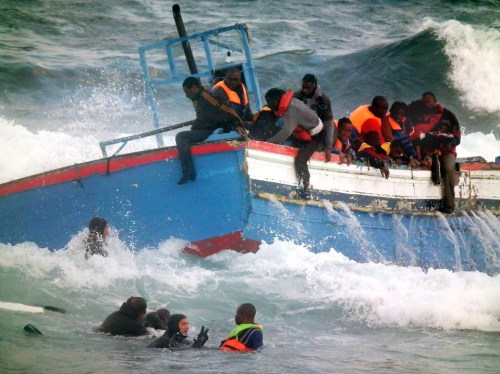
Migrant Boat From Libya Sinks Off Pantelleria – 2 Dead, 100+ Rescued

A migrant boat sank yesterday just off shore of Pantelleria, an Italian island approximately 150 km northwest of Lampedusa.  The boat was carrying approximately 250 people and ran around on rocks near the entrance to the port.  The boat had been intercepted earlier in the night by an Italian naval vessel and was being escorted to Pantelleria.  It is not clear why the migrant boat was unable to enter the harbour safely.  Two young women died.

Click here and here for articles.  (IT)

AFP PHOTO/ Francesco Malavolta/Getty Images

1 Comment

Filed under Frontex, Italy, Libya, Mediterranean, News

COE Parliamentary Assembly to Hold Urgent Debate on Large-Scale Migrant Arrivals in Southern Europe

From PACE:  “Spring session: 11-15 April 2011 – Debates on the arrival of irregular migrants and asylum seekers on Europe’s southern shores and on the situation in Northern Africa.

Adopting the final agenda of its plenary Spring Session, the Assembly today [11 April] decided to hold, on Thursday 14 April, an urgent debate on the large-scale arrival of irregular migrants on Europe’s southern shores and a current affairs debate on the situation in Northern Africa…..”  Agenda Working documents

From the Agenda:

Thursday 14 April 2011

8.30 a.m. Committees
10 a.m. 1. Debate under urgent procedure: 

The large-scale arrival of irregular migrants, asylum seekers and refugees on Europe’s southern shores (Doc. )

Rapporteur of the Committee on Migration, Refugees and Population:

Deadline for tabling amendments: Wednesday 13 April at 12 noon

Debate and vote on a …

2. Current affairs debate: 

The situation in Northern Africa

Discussion

1 p.m. End of the sitting

Click here for link to PACE news page.

Leave a comment

Filed under Council of Europe, Italy, Libya, Malta, Mediterranean, News, Tunisia

Belgium Plans to Reintroduce Border Controls to Block Entry by Tunisians from Italy

Belgium announced earlier today at the conclusion of the JHA Council meeting that it plans to reintroduce border controls, joining France and Germany, in an effort to block the entry of Tunisian migrants granted temporary residency by Italy.  The announcement was made by Melchior Wathelet, Secretary of State for Asylum and Migration. Wathelet also suggested that Austria and the Netherlands , as countries of “final destination,” were supportive of the move to reintroduce border controls within the Schengen Area.

Click here (FR), here (NL), and here (FR) for articles.

Leave a comment

Filed under Belgium, European Union, France, Germany, Italy, Libya, Mediterranean, News

JHA Council Conclusions on the management of migration from the Southern Neighbourhood – 11 April 2011

Excerpts from today’s JHA Council Conclusions:

[***]

5. The Council calls on FRONTEX to continue to monitor the situation and prepare detailed risk analyses on possible scenarios with a view to identifying the most effective responses to them, and also invites FRONTEX to speed up negotiations with the countries of the region – and in particular with Tunisia – with a view to concluding operational working arrangements, and organising joint patrolling operations in cooperation with Tunisian authorities and in application of all relevant international Conventions, in particular the UN Convention on the Law of the Sea (“the Montego Bay Convention”).

6. The Council urges Member States to provide further human and technical resources to support the Agency’s operations, and in particular the existing Joint Operations Hermes, Poseidon Land and Sea and the possible deployment of a RABIT operation in Malta, in accordance with needs identified by the Agency in the light of the developing situation.

7. In order to rapidly strengthen the competences of FRONTEX and put more effective tools at its disposal, the Council agrees to accelerate negotiations on amending the FRONTEX Regulation, in cooperation with the European Parliament, with a view to reaching agreement by June 2011.

8. The Council underlines the need to promote all relevant forms of cooperation on a performance-based approach in the field of migration, mobility and security with the countries of the region that are sufficiently advanced in their reform progresses, and that effectively cooperate with the EU and its Member States in preventing illegal migration flows, managing their borders and cooperating in the return and readmission of irregular migrants. The Council stresses the need for early progress in the area of return and readmission in the case of relevant third countries, and recalls in particular that all States have an obligation to readmit their own nationals.

[***]

10. The Council welcomes the outcome of the visits of the Presidency and the Commission to Egypt and Tunisia and the intention of the Commission to follow-up these visits by setting up dialogues with the authorities of these countries at senior officials’ level, in which Member States will also participate, and which will be aimed at promoting the swift development of cooperation on the management of migration flows. This dialogue should in first instance, focus on the identification and promotion of measures which can contribute in a concrete and effective way to the prevention of illegal migration, to the effective management and control of their external borders, to the facilitation of the return and readmission of irregular migrants, and to the development of protection in the region for those in need, including through regional protection programmes. Subsequently, this dialogue could explore the possibilities for facilitating people-to-people contacts using instruments such as mobility partnerships.

11. The Council stresses the importance of offering durable protection solutions to those in need of international protection present in the countries of the Southern Neighbourhood, and, in this respect, calls on the Commission and the Council’s preparatory bodies to examine the possibility of assisting those countries in capacity building in the area of international protection, including by activating existing regional protection programmes, and assessing the need for additional programmes in the region.

12. The Council recalls that resettlement of refugees on a voluntary basis, in particular those living for some years in a situation of protracted displacement and vulnerability, and having no other perspective, can represent a durable solution for them. The Council takes note of the willingness of certain Member States to consider offering resettlement opportunities for the refugees present in the region. The Council invites Member States to continue supporting UNHCR in the development of resettlement programmes and calls on the Commission to identify solutions for supporting financially such resettlement actions.

13. The Council underlines that the measures mentioned in the paragraphs above represent the immediate answer to the crisis situation in the Mediterranean, but that it is also crucial to put in place a more long-term sustainable strategy to address international protection, migration, mobility and security in general, and taking also the secondary movements to other Member States into account.

14. The Council welcomes the Commission’s intention to come forward for that purpose with proposals in response to the Declaration of the Extraordinary European Council of 11 March and the Conclusions of the European Council of 24-25 March, and notes that the Presidency stands ready to convene an extraordinary meeting of the Council on 12 May if necessary in the light of developments and to further consider these matters.”

Click here for full document.

Leave a comment

Filed under European Union, Frontex, Italy, Libya, Malta, Mediterranean, News, Statements, Tunisia, UNHCR