Pillay Deplores Italy’s Criminalisation of Migrants

ANSAMed reported that speaking before the Foreign Affairs Commission of the Italian Chamber of Deputies, UN High Commissioner for Human Rights Navathenem Pillay said “I deplore the tendency to criminalise illegal immigration and wonder what led to illegal immigration becoming a criminal offense [in Italy].”  “Pillay also spoke out against Italy’s policy of sending back migrants at its borders. ‘Those requesting asylum have to be able to be heard, and the policy of sending them back prevents this. The latter constitutes a violation’ of human rights.’”

Click here for article.

Leave a comment

Filed under Italy, Mediterranean, News, OHCHR

First Meeting of EU Committee on Operational Cooperation on Internal Security – COSI

The Standing Committee on Operational Cooperation on Internal Security was established by the EU Council pursuant to Council decisions of 27 November 2009 (16515/09) and 5 February 2010 (5949/10) based on the guidelines established by the Treaty of Lisbon. Its stated objective is “to strengthen the co-ordination of the operational actions between EU Member States in relation to internal security.”

COSI met for the first time on 11 March in Brussels.  The Spanish EU Presidency’s web site states: “The Spanish Director General of the Police and Civil Guard, Francisco Javier Velázquez, chaired the first meeting of … COSI …which began the process of designing a joint strategy to deal with global threats. The meeting was attended by directors of police and heads of security forces in Europe, who examined joint measures for tackling terrorism, human trafficking, drug trafficking and cyber crime. …”

“In relation to drug trafficking, [COSI is] studying proposals from Member States, such as a French operational project to deal with trafficking from Africa, or the possibility of creating EU platforms in affected African countries.”

“Other tasks entrusted to COSI include co-ordinating the action of European agencies with responsibilities in areas of justice and home affairs, such as EUROPOL, EUROJUST, FRONTEX and CEPOL. It must also ensure that none of their activities overlap and that there is a real focus on their requirements.”

Click here for article posted on Spanish EU Presidency’s site.

Click here for article.

Leave a comment

Filed under European Union, Frontex, News, Spain

Réaction du REMDH suite au Sommet UE-Maroc

“Réaction et commentaires du Réseau Euro-Méditerranéen des Droits de l’Homme (REMDH) suite à la Déclaration conjointe publiée lors du premier Sommet UE-Maroc qui s’est tenu les 6 et 7 Mars 2010 à Grenade:

Le REMDH note avec satisfaction que la déclaration conjointe réaffirme les droits de l’Homme comme étant « l’un des piliers fondamentaux du partenariat UE-Maroc ». Il salue l’accent mis sur la nécessité de mettre en œuvre toutes les recommandations de l’Instance Equité et Réconciliation (IER) ainsi que de poursuivre les réformes en matière de justice, de liberté d’expression, de presse et d’association.  Cependant, le REMDH regrette que la Déclaration ne mentionne pas explicitement les droits de l’Homme parmi les domaines qui requièrent une attention particulière comme la réforme de la justice ou les droits des migrants….

Le REMDH exprime par ailleurs sa plus vive inquiétude concernant la volonté réaffirmée de conclure dès que possible un accord de réadmission. La loi relative à l’entrée et au séjour des étrangers au Maroc ne garantit pas la protection des droits de l’Homme, en particulier, le droit à un recours effectif ainsi que la protection contre le retour forcé vers un pays où la sécurité de la personne ne serait pas assurée. Dans ce contexte, le REMDH estime que les droits des migrants, réfugiés et demandeurs d’asile ne sont pas garantis. Il demande à l’UE et au Maroc de respecter leurs engagements internationaux en la matière notamment en interrompant les négociations en cours en vue de la conclusion d’un accord de réadmission…..”

Cliquez ici pour le commentaire complet.

Leave a comment

Filed under Communiqués, Eastern Atlantic, European Union, Mediterranean, Morocco, Statements

Déclaration Conjointe Sommet UE-Maroc

Extraits de la Déclaration conjointe Sommet Union Européenne-Maroc Grenade, 7 mars 2010:

“[***] Le Sommet couronne une intense période d’accélération dans les relations UE-Maroc, initiée par l’entrée en vigueur de l’Accord d’association en mars 2000, renforcée par la mise en place du Plan d’Action, dans le cadre de la Politique Européenne de Voisinage, en juillet 2005 et par l’adoption du document conjoint sur le Statut Avancé lors du Conseil d’Association d’octobre 2008.

Ce partenariat qui traduit un processus intense de dialogue couvrant tous les domaines politiques, économiques, sociaux et humains, reflète les aspirations des deux Parties à consolider la spécificité de leur partenariat….

I. L’UNION EUROPEENNE ET LE MAROC PARTENAIRES DANS UN MONDE GLOBAL

[***]  En matière de migration, le Maroc et l’UE conviennent de renforcer les mécanismes de coopération entre les pays d’origine, de transit et de destination, à travers la poursuite du dialogue entre les deux Parties et l’appui au processus de renforcement des capacités des parties concernées en matière de lutte contre l’immigration illégale, promotion de la migration régulière, optimisation de la contribution des migrants au développement et traitement des causes profondes de la migration. Une telle approche globale et équilibrée des questions de migration, incluant aussi une coopération pour le retour et la réadmission des migrants en situation irrégulière, doit constituer un élément fondamental du partenariat entre l’UE et le Maroc.

Le Maroc et l’UE saluent les réalisations du processus euro-africain sur la migration et le développement, lancé à Rabat en juillet 2006 et renforcé à Paris en novembre 2008, processus dans lequel le Maroc a joué un rôle moteur….

II. PREMIERS PAS VERS LA CONSOLIDATION DU STATUT AVANCE

[***]  Dimension humaine.

[***]  Le Maroc et l’UE notent avec satisfaction le consensus qui émerge au niveau international sur la nécessité d’examiner les questions migratoires dans le cadre d’une approche globale basée sur la responsabilité partagée et l’action collective concertée et associant la lutte contre la migration irrégulière, la gestion de la migration régulière et le lien entre migration et le développement.

Le Maroc et l’UE ont convenu de la nécessité de conclure dès que possible la négociation de l’accord de réadmission. La conclusion de cet accord est de nature à développer leur coopération dans le domaine de la migration, leur objectif commun étant de lutter contre la migration irrégulière, de favoriser l’utilisation de canaux réguliers de mobilité et migration, et de promouvoir l’impact positif de la migration sur le développement. La finalisation de la négociation sur l’accord de réadmission permettra une coopération globale sur la migration incluant la facilitation des visas.

III. UN AGENDA OPERATIONNEL POUR L´AVENIR

[***] Nouvel instrument qui prendra le relais du Plan d’action UE-Maroc L’actuel Plan d’action UE-Maroc adopté en 2005 pour une période de 5 ans arrivant à son échéance, les deux parties soulignent l’importance de finaliser le nouvel instrument qui doit être adopté en 2010 et qui prendra le relais du Plan d’action actuel. Ce nouveau document devra donner un contenu opérationnel aux objectifs du Statut avancé en intégrant les réformes agréées et les actions prévues dans le cadre du Plan d’action qui n’ont pas encore été mises  en oeuvre, ainsi que les éléments nouveaux qui sont prévus dans le document conjoint. Il intégrera également les éléments du programme gouvernemental de convergence réglementaire….”

Cliquez ici pour la Déclaration complete.

Leave a comment

Filed under Eastern Atlantic, European Union, Mediterranean, Morocco, Statements

Lettre ouverte au Sommet UE-Maroc relative à l’accord de réadmission UE-Maroc

Une letter de la part des associations défendant les droits des migrants où on recommande l’arrêt de toute négociation allant dans le sens de la conclusion d’un accord de réadmission UE-Maroc:

“Depuis le début des années 2000, l’Union européenne tente d’imposer au Maroc la signature d’un accord de réadmission qui comprendrait la réadmission des ressortissants marocains en situation irrégulière en Europe ainsi que celle de tout étranger ayant transité par le Maroc avant de parvenir sur le sol européen.   A ce jour, le Maroc a pu résister aux pressions de l’Union européenne ….  En effet, les accords de réadmission sont un des instruments centraux de la politique migratoire de l’UE, réitérés dans le Pacte européen sur l’asile adopté par le Conseil européen le 16 octobre 2008. Les négociations entre l’UE et les différents pays se réalisent en général dans l’opacité la plus totale….

Suite à l’adoption du principe d’un Statut avancé pour le Maroc et dans le cadre du premier Sommet UE-Maroc, qui se déroule du 6 au 8 mars à Grenade, nous nous inquiétons des pressions de l’Union européenne sur le Maroc qui semblent de plus en plus fortes. En effet, bien que l’UE déclarait, au sujet du Statut avancé du Maroc, lors du 8ème conseil d’association,  que « ce partenariat renforcé entre l’UE et le Maroc traduit la volonté de l’UE de répondre positivement aux attentes et aux besoins spécifiques du Maroc, afin de l’accompagner dans son processus courageux de modernisation et de démocratisation (…) ». Il est pourtant clair que la signature de l’accord de réadmission UE-Maroc ne répond en rien aux attentes et aux besoins spécifiques du Maroc. Au contraire, l’UE à travers ses politiques migratoires restrictives, notamment celles des visas, a transformé les pays frontaliers de l’UE en pays de transit et cherche aujourd’hui à les ancrer dans ce rôle en expulsant vers ces territoires toute personne en situation irrégulière en Europe ayant transité par ces derniers. …

Nous dénonçons par ailleurs, le rôle ambigu de l’UE qui d’une part déclare encourager le Maroc dans son processus de démocratisation et de promotion des droits humains, tout en le poussant, d’autre part à mettre en place des mesures restrictives de contrôle des frontières et de réadmission qui mettent en péril le respect des droits humains et en particulier celui des migrants tant sur le territoire marocain qu’européen. Pour rappel, cela a été déjà le cas par le passé, notamment lors des événements de Ceuta et Melilla….”

Cliquez ici pour la letter complete.

Leave a comment

Filed under Eastern Atlantic, European Union, Mediterranean, Morocco, Statements

EU Conference on Space and Security

One of the decisions taken at last month’s meeting of the Council of Justice and Home Affairs (JHA) was a decision concerning EUROSUR (the European Surveillance System)  and GMES (Global Monitoring for Environment and Security) where the Council agreed “[…] To invite the Commission to report before the end of 2010 on how the conclusions of the Global Monitoring for Environment and Security (GMES) border surveillance group on common application of surveillance tools, such as satellites, could be implemented in the EU land and sea borders”.

On 10 and 11 March the Spanish EU Presidency is sponsoring a Conference on Space and Security in Madrid.  “The Conference seeks to facilitate a structured dialogue amongst all actors involved in Security-related Space matters embedded in two main programmes: GMES and SSA…. The aim is to build upon the status of discussions on these two programmes in Space Council Resolutions, in GMES Communications from the European Commission and in GMES-related Conferences of previous EU Presidencies (Graz, Munich, Lisbon, Portoroz, Lille, Prague and Stockholm).”

As noted in a Draft Input Paper posted on the Conference web site, one of the topics under discussion is a focus on the security aspects of space monitoring:  “[S]ince its inception, the security element of GMES focused on environmental applications and, to a much lesser extent, civilian security applications. Reflecting on current political dynamics, GMES stakeholders are now taking initiatives to strengthen the ‘S’ in GMES by creating synergies between civilian and military actors.”

“The 2008 EU Council Conclusions on GMES call on the Commission to foster the implementation of GMES security related services to support the related European Union policies. (Council Conclusions on Global Monitoring for Environment and Security (GMES): “Towards a GMES programme”, 16722/08 of 2 December 2008.)  Border surveillance, maritime surveillance and support to EU External Action have been identified as priority areas for action.”

Click here for the draft EC/ESA Joint Secretariat Input Paper on Space and Security, Feb. 2010.

Click here for ESA GMES page.

Leave a comment

Filed under Colloques / Conferences, European Union, Frontex, News, Spain

Malta’s MEP Will Try to Block EP’s Approval of Changes to Frontex Guidelines

“Nationalist MEP Simon Busuttil has told the European Parliament’s Civil Liberties Committee that the procedure used to draw up new [Frontex] guidelines for anti-immigration patrols are illegal and should not be approved. … The guidelines, recently approved by the EU Council despite the objections of Malta and Italy, need the EP’s consent to enter into force.

Intended to act as a new code of engagement for Frontex’s patrol missions, the regulations will place responsibility for rescued immigrants and asylum seekers on the country hosting the mission. … Frontex wants the new rules to come into force before the next anti-migration patrol mission off Malta, scheduled to start in April. However, the new position adopted by Dr Busuttil may derail the process….”

Click here for Times of Malta article.

Leave a comment

Filed under European Union, Frontex, Italy, Malta, Mediterranean, News

Commission Staff Working Document Impact Assessment re Proposal to Amend the Frontex Regulation

Click here for full Document.

COMMISSION STAFF WORKING DOCUMENT IMPACT ASSESSMENT accompanying the Proposal for a REGULATION OF THE EUROPEAN PARLIAMENT AND OF THE COUNCIL amending Council Regulation (EC) No 2007/2004 establishing a European Agency for the Management of Operational Cooperation at the External Borders of the Member States of the European Union (FRONTEX)

Brussels, 24.2.2010, SEC(2010) 149

{COM(2010) 61 final}

{SEC(2010) 150}

TABLE OF CONTENTS

1. PROCEDURAL ISSUES AND CONSULTATION OF INTERESTED PARTIES

1.1. Background and political context

1.2. Procedural issues and consultations with interested parties

2. PROBLEM DEFINITION

2.1. The legal framework

2.2. The context

2.3. What are the problems to be addressed?

2.3.1. Insufficient technical equipment put at the disposal by Member States

2.3.2. Insufficient human resources put at the disposal for joint operations by Member States; lack of uniform standards

2.3.3. Inefficient coordination and follow up of joint operations

2.3.4. Insufficient and inefficient cooperation with third countries

2.3.5. Collection, storage and processing of personal data

2.3.6. Return

2.3.7. No use of the expertise of the Agency to evaluate Member States’ performance in the area of border management

2.4. How would the problem evolve, all things being equal?

2.5. Right to act

3. OBJECTIVES

3.1. General objectives (cf Article 1 of the Regulation)

3.2. Specific objectives (cf Article 2 of the Regulation)

3.3. Operational objectives

4. POLICY OPTIONS

4.1. Assessment criteria

5. DESCRIPTION OF SUBOPTIONS AND ANALYSIS OF IMPACTS

5.1. Revising existing provisions on the use of technical equipment in joint operations, including the mechanisms for contributions from the Member States of such equipment

5.1.1. Do the suboptions address the general objectives?

5.1.2. Do the options have an impact on external countries/partners?

5.1.3. Can the involved costs be (or become) part of the FRONTEX budget and how high are they?

5.1.4. What are the possible impacts on fundamental rights?

5.1.5. Comparison of the suboptions

5.2. Mechanisms to improve the availability of border guards in joint operations

5.2.1. Do the suboptions address the general objectives?

5.2.2. Does the option have an impact on external countries/partners?

5.2.3. Can the involved costs be (or become) part of the FRONTEX budget and how high are they?

5.2.4. What are the possible impacts on fundamental rights?

5.2.5. Comparison of the suboptions

5.3. Revising the role of the Agency in preparing, coordinating and implementing operations, including with regard to the sharing of tasks between the Agency and the Member States

5.3.1. Do the suboptions address the general objectives?

5.3.2. Can the involved costs be (or become) part of the FRONTEX budget and how high are they?

5.3.3. What are the possible impacts on fundamental rights?

5.3.4. Comparison of the options

5.4. Expanding the mandate of the Agency in cooperating with third countries on border management

5.4.1. Do the suboptions address the general objectives?

5.4.2. Does the option/recommendation have an impact on external countries/partners?

5.4.3. Can the involved costs be (or become) part of the FRONTEX budget and how high are they?

5.4.4. What are the possible impacts on fundamental rights?

5.4.5. Comparison of the suboptions

5.5. Mandating the Agency to collect and process personal data

5.5.1. Do the suboptions address the general objectives?

5.5.2. Do the options have an impact on external countries/partners?

5.5.3. Can the involved costs be (or become) part of the FRONTEX budget and how high are they?

5.5.4. What are the possible impacts on fundamental rights?

5.5.5. Comparison of the options

5.6. Revising the mandate of the Agency as concerns return operations

5.6.1. Do the suboptions address the general objectives?

5.6.2. Does the option have an impact on external countries/partners?

5.6.3. Can the involved costs be (or become) part of the FRONTEX budget and how high are they?

5.6.4. What are the possible impacts on fundamental rights?

5.6.5. Comparison of the options

5.7. Mandating the Agency to evaluate Member States’ performance in the area of border management

5.7.1. Do the suboptions address the general objectives?

5.7.2. Does the option have an impact on external countries/partners?

5.7.3. Can the involved costs be (or become) part of the FRONTEX budget and how high are they?

5.7.4. What are the possible impacts on fundamental rights?

5.7.5. Comparison of the options

5.8. Subsidiarity and proportionality

6. ASSESSMENT OF THE PREFERRED POLICY OPTION

6.1. Summary of the preferred option

6.2. Overall assessment of impact of the preferred policy option

6.2.1. Subsidiarity and proportionality

6.2.2. Costs

7. MONITORING AND EVALUATION

Click here for full Document.

Leave a comment

Filed under Analysis, European Union, Frontex

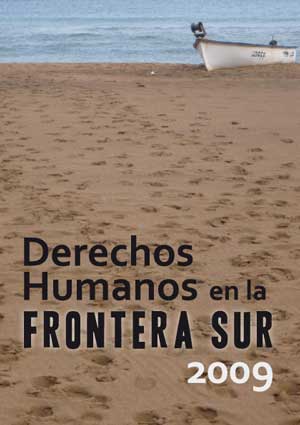
Apdha: Nuevo Informe “Derechos Humanos en la Frontera Sur 2009”

La Asociación Pro Derechos Humanos de Andalucía viene realizando desde 1997 un seguimiento de la evolución de los flujos migratorios referidos a España y de las políticas desarrolladas por la Unión Europea y los sucesivos gobiernos españoles para abordarlos y en general reprimirlos y contenerlos….

Según los datos de la APDHA [Asociación Pro Derechos Humanos de Andalucía] viene, 8.728 personas han sido detenidas al llegar a las costas españolas durante el año 2009, trescientas más que las que recuenta el Ministerio del Interior. En todo caso, ello supone un descenso en las llegadas por esta vía de más del 45% con respecto a 2008, cuando las detenciones alcanzaron la cifra de 15.572 personas….

Sobre un 30% de las personas que intentan llegar a nuestro país, finalmente lo consiguen… Por tanto, las cifras de personas interceptadas sólo reflejan una parte de la realidad. … [L]as cifras aportadas por el Ministerio del Interior no se reflejan el número de personas interceptadas en las costas africanas. Estas son, cada vez más, otro de los resultados del control de los flujos migratorios que la política de externalización ha trasladado a los países africanos. Resulta difícil concluir cuántas personas son interceptadas en la aplicación de estas políticas de externalización en las costas africanas o aledaños.

La APDHA, con muchas dificultades, ha seguido informes de la operativa Frontex, de la Marina Nacional Argelina, de la Gendarmería marroquí y de su Gobierno, o de la policía costera mauritana. Pocas cifras proporciona la guardia costera de Senegal, por no referirnos a Guinea, Gambia o Cabo Verde. Pero de todo ello, desde la APDHA hemos llegado a la conclusión que no menos de 11.000 personas han sido detenidas en las costas africanas a lo largo de 2009, alcanzando así la cifra de 19.728 personas detenidas intentando llegar a España durante el 2009.

Insistimos en que todas estas cifras no son sino un reflejo de la realidad, que ponen de manifiesto dos cuestiones: un acusado descenso de los flujos migratorios que, paradójicamente, se solapan con un acusado incremento de las razones que obligan a la emigración….

La vigilancia de las costas es cada vez más férrea por parte de Mauritania, Senegal o Marruecos. Pero a ello hay que añadir el efecto de la implementación de crecientes y férreos controles en las fronteras que cercan el Sahel que tienen sin duda, a nuestro modesto entender, mayor importancia que los propios controles en las costas y aguas por parte de España y el Frontex….

En todo caso, no está de más resaltar aquí que esos procesos de externalización y creciente militarización de las fronteras africanas están provocando graves sufrimientos y violaciones de derechos en las mismas. La APDHA reivindica que el respeto a los derechos humanos, también en las fronteras, no puede obviarse por razones de control de las migraciones. Y entre ellos, sin duda, se encuentra el derecho a salir y regresar al propio país, tal como recoge el art. 13.2 de la Declaración Universal de los Derechos Humanos….”

Click here for full Report.

Click here for article about the Report.

Leave a comment

Filed under Data / Stats, Eastern Atlantic, European Union, Frontex, Gambia, Mauritania, Mediterranean, Morocco, Reports, Senegal, Spain

Las Constantes Averías del SIVE Obligan a Revisar Toda la Red de Radares en Alicante

ABC:  “Las constantes averías detectadas desde su puesta en marcha han obligado a la Guardia Civil a pedir a la empresa Amper que realice una exhaustiva puesta a punto de los cuatro radares SIVE instalados en las costas alicantinas.

Los responsables de este servicio han remitido a la Dirección General de la Guardia Civil en Madrid un informe en el que enumeran los fallos e incidencias registrados en estos dispositivos desde su instalación, el pasado mes de septiembre. A raíz de este informe, ingenieros de la multinacional Amper están revisando toda la red del Sistema Integral de Vigilancia Exterior (SIVE) en la provincia, con el objetivo de reducir su elevado índice de error….”

Click here for full article.

Leave a comment

Filed under Mediterranean, News, Spain

Research Suggests 30,000 Drowning Deaths Since 1988 in Aegean and Mediterranean

The Turkish newspaper Today’s Zaman reports that “Research conducted on migration patterns by a group of journalists has revealed that more than 34,000 illegal migrants drowned in the Aegean and Mediterranean seas between 1988 and 2009.”

Click here for article.

Leave a comment

Filed under Aegean Sea, Data / Stats, Mediterranean, News, Turkey

Conférence-Débat: Frontex : guerre aux migrants, 24 mars, Bruxelles

La Ligue des droits de l’Homme en collaboration avec Progress Lawyers Network présentent, conférence-débat Frontex : guerre aux migrants.

“Bien qu’opérationnelle depuis 2005, Frontex, dont les compétences et capacités sont sans cesse renforcées, reste pourtant méconnue du public. L’objectif de la conférence-débat tend dès lors à mettre en lumière son existence, ses compétences et les conséquences de ses opérations en termes de violation des droits fondamentaux des migrants.  Pour aller au-delà du simple constat, différentes pistes seront abordées, tant d’un point de vue juridique que politique, afin de mettre sur pied un plan d’action contre ce dispositif des plus inquiétants.

Une conférence-débat avec Selma Benkhelifa, avocate chez Progress Lawyers Network, Hélène Flautre, parlementaire européenne et membre de la Commission LIBE, Violeta Moreno Lax, chercheuse et doctorante à l’UCL et Claire Rodier, GISTI (France) et vice-présidente de Migreurop.”

Cliquez ici pour infos.

Leave a comment

Filed under Belgium, Colloques / Conferences, Frontex

EU-Morocco Summit Meeting

The first post-Lisbon Treaty summit meeting between the EU and another country will take place 6 and 7 March in Granada between the EU and Morocco.

Among the topics of discussion will be immigration and the Union for the Mediterranean.  Spanish Minister for Foreign Affairs, Miguel Ángel Moratinos, said  “…we will discuss immigration issues, which are very important. Morocco is a partner that assists European countries and source countries enormously to manage migratory flows co-responsibly, and it is therefore a key country for the strong and effective management of these flows….”

Click here and here for Spanish EU Presidency statements and here for an article (en francais).

Leave a comment

Filed under Eastern Atlantic, European Union, Mediterranean, Morocco, News, Spain

CARIM Mediterranean Migration 2008-2009 Report

Noted recently in the Newsletter of the Real Instituto Elcano:

CARIM MEDITERRANEAN MIGRATION 2008-2009 REPORT, Robert Schuman Centre for Advanced Studies, San Domenico di Fiesole (FI): European University Institute, October 2009, Edited by Philippe Fargues

MIGRATIONS MÉDITERRANÉENNES, RAPPORT 2008-2009, Octobre 2009, Sous la direction de Philippe Fargues

An excerpt:

“The period covered in this latest report, the years 2007 and 2008, is characterised by the accentuation of the migratory trends described in previous reports1: emigration from South and East Mediterranean countries (SEM) is continuing at a steady rate, while immigration to these countries is increasing, particularly in various irregular forms. [***]

Transit Migrants

Transit migrants in the SEM countries are people who cannot reach the destination of their choice (Europe) for lack of the required visa. They are waiting to find a way to reach this destination and over time their transit becomes stay. All the SEM countries, from Mauritania in the west to Turkey in the East, have, over the course of the last two decades, been transformed into transit countries for those travelling to Europe.

How many transit migrants are there in the SEM countries? The statistics in this area are even more inadequate than those for de facto refugees or irregular migrant workers. Aggregating figures provided by the police and various NGOs allows for a maximum estimation of 200,000 transit migrants in the region (Table 7).

Table 7: Transit migrants present in SEM countries around 2005

Country                        Estimated number

Algeria                           > 10,000

Turkey                           > 50,000

Libya                              > 10,000

Mauritania                   ± 30,000

Morocco                      > 10,000

Egypt, Israel, Jordan,

Lebanon, Palestine,

Syria, Tunisia              Not available

Total SEM                     < 200,000

Sources: CARIM, Irregular Migration Series http://www.carim.org/index.php?areaid=8&contentid=235&callTopic=7

According to data collected by an Italian NGO on deaths and disappearances at sea (Table 8), it would seem that the number of clandestine sea crossings from SEM countries to Europe is not increasing (in fact it may even have decreased in 2008) but the routes are changing. The most ancient route across the Straits of Gibraltar is being used less and less and has been successively replaced by that from Mauritania, or even Senegal, to the Canary Islands (on which traffic peaked in 2006), from Turkey to the Greek Islands of the Dodecanese (on which traffic peaked in 2007) and lastly from Libya to Italy on which traffic peaked in 2008).

How many transit migrants are there who attempt (sometimes successfully) the crossing to Europe? And for how many does transit in the SEM countries become a more long period of stay? The rare surveys carried out in the Maghreb or in Turkey do not allow us to assess this. With the extension of their stay in countries initially seen as a place of transit, transit migrants soon become mixed up with the more significant mass of migrant workers in irregular situation. On the other hand, it is not always possible to distinguish them from refugees. The two groups exist side by side in what the HCR calls flows of “mixed migration” where transit migrants and refugees, sometimes from the same countries of provenance, resort to the same smugglers and find themselves in the same circumstances.

Table 8: Dead and missing persons on sea routes of irregular migration from SEM to Europe 2000 – 2008

Year\ Route      Sicily +             Gibraltar +

Sardinia           Ceuta & Melilla

2000                   0                           127

2001                     8                           157

2002                     236                     106

2003                     413                     108

2004                     206                    64

2005                     437                    146

2006                     302                    215

2007                     621                    142

2008                     702                    216

Total                     2,925                1,281

Year\ Route      Canary              Aegean Sea

Islands

2000                   16                         32

2001                     40                        102

2002                     39                        94

2003                     130                      81

2004                     232                      103

2005                     185                      98

2006                     1,035                  73

2007                     745                      257

2008                      136                      181

Total                       2,558                 1,021

Year                Total All Routes

2000                 175

2001                   307

2002                   475

2003                   732

2004                   605

2005                   866

2006                   1,625

2007                   1,765

2008                   1,235

Total                  7,785

Source : http://fortresseurope.blogspot.com/

[***]”

Click here for link to full Report in both English and francais.

Leave a comment

Filed under Algeria, Data / Stats, Egypt, France, Greece, Italy, Libya, Malta, Mauritania, Mediterranean, Morocco, Portugal, Reports, Spain, Tunisia, Turkey

NGO Statement on Europe for UNHCR’s 47th Standing Committee Meeting

From the ICVA – International Council of Voluntary Agencies.   Excerpts from the NGO Statement:

“Executive Committee of the High Commissioner’s Programme

Standing Committee, 47th Meeting, 2-4 March 2010

NGO Statement on Europe

Agenda Item 3. (a) iii

This statement has been drafted in consultation with, and is delivered on behalf of, a wide range of NGOs and attempts to reflect the diversity of views within the NGO community.

[***] If we look at the asylum policies of the European Union (EU) and neighbouring countries, we detect a hesitation or shift away from the spirit of the 1951 Convention and 1967 Protocol.

In this statement, NGOs would like to draw attention to this trend in three policy areas. These are:

  • The limits on access to refugee protection in Europe;
  • The integration of refugees in European society; and
  • The externalisation of refugee protection.  [***]

Limits on Access to Protection in Europe

Access to territory

[***] EU border policies continue to be obsessed with security and combating irregular migration at the expense of providing access to those in need of international protection. There is now no legal way for an asylum-seeker to enter the EU. NGOs urges the Member States to collaborate with the European Commission, Parliament, Frontex, and the newly established European Asylum Support Office in developing guidelines on identifying those in need of international protection in mixed flows. UNHCR should be closely consulted in this process. [***]

Externalisation of Refugee Protection

[***] The Stockholm Programme raises the issue of external processing of asylum claims in transit countries. Careful consideration must be given to the potential role of UNHCR in joint processing and the responsibility of European countries in resettling those identified as in need of international protection. It should not be assumed that identified refugees will remain in the transit country. There remains significant concern from European NGOs regarding the legal, practical, and moral implications of such external processing if these trends continue.

Bilateral agreements, such as those between Spain and the West African countries of Senegal and Mauritania, do firmly place the burden of hosting refugees with the transit country. This trend is also visible in the agreements between Italy and Libya and the pushbacks in the Mediterranean.

What we can discern from these trends and those above, is that European policies favour refugees remaining in neighbouring regions rather than facilitating their access to Europe. These trends can only be met with condemnation as an obvious breach of human rights and States’ obligations. [***]

Closing Remark

Given the current negative trends in European refugee policies, it is important to look at initiatives that move in the opposite direction. NGOs are greatly supportive of the call in the Stockholm Programme for the EU to seek accession to the 1951 Refugee Convention and its 1967 Protocol. This is made possible through the adoption of the Lisbon Treaty that gives the EU a legal personality. As such, we look forward to the different agencies of the EU, including Frontex and European Asylum Support Office, seeking guidance from and collaborating with the UNHCR. [***]”

Click here for full Statement.

Click here for link to other related documents on ICVA web site.

Leave a comment

Filed under European Union, Frontex, Statements, UNHCR