Author Archives: Niels Frenzen

Niels Frenzen's avatar

About Niels Frenzen

Clinical Professor of Law, Gould School of Law, University of Southern California, Los Angeles, USA. Contact: frenzen@usc.edu; @migrantsatsea

UNHCR Reports 54 Persons Dead After Migrant Boat Drifts in Mediterranean for 15 Days

The UNHCR reported yesterday that UNHCR staff interviewed the sole survivor of a migrant boat that departed from Tripoli for Italy in late June with 55 people on board.  The survivor was interviewed in Zarzis, Tunisia. “According to the survivor, there was no water on board and people started to die of dehydration within days. Many drank sea water, including the man who survived. He was rescued [off the coast of Tunisia] floating on the remains of the [inflatable] boat and a jerry can. According to the survivor over half of the deceased were from Eritrea, including three of his relatives.”  According to the UNHCR press statement “[s]o far in 2012, over 1,300 people have arrived by boat from Libya in Italy. A boat, reportedly carrying 50 Eritreans and Somalis, is currently at sea. They refused to be rescued by Maltese military forces [on 9 July].  Over 1,000 people on 14 boats have arrived in Malta from Libya so far this year. Two other boats were intercepted by Maltese authorities, but the majority elected not to be rescued and continued to Italy.  UNHCR Italy estimates that so far this year some 170 people have been declared dead or lost at sea attempting to make the journey from Libya to Europe.”

Click here for UNHCR press statement.

Leave a comment

Filed under Data / Stats, European Union, Italy, Libya, Malta, Mediterranean, News, UNHCR

Cyprus Reportedly Preparing for Possible Influx of Syrian Boat Refugees

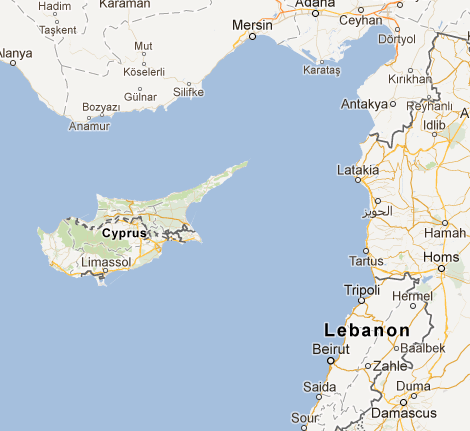
The EU Observer reported two weeks ago that Cyprus “is worried that Syrian refugees could arrive en masse in the island-nation and in the EU more broadly if the conflict gets worse [and that Cyprus] is drawing up plans in case Syrian boat refugees arrive on its coast, a Cypriot source told this website.”  What these plans may consist of is not clear, but during a recent visit to Malta, Cypriot President Demetris Christofias said that Cyprus and Malta shared “’common worries and interests’ over irregular migration … ‘We’re not racists but we must defend the rights of our countries’.”

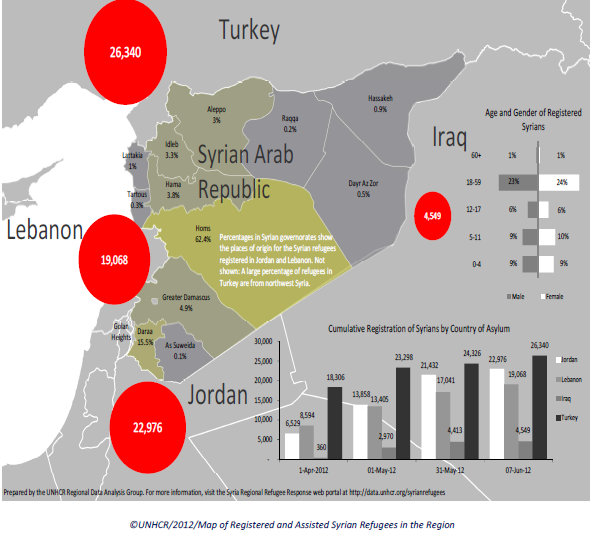
While it is conceivable that Syrian refugee boats could head for Cyprus if the number of people forced to flee Syria continues to rise, but, as was the case with Libya, most will likely continue to flee across land borders to neighbouring countries and will not take to the sea.  The UNHCR estimates that as of early this month, over 81,000 people have fled to Jordan, Lebanon, Turkey and Iraq and that there are approximately 400,000 internally displaced persons within Syria.  To the extent that some may flee Syria by sea, the portion of the island of Cyprus closet to Syria is the northeastern area which is controlled by Turkey.

Cyprus assumes the EU presidency on 1 July.

Click here and here for articles.

Click here for UNHCR Syria Regional Refugee Response Information Sharing Portal.


1 Comment

Filed under Cyprus, European Union, Mediterranean, News, Syria, Turkey

Frontex Director is Leading Candidate for Finnish Interior Ministry Position

Frontex Executive Director Ilkka Laitinen is a leading candidate for the recently vacated position of Permanent Secretary of the Ministry of the Interior in Finland.  He was passed over for the position when it was last open.  Prior to becoming Frontex’s Director, Laitinen was the Deputy Head of Division, Frontier Guard HQ, in Finland.  Laitinen has been the Executive Director of Frontex since its inception in 2005.

Click here, here, and here for articles. (FI)

1 Comment

Filed under European Union, Frontex, News

AI Report: S.O.S. Europe – Human Rights and Migration Control

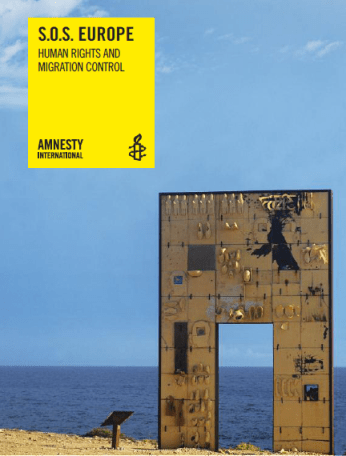
Amnesty International today has released a report, “S.O.S. Europe: Human Rights and Migration Control,” examining “the human rights consequences for migrants, refugees and asylum-seekers that have occurred in the context of Italy’s migration agreements with Libya.”

The Report is accompanied by the “the launch of Amnesty International’s ‘When you don’t exist campaign‘, which … seeks to hold to account any European country which violates human rights in enforcing migration controls. When you don’t exist aims to defend the rights of migrants, refugees and asylum-seekers in Europe and around its borders. …  Today, Europe is failing to promote and respect the rights of migrants, asylum-seekers and refugees. Hostility is widespread and mistreatment often goes unreported. As long as people on the move are invisible, they are vulnerable to abuse. Find out more at www.whenyoudontexist.eu.”

Excerpts from S.O.S. Europe Report:

WHAT IS EXTERNALIZATION?

Over the last decade, European countries have increasingly sought to prevent people from reaching Europe by boat from Africa, and have “externalized” elements of their border and immigration control. …

European externalization measures are usually based on bilateral agreements between individual countries in Europe and Africa. Many European countries have such agreements, but the majority do not publicize the details. For example, Italy has co-operation agreements in the field of “migration and security” with Egypt, Gambia, Ghana, Morocco, Niger, Nigeria, Senegal and Tunisia,2 while Spain has co-operation agreements on migration with Cape Verde, Gambia, Guinea, Guinea-Bissau, Mali and Mauritania.3

At another level, the European Union (EU) engages directly with countries in North and West Africa on migration control, using political dialogue and a variety of mechanisms and financial instruments. For example in 2010, the European Commission agreed a cooperation agenda on migration with Libya, which was suspended when conflict erupted in 2011. Since the end of the conflict, however, dialogue between the EU and Libya on migration issues has resumed.

The European Agency for the Management of Operational Co-operation at the External Borders of the Member States of the EU (known as FRONTEX) also operates outside European territory. FRONTEX undertakes sea patrols beyond European waters in the Mediterranean Sea, and off West African coasts, including in the territorial waters of Senegal and Mauritania, where patrols are carried out in cooperation with the authorities of those countries.

The policy of externalization of border control activities has been controversial. Critics have accused the EU and some of its member states of entering into agreements or engaging in initiatives that place the rights of migrants, refugees and asylum-seekers at risk. A lack of transparency around the various agreements and activities has fuelled criticism.

This report examines some of the human rights consequences for migrants, refugees and asylum seekers that have occurred in the context of Italy’s migration agreements with Libya. It also raises concerns about serious failures in relation to rescue-at-sea operations, which require further investigation. The report is produced as part of wider work by Amnesty International to examine the human rights impacts of European externalization policies and practices.

[***]

AGREEMENTS BETWEEN ITALY AND LIBYA

[***]

The implementation of the agreements between Libya and Italy was suspended in practice during the first months of the conflict in Libya, although the agreements themselves were not set aside. While the armed conflict was still raging in Libya, Italy signed a memorandum of understanding with the Libyan National Transitional Council in which the two parties confirmed their commitment to co-operate in the area of irregular migration including through “the repatriation of immigrants in an irregular situation.”8 In spite of representations by Amnesty International and others on the current level of human rights abuses, on 3 April 2012 Italy signed another agreement with Libya to “curtail the flow of migrants”.9 The agreement has not been made public. A press release announced the agreement, but did not include any details on the measures that have been agreed, or anything to suggest that the present dire human rights predicament confronting migrants, refugees and asylum-seekers in Libya will be addressed.

[***]

HUMAN RIGHTS OBLIGATION BEYOND BORDERS

Human rights and refugee law requires all states to respect and protect the rights of people within their jurisdiction: this includes people within the state’s territorial waters, and also includes a range of different contexts where individuals may be deemed to be within a certain state’s jurisdiction.

[***]

States must also ensure that they do not enter into agreements – bilaterally or multilaterally – that would result in human rights abuses. This means states should assess all agreements to ensure that they are not based on, or likely to cause or contribute to, human rights violations. In the context of externalization, this raises serious questions about the legitimacy of European involvement – whether at a state-to-state level or through FRONTEX – in operations to intercept boats in the territorial waters of another state, when those intercepted would be at a real risk of human rights abuses.

A state cannot deploy its official resources, agents or equipment to implement actions that would constitute or lead to human rights violations, including within the territorial jurisdiction of another state.

CONCLUSION

Agreements between Italy and Libya include measures that result in serious human rights violations. Agreements between other countries in Europe and North and West Africa, and agreements and operations involving the EU and FRONTEX, also need to be examined in terms of their human rights impacts. However, with so little transparency surrounding migration control agreements and practices, scrutiny to date has been limited.

[***]

RECOMMENDATIONS

Amnesty International urges all states to protect the rights of migrants, refugees and asylum-seekers, according to international standards, This report has focused on Italy.

THE ITALIAN GOVERNMENT SHOULD:

  • set aside its existing migration control agreements with Libya;
  • not enter into any further agreements with Libya until the latter is able to demonstrate that it respects and protects the human rights of refugees, asylum seekers and migrants and has in place a satisfactory system for assessing and recognizing claims for international protection;
  • ensure that all migration control agreements negotiated with Libya or any other countries are made public.

EUROPEAN COUNTRIES AND THE EU SHOULD:

  • ensure that their migration control policies and practices do not cause, contribute to, or benefit from human rights violations;
  • ensure their migration control agreements fully respect international and European human rights and refugee law, as well as the law of the sea; include adequate safeguards to protect human rights with appropriate implementation mechanisms; and be made public;
  • ensure their interception operations look to the safety of people in distress in interception and rescue operations and include measures that provide access to individualized assessment procedures, including the opportunity to claim asylum;
  • ensure their search-and-rescue bodies increase their capacity and co-operation in the Mediterranean Sea; publicly report on measures to reduce deaths at sea; and that Search and Rescue obligations are read and implemented in a manner that is consistent with the requirements of refugee and human rights law.”

Click here (EN), here (EN), or here (FR) for Report.

See also www.whenyoudontexist.eu

2 Comments

Filed under Eastern Atlantic, European Union, Frontex, Italy, Libya, Mediterranean, Reports

Moderately Large Numbers of Migrants Reaching Malta and Italy

Hundreds of migrants have been arriving in Malta and Italy over the past month.  According to Maltese officials 712 persons have arrived in Malta over the past five weeks.  A total of 832 people have arrived since the beginning of the year.  Hundreds of migrants have also reached Italian territory, landing on Sicily or elsewhere.  Good weather has facilitated the voyages.

Click here (EN), here (EN), here (EN), here (IT), and here (IT) for articles.

Leave a comment

Filed under Italy, Libya, Malta, Mediterranean, News

Israel’s Refugee Practices, Past and Present

Yesterday, 10 June 2012, marked the 35th anniversary of the rescue by an Israeli ship (the freighter Yuvali) of 66 Vietnamese boat people in the South China Sea.  After neighboring countries, including Hong Kong and Taiwan, refused to permit the disembarkation of the rescued Vietnamese, the Israeli government agreed to allow the 66 Vietnamese to be transported to and resettled in Israel.  While I have not confirmed this, an Associated Press report at the time of the event quoted an Israeli Interior Ministry official as saying that this was the first time that Israel had permitted non-Jewish refugees to settle in Israel.  The humanitarian decision taken 35 years ago stands in stark contrast to the asylum and migration laws that are now to be enforced in Israel.

Israeli Interior Minister Eli Yishai announced last week that the revised Prevention of Infiltration Law will begin being enforced.  The Infiltration Law allows the arrest and detention of irregular border crossers, including asylum seekers.  The Israeli Defence Ministry also announced last week that five new detention centres are under construction and when completed will consist of 20,000 to 25,000 tents.  “The objective of the plan, according to the [Defence] ministry, is to ensure that all African migrants who enter Israel will be directly transferred to a detention center where they will stay for long periods of time, in order to prevent their entry to Israeli cities.”

Human Rights Watch issued a statement on 10 June calling on the Israeli government to refrain from enforcing the law until its provisions are amended to comply with Israel’s international legal obligations:  “On January 10 [2012] the Knesset amended the 1954 Prevention of Infiltration Law to define all irregular border-crossers as ‘infiltrators.’ The law permits Israeli authorities to detain all irregular border-crossers, including asylum seekers and their children, for three years or more before their deportation. The law also allows officials to detain some people indefinitely, even if border control officials recognize they might face persecution if returned to their country. [***]   The government and the United Nations High Commissioner for Refugees (UNHCR) estimate that since 2005, around 60,000 Africans have entered Israel somewhere along the 240-kilometer border with Egypt after passing through the Sinai desert. Many of the migrants and asylum seekers fall victim to abusive human traffickers en route to Israel, particularly in the Sinai. [***] Israel is building a fence along the border to prevent irregular crossings and expanding a detention facility for irregular border-crossers from 2,000 beds to around 5,400, according to Israeli refugee rights groups….”

Click here for HRW Statement.

Click here or here for article from ECRE’s Weekly Bulletin, 8 June.

Click here and here for articles.

Click here or here for 1977 article.

Leave a comment

Filed under Israel, News, UNHCR

Deaths at Sea at Europe’s Other Southern Border – Mayotte

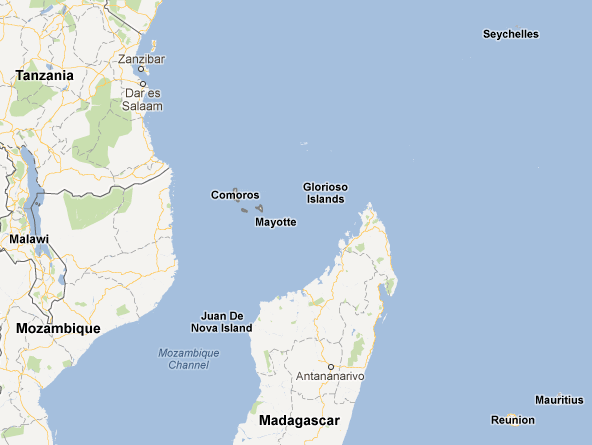
Five persons, including three children, are confirmed dead, and at least 15 are missing and presumed dead after a small boat (known locally as a “kwassa-kwassa”) sank off of the French island of Mayotte on 19 May.  19 people were rescued.  The boat sank after striking a coral reef.  The boat was attempting a 100 km voyage from the island of Anjouan in the Union of the Comoros to the French island of Mayotte.  Approximately 200 people each year are believed to die attempting to make the 100 km voyage from the Comoros to Mayotte.

Mayotte, which is located off the coast of Mozambique and is geographically part of the Comoros Islands, became an Overseas Department of France in March 2011.  The French government estimates that 40% of Mayotte’s population is without legal immigration status.  According to a Reuters article, in 2011, “there were some 1200 applications for asylum in Mayotte, 41 per cent more than in 2010. The largest proportion of applicants came from the Union of the Comoros (90 per cent), with citizens from the Democratic Republic of Congo, Madagascar, Rwanda and Burundi, accounting for the rest. Last year some 20,000 people, including failed asylum seekers, were sent back from Mayotte to the Union of the Comoros and Madagascar.”

Click here (EN), here (FR), here (FR), here (FR) and here (FR) for articles.

Click here for statement from La Ligue des Droits de l’Homme: “A Mayotte, ce n’est pas la mer qui tue, c’est la politique” (FR)

Capture from Google Maps.

Leave a comment

Filed under European Union, France, Indian Ocean, News

2012 Frontex Annual Risk Analysis

Frontex posted its 2012 Annual Risk Analysis (“ARA”) on its website on 20 April.   (The 2012 ARA is also available on this link: Frontex_Annual_Risk_Analysis_2012.)  The stated purpose of the ARA is “to plan the coordination of operational activities at the external borders of the EU in 2013. The ARA combines an assessment of threats and vulnerabilities at the EU external borders with an assessment of their impacts and consequences to enable the Agency to effectively balance and prioritise the allocation of resources against identified risks….”

Highlights include:

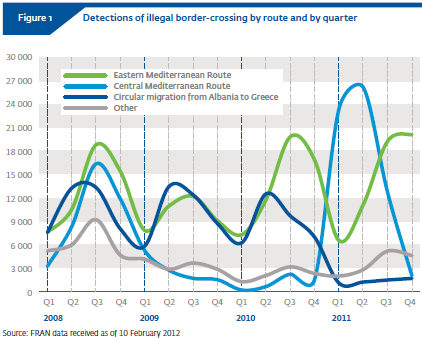
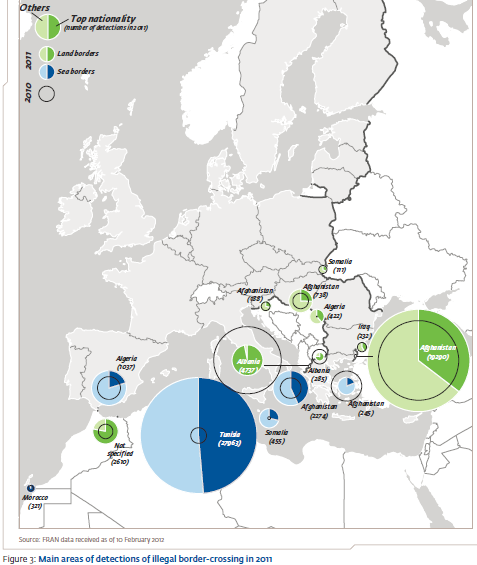
  • 86% of the detections of irregular migrants in 2011 on the EU’s external borders occurred in two areas, the Central Mediterranean (46%) and the Eastern Mediterranean, primarily on the land border between Greece and Turkey (40%);
  • The 64 000 detections in 2011 in the Central Mediterranean were obviously linked directly to the events in North Africa.  The flow of Tunisians was reduced by 75% in the second quarter of 2011 as a result of an accelerated repatriation agreement that was signed between Italy and Tunisia;
  • There is a very high likelihood of a renewed flow of irregular migrants at the southern maritime border.  Larger flows, if they develop, are more likely to develop on the Central Mediterranean route because of proximity to Tunisia, Libya, and Egypt;
  • Irregular migration in the Western Mediterranean towards Spain remains low, but has been steadily increasing and accounted for 6% of the EU’s detections in 2011;
  • Cooperation between Spain and Mauritania, Senegal, and Mali, including bilateral agreements and the presence of patrolling assets near the African coast, are the main reasons for the decrease in arrivals on the Western African route in recent years.  The situation remains critically dependent of the implementation of effective return agreements between Spain and western African countries.  Should these agreements be jeopardised, irregular migration is likely to resume quickly;
  • The land border between Greece and Turkey is now an established illegal-entry point for irregular migrants and facilitation networks;
  • According to intelligence from JO Hermes, women embarking from North Africa to the EU are in particular danger of being intimidated by their smugglers and forced into prostitution;
  • Austerity measures being implemented by Member States are likely to adversely affect operational environments of border control by reducing resources and by exacerbating corruption;
  • There is an intelligence gap on terrorist groups active in the EU and their connections with irregular-migration networks.  The absence of strategic knowledge may constitute a vulnerability for internal security.

Selected excerpts from the ARA:

“Executive Summary

[***] Looking ahead, the border between Greece and Turkey is very likely to remain one of the areas with the highest number of detections of illegal border-crossing along the external border. More and more migrants are expected to take advantage of Turkish visa policies and the expansion of Turkish Airlines, carrying more passengers to more destinations, to transit through Turkish air borders and subsequently attempt to enter the EU illegally. [Turkey reported an increase in 2011 of 26% in air passenger flow. See p. 12 of ARA.]

At the southern maritime borders large flows are most likely to develop on the Central Mediterranean route due to its proximity to Tunisia, Libya and Egypt, where political instability and the high unemployment rates are pushing people abroad and where there is evidence of facilitation networks also offering facilitation services to transiting migrants. [***]

There is an increasing risk of political and humanitarian crises arising in third countries which may result in the displacement of large numbers of people in search of international protection towards the land and sea borders of the EU. [***]

Various austerity measures introduced throughout Member States may result in increasing disparities between Member States in their capacity to perform border controls and hence enable facilitators to select those border types and sections that are perceived as weaker in detecting specific modi operandi. Budget cuts could also exacerbate the problem of corruption, thus increasing the vulnerability to illegal activities across the external borders. [***]

3. Situation at the external borders

[***] 3.2 Irregular migration

[***] Consistent with recent trends, the majority of detections [in 2011] were made in two hotspots of irregular migration, namely the Central Mediterranean area and the Eastern Mediterranean area accounting for 46% and 40% of the EU total, respectively, with additional effects detectable across Member States.  [***]

Central Mediterranean route

[***] Initially, detections in the Central Mediterranean massively increased in early 2011, due to civil unrest erupting in the region, particularly in Tunisia, Libya and, to a lesser extent, Egypt. As a result, between January and March some 20 000 Tunisian migrants arrived on the Italian island of Lampedusa. In the second quarter of 2011 the flow of Tunisian migrants was reduced by 75% following an accelerated repatriation agreement that was signed between Italy and Tunisia. … Since October 2011, the situation has eased somewhat due to democratic elections in Tunisia and the National Transitional Council successfully gaining control of Libya. However, the situation remains of concern, with sporadic arrivals from Tunisia now adding to arrivals from Egypt. There are also some concerns that the flow from Libya may resume. [***]

Eastern Mediterranean route

[***]Undeniably, the land border between Greece and Turkey is now an established illegal-entry point for irregular migrants and facilitation networks. [***]

Western Mediterranean route (sea, Ceuta and Melilla)

Irregular migration across the Western Mediterranean towards southern Spain was at a low level   through most of 2010. However, pressure has been steadily increasing throughout 2011 to reach almost 8 500 detections, or 6% of the EU total. A wide range of migrants from North African and sub-Saharan countries were increasingly detected in this region. It is difficult to analyse the exact composition of the flow, as the number of migrants of unknown nationality on this route doubled compared to the previous quarter. This may indicate an increasing proportion of nationalities that are of very similar ethnicity and/or geographic origin.

The most common and increasingly detected were migrants of unknown nationality, followed by migrants local to the region, coming from Algeria and Morocco. There were also significant increases in migrants departing from further afield, namely countries such as Côte d’Ivoire, Guinea, Nigeria and Congo.

In 2011, two boats were intercepted in the waters of the Balearic Islands with Algerians on board, having departed from the village of Dellys (Algeria) near Algiers. However, most migrants prefer to target the southern coast of the Iberian Peninsula.

Western African route

The cooperation between Spain and key western African countries (Mauritania, Senegal and Mali), including bilateral agreements, is developing. They are one of the main reasons for the decrease in arrivals on the Western African route over the last years, as is the presence of patrolling assets near the African coast. Despite a slight increase at the end of 2010, detections on this route remained low in 2011, almost exclusively involving Moroccan migrants.[***]

3.3.4 Trafficking in human beings

[***] According to information received from Member States, the top nationalities detected as victims of human trafficking in the EU still include Brazilians, Chinese, Nigerians, Ukrainians and Vietnamese. In addition, victims from other third countries like Albania, Ghana, Morocco, Moldova, Egypt, Indian, the Philippines and the Dominican Republic have also been reported, illustrating the broad geographical distribution of the places of origin of victims. Most THB cases are related to illegal work and sexual exploitation in Europe.

In some cases, the distinction between the smuggling of migrants and THB is not easily established because some of the migrants are initially using the services of smugglers, but it is only later, once in the EU, that they may fall victim to THB. According to intelligence from JO Hermes, this is particularly the case for women embarking for illegal border-crossing from North Africa to the EU. Once in Europe, some of them are intimated by their smugglers and forced into prostitution.

A worrying trend reported during JO Indalo is the increasing number of detections of illegal border-crossing by minors and pregnant women (see Fig. 15), as criminal groups are taking advantage of an immigration law preventing their return. Although it is not clear whether these cases are related to THB, women and children are among the most vulnerable. Most of these women claimed to be from Nigeria, Côte d’Ivoire and Cameroon and were between the fifth and ninth month of pregnancy. Minors were identified as being from Nigeria, Algeria and Congo.

Another modus operandi is for the criminal groups to convince their victim to apply for international protection. Such modus operandi was illustrated by the verdict of a Dutch court case in July 2011, when one suspect was convicted for trafficking of Nigerian female minors. The asylum procedure in the Netherlands was misused by the criminal organisation to get an accommodation for the victims. The victims were forced to sexual exploitation in several Member States. [***]

5. Conclusions

[***] 1. Risk of large and sustained numbers of illegal border-crossing at the external land and sea border with Turkey

The border between Greece and Turkey is very likely to remain in 2013 among the main areas of detections of illegal border crossing along the external border, at levels similar to those reported between 2008 and 2011, i.e. between 40 000 and 57 000 detections per annum. [***]

Depending on the political situation, migrants from the Middle East may increasingly join the flow. In addition, migrants from northern and western Africa, willing to illegally cross the EU external borders, are expected to increasingly take advantage of the Turkish visa policies, granting visas to a different set of nationalities than the EU, and the expansion of Turkish Airlines, to transit through the Turkish air borders to subsequently attempt to enter the EU illegally, either by air or through the neighbouring land or sea borders. As a result, border-control authorities will increasingly be confronted with a wider variety of nationalities, and probably also a greater diversity of facilitation networks, further  complicating the tasks of law-enforcement authorities.

This risk is interlinked with the risk of criminal groups facilitating secondary movements and the risk of border-control authorities faced with large flows of people in search of international protection. [***]

3. Risk of renewed large numbers of illegal border-crossing at the southern maritime border

The likelihood of large numbers of illegal border-crossing in the southern maritime border remains very high, either in the form of sporadic episodes similar to those reported in 2011 or in sustained flows on specific routes originating from Africa.

Irregular-migration flows at the southern maritime borders are expected to be concentrated within one of the three known routes, i.e. the Central Mediterranean route, the Western Mediterranean route or the Western African route. Larger flows are more likely to develop on the Central Mediterranean route than on the other two routes, because of its proximity to Tunisia, Libya and Egypt, where political instability and high unemployment rate among young people is pushing people away from their countries and where there is evidence for well-organised facilitation networks.

On the Western Mediterranean route, the situation remains of concern because of the increasing trend of illegal border-crossing reported throughout 2011. According to reported detections, the situation on the Western African route has been mostly under control since 2008 but remains critically dependant of the implementation of effective return agreements between Spain and western African countries. Should these agreements be jeopardised, irregular migration pushed by high unemployment and poverty is likely to resume quickly despite increased surveillance.

The composition of the flow is dependent on the route and the countries of departure, but includes a large majority of western and North Africans. Mostly economically driven, irregular migration on these routes is also increasingly dependent on the humanitarian crisis in western and northern African countries. Facilitators are increasingly recruiting their candidates for illegal border-crossing from the group that are most vulnerable to THB, i.e. women and children, causing increasing challenges for border control authorities.

4. Risk of border-control authorities faced with large numbers of people in search of international protection

Given the currently volatile and unstable security situation in the vicinity of the EU, there is an increasing risk of political and humanitarian crises in third countries resulting in large numbers of people in search of international protection being displaced to the land and sea borders of the EU. The most likely pressures are linked to the situation in North Africa and the Middle East. In addition, the situation in western African countries like Nigeria may also trigger flows of people in search of international protection at the external borders. [***]

6. Risk of less effective border control due to changing operational environment

At the horizon of 2013, the operational environments of border control are likely to be affected, on the one hand, by austerity measures reducing resources, and on the other hand, by increased passenger flows triggering more reliance on technological equipment.

Austerity measures have been introduced throughout Member States in various forms since 2009. The most obvious examples are found in Greece, Ireland, Portugal, Spain and the Baltic countries. These measures could result in increasing disparities between Member States in their capacity to perform border controls and hence enabling facilitators to select border types and sections that are perceived as weaker in detecting specific modi operandi.

Budget cuts could also exacerbate the problem of corruption, increasing the vulnerability to illegal activities across the external borders.

Austerity measures will inevitably impact on the efficacy of border-control authorities in detecting and preventing a wide array of illegal activities at the borders, ranging from illegal border-crossing through smuggling of excise goods to THB. [***]

8. Risk of border-control authorities increasingly confronted with cross-border crimes and travellers with the intent to commit crime or terrorism within the EU

[***]There is an intelligence gap on terrorist groups that are active in the EU and their connections with irregular-migration networks. The absence of strategic knowledge on this issue at the EU level may constitute a vulnerability for internal security. Knowledge gained at the external borders can be shared with other law enforcement authorities to contribute narrowing this gap.”

Click here or on this link: Frontex_Annual_Risk_Analysis_2012, for 2012 Frontex ARA.

Click here for Frontex press statement on the 2012 ARA.

Click here for my post on the 2011 ARA.

4 Comments

Filed under Aegean Sea, Analysis, Data / Stats, Eastern Atlantic, European Union, Frontex, Mediterranean, News, Reports

EU Court of Justice Advocate General Recommends Annulment of Frontex Sea Borders Rule

ECJ Advocate General Paolo Mengozzi issued an Opinion on 17 April in which he recommended that the European Court of Justice annul Council Decision 2010/252/EU of 26 April 2010 supplementing the Schengen Borders Code as regards the surveillance of the sea external borders in the context of operational cooperation coordinated by Frontex (Sea Borders Rule).  The Advocate General’s recommendation, issued in the case of the European Parliament v Council of the EU, Case C-355/10, will be considered by the ECJ in the coming weeks.  The case was filed by the European Parliament on 12 July 2010.  A hearing was conducted on 25 January 2012.

The Advocate General’s recommendation is based primarily on the conclusion that the Council adopted the Frontex Sea Borders Rule by invoking a procedure which may only be used to amend “non-essential elements” of the Schengen Borders Code.  The Advocate General concluded that rather than amending “non-essential elements” of the SBC, the Council Decision introduces “new essential elements” into the SBC and amends the Frontex Regulation.  The recommendation calls for the effects of the Sea Borders Rule to be maintained until a new act can be adopted in accordance with ordinary legislative procedures.

[UPDATE:]  Paragraph 64 of the Recommendation explains why the Commission likely sought to implement the Sea Borders Rule through the committee mechanism rather than by pursuing ordinary legislative procedures:

“64.      Firstly, some provisions of the contested decision concern problems that, as well as being sensitive, are also particularly controversial, such as, for example, the applicability of the principle of non-refoulement in international waters (51) or the determination of the place to which rescued persons are to be escorted under the arrangements introduced by the SAR Convention. (52) The Member States have different opinions on these problems, as is evident from the proposal for a decision submitted by the Commission. (Ftnt 53)

Ftnt 53 – Moreover, it would seem that it is precisely a difference of opinion and the impasse created by it which led to the Commission’s choosing to act through the committee mechanism under Article 12(5) of the SBC rather than the ordinary legislative procedure, as is clear also from the letter from Commissioner Malmström annexed to the reply. These differences persist. The provisions of the contested decision concerning search and rescue, for example, have not been applied in Frontex operations launched after the entry into force of the contested decision on account of opposition from Malta.”

While this case presents a procedural question and does not involve a review of any of the substantive provisions of the Sea Borders Rule, the Advocate General’s statement in Paragraph 64 that “the applicability of the principle of non-refoulement in international waters” is a “controversial” position is wrong.  Perhaps the position is still controversial in some circles, but legally, with the important exception expressed by the US Supreme Court, it is clear that non-refoulement obligations apply to actions taken in international waters.

Click here for Opinion of Advocate General Mengozzi, Case C-355/10, 17 April 2012.

Click here, here, and here for articles.

Click here for my last post on the case.

Extensive Excerpts from the Advocate General’s Recommendation:

“1.        In the present proceedings, the European Parliament requests the Court to annul Council Decision 2010/252/EU of 26 April 2010 supplementing the Schengen Borders Code (2) as regards the surveillance of the sea external borders in the context of operational cooperation coordinated by the European Agency for the Management of Operational Cooperation at the External Borders of the Member States of the European Union (‘the contested decision’). (3) If the action should be upheld, Parliament requests that the effects of the contested decision be maintained until it shall have been replaced.

[***]

9.        The contested decision was adopted on the basis of Article 12(5) of the SBC, in accordance with the procedure provided for in Article 5a(4) of the comitology decision … [***]

10.      According to recitals (2) and (11) of the contested decision, its principal objective is the adoption of additional rules for the surveillance of the sea borders by border guards operating under the coordination of the European Agency for the Management of Operational Cooperation at the External Borders of the Member States of the European Union (‘the Agency’ or ‘Frontex’), established by Regulation 2007/2004 (‘the Frontex Regulation’). (9) It consists of two articles and an annex divided into two parts entitled ‘Rules for sea border operations coordinated by the Agency’ and ‘Guidelines for search and rescue situations and for disembarkation in the context of sea border operations coordinated by the Agency’. Under Article 1, ‘[t]he surveillance of the sea external borders in the context of the operational cooperation between Member States coordinated by the … Agency … shall be governed by the rules laid down in Part I to the Annex. Those rules and the non-binding guidelines laid down in Part II to the Annex shall form part of the operational plan drawn up for each operation coordinated by the Agency.’

11.      Point 1 of Part I to the Annex lays down certain general principles intended, inter alia, to guarantee that maritime surveillance operations are conducted in accordance with fundamental rights and the principle of non-refoulement. Point 2 contains detailed provisions on interception and lists the measures that may be taken in the course of the surveillance operation ‘against ships or other sea craft with regard to which there are reasonable grounds for suspecting that they carry persons intending to circumvent the checks at border crossing points’ (point 2.4). The conditions for taking such measures vary depending on whether the interception takes place in the territorial waters and contiguous zone of a Member State (point 2.5.1) or on the high seas (point 2.5.2). Point 1 of Part II to the Annex lays down provisions on units participating in the surveillance operation in search and rescue situations, including with regard to communicating and forwarding information to the rescue coordination centre responsible for the area in question and the coordination centre of the operation, and defines certain conditions for the existence of an emergency (point 1.4). Point 2 lays down guidelines on the modalities for the disembarkation of the persons intercepted or rescued.

II –  Procedure before the Court and forms of order sought

12.      By act lodged at the Registry of the Court of Justice on 12 July 2010, the Parliament brought the action which forms the subject-matter of the present proceedings. The Commission intervened in support of the Council. At the hearing of 25 January 2012, the agents of the three institutions presented oral argument.

13.      The Parliament claims that the Court should annul the contested decision, rule that the effects thereof be maintained until it is replaced, and order the Council to pay the costs.

14.      The Council contends that the Court should dismiss the application as inadmissible or, in the alternative, as unfounded and order the Parliament to pay the costs.

15.      The Commission requests the Court to dismiss the application and order the Parliament to pay the costs.

III –  Application

A –    Admissibility

[***]

23.      For all the reasons set out above, the application must, in my view, be declared admissible.

B –    Substance

24.      The Parliament considers that the contested decision exceeds the implementing powers conferred by Article 12(5) of the SBC and therefore falls outside the ambit of its legal basis. In that context it raises three complaints. Firstly, the contested decision introduces new essential elements into the SBC. Secondly, it alters essential elements of the SBC. Thirdly, it interferes with the system created by the Frontex Regulation. These complaints are examined separately below.

[***]

3.      First complaint, alleging that the contested decision introduces new essential elements into the SBC

[***]

61.      Given both the sphere of which the legislation in question forms part and the objectives and general scheme of the SBC, in which surveillance is a fundamental component of border control policy, and notwithstanding the latitude left to the Commission by Article 12(5), I consider that strong measures such as those listed in point 2.4 of the annex to the contested decision, in particular those in subparagraphs (b), (d), (f) and g), and the provisions on disembarkation contained in Part II to that annex, govern essential elements of external maritime border surveillance. These measures entail options likely to affect individuals’ personal freedoms and fundamental rights (for example, searches, apprehension, seizure of the vessel, etc.), the opportunity those individuals have of relying on and obtaining in the Union the protection they may be entitled to enjoy under international law (this is true of the rules on disembarkation in the absence of precise indications on how the authorities are to take account of the individual situation of those on board the intercepted vessel), (47) and also the relations between the Union or the Member States participating in the surveillance operation and the third countries involved in that operation.

62.      In my view, a similar approach is necessary with regard to the provisions of the contested decision governing interception of vessels on the high seas. On the one hand, those provisions expressly authorise the adoption of the measures mentioned in the preceding paragraph in international waters, an option which, in the context described above, is essential in nature, irrespective of whether or not the Parliament’s argument is well founded, that the geographical scope of the SBC, with regard to maritime borders, is restricted to the external limit of the Member State’s territorial waters or the contiguous zone, and does not extend to the high seas. (48) On the other hand, those provisions, intended to ensure the uniform application of relevant international law in the context of maritime border surveillance operations, (49) even if they do not create obligations for the Member States participating in those operations or confer powers on them, other than those that may be deduced from that legislation, do bind them to a particular interpretation of those obligations and powers, thereby potentially bringing their international responsibility into play. (50)

63.      Two further observations militate in favour of the conclusions reached above.

64.      Firstly, some provisions of the contested decision concern problems that, as well as being sensitive, are also particularly controversial, such as, for example, the applicability of the principle of non-refoulement in international waters (51) or the determination of the place to which rescued persons are to be escorted under the arrangements introduced by the SAR Convention. (52) The Member States have different opinions on these problems, as is evident from the proposal for a decision submitted by the Commission. (53)

65.      Secondly, a comparison with the rules on border checks contained in the SBC shows that the definition of the practical arrangements for carrying out those checks, in so far as they concern aspects comparable, mutatis mutandis, to those governed by the contested decision, was reserved to the legislature, and this is so notwithstanding the fact that the Commission expressed a different opinion in the proposal for a regulation. (54)

66.      In the light of all the preceding provisions, I consider that the contested decision governs essential elements of the basic legislation within the meaning of the case-law set out in points 26 to 29 of this Opinion.

67.      Therefore, the Parliament’s first complaint must, in my opinion, be upheld.

4.      Second complaint, alleging that the contested decision alters essential elements of the SBC

68.      In its second complaint, the Parliament claims that, by providing that border guards may order the intercepted vessel to change its course towards a destination outside territorial waters and conduct it or the persons on board to a third country [point 2.4(e) and (f) of Part I to the annex], the contested decision alters an essential element of the SBC, that is to say, the principle set out in Article 13, under which ‘[e]ntry may only be refused by a substantiated decision stating the precise reasons for the refusal.’

69.      The Parliament’s argument is based on the premise that Article 13 is applicable to border surveillance too. This interpretation is opposed by both the Council and the Commission, which consider that the obligation to adopt a measure for which reasons are stated pursuant to that provision exists only when a person who has duly presented himself at a border crossing point and been subject to the checks provided for in the SBC has been refused entry into the territory of Union.

70.      The Parliament’s complaint must, in my view, be rejected, with no need to give a ruling, as to the substance, on the delicate question of the scope of Article 13 SBC on which the Court will, in all likelihood, be called to rule in the future.

[***]

5.      Third complaint, alleging that the contested decision amends the Frontex Regulation

[***]

82.      However, the fact remains that Article 1 of the contested decision substantially reduces the latitude of the requesting Member State and, consequently, that of the Agency, potentially interfering significantly with its functioning. An example of this is provided by the events connected with the Frontex intervention requested by Malta in March 2011 in the context of the Libyan crisis. The request by Malta, inter alia, not to integrate into the operational plan the guidelines contained in Part II to the annex to the contested decision met with opposition from various Member States and involved long negotiations between the Agency and the Maltese Government which prevented the operation from being launched. (62)

83.      In actual fact, the annex to the contested decision as a whole, including the non-binding guidelines – whose mandatory force, given the wording of Article 1, it is difficult to contest – (63) is perceived as forming part of the Community measures relating to management of external borders whose application the Agency is required to facilitate and render more effective under Article 1(2) of the Frontex Regulation. (64)

84.      Furthermore, the non-binding guidelines contained in Part II to the annex to the contested decision relating to search and rescue situations govern aspects of the operation that do not fall within Frontex’s duties. As the Commission itself points out in the proposal on the basis of which the contested decision was adopted, Frontex is not an SAR agency (65) and ‘the fact that most of the maritime operations coordinated by it turn into search and rescue operations removes them from the scope of Frontex’. (66) The same is true with regard to the rules on disembarkation. None the less, the contested decision provides for those guidelines to be incorporated into the operational plan.

85.      On the basis of the foregoing considerations, I consider that, by regulating aspects relating to operational cooperation between Member States in the field of management of the Union’s external borders that fall within the scope of the Frontex Regulation and, in any event, by laying down rules that interfere with the functioning of the Agency established by that regulation, the contested decision exceeds the implementing powers conferred by Article 12(5) of the SBC.

[***]

C –    Conclusions reached on the application

89.      In the light of the foregoing, the action must, in my view, be allowed and the contested decision annulled.

IV –  Parliament’s request that the effects of the contested decision be maintained

90.      The Parliament requests the Court, should it order the annulment of the contested decision, to maintain the effects thereof until a new act be adopted, pursuant to the power conferred on it by the second paragraph of Article 264 TFEU. That provision, under which ‘the Court shall, if it considers this necessary, state which of the effects of the act which it has declared void shall be considered as definitive’ has also been used to maintain temporarily all the effects of such an act pending its replacement. (68)

91.      In the present case, annulment pure and simple of the contested decision would deprive the Union of an important legal instrument for coordinating joint action by the Member States in the field of managing surveillance of the Union’s maritime borders, and for making that surveillance more in keeping with human rights and the rules for the protection of refugees.

92.      For the reasons set out, I consider that the Parliament’s application should be granted and the effects of the contested decision maintained until an act adopted in accordance with the ordinary legislative procedure shall have been adopted.

[***]”

Click here for Opinion of Advocate General Mengozzi, Case C-355/10, 17 April 2012.

Click here, here, and here for articles.

Click here for previous post on topic.
Leave a comment

Filed under European Union, Frontex, Judicial, News

Report- “Forensic Oceanography: Left-to-Die Boat Case”

A report has been released which addresses new details surrounding the deaths of 63 migrants who died one year ago after their disabled boat drifted for days within an area that was heavily patrolled by NATO warships.  The report, Forensic Oceanography: Left-to-Die Boat Case- 11April2012, was prepared by researchers at the Centre for Research Architecture, Goldsmiths, University of London, and by others, and was released earlier today in conjunction with the announcement in Paris by a coalition of NGOs that a legal process against the French military for alleged failure to rescue has been commenced by several survivors from the migrant boat.

Click here for today’s Guardian article on the Report.

Excerpt: “1.1 EXECUTIVE SUMMARY

The UNHCR defined 2011 as the “deadliest year” in the Mediterranean since the organisation began recording these statistics in 2006, estimating that over 1,500 migrants died while fleeing Libya during the initial stages of the violent conflict.  This number is extremely high in comparison to the 13,417 deaths documented from 1988 to March 2012 at the maritime borders of the EU, and the 6,226 deaths occurred solely in the Sicily Channel during the same period.  Furthermore, the loss of lives at sea in 2011 occurred despite the significant naval and aerial presence in the area due to the military intervention in Libya launched by an international coalition of states and NATO (hereafter referred to as ”participating states/NATO”) under the United Nations Security Council Resolution 1973.

One particular event, reported by the international press, provoked widespread public outrage. In the case of what is now referred to as the “left-to-die boat”, 72 migrants fleeing Tripoli by boat on the early morning of March 27 2011 ran out of fuel and were left to drift for 14 days until they landed back on the Libyan coast. With no water or food on-board, only nine of the migrants survived. In several interviews, these survivors recounted the various points of contacts they had with the external world during this ordeal. This included describing the aircraft that flew over them, the distress call they sent out via satellite telephone and their visual sightings of a military helicopter which provided a few packets of biscuits and bottles of water and a military ship which failed to provide any assistance whatsoever. The events, as recounted by these survivors, appeared to constitute a severe violation of the legal obligation to provide assistance to any person in distress at sea, an obligation sanctioned by several international conventions.

In response to this incident, several initiatives were undertaken to shed light on these deaths and demand accountability for them. On 10 May 2011, Human Rights Watch demanded that NATO and its member countries conduct a full investigation of the case.  On 9 June 2011, the French NGO GISTI sent out a public call which led to the formation of a coalition of NGOs (constituted primarily by CIRÉ, FIDH, GISTI, LDH, and Migreurop) that sought accountability for the non-assistance of migrants at sea during and in the aftermath of Arab Spring in general and in the case of the “left-to-die boat” in particular.  The Committee on Migration, Refugees and Population of the Parliamentary Assembly of the Council of Europe (PACE) appointed the Dutch Senator Tineke Strik to prepare an in-depth report on the deaths that have occurred in the Mediterranean in 2011. Her report titled “Lives lost in the Mediterranean Sea: who is responsible?” was presented in Brussels on 29 March 2012.

The enclosed report focuses on the spatial analysis of data surrounding the case of the “left-to-die boat” and includes a series of visualizations that supplement the written reports produced by the organisations and institutions mentioned above. In order to generate our analysis and report we employed a wide range of digital mapping and modelling technologies, which included the use of Synthetic Aperture Radar (SAR) imagery, geospatial mapping, and drift modelling. In combining these technologies to elucidate the chain of events of this particular case we also suggest new ways in which these emergent technologies could be applied to the field of international law and human rights advocacy.

In collecting, analysing, and synthesising data, reports, and human testimonies related to the case, this report reconstructs as accurately as possible what happened to this vessel. It ultimately aims to answer the following question: what happened to the “left-to-die boat” and who was involved in the events leading to the deaths of 63 migrants? While some differences between oral testimonies occur on specific points and while there are some instances in which more data would have been desirable, overall a coherent picture emerges from the synthesis of these disparate bodies of information, a picture that demonstrates how the migrants were lead to a slow death despite repeated contacts with several parties. An abbreviated summary of key events is outlined as follows (fig. 2):

  • • In the early morning of 27 March 2011, between 00:00 and 02:00 GMT, a Zodiac-style rubber boat, approximately 10 metres in length with 72 people on-board left the port next to the Medina (Old City) of Tripoli, Libya and headed in the direction of the island of Lampedusa in Southern Italy.
  • • At 14:55 GMT an aircraft flew over the migrants’ vessel notifying the Italian Maritime Rescue and Coordination Centre (MRCC) of its sighting. This fly-over generated a photograph and provided the exact location of the vessel (fig. 2A).
  • • At the end of the afternoon of the same day, with little fuel and almost no food and water left and no sight of land, the migrants called Father Zerai, an Eritrean priest based in Rome, by satellite phone to ask for help. After receiving the call, Father Zerai informed of the situation Rome MRCC, which after obtaining the GPS location of the boat at 16:52 GMT from the satellite provider (fig. 2B), informed their Maltese counterparts, NATO’s Naples Maritime HQ and sent out a distress signal to all ships in the area.
  • • Two to three hours after having placed the call and while the migrants’ vessel continued sailing in the direction of Lampedusa, it was flown over by a military helicopter, which bore the writing “ARMY” or “RESCUE ARMY” on its side. Despite the migrants’ clearly identifiable gestures for help – waving, holding the babies on board at arms length, showing the empty tanks of petrol -, the helicopter hovered over the boat but left without providing any immediate assistance. The migrants now believed they would soon be saved, and the “captain” therefore threw overboard the satellite phone, which had failing batteries and could have been used as evidence of his involvement in a smuggling network. The last GPS position registered by the satellite provider at 19:08 GMT (fig. 2C) thus corresponds in all likelihood to the location of the first helicopter encounter.
  • • After 4-5 hours of waiting, floating in approximately the same position and with no sign of rescue, the migrants decided to ask for help from some fishermen, whose boats they noticed around them. They attempted to reach those boats but the fishermen too left without providing any assistance. Shortly afterwards, and still in approximately the same position, the same helicopter came back. This time, military personnel on-board threw down 8 bottles of water and a few packets of biscuits before leaving again.
  • • Following this second helicopter visit, the migrants were shown the direction of Lampedusa by yet another fishing vessel. Between 00:00 and 01:00 GMT on 28 March 2011, they resumed movement in this direction for 5-8 hours until they ran out of fuel in the early morning (fig. 2D). From this moment, until they landed back on the Libyan coast, their boat drifted on the open sea without any use of its motor.
  • • After several days of drifting, between the 3rd and 4th of April, the migrants encountered a military ship with one or two helicopters on its deck (fig. 2E). The migrants got as close as 10 metres to this ship in their plea for help. The crew on the deck of the military ship did not provide assistance and only took photos before departing.
  • • The migrants’ vessel continued to drift until it eventually landed back on the coast of Libya, near Zlitan, on April 10th. In total, the boat drifted for 14 days. Of the 72 people who departed from Tripoli only 11 survived. One woman died shortly after arriving ashore, while the others were caught and imprisoned by Libyan soldiers. During the imprisonment another person died. In total nine people survived the journey and 63 perished.

While the involvement of all actors in these dramatic events will be discussed in greater detail in chapter three, the reconstruction of the events will clearly demonstrate that the actions or inactions of different actors contributed to the death of 63 migrants. At least one patrol aircraft, one helicopter, two fishing boats, and a military ship, whose identities still remain unknown, allegedly had direct contact with the boat. Moreover, the Italian and Maltese MRCC as well as participating states/NATO forces present in the area were informed of the distress of the boat and of its location, and had the technical and logistical ability to assist it. Despite all this, none of these actors intervened in a way that could have averted the tragic fate of the people on the boat.

In her report “Lives lost in the Mediterranean Sea: who is responsible?” Senator Tineke Strik has spoken of a “catalogue of failures” that led to the loss of “many opportunities for saving the lives of the persons on board the boat.” Furthermore, these deaths occurred in an area that was under strict surveillance by NATO to enforce an arms embargo as provided for by UNSCR 1973 and where at least 38 naval assets were present at some time during the event. While this report focuses on the “left-to-die boat” case specifically, it should be recalled once again that this is only one amongst the many incidents that have caused the death of more than 13,417 deaths at the maritime borders of the EU over the last 20 years.”

Click on following link, Forensic Oceanography: Left-to-Die Boat 11April2012  , for report.

Click here for Guardian article on report.


1 Comment

Filed under Analysis, Italy, Libya, Malta, Mediterranean, Reports

[UPDATED- Link to Complaint] Press Conference to Announce Filing of Legal Complaint Against French Army for Failure to Assist Migrant Boat (Paris, 11 April)

FIDH, GISTI, and Migreurop are holding a press conference at 11:00 AM on Wednesday, 11 April, to announce the filing of a legal complaint against the French military with the Procureur de la République du Tribunal de grande instance de Paris alleging that military forces failed to render assistance to the migrant boat that drifted for days one year ago within the NATO military zone off the Libyan coast.  63 persons ultimately died.

Press Conference details:

“mercredi 11 avril à 11H00, dans les locaux de la FIDH, 17, passage de la Main d’or – Paris 75011

en présence de:

  • – Stéphane Maugendre, président de GISTI
  • – Patrick Baudouin, président d’Honneur de la FIDH
  • – Jacques Montacié, LDH
  • – Charles Heller, chercheur à Goldsmiths, University of London
  • – Père Mussie Zerai, président de l’Agenzia Habeshia

Un an après la mort de 63 migrants dans un bateau au large de la Libye, des survivants, avec le soutien d’une coalition d’ONG déposeront, mercredi 11 avril, devant le auprès du Procureur de la République du Tribunal de grande instance de Paris , une plainte mettant en cause l’armée française pour non assistance à personne en danger. Cette conférence de presse sera l’occasion de revenir en détails sur les événements de ce périple cauchemardesque et d’expliquer pourquoi notre coalition estime que certains militaires français devraient en l’espèce voir leur responsabilité pénale engagée.

Contacts presse: FIDH: Arthur Manet – Tel: +33 6 72 28 42 94; GISTI: Stéphane Maugendre – Tel: +33 6 07 37 90 72”

UPDATE: Click here or on this link, La plainte contre-armee-francaise 11avril2012, for copy of the Complaint.  (FR)

2 Comments

Filed under France, Libya, Mediterranean, News

PACE Migration Committee Report: Lessons Learned and Recommendations for States

The PACE Migration Committee report, “Lives lost in the Mediterranean Sea: who is responsible?”, released yesterday, is a must read for anyone concerned with this topic.  In addition to documenting the events of March-April 2011 and the resulting deaths of 63 persons, the report makes a series of recommendations as to how search and rescue should be carried out in the future:

“13. While the [rapporteur’s] investigation focused on a single incident, the lessons learnt have implications for the way in which search and rescue should be carried out in the future. As a consequence, the [Parliamentary] Assembly recommends that member States:

13.1. fill the vacuum of responsibility for an SAR zone left by a State which cannot or does not exercise its responsibility for search and rescue, such as was the case for Libya. This may require amending the International Maritime Search and Rescue Convention (SAR Convention). In the case in question, two Maritime Rescue Coordination Centres (Rome and Malta) were aware that a boat was in distress, but neither took the responsibility to start a search and rescue operation. Rome, being the first MRCC informed of the distress situation, had a greater responsibility to ensure the boat’s rescue;

13.2. ensure that there are clear and simple guidelines, which are then followed, on what amounts to a distress signal, so as to avoid any confusion over the obligation to launch a search and rescue operation for a boat in distress;

13.3. avoid differing interpretations of what constitutes a vessel in distress, in particular as concerns overloaded, unseaworthy boats, even if under propulsion, and render appropriate assistance to such vessels. Whenever safety requires that a vessel be assisted, this should lead to rescue actions;

13.4. tackle the reasons why commercial vessels fail to go to the rescue of boats in distress. This will require dealing with:

13.4.1. the economic consequences for the rescuing vessel and its owners, and the issue of compensation;

13.4.2. the disagreement between Malta and Italy as to whether disembarkation should be to the nearest safe port or to a port within the country of the SAR zone. The International Maritime Organization should be urged to find a solution to the matter and step up its efforts towards a harmonised interpretation and application of international maritime law;

13.4.3. the fear of criminalisation (trafficking or aiding and abetting irregular migration) by those who go to the rescue of boats carrying irregular migrants, asylum seekers and refugees;

13.4.4. legislation to criminalise private shipmasters who fail to comply with their duty under the law of the sea, as is already the case in certain Council of Europe member States;

13.5. ensure that, in accordance with the Hirsi v. Italy judgment of the European Court of Human Rights, after the rescue operation, people are not pushed back to a country where they risk being treated in violation of Article 3 of the European Convention on Human Rights;

13.6. tackle the issue of responsibility sharing, particularly in the context of rescue services, disembarkation, administration of asylum requests, setting up reception facilities and relocation and resettlement, with a view to developing a binding European Union protocol for the Mediterranean region. The heavy burden placed on frontline States leads to a problem of saturation and a reluctance to take responsibility;

13.7. respect the families’ right to know the fate of those who lose their lives at sea by improving identity data collection and sharing. This could include the setting up of a DNA file of the remains of those retrieved from the Mediterranean Sea. In this context, the ongoing work of the International Committee of the Red Cross (ICRC) and other organisations should be acknowledged and supported;

13.8. follow up Assembly Resolution 1821 (2011) on the interception and rescue at sea of asylum seekers, refugees and irregular migrants;

13.9. ensure that the lack of communication and understanding between the Rome Maritime Rescue Coordination Centre and NATO, which led to no one taking responsibility for the boat, is not reproduced in future NATO operations, and ensure that NATO introduces a mechanism to co-ordinate its assets in SAR operations in direct contact with relevant Maritime Rescue Coordination Centres wherever possible.”

Click on the following links for:

PACE Press Statement

Full report – provisional version (PDF)

Last letter from NATO (PDF)

Graphic: map showing reconstruction of the voyage and other annexes (PDF)

“Boat people” web file

Video recording of press conference 

1 Comment

Filed under Analysis, Council of Europe, Italy, Libya, Malta, Mediterranean, Reports, Tunisia

PACE Migration Committee Approves Report on “Lives Lost in the Mediterranean” and Calls on NATO and Responsible States to Conduct Full Inquiries into the Failures to Rescue

The report, “Lives lost in the Mediterranean Sea: who is responsible?”, was adopted this morning by the PACE Committee on Committee on Migration, Refugees and Displaced Persons.  It will next be debated in a plenary session of the Parliamentary Assembly, probably on 24 April.

Here is the full text of the PACE press statement and links to the provisional version of the report:

“Strasbourg, 29.03.2012 – A failure to react to distress calls and a ‘vacuum of responsibility’ for search and rescue are among a ‘catalogue of failures’ which led to the deaths of 63 people fleeing the conflict in Libya by sea during a tragic 15-day voyage in March 2011, according to a committee of the Parliamentary Assembly of the Council of Europe (PACE).

A report by Tineke Strik (Netherlands, SOC), adopted this morning in Brussels by PACE’s Committee on Migration, Refugees and Displaced Persons, says Italian search and rescue authorities, NATO, the flag states of naval vessels in the area, the Libyan authorities and reckless smugglers are among those who share responsibility.

The boat, which left Tripoli with 72 people on board a week after the beginning of international air strikes on Libya, washed up on the Libyan coast 15 days later with only nine people still alive – even though distress messages giving its last known position were regularly broadcast to all ships in the area.

NATO ‘failed to react to distress calls’ in a military zone under its control, the committee says, pointing out that the Spanish Navy frigate Méndez Núñez, under NATO command, was reported to be only 11 miles away, although the Spanish authorities dispute the distance. An Italian military vessel, the Borsini, was 37 nautical miles away. Both vessels can carry a helicopter.

The committee says it finds ‘credible’ the testimonies of the nine survivors of the incident, who said that a military helicopter dropped water and biscuits to them and indicated it would return, but never did. On the tenth day of the voyage – with half the passengers dead – they said ‘a large military vessel’ approached, close enough for them to see crew with binoculars, but sailed away without effecting a rescue.

‘Many opportunities of saving the lives of the persons on board were lost,’ the committee concludes. It demands that NATO conduct an inquiry into the incident and provide comprehensive answers to outstanding questions, and calls on the European Parliament to seek further information, including satellite imagery. National parliaments of the states concerned should also carry out inquiries. There should also be an overhaul of maritime regulations to fill the ‘vacuum of responsibility’ when a state cannot carry out search and rescue in its assigned zone, and to deal with the dispute between Italy and Malta over which country should be responsible for disembarkation of those rescued at sea.

The report is due to be debated at the April plenary session of the Parliamentary Assembly, probably on Tuesday 24 April.

Full report – provisional version (PDF)

Last letter from NATO (PDF)

Graphic: map showing reconstruction of the voyage and other annexes (PDF)

“Boat people” web file

Video recording of press conference

1 Comment

Filed under Analysis, Council of Europe, Italy, Libya, Malta, Mediterranean, Reports, Spain, Tunisia

The Guardian’s Advance Coverage of PACE Report – “Lives Lost in the Mediterranean Sea: Who is Responsible?”

The Guardian has reviewed a copy of the report prepared by Ms. Tinke Strik which will be presented to the PACE Committee on Migration, Refugees and Displaced Persons on Thursday, 29 March.  The Guardian describes the report as “a damning official report” that documents “[a] catalogue of failures by Nato warships and European coastguards [which] led to the deaths of dozens of migrants left adrift at sea [ ].”

Click on the following links for the Guardian’s articles:

Migrants left to die after catalogue of failures, says report into boat tragedy

How a migrant boat was left adrift on the Mediterranean

Drastic action needed to prevent more migrants dying in boat tragedies

Leave a comment

Filed under Analysis, Council of Europe, European Union, Frontex, Italy, Libya, Malta, Mediterranean, News, Reports, Tunisia

Human Rights Organisations Renew Call for NATO and Governments to Release Information Regarding Migrant Deaths in Mediterranean Sea

Human Rights Watch, the International Federation for Human Rights (FIDH), and 9 other human rights groups on 26 March sent letters to NATO and the defence ministers of France, Italy, Spain, Canada, the UK, and the US calling for the release of information to clarify events surrounding the deaths of 63 migrants who died approximately one year ago after their disabled boat drifted for days within an area that was heavily patrolled by NATO warships.  The renewed call for release of information is being made in connection with the scheduled release on 29 March of the PACE Migration Committee Report, “Lives lost in the Mediterranean Sea: who is responsible?”  Representatives of HRW and FIDH will participate in a press conference on 29 March, 2 p.m. CET, with Ms. Tineke Strik (Netherlands, SOC), when Ms. Strik releases the report.

Click on the following links for copies of the letters sent to: NATO, France, Italy, Spain, United Kingdom, and the United States. (EN)

Click here for the 26 March PACE press release and information regarding 29 March press conference.

Click here for the 26 March HRW press release.

1 Comment

Filed under Council of Europe, Italy, Libya, Malta, Mediterranean, News, Statements, Tunisia