Category Archives: States

La Guardia Civil espera una avalancha de pateras con los radares del Sistema de Vigilancia Exterior (SIVE) averiado

“…Según fuentes de la Guardia Civil consultadas por ABC, los agentes que se encargan de la vigilancia marítima en Alicante -un servicio mermado por las bajas- esperan que en la segunda quincena del mes de enero se produzca una auténtica «avalancha» de pateras lanzadas desde las costas de Argelia y Marruecos.

Dos factores explican el estado de alerta de la Guardia Civil. De un lado, la llegada de las primeras pateras del año a las costas de Motril y Cartagena, este fin de semana. Y de otro, el hecho de que a partir del 15 de enero empiecen las calmas en el mar Mediterráneo, que facilitan el tránsito de pateras desde el norte de África.

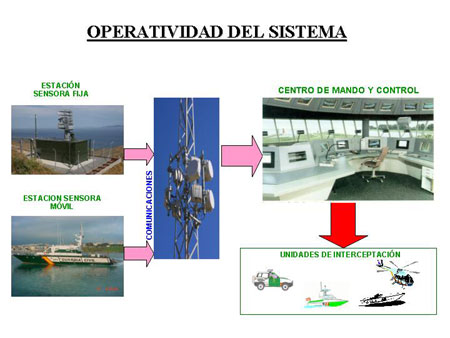
La certeza de la futura llegada de nuevas pateras a las costas alicantinas se conjuga, además, con la desalentadora realidad de que el SIVE, un sistema cuya implantación en Alicante -donde existen cuatro radares fijos y uno móvil conectados a la Comandancia de la Guardia Civil- ha costado 8,5 millones de euros, es incapaz de detectar la llegada de la mayoría de embarcaciones….”

Click here and here for articles.

Click here for more information from la Guardia Civil y el Sistema Integrado de Vigilancia Exterior (SIVE)

Leave a comment

Filed under Mediterranean, News, Spain

Besson appelle l’UE à accélérer le renforcement de l’agence européenne Frontex et la surveillance des frontières européennes

“Les corps de neuf migrants morts noyés en tentant de gagner la Grèce à partir de la Turquie ont été découverts depuis cinq jours au large du port grec d’Alexandroupolis….

“Alors que les frontières extérieures de l’Union Européenne sont soumises en Grèce à une pression sans précédent des filières d’immigration irrégulière, plus de la moitié des entrées illégales dans l’espace Schengen ayant été enregistrées en 2009 à la frontière turco-grecque, Eric BESSON appelle l’Union Européenne à renforcer la surveillance des frontières européennes notamment en Méditerranée.

“Eric BESSON interviendra dans les prochains jours auprès du Commissaire européen chargé de l’immigration pour demander que les décisions prises par les Chefs d’Etat et de Gouvernement européens pour le renforcement de l’agence européenne Frontex soient mises en oeuvre sans délai.

“Ces décisions, adoptées sur proposition de la France par le Conseil européen du 30 octobre 2009, portent en particulier sur :

  • L’adoption de règles d’engagement claires pour les opérations de contrôle maritimes.
  • Une coopération opérationnelle accrue entre Frontex et les pays d’origine et de transit, notamment la Libye et la Turquie.
  • La possibilité d’affréter régulièrement des vols conjoints financés par Frontex pour des opérations groupées d’éloignement au niveau européen.

“Eric BESSON demandera également que la coopération de la Turquie dans la lutte contre les filières d’immigration irrégulière soit placée au centre des relations entre l’Union Européenne et ce pays.

“Eric BESSON proposera enfin à la présidence espagnole de l’Union Européenne que la prochaine réunion des Ministres européens en charge de l’immigration, le 21 janvier à Tolède, permette de définir une feuille de route précise pour l’application des décisions du Conseil européen et les relations avec la Turquie dans le domaine de la circulation des personnes.”

Click here for full Statement.

Leave a comment

Filed under Aegean Sea, European Union, France, Frontex, Greece, Mediterranean, Statements, Turkey

CNN Video: 250 Tamil Asylum Seekers Held on Boat in Indonesia

Approximately 250 asylum seeking Tamils have been held on board a boat in the Javanese port of Merak since October 2009 when the vessel was intercepted by Indonesian authorities.  The vessel was attempting to reach Australia.  The Tamils are refusing to leave the boat unless Australia agrees to accept them for resettlement.

Click here for CNN video.  Click here for article.

1 Comment

Filed under Australia, Indian Ocean, Indonesia, News

IAI Analysis: Control of Illegal Immigration and Italian-EU Relations

An analysis by Bruno Nascimbene, with the Istituto Affari Internazionali (IAI), CONTROL OF ILLEGAL IMMIGRATION AND ITALIAN-EU RELATIONS:

“Controlling maritime borders and flows of illegal immigrants in the Mediterranean is an issue where sharp tensions have been evident for some months now at the national, EU and international levels. Tensions evidenced by the reactions and outcry provoked by operations involving Italian naval units which have intercepted boats carrying migrants and sent them back to their ports of departure, most notably in Libya. The migrants concerned were deemed to be illegal regardless of their possible asylum-seeker status. Such interventions have raised, and continue to raise, concerns over the fate of the persons involved, especially as regards the protection of their fundamental human rights.”

Click here for full article.

Leave a comment

Filed under Analysis, European Union, Italy, Libya, Mediterranean

Somet Algérie–Espagne, 7-8 janvier

“Initialement prévu en février 2008, le sommet Zapatero-Bouteflika, dont la tenue était suspendue à l’aval d’Alger, … se déroulera en fin de compte cette semaine dans la capitale espagnole. …  Ce sommet est devenu possible après que l’Espagne eut assoupli ses positions dans un certain nombre de dossiers, notamment l’énergie, le Sahara occidental et l’immigration, qui constitueront d’ailleurs les principales questions que traiteront les deux responsables….”

“L’immigration clandestine, point sur lequel divergeaient les deux parties, sera également au centre des entretiens entre Bouteflika et Zapatero, qui tenteront d’aplanir leur différend sur le sujet, notamment concernant le traitement réservé aux immigrants clandestins par les autorités ibériques….”

Click here or here for the article.

Leave a comment

Filed under Algeria, Mediterranean, News, Spain

Harraga, ces damnés de la terre

Un article de Mohamed TOUATI (L’Expression, Algérie):

“Chaque année, des milliers de jeunes [Algériens] bravent la mort. Ils étaient quelque 4000 à avoir tenté l’aventure en 2008, selon les statistiques. Ce triste record devrait largement être dépassé en 2009.”

“La loi punissant toute personne qui tente de quitter illégalement le territoire national de 2 à 6 mois de prison ainsi que d’une amende de 20.000 à 60.000 dinars s’est avérée bien peu dissuasive et pratiquement d’aucune efficacité pour ne serait-ce que juguler ce fléau.”

“A la fin du mois de décembre 2008, soit pratiquement une année, jour pour jour, la presse écrite nationale dans son ensemble avait largement fait cas dans ses manchettes de 600 corps d’Algériens se trouvant dans les morgues espagnoles. Almeria, Alicante et d’autres villes encore. Une information livrée il y a une année lors d’une conférence de presse par la Commission nationale pour la sauvegarde de la jeunesse algérienne affiliée à la Laddh, la Ligue algérienne de la défense des droits de l’homme, aile Hocine Zahouane. «Les corps qui sont déposés dans les morgues des villes, à Almeria ou ailleurs, certains depuis six mois, d’autres depuis deux ans, sont en état de décomposition avancé», selon les déclarations de l’imam de la ville d’Alicante.  Une information vite démentie par Djamal Ould Abbès. Le ministre de la Solidarité nationale, de la Famille et de la Communauté nationale à l’étranger a cependant reconnu que neuf cadavres ont été recensés dans les morgues d’Alicante et de Murcie.”

Click here for full article.

Leave a comment

Filed under Algeria, Mediterranean, News

EU-Funded IOM Project in Yemen

Saba, the Yemen News Agency reported that an 18 month € 2 million EU-funded project implemented by IOM will begin this month.

“The IOM-suggested project has been designed in response to humanitarian and security challenges caused by migration into Yemen, mainly through the Gulf of Aden, directly linked to organized crime, trading in human and instability in the region and Yemen, [project manager Fawzi al-Zayood] said. The [project] outcomes are expected to include a framework for legislation and policies for migration management, training about 800 employees working at the migration authority and Border Guard and establishing a fund to provide services for trafficking-victimized migrants under the supervision of the IOM.”

Click here for article.

2 Comments

Filed under European Union, Gulf of Aden, News, Yemen

Canary Islands – Migrant arrivals at 10 year low

2,242 migrants arrived in the Canary Islands in 2009 compared with approximately 9,000 in 2008.  This was the lowest number of migrant arrivals since 1999 when 2,165 migrants arrived. There were 32 confirmed migrant deaths in 2009 compared to 45 in 2008.

The largest number of migrant arrivals took place in 2006 when 31,859 migrants arrived.  Coordinated Frontex operations were expanded beginning in May 2006.  Since 1994 there have been over 96,000 recorded arrivals.

Click here (EN), here (FR) and here (ES) for articles.

Leave a comment

Filed under Data / Stats, Eastern Atlantic, Frontex, News, Spain

Spanish EU Presidency’s Web Site and Work Programme

The Spanish EU Presidency’s web site is up and running.

Excerpts from a summary of the Presidency’s work programme:

“This will be the fourth occasion that Spain has held the Presidency of the European Union. On each of the previous occasions, it faced important challenges. But none, like now, have coincided with a global crisis like the one that is affecting the economy and at a time as strategic as now in the European transformation process. This gives our Presidency a unique significance and, at the same time, even greater responsibility.”

“Spain has worked very closely with Belgium and Hungary to prepare a joint program for the next 18 months, in accordance with the Treaty, which was presented to the Council of Ministers of Foreign Affairs on the 7th and 8th in Brussels.”

“These are the four main priorities of our Presidency:

• The first and essential priority for the development of the others is the full and effective application of the Lisbon Treaty.

• The second is to guarantee the economic recovery of Europe through greater co-ordination of every member state and the approval of the European strategy for sustainable growth for 2020.

• The third is to reinforce the presence and influence of the European Union in the new world order.

• Finally, the fourth is to place European citizens at the centre of EU policy, with initiatives designed to develop their rights and freedoms.”

“We are also going to encourage dialogue and co-operation with South Mediterranean countries, the stability and prosperity of which constitute a priority for Europe. The structure of the Union for the Mediterranean needs to be configured and its General Secretariat set up in Barcelona.”

“We will also initiate the process for the European Union’s accession to the Convention on Human Rights, and we will approve the Stockholm Programme Action Plan for the European Area of Freedom, Security and Justice, with measures that will have a considerable positive effect on the security of our citizens.”

“We know that dealing with immigration is one of Europe’s greatest challenges. We, who have contributed to the content of European policy on immigration over the last few years, are well aware of the situation.”

“Now we will deal with it in its different aspects, from integration and cooperation with the countries of origin and transit, to the tireless fight against the mafias that exploit the desperation of the less fortunate.”

Click here for full document.

Leave a comment

Filed under European Union, Spain

Thatcher Wanted to Buy Island for Vietnamese Boat People in 1979

Documents released under the UK’s 30 year rule (requiring many Government documents to be turned over to the National Archives after 30 years) reveal that former PM Margaret Thatcher considered the possibility of buying an Indonesian or Philippine island not only for the staging and screening of Vietnamese boat people, but also as a place of resettlement for the Vietnamese.

Click here, here, and here for articles.

Leave a comment

Filed under News, Pacific Ocean, UK, Vietnam

Le nombre de clandestins arrivés en Espagne soit retombé à 7.000

“Le chef du gouvernement espagnol José Luis Rodriguez Zapatero s’est félicité … que le nombre de clandestins arrivés en Espagne soit retombé à 7.000 en 2009 contre 14.000 en 2008, estimant être en train de ‘gagner le combat’ contre l’immigration illégale.”

“Selon des statistiques encore provisoires, le nombre des clandestins subsahariens arrivés cette année dans des embarcations de fortune sur le seul l’archipel espagnol des Canaries, au large de l’Afrique, est retombé à environ 2.250, contre plus de 9.000 en 2008 et un record de 31.600 en 2006.  Le nombre de clandestins arrivés cette année sur les côtes d’Andalousie, en provenance notamment du Maghreb, a en revanche augmenté.”

Zapatero “a attribué cette baisse globale aux accords de coopération conclus avec les pays d’origine en Afrique et au renforcement des moyens de lutte contre l’immigration clandestine, notamment le dispositif européen Frontex au large des côtes africaines.”

Click here for article.

Leave a comment

Filed under Data / Stats, Eastern Atlantic, Frontex, Mediterranean, News, Spain

España: La llegada de inmigrantes ilegales se ha reducido a la mitad

Conferencia de prensa del Presidente del Gobierno, José Luis Zapatero, después de la reunión del Consejo de Ministros:

“ *** En el campo de la seguridad colectiva debería, como antes referí, hacer una referencia a la política de inmigración ilegal, que en alguna de mis comparecencias de esta naturaleza ha sido tema central, también para expresar nuestra satisfacción porque la llegada de inmigrantes ilegales durante 2009 se ha reducido a la mitad en relación con 2008: hemos pasado de catorce mil a siete mil. Se está ganando el combate a la inmigración ilegal después de haber sufrido, como saben, especialmente en 2006 y 2007, años extraordinariamente difíciles. Y se está haciendo gracias a un despliegue amplísimo de política de cooperación con los países de origen, la mayoría de ellos países africanos, y con un refuerzo de todos los medios personales y materiales en la lucha contra la inmigración ilegal. No vamos a bajar la guardia, sabemos que puede haber momento de repunte; pero, afortunadamente, un tema de gran calado y de gran preocupación está en una dirección muy adecuada. *** “

Click here for transcript of Press Conference.

Leave a comment

Filed under News, Spain

Puntland Authorities Detain Migrants

The Somaliweyn Website reported that Puntland authorities have arrested over 100 intending migrants:

“‘The exact number of the people whom we have arrested is 110, and they are from different nations in Africa, but the leading numbers of the people are from our immediate neighbour Ethiopia, the entire of these people were intending to cross the wide waters between Yemen and Puntland state, and just before they have accomplished their dreams they were apprehended by our security personnel’ said Musse Ahmed Abdurahman the police commissioner of Puntland state speaking to Somaliweyn Website via the wire. The Police commissioner has also added that lately the number of the persons intending to illegally cross the water between Yemen and Puntland has been rapidly mounting….”

IRIN reported: “‘We have begun to force would-be migrants back to their homes for their own safety. I would rather have them back in their homelands than dying at sea,’ said Muse Ghelle Yusuf, governor of Puntland’s Bari region. He said thousands of Ethiopians and Somalis are currently in Bosasso, the commercial capital of Puntland, intending to cross into Yemen.
‘Our estimate is that as of today [29 December 2009] there are 4,000-5,000 migrants in and around Bosasso,’ Yusuf said, noting that 1,000-1,700 have been arriving in the area daily.”

Click here, here, and here for articles.

Leave a comment

Filed under Gulf of Aden, News, Somalia, Yemen

Le Maroc: Un cul-de- sac pour les migrants en quête d’une vie meilleure en Europe

Un article de La Libre (Belgique) sur les migrants subsahariens au Maroc:

“En contrepartie de son investissement pour bloquer les mouvements de populations subsahariennes, [le Maroc]  a obtenu des aides européennes non négligeables, soit 654 millions d’euros entre 2007 et 2010. Les organisations marocaines de défense des droits de l’homme s’en indignent, lui reprochant d’être ‘le gendarme ou l’arme de régulation de l’Europe’. Les responsables marocains préfèrent, quant à eux, garder le silence sur un dossier bien trop encombrant….”

“Les chiffres officiels font état de 10000 à 15000 migrants bloqués au Maroc, principalement originaires du Mali, du Sénégal, de Gambie, du Congo ou du Libéria. Difficile de donner un chiffre exact pour une population mobile qui évolue dans le cadre d’un système parallèle….”

“La politique restrictive et répressive de ‘bouclage’ des frontières, menée par les pays de l’Union européenne, a eu comme résultat prévisible d’enfermer à l’intérieur même du Maroc les candidats à l’émigration. Ils se retrouvent contraints de rester pour des périodes relativement longues dans une Afrique du Nord qui les dénigre, attendant qu’une occasion de traverser se présente….”

Click here for article.

1 Comment

Filed under European Union, Morocco, News

NGO Asylum Good Practice Recommendations to Spain, Belgium, and Hungary

CEAR (Spanish Refugee Council), the Flemish Refugee Action (Vluchtelingenwerk Vlaanderen), CIRE (Coordination et Initiatives pour Réfugiés et Etrangers),and the Hungarian Helsinki Committee (Magyar Helsinki Bizottság) have made a series of good practice recommendations to Spain, Belgium and Hungary.  These three countries are “the new Trio of States that will hold the Presidency of the European Union from January 2010 until June 2011, a crucial moment for the development of the EU policy and legislation in the field of asylum … The Trio will therefore play a key role in [the] implementation [of the Stockholm Programme] … The aim of [the recommendations is ] to complement ECRE’s positions and identify, from a more national perspective, those issues where the often diverse experiences of Spain, Belgium and Hungary can be employed to effectively address some of the main shortcomings of asy­lum systems in Europe.”

“As a general recommendation we urge the Trio of States to join their efforts in ensuring that the second phase of the Common European Asylum System will translate the best practices and highest protec­tion standards of the Member States’ national laws into EU legislation. The harmonisation on minimum standards, too often resulted in the lowest common denominators, should not be repeated.”

“[I]t must also be noted that in recent years a worrisome tendency has developed towards the exter­nalisation of responsibility for asylum claims outside the EU to neighbouring third countries. In this respect we recommend the Trio of States to support cooperation with third countries aimed at reinforcing their protection system. At the same time we urge the Trio of States to take a strong and clear position to make sure such cooperation does not become a way for the EU to escape its responsibility to protect under international and EU law.”

Click here for full document.

Leave a comment

Filed under Belgium, European Union, Hungary, Spain, Statements