Tag Archives: Rescue at Sea

Hirsi v Italy: Summary of Oral Submission made by Govt. of Italy to Grand Chamber ECtHR

I have watched a portion of the web cast of yesterday’s oral submissions before the ECtHR Grand Chamber in Hirsi and others v Italy, Requête no 27765/09.  Here is a summary of the oral submissions made on behalf of the Respondent Government of Italy by Mrs. Silvia Coppari, Co-Agent, and Mr. Giuseppe Albenzio, Adviser.  NB while I think my notes are accurate, do not rely on them for exact quotes of any of the oral remarks.

Oral Submission by Mrs. Silvia Coppari, Co-Agent, Government of Italy

Introductory Remarks Critical of Applicants:

Coppari began her oral submission by saying that the Italian government did not intend to enter into the controversy raised by Applicants in their written submissions where the Italian government and its representatives were insulted and provoked by the Applicants’ statements that the arguments relied upon by the Italian government were purely formal or quite absurd and tendentious.  Coppari described the Applicants’ written submission as a political and ideological manifesto against the government and its policy.

Questioning Why Italy Was Singled Out:

Coppari said that the issues raised by the Applicants related to European public policy in general and therefore all EU Member States should be involved in the case.  Italy’s policies and actions were adopted and carried out in a manner consistent with the guidelines, objectives, and guidance set by the EU to curb illegal migration.

Reminding Court that Case is Limited to the Events of 6 May 2009 and is Not a Challenge to Italy’s Migration Policies:

Coppari emphasised that the Application was lodged only with respect to the events that took place on 6 May 2009 when the push-back operation involving the Applicants occurred and that the Application does not deal with the public policy or practices of the Government.

Admissibility Challenge No. 1:

Coppari recalled that the allegations lacked specific supporting evidence and noted that the Applicants themselves have not testified in any domestic proceedings and have not otherwise personally participated in the case. Coppari expressed misgivings about the validity and authenticity of the authorisations given to the Applicants’ legal representatives.  Coppari said there was no certainty as to the identity of the Applicants and therefore no likelihood of individually assigning a particular alleged offence to them or a possible violation of their rights under Art. 34 of the Convention.

Admissibility Challenge No. 2:

Coppari made a second inadmissibility objection due to the failure of the Applicants to lodge an appeal with the Italian courts in line with Art. 13.  The pursuit of such domestic remedies would have given the Italian authorities the opportunity to check whether those who were rescuing illegal migrants on the high seas were possibly liable for any rights violations.  Coppari emphasised that at present there are criminal proceedings underway at the domestic level in cases very similar to the instant case and that these cases will determine whether there was compliance with national and international standards and whether there was effective access to procedures for international protection for unidentified migrants intercepted at high seas and transported to Italian vessels. The existence of these ongoing domestic cases proves that domestic remedies do exist which were not pursued by the Applicants.

The Events of 6 May 2009:

Coppari said that the operations carried out on 6 May 2009 to intercept 3 makeshift migrant vessels were done to protect the migrants from danger and to control the flows of illegal migration towards Europe.  The migrant vessels were in distress on high seas in the Maltese SAR zone.  The migrants were rescued and returned to Libya on board Italian military vessels.  There is no evidence suggesting that requests for international protection were made to Italian authorities.  The migrants were in fact welcomed upon arrival in Libya.  The returns did not breach any basic rights of the Applicants.

Prohibition Against Collective Expulsions Does Not Apply Extraterritorially:

Coppari said that prohibition of collective expulsions provided by Art. 4 of Protocol 4 is not applicable to the case.  Coppari said that the use of the word “expulsion” is an obstacle to its application in the case of extraterritorial exercise of state jurisdiction.  Not only is it an apparent obstacle, it is in fact a logical obstacle which cannot be circumvented because an “expulsion” can only happen to people who are already on national territory or who have illegally crossed the border.  The transfer to a vessel on the high seas cannot be equated with entry upon national territory or permanent residence on national territory.

Giuseppe Albenzio, Adviser, Government of Italy

Introductory Remarks – Italy’s Policies Consistent with EU Principles:

Italy has acted in respect of principles handed down by the EU. The European pact on immigration and asylum provides for limits on migratory flows, the need to control illegal immigration by ensuring that illegal immigrants are returned to the country of origin or to a country of transit, the need to make border controls more effective, and to make partnerships with countries of origin or transit.

At the Time of the Events in Question, Libya Was a Country with an Adequate Protection System in Place:

Italy’s bi-lateral agreements with Libya at the time they were implemented recalled the general principles of international law and of human rights and therefore in face of these principles recognised in the agreements, the misgivings regarding Libya’s non-subscription to the UN Refugee Convention should not exist and are not justified especially since Libya has signed the similar African Union Convention for refugees.  It should also be underlined that at the time of the events in question, the UNHCR and IOM were both active in Tripoli and the operations that were carried out in the months after the bilateral treaty was implemented should be seen in this context.

After the first phase of the implementation of the bi-lateral treaty when Italian authorities took note of the fact that Libyan authorities had ordered the UNHCR office in Tripoli to close, which in turn made it difficult to guarantee the protection of fundamental rights on its territory, Italy’s methods for rescuing migrants on the high seas were modified and people who were on vessels coming from Libya would be accompanied to Italian soil after rescue.

The web cast of the hearing is available here.  (I was able to view this with IE but not with Firefox.)

1 Comment

Filed under Council of Europe, European Court of Human Rights, European Union, Italy, Judicial, Libya, Mediterranean, News, UNHCR

PACE Migration Committee to Designate Rapporteur to Conduct Inquiry into Deaths of Boat People

PACE President Mevlüt Cavusoglu announced today that the PACE Migration Committee will conduct an inquiry into the incident that occurred in April when 61 migrants died at sea after leaving Libya.  Survivors from the boat reported that several ships, including naval ships, ignored their calls for assistance.  The Committee will designate a Rapporteur this week who will look into this incident as well as “other cases where better interception and rescue co-ordination could have saved human lives.”

Click here and here for PACE press statements.

Click here and here for previous posts.

Leave a comment

Filed under Council of Europe, Libya, Mediterranean, News

NATO Ships Rescue Migrant Boat Off Spanish Coast

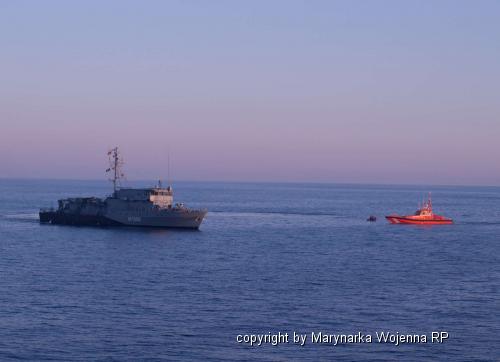
Two NATO ships, the Polish warship Kontradmiral Xawery Czernicki and the German warship Datteln, rescued 9 migrants in an inflatable boat on 16 June.  The incident occurred 80 km off the Spanish coast.  The German warship initially provided water to the migrants on the inflatable.  Spanish rescue services were notified when it appeared the migrant boat was taking on water.  A Spanish Salvamento Marítimo boat took the migrants on board and transported them to Spain.  The two NATO ships were participating in NATO Operation Active Endeavour which is the post-9/11 anti-terrorism operation in the Mediterranean and northern Red Sea aimed at protecting merchant vessels against attacks by terrorists.

Click here for Polish Navy press statement.

Click here (EN) and here (PL) for articles.

German warship Datteln and Spanish Salvamento Marítimo boat. © Polish Navy / Marynarka Wojenna RP

Leave a comment

Filed under Germany, Mediterranean, News, Spain

HRC Adopts Resolution on Migrants and Asylum Seekers Fleeing North Africa; Calls for Inquiry Into Allegations of Failures to Rescue Boats in Distress

The UN Human Rights Council, 17th Session, on Friday, 17 June, adopted a resolution (A/HRC/17/L.13) on Migrants and Asylum Seekers Fleeing from Events in North Africa.  The Resolution recalls states’ obligations under human rights, humanitarian, and refugee law, including the obligation of non-refoulement and called for ships patrolling the Mediterranean Sea to provide assistance to non-seaworthy boats leaving North Africa.

The Resolution also calls for “a comprehensive inquiry into the very troubling allegations that sinking vessels carrying migrants and asylum seekers fleeing the events in North Africa were abandoned to their fate despite the alleged ability of European ships in the vicinity to rescue them, and welcomes the call made by the Council of Europe in this regard on 9 May 2011.”  [NB – this quoted text is taken from a 15 June version of the Resolution and may not reflect the final approved language. frenzen]

The Resolution was adopted by a vote of 32 in favour, 14 against, and no abstentions:

In favour (32): Angola; Argentina; Bahrain; Bangladesh; Brazil; Burkina Faso; Cameroon; Chile; China; Cuba; Djibouti; Ecuador; Gabon; Ghana; Guatemala; Jordan; Kyrgyzstan; Malaysia; Maldives; Mauritania; Mauritius; Mexico; Nigeria; Pakistan; Qatar; Russian Federation; Saudi Arabia; Senegal; Thailand; Uganda; Uruguay and Zambia.

Against (14): Belgium; France; Hungary; Japan; Norway; Poland; Republic of Korea; Republic of Moldova; Slovakia; Spain; Switzerland; Ukraine; United Kingdom and United States.

Excerpts from the Afternoon 17 June summary of the HRC meeting:

“OSITADINMA ANAEDU (Nigeria), introducing draft resolution L.13, said the African Group recognized that due to the recent crisis situation in North Africa, migrants had suffered great hardship. Migrants were fleeing, not flowing out of North Africa. People were running away because their lives were at risk. Other root causes for migration did not apply in this case.  This resolution had been difficult to establish. Nigeria thanked all partners for their efforts in developing the draft resolution. The information emanating from North Africa was such that while neighboring countries did quite a lot in accommodating migrants, there were substantial difficulties in traveling from North Africa. Some people had even died at sea. Nigeria took note that some countries did provide assistance through their offices of migration or other mechanisms. The hardship suffered by migrants should be investigated in order to clarify the problems that arose and ensure this situation was not repeated. Nigeria believed that the Special Rapporteur, working with the High Commissioner, would be able to provide information about how to deal with such a situation in the future. The African Group would appreciate if the draft resolution would be approved by consensus.

[***]

ANDRAS DEKANY (Hungary), speaking on behalf of the European Union in an explanation of the vote before the vote, noted that the European Union had assisted greatly with the humanitarian effort in Libya. From the outset the European Union had been at the forefront of humanitarian response. The European Union had been active in repatriating third country nationals.  This had been vital in reducing the stress on neighboring countries. The draft text was circulated late. The European Union had engaged in a constructive spirit on the text, while retaining a specific focus that would address the issue at stake in a more balanced and legally accurate manner, notably when referring to issues related to refugee law and law of the sea. It noted that this was particularly true with regard to PP7 and operative paragraphs, which introduced new language that was not consistent with public international law. The resolution did not capture the multi-dimensional aspects of the problem. There was no reference to the overall human rights situation in the region, and therefore the root causes of the plight of migrants.  The resolution did not refer to the responsibility of criminal traffickers and continued to characterize the situation in an unbalanced way. The European Union and its Member States had continued to observe the principle of non-refoulement. Not a single refugee had been subjected to refoulement. The European Union called for a vote and noted that it would vote against the resolution.

EILEEN CHAMBERLAIN (United States), speaking in an explanation of the vote before the vote on L. 13, said the United States shared concern for the migrants and asylum seekers fleeing the violence in Libya. A resolution requiring countries to recognize their obligations under international law and support victims of violence and migrants from Libya was important.  However, this resolution assigned the sole responsibility to countries of destination and avoided reference to the root causes of the problem. The draft resolution used language that misconstrued State obligations and responsibilities regarding those migrants and asylum seekers. The sponsors had delayed introduction of the draft resolution, thus allowing only a restricted period to review and provide comments on the draft resolution. The United States regretted that the manner the resolution was developed belied its importance and sent the wrong message to the Gaddafi forces.”

Click here for UN News Centre summary.

Click here for the AFTERNOON 17 June 2011 summary of the HRC meeting.

Click here or on this link [ L.13 Document As Received ] for Resolution “document as received.”

Click here for Resolution “document as issued.” [NB – this may not be the final approved version.]

Click here  or on this link [ L.13 Oral Revision ] for Resolution “oral revision.”

Click herehere or here for final versions of resolutions when available.  [HRC Extranet registration may be required.]

1 Comment

Filed under Hungary, Libya, Mediterranean, News, OHCHR, Statements, United Nations, United States

Moreno-Lax, Int J Refugee Law, “Seeking Asylum in the Mediterranean: Against a Fragmentary Reading of EU Member States’ Obligations Accruing at Sea”

The latest edition of the International Journal of Refugee Law, contains an article by Violeta Moreno-Lax (PhD Candidate at Université catholique de Louvain; Visiting Fellow 2010-11 at Refugee Studies Centre, University of Oxford) entitled “Seeking Asylum in the Mediterranean: Against a Fragmentary Reading of EU Member States’ Obligations Accruing at Sea.”

Abstract: “Although both international and EU law impose a number of obligations on the EU Member States with regard to persons in distress at sea, their effective implementation is limited by the manner in which they are being interpreted. The fact that the persons concerned are migrants, who may seek asylum upon rescue, has given rise to frequent disputes and to episodes of non-compliance. Frontex missions and the Italian 2009 push-back campaign illustrate the issue. With the objective of clarifying the scope of common obligations and to establish minimum operational arrangements for joint maritime operations, the EU has adopted a set of common guidelines for the surveillance of the external maritime borders. On the basis of the principle of systemic interpretation, this article intends to contribute to the clarification of the main obligations in international and European law binding upon the EU Member States when they operate at sea.”

This is a revised and updated version of the paper presented at the 12th IASFM Conference held in Nicosia, 28 June-2 July 2009.  [The article was written and sent for typesetting before the various uprisings in North Africa – IJRL Editor, 4 March 2011]

Click here for link.  (Subscription or payment required.)

Leave a comment

Filed under Analysis, Eastern Atlantic, European Court of Human Rights, European Union, Frontex, Greece, Italy, Libya, Malta, Mauritania, Mediterranean, Senegal, Spain

Gisti Calls for NATO to Use Its Surveillance Capabilities to Prevent Migrant Deaths at Sea

From Gisti:

“…  Faced with hundreds of fatal wrecks in the Mediterranean, can we simply denounce the deafening silence in which lives are lost at our doors? Should we accept being powerless in the face of immigration politics which we cannot change? Those who have drowned are not the victims of natural disasters, but of political decisions carried out by persons whose responsibility must be marked. In response to these attacks on the most fundamental right – the right to life – we must ensure that procedures are undertaken and that justice is done. We must stop this carnage. [***] These wrecks, sinking boats transformed into floating coffins of men, women and children, deaths from exposure,  hunger and thirst after drifting at sea, have become commonplace.  [***] But things have changed since an international coalition and NATO forces intervened in Libya. Today, AWACS, drones, planes, helicopters, radar, and warships watch everything that moves in the Mediterranean. They can not fail to see the boats of exiles from sub-Saharan Africa who seek to flee from Libya. [***] By not intervening, they are guilty of failing to assist persons in danger. This can not go unpunished. [***]>>

<<[***] Face aux centaines de naufrages mortels en Méditerranée, peut-on se contenter de dénoncer le silence assourdissant dans lequel des vies disparaissent à nos portes ? Doit-on se résoudre à l’impuissance devant des politiques migratoires auxquelles on ne pourrait rien changer ? Ces noyées ne sont pas les victimes de catastrophes naturelles, mais de décisions politiques mises en œuvre par des exécutants dont les responsabilités doivent être pointées. Devant ces atteintes au droit le plus fondamental – le droit à la vie – il faut que des procédures soient engagées et que justice soit rendue. Il faut mettre fin à cette hécatombe. [***]  De ces naufrages, des épaves transformées en cercueils flottants d’hommes, de femmes et d’enfants morts d’épuisement, de faim et de soif après de longues dérives en mer, l’opinion a pris l’habitude. [***]  Mais la donne a changé depuis qu’une coalition internationale et les forces de l’OTAN interviennent en Libye. Aujourd’hui, awacs, drones, avions, hélicoptères, radars et bâtiments de guerre surveillent tout ce qui bouge en Méditerranée. Ils ne peuvent pas ne pas voir les bateaux des exilés originaires d’Afrique subsaharienne qui cherchent à fuir la Libye. [***] En n’intervenant pas, ils se rendent coupables de non-assistance à personne en danger. Ceci ne peut rester impuni. [***] >>

Click here for full statement.  (FR)

2 Comments

Filed under European Union, Frontex, Italy, Libya, Mediterranean, Statements, Tunisia

1500+ Migrants Land in Lampedusa / NATO Helicopters Report Migrant Boat Sightings to Maltese SAR Authorities

Seven migrant boats from Libya carrying over 1500 migrants arrived in Lampedusa over a 12 hour period Friday night to Saturday.  The large number of arrivals follows an 11 day period when there where no arrivals on Lampedusa.  Improved sea conditions are again believed to be the main explanation for the timing of arrivals.

According to Maltese news reports, NATO Headquarters in Naples informed Maltese SAR authorities that a helicopter operating from a NATO vessel had sighted several of the migrant boats sailing north from Libya and search operations for the migrants boats were begun as a result.

It would be helpful if NATO’s press office would include information on NATO’s search and rescue activities and sightings of migrant boats in its daily Unified Protector Operational Media Update.  The Update already includes a daily tally of NATO air operations (sorties and strike sorties), hits, maritime arms embargo activities (hailings, boardings, interdictions), and humanitarian assistance movements.

Click here (EN), here (IT), here (IT), and here (IT) for articles.

1 Comment

Filed under Italy, Libya, Malta, Mediterranean, News

Icelandic Coast Guard Rescues Disabled Migrant Boat Near Crete

An Icelandic patrol boat participating in Frontex Joint Operation Poseidon in the eastern Mediterranean rescued approximately 93 migrants from a disable vessel near Crete.  One media report indicated the passengers may be Egyptian.

Click here, here, and here for articles.

Leave a comment

Filed under Egypt, Frontex, Greece, Iceland, Mediterranean, News

Migrant Boat(s) Sink Off Tunisian Coast / 250+ Feared Dead, 550+ Rescued

Tunisian authorities report that one or more migrant boats that had departed from Libya capsized and sank near the Tunisian coast on Tuesday near the Tunisian island of Kerkennah.  There are currently conflicting media reports on the number of boats involved.  The boat(s) are is thought to have been carrying approximately 800 people in total.  Over 500 people have reportedly been saved.  Approximately 270 are missing and assumed dead.

Click here, here, and here for articles.

Leave a comment

Filed under Italy, Libya, Mediterranean, News, Tunisia

Maltese JHA Minister: Migrant Boats Have Rights of Passage and Rescue Not Always Needed

Maltese Justice and Home Affairs Minister Carm Mifsud Bonnici is quoted by AP as saying that migrant boats leaving Libya “have the right of passage and nobody can stop them, not even our forces or a NATO ship.  As long as [the boats] are not in distress, then [there] is no issue.”

While Mifsud Bonnici’s observation about the right of passage in international waters is technically correct, given that all or virtually all of the migrant boats that have left Libya in recent weeks have been severely overloaded, all migrant boats leaving North Africa under the current situation should be considered to be in distress and in need of rescue.  Migrant boats departing from Libya with few exceptions must pass through the Maltese Search and Rescue Area and Malta should not avoid its rescue at sea obligations under international law by claiming that it is respecting a vessel’s right of passage.  The UNHCR has called upon “states, commercial shipping companies and others present in the Mediterranean to consider that all boats leaving Libya for Europe are likely to require assistance.”

Click here or here for AP article.

Click here for UNHCR statement.

Leave a comment

Filed under Libya, Malta, Mediterranean, News, UNHCR

Tunisia Intercepts / Rescues Migrant Boat Fleeing Libya

Tunisian Coast Guard and Army units (les unités de la garde maritime et de l’armée nationale) intercepted and rescued 222 people on board a migrant boat that left Libya and was attempting to sail to Italy.  The incident occurred on Saturday, 14 May.  The migrant boat was intercepted near Djerba and had reportedly made a distress call because it was taking on water.  The people on board the boat were reportedly all sub-Saharan Africans and they have been taken to the Tunisian camp at Choucha (Shusha).

Click here (EN), here FR), here (FR), and here (IT) for articles.

Leave a comment

Filed under Italy, Libya, Mediterranean, News, Tunisia

Maltese JHA Minister Doubts Migrants Are Being Pushed to Flee Libya

An article in the Malta Independent says that Maltese Justice and Home Affairs Minister Carm Mifsud Bonnici believes it is unlikely that the asylum seekers who have reached Malta in recent weeks have been forced by anyone to flee Libya.  His view is at odds with the statements being made by some of the migrants who have recently arrived in both Lampedusa and Malta.

Mifsud Bonnici “said that he doesn’t think the thousands who have fled from the north African country so far have done so because they were pushed by some people. ‘I don’t think there are any people who are benefiting from this exodus of immigrants to Europe. From the information we have, there is no evidence to suggest that people are being pushed into boats and sent towards Europe. Most immigrants have sought pastures new simply because they fear for their lives. As I have said time and time before, this latest wave of immigration is different to what we have experienced before. Quite a lot of the immigrants who have come to Europe by boat over the past few weeks came with their families, are university graduates, and have a lot of work experience behind them,’ Dr Mifsud Bonnici said.”  The latest boat arrival in Malta carried mostly Libyan nationals.  Over 1100 persons have landed in Malta over the past six weeks.

Click here for article.

1 Comment

Filed under European Union, Italy, Libya, Malta, Mediterranean, News

PACE President Calls for Inquiry into Europe’s Role in Deaths of 61 Boat People

Full Text:

“Strasbourg, 09.05.2011 – Mevlüt Çavusoglu, President of the Parliamentary Assembly of the Council of Europe (PACE), today expressed his distress and deep concern following reports that 61 boat people have died after their appeals for rescue were ignored. Reportedly, their boat was left to drift in the Mediterranean for 16 days.

‘If this grave accusation is true – that, despite the alarm being raised, and despite the fact that this boat, fleeing Libya, had been located by armed forces operating in the Mediterranean, no attempt was made to rescue the 72 passengers aboard, then it is a dark day for Europe as a whole,’ he declared.

‘I call for an immediate and comprehensive inquiry into the circumstances of the deaths of the 61 people who perished, including babies, children and women who – one by one – died of starvation and thirst while Europe looked on,’ he added.

‘At the same time, we have also witnessed acts of solidarity: over 400 boat people were rescued yesterday by the Italian coastguard, with the help of Lampedusa’s inhabitants,’ he said. ‘This is something Europe should be proud of.’

‘Finally, Europe should stop exaggerating the impact of these arrivals. Libya’s neighbouring countries, mainly Egypt and Tunisia, are dealing with over 650 000 refugees who have fled the conflict there. In a spirit of solidarity and of burden-sharing, the 27 EU member states should at least be able to deal, in a humane way and in compliance with their international obligations, with the arrival by boat of several thousand,’ Mr Çavusoglu added.

‘Our Assembly will be sending a delegation to Lampedusa on 23-24 May 2011 to evaluate the situation there, ahead of two major debates – possibly in June – on the rescue of boat-people and the need for Europe to share responsibility. The Assembly has produced a string of critical reports on these matters, and will continue to urgently insist on the humane and lawful treatment of asylum-seekers, refugees and irregular migrants coming to Europe.'”

Click here for link to statement.

2 Comments

Filed under Council of Europe, Mediterranean, News, Statements

500 Migrants Rescued Off Lampedusa; Hundreds Likely Dead Off Libya

A boat from Libya carrying over 500 people from sub-Sahara Africa and Asia ran around off Lampedusa on Sunday. Italian rescuers saved everyone on board.  The survivors had to be brought ashore by rescuers in the water because rescue boats were unable to approach due to the shoals on which the migrant boat ran around.

In a separate incident, early Friday morning, 6 May, a migrant boat believed to be carrying over 600 people capsized or broke apart off the Libyan coast.  It is feared that most of the passengers have died.

Click here, here, and here for articles about the Lampedusa rescue. (EN)

Click here (EN) and here (IT) for article about the sinking off Libya.

Leave a comment

Filed under Italy, Libya, Mediterranean, News, UNHCR

Report: Military Ships Failed to Rescue or Render Aid and 61 Died at Sea

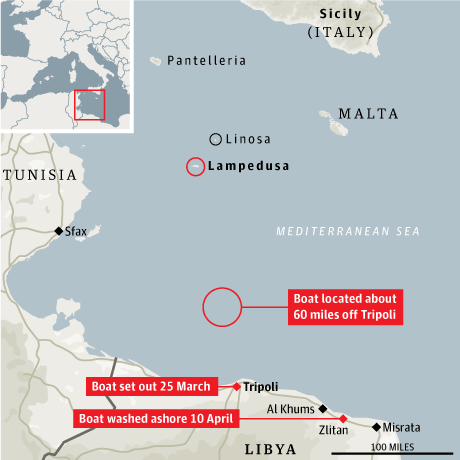
The Guardian on Sunday reported many more details about an incident that began on 25 March when a migrant boat left Libya carrying 72 asylum seekers and which ended 16 days later on 10 April when the disabled vessel washed ashore in Libya with only 11 survivors.  The survivors have described several incidents where military ships and planes ignored their pleas for rescue.  It is clear from the survivors’ descriptions that their disabled vessel was sighted because at one point a military helicopter dropped bottles of water and emergency food rations on the migrant boat.

The UNHCR and Father Mussie Zerai, an Eritrean priest in Rome who runs the refugee rights organisation Habeshia, have called for further investigations into why the boat’s passengers were not rescued.

From the Guardian article: “The Guardian’s investigation into the case of the boat of 72 migrants which set sail from Tripoli on 25 March established that it carried 47 Ethiopians, seven Nigerians, seven Eritreans, six Ghanaians and five Sudanese migrants. Twenty were women and two were small children, one of whom was just one year old. The boat’s Ghanaian captain was aiming for the Italian island of Lampedusa, 180 miles north-west of the Libyan capital, but after 18 hours at sea the small vessel began running into trouble and losing fuel.  Using witness testimony from survivors and other individuals who were in contact with the passengers during its doomed voyage, the Guardian has pieced together what happened next. The account paints a harrowing picture of a group of desperate migrants condemned to death by a combination of bad luck, bureaucracy and the apparent indifference of European military forces who had the opportunity to attempt a rescue….

The Guardian has made extensive inquiries to ascertain the identity of the Nato aircraft carrier, and has concluded that it is likely to have been the French ship Charles de Gaulle, which was operating in the Mediterranean on those dates.  French naval authorities initially denied the carrier was in the region at that time. After being shown news reports which indicated this was untrue, a spokesperson declined to comment.

A spokesman for Nato, which is co-ordinating military action in Libya, said it had not logged any distress signals from the boat and had no records of the incident. ‘Nato units are fully aware of their responsibilities with regard to the international maritime law regarding safety of life at sea,’ said an official. ‘Nato ships will answer all distress calls at sea and always provide help when necessary. Saving lives is a priority for any Nato ships.’”

Click here for full Guardian article.

Click here (IT) for earlier article.

The route of the boat - from guardian.co.uk

2 Comments

Filed under France, Italy, Libya, Malta, Mediterranean, News, UNHCR